Blogs

Checkout our most recent Resource Corner!

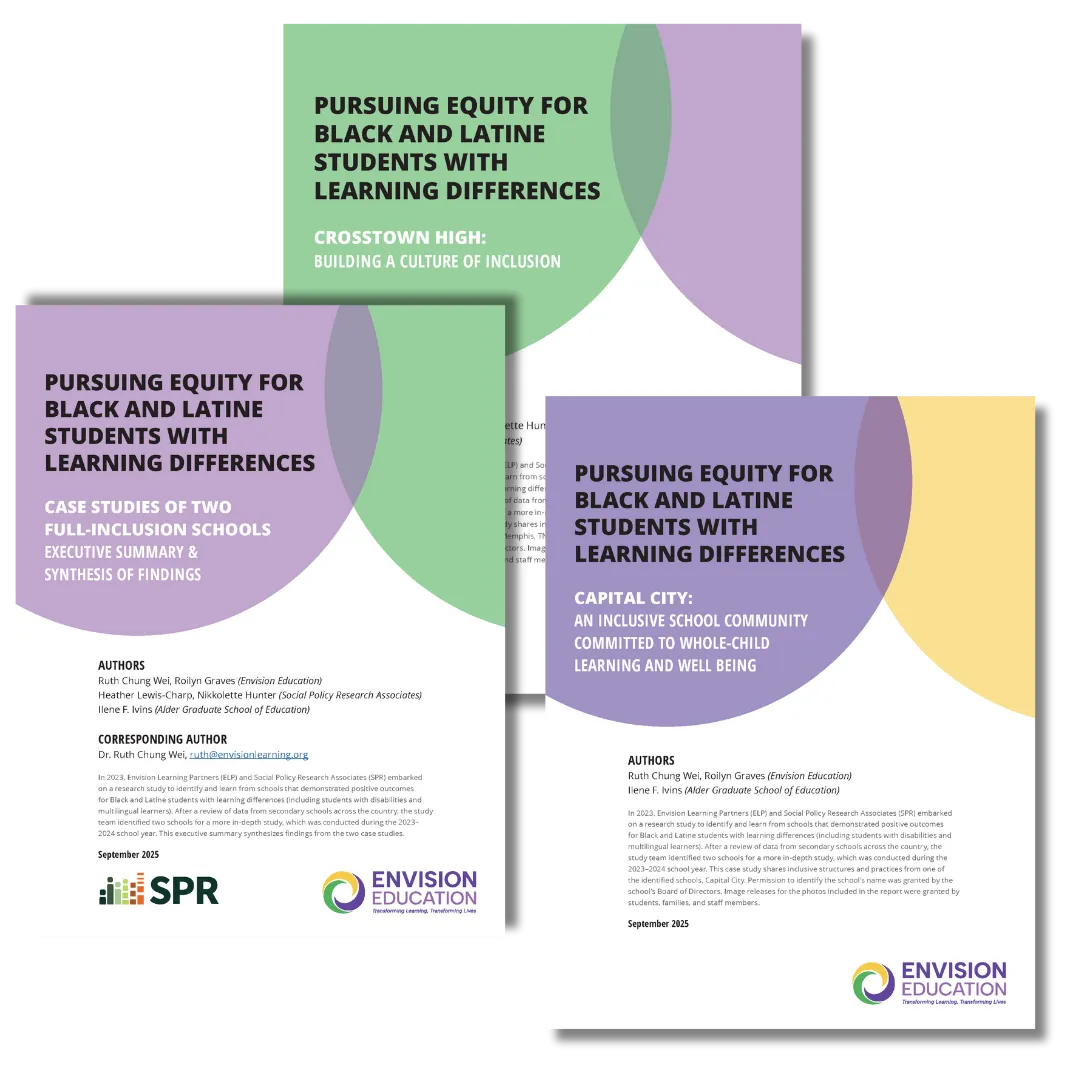
We're excited to share the culmination of a two-year research project, Pursuing Equity for Black & Latine Students with Learning Differences, which documents and illustrates the systems, practices, cultures, and supports that are associated with the well being and success of Black and Latine students with learning differences – students with disabilities and multilingual students with disabilities.
Thank you! Your submission has been received!
Oops! Something went wrong while submitting the form.
Thank you! Your submission has been received!
Oops! Something went wrong while submitting the form.
__wf_reserved_inherit

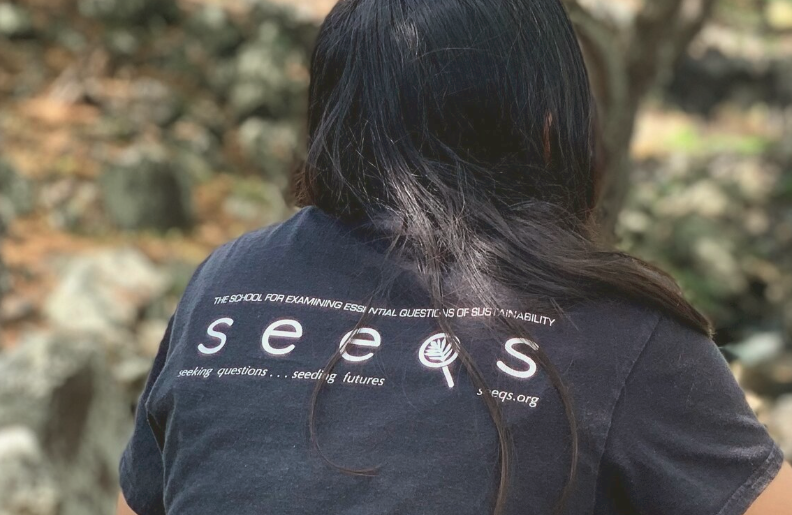
One of our long-time partners, SEEQS (the School for Examining Essential Questions of Sustainability) Public Charter School in Honolulu, HI has been implementing their Portfolio Defense system for over ten years now, and they have gone through many iterations refining the process for their school community and sustainability-focused values. Now in their 11th year, they have created The SEEQS Sharing Hub, their in-house professional development service, and have announced a three-part series that offers an in-depth look at all of the structures and steps that lead to a rigorous and meaningful culminating experience for their students. Join them for one, two, or all three of them:

Introductory Webinar (free)

  • February 1st, 4:00PM-5:00PM HST

Get an overview of the SEEQS Portfolio Defense process from start to finish. We’ll discuss school structures that make it possible, as well as what it looks like for students. This session would be great for anyone interested in what the SEEQS Portfolio Defense processes look like, whether you’re curious about exploring them for your school or classroom, or whether you’re already implementing them and want to hear details about how another school does it.

Portfolio Deep-Dive (in-person)

  • March 2nd, 9AM-12PM HST
  • Sliding fee, $0-$50

Learn about the nuts and bolts of what makes student portfolios and reflections, and how we assess them. Look at student work and practice giving feedback to students who are involved in the process. This session would be great for those who have already started a portfolio defense process at their school and want to learn about the SEEQS portfolio writing, revision, and assessment process (which we do as a separate part of the portfolio defense process).

Defense Deep-Dive (in-person)

  • May 2nd, 12PM-4PM; May 3rd, 8AM-4pm
  • Sliding fee, $20-$150

Experience what our Portfolio Defenses look and feel like in real time. On the first day of this workshop, participants will learn about the entire process and watch an exemplary (live) Portfolio Defense presentation by a current 8th grader. On the second day, participants will observe multiple portfolio defense presentations, the scoring process, and have the opportunity to debrief and reflect with experienced practitioners. Participants will leave with a toolkit of usable materials and structures that SEEQS uses to implement its Portfolio Defense System.

Register Here

Hear more about SEEQS, including a little bit about our prior work together, on this episode of the Learner-Centered Collaborative Podcast: Keeping Humanity at the Center of Assessment with Buffy Cushman-Patz.

The third cohort of the Deeper Learning Leadership Forum (DLLF) met in sunny San Diego for their second convening, at the end of March. Part of this session included the National Equity Project hosting and engaging cohort members in a focus on educational equity as they unpacked systems of advantage and disadvantage and how each member could return home and lead for equity. Participants made connections to their own local contexts and chose an equity project that they would start addressing throughout the cohort program.

The DLLF convening rolled right into the 7th annual Deeper Learning Conference, held at High Tech High. The DLLF cohort and other members of the Envision team joined educators from all over, who are focused on creating more equitable outcomes by engaging students in deeper learning.

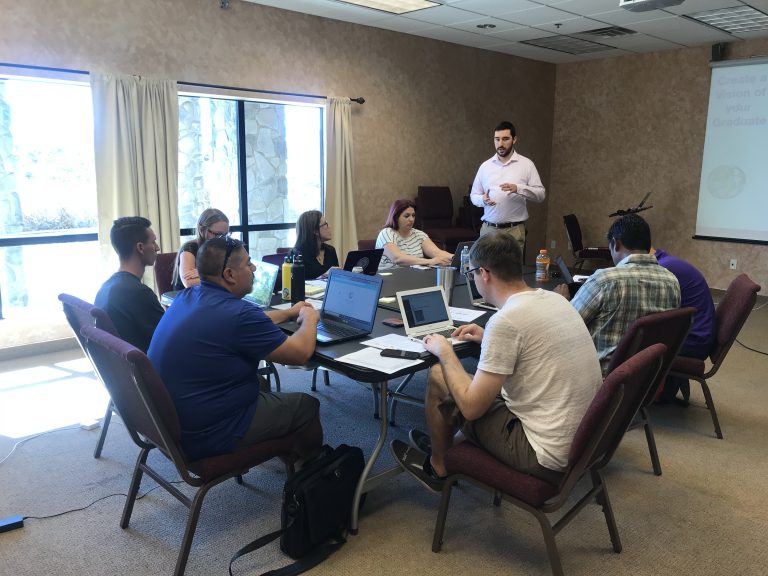
Deeper Learning Coach Alcine Mumby, and Executive Director Justin Wells hosted an all-day deep dive with the help of Roilyn Graves, Envision’s Program Specialist. Deeper Assessment: Rapid Prototyping Portfolio Defense engaged 25 educators in developing the beginnings of a Graduate Profile (GP) for their students. After assembling their GP drafts, they looked at the “why” and “how” of meaningful reflection and explored models from schools that are successfully using a portfolio system aligned to Graduate Profiles, such as Envision’s schools.

Deeper Learning Coach Abby Benedetto, also co-facilitated a deep dive at the conference, Digging Out to Freedom: Education and Liberation; participants explored the intersectionality of structural oppression in assessment, systems design and more, in order to define Diversity, Equity, and Inclusion (DEI). Participants left with inspiration and new tools for self-liberation, to engage liberated learners and advance institutional diversity, equity, inclusion and social justice in their practice.

Historically, education has been the least nimble of all of our institutions.  Walk into classrooms across the country and many of them have not changed significantly in 150 years.  We are trying to shift the way that schools organize and engage all students in meaningful deeper learning so that every young person has the skills they need to be their most fully expressed selves as they go out into the world.  The Summer Accelerator borrows structures that support innovation and rapid prototyping from the tech and business sectors. This will be an intensive, immersive experience during which inclusive school design teams consisting of adults and students will learn, imagine, and plan for how we might redesign school models to better serve all students.

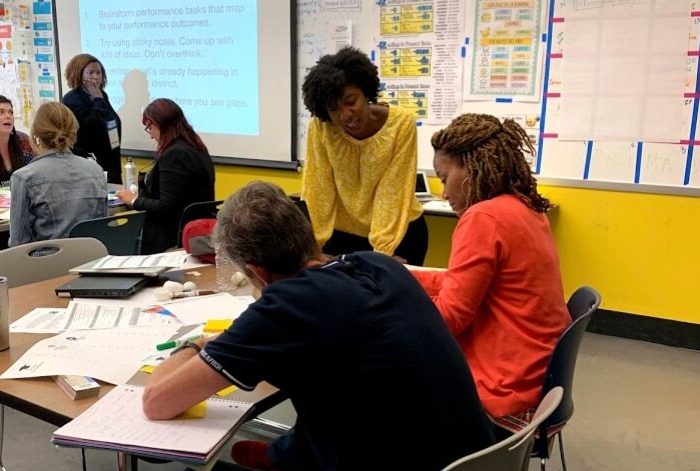
We are using an equity-centered design model for both the experience that the teams will go through, as well as for the lens through which they will be designing. There will be structured learning experiences in the first half of each day, and supported work time/office hours with access to experts in the second half.  Each day will end with some type of feedback loop during which teams will present something with which they are grappling and receive thought partnership from the larger group so that they can move forward the following day. By the final day, each team will leave with a prototype of a Graduate Profile, performance outcomes associated with each skill they selected, and a plan for what component of their system they will begin to test the prototype.  The school design teams will come from the 5 Envision Education schools: Envision Academy High School and Middle Grades in Oakland, City Arts & Technology High School in San Francisco, and Impact Academy of Arts & Technology High School and Middle Grades in Hayward, as well as from one of our client schools in Madison, WI.

Each school design team is intended to be as representative of diverse voices and perspectives as possible. Schools are required to bring teams that include at least the following: 1 administrator, 2 teachers from different grade/subject/experience levels, and 2 students from different grade/experience levels. Schools may choose to add more to their teams if possible and/or relevant. This will be the first year that we are piloting the Summer Accelerator, so we are wanting to keep the participant list manageable and targeted to schools who are in a similar phase of readiness for transformation.

The mission of Envision Schools is to transform the lives of students – especially those who will be first in their family to attend college – by preparing them for success in college, career, and life. Our high schools were all created with an arts & technology focus in terms of curriculum because we believe that young people need skills of creativity and technology in order to be successful in today and tomorrow’s jobs. Our students primarily come from underrepresented populations in tech – 75% of them qualify for free and reduced lunch, 72% of them will be first in their family to attend college, and 90% are students of color. We are working to create systems of education that allow all students to see themselves in any career of their choosing, specifically encouraging them to consider tech and tech-related fields as vibrant and viable options. The goal of the Summer Accelerator is to situate equity at the center of our thinking and planning at every level such that we work towards creating more inclusive educational systems for students in Oakland and beyond.

The Accelerator planning is being wonderfully lead by ELP team member, Abby, learn more about her in this post, and is being supported by a long-time deeper learning colleague and thought leader around equity in education, Shane Safir.

An exasperated mother once entered my Principal’s Office unannounced and asked for some time to discuss concerns about her daughter. After listening to a barrage of incidents about battles to get to the morning bus, hurled insults at the dinner table, and intense homework rebellion, I asked a question I love to ask every parent: “What are your hopes and dreams for your child?”.

Her answer stuck with me. Without hesitating, the parent shared, “I never want my daughter to experience failure.” No wonder she was exasperated. She might as well hope her daughter never experiences gravity.

Failure is a universal human experience. Failure helps us understand where our boundaries and limits are and defines a path for expanding them. Failure reminds us of our imperfections and inspires us to find colleagues with complementary skills and talents to our own. Failure helps us savor success without slipping into arrogance.

While an important experience, failure should not be defined as an antonym of success. A recent article in The Hechinger Report discusses how important it is that we embrace failure as an invaluable teaching opportunity. The authors share that developing deeper learning competencies requires serious, guided reflection by students about why they failed. Students can then develop a growth mindset that sees failure as opportunities to shine a light on personal development and, over time, celebrate growth. Failure, therefore, can be seen as the dawn of success, not the absence of it.

As a community that cherishes how deeper learning addresses students’ holistic needs, let us encourage our schools to develop safe opportunities for students to learn from their failures and, as a result, accelerate their personal development.

Take care,

Royce Conner, Executive Director

What did you most enjoy about being a coach with ELP?

My favorite thing about being at Envision Learning Partners has been the people. It has been so great to work with a team of people full of such brilliance, integrity, and creativity. Most of the best moments have been during car (or plane) rides between professional development sessions and post-meeting meetings where we’d all talk and argue and learn about each others’ challenges, questions, insights, and strategies for helping schools.

What was your favorite coaching experience?

It is really hard to pick just one favorite coaching experience but, if I had to, it would probably be working with Vinci Daro [ELP’s Director of STEM Learning] and Tamyra Walker [Envision Education’s Director of Math] to build out professional learning programs for the Envision math teachers.

What are your plans now?

My plan is to pursue a Ph.D. in Math Curriculum & Teacher Education so I can, hopefully, learn even more ways to be more useful to schools.

Jim’s Background

As STEM Assessment Specialist at Envision Learning Partners (ELP), Jim played a key role on the ELP STEM team in his work with teachers and school leaders to improve math instruction, connect assessment and learning, and build educator capacity to support students’ language development in the process. Jim came to ELP from Understanding Language/Stanford Center for Assessment, Learning, and Equity (UL/SCALE), which he joined in 2016 after working for two years as a teacher collaborator on SCALE’s PBL curriculum project Learning Through Performance Middle School Mathematics. He taught 6th grade mathematics at East Bay Innovation Academy (Oakland, CA), which uses a combination of blended learning and project-based learning. Before that, he taught at public schools in Philadelphia and in Ghana.

Jim’s experience as a middle school math teacher brings a classroom lens to his work on performance task design, rubric design, analysis of student work, and professional development. Jim’s curriculum development experience includes building language development opportunities into math and science curricula, including the Illustrative Mathematics OER curriculum, and working with the English Learner Success Forum to train curriculum developers in designing materials that attend to both mathematical and language development. His professional development experience includes working with the CALLI (California Language and Learning Innovation) Collaborative project. At ELP, he continued to facilitate professional development empowering math teachers to write high-quality performance assessments. He is also a member of the research team for the Measures of Deeper Learning project, supporting our work with schools engaged in the assessment of social-emotional learning competencies.

Follow Jim on Twitter @JimMalamut.

Abby- A0: One way to check the quality of your graduate profile is to use the ELP Quality Criteria Tool that asks a series of questions to guide your revision process. LINKED HERE!

Suzanne- A0: In my experience so far, there are three key things that make a graduate profile good. It has to reflect skills that needed in many areas of life. It has to be actionable and measurable. And it has to be attractive and accessible to students and stakeholders.

AbbyA0: A great way to check the “Authenticity” is to pull up a current job description from any industry and see how many of your graduate profile skills show up in what businesses are looking for in employees. Fun to have students and adults do this!

Suzanne- A1: Taking a graduate profile from a poster on the wall to an organizing principle of a school means first taking the “Headlines” of the skills and breaking them down into observable outcomes. Once you have involved your community in naming the observable behaviors all students must be able to demonstrate in order to graduate, you can design or redesign your assessment system to support all learners in developing and demonstrating those skills. Once you have some great assessments in place, a reflective school staff and leadership can analyze their whole system through the lens of what kind of culture, structures, other elements, are needed to prepare all students to be successful in those assessments.

Abby- A1: You cannot measure a graduate profile with a fill-in-the-blanks quiz. More authentic demonstrations of learning like portfolio defense, student-led conferences, capstone projects, etc. are necessary to challenge students to demonstrate their skills.

Suzanne- A2: At @BryanAdamsHS a public school in Dallas they designed Portfolio Defenses to measure their Portrait of a Graduate. All their students do 2 before they graduate. 1 big shift was developing advisory to support all students. Ask @MaryAnnSuhl. (MaryAnn is a Coordinator for Dallas ISD and was a teacher leader and then key system re-designer and Coordinator at Bryan Adams)

Read more about our partnership with Bryan Adams here.

Abby- A2: A hugely impactful shift is that a system must make room for reflection when actualizing a graduate profile. Regular moments to pause and make deep connections between the grad profile skills and the work of school and life is a powerful necessity for all.

Abby- A3: As with all good teaching, you want to begin with the end in mind. We think about the process as 3 steps, our Theory of Action. It is vital to involve ALL stakeholder groups every step of the way, especially those most marginalized in your system.We encourage you to assemble diverse co-creators that represent all of the voices in your system: students, families, teachers, community members, higher education, etc. to begin an inquiry process about your definition of success for your young people, and what skills are needed.

Suzanne- A4: The BIGGEST pitfall is doing nothing. Use design thinking: build on your strengths & start actualizing your Graduate Profile today! You have to prototype, test, reflect, revise, and improve, or it will forever remain an abstract idea.

Make sure to follow ELP on Twitter @EnvisionSchools and use the hashtag #ELPCoachChat to join our next Twitter Chat!

Assessment Design Partner, Josette Neal-De-Stanton, was joined by previous ELPer, Abby Benedetto, in Beijing this past August to continue our collaboration with Moonshot Academy.

Learn more about ELP’s previous work with Moonshot in 2018 in their Partner Profile.

Josette chats with ELP colleague, Courtney Katen, about her experience in Beijing.

A Reflection from Abby

The first and only other time I have been to Beijing was in 2018.  Things were different then – ELP was still celebrating the incredible win of joining forces with our brilliant team members from SCALE, the only notions of a world-wide pandemic were still relegated to blockbuster movies or our wildest imaginations, and Moonshot Academy had not yet welcomed its first class of students…. In fact, the school did not even have classrooms yet (they were still in initial stages of construction for their first location). It was an easy and exciting thing to say yes to such a novel opportunity to travel around the world to learn, witness, and share with educators in China.  And the days that Ruth and I spent with the founding team at Moonshot were remarkable in so many ways that pushed my thinking about how learners can lead their own learning journey, and revealed my biases and held stereotypes about education in a country that is not mine.  By the end of that trip, teachers had learned about Performance Assessment and Deeper Learning, and I left holding on to really lovely connections with many of the teachers, and excitement about the possibility of this visionary school and the humans who were building it.

Fast forward to last month when I got the call from ELP that we were headed back to Moonshot five years later, and there was a chance for me to participate in this trip.  It is fairly well known that teachers often don’t know of their impact on students until many years later if and when a student comes back to articulate how they were changed because of a moment in your class.  This feels doubly true as a consultant.  After a single workshop or even multi-year engagement, I sometimes wonder what happened with a client or system after I left… did I build enough capacity with the team there? Was there a change in leadership that brought in a new vision? Did anything stick? So to walk through the doors of Moonshot Academy in 2023 and see evidence of performance assessment and deep project-based learning on the walls of the hallways and in the planning documents of teachers and in the systems of the school itself was so inspiring!  Students in this innovative school in Beijing are doing portfolio defenses about their learning, and capstone projects that allow them to follow their interests, and are actively working on developing and practicing really important transferable skills such as empathy, self-direction, and social responsibility!

The team at Moonshot is really dedicated to reimagining education for young people in Beijing, and it was really inspiring to learn with and from the faculty and staff.  They are actively building a Deeper Learning community in China, and might host the first Deeper Learning Conference over there soon! It was a joy to be able to co-facilitate with Josette and watch the room respond to her magic and genius.  I am excited to think about where they might go next as a K-12 school, and the learning journey that their students will be able to experience.

– Abby Benedetto

By Tara Curry-Jahn, Partner, Leadership+Design

A family vacation can be about prioritizing presence and connection, relaxing, doing activities and creating fun memories, while also enjoying good food and conversation. However, in some worlds it can also feel like “forced family time,” because being under the same roof or on a joint itinerary can feel like testing the limits of patience and politeness. While both of those options can be true at the same time and were for me earlier this month, it also reminded me that vacations are experiences ripe to practice experience design. Although, when I found myself on “the balcony” watching myself and my family on “the “dance floor” (a metaphor we use at Leadership+Design (L+D) to help leaders reflect on their role or behavior both while doing something and observing yourself do that thing), it felt like we unintentionally missed a design opportunity, which as an attendee of many professional gatherings feels more common than not.

Think about the gatherings you attend each year. If you were to use the mental model that everything is designed, how many of those gatherings were designed well? How do you decide if it was designed well, what metrics would you use? If you had to guess, what and whom were they designed for? What were the outcomes the planners tried to achieve?

This year at gatherings, I felt deep connection and relationship, disconnection and minor loneliness, high expectations and missed opportunities and both joy and awe. As a human-centered designer (who has a disposition for wanting to connect with other people), it’s difficult for me to participate in things and not use the lens described above and have those questions rattling around in my head. Having both been on the planning and attending side of events, I often wonder if we spend enough time mapping out our intentions and “why” the gathering exists, as Priya Parker asked us to do in The Art of Gathering.

There seem to be three main design categories related to the level of human connection in programs or gatherings:

First, there is being together in person, in community, in authenticity, etc. If this is the goal, likely there has been attention paid to helping people be in proximity to one another and build relationships. It’s not always easy or cost effective, but it is a design tool you can use to achieve your outcomes. I will say though that you can have proximity, but not create a feeling of being together.

  • At Leadership+Design we prioritize this design outcome in our leadership development programs. This summer we convened 32 women (educators and leaders) for a 4 day leadership program, Wonder Women, in Connecticut. In this program, the degree of intended togetherness was designed formally through a learning partner and small group project, in addition to full group sharing. Togetherness also existed informally with morning runs, evening trivia and larger breaks to allow for reflection and networking. Based on feedback, this in-person experience felt moving for attendees, and could not have been created if the program was much bigger or had been held virtually.
  • Another example was this year’s Assessment for Learning (AFL) Winter and Spring Convenings, led by the Center for Innovation in Education in partnership with Envision Learning Partners and L+D. These were designed for a smaller audience (under 40 participants), embedded in local communities with a focus on belonging, inclusion, reciprocity and supported provocations to learn newassessment practices. In both events (Aurora, CO and Oakland, CA), conversations led to connections and strengthened a network of progressive educators and leaders asking how we could work together to improve assessment practices. This felt human, vulnerable and connected.
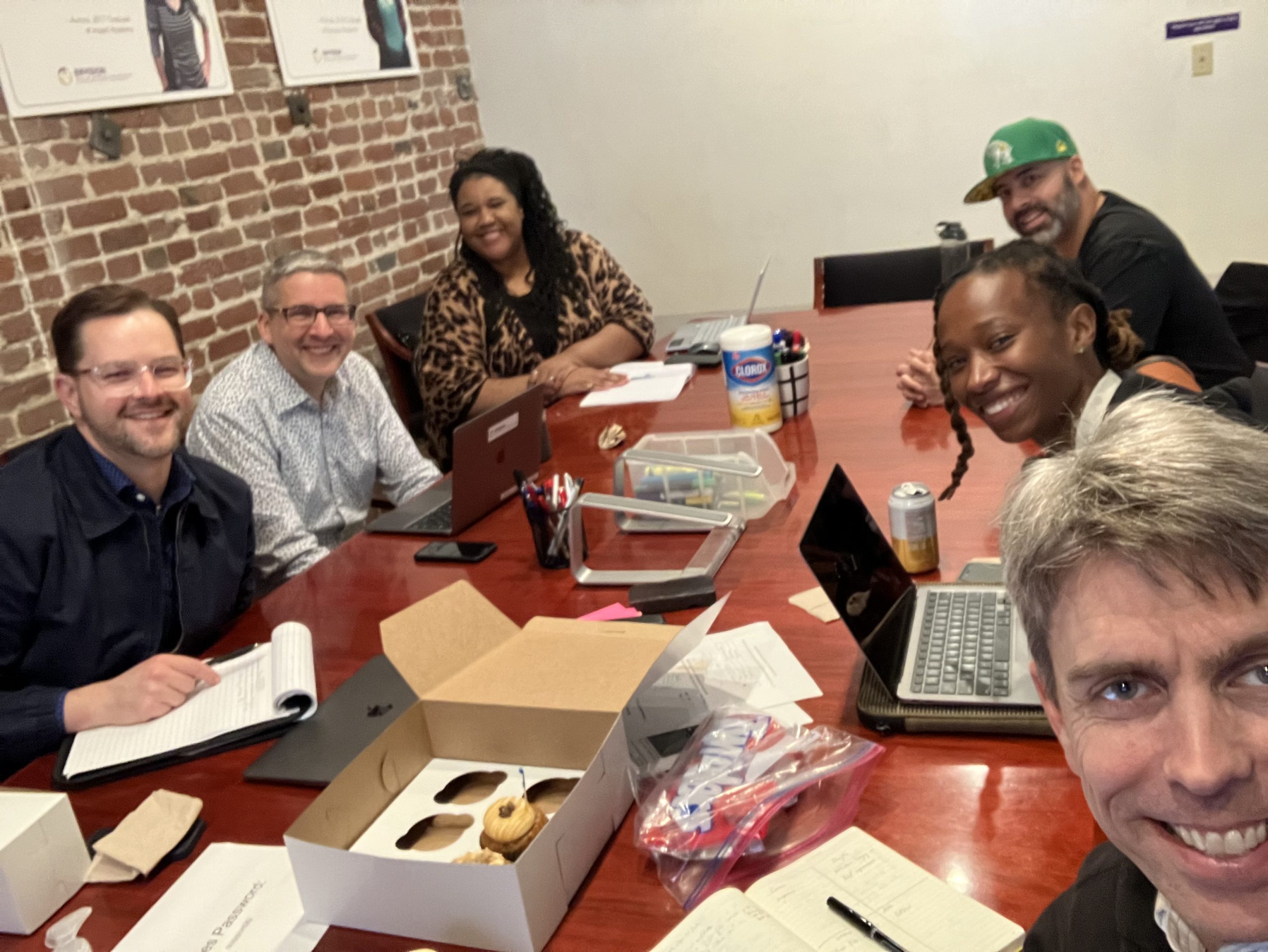
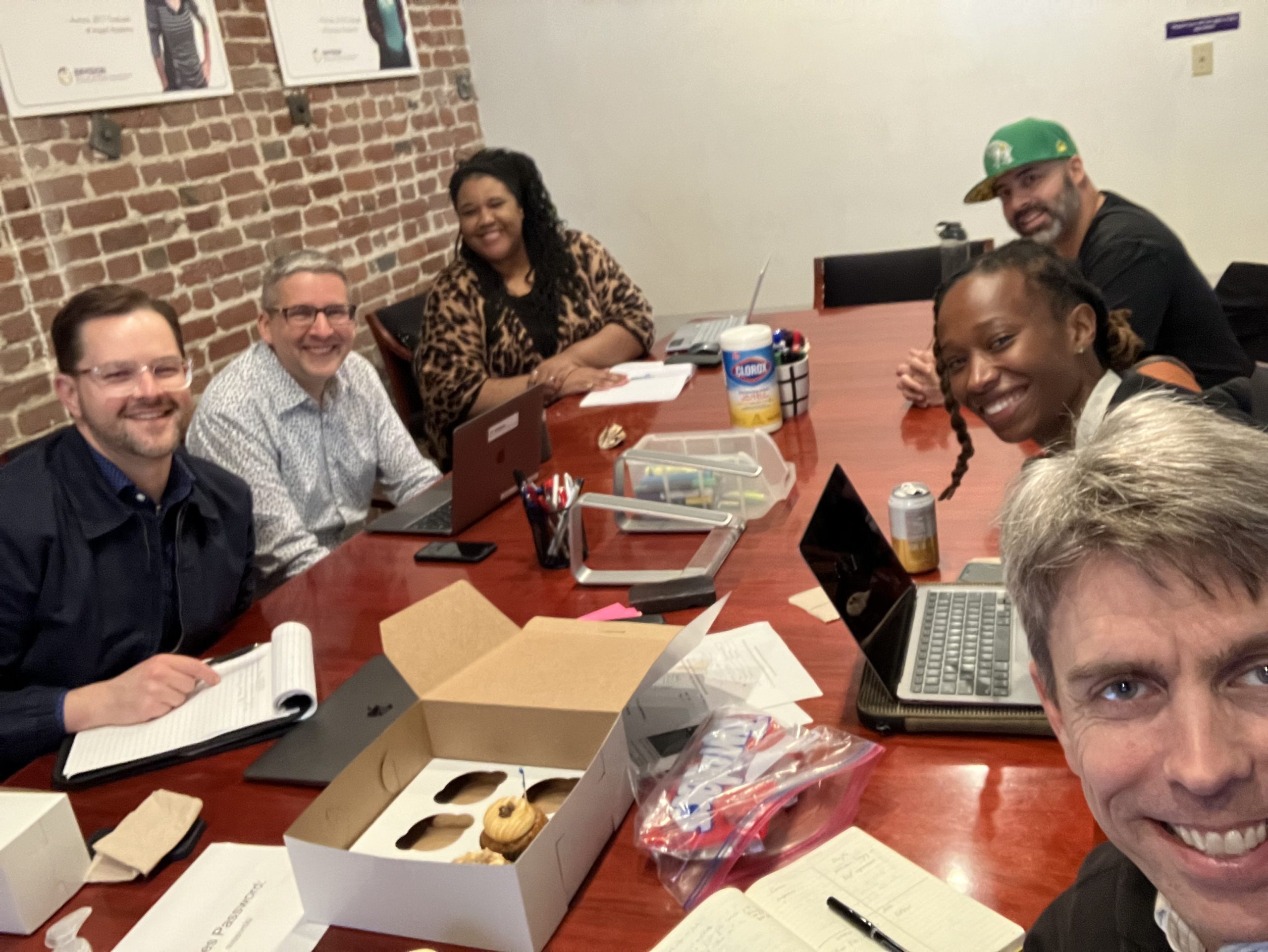
Some of the AFL Design Team in Oakland, CA

Second, there is designing to keep people separate, which is actually not a gathering, but could be a decision when you scope your desired outcomes. This may be a more efficient or cost effective strategy on the surface, but it depends on the type of experience you want to create and are honest about the costs of asking for engagement virtually or for people to work independently.

  • In the past month, I have had two sets of parents with driver-aged kids tell me that Driver’s Education used to be a right of passage and a coming of age experience that was about friendship and social interaction, as much as it was about driving (this was my personal experience as well). The new model however, is more cost effective and efficient, but it’s at home, alone and virtual. Obviously, there was a design decision there, one that prioritized cost and personal flexibility over the likely unintentional lost human connection that resulted from the old model.

The third option is the combination of being together physically (or virtually in some instances) but feeling or functionally remaining separate (in practice or mindset).

  • An example of this could be many of our experiences during plane travel. While, passengers share a four inch armrest, you are inarguably “in this together”, but unless one of passengers chooses to engage and open the communication channels, we exist separately.
  • This spring, I attended a very large conference where I knew only my team and a handful of other people. The event was housed in a large convention center which elicited a feeling of being separate and disconnected even when the conference attempted design decisions aimed at connection (i.e. a lounge space with arcade games and coffee, but was seemingly always empty).
  • This summer during a family reunion vacation, I looked outside and 12 of the 15 family members ranging in age from 11 to 76 (my kids are too young to have devices) were sitting on the patio in a circle all on their phones not speaking to one another. The group was physically present, but mentally somewhere else.

This year, I have attended well designed experiences that create human connection, a design principle I was looking for. This contributed to my growing awareness of how we conceive and design experiences for humans to gather and whether the true outcome is bringing people together and creating connection, keeping them separate, or bringing them together and still missing the opportunity to help attendees feel belonging, inclusion and connection.

It comes back to the foundational reality in decision making, design matters. I believe that in “our day and age” human connection also matters. If you want human connection, you need to design gatherings with this in mind, including the invitation, the space, the roles, and the schedule so people can find the time to connect. This is true for vacations, conference, book clubs or neighborhood block parties. We need to know who we are designing for, build trust in our communities to ask if we are effective, and realize that while it’s not efficient, sometimes being together and connected will help us as humans and leaders.

What can we do differently?

Below are some ideas on how to build additional human connections through gathering and being together. In addition to my experience at convenings this spring, I have also found some great resources to push my thinking and help my personal “aha” feel more rooted and connected to a larger community of people having a similar “aha” about what will help us as educators, community members, parents, and leaders.

CHALLENGE #1

The other day, I discovered an interview by the New York Times with Robert Putnam, author of numerous books including a favorite of mine, Bowling Alone and most recently The Upswing: How America Came Together a Century Ago and How We Can Do It Again. In the interview he shared how the structures or lack thereof that our culture employs deepen the feelings of loneliness and disconnection. The outcome of this disconnection impacts the level of separation we feel with “the other side” and he asserts that by involvement in community and civic groups we will learn about one another and build trust and connection. Even if we are opposites in our beliefs, if we are together and not separate, our future is more optimistic.

I recently dug into last year’s report by Surgeon General Dr. Vivek H. Murthy, Our Epidemic of Loneliness and Isolation 2023: The U.S. Surgeon General’s Advisory on the Healing Effects of Social Connection and Community which lays out the true implications on personal and societal health when we are more separate than together.

  • TAKE ACTION #1: Join something. Especially something local, in-person, and one that comes with a possibility of real human connection. And when you are there, be together even if it’s vulnerable. If you can’t find anything to join, start something and invite others. Be human together and give yourself permission to share your goals for what brought you there. If you are seeking togetherness, remind yourself of Robbie Novak and Brad Montague’s provocation in Kid President’s Guide to Being Awesome“put down your phone” and connect. That is unless you are getting someone’s digits or making a plan for your next meet-up.  

CHALLENGE #2

Putnam also references the level of politically-induced division and how it’s creating a lot of feelings on all sides. Decisions are made about who people are by what we think we know about them. In an effort to personally challenge my own mental models, leveraging tools and processes help.

Organizations like Starts With Us, which describes itself as “a movement to empower millions of Americans just like you — tired of our culture of contempt and energized to foster critical thinking and constructive communication across our lines of difference” can be great resources to locate and practice tools that help us build empathy, and as Putnam suggests, have conversations that build trust and human connection.

Leadership+Design, has taken on a similar cause by developing a human-centered curricular resource, Design For Election Season, to help school communities (both students and adults) practice the skills of being curious and developing empathy and understanding for someone who has a different lived experience or set of beliefs. The “container” for learning is political in nature (not partisan), but it’s rooted in the belief that as humans we need to spend time learning from and listening to one another. The resource shares tools and protocols to help structure that learning.  

  • TAKE ACTION #2: Think about your own echo chambers and be honest about the biases you have about people and their beliefs. Take time to challenge those assumptions and practice critical curiosity. Lean on tools and protocols like those above to be comfortable being uncomfortable.

CHALLENGE #3

On recent drives with my 8 year old son, we listen to the book The Anxious Generation: How the Great Rewiring of Childhood Is Causing an Epidemic of Mental Illness by Jonathan Haidt. The book focuses on the mental and physical health implications of technology use, specifically on young people. As I reflect on my own feelings about togetherness and separateness, and my time on the patio with my family, it relates to what we are willing to do about the changes we want.

A colleague at Leadership+Design reminded me that while I can only control myself (related to technology use), I can initiate a conversation about how I feel at that moment, share my reaction to being together, but separate. I could share my goals for our time together and enter into a conversion about what brought us all to the gathering. This is something in my control.

  • TAKE ACTION #3: Design with intention and communicate the intentions you have for an experience to those who are invited. If you want others to help you design, align your design principles towards the experience you want to have. If you are either someone who attends gatherings or plans them, you still have an opportunity to have an opinion. Think about what feels better, together or separate or together and still separate, and be part of the solution to improve the gatherings.

All of this to say, let’s do better. Assessment for Learning convening was a relatively small group of education leaders who prioritized designing for connection, but that was a choice we made. In contrast, it felt like my family vacation took a “wait and see” approach. We can also make choices starting with the patio conversations, the armrest airplane engagement and the commitment to looking across “the aisle” to build relationships and trust. We can continue to be told by the media, the Surgeon General, and Putman how bad things are when we don’t have a strong social fabric to care about and not fear one another. However, they and many others continue to remind us, it’s up to us whether we plan our lives, relationships, gatherings and organizations to simply happen or whether we design them to be catalysts for change and improved connection.

This month, Envision Education’s CEO, Gia Truong is our guest blogger, writing about our Portfolio Defense assessment model, it’s impact on students and the work we are doing collectively to improve it. We know that our model is transformative for some, but not yet for all and not consistently for the most marginalized. In order to truly serve our black and brown students, we must find ways to center their experiences and eliminate racist structures within our system, so that all students have access to transformative learning experiences. Read on to learn what we are doing…

Envision Schools’ mission is to transform the lives of students – especially those who will be the first in their families to graduate from college – by preparing them for success in college, career, and life. We accomplish our mission through our Portfolio Defense assessment model, which authentically measures the most important things students need in order to succeed in college and career. Portfolio Defense gives students the academic, social-emotional and leadership skills they need to get into college and persist. One of the biggest problems facing underserved students is educational inequity. Because of this inequity, poor students are far less likely to receive an education that will transform their life trajectory. We know that only 1 out of 10 low-income students earns a 4-year college degree by their mid-twenties, significantly limiting their income potential for their entire lives.

The signature practice of every Envision school is the Portfolio Defense. In 8th, 10th and 12th grades, every Envision student stands before a panel of teachers, peers, family and friends, and delivers a comprehensive presentation that demonstrates how and why they are ready for the next academic challenge. Every defense is both an authentic academic assessment and a celebration of what students have accomplished. The essential outcome of the model, above and beyond rigorous academic preparation, is the agency our students can develop: they graduate ready to take charge of their educational future and advocate for themselves on the path to receiving a college degree.

We also know that our model is not yet building that agency for enough of our students. It is transformative for some, but not yet for all and not consistently for the most marginalized. We know that in order to truly serve our black and brown students, we must find ways to center their experiences and eliminate racist structures within our system, so that all students have access to transformative learning experiences.

Last year, Envision Academy (EA), our Oakland California school’s 11th and 12th grade teachers observed that too many student defense presentations felt like pro forma exercises, lacking authentic student engagement and falling short of the potential of Portfolio Defense. They could see that the Defense — a model designed to empower students — was not working for enough of their students. EA teachers hypothesized that students would be far more engaged and their agency would increase if their identities as learners were more central and if the Defense process were more inclusive and culturally responsive. We hypothesize that with these improvements, students will be better prepared for college, less likely to confront imposter syndrome, and more likely to persist until they earn a degree.

As a result of the EA teachers’ inquiry, in 2018-19 Envision Academy changed the driving question of the Defense to one that asks each student to describe who they were, are, and want to be as a scholar, the kind of person they want to be, and the role of education in shaping their identity. The teachers also found ways for students to bring more of their culture and community into the process, including giving their presentations in their native language. As a result of these changes, other aspects of model changed as well: the senior Advisory curriculum shifted to focus on the Identity Statement, with significant time dedicated to writing and revising; new strategies were put in place to align the Identity Statement with each students’ portfolio of academic artifacts; teachers developed tighter frameworks for assessing projects and calibrated with each other to ensure consistency. These changes led to stronger, more personal defense presentations, richer connections to academic content, and clearer reflections from students about their identities, their goals for the future, and their awareness about their areas of growth.

The improvements we have piloted at EA have already had a strong, positive impact on students. In the words of one graduate: “I was able to express more about myself and my passions in my defense presentation, especially where we explained who we are, who we used to be, and who we want to be. That was very powerful because the presentation wasn’t just academic but also about the student and their goals; it felt more authentic.” Teachers also noticed important changes: “I’ve always thought Portfolio Defense was amazing, but last year was just incredible. The new process really put our students at the center. It was rewarding to see them, in the 2019 presentations, be more engaged and invested; presentations were more personal, and so many more of them presented like scholars. That’s how I know these changes have made a huge difference.”

Anecdotally, these quotes represent what we know is possible: with a more student-centered Portfolio Defense system, our students will be more invested in their education, they will actively develop a scholar-warrior identity, and they will be more prepared to meet the challenges of college and persist through them. With a college degree, they will be positioned to change the economic trajectory of their lives. As these students gain financial autonomy, they can break the cycle of generational poverty, positively impacting the individual student, their families, and their communities more broadly.

In community,

-Gia

Click here for more information about Envision Schools.

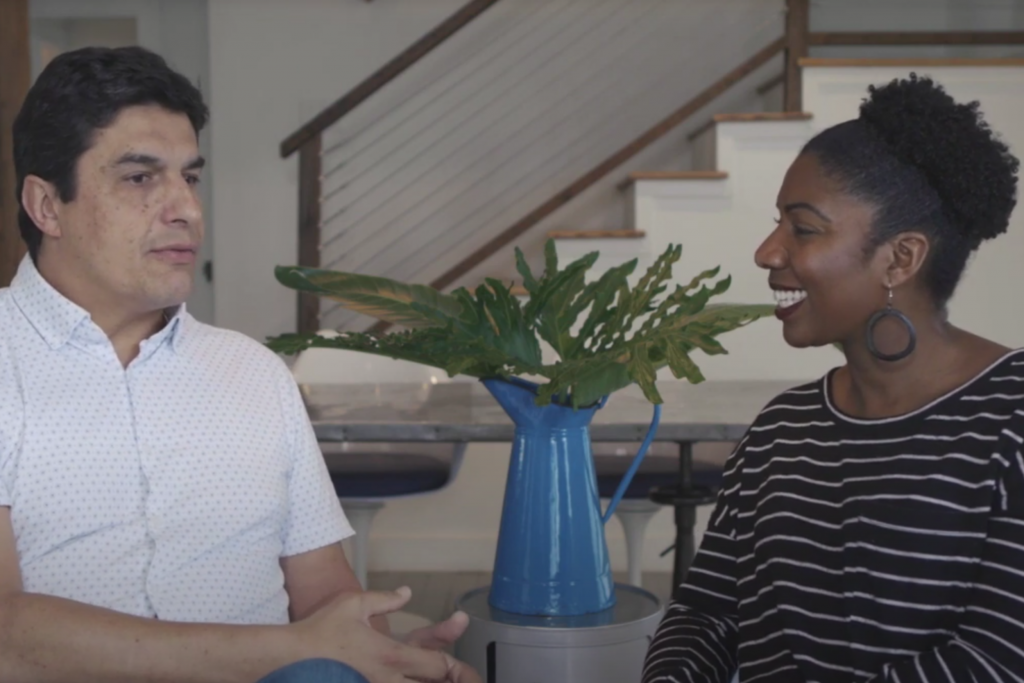
In this special Guest Blog Video Interview, Assessment Design Partner, Josette Neal-De-Stanton, interviews her very own brother, Rene Neal-De-Stanton.

Rene is currently a science teacher byway of nursing school with a background in entertainment and dance.

They discuss the importance of project-based learning in science and dive into the importance of representation and equity in the classroom.

My career began volunteering at an elementary school in Washington, DC in 2001. As a staff member walked me to my assigned classroom, I noticed a room tucked away in the corner. There were only a few students in the space. Some students were wandering around, some were disengaged, some sleeping, and others were sitting at tables coloring or tracing the alphabet. There were multiple adults in the room, mostly talking and laughing but not really paying much attention to the students. Growing up, I attended the same school as my uncle, who had Down Syndrome. I recognized that room. I knew exactly who that room was for. It was the place where special education students were “contained”. That was the moment I decided to become a special education teacher. I’ve been committed to this work ever since.

Admittedly, we’ve learned a lot since 2001. The Individuals with Disabilities Education Act (IDEA)1 held all schools and/or districts accountable for ensuring that students with disabilities received a Free and Appropriate Public Education (FAPE). Shortly thereafter, came the revival (originally introduced around 1994) of Inclusive Education. Educational researchers soon learned that students with disabilities had better academic outcomes in classrooms where they were included with non-disabled peers. The research also found that inclusion positively impacted all students in the classroom (National Center for Education Restructuring and Inclusion, 1995.) Based on this research and with the revision of IDEA 2004, schools began to adopt Inclusive Education as the pillar of serving all students in the educational environment.

The world of special education shifted. Students with disabilities were no longer excluded from the general education classroom and everyone felt as though true progress had been made. We lived in this fantasy for a while. Students with disabilities were no longer being served under the “separate but equal” approach. Everyone began to settle into the idea that including all students in the same classroom had less of a negative impact than was previously thought. Students without disabilities were still thriving (relatively speaking) and students with disabilities (and their families) were happy. As time progressed, challenges began to arise. Schools began to experience significant rates of disproportionality among certain racial and ethnic groups entering into Special Education. These same students were often being disciplined and/or suspended at a higher rate, placed in more restrictive learning environments, and were not meeting academic expectations. Schools began to wonder if Inclusive Education was the answer to serving all students. This is where educators began to ask questions:

  • What does an effective inclusive classroom look like? Are there models?
  • Were we ever fully prepared for this inclusive transition ?
  • Do students with disabilities really have what they need?
  • Are all educators trained appropriately?
  • What about funding? Don’t we need more money?
  • What efforts have been made to ensure that we are centering the needs of students with disabilities (and diverse learners in general) within an inclusive environment?
  • Why are they still being suspended at higher rates than their non-disabled peers
  • The research says this works so, why isn’t it working?

Inclusive Education takes an immense amount of preparation and planning. It requires a team of educators who believe that all students can achieve, no excuses. It means that all systems are universally designed with the most vulnerable populations in mind. Inclusive Education means that everyone has the strategies, tools, and training necessary to deliver high quality instruction to all students. It means modeling structures during professional development, co-planning and co-teaching. It means using The UDL Guidelines to support curriculum design, unit, and lesson planning. Inclusive Education means every stakeholder has a voice that isn’t only heard but represented in the work. Most importantly, Inclusive Education means that all of our students are thriving and operating in their full genius.

Take a look at the data. Literally, pause and google “How effective is Inclusive Education?” or whatever variation of the phrase you’d like. In 30 seconds, you’ll find that Inclusive Education does work. There are some good examples of this AND that students with disabilities aren’t doing much better now than they were in 1994, or 2001, or even in 2023. Some educators like to attribute this to the pandemic but let’s be honest, the same issues were present before. We can no longer continue to ignore the fact that our infrastructure, our systems, and even our preparation programs were not designed to support students with disabilities or diverse learners. I know everyone is busy, I know everyone is exhausted. I know funding is an issue. I know COVID threw us all for a loop. I also know that not all of our students have what they need to be successful. In full transparency, I know since the inception of Inclusive Education, things actually haven’t gotten all that better, and so do you. With that being said, let me ask you some questions: What can we do to shift the data? What can we do to change the narrative? How can we center students with disabilities and diverse learning styles in the planning process, in our classrooms, in our staff development, and in our schools? What actionable steps have we taken since 1994?

No more excuses. Inclusive Education works when we work it. Even though our students are in Inclusive environments, the data says they are struggling academically, behaviorally, and emotionally. It’s time to shift.

Here is my CALL TO ACTION:

  • Do Your Research. You don’t have to be a credentialed special education teacher to find strategies of support that work. You don’t have to know everything. We all have a responsibility to all students regardless of what we teach, where we work, or how much time we have. You can find trainings, read books, start conversations, visit schools who are successful, review the resources on the CAST website (lots of good stuff here), and/or reflect on your personal practices.
  • Collaborate: Make space and time for all educators to inclusively plan together. We can learn a lot from collaboration. It is time for us to maximize our collective brilliance. In order to sustain ourselves in this work, we must not operate in silos. We need students, families, teachers, administrators, and district leaders to be in community with one another. There is an African proverb that says “ If you want to go fast, go alone. If you want to go far, go together.”
  • Innovate: The reality is schools are overcrowded and under-resourced. We all know that educators are overworked and underpaid. There are a million reasons why we can’t invest more in inclusive practices. I’m asking you to focus, just for a moment on the millions of reasons why we can. What can be done differently? What can we shift? How can we redesign and/or restructure with the “Curb Cut Effect” in mind? Be creative, think outside the box, color outside of the lines.

Let’s reconnect, re-engage, re-introduce, re-commit, and re-establish ourselves, our systems and all stakeholders. Our students deserve better. We can do better. Let’s just start, no more excuses.

Roilyn Graves is Envision Education’s Director of Special Education.

Note: All resources and research are linked.

From a professional standpoint, I was the Principal of the first International Baccalaureate French dual language public school in the country. I have seen how a graduate le arner profile empowers a community of diverse learners and how performance assessments make room for self-discovery. The work of Envision is aligned to my values as an educator and leader.

To be deeply understood and valued for who we really are is a basic human need. It is also unmistakably a privilege. It is a privilege because not everyone can trust that their whole selves will be tolerated in all spaces. It is a cultural loss.  The impact is a ripple effect; we stop bringing the best of ourselves into spaces where difference is not well received. It is a missed opportunity to learn from one another and to consider the solutions created from divergent ways of thinking.

Growing up, I watched my black father from the south navigate different spaces. He fought his way through college with no plan and no support. Fumbling through life, he hid who he was to survive. He hid his childhood, the poverty, the abuse, the foster care, and the pain that lingers when mental health goes untreated and leads to starvation and death.  He was a brilliant man and I am not sure how many people knew that.  He was a shadow.

I think a lot about what it means to be a black woman, an educator, a leader, a good sister and daughter. I think about what experiences our young people and families deserve to ensure that they are both seen and heard. I think about what it means to be a disrupter of cultural norms and practices that have historically oppressed groups of people who have not experienced being deeply understood and cared for.

As the incoming CEO of Envision Education, I have a deep sense of pride in the work of Envision Learning Partners (ELP) and the number of students who are impacted by thoughtful collaboration with smart educators across the country.  ELP is about establishing learning opportunities for young people to be deeply understood and appreciated for how they learn and share with the world. The development and execution of performance assessments is equity based learning because it requires expansion of knowledge and exploration with people who carry different perspectives and experiences. It provides opportunities for young people to be seen, heard, and celebrated. It empowers independent thought and dismantles practice where authenticity is for some not all.

I believe in our collective work as educators and the power of unity. Together we can move students from the shadows and into the light where all students can and will thrive.

Get to know Jillian more in the June ELP Lounge, RSVP here.

Guest Blog: Kina Evans, Bully Talk

Impact Academy alum, Kina Evans, shares how her time at Impact shaped her path from student to educator and now CEO. Walking the halls of Impact Academy, Kina learned not just academics, but how to find her voice, lead with confidence, and envision a future bigger than herself. After earning her master’s degree and teaching for six years, she founded Bully Talk Inc., a nonprofit dedicated to empowering youth and transforming school culture. In her ELP Guest Blog, Kina reflects on how Impact Academy’s lessons continue to guide her work as a leader, advocate, and change maker.

From Student to CEO: How Impact Academy Shaped My Path

Walking through the halls of Impact Academy in Hayward, CA was where my journey truly began. As a student, I didn’t just learn academics—I learned how to find my voice, lead with confidence, and envision a future bigger than myself. Those experiences planted the seeds for everything that would come after graduation.

After Impact, I pursued higher education and proudly earned my master’s degree. One of my proudest moments came when I was invited to appear on The Jennifer Hudson Show, where I was able to share my story and the mission behind my work. It was a reminder that the impact of our voices can carry far beyond the classroom.

For six years, I poured my heart into teaching, working directly with students and families every day. Teaching was more than a job—it was a calling, and it gave me the foundation to see where my true purpose was leading me. Eventually, I made the decision to transition into substitute teaching so I could dedicate more of my time and energy to building Bully Talk Inc., the nonprofit I founded to empower
youth, transform school culture, and create safe spaces for students everywhere.

Looking back, I can see just how much Impact Academy changed my life. From the lessons I learned as a teenager to the resilience and drive I carry today, Impact has been a thread running through every step of my journey. It helped shape not just who I was then, but who I am now—a leader, an advocate, and someone committed to making a difference in the lives of others.

By Michael Viera, Envision Education’s College and Career Pathways Manager

Several years ago the city of Oakland came together to support college and career programming for high schoolers, by advancing and deepening career pathways in alignment with the Linked Learning Alliance standards and methodology. The Linked Learning Alliance hosts an annual conference where educators share best practices and takeaways from school sites around the state. Oakland schools always show out in big numbers at the conference, but this year it took place in downtown Oakland, so the presence was even greater.

I had been to the conference previously, but this time was different. Being my 3rd year at Envision in this role, I felt like I finally understood what it was all about. I had colleagues from Envision Learning Partners in attendance and collaborating with me. I got to connect with colleagues from other Oakland schools. I knew what to look for and who to listen to in order to improve our programming at Envision Academy and across the Envision network.

The conference was motivating, to say the least. It is a breath of fresh air being in rooms of educators who are excited and realistic about their work in schools, and who understand the skills students need to have success in their futures.

I came back from the conference and immediately organized Envision Academy’s first job fair since COVID. We had twelve community partners visit our campus to share information with students on internship opportunities, after school and summer programs, and community resources. Students seemed excited about these experiences that they can be a part of outside of their regular curriculum.

At the end of the event, two students stayed back and pulled me aside. I thought something bad had happened. Instead, one of them simply said, “Mr. Viera, we just wanted to thank you for putting together this event. It’s really inspiring to see all these opportunities we didn’t know about until now.”

After a couple of weeks of back and forth emails and phone calls with partners, planning meetings with administration, and quite literally running around setting up tables and chairs on the day of the event, those students made it all worth it. When students are able to take their learning outside of school walls and make connections with their community, they feel seen and they thrive.

Hear from Michael and ELP Assessment Design Partner, Josette Neal-De-Stanton on their takeaways from the Linked Learning Conference.

We are honored to introduce Michelle Molitor, Executive Director of The Equity Lab.  Their equity work began as a response to the urgent need for culturally responsive systemic change for our most vulnerable students. Ms. Molitor has partnered with and led work alongside several national and regional education agencies and works directly with organizations across the education ecosystem, including the Department of Education, philanthropic groups, district offices, schools, and education-facing nonprofits. Michelle wrote this piece in partnership with Nicole Young.

The Kids Are Not Alright… Michelle Molitor and Nicole Young

Even the kids are feeling it. 

You can see it in the weary, glazed-over looks of your friends’ children on Instagram. Or in the hilarious quotes parents post about homeschooling on Twitter. Children, too, are tired of sitting in the house each day looking at their siblings, learning from their parents and their disembodied electronic teachers, and being unable to see their friends.

A friend recently posted about her four-year-old’s utter meltdown when she bombed their house for ants. He was devastated that she’d destroyed the only friends who had come to visit in weeks.

We’ve talked a lot about mental health during this pandemic, but we are often talking about adults. Kids, we assume, are resilient and much more adaptable than ourselves; we’ve decided they will be just fine. But children are feeling the same immeasurable strain adults are. 

We are communal mammals, and our brains are not designed for social isolation. It’s difficult to parse the cascading grief we’re feeling at the loss of loved ones, time with friends, activities we enjoy, or income — even as adults. How much more onerous must it be for children, who face the same realities with less insight into what is causing them? 

Some of the most accessible and cost effective mental health options for children in America are delivered through our schools. And when schools shut down, a lifeline for children in desperate need of counseling and support all but collapses

In the COVID-19 world, we need to think differently about how we provide for the whole child. As traditional schooling changes, it is imperative that we consider how to support children with trauma, kids whose homes may not be safe, and queer and trans kids navigating their identities in hostile environments. 

When we assume children are fine, that they are in less need of mental or spiritual support than ourselves, we are tacitly asking them to sublimate a portion of who they are. In doing so, we limit their complexity, ignore their needs, and most alarmingly, ask them to flatten themselves so that we can believe they are all right. 

Grounding in History

There is a violent legacy of assimilation in American schooling. Throughout our nation’s history, the most vulnerable students have been rounded up, tracked, beaten, and punished for being who they are.

In 1824, then Secretary of War John C. Calhoun created the Bureau of Indian Affairs, an office in the U.S. Department of the Interior that was tasked with “civilizing” and controlling Indigenous and Native American tribes across the country. 

In addition to forced displacement and brutal subjugation, the Bureau of Indian Affairs also oversaw the creation of “Indian boarding schools.” These schools, which operated for more than 100 years (from 1860 to 1978), were specifically designed to force the assimilation of Indian children to white culture and the English language. 

Indigenous children were taken from their homes, often without their parents’ consent, and sent to live in these boarding schools. Their hair was cut and their clothes were burned, they were beaten for using their native languages, they were often abused by their caretakers, they were forced to practice Christianity, and their cultural and familial ties were severed. 

In 1892, Richard H. Pratt, the man who established the Carlisle Indian School in Pennsylvania, famously delivered his “Kill the Indian, and Save the Man” speech. Indians were, in Pratt’s opinion, only worth saving if they could be Americanized. Every part of their Indian identity and culture was savagery that must be stripped away. His was the prevailing thought driving American policy and law through the turn of the 20th century and until the Indian Child Welfare Act was passed into federal law in 1978. 

Even as John Dewey’s research was leading a national discussion about educating the whole child, Indigenous and Native American children were enduring an educational system that viewed their cultural identity as a scourge to be erased. 

Listening to Those Most Impacted

By 1978, generations of Indigenous children had been forcibly assimilated through schools. In their own chilling accounts, survivors of this trauma recount the voicelessness that permeated their experience; they were unable to speak their own native tongues and unable to voice dissent in the language that was forced upon them. 

Are we listening to our students when they tell us what they need today? As children fight to stay engaged on laptops all day or dissolve into tears over dead ants, do we hear them? 

A global pandemic, we’re learning, affects everyone — in ways large and small. And instead of insisting children put on a bright face in the midst of such global uncertainty, it is incumbent upon us as educators, parents, and community members to ask them what they need to feel supported.  
For children who are struggling in homes where their identities are under attack, this is even more important. How do we make room in our thinking, and eventually in our policy making, to prioritize the voices of LGTBQ students, students facing abuse, or those struggling with trauma and depression? 

COVID-19 has cracked wide open the deficiencies in our education system. But as we reconfigure the system to support adult needs, are we listening to young people? 

Advocate for Radical Change

We see echoes of the Indian boarding schools’ philosophies in our classrooms and schools today. Students are asked to leave their identities at the school door. Black, Latinx, poor, and immigrant parents are seen as nuisances rather than co-designers in their children’s education. 

However, students do not come to school as empty vessels waiting to be filled. Instead, they come full of incredible strengths and their own individual stories. To make radical change in this area would be to create an education system that encourages children to lean into their identities and genius, rather than stifling them for adult comfort. 

We will only see a radical shift in American education when we begin to devalue compliance and assimilation. As much as children need structure, they also deserve an education that is compassionate and treats them as the whole people they are. 

If we reimagine an educational system that serves the whole child, parents, families, students, and educators must be equal partners in defining its purpose and leading its design. For vulnerable students, those facing abuse or those whose families would punish them for being LGBTQ, a holistic model must address the realities they face when they get home. 

Ultimately, radical change means investing in the whole child being able to heal and thrive. 

Build and Iterate

Assimilation is a tool, wielded by a racist, homophobic, sexist, and capitalist society to quell difference. Its dominance in our education system means that we are stifling children and actively ignoring their needs as physical, mental, and spiritual beings. But if such an oppressive system is designed, it can be redesigned

This requires recreating an education system with the needs of the most marginalized children at the center. This necessitates adults mobilizing in support of children — not on their behalf. And it demands a different orientation to the many facets of childhood in a rapidly changing world. 

Want to Learn More? 

Watch Unseen Tears: The Native American Boarding School Experience in Western New York

OR 

Read Moving Equity Work Toward Action in the Age of Covid-19

A Parent’s Reflection on the Driver’s Test Analogy

Here at Envision, we frequently use the Driver’s License Test analogy to talk about Performance Assessment: it is a clear and familiar example of showing you are ready for a momentous next step by demonstrating what you are able to do (drive) with what you know (driving rules and regulations).

As a mom, I recently had a chance to consider this analogy from a distinct vantage point: the passenger seat. Helping my daughter learn to drive has given me the opportunity to expand on this beloved Envision metaphor with some key observations related to Performance Assessment.  

First, it can be abjectly terrifying to drive with an “emerging” driver.  In Lola’s first few forays on the road, I had several white-knuckle experiences that will be familiar to any parent of teens. I had multiple visions of catastrophe. I may have screamed a couple of times. And I realized it was the loss of control that really unsettled me. It is daunting to realize there is NO OTHER WAY for your child to learn how to drive except by LETTING GO OF CONTROL. It dawned on me that it must also be hard for teachers to let go of control in the classroom. Of course, classroom performance assessment does not pose the threat of bodily harm the way hurtling over the Bay Bridge on my daughter’s maiden voyage did. But I found it interesting that I struggled to give up control even though I knew she was ready for this important step. I struggled in safer situations too—complete with pressing on the non-existent, passenger side brake—and sometimes found it hard to articulate instructions. It made me curious about how teachers confront and manage this struggle. 

Secondly, teacher-student relationships really do make a difference in student success. Lola took the test twice: she failed the first time. The first instructor was dour, unfriendly, and impatient. According to Lola, she gave the directions (turn left, turn right) with very little time between instruction and execution. She wasn’t receptive to clarifying questions. She did not smile. Two weeks later and the difference could not have been more stark: the second instructor was friendly and engaging, immediately introducing herself to both of us. After the successful test, Lola was effusive about how different this second experience was. This instructor took the time to give Lola a friendly overview of what the test would be like. When she noticed Lola was nervous, she offered suggestions for how to relax a little bit. For Lola, having the instructor see and acknowledge her anxiety helped enormously. Out on the road, when Lola made some small mistakes, the instructor said things like “this is a mistake I make sometimes too, so just keep in mind xyz…”. She also gave directions clearly, with time for Lola to execute on them, and was patient with questions. With that kind of assessor in the seat next to her, Lola was able to drive the way she knew how, and of course she passed.

In the days since Lola has been whizzing around the Bay Area on her own, I have thought often about this woman, her skill at her job, and the way she helped my daughter. It strikes me that performance assessment, at its best, is about not only challenging the learner but also creating conditions for her success. And I’m once again grateful for teachers who are practiced in the art of both supporting students and letting them truly show what they know and are capable of.

For more of Monica’s “parent perspective,” check out this 2018 post in EdWeek: The Gift of Portfolio Defense.

Morgan Vien writes about ELP’s work with Alliance College-Ready Public Schools

ELP and Alliance kicked off our partnership in the 2018-19 school year. In our first year we worked together to deeply engage around building a graduate profile. In 2019-20, we have been engaged with the Alliance team to develop a vertical articulation of the graduate profile with the intention of using that vertical articulation as a tool for a few things:

  1. Make the graduate profile accessible across all grade levels and contexts for instruction and whole student support, and to be able to align their model, too.
  2. Use it as a way to continue to engage their stakeholders and to scale their graduate profile work.

What are some of the enabling conditions that allow Alliance to be great partners with ELP?

  • Alliance leadership has had conversations about the power of a graduate profile and that it was born based on this movement to not only get kids into college but to ensure kids have the soft and hard skills to get through college as well. Because of that, there’s an established value set within the leadership, home office, principals and micro-communities of these hard and soft skills and desire to codify measures for all of those.
  • Alliance’s leadership in the Home Office have a deep sense of equity, high expectations for students, a clear expectation of that change management looks like on the leadership level, a deep respect for school leadership, and a real want to do it well and to get real buy-in. Finally, a real understanding that this work is complex, that it takes a human to hold the work and to orchestrate that and that they can truly have design teams doing the work and have teachers being the faces of this work.
  • Thoughtful, intentional choices around how to roll out the work, who does it and a clear value in the resources behind the movement for their graduate profile.
  • The Alliance team is really committed to what they do, and are also coachable – tight on criteria and loose on pathway.
  • Alliance has a dedicated person directly holding the work, tight attention to process and product, and collective ownership of the work.
  • Alliance has a strong culture for quality of engagement and quality of work leading to a commitment to being timely, thorough and intentional with what they are doing.

ELP Executive Director, Justin Wells, with the Alliance team.

ELP looks forward to our continued partnership with Alliance!

For more information about Alliance, click here to see their Partner Profile.

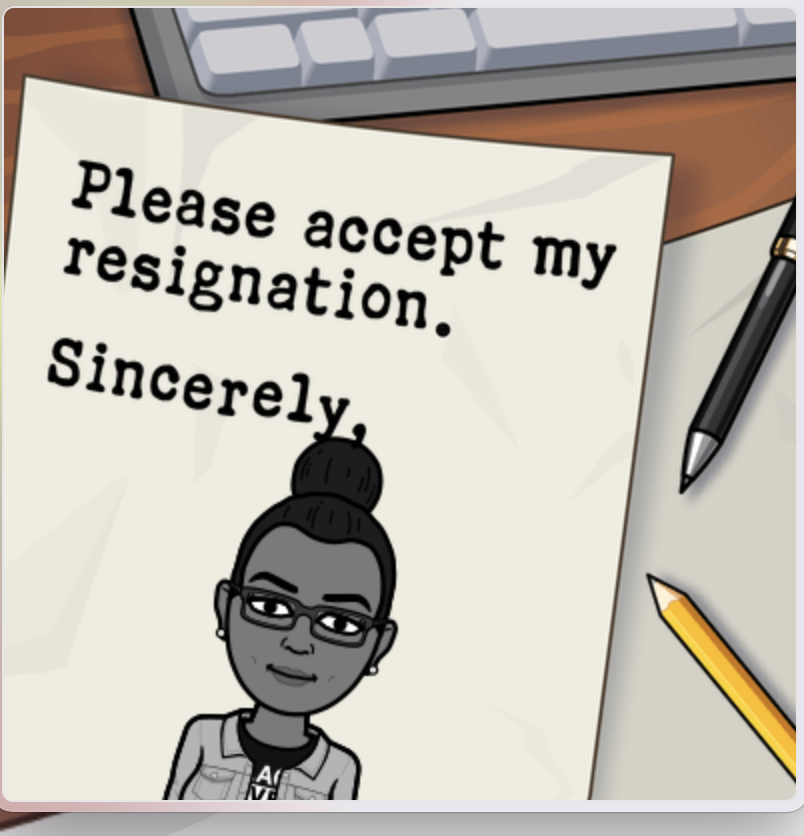
NO RESIGNATIONS ALLOWED

By Dr. Sabrina “Bri” Moore

  • Founder of 3Ls: Literacy, Leadership & Liberation 
  • Program Director Systemic Instructional Review Alameda County Office of Education 
  • Oakland Native: Former OUSD Student, Teacher and Principal

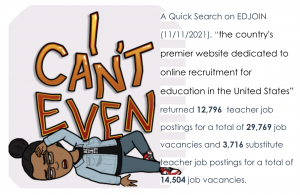
As a former student, teacher and principal and current director in education, I have a question. Am I the only one wondering how THE GREAT RESIGNATION will impact an already exacerbated teacher shortage? If I am alone in this wondering, please do not keep reading. If, however, like me, you’ve seen the statistics that say over 4 million and growing individuals have decided to leave their jobs for greener pastures and you remember what it was like when you or someone you know became an overnight homeschool educator; then you’re still reading. 

According to Jill Tucker of the S.F. Chronicle, the pandemic ushered in unprecedented numbers of teachers retiring from the profession, “a survey found that 62% of [retired teachers] … decided to retire earlier than they had planned to.” This blog post is my meager attempt to plead with and support all teachers and educators to stay in your job; whatever you do, do not resign. You are needed and greatly appreciated. Nothing about teaching and leading is schools has ever been simple or easy. In fact after the last few years we have had, I can say with certainty, I am not alone in my belief that teaching and leading in schools is not for the faint of heart. Daily educators wear the hats of many as they impart knowledge and provide conditions that support student learning and social emotional wellbeing; sometimes without consideration of their own. Compound this with wearing masks, staying safe and contact tracing and, I too am at a loss for words.   

All that being said, educators, school folx, the people who show up for our young people each day, to you, I have a few words of wisdom for your own learning and social emotional wellbeing; do all of this and when you return in the Fall you have my word that the students you love and learning that follows good teaching will be there waiting. 

The words of wisdom I will share are as follows:

  • Pause to remember “your” why. Why did you become a teacher / educator / champion of students? (Make a list.) 
  • Pause, take the break you need, with the holidays approaching what type of rest do you need? Are you like me and want to just read a good book and listen to your family argue about nothing or maybe a completely quiet space for reflection. 
  • Pause and think about all of the wins this year; what’s going well? What has brought you joy that you can build on?

If none of that works for you, fill in the blank. Pause __________________. What any therapist, counselor or coach will tell you is before making a decision that will impact your life in ever rippling ways and in the case of school educators the lives of so many others you should Pause

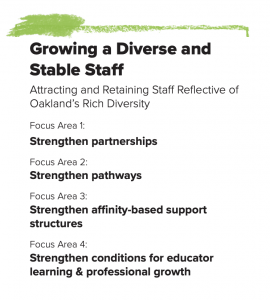
Pausing is not what we are best known for in Oakland. We [as an Oakland native I feel like I can speak for the we of us] are known for leading out on the latest and greatest campaign, initiative, change, challenge or charge for social justice, civil rights, advocacy and action. We are not however known for the EPIC PAUSE. Yes I  just made that up but, stay with me. I’m starting a new campaign for all educators and if you are not an educator (which is debatable; we all are in some way) you too. Until the FALL of 2022 let’s commit to the EPIC PAUSE. The epic pause is the moment we take to think deeply about our why, ask great questions, remember what it was like before the Covid-19 Crisis and what it could be like if we all banded together to build the diverse and stable staff called out in the Oakland Unified School District’s strategic plan.

If you all commit to that, my team and I at 3Ls will commit our work, life, passion and energy to the mission of 3Ls: Literacy, Leadership and Liberation. Where we offer a “whole child” full-service community model for alternative literacy opportunities to educate and empower students, families, community members and educators, led by people within the community itself, to break cycles of illiteracy and generational poverty one neighborhood at a time. We promise to show up everyday so that every student can read, every school we serve receive quality coaching and professional development leading to better literacy, leadership and liberatory ways of being for all.

Dr. Sabrina “Bri” Moore

3Ls: Literacy, Leadership & Liberation

510-685-1329

bri@leadliberated.org

https://www.3lstheacademy.org

Follow us: 3Ls on Social Media

Facebook, Twitter, LinkedIn & Instagram

Bri is also an alumni of ELP’s Deeper Learning Leadership Forum.

Challenge Success-Stanford Survey of School Experiences, our student experience survey with dozens of school teams each year. While the survey covers many topics within student well-being, engagement, and belonging, one of the key metrics we discuss with schools is stress. Across hundreds of thousands of responses and 10 years, assessments, tests, and grades are consistently some of the top sources of stress for middle and high school students.

Productive Stress vs. Unhealthy Stress

Experiencing stress is not negative in and of itself. In fact, learning how to adapt to productive stressors such as a difficult subject or strenuous exercise is how we grow and develop. However, the stress students feel from assessments is too often an unhealthy form of stress. Traditional summative assessments, typically tests and quizzes, are clearly linked in students’ minds to grades, transcripts, and the post-secondary stakes associated with them. In this context, assessment can become a source of fear, anxiety, and dread. Some students respond to this stress by plowing hours of time studying and preparing at the expense of their sleep and other activities, while others might shut down, procrastinate, or resort to last-minute cramming. These strategies might help them score well, but don’t do much for long term learning.

Schools are in a challenging position because they are responsible for promoting student engagement, well-being, and belonging while also preparing them for post-secondary admissions and learning in the higher education system.

How can schools help students engage in rigorous, transferable learning in ways that help navigate this tension?

One promising path is to take a clear eyed look at assessment practices. When schools make time to consider why and how they assess, who their assessments are for, and ultimately what they want their assessments to look like, they often express a desire to make assessment to feel authentic and personally meaningful. They want assessments that inspire effort and growth, that demonstrate high levels of learning and a depth of understanding, and most of all that feel meaningful and important to their students.  

In other words, they want more performance assessment.  

Performance assessments are tasks where students apply their knowledge and skills to solve real problems, create authentic products, or demonstrate mastery in contexts that mirror professional or real-world situations. Think science experiments designed to solve local environmental problems, history projects creating museum exhibits, or math challenges proposing a redesign of a public park.

While talk of performance assessment often centers around all the ways it is a superior measure of complex, transferable skills, what I want to lift up here is how performance assessment done well is also a major lever for students’ overall well-being, engagement, and belonging.

Better for Well-Being: From Uncertainty to Productive Pressure

One of the biggest stressors for students is the uncertainty surrounding traditional assessments. They worry about what will be on the test, whether they studied the right material, and how their performance will impact their grades. This anxiety is not just about the difficulty of the work—it’s about the unpredictability of the assessment itself.

Performance assessments help eliminate this unnecessary stress by making expectations clear. During high quality performance assessments, students receive rubrics, exemplars, checklists, and guides that outline exactly what success looks like. With excellence made clear, instead of wondering “Will this be on the test?” students can instead start asking “How can I make my work stronger?” There’s still pressure to perform, but it’s a productive pressure, the kind that pushes students to pursue their best rather than paralyzing them with fear.

Additionally, traditional assessments often take a “stop and measure” approach, where the assessment feels like a separate event from the learning.  This disconnection positions assessment as an, often high-stakes, judgment rather than part of the learning process. With performance assessments, students have the opportunity to learn through the assessment itself. They reflect on their work, receive feedback, and have opportunities to improve as they work towards a final product. The standards for quality remain high, but the process of pursuing those standards nurtures effort through emphasis on quality, revision, and growth rather than relying on high stakes for high, stressful effort.

Better for Engagement: From “Doing School” to Full Engagement

A common complaint from students is that schoolwork feels meaningless. They don’t see how what they’re doing in class connects to the world outside school or their future goals. In our Challenge Success Survey data, our most consistent finding is that students are mostly “doing school” when it comes to their engagement. They are working hard, paying attention, and turning in assignments, but they don’t have a strong sense of purpose, let alone interest in their work. Traditional assessments reinforce this disconnect, as they often emphasize memorization and rote recall rather than deep understanding and application.

Performance assessments change this dynamic by making learning more relevant. Instead of filling out study sheets to prepare for taking multiple-choice tests, students can be asked to tackle complex projects, solve real-world problems, and create authentic artifacts that mimic the kind of work professionals do. When students see that their work has real-world applications, they are more likely to find it meaningful and stay engaged.

Another key component of performance assessments is choice. Students have more agency in how they demonstrate their learning, whether that means choosing different materials, exploring unique lines of inquiry, or deciding how to present their findings. This autonomy increases motivation and makes learning more enjoyable. Plus, when students are able to tap into their strengths in their particular approach to the task, the assessment becomes more personally meaningful and enjoyable.

Better for Belonging: From One-Size-Fits-All to Each Voice Matters

Belonging is a crucial element of a healthy school experience, and performance assessments can play a major role in building a strong classroom community and individual excellence.

Belonging starts with connection, and performance assessments create space for meaningful teacher-student interactions. Because these assessments often involve complex work and ongoing feedback, teachers have more opportunities to connect with students one-on-one. These conversations help build trust and rapport, reinforcing the idea that teachers are there to support learning, not just evaluate performance.

Additionally, performance assessments encourage peer collaboration. Unlike traditional tests, which often promote competition and isolation, performance-based tasks allow students to collaborate, give each other feedback, and share ideas. This fosters a sense of shared purpose and community, shifting the classroom culture from “every person for themselves” to “we’re in this together.” The result? A stronger sense of belonging and a more positive learning environment.

Belonging is also related to our sense of identity.  As we seek to inspire all learners to high levels of personal excellence, performance assessments provide opportunities to embrace a broader vision of excellence. Traditional high-stakes tests tend to privilege certain test-taking skills and a narrow range of talent, while performance assessments allow multiple ways to demonstrate understanding, empowering students from different backgrounds or with different strengths to succeed. Additionally, when students are able to make individually meaningful choices in their work, they are able to bring more of their full selves to their learning and to the classroom community.. This not only enriches their personal experience, it creates greater opportunity for connection and relationship building with teachers and peers.

It’s also important for students to see examples of successful work from people with diverse backgrounds, especially in fields where certain groups have been historically underrepresented. For example, young women of color in science classes can and should see examples of women of color thriving in those fields through exemplars, stories, and real-world models. Seeing themselves reflected in the work they’re being asked to do can build both belonging and ambition.

The Takeaway

Shifting toward more performance-based assessment is no small task. It requires thoughtful planning, sustained effort, and, often the guidance of experienced experts like the team at ELP. But the rewards make it worth the investment. Students’ well-being, engagement, and sense of belonging are deeply interconnected, shaping their entire experience of school. High-quality performance assessments are one of the most effective tools we have as educators to nurture these dimensions of student thriving. By integrating them into our practice, we can create learning environments that challenge students intellectually while supporting them emotionally, socially, and developmentally.

Why did you apply for the Deeper Learning Leadership Forum (DLLF)?

[ELP’s Deeper Learning Coach] Alcine had worked with our district for a year, helping us develop our Graduate Profile. During one of our training sessions, she informed me of the DLLF geographic plan to include our area. That year I was also assuming a new role of Director of Pupil Personnel/Equity Officer and felt that the forum would greatly benefit my professional growth as well as the direction of my district.

What are the benefits of being a part of the DLLF?

Learning from a group of diverse educators has been the greatest reward. There are members from large and small districts who are willing to go on the deeper learning/equity journey that will take our school systems to the next level.

How has it helped you with your professional work?

The DLLF experience has provided me with a network of educators that will serve as a professional learning community for 18 months and beyond. The structured and unstructured collaboration has allowed me to introduce ideas in my district that “disrupt” the typical processes of education.

What is your individual project?

Introducing equity systems across my district. Building the concept of equity in our district is definitely in its infancy stages. To complete my project, I used Kotter’s 8 Stages of Change to introduce and implement equitable practices in my district.Robert is the Director of Pupil Personnel and Equity Officer for the Mason County School District in Kentucky.

Learn more about the Deeper Learning Leadership Forum experience by clicking here.

In these extraordinary times, we need schools that prioritize the whole child.

I have two daughters – ages 12 and 9. Both attend our neighborhood K-8 public school, an easy five-minute walk from our home. Like many working parents with school-age children, my spouse and I juggled our work and parenting responsibilities in pre-COVID times to make sure we spent quality time with our children, provide support with math homework and longer-term projects, and support their participation in enrichment and extracurricular activities. Sometimes math homework sessions ended in tearful or rage-filled meltdowns, and at other times, perfectly decent drafts of writing projects ended up as torn or crumpled pages thrown across the room. On the flip side, one of my daughters exuberantly and proudly shares her creations in a game simulation, and the other eagerly accepted swim lessons after years of rejecting them so she could keep up with her friends at pool parties. If any of this sounds familiar, you are in good company. Based on my experiences as a parent, educator, and researcher, I have come to understand a singular truth about learning – that ALL learning is social-emotional learning

Recall a time when you struggled to learn something new at some point in your life. What emotions did you feel in your struggle? What factors helped you persist in the learning process? I recall shedding tears over long division in third grade, lacking confidence to contribute to class discussions, and anxiety over a lifetime of failed swim lessons. Sometimes, all I needed was a friend to show me how they worked a problem, an invitation from a teacher to share my ideas, or an opportunity to practice the skill again and again. Thinking about those times, it is clear to me that there is a social-emotional component to all aspects of learning. Over the last two decades, researchers have documented the critical role that social-emotional factors play in student outcomes such as grades, school persistence, and test scores (Durlak, et.al., 2011; Greenberg, et.al., 2003; Sklad, et.al., 2012; Taylor, et., al, 2017). Encouragingly, in recent years, there has also been a growing awareness of the importance and value of students’ well-being (the Stanford Prevention Research Center (2019) defines well-being as “a holistic synthesis of a person’s biological, psychological, and spiritual experiences, resulting from interplay between individuals and their social, economic, and physical environments that promotes living a fulfilling life.”) and “whole-child development” (see Turnaround for Children’s Building Blocks for Learning for another whole-child framework) as a valued goal in and of itself. 

From 2016-19, I had the opportunity to direct a research study with a team at the Stanford Center for Assessment, Learning, & Equity (SCALE) and ELP called “Measures of Social-Emotional Learning,” a project supported by the William & Flora Hewlett Foundation and the Stuart Foundation, to explore the possibility of developing credible, instructionally-embedded sources of evidence about students’ SEL development that can be used to inform students’ and teachers’ next steps. We wanted to go beyond traditional pupil survey instruments that, in many cases, do not provide timely and immediately actionable information about specific students (there are a couple exceptions: the Co-Pilot/Elevate program developed by PERTS (Project for Education Research that Scales) engages students in multiple short-cycle administrations of a brief survey that provides targeted, disaggregated information to teachers and can be used to inform immediate next steps; Project Co-Vitality allows for tracking individual pupil responses over time. Both instruments are proprietary and require registration with their programs), to explore authentic sources of evidence in contexts where students actually apply social-emotional practices in the course of engaging with academic content. This study was completed in partnership with teachers in student-centered learning contexts where students were engaged in project-based learning and exhibitions/defenses of learning. The Executive Summary provides an overview of our findings.

The findings from that study have strongly influenced my understanding of the importance of whole-child development, the integration of social-emotional learning in all aspects of learning in school, and the learning environments that are necessary for students to develop as self-directed learners with ownership of their learning and agency over their lives. Teachers, families, and other adults in the school community play a critical role in shaping the learning environments and conditions that nurture students’ SEL development. These learning environments shape whether students feel empowered to make choices in their learning and whether student voices are honored and heard. A culture of mutual respect, support, and safety among students is needed to empower student voice and choice.  If students are to have ownership and agency in their learning, they need a low-stakes “trial and error” culture where they feel safe not getting things right on their first, second, or even third attempt, where academic and creative risk-taking is applauded, and grading policies value growth and effort over initial success. A culture that values growth also provides regular opportunities to receive constructive feedback from peers and teachers, and supports students to act on that feedback. Through the study, our team came to understand that all teachers, not just counselors and advisory teachers, need to be equipped to understand the social-emotional well-being of their students and the role that all teachers play in creating the learning environments that support students’ SEL.

During the research project, based on evidence of how well teacher-developed measures of SEL worked for students, the research team authored a framework that describes opportunities for developing and demonstrating social-emotional learning in the context of PBL and Exhibitions of Learning. The framework proposes a set of design principles for credible and valid measures of SEL:

  • Authentic audience and purpose
  • Student-centered (supporting choice and ownership)
  • Socially constructed or mediated
  • Learning context demands demonstration of SEL practices
  • Ongoing, repeated, varied, multi-faceted
  • Produces actionable evidence

One key learning from the study was that students need an authentic purpose and audience for engaging with measures of SEL – this is similar to the way authentic performance assessments can spark and sustain student motivation and more validly measure a complex skill. For example, when students reflect on their own and their peers’ “team mindset” skills in the context of completing a joint project, the feedback they give each other and their own reflections on how they contributed to the project are more meaningful, honest, and valid than completing survey items on their collaboration skills without a specific context. Another key learning is that measures that engage students in socially constructed or peer-mediated sense-making (e.g., those in which students have opportunities to share learning goals with a buddy, discuss evidence of their progress on those goals, set new goals, and hold each other accountable) were seen as the most authentic and valid SEL measures by students and teachers. This is the “social” in social-emotional learning. Most students learn and perform best when they have opportunities to engage with others (whether peers, teachers, or mentors) in authentic discussions, collaborative projects, or when receiving feedback and coaching. This allows them to process complex ideas through conversation, build and validate their understandings, make meaning of common experiences, and refine their own ideas. The interactions students have with others in the process of learning something new is not just a “nice to have” – it is an essential component of the learning process.

The need for teachers to become better equipped to nurture their students’ SEL (and by extension, attend to their own social-emotional well-being) has been amplified by a range of crises and challenges over the last two decades — a rise in school shootings, growing awareness of the harms of in-person and cyberbullying, unnecessary use of police force in schools and disproportionate over-application of disciplinary action and criminalization of Black and brown students, increasing poverty and homelessness, children in foster care, a national opioid epidemic, the plight of undocumented immigrants living in constant fear of ICE, and the marginalization of LGBTQIA+ students, to name a few challenges to well-being that children in American schools currently face. 

During the global COVID-19 pandemic crisis, it has become even clearer that we need to attend to the social-emotional needs of children as well as the adults that mentor them to create safe learning conditions that shape how students will be able to cope with the health crisis and a world where threats to their very existence feel more real than ever. The pandemic crisis and distance learning pulled back the curtains on deep systemic inequities in the ways students from Black, brown, and other marginalized communities have been left behind. Schools mobilized to provide for the needs of millions of children across the U.S. whose only steady meals came from the school lunch program, and did their best to overcome the deep gaps in access to the computing technology and Internet service needed to participate in online learning. Even with the heroic efforts of their schools, many of these students fell through the cracks and existing inequities widened. In addition, many public school students suffer from homelessness (114,000 in New York City and 17,000 in Los Angeles alone), lack of access to healthcare, worries for parents who must risk becoming infected everyday because they are essential workers, and sometimes abuse in the home. On top of these extraordinary stressors, Black and brown children suffer immensely from seeing the violent murders of people who look like them by the police and other individuals, with almost no consequences for perpetrators and no justice for the victims. And children of Asian American Pacific Islander descent are increasingly becoming witness to or victims of overt racist attacks by individuals blaming them for “bringing the Coronavirus”.  In the face of these immense sources of stress, fear, and trauma, what should schools and teachers be doing to prepare for the next academic year, which begins in less than a month in some districts? 

Rather than preparing to be instructors of content, teachers must be prepared to be instructors, coaches, and mentors of children. This juxtaposition of these two teaching dispositions is not a new idea; nor is it intended to be mutually exclusive. It is entirely achievable to be a teacher of children and a teacher of content. And in an equitable classroom that prepares students to cope with the current challenges in their lives and the world they will face as adults, teachers must fulfill both roles. However, it is imperative now more than ever that teachers attend to the needs of the whole child, not just their academic needs. In this moment, when there is so much healing and recovery that students, families, and teachers need to do in the face of a pandemic that continues to rob people of their health, jobs, homes, and basic sense of security, and heightened anger about the racial disparities in our justice system and basic civil rights, we will cause more harm than good if we simply return to the past patterns of policies, practices, and priorities of “normal” school, as argued by Adelric McCain (Network for College Success, UChicago) and Hugh Vasquez (National Equity Project). Indeed, we should remember that “normal” school has not worked well for vast numbers of school children, especially Black and brown children, English learners, and children with special needs. In many cases, students have been traumatized by their experiences with “normal” school. Dr. Pedro Noguera suggests constructive ways for reopening schools in a way that puts equity at the center.

This is a time to prioritize the well-being and social-emotional needs of students, their families, and their teachers. Before we can demand that teachers teach their content effectively (in-person or via distance learning) or expect that students catch up on all the academic learning that did  not happen in the Spring, we have to ask whether members of the school community, but especially children, feel safe, seen and heard, and supported. The well known Adverse Childhood Experiences Study (1995-97) found that certain traumatic experiences in childhood are major risk factors for the leading causes of illness and death as well as poor quality of life in the U.S. However, the same study also found that the effects of these traumatic experiences can be offset by the presence of one dependable and caring adult in a child’s life. Sometimes, that adult is a mother, father, or a relative. More frequently, that stable, caring adult is a teacher or mentor (Paper Tiger film; Resilience: The Biology of Stress & the Science of Hope film). There are not enough school counselors, social workers, and mental health providers to meet the explosion in need, especially with anticipated school budget cuts (S. Kohli, Los Angeles Times, 5/7/20). Teachers and other caring adults in children’s lives will need to step up and work together to help children recover from the traumas experienced during the pandemic school closures and even before that.

Implications for pedagogy and practice.  When teachers are instructors, coaches, and mentors of children, teachers begin not by testing students about their reading and math knowledge, but by prioritizing learning about their students – who they are as persons – their strengths, interests, and lived experiences, their families, their communities, and their cultural/language backgrounds. Teachers begin also by establishing classroom norms, routines, and a culture of safety, mutual respect, risk-taking, personal and social responsibility, personal and social awareness, peer support, and low-stakes learning through “trial and error”. They endeavor to build trusting relationships with their students and their families through ongoing communication and inviting families to be a partner in their students’ learning. They check in regularly with their students and invite them to share their successes, struggles, and needs. They create opportunities for students to build relationships with their peers, which provides a powerful authentic context for students to experience healing and support – something we learned from our research study on measures of SEL. Relationship building is an ongoing process that will be challenged by events in and outside the classroom across the year. When incidents of racial injustice and intolerance occur in school and outside of it, teachers do not gloss over these events or pretend they didn’t happen. Teachers who care for students’ social-emotional well-being confront these issues head-on, centering the voices of marginalized students as they process these issues and encourage students to respond in appropriate ways. Teachers are prepared to respond to instances of racism, disrespect, or conflict within the classroom as a mediator, rather than as a punisher, to repair relationships and restore a culture of mutual respect, as well as respond to crises or traumatic experiences (with the support of families, counselors, and social workers) that affect students’ social-emotional well-being. 

Some teachers may have an intuitive ability to build relationships with students, create and maintain a classroom culture of safety, support, and mutual respect, and respond appropriately to the effects of trauma in students’ lives. However, this is a skill set that many teachers will need to learn and practice. Thankfully, there are resources and an established knowledge base to draw upon from counseling psychology, social work, and the mental health field. Below are some organizations and resources that can support your school staff as they consider beginning the journey to becoming instructors, coaches, and mentors of children, prioritizing the well-being of the whole child. Our team of ELP coaches has expertise and direct experience with these student-centered, whole-child pedagogies and practices; we have also created research-based tools and design frameworks for designing measures that elicit instructionally-embedded evidence of social-emotional practices that can help teachers better understand their students’ social-emotional strengths and needs and create learning environments that nurture their SEL development. We invite you to reach out to us to learn more about how we support districts and schools.

Organizations 

ACES in Education

CASEL Cares Initiative

Center for Youth Wellness

ChildTrends/Child Trauma Training Center (UMass)

Culturally Responsive Education Hub

Mindful Schools

National Child Traumatic Stress Network

Trauma Sensitive Schools (National Association of School Psychologists)

UCSF Hearts

Readings and Research

Forbes, H.T. (2012). Help for Billy. Boulder, CO: Beyond Consequences Institute.

Harris, N.B. (2018) The Deepest Well. New York, NY: Houghton Mifflin Harcourt.

Kaiser Permanente & CDC (1998). Adverse Childhood Experiences Study

Menakem, R. (2017). My Grandmother’s Hands: Racialized Trauma and the Pathway to Mending Our Hearts and Bodies. Central Recovery Press

Minahan, J. (2019, Oct). Trauma Informed Teaching Strategies. Educational Leadership, 77 (2), 30-35.

Newhouse, C. (2020, April 6). Four Core Priorities for Trauma-Informed Distance Learning. KQED Mind/Shift.

Porges, S. (2011). The Polyvagal Theory. New York, NY: W.W. Norton & Company 

Resilient Educator (2020). Essential Trauma-Informed Teaching Strategies for Managing Stress in the Classroom. 

Teaching Tolerance (2020, March 23). A Trauma-Informed Approach to Teaching Through Coronavirus. 

van der Kolk, B. (2015). The Body Keeps the Score. New York, NY: Penguin Random House.

Yusem, D. (2019, May 31). Restorative Justice in Schools: SEL in Action. Mindful Schools. 

Resources for Adult Well-Being

Emotional Well-Being and Coping During COVID-19 (UCSF)

That Discomfort You are Feeling is Grief (Harvard Business Review)

Self-Care for Teachers of Traumatized Students (Resilient Educator)

4 Self-Care Resources When the World is Terrible (Colorlines)

References

Durlak, J.A., Weissberg, R.P., Dymnicki, A.B., Taylor, R.D, and K.B. Schellinger (2011). The impact of enhancing students’ social and emotional learning: A meta-analysis of school-based universal interventions. Child Development, 82, (1), 405–432.  https://www.cpr.org/sites/default/files/durlak_et_al-2011-child_development.pdf

Greenberg, M.T., Weissberg, R.P., O’Brien, M.U., Zins, J.E., Fredericks, L., Resnik, H., & Elias, M.J. (2003). Enhancing school-based prevention and youth development through coordinated social, emotional, and academic learning. American Psychologist, 58, 466-474.

Sklad, M., Diekstra, R., De Ritter, M., Ben, H., Gravestein, C. (2012), Effectiveness of school‐based universal social, emotional, and behavioral programs: Do they enhance students’ development in the area of skill, behavior, and adjustment? Psychology in the Schools, 49(9), 892-909. https://doi.org/10.1002/pits.21641

Taylor, R.D., Oberle, E., Durlak, J.A., Weissberg, R.P. (2017). Promoting positive youth development through school‐based social and emotional learning interventions: A meta‐analysis of follow‐up effects. Child Development, 88(4), 1156-1171

Learn more about AVHSD in their 2020 ELP Partner Profile.

Envision Learning Partners has had the honor of working with Antelope Valley Union High School District since 2017 and we’re excited to share an update on how they are Integrating Portfolio Defenses into the Curriculum: All-in for Success in this Guest Blog written by Duane Robertson.

It is more critical than ever to equip students with a range of skills that will prepare them for college, careers, and life. One strategy that has been implemented in the Antelope Valley High School Districts (AVUHSD) Career Technical Education (CTE) pathways is the Portfolio Defenses. The portfolio defenses not only enhances communication but also fosters students confidence, critical thinking, and collaboration. Recognizing this importance, AVUHSD set a plan to integrate the portfolio defenses into the curriculum, making them an essential component of pathway students’ learning experiences. The implementation plan, the challenges faced, and the successes achieved by AVUHSD is outlined below.

Identifying the Need

After discussions with CTE administration and feedback from teachers, it became apparent that many students lacked opportunities to practice public speaking in structured, meaningful ways – especially after COVID 19. While presentations occasionally appeared in class, they were sporadic and often lacked uniform standards, rubrics or assessments. To address this gap, portfolio defenses were implemented to incorporate presentations as a formalized, skill-building component of CTE pathways.

Setting the Objectives

The primary goals for integrating defenses into the curriculum included:

  1. Skill Development: To improve students’ communication, critical thinking, and organizational abilities.
  2. Interdisciplinary Learning: To encourage students to draw connections between CTE and Academic classes.
  3. Inclusivity: To ensure all students, regardless of confidence level, had the opportunity to grow in a supportive environment.
  4. Assessment Alignment: To create clear rubrics that aligned with broader academic standards.
  5. Graduate Profile:  To align with components if the Graduate Profile.

Developing the Plan

The implementation plan was multi-faceted and involved the following steps:

  1. Curriculum Mapping
    Pathway leads identified where presentations would naturally fit. For example, history classes could include debates or oral reports on historical events, while science courses might feature project-based presentations on experiments or innovations.
  2. Teacher Training and Professional Development
    Workshops were organized to guide teachers on effective strategies for incorporating presentations, creating rubrics, and providing constructive feedback. Emphasis was placed on fostering a growth mindset and supporting students who struggled with public speaking.
  3. Rubric Design
    A standardized rubric was created to ensure consistency and equity in assessment. The rubric focused on key components like content accuracy, delivery, visual aids, engagement, and providing student evidence of learning.
  4. Student Preparation
    Resources were developed to help students prepare, including templates, teacher mentors, and strategies for engaging audiences.
  5. Pilot ProgramBefore full implementation, a pilot program was conducted in select classrooms. Feedback from students and teachers during this time was invaluable in refining the student outcomes.

Overcoming Challenges

While the initiative was ultimately successful, it came with its share of challenges:

  • Resistance to Change: Some teachers were initially hesitant, citing concerns about time constraints and additional workload. Regular meetings and showcasing other schools early successes helped alleviate the concerns.
  • Student Anxiety: Many students were apprehensive about speaking in front of peers. To address this, smaller groups were formed and presentations were introduced before progressing to larger, graded ones.
  • Resource Allocation: Ensuring access to technology required careful planning.

Measuring Success

The impact of this initiative was evaluated through teacher and student reflections, and academic outcomes. Key findings included:

  • Improved Confidence: Over 80% of students reported feeling more confident speaking in front of an audience.
  • Enhanced Engagement: Teachers observed increased participation and enthusiasm, particularly in interdisciplinary projects.
  • Skill Retention: Students demonstrated improved organization and critical thinking in other assignments, indicating a transfer of skills.

Expanding the Vision

Encouraged by the success of the program, plans are underway to further enhance the initiative by extending portfolio beyond CTE classes:

  • Incorporating alumni and peer reviews to build collaborative skills.
  • Organizing a school-wide presentation day where students can showcase their work to a broader audience.
  • Partnering with community organizations to bring real-world relevance to student presentations and participate as panelists.

Conclusion

Integrating portfolio defenses into the curriculum has transformed the learning environment, empowering students with communication skills that extend far beyond the classroom. This initiative exemplifies how thoughtful planning, collaboration, and a commitment to students can create meaningful change in education. As students continue to excel in their portfolio defenses and critical thinking abilities, the benefits of this learning strategy reaffirm the importance of such initiatives in preparing our students for the future.

Duane Robertson is the Coordinator of CTE for the Antelope Valley Union High School District.

Mr. Robertson left his position as a multimedia and computer science instructor and Academy Coordinator of the Lancaster High School Engineering and Multimedia Academy, the first Linked Learning Silver-Certified academy. He previously taught business classes as an Adjunct Instructor, after a 15 year career as a project manager. He received his B.S. in Business with an emphasis in Management from Cal State Dominguez Hills, and his first Masters Degree in Education from Chapman University and a 2nd Masters in Administrative Leadership from Cal State Bakersfield.

Duane’s desire to reach students led him to his current role as CTE Coordinator for the Antelope Valley Union High School district. Under his leadership, the CTE classes and academies continue to align with the district’s vision of “every student who graduates will be prepared to pursue college and any career to which he or she aspires”.

Duane is also an alumni of ELP’s Deeper Learning Leadership Forum, Cohort 4.

When I was a kid, I was thrilled by timed multiplication tests. You know the ones. Fresh paper flipped with the blank side up, while you recite to yourself…

Then go! You flip your paper and, hardly registering the numbers, answer 60 multiplication problems in 60 seconds (or less) with the speed of Usain Bolt. And when the time is up, you pass the paper to a classmate, hopefully a friend, to grade your paper in purple gel pen and find out whether you are a math genius or…well…hopefully you have other talents.

I loved it. To me, math was speed and accuracy. As I went from carrying the one to the Pythagorean Theory, I learned procedures to solve problems with speed and accuracy, hardly registering the numbers. Until I couldn’t anymore.

Eventually, the concepts became too abstract and the procedures couldn’t carry me to any solution – let alone with accuracy and speed. Eventually, I figured that I reached my limit and stopped. As my identity as a ‘math person’ ended, so did aspirations to work in the sciences and anything STEM related. With one course, my plans for my life changed.

Later in life, math and I were reintroduced, this time as a teacher. And I saw that my journey directly conflicted with what we ask of our students: be lifelong learners, persevere, you can do anything you put your mind to. It was then that a thought occurred to me: we’ve been thinking about math all wrong.

So here’s a reframe. The purpose of math class is not to learn numbers and theorems. That’s a byproduct. Instead, the purpose is to learn how to think, problem solve, and investigate our world. Everyday phenomena – natural or socially constructed – are linked to mathematics. It adds data, color, insights, and questions. How we approach a new or difficult math problem informs how we approach challenges that we encounter in our lives. Sure, learning new strategies is an important part of what educators teach in math. But perhaps more powerful is the idea that you can find and use new strategies in creative ways. That we all think differently. That we can build on each others’ ideas. We can aim to support students as they build up their toolboxes and practice being problem-solvers, innovators, and world builders in a variety of circumstances.

We see this shift with the eight standards for mathematical practice, which describe the “processes and proficiencies” that learners will need to be effective in their math education. Simply applied to finding solutions to problems, our learners likely won’t internalize the power of these practices. However, applied as an approach to problem solving, students become empowered in their learning and move toward liberation. When students ask, “Why do we need to learn this math?” We can respond, “So you can change the world.”

This reframe requires safe learning spaces where our students can make mistakes, try new strategies, and explore their world. It requires projects, games, and exploration. Going into next school year, how can we move away from a focus on speed, accuracy, and learning math as a checkbox for the next level of math? How can we move toward liberation?

If we are truly pursuing justice – now and in the future – then we have to change the way we think about math class.

This Guest Blog was written by Envision Education’s Director of STEM, Kala Stepter. Connect with her on LinkedIn.

Urgency, Patience, and the Cultivation of Hope

By Trevor Gardner

The tension between urgency and patience is a constant for educators. On one end we hold high expectations, pushing students to do more than they think they are capable of; we demand their best. On the other end we nurture; we meet them where they are; we remain steadfastly compassionate and understanding.

Paulo Freire first helped me understand this tension when I read what I believe is his most essential texts for school educators: Teachers as Cultural Workers: Letters to those Who Dare to Teach. In his “Fourth Letter: On the indispensable qualities of progressive educators for their better performance,” he frames the tension in this way:

[The progressive educator] must exercise wisdom in experiencing the tension between patience and impatience. Neither patience nor impatience alone is what is called for. Patience alone may bring the educator to a position of resignation, or permissiveness; that denies the educator’s democratic dream. Unaccompanied patience may lead to immobility, to inactivity… Untempered impatience threatens the success of one’s practice, which becomes lost in the arrogance of judging oneself the owner of history. Patience alone consumes itself in mere prattle; impatience alone consumes itself in irresponsible activism. Virtue, then, does not lie in experience either without the other but, rather, in living the permanent tension between the two. The educator must live and work impatiently patiently, never surrendering entirely to either (pg. 211). 

If you have spent any amount of time with young people in schools – but especially as a classroom teacher – you have felt the weight of this tension and you have struggled with the layers of complexity that pull you in either direction. And if you currently work with young people in schools, as we emerge slowly from the global pandemic that forced students to endure nearly a year and a half of online “school”, isolated in their homes, their bedrooms, and their computer screens; I imagine you are experiencing the antagonism of this polarity in a way that is heavier, more messy, and more emotionally fraught than ever before.

Ukiah Camping with Students

Moving into my 23rd year as an educator, both as a classroom teacher and a school leader, I find myself struggling more than ever, as I look out at the 28 students in my 11th grade US History class, or when I sit in coaching meetings with my incredible teachers, with the wisdom to locate the equilibrium in this tension.

Belief in the possibilities of education feels like it is at an all time low. Engagement in the classroom feels more challenging to sustain. Desire to struggle through difficult work seems more short-lived.

 When attempting to capture the feeling of this dynamic, I have been using the analogy of an athlete whose muscles have atrophied due to being sidelined for a long time due to injury. From March 2020 until August 2021, students (at least those in Bay Area public schools) did not step foot into a school building. They did not engage in small group discussion with their classmates. They did not get up in front of the class to model how to work out a math problem. They did not rotate around the room on a gallery walk, writing their thoughts on small posters and reading the ideas of their peers. They did not rush out the door to find their best friends for lunch.

Of course, after such a hiatus, they are less good at doing school. In this sense, yes, they have atrophied, at least as students in the classroom. But they have also built different muscles. They have learned to navigate the world in a pandemic, a world more complex than we have known before. They have learned to be closer to their families, to care for younger siblings doing online schooling and for elders facing health conditions. They have built muscles of resilience, awareness, and empathy. 

Ukiah Camping with Students

What I am realizing more and more is that, if we are exercising the wisdom of our experience, as Freire asks us to do, then we must find ways to turn this incredibly challenging moment into an opportunity. Our urgency must be marshaled not only in support of our students, but also in questioning, transforming, and reimagining how schools (or at least our own classrooms) function.

Do we want our students to build back muscles that help them comply and fit into a box, an institution, a system that can feel disconnected, uninspiring, and even harmful? Do we want them to be better at enduring boredom and passivity? What are the muscles we want to rebuild as we take this long journey together back to an education that truly serves our students and our communities?

What if we add a third point to Freire’s tension between patience and impatience and we call it HOPE – and we allow ourselves to pull equally in the direction of what else is possible? What if we add an element in our lesson plans labeled hope? What if we ask ourselves every day how we are cultivating hope – in our classrooms, in our discipline policies, in our communication with families and caregivers, and in our interactions with our colleagues? Hope that a different way is possible. Hope that what I learn today matters. Hope that we will learn through this difficult moment together. 

I know it is not simple. My students will certainly tell you that there have been more than a few US History lessons that have bored them to sleepiness or that did not inspire them to suck out all the marrow of life and use their knowledge of history to transform the world. I have work to do. At times I have let my urgency run over students and lose sight of the myriad struggles they continue to cope with. At other times my patience has left me mired in acceptance of the status quo.  I too have atrophied and have questioned my purpose as a teacher and school leader. 

But what if I, what if WE, collectively, placed the cultivation of hope as our primary objective? What if we met the challenges with what the incredible Shawn Ginwright calls “radical imagination… the collective dreaming about how things should be.”  Imagine what schools could become.

Trevor Gardner has been an educator in the Bay Area for 20 years. He has taught high school English and history and has worked at multiple levels of school leadership and is currently the Director of Teaching and Learning at ARISE High School in East Oakland. Trevor is the author of Discipline Over Punishment: Successes and Struggles with Restorative Justice in Schools and also an alumni of ELP’s Deeper Learning Leadership Forum. Connect with Trevor on Twitter and LinkedIn.

Vermont has been on an ambitious journey to implement student-centered, proficiency-based learning for over twenty years. That journey continues to evolve today, and this blog shares some of the key points along the way.

A publication by the Vermont Department of Education in 2003, “High Schools on the Move,” addressed “the critical issues facing Vermont high schools” and identified principles that remain at the heart of Vermont’s work today. These include:

  • Empowering students, as young adults, to create and pursue their own personal goals;
  • Providing students with a variety of education pathways in which they can pursue their goals; and
  • Encouraging students to learn and apply skills in real-world settings.

(A Report to the Vermont Legislature on Career and Technical Education)

The task force recommended a focus on personalized learning environments that would enable students to take risks in a supportive setting and prepare them for life after graduation. The What and Why of Act 77 outlines additional milestones along Vermont’s path towards the Flexible Pathways Initiative, created by Act 77 of 2013 and found in statute under 16 V.S.A. § 941. This Act was “established to encourage and support the creativity of school districts as they develop and expand high-quality educational experiences that are an integral part of secondary education in the evolving 21st Century classroom; to promote opportunities for Vermont students to achieve postsecondary readiness through high-quality educational experiences that acknowledge individual goals, learning styles, and abilities; and to increase the rates of secondary school completion and postsecondary continuation in Vermont.”

The Flexible Pathways Initiative paved the way for the inclusion of proficiency-based learning in Vermont’s State Board of Education Rules, Series 2000, The Education Quality Standards, that went into effect in April 2014. These rules state:

  • Schools must provide students the opportunity to experience learning through flexible and multiple pathways, including but not limited to career and technical education, virtual learning, work-based learning, service learning, dual enrollment, and early college. Learning must occur under the supervision of an appropriately licensed educator. Learning expectations must be aligned with state expectations and standards. Students must be allowed to demonstrate proficiency by presenting multiple types of evidence, including but not limited to teacher- or student-designed assessments, portfolios, performances, exhibitions, and projects.
  • Students must be allowed to demonstrate proficiency by presenting multiple types of evidence, including but not limited to teacher- or student-designed assessments, portfolios, performances, exhibitions, and projects.

In an effort to develop a shared vision for both proficiency-based learning and college and career readiness, in 2017 the VT Agency of Education began collaborating with the field to develop a statewide Portrait of a Graduate (PoG). Approximately sixty educators from across the state gathered to react to the initial draft. That version was influenced by a blog post, The Graduate Profile: A Focus on Outcomes, from Edutopia by Ken Kay that stated:

  • Unlike a mission or vision statement, a graduate profile is a document that a school or district [or state] uses to specify the cognitive, personal, and interpersonal competencies that students should have when they graduate.                      

Over the next two years, more than three hundred students, parents, educators, and community members contributed to the final version of the Vermont PoG. The PoG provided guidance in the development of proficiency-based graduation requirements and articulates the vision for learners who are prepared for success in college, career, and life. Personalized Learning Plans, a requirement in Act 77 for students in grades seven through twelve, serve as a vehicle for documenting a learner’s progress towards the attributes of the PoG.  

Fast forward to 2020. . . Vermont educators had been working hard to implement the expectations within the Education Quality Standards for local graduation requirements, however, a survey that year revealed a wide variation in requirements across the state. Depending upon the supervisory union or district a student attended, there was a range from six to one hundred thirty-five Proficiency-Based Graduation Requirements. This indicated that expectations for graduation, which are determined locally and approved by school boards, were being interpreted in a variety of ways. Educators moved forward with the development of PBGRs with good intentions, however, a collective understanding for these expectations had not been developed. Unintentionally, this range in PBGRS created inequitable expectations for learners across the state.

Concern about this lack of coherence and the impact on students, especially those who move frequently or attend Career Technical Education Centers from several different sending schools, gave “birth” to the Proficiency-Based Graduation Hierarchies. Content Specialists started by determining what it means to be literate in their content area and distilled the essential information into an overarching Proficiency-Based Graduation Requirement. Critical Proficiencies represent the enduring knowledge and skills within a content area and promote high expectations for all students. Priority Performance Indicators represent the skills and knowledge that will be taught and assessed. Finally, Proficiency Scales indicate the progression of learning over time. Once this information was drafted, the Hierarchies went through an internal review process using quality criteria documents as lenses for providing feedback. After an additional two rounds of feedback from the field, the Hierarchies were revised, finalized, and posted on the VT AOE website.

Since Vermont is a local control state, supervisory unions and districts are not required to adopt the PBGR Hierarchies. However, in the spirit of continuous improvement, educators are encouraged to adopt the PBGR Hierarchies, adapt them to fit their context, or use each Hierarchy to refine locally defined PBGRs.  

  • Adopt: SU/SDs may choose to adopt the AOE PBGR Hierarchies. Broad adoption of these PBGR Hierarchies will help to ensure that students who move between schools or attend Career Technical Education Centers experience common expectations. Furthermore, common expectations between SU/SDs would also allow for collaborative processes of improvement.  
  • Adapt: SU/SDs may choose to adapt AOE developed PBGR Hierarchies to fit their own local context and student needs. It is recommended that student data and local portraits of a graduate be used as the basis for differentiation between local graduation requirements and the state models.  
  • Refine: Many SU/SDs have PBGRs in place. SU/SDs can use the AOE PBGR Hierarchies as a basis for quality assurance of local PBGRs by comparing and understanding their differences (e.g., why might a PPI that is emphasized in the state Math PBGR Hierarchy not be emphasized in the local Math PBGR). These conversations, reflections, or processes of comparison (between models and local policies/procedures/practices) are part of an iterative process of PBGR improvement that all SU/SDs are recommended to engage with.

As part of VT AOE’s continuous improvement process, members of the Student Pathways Division are working with educators in SU/SDs to support the processes of adapting, adopting, or refining local PBGRs through Participatory Action Research (PAR).

Numerous resources have been developed over time to support Vermont’s efforts to implement proficiency-based learning. The Vermont Framework for Proficiency: Resources to Support Implementation is composed of stackable documents that enable educators to access the information that is most relevant to the needs of their particular school system. It is organized from a backward-designed perspective so that the initial documents lay the foundation for subsequent work and inform decisions regarding next steps. The resources also demonstrate how different parts of the Framework for Proficiency connect and build upon one another. The hope is that by sharing these resources and Vermont’s journey, others can benefit and join us on the road to proficiency.

Guest Blog written by Pat Fitzsimmons

In this special Guest Blog Video Interview, hear from Alcine Mumby and Laureen Adams, interviewed by Niloy Gangopadhyay and Courtney Katen.

This interview was sparked by Alcine’s recent travel to the Ghana ASCD Educators’ Summit 2024 earlier this year.

Learn about Alcine and Laureen’s history- all starting in Oakland at Envision Academy, what Laureen took away and still carries with her as leader of the Tutu Institute in Ghana, why she believes so deeply in performance assessment, and what’s up next for her work continuing to support educators and systems.

We All Deserve Badges for Resilience and Adaptability

By Roman Stearns

During the pandemic, each individual and organization has been forced to practice unprecedented levels of resilience and adaptability. It’s remarkable really. Workers adapted to new conditions and norms. Students adapted to new places and forms of learning. Parents adapted to some form of homeschooling. Beyond individuals, businesses adapted to new strategies for offering products and services, and nonprofits and government agencies adapted to new and creative methods for providing support. From my observation, everyone, of all ages and across all sectors of society, deserves a badge for resilience and adaptability.

Badges as a Motivation to Advance

Most of us have grown up with some form of badging to recognize accomplishments. Some remember merit badges awarded during Boy or Girl Scouts. Some work in organizations that award pins for years of service. Of course, gamers are very familiar with endless ways to earn badges and level up. The age-old strategy persists because it works; it draws on our natural desire to improve, to achieve, to win, and to get recognition when we do.

Please indulge me while I reflect on personal experience. I’m a former high school Spanish teacher. My wife is multilingual. We see language as a tremendous asset, and thus are committed to promoting languages among our children. When our eldest son, Eli, was three years old, we enthusiastically enrolled him in a dual immersion preschool, where 100% of instruction was in Spanish. To our surprise, rather than becoming fluent, he emerged after three years with very limited capability. Years later, now at a charter Montessori school, Eli has one hour of Spanish per week – not nearly enough for him to become proficient. I had submitted to the reality that perhaps he would not emerge from his schooling speaking Spanish.

Then came the pandemic and the transition to homeschooling. The school introduced Eli, then 12-years-old, to Duolingo, an online app for learning languages. All of a sudden, he became highly interested, doing Spanish for an hour or more a day! He began learning Spanish at a remarkable rate. I was fascinated by the change and wondered about the cause. Like many other online learning apps (e.g., Khan Academy), Duolingo is gamified, with students earning badges and leveling up. It celebrates progress and accomplishment, motivating users to continue to advance to higher and higher levels of achievement. To my delight, after just a few weeks, Eli was speaking Spanish around the house using full sentences!

Scaling Badges in Schools

As a school reformer, I’ve always liked the idea of awarding digital badges to students who demonstrate various competencies, whether collaboration, initiative, empathy, creativity, or civic action. I wonder why programs like 21st Century Skills Badging, designed jointly by the Foundation for California Community Colleges and New World of Work, have not become more popular in CA. Is it because the incentives are not in place? Is it that our education system does not adequately value student demonstration of 21st century skills and social emotional learning outcomes? Is it because those competencies have not yet earned a place in our state accountability system? Inherently, we know they are important, and a growing body of research reinforces the benefits to student achievement and success.

Example: 21st Century Skills Badging

Badges could help us focus on what matters

In another blog post, I emphasized that the current circumstances accentuate the need and urgency to embrace success skills and social emotional development as core and central to our education process. As we reflect on what we’re learning – individually, organizationally, and societally – during the pandemic, we must consider how the “new normal” will value the competencies that young people have demonstrated so impressively over the past two years – adaptability, resilience, empathy, compassion, civic responsibility, effective communication across platforms, digital literacy, independence, initiative, resourcefulness, creativity, critical thinking, and more.

Could digital badges help us signal the importance of those competencies? How can we build the capacity of teachers to both demonstrate and measure these skills? Will we add them to report cards? Could more recognition, perhaps through approaches such as badges or gamification, elevate their importance for students? As per another blog post, might it be time for the traditional “currency of education” – the high school transcript – to give way to a newer currency that is more equitable, student-centered, and competency-based? Might digital badges be the best currency as we pivot to a competency-based approach to learning and assessing students?

Leading the charge

Fortunately, a group of school districts is already tackling these questions. They are pioneering members of a new community of practice dedicated to educating the whole child. A new California partnership, called Scaling Student Success, works with school districts that have engaged their local stakeholders to create a Graduate Profile – a succinct, one-pager that articulates the skills, competencies, and mindsets young people need for future success. These districts are eager to move “from poster to practice” – i.e., breathing life into their Graduate Profiles, giving each and every student an equitable opportunity to develop and demonstrate the competencies articulated on their Graduate Profile.

One common challenge among the districts in the Scaling Student Success community of practice is how to build coherence around their Graduate Profile and measure and report on the Profile outcomes. They recognize that not all are achievable during 180 school days, from 8:00 am to 3:00 pm. They wonder how they can actively involve their community members in offering opportunities for students to practice and demonstrate competencies beyond the boundaries of the classroom, clock (school day), and calendar (school year). For example, would it be possible to engage families, neighbors, soccer coaches, dance instructors, youth group leaders, internship supervisors, and other youth-serving community members?

I have a dream

While my dream is nowhere near as ambitious nor eloquent as the one expressed by Martin Luther King Jr. in 1963, it’s a dream that I too hope can become reality in the years to come. Let’s create a phone app that allows students, their peers, families and community members to rate student performance on any competence represented on a district’s Graduate Profile.

To understand how this would work, let’s return to my son Eli. Similar to a Graduate Profile, his school has a set of “Whole Child Reflections” that include empathy, independence/responsibility, acceptance of self/others, problem solving, positive risk taking, integrity, organization, contribution, curiosity and initiative, and critical thinking. On report cards each quarter, his teachers rate him on a scale (AC = area of concern, S = sometimes, O = often, C = consistently). But, those ratings are merely teacher observations during class time. They do not include self-reflection, peer assessments, or ratings offered by other adults who interact with Eli both in and out of school.

When COVID forced an end to his soccer practices, Eli insisted on continuing to practice every day. Happy to support his wellness, we drove him each afternoon to a local park. Over time, he became frustrated that he didn’t have goals, cones, hurdles, and other training equipment he was accustomed to. I suggested that he earn some money to buy the items he wanted. He learned during the recent spring break that he can make money washing cars. So, Eli created a flier promoting “Eli’s Car Wash,” printed it, and placed it on a few dozen door steps in the neighborhood (see Eli’s fun flier here). Over several weeks he earned over $500 and bought all the equipment he needed, including a new pair of cleats! Wouldn’t it have been ideal if he had the opportunity to ask the neighbors to rate him on independence/responsibility, initiative, and perhaps problem-solving. The neighbors could download the app, offer a rating, make a comment, and even attach an artifact.

Then, when Eli had received five or more ratings for, say independence/responsibility, he would use the app to submit the ratings for review and approval. His teacher would review the ratings and associated comments and evidence, and determine whether he had met a standard. If met, Eli would be awarded a digital badge representing his demonstration of competence. That badge would become a portable credential that he then could use in multiple ways, i.e., when applying for high school, college, or his first job.

Benefits to Students and Schools

An app like this could have many benefits, including:

  • It puts agency in the hands of young people, allowing them a high degree of control over how they learn, who rates their competence and when.
  • It engages the entire community in the education of our young people.
  • It promotes equity by allowing any young person to tap a larger network of peers and adults to support their learning. 
  • It moves our education system toward a competency-based approach to learning, a persistent goal of  school reformers.

Please share your ideas. How can we promote community-based learning opportunities and validate students’ demonstration of essential skills? Are there places where this kind of badging system is already working? What have you seen and experienced? What would you like to see?

Roman Stearns is Founder & Executive Director of Scaling Student Success, a California partnership dedicated to educating the whole child. Envision Learning Partners is an active practice partner, helping to co-design and facilitate community of practice sessions. Roman is also a member of ELP’s 5th Deeper Learning Leadership Forum.

What’s next? Enforcing “time served” is for prison guards, not stewards of genius.

Vinci Daro and Theresa Morris are two razor-sharp colleagues of mine. Among other qualities, they are math curriculum and assessment designers; they also help teachers shift the focus of learning to center students. The teacher works to guide, encourage, and create conditions for unfettering the growth of all students as full human beings, as problem solvers, thinkers, learners, and doers. That’s how I understand it, anyway. It is the opposite of my experience with high school math in particular, and I literally love them for it.

Once I heard Theresa very quickly answer a question about her mission and purpose: “Recovering lost potential.” Another time I saw Vinci’s response to a question about the values and principles she proposes when she is coaching or facilitating, and I think it was the only thing she wrote: “Students are brilliant.”

Think about that. What is happening in a course built on those directives? Let’s explore.

A few years back I heard from two high school students from different schools who designed and prototyped shoes with batteries built into the soles, which recharge via kinetic and solar energy from being used like shoes – walking around, and it helps if it’s sunny. Both students researched previous attempts at such a design. Both devised and revised proposals, plans, designs. Both went into the world to share their inquiries and challenges with professionals, mainly scientists and engineers. One used design thinking and the other used the engineering design process to get to a working prototype, and they did not solve the design challenges in the same way. One of these innovators was acquiring a patent in hopes of a licensing deal and navigating all of that, while the other had a batch of shoes manufactured and shipped to families in Ethiopia so they can be less impacted by rolling blackouts. He raised the money for that, too! They both spoke publicly about their process, challenges, and learning and expertly Both answered a barrage of questions from adults. One shared her story through a professional presentation in a giant auditorium and the other stood by a digital display of his project and walked groups of people through as they approached and investigated his station.

How do we design for that? One answer may strike you as suspiciously familiar.

  • Decide what learning matters most. Collaboratively designed and research-based “graduate profiles” or “portraits,” “21st century leadership skills,” and “competency-based learning” encourage us to aid student development in certain authentic skills that are transferable and in high demand. Students aren’t going to have fully mastered these skills by the time they are seventeen years old. Adults in the building won’t have mastered them all either.
  • Define your competencies. Clearly formulate measurable outcomes that comprise this or that competency. This should define “what” students will do and leave plenty of room for student agency and choice on “how” the outcomes get demonstrated. “Backwards planning” and “Understanding by Design” are two approaches that empower teachers to think outside the box of traditional assessment and then “teach to a test” that is an unfettered expression of brilliance.
  • Design courses around tasks, units and projects that grow up out of student agency. Instead of having student choice sit in the sidecar, focus on helping the people in your class take the wheel (or handlebars); as much as possible at any given point, turbo-boost their collection of strategies and mindsets that help them build on their strengths, challenge themselves, and move toward independent demonstration, meaningful application, and unique creations full of evidence of the learning that matters most. “Performance assessment,” “assessment for learning,” “project-“ and “inquiry-based learning,” support all that. Allow students to decide what and how they create. Let them make outrageous proposals, justify them, develop them further… Applying skills to new, real and unpredictable situations is a skill in itself and is also rigorous and engaging! Offer experiences worth reflecting on.

Schools have found themselves bogged down by inflexible structures at a time when we need flexibility most. Some educators worry about students completing work too quickly and then not having anything to do with the remaining class time.

Rooting conditions for school success in things like seat time ultimately dilutes the data that actually measures student learning. Here are some things we will miss: what students can do now, their strengths and needs, how to support them, and what’s next for them. Pretty important stuff! Once you have them in front of you, how will you use that time to answer those other questions, and teach things that can be learned? Relationships, home visits, personalized interventions, bus passes, carpools, and other creative community support are more effective ways to address the high crimes of absence and tardiness!

Education shouldn’t be like serving a sentence. Let’s instead refocus our approach on what matters most and prepare ourselves to cultivate some genius. Model those transferable skills, bring all students relevant learning experiences, assist them in gaining useful strategies, expressing themselves, creating real things, taking initiative, and generally developing their powers! Let the reality of student brilliance and the high stakes of lost potential set the terms, not “time served.”

In other words, your students are not done yet. They’ve got way more to offer and more to learn. So what’s next for each of them and how will you let them do it?

Exposure and practice to the art of public speaking has the power to deepen and strengthen our connection to self, our education, and our community.

Growing up, I devoted myself to school because it was the one thing in my life whose outcome I knew I could control.

If I did my homework, I got good grades.

If I tested well, I got good grades.

If I met my deadlines, I got good grades.

If I completed my reading log (even if sometimes I skipped reading) I got good grades.  
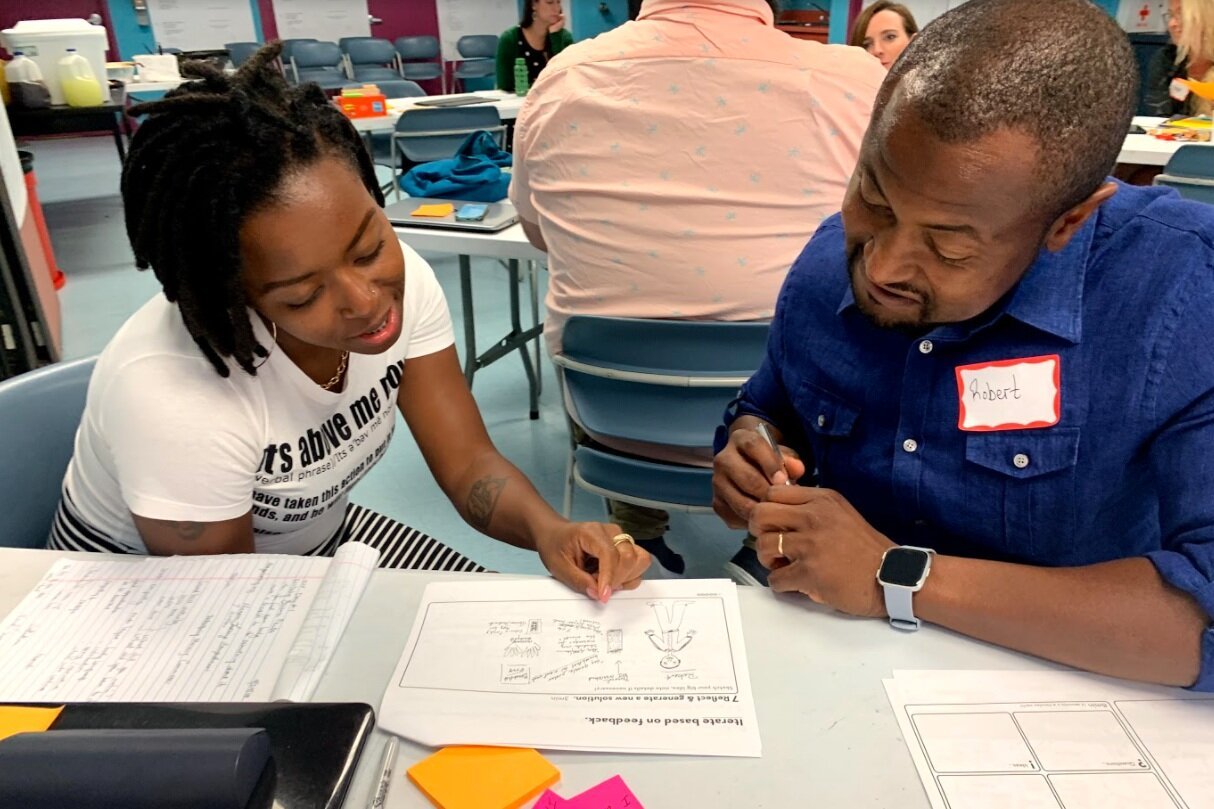
Good grades meant a great report card and that meant that I could eventually go do big things in the world.

My teachers had no complaints by the time parent teacher conferences came, except that they would love it if I “spoke up more and participated in group discussions”. And each time I would tell them that I would work on it, but truthfully, it was the #1 piece of feedback I received for years to come.

I’ll be honest in saying that for this introvert, it was difficult to participate in class. I was afraid of judgment, but more importantly, I needed time to process my thoughts and in some ways, protect my inner voice.

As a first generation, oldest daughter of an immigrant single mother, being the shy, quiet, & reserved Yvonne was simply more comfortable than being in the spotlight. Besides, it had always gotten me the results I “needed”: good grades. And that’s all I needed to help pave the way for my siblings and I to “be successful”.

There were moments I got glimpses of my power as a speaker as the MC for my elementary school graduation & cultural events, but the excitement of those moments were never fully integrated in the classroom.

__wf_reserved_inherit
Photo by Johnny Barumeida & Kita Zuleta

When I started high school at Metropolitan Arts & Tech (one of the first Envision Education Bay Area schools) I had no idea that my engagement with my education would completely transform. Our curriculum focused a lot on internalizing our learnings through deep reflection, critical thinking, creativity, and talking about it. Every semester we hosted ‘exhibitions’ as a way to share our work with our peers, family, and friends. We were required to present a collection of our work to showcase that we had achieved the learning outcomes of projects across subjects, which made me incredibly uncomfortable and way too nervous. I remember thinking “Why are they making us do all of this extra stuff? Can I just take a test?”

We’d spend hours preparing our talking points, our presentation boards, and even our outfits. Each time, it got easier and I reconnected with my love for public speaking. I say reconnected because I already had it in me. I was just not always in environments that pushed me to step up. The Yvonne that I knew myself to be, could also now fully exist in the classroom. Public speaking opened the door for me to be more authentically myself. To lean into a perceived contradiction where I had a hard time participating in class discussions, but could completely dominate a speech because I had been granted the time to practice and cultivate my art.

And I didn’t do it alone. I had an entire community in my teachers and my classmates. We were all in it together and all bonded over having to deliver presentations so frequently. I grew closer to my classmates because we’d spend hours giving each other feedback or exchanging ideas for how we’d present. We could collectively share our nerves and also work through them to deliver.

No matter who we were or where we came from, when we showed up to the classroom we were given the platform to share our ideas & deeply engage in our education from the lens of our lived experiences.

Presenting in the classroom allowed me to understand myself at a much deeper level, feel empowered by my education, and learn to create community through the art of public speaking.

My hope is that we can all see the power of public speaking beyond simply “taking the stage”, but also recognize its power in helping us reconnect with our most authentic selves, our education, and the collective power of doing things in community with others.

Learn more about Yvonne and connect.

ELPers, Alcine Mumby and Aragon Burlingham speak on camera about their experiences being part of the first Nexus Fellowship. The Nexus Fellowship was developed by the Equity Lab in response to the overwhelming need for race, equity, diversity, and inclusion (REDI) in the learning profession. The Fellowship helps leaders to create long-term organizational change around race and equity.

What experiences brought you into coaching?

I had the incredible experience to be on the team that founded Envision Learning Partners.  I was half-way into my teaching career at that point and was offered the opportunity to design and create a way in which we could share some of what makes Envision special with others around the country who were interested.  I spent 2 years feeling like I had gone back to grad school as we built ELP, as I was learning so much in the process! Wanting to put into practice for myself all of the rich growth I had experienced, I went back into the classroom at Envision for 5 more years.  It was a natural and wonderful return to coaching in 2016 when I was able to re-join the team on this side of the organization.

What do you most enjoy about being a coach?

I feel so inspired by the brilliant educators with whom I get to cross paths and sit shoulder to shoulder while on my coaching journey.  I was worried that I would miss the beautiful chaos of teenagers on a daily basis when I left teaching, but coaching provides similarly vibrant relationships with the folks I get to partner with.  Coaching offers a bit of a different cognitive challenge as I get to think about units of change larger than my own classroom. This is invigorating and often makes my brain hurt in really cool ways.

What do you like to do when you are not coaching?

When not on a plane or sitting in an airport, you can find me running the trails of the incredible hills and redwood forests in the east bay, talking to every dog I pass on the sidewalk, enjoying the incredible food and wine that we have at our fingertips, traveling to far off magical lands as often as possible, cooking dinner for former students, and stepping out on a dance floor when the music is right.

Hear why our newest Deeper Learning Coach, Morgan Vien, joined ELP and is excited about her new role working with our partners across the country.

What experiences brought you into coaching?

As a student, I loved learning but found school more stifling than unleashing of my love of learning. As a high school teacher, I loved learning from my students and helping them discover themselves and the world around them. As a lead teacher, I always wanted more time to design amazing learning experiences, think about school-wide systems, and learn more about what other great schools are working on.

What do you most enjoy about being a coach?

As a coach, while I miss crazy teenager energy, I love the increased impact my work has on many other people’s students; I love the nitty-gritty of it too: learning, collaborating, and co-designing learning experiences and systems that help schools and districts in their process of transforming teaching and learning from the systems we all inherited.

What do you like to do when you are not coaching?

I am an activist, an artist, and an introvert! A big contradiction of things. I try to maintain space for calm, for creating and appreciating art in many forms, for reflection, and for just existing outside as part of the natural world, as well as fighting the fights that must be fought to make the world a better place.

What experiences brought you to ELP?

I first learned about ELP as a client when working at ARISE High School in Oakland, CA. We were building out new graduate student profiles/senior defenses, as my team 

  • What are you hoping to learn while you’re at ELP?

While working with ELP, I am hoping to continue to gain knowledge on how to work with a variety of partners to achieve common goals around bettering the quality of education for our youth. I’ve been on the other side as a client, and I am excited to really dive into the ways of leading this work as an assessment design partner. I am also excited about having the opportunity to lead virtual workshops that can potentially reach the world (s/o to Vinci who had someone from out the country in her last workshop!). 

  • What are you most excited about starting at ELP?

I am SO excited to be a part of this team! Even before I started on my first day, I felt accepted, appreciated, and valued. The fact that I am surrounded by so many knowledgeable and wise educators with a breadth of experience has already begun to excite me even more so about this work. There is a lot of passion and dedication, as well as a strong focus on equity and cultural responsive practice which definitely aligns with my work morals/ethics. And, I’m always excited to grow myself as an educational leader, and I know that’s going to happen here with ELP!

  • What do you like to do when you’re not working?

When I’m not working, I’ve been enjoying learning about, and exploring Long Beach/SoCal! I just moved down here in March, and there is so much to do! Aside from exploring, I love to listen to music; sing, dance, zone out, etc. I have been reclaiming my love for exercise, and have been kickboxing and bike riding as well. I just recently got back into art, so I’ve been painting too! Then there’s: time with my family and partner, catching up with friends, sports (playing and watching), watching anime, meditation and breathwork, reading, journaling, amateur photography…I like to do A LOT when I have time! 

Fun fact: Current ELPer, Ruth Chung Wei and I discovered that her nephew is my kickboxing coach here in Long Beach! =)

What’s your new role?

I am serving as the Chief Program Officer (CPO) of Envision, a new role for the organization. My job is to steward the overall academic model of Envision Education, which is enacted through our four charter schools in the San Francisco Bay Area and through our nationwide consulting arm, Envision Learning Partners (ELP).  

__wf_reserved_inherit

What does Envision Education hope to achieve with this shift?

Before the CPO role was created, the bridge between ELP and our schools ran through the CEO, at the very top of the organization. The intent of my role is to lower the altitude of that bridge and add lanes. I am working to increase the bandwidth of learning between our schools and our nationwide coaching.

How does it support Envision E ducation’s mission and vision?

Since its founding, Envision has been dedicated to the idea that students deserve an education that attends not just to what they know, but also to what they can do and how deeply they can reflect. (See our principles of High-Quality Performance Assessment, or HQPA.) And we’ve always been committed to serving not only students in our own schools but also students everywhere, by sharing our ideas with public schools and advocating for shifts in policy.  In that sense, Envision is proud to be living out the original purpose of charter schools: places to test ideas and, if they work, share them. The job of the CPO is to ensure that we live up to that ideal.

What’s your favorite part of your new role?

I am interacting daily with broader swath of Envisioners, including students, teachers, and school leaders. I directly support a team of directors of academics and student services who are brilliant and collaborative. Plus, I still get to hang with ELP!

What are you bringing from ELP that you’re using in your new role?

My decade at ELP taught me that change happens not through mandate but through persuasion and inspiration. That requires communication that is clear, tight, and uplifting. I try to apply those skills every day.

Where do you see yourself and/or your role in the next few years?

I have so much to learn if I am to succeed in my new role, but I remind myself that over my 20 years at Envision, I’ve been here before. I was there when I had to figure out project-based learning as a brand new teacher. I was there when I joined ELP and had to learn how to facilitate learning for educators (a tough crowd!). And it’s where I am and will be for the foreseeable future: climbing a learning curve that’s real steep, pausing now and then to enjoy the view.

Although I have a title of Executive Director (privileged to do work I love with people who inspire me), I still call myself a teacher. I have always been, and remain, completely in thrall to the process of human learning.

Back in 2008, in my sixth year as an English teacher for Envision Schools, I was lucky to be involved in the design and implementation of a multi-disciplinary project that was chronicled by a professional documentarian. Many of you will be familiar with this video of the Campaign Ad Project, but for those who aren’t, it’s a blast-from-the-past glimpse into who I am as a teacher, why I love teaching in a deeper learning culture, and why I am so committed to the overlapping concepts of project-based learning and performance assessment.

Young people deserve learning experiences that are challenging, exciting, supportive, and memorable—what I like to call “learning you can tell a story about.” ELP’s mission is to help learning communities create the conditions for these kinds of experiences to be typical, not extraordinary.

Follow Justin on Twitter @jusowells.

This rounds out our introduction of every ELP team member. In upcoming installments, we’ll pose questions that prompt deeper insights into the ELP team. If you have a question for the team that you’d like answered, please send your question to Courtney Katen for a chance to have it answered in a future newsletter.

Hi I’m Michael, an 11th grade student from Envision Academy, born and raised here in the Bay Area. Interests that I have are the inner workings of cars and what goes into building/modifying them. I’m very interested in the Mechanical Engineering world and would love to pursue a career in it. I look forward to spending the week with the ELP team and learning from them in order to grow as both a person and finding out what makes things work.

I chose to go to Envision Academy in Oakland because I heard great things about the school from my older brother who also attended for the full 4 years. So far I’ve had a great experience at Envision Academy with the school being very inclusive, I never feel out of place.

Here are a few things that I am doing at school: A bridge project in my Physics class where me and a group of students work together to design a bridge that can hold up at least one brick. A satirical piece of writing in my English class where I am pointing out a problem of my choice in today’s world/society while incorporating ideas like irony into the text.

Right now I am looking at colleges which can help the dream of me wanting to become a Mechanical Engineer with a friend of mine contributing to it as well. We have a full list of colleges with each being color coded to indicate how likely we are to be accepted, with green being we are sure to get in and red being a longshot. I am currently looking at Georgia Tech and Stanford University as my top two choices for Mechanical Engineering classes.

What I want to take from this experience of working with the ELP team is how organized and calculated I can get with all my work, but also researching so I can continue to investigate more opportunities that I and others can benefit from.

Week Recap:

Michael on Day 1 with ELPers, Courtney & Royce

My week here has been amazing. Being able to meet all these amazing people that helped me settle in and feel welcome was exciting. I got to learn what goes on behind the scenes here and also have my share in the conversations not being left out of meetings and being asked for my inputs on a variety of subjects. A skill I improved at was my communication and planning skills. By being able to participate in the meetings I got better at talking with people that are older but also come from different backgrounds than me. Having control over my schedule also gave me a better understanding on how to handle my time in order to get the work I need done but also make time for other things, whether that be meetings or interviews by my fellow peers. I would recommend that other schools also start to implement an internship week of sorts because the opportunities and just overall knowledge that gain from a work environment is different to that of a school one. The amount of connections you can gain would be very helpful for students so that they get a sense of what their future can hold for them and it would also help them narrow what it is they actually want to do.

Michael was also able to interview three other Envision Academy interns who were at the Envision Education Support Office in Oakland, CA.

Start of the week:

L to R: Cristian, Michael, Jesus

Cristian: “I chose this because David, my mentor, the senior directive of student services, made me interested in learning more about the school policies and how they work. I want to gain a different perspective of life, although there are many other opportunities, I want one that hears about students and how they feel when it comes to certain activities. I want to improve my communication skills, not just with students but with adults too. I want to become a structural engineer/architect. What interests me about Envision is its cultural theme and how inclusive they are with African American, hispanic, etc, and how they treat them and their months for example black history month, especially with how inclusive they can be. I’m a sports guy. I play a different variety of sports like baseball, soccer, football, etc. I played for the school soccer team this year. I was thinking of going to a college in Boston or Riverside, San Jose State university.”

Jesus: “I chose this internship because it was close to my home and the work seemed interesting to do throughout the week. I want to learn what are the steps that ELP does to work with the school and how the hiring process works here. I want to improve my communication skills. What interested me about Envision was how it was really close to my house and my siblings had already gone to Envision before. I want to pursue a career in real estate. I like to play soccer, baseball, and I’m interested in the process of making music. I also like to play different instruments like the guitar, accordion, and the drums. I was thinking of trying out Sonoma State, UC Santa Cruz, Cal State, and UC Davis.”

Interns with some of their Support Office Staff

Melanie: “I wanted to go into a medical field assisting but things didn’t work out, but Mr.Viera introduced me to Ms.Kat and the idea interested me because she works with HR and the higher ups, staff, and teachers so I wanted to look more into what goes on behind the scenes at Envision to make things work at the school. I want to learn more about the environment and Ms.Kat’s routine, and what goes on behind the scenes because I didn’t think that all this went on to make the school work. I thought it was just the Principal and the staff at the school. I want to improve my communication skills and hands on work with computers like google docs and sheets. What interests me about Envision is that it’s a small community so you’re able to know almost everybody and with how it is an art and technology school I had an interest in going here when I was coming out of middle school. I’m very interested in the medical field, more specifically the dental industry. I like to explore, hang with my friends, and create memories while also having fun. Some colleges I have on my mind are UC Santa Cruz, UC Santa Barbara, and Cal Poly.”

End of the week:

Cristian: “I learned a lot of communication skills, being able to interview teachers, students, and other staff, all of these being people I do and don’t know broadened my interviewing skills. I got to create more and better bonds with all these people. Other Jobs I did were to attend a lot of meetings. The fun part about that was being able to go out, visiting the office, and getting a lot of new views/perspectives on different topics. My experience here was good. I got to meet new people and learn more about them, their job titles, and all the work they do to make everything happen. I think it’s a good idea to add an internship week for other schools because it’s a valuable learning experience, getting them slowly out of their comfort zone white also giving them knowledge on career paths that they themselves might want to pursue after the week is done.”

L to R: Cristian, Michael, Jesus

Jesus: “My week here went well and I definitely learned about the process of how teachers are hired and what they look for in teachers. A skill I improved on was being able to stay focused on a piece of work since I’m very easy in getting distracted so this internship bettered my focus. I would recommend this internship to other Envision students because it’s an easy job but you gain so much knowledge and you learn a lot from being here. I would recommend other schools to also start doing an internship style week because of the amount of opportunities you gain. For example, I was able to get a letter of recommendation from my mentor here. You also get to actually experience what the working world is like and it’ll give an early opportunity for students to learn about it.”

Melanie: “My week was very flexible and very calm, the first day I got an understanding of what the rest of my week was going to look like. After that I spent my time doing my work and overlooking my mentor to get a better understanding of what she does. I’ve learned that the process of having new people is not just accepting the job on the spot there is so much behind it. It can take weeks looking at them and accepting new staff and what they actually look at for potential staff. I improved my understanding and listening better with one on one talks with my mentor, asking her questions, and also just paying attention better. Just comprehension skills overall. I do recommend for other schools to start an internship like week because of the new environment you can get into and the vast majority of opportunities you can get by just meeting new people. A lot of students might not get the most out of just going to school so it would be very great to also learn about other experiences at other workplaces, while also giving students new jobs to look at that they might be interested in pursuing in their future.”

During the 2019 calendar year, ELP’s Alcine Mumby and Aragon Burlingham participated in the first Nexus Fellowship, a program from the Equity Lab. Nexus was designed in response to the overwhelming need for race, equity, diversity, and inclusion (REDI) in the learning profession.

This was a transformative experience for us and the other 14 Nexus Fellows! Michelle and her talented team curated a deep and personal experience for our new community of equity leaders. Nexus took us into a deep personalized leadership journey based on our identities around three specific design challenges:  challenges with people, challenges with processes, and challenges with programs.

Watch the video to hear about the experiences of the Nexus Fellows and Equity Lab’s ED, Michelle Molitor.

Thank you Michelle and your exceptional team for creating this incredible program!

Describe what you do at ELP?

I lead the operations side of Envision Learning Partners. This primarily involves behinds the scenes work to ensure our infrastructure and systems are running smoothly so our coaches can deliver high-quality professional development. ELP’s start-up culture has built our service and systems through many years of relationship building, prototyping, and refining.

What experiences brought you to ELP?

I began my work with Envision as an English teacher at City Arts and Tech [our school in San Francisco]. After stepping out of the classroom, I worked closely with all of our schools in a highly successful reading intervention program. In 2010, I became a founding member of the Envision Learning Partners team. We spent the first several years of ELP figuring out the most high leverage work we could do with our external partners. The journey has been amazing – we’ve grown our service from 3 team members serving 1 partner to 11 team members serving over 60 partners.

What do you enjoy most about working for ELP?

I am driven by the mission of ELP and expanding positive educational impact to all students. I believe deeply in providing access and high-quality learning experiences to all students. At ELP we primarily work with adult learners to refine their teaching practices and educational systems, but my motivation still comes from impacting students’ lives by shifting adult teaching and learning.

What do you like to do when you’re not working?

I spend most of my time on outdoor adventures with my wonderful husband and two children. We like to hike, rock climb, backpack, ski, and camp whenever we have the opportunity. Almost every morning before the sun is up you can find me at a barre class and I always sneak in time to read several novels per month.

have always been incredibly passionate about the work I do with students and families. I started my career as a Special Education Teacher in Philadelphia, Pa. At my core, I will always be a special educator.  I transitioned into student services/ special education administrative work which allowed me to have a deeper understanding of the way systemic oppression impacts vulnerable populations. I learned how to center the needs of the community and work alongside those who are most impacted.  While working in this role, I developed a passion for inclusive education – it can work when we work it (see article). This led me to another passion of mine – teaching. I work with the Graduate School of Education at Stanford University teaching aspiring general education teachers how to incorporate best practices into their teaching while challenging the narrative of what it means to educate students who learn differently. With my transition to ELP, I am hoping to bring a perspective that allows us to center the most vulnerable populations in the amazing work we do.  I am hoping to uphold high expectations for all of the students we serve and, I am hoping that students who learn differently will see themselves reflected in the work we do with districts, organizations, and communities.

What are you hoping to learn while you’re at ELP?

I am hoping to learn how to design high quality performance assessments on a large scale while centering neurodivergent learners.  I would like to support districts and school communities with inclusive education as it relates to high quality performance assessments and graduate portfolios.  I am also hoping to learn more about research projects on a large scale and how to use that information to improve school outcomes.

What are you most excited about starting at ELP?

I am most excited about working with a team that centers human connection while making an impact on the world of education. I am looking forward to getting to know everyone on the team as well as getting to know our clients and their school communities.

Another project that I am incredibly excited to join is the work ELP is doing with the Oak Foundation. The case study aims to illustrate high-leverage school practices that support the well being and success of Black and LatinX students with learning differences.  I am beyond honored to support this work.

What do you like to do when you’re not working?

  • Cuddles with Sully (my dog)
  • I’m a professional frolicker
  • Music is Life

Roilyn’s Bio:

Roilyn is a trailblazing advocate for inclusive education and has been in this work for the last 20 years. With an unwavering commitment to equality and empowerment, she has dedicated the past two decades to transforming the educational landscape for marginalized students.

Roilyn began her career as a special education teacher for the School District of Philadelphia. After teaching for 10 years, Roilyn transitioned into special education administration and served in schools on the east and west coast in similar capacities. Currently Roilyn works as an Assessment Design Partner and is a course lecturer in the graduate school of education at Stanford University. In her spare time she enjoys cuddles with her dog Sully, chatting with her nieces and nephew, and karaoke (mostly at home).

Learn more about Roilyn in her ELP blog post and/or connect with her on Twitter or LinkedIn.

Hi! My name is Royce Conner, and I recently joined the team as ELP’s Executive Director. In many ways, I feel like I have returned home. While I am new to Envision, my education career began by learning about progressive education from leaders in the field such as Ted Sizer and the Coalition of Essential Schools. Since then I have put students at the center of each of my classrooms and schools. I am thrilled to be part of a team that cherishes the idea that students thrive when given authentic, challenging and rigorous work that is personally meaningful to them and their communities.

A bit more about me…

What experiences brought you to ELP?

A visiting professor from a teacher preparation program once visited my classroom. He observed students deeply engaged in projects that provided them various opportunities to use their knowledge and skills to answer challenging questions about the world and their places in it. Some students led Socratic seminars about the nature of goodness. Others wrote policy briefs for local legislators. A few wrote an original play to be performed along with local actors using interviews the students conducted with immigrants. When the professor left, he said, “This is the way school should be.”

I spent ten years learning the craft of teaching using projects and performance-based assessments. I became a lead teacher in my school, supporting new teachers as they designed projects and aligned performance assessments to local standards. My middle school students, the majority low-income students of color, would often return to my classroom as high school and college graduates sharing gratitude that the work we did in my classroom prepared them for what one student called “the world I almost missed out on.”

After my time in the classroom, I spent two years in the public policy arena, working on statewide and national education issues with Rhode Island Kids Count. I enjoyed policy, but I eventually felt the call to return to education. I moved to California to pursue a degree in educational leadership and policy. After that I spent two years consulting with various school districts, including Oakland USD. I then spent one year leading the recruitment team for San Francisco USD. Following SFUSD I entered the world of school leadership. I served as Head of School for three Bay Area charter schools. One of my schools scored a front page article in Education Week for its innovative blended learning design, and another connected me with Bob Lenz and PBLWorks for its dedication to project-based learning for our students in K-8.

Before joining ELP, my most recent role was as a Fellow with Foster America, a national nonprofit working to improve outcomes for foster youth and develop innovations for the child welfare system.

And this brings me to Envision. While my career has had many interesting turns, I am delighted that I find myself back in an organization that operates and promotes schools that are, like that professor once said, the way schools should be.

What are you hoping to learn while you’re at ELP?

I am going to learn a tremendous amount from our schools! I look forward to seeing how partners in rural, suburban and urban districts rally their school cultures around student-centered design and performance assessments. We know there is no such thing as “one size fits all,” so I cannot wait to learn about how our partners are implementing high-quality performance assessments, graduate profiles, and portfolio defense in their unique contexts.

What are you most excited about starting at ELP?

Truly, it’s the team. I have the great pleasure to work with expert educators, coaches, facilitators, designers, researchers and operations professionals. They are parents, siblings, authors, cooks, readers, adventurers, musicians and athletes. They appreciate a challenge and embrace the power of difficult conversations. As excited as I am to connect with schools, it is the team that brings me the most joy.

What do you like to do when you’re not working?

I would love to tell you that I dive deeply into great works of art and literature, but the truth is that I love my PlayStation and I play it like a teenager guzzling Mountain Dew. I am also a movie fan, especially horror movies. But I also love my outdoor time, especially hiking. In addition, I love to travel. So far I have traveled to 48 states (I’m looking at you, Mississippi and Hawaii!).

Anything else to add?

My favorite quote is “Don’t dream it—be it.” Extra points if you can name the source.

Royce’s Bio:

Royce joined Envision Learning Partners in 2023. A native of Bloomsburg, Pennsylvania, he attended Brown University, where he was first introduced to progressive principles of education through Ted Sizer and the Coalition of Essential Schools. He spent 10 years teaching at Community Preparatory School in Providence, Rhode Island. He then worked on statewide and national education policy with Rhode Island Kids Count, where he was selected as an Emerging Leader by The Children’s Defense Fund. He moved to California in 2007 to attend Stanford University’s Graduate School of Education, where he earned a Master’s degree in Policy, Organization and Leadership Studies. He spent two years consulting with urban school districts and another year leading the recruitment team at San Francisco Unified School District. He then served as Head of School for three Bay Area charter schools. His most recent role was as a Fellow with Foster America, a national nonprofit working across the country to improve the child welfare system and increase opportunities for foster youth. Royce lives in Richmond, California with his husband. He is thrilled to be part of the team at Envision Learning Partners!
Connect with Royce on LinkedIn.