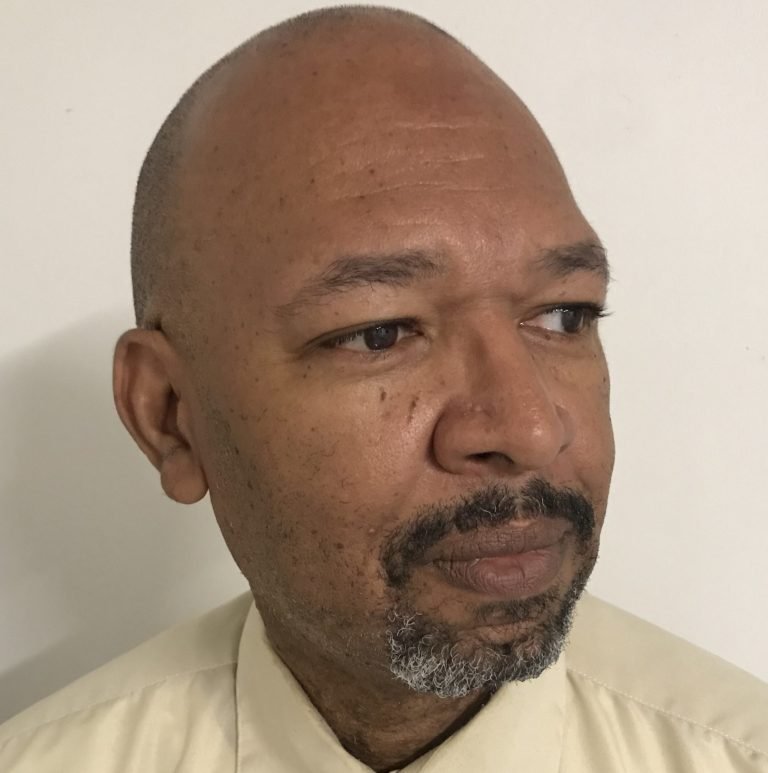
Guest Blog: The Blueprint to Defenses by Duane Robertson, AVHSD
Heading 1
Heading 2
Heading 3
Heading 4
Heading 5
Heading 6
Lorem ipsum dolor sit amet, consectetur adipiscing elit, sed do eiusmod tempor incididunt ut labore et dolore magna aliqua. Ut enim ad minim veniam, quis nostrud exercitation ullamco laboris nisi ut aliquip ex ea commodo consequat. Duis aute irure dolor in reprehenderit in voluptate velit esse cillum dolore eu fugiat nulla pariatur.
Envision Learning Partners has had the honor of working with Antelope Valley Union High School District since 2017 and we’re excited to share an update on how they are Integrating Portfolio Defenses into the Curriculum: All-in for Success in this Guest Blog written by Duane Robertson.
It is more critical than ever to equip students with a range of skills that will prepare them for college, careers, and life. One strategy that has been implemented in the Antelope Valley High School Districts (AVUHSD) Career Technical Education (CTE) pathways is the Portfolio Defenses. The portfolio defenses not only enhances communication but also fosters students confidence, critical thinking, and collaboration. Recognizing this importance, AVUHSD set a plan to integrate the portfolio defenses into the curriculum, making them an essential component of pathway students’ learning experiences. The implementation plan, the challenges faced, and the successes achieved by AVUHSD is outlined below.
Identifying the Need
After discussions with CTE administration and feedback from teachers, it became apparent that many students lacked opportunities to practice public speaking in structured, meaningful ways – especially after COVID 19. While presentations occasionally appeared in class, they were sporadic and often lacked uniform standards, rubrics or assessments. To address this gap, portfolio defenses were implemented to incorporate presentations as a formalized, skill-building component of CTE pathways.
Setting the Objectives
The primary goals for integrating defenses into the curriculum included:
Skill Development: To improve students’ communication, critical thinking, and organizational abilities.
Interdisciplinary Learning: To encourage students to draw connections between CTE and Academic classes.
Inclusivity: To ensure all students, regardless of confidence level, had the opportunity to grow in a supportive environment.
Assessment Alignment: To create clear rubrics that aligned with broader academic standards.
Graduate Profile: To align with components if the Graduate Profile.
Developing the Plan
The implementation plan was multi-faceted and involved the following steps:
Curriculum Mapping Pathway leads identified where presentations would naturally fit. For example, history classes could include debates or oral reports on historical events, while science courses might feature project-based presentations on experiments or innovations.
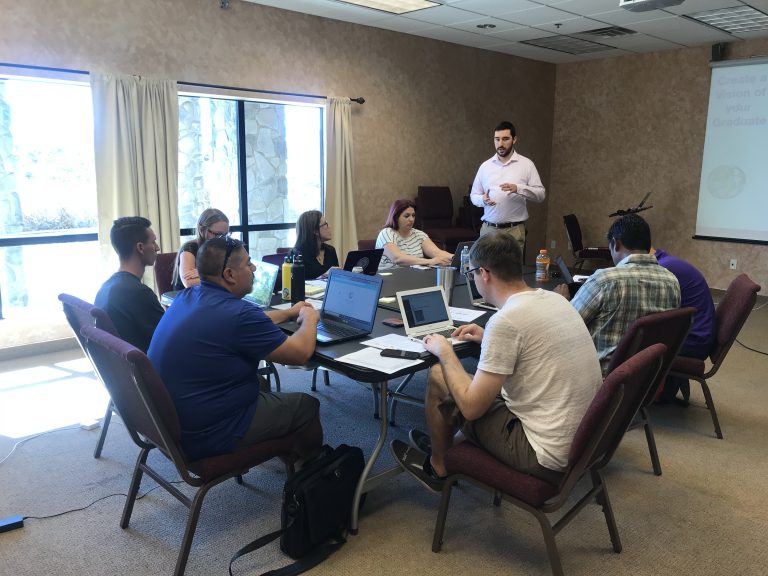
Teacher Training and Professional Development Workshops were organized to guide teachers on effective strategies for incorporating presentations, creating rubrics, and providing constructive feedback. Emphasis was placed on fostering a growth mindset and supporting students who struggled with public speaking.
Rubric Design A standardized rubric was created to ensure consistency and equity in assessment. The rubric focused on key components like content accuracy, delivery, visual aids, engagement, and providing student evidence of learning.
Student Preparation Resources were developed to help students prepare, including templates, teacher mentors, and strategies for engaging audiences.
Pilot ProgramBefore full implementation, a pilot program was conducted in select classrooms. Feedback from students and teachers during this time was invaluable in refining the student outcomes.
Overcoming Challenges
While the initiative was ultimately successful, it came with its share of challenges:
Resistance to Change: Some teachers were initially hesitant, citing concerns about time constraints and additional workload. Regular meetings and showcasing other schools early successes helped alleviate the concerns.
Student Anxiety: Many students were apprehensive about speaking in front of peers. To address this, smaller groups were formed and presentations were introduced before progressing to larger, graded ones.
Resource Allocation: Ensuring access to technology required careful planning.
Measuring Success
The impact of this initiative was evaluated through teacher and student reflections, and academic outcomes. Key findings included:
Improved Confidence: Over 80% of students reported feeling more confident speaking in front of an audience.
Enhanced Engagement: Teachers observed increased participation and enthusiasm, particularly in interdisciplinary projects.
Skill Retention: Students demonstrated improved organization and critical thinking in other assignments, indicating a transfer of skills.
Expanding the Vision
Encouraged by the success of the program, plans are underway to further enhance the initiative by extending portfolio beyond CTE classes:
Incorporating alumni and peer reviews to build collaborative skills.
Organizing a school-wide presentation day where students can showcase their work to a broader audience.
Partnering with community organizations to bring real-world relevance to student presentations and participate as panelists.
Conclusion
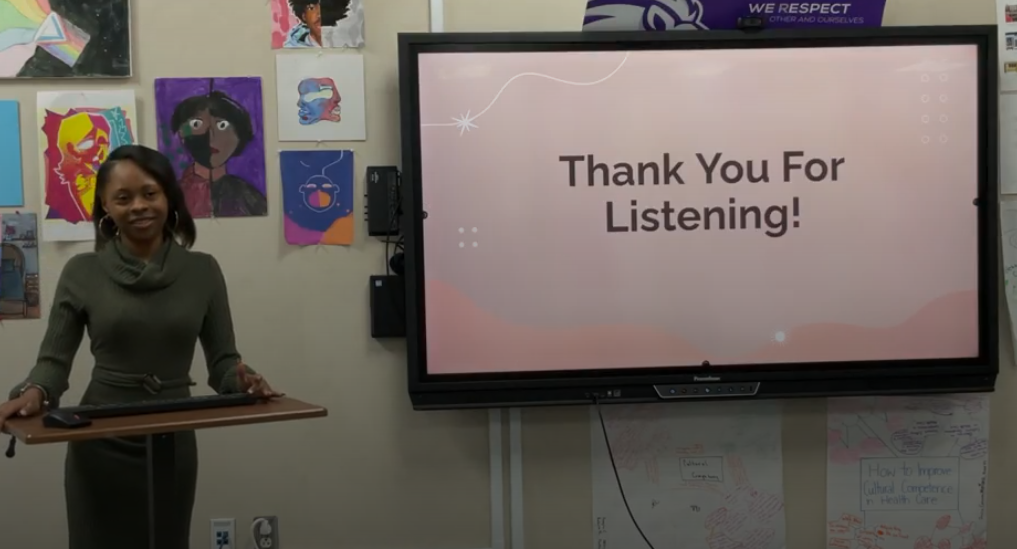
Integrating portfolio defenses into the curriculum has transformed the learning environment, empowering students with communication skills that extend far beyond the classroom. This initiative exemplifies how thoughtful planning, collaboration, and a commitment to students can create meaningful change in education. As students continue to excel in their portfolio defenses and critical thinking abilities, the benefits of this learning strategy reaffirm the importance of such initiatives in preparing our students for the future.
Duane Robertson is the Coordinator of CTE for the Antelope Valley Union High School District.
Mr. Robertson left his position as a multimedia and computer science instructor and Academy Coordinator of the Lancaster High School Engineering and Multimedia Academy, the first Linked Learning Silver-Certified academy. He previously taught business classes as an Adjunct Instructor, after a 15 year career as a project manager. He received his B.S. in Business with an emphasis in Management from Cal State Dominguez Hills, and his first Masters Degree in Education from Chapman University and a 2nd Masters in Administrative Leadership from Cal State Bakersfield.
Duane’s desire to reach students led him to his current role as CTE Coordinator for the Antelope Valley Union High School district. Under his leadership, the CTE classes and academies continue to align with the district’s vision of “every student who graduates will be prepared to pursue college and any career to which he or she aspires”.
Insights, partner highlights, guest perspectives, and resources to support your work
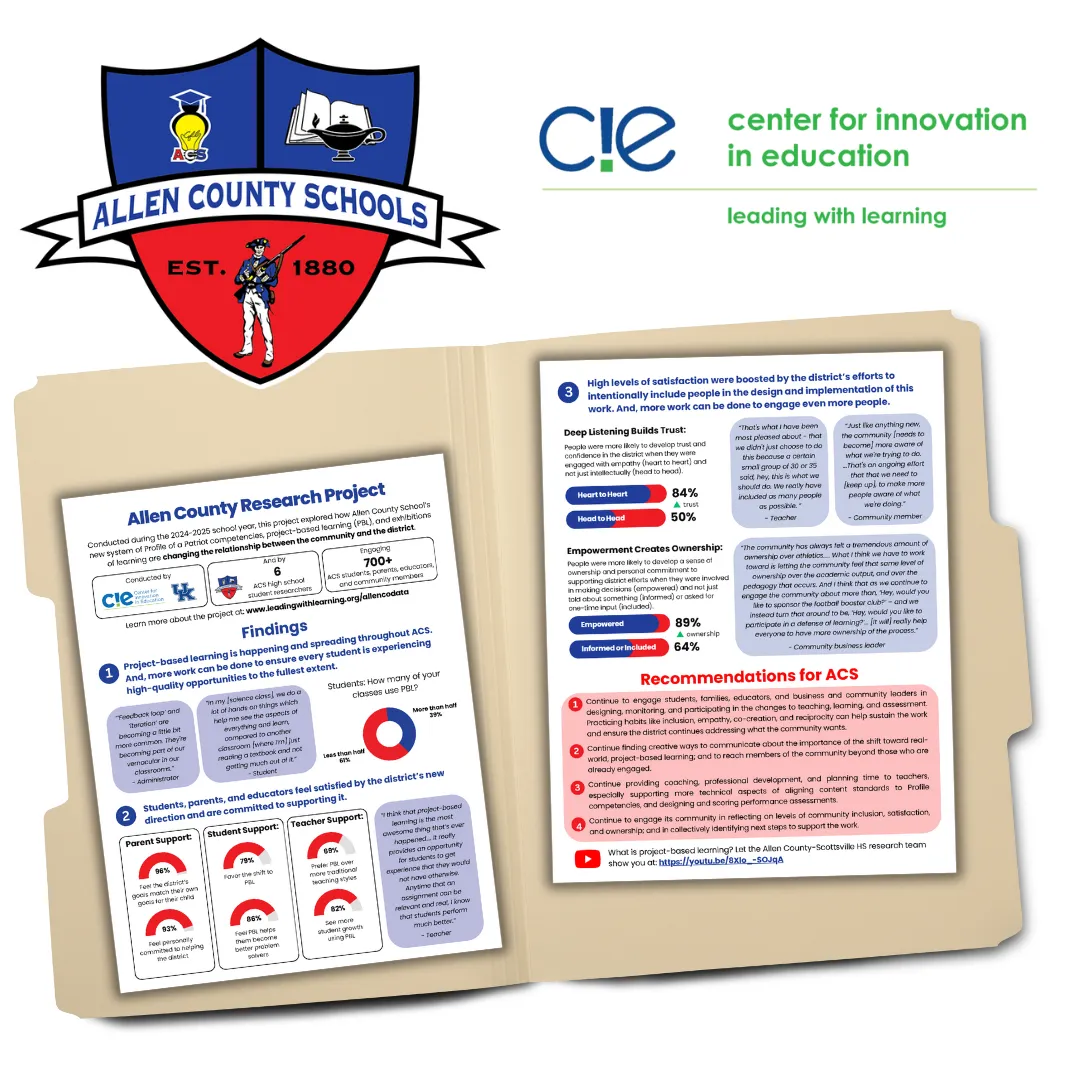
A newly published case study from the Center for Innovation in Education (C!E), featuring Envision Learning Partners in Appendix C, highlights Allen County, Kentucky’s multi-year effort to redesign assessment and accountability through Inclusive Design. The report, Better Together, shows how the district co-created their graduation competencies called “Profile of A Patriot” and embedded project-based learning and performance assessments to place students’ passions and real-world skills at the center of learning.
Envision Learning Partners has been proud to support Allen County in this work, and we’re excited to share C!E’s new case study. We’ve partnered closely with C!E through the Assessment for Learning Project, working together to advance learner-centered assessment practices nationally.
By Michael Viera, Envision Education’s College and Career Pathways Manager
Several years ago the city of Oakland came together to support college and career programming for high schoolers, by advancing and deepening career pathways in alignment with the Linked Learning Alliance standards and methodology. The Linked Learning Alliance hosts an annual conference where educators share best practices and takeaways from school sites around the state. Oakland schools always show out in big numbers at the conference, but this year it took place in downtown Oakland, so the presence was even greater.
I had been to the conference previously, but this time was different. Being my 3rd year at Envision in this role, I felt like I finally understood what it was all about. I had colleagues from Envision Learning Partners in attendance and collaborating with me. I got to connect with colleagues from other Oakland schools. I knew what to look for and who to listen to in order to improve our programming at Envision Academy and across the Envision network.
The conference was motivating, to say the least. It is a breath of fresh air being in rooms of educators who are excited and realistic about their work in schools, and who understand the skills students need to have success in their futures.
I came back from the conference and immediately organized Envision Academy’s first job fair since COVID. We had twelve community partners visit our campus to share information with students on internship opportunities, after school and summer programs, and community resources. Students seemed excited about these experiences that they can be a part of outside of their regular curriculum.
At the end of the event, two students stayed back and pulled me aside. I thought something bad had happened. Instead, one of them simply said, “Mr. Viera, we just wanted to thank you for putting together this event. It’s really inspiring to see all these opportunities we didn’t know about until now.”
After a couple of weeks of back and forth emails and phone calls with partners, planning meetings with administration, and quite literally running around setting up tables and chairs on the day of the event, those students made it all worth it. When students are able to take their learning outside of school walls and make connections with their community, they feel seen and they thrive.
Hear from Michael and ELP Assessment Design Partner, Josette Neal-De-Stanton on their takeaways from the Linked Learning Conference.
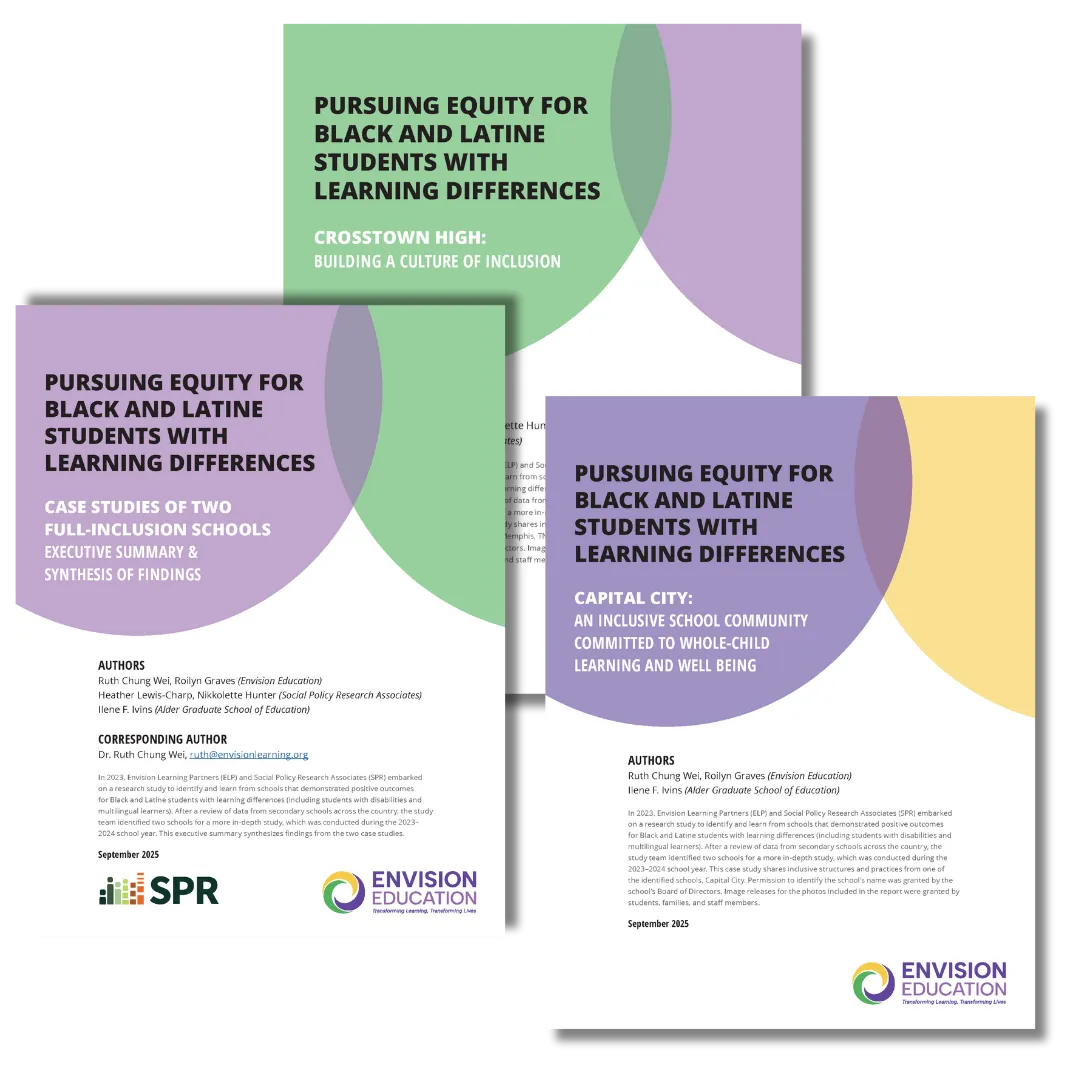
Envision Education is excited to share the culmination of its two-year research project, Pursuing Equity for Black & Latine Students with Learning Differences, which
documents and illustrates the systems, practices, cultures, and supports that are associated with the well being and success of Black and Latine students with learning differences – students with disabilities and multilingual students with disabilities.
In 2023, Envision Learning Partners (ELP) and Social Policy Research Associates (SPR) embarked on a research study to identify and learn from schools that demonstrated positive outcomes for Black and Latine students with learning differences (including students with disabilities and multilingual learners). After a review of data from secondary schools across the country, the study team identified two schools for a more in-depth study, which was conducted during the 2023–2024 school year.
The results of the research are shared through case studies of the two schools that were the focus of the research: 1) Crosstown High: Building a Culture of Inclusion; 2) Capital City: An Inclusive School Community Committed to Whole-Child Learning and Well Being; and 3) An Executive Summary/Synthesis of Findings.
In addition, we have authored four practice briefs based on the findings of the research that provide practical steps that schools can take to create more inclusive environments that support the success of Black and Latine students with learning differences.
Co-teaching: A Means to Creating Inclusive and Equitable General Education Classrooms
UDL: Universal Design for Learning in a Culturally Responsive Context
Culturally Responsive Practices: An Inclusive, Culturally Responsive School Culture That Fosters Relationships
Competency-Based Learning and Assessment: Assessment and Grading Practices That Support an Inclusive Learning Culture
This research was made possible through the generous support of New Profit, a venture philanthropic organization, and the Oak Foundation.
Explore our diverse events. Enhance your expertise, connect with thought leaders, and broaden your horizons.
A newly published case study from the Center for Innovation in Education (C!E), featuring Envision Learning Partners in Appendix C, highlights Allen County, Kentucky’s multi-year effort to redesign assessment and accountability through Inclusive Design. The report, Better Together, shows how the district co-created their graduation competencies called “Profile of A Patriot” and embedded project-based learning and performance assessments to place students’ passions and real-world skills at the center of learning.
Envision Learning Partners has been proud to support Allen County in this work, and we’re excited to share C!E’s new case study. We’ve partnered closely with C!E through the Assessment for Learning Project, working together to advance learner-centered assessment practices nationally.
By Michael Viera, Envision Education’s College and Career Pathways Manager
Several years ago the city of Oakland came together to support college and career programming for high schoolers, by advancing and deepening career pathways in alignment with the Linked Learning Alliance standards and methodology. The Linked Learning Alliance hosts an annual conference where educators share best practices and takeaways from school sites around the state. Oakland schools always show out in big numbers at the conference, but this year it took place in downtown Oakland, so the presence was even greater.
I had been to the conference previously, but this time was different. Being my 3rd year at Envision in this role, I felt like I finally understood what it was all about. I had colleagues from Envision Learning Partners in attendance and collaborating with me. I got to connect with colleagues from other Oakland schools. I knew what to look for and who to listen to in order to improve our programming at Envision Academy and across the Envision network.
The conference was motivating, to say the least. It is a breath of fresh air being in rooms of educators who are excited and realistic about their work in schools, and who understand the skills students need to have success in their futures.
I came back from the conference and immediately organized Envision Academy’s first job fair since COVID. We had twelve community partners visit our campus to share information with students on internship opportunities, after school and summer programs, and community resources. Students seemed excited about these experiences that they can be a part of outside of their regular curriculum.
At the end of the event, two students stayed back and pulled me aside. I thought something bad had happened. Instead, one of them simply said, “Mr. Viera, we just wanted to thank you for putting together this event. It’s really inspiring to see all these opportunities we didn’t know about until now.”
After a couple of weeks of back and forth emails and phone calls with partners, planning meetings with administration, and quite literally running around setting up tables and chairs on the day of the event, those students made it all worth it. When students are able to take their learning outside of school walls and make connections with their community, they feel seen and they thrive.
Hear from Michael and ELP Assessment Design Partner, Josette Neal-De-Stanton on their takeaways from the Linked Learning Conference.
Envision Education is excited to share the culmination of its two-year research project, Pursuing Equity for Black & Latine Students with Learning Differences, which
documents and illustrates the systems, practices, cultures, and supports that are associated with the well being and success of Black and Latine students with learning differences – students with disabilities and multilingual students with disabilities.
In 2023, Envision Learning Partners (ELP) and Social Policy Research Associates (SPR) embarked on a research study to identify and learn from schools that demonstrated positive outcomes for Black and Latine students with learning differences (including students with disabilities and multilingual learners). After a review of data from secondary schools across the country, the study team identified two schools for a more in-depth study, which was conducted during the 2023–2024 school year.
The results of the research are shared through case studies of the two schools that were the focus of the research: 1) Crosstown High: Building a Culture of Inclusion; 2) Capital City: An Inclusive School Community Committed to Whole-Child Learning and Well Being; and 3) An Executive Summary/Synthesis of Findings.
In addition, we have authored four practice briefs based on the findings of the research that provide practical steps that schools can take to create more inclusive environments that support the success of Black and Latine students with learning differences.
Co-teaching: A Means to Creating Inclusive and Equitable General Education Classrooms
UDL: Universal Design for Learning in a Culturally Responsive Context
Culturally Responsive Practices: An Inclusive, Culturally Responsive School Culture That Fosters Relationships
Competency-Based Learning and Assessment: Assessment and Grading Practices That Support an Inclusive Learning Culture
This research was made possible through the generous support of New Profit, a venture philanthropic organization, and the Oak Foundation.

.svg)
.svg)


.svg)
.svg)




.svg)
.svg)

.svg)

.svg)

