We're excited to share the culmination of a two-year research project, Pursuing Equity for Black & Latine Students with Learning Differences, which documents and illustrates the systems, practices, cultures, and supports that are associated with the well being and success of Black and Latine students with learning differences – students with disabilities and multilingual students with disabilities.
Envision Education is excited to share the culmination of its two-year research project, Pursuing Equity for Black & Latine Students with Learning Differences, which
documents and illustrates the systems, practices, cultures, and supports that are associated with the well being and success of Black and Latine students with learning differences – students with disabilities and multilingual students with disabilities.
In 2023, Envision Learning Partners (ELP) and Social Policy Research Associates (SPR) embarked on a research study to identify and learn from schools that demonstrated positive outcomes for Black and Latine students with learning differences (including students with disabilities and multilingual learners). After a review of data from secondary schools across the country, the study team identified two schools for a more in-depth study, which was conducted during the 2023–2024 school year.
The results of the research are shared through case studies of the two schools that were the focus of the research: 1) Crosstown High: Building a Culture of Inclusion; 2) Capital City: An Inclusive School Community Committed to Whole-Child Learning and Well Being; and 3) An Executive Summary/Synthesis of Findings.
In addition, we have authored four practice briefs based on the findings of the research that provide practical steps that schools can take to create more inclusive environments that support the success of Black and Latine students with learning differences.
Co-teaching: A Means to Creating Inclusive and Equitable General Education Classrooms
UDL: Universal Design for Learning in a Culturally Responsive Context
Culturally Responsive Practices: An Inclusive, Culturally Responsive School Culture That Fosters Relationships
Competency-Based Learning and Assessment: Assessment and Grading Practices That Support an Inclusive Learning Culture
This research was made possible through the generous support of New Profit, a venture philanthropic organization, and the Oak Foundation.
General
5 min read
Resource Corner: Pursuing Equity for Black and Latine Students with Learning Differences Case Studies & Practice Briefs
Envision Education is excited to share the culmination of its two-year research project, Pursuing Equity for Black & Latine Students with Learning Differences, which documents and illustrates the systems, practices, cultures, and supports that are associated with the well being and success of Black and Latine students with learning differences – students with disabilities and multilingual students with disabilities.
Oops! Something went wrong while submitting the form.
Thank you! Your submission has been received!
Oops! Something went wrong while submitting the form.
Over the last three decades, standards-based reforms have attempted to close opportunity gaps – mostly by tapping large scale assessment and accountability systems. But these assessment systems were not designed to provide real-time feedback to support teaching and learning at the classroom level. We also know that systemic racism is deeply ingrained in the history of assessment in our nation. But we can build and envision different ways of measuring learning, especially by centering students in these systems.
In this keynote, Alcine Mumby of Envision Learning Partners discussed how performance assessment can be a key equity strategy – giving students the opportunity to declare what they know, how they’ve learned it, and how they plan on using that knowledge to change the world.
Announcements
General
General
5 Min read
2023 Aurora Institute Symposium Keynote
In this keynote, Alcine Mumby of Envision Learning Partners discussed how performance assessment can be a key equity strategy – giving students the opportunity to declare what they know, how they’ve learned it, and how they plan on using that knowledge to change the world.
Read More
On May 15 and 16th, 2024 educators from across the country came together in Oakland, CA for a two-day Assessment for Learning (AFL) Deep Dive and focused on student demonstrations of learning.
Together, we continued to pursue AFL’s essential question: What can we learn together about how assessment for learning relates to learner belonging, equity and liberation? Specifically, we explored “How do we build aligned and coherent performance assessment systems that promote learner belonging, equity and liberation?”
The event included background knowledge of Oakland education with ELP Assessment Design Partner, Josette Neal-De-Stanton, and longtime Oakland education leader, Gary Yee, school site visits hosted by Envision Academy and ARISE High School where folks experienced student presentations of learning, new tools were presented, and community connections were strengthened.
The AFL Blog will soon have posts from Storytellers about their experience at the event; learn more as those come out and see previous blogs from other AFL events by clicking here.
Announcements
Events
General
Newsletters
Newsletters
5 Min read
AFL Oakland Deep Dive Update
On May 15 and 16th, 2024 educators from across the country came together in Oakland, CA for a two-day Assessment for Learning (AFL) Deep Dive and focused on student demonstrations of learning.
Read More
A performance task can make no claim to quality if it is not crystal clear on what skill or skills it is assessing. The same is true for a performance assessment system writ large. This is why ELP cares about, and has become a booster for, the concept of a graduate profile (aka portrait of a graduate, learner profile, schoolwide outcomes, etc.). In order to “elicit learning that matters”—a key principle of ELP’s HQPA framework—a learning community must define what matters. That’s what a graduate profile does, and therefore why a profile, or something akin to it, is foundational to a performance assessment system.
To that end, I am excited to announce that ELP’s first ever online workshop series is devoted to developing a high-quality graduate profile. Although this workshop is already booked up, scroll down to learn more about future opportunities.
The launch of this series marks ELP’s commitment to making our work more widely and frequently accessible to the performance assessment movement. We plan to roll out a number of other online workshops, on various topics related to performance assessment, through 2021 and beyond.
A Message From Our Executive Director – January 2021
A performance task can make no claim to quality if it is not crystal clear on what skill or skills it is assessing. The same is true for a performance
Read More
To ELP partners and friends,
Envision Learning Partners was established to disrupt the systemic inequities created when students are expected to learn and demonstrate their learning in rote, standardized ways. We know that current systems of assessment do not show or honor the brilliance and talents of Black students. When we support schools, districts, and states to create more balanced systems of assessment, one way we define success is the ability to bear witness to powerful demonstrations of learning by Black students. Humbly, we acknowledge that we have more work to do as individuals and as an organization. And we are humbled by the searing reminder of recent events that improving education is not enough.
At Envision Learning Partners, we are taking this time to reaffirm our commitment to supporting our Black students, Black teachers, and Black leaders. We have explicit anti-racist, pro-black strategic goals. We have specifically invested in training and professional learning by Black-led organizations so that we can embody these ideals. We seek to work alongside our partners, in conversation and collaboration, to center the voices of the most marginalized and continually examine how our work as educators can support rather than impede racial justice in schools.
In that spirit, we urge our partners and friends to join us in engaging or recommitting to anti-racist equity work within your organizations. And we ask you to do it with the guidance of expert individuals and organizations, such as those listed below, that were committed and practiced long before 2020 hashtags and uprisings. Consider learning from and supporting any of the following Black-led organizations:
If you’d like us to make a warm introduction to one of these organizations, let us know.
In solidarity and community,
Abby, Alcine, Aragon, Courtney, Justin, Morgan, Rachel, Ruth, and Vinci
General
General
5 Min read
A Message to Our Partners and Friends
To ELP partners and friends,
Read More
Still hot from the forge, ELP’s Virtual Portfolio Defense Toolkit is hereby released to the world. Click the button below to download the toolkit. Use it and share it widely. We hope that it inspires action, saves you time, and helps you find opportunity within this crisis to put students at the center of their learning.
ELP was galvanized by what we are hearing from our partner schools and districts: Rather than backing off from your performance assessment systems, most of you are leaning into them, understanding that students need this now more than ever. This toolkit is ELP’s first answer to your call for help. It is designed for learning communities at all levels of experience, whether you’ve had kids defending their learning for years or see this as your first opportunity to try.
And know that there are more tools on the way. Before the end of the week, we’ll release an accompanying Student Planning Tool, a student-facing organizer to help them plan for their virtual defenses or presentations. (Update: these tools have been released and are available using the link below.)
Next week, Morgan Vien and Abby Benedetto, chief designers of this toolkit, will host a webinar and some virtual office hours so that you can ask questions and get support for implementation. (Update: use the link below to view the webinar recording.)
There is no better time than now to challenge and honor young people with an opportunity to tell the story of their learning.
Still hot from the forge, ELP’s Virtual Portfolio Defense Toolkit is hereby released to the world. Click the button below to download the toolkit. Use it and
Read More
Here at Envision, we frequently use the Driver’s License Test analogy to talk about Performance Assessment: it is a clear and familiar example of showing you are ready for a momentous next step by demonstrating what you are able to do (drive) with what you know (driving rules and regulations).
As a mom, I recently had a chance to consider this analogy from a distinct vantage point: the passenger seat. Helping my daughter learn to drive has given me the opportunity to expand on this beloved Envision metaphor with some key observations related to Performance Assessment.
First, it can be abjectly terrifying to drive with an “emerging” driver. In Lola’s first few forays on the road, I had several white-knuckle experiences that will be familiar to any parent of teens. I had multiple visions of catastrophe. I may have screamed a couple of times. And I realized it was the loss of control that really unsettled me. It is daunting to realize there is NO OTHER WAY for your child to learn how to drive except by LETTING GO OF CONTROL. It dawned on me that it must also be hard for teachers to let go of control in the classroom. Of course, classroom performance assessment does not pose the threat of bodily harm the way hurtling over the Bay Bridge on my daughter’s maiden voyage did. But I found it interesting that I struggled to give up control even though I knew she was ready for this important step. I struggled in safer situations too—complete with pressing on the non-existent, passenger side brake—and sometimes found it hard to articulate instructions. It made me curious about how teachers confront and manage this struggle.
Secondly, teacher-student relationships really do make a difference in student success. Lola took the test twice: she failed the first time. The first instructor was dour, unfriendly, and impatient. According to Lola, she gave the directions (turn left, turn right) with very little time between instruction and execution. She wasn’t receptive to clarifying questions. She did not smile. Two weeks later and the difference could not have been more stark: the second instructor was friendly and engaging, immediately introducing herself to both of us. After the successful test, Lola was effusive about how different this second experience was. This instructor took the time to give Lola a friendly overview of what the test would be like. When she noticed Lola was nervous, she offered suggestions for how to relax a little bit. For Lola, having the instructor see and acknowledge her anxiety helped enormously. Out on the road, when Lola made some small mistakes, the instructor said things like “this is a mistake I make sometimes too, so just keep in mind xyz…”. She also gave directions clearly, with time for Lola to execute on them, and was patient with questions. With that kind of assessor in the seat next to her, Lola was able to drive the way she knew how, and of course she passed.
In the days since Lola has been whizzing around the Bay Area on her own, I have thought often about this woman, her skill at her job, and the way she helped my daughter. It strikes me that performance assessment, at its best, is about not only challenging the learner but also creating conditions for her success. And I’m once again grateful for teachers who are practiced in the art of both supporting students and letting them truly show what they know and are capable of.
A Parent’s Reflection on the Driver’s Test Analogy
Here at Envision, we frequently use the Driver’s License Test analogy to talk about Performance Assessment: it is a clear and familiar example of showing you
Read More
New Envision Learning Partners Projects/Events Page
The ELP team will have a significant presence around the US this Spring. Take a look at this new page on our website to see where we’ll be!
PARB Up & Running with Refresh
Last year, ELP merged with SCALE (the Stanford Center for Assessment, Learning, and Equity) and was given the opportunity to inherit the amazing Performance Assessment Resource Bank (PARB) website. PARB is a free resource that provides high-quality performance tasks, portfolio frameworks, rubrics, and much more.
Last month, the website was temporarily down for maintenance but is now back up and running, refreshed, and quicker than ever. We hope you have some time to explore and take advantage of all that PARB has to offer.
Keep an eye out in future newsletters for site updates and improvements!
Announcements
Newsletters
Announcements
5 Min read
April 2019 Announcements
The ELP team will have a significant presence around the US this Spring. Take a look at this new page on our website to see where we’ll be!
Read More
The pandemic has thrust assessment into the spotlight. Everyone is talking about testing and grading. In the history of education, this is an opportune time to make things better.
In that same issue, you can also read an article by ELP’s longtime partner Susan Dugle, the chief academic officer of Shelby County Public Schools in Kentucky. Shelby has been leading the way in this work for years, and the district’s performance assessment system has proven itself effective and resilient through the pandemic
Turns out that assessment systems built for learning, not for sorting, are not only more just; they also hold up in a crisis. So keep building your system. You are preparing for uncertainty while also doing right by your students.
Your fellow learner
General
General
5 Min read
Assessment Beyond the Pandemic
The pandemic has thrust assessment into the spotlight. Everyone is talking about testing and grading. In the history of education, this is an opportune time to make things better.
Read More
“Inclusive and Personalized School Environments Where Black and Latinx Students with Learning Differences Thrive”
Led by ELP’s Director of Research & Innovation, Ruth Chung Wei
Room Bolden 4 at 2:45pm – 3:45pm PT
Students with disabilities and multilingual learners are often subjected to exclusion from robust learning experiences and social disconnection. Participants will dive into the Effective Learning Environments for Learning Differences framework, which summarizes systems and supports implemented by four secondary schools that have a track record of success in supporting the thriving of Black and Latinx students with learning differences. The framework highlights inclusive, personalized, and competency-based practices that promote student belonging, engagement, and growth. Drawing on the framework school leaders and students from two schools will share practices, systems, and supports that support thriving among students with learning differences. Participants will use the framework to reflect on their own school learning environments for students with learning differences, challenges, and implications for their own work in schools serving students with learning differences.
The Effective Learning Environments for Learning Differences framework was developed with a central focus on learning and well-being outcomes for Black and LatinX students with learning differences (students with disabilities and multilingual learners), who represent some of the most marginalized and underserved groups in U.S. public schools. We seek to equip school leaders with greater understanding of the conditions under which these students can be successful and thrive.
The Panel will include two school leaders, two students/graduates of inclusive, competency-based schools, and three researchers responsible for documenting the characteristics of the schools’ inclusive learning environments in case studies completed in June 2024.
Students with disabilities and multilingual learners are often subjected to exclusion from robust learning experiences and social disconnection.
Read More
This workshop will dive deeply into the characteristics of High-Quality Performance Assessment. We know that one area where schools can improve students’ experiences is engaging them in rigorous, authentic assessments that provide students opportunities to lead their own learning experiences. Through performance assessments, students learn how to reflect, revise, and communicate in ways that strengthen teachers’ learning outcomes. Performance assessments also re-engage teachers in the craft of teaching, activating their own creativity and love of learning.
Participants will learn the characteristics of High-Quality Performance Assessments (HQPA). They will observe students engaged in a defense of learning and reflect on how the practice demonstrates the qualities of HQPA. We will also discuss examples of performance assessments and consider what teachers and leaders can do on Monday morning to move towards implementing performance assessments across schools and systems. Participants will leave the session understanding what is required to create outstanding performance assessments and excited to either start building new assessments or revising current assessments.
This workshop will dive deeply into the characteristics of High-Quality Performance Assessment.
Read More
This year, with our seven coaches flying all over the country providing Professional Development to our partners, we decided to take the time to map out the various locations we are serving. Over the coming months, we will continue to profile some of our partners around the country. For now, check out the map below to see the places ELP has active partnerships: we are working with schools, districts, and teachers all over the country, impacting hundreds of thousands of students!
General
General
5 Min read
Connecting The Dots
This year, with our seven coaches flying all over the country providing Professional Development to our partners, we decided to take the time to map out the various locations we are serving.
This workshop will explore the often problematic relationship many students and educators have with STEM education emerging from traumatic experiences we simply never address. This workshop particularly focuses on the roots of STEM as it relates to white supremacy culture and STEM education, and how that bleeds into the way we see ourselves, or don’t, in in those fields. We will look at ELP’s HQPA principles (1: Eliciting evidence of learning that matters & 2: Tight on its criteria for success) as a means to address healing and thriving in the design of STEM assessments that matter. As 2 educators of color, we will create a learning environment that is safe especially for the most marginalized communities to have a voice, and use our expertise as STEM leaders to begin to change the narrative within our school structures. Participants will: have dialogue opportunities in pairs, and small groups, journaling time, creation of personal STEAM projects to help process their trauma, and leave with a plan created to address how the will disrupt STEM trauma in their lives/workplace.
This is an interactive hands-on workshop where participants will prototype a high quality performance assessment (HQPA) aligned to deeper learning competencies. Through learning stations, participants will explore the what and why of performance assessments and use quality criteria tools to analyze for rigor, learner agency, and authenticity. Then participants will prototype their ideal HQPA, and reflect on their own learning and leadership.
This learning experience is organized around the principle that learning happens when learners’ own ideas are an active focus of the sense-making process. This is true for students who are presented with problems in their math class and being challenged to make sense of the problem, rather than being told an algorithm. This is also true for educators who are being asked to structure learning environments in new ways. This session discusses how one district has redefined what math class is, and how that new definition is framing the ways that students, teachers, and administrators are engaging in learning, including professional learning.This example serves as a focal point for experiencing what a modernized math classroom looks like, sounds like, and feels like. The session begins with a series of questions that encourage participants to reflect on their experiences as mathematicians. Many educators have not experienced learning environments that promote deep learning, therefore, it is important to create safe spaces where participants honestly reflect on how this discrepancy may impact their professional stance. We will explore what matters most in mathematics classrooms and we model how to prioritize deep and robust mathematical understanding. Modern math classrooms seek to both heal the traumas incurred from experiencing systems — math education — designed to sort learners, and establish new routines and practices that center deep and diverse problem-solving. There are a multitude of ways that one could approach the task of healing through teaching and learning, for this session we look closely at mathematics learning environments that allow student ideas to fuel the teaching and learning. We will highlight the ways that this environment supports learners to make their thinking visible, how learners revise their thinking in an iterative sense-making process, and how students use formal and informal mathematical language to communicate their ideas.
Funders have felt that PBL + DL is not worth funding when trying to close achievement gaps for majority BIPOC learners. Others feel that BIPOC students MUST demonstrate that they have the basics they know (usually via standardized tests) before they engage in projects. What we have observed is that educators in the system need to know DL from the inside out. So how do we, as Black leaders, create the conditions for our educators (who are often not Black) to engage in deeper learning themselves? What does it mean to build or talk about a DL school system that dismantles racist + oppressive idealogy?
This workshop will explore the often problematic relationship many students and educators have with STEM education emerging from traumatic experiences we simply never address. This workshop particularly focuses on the roots of STEM as it relates to white supremacy culture and STEM education, and how that bleeds into the way we see ourselves, or don’t, in in those fields. We will look at ELP’s HQPA principles (1: Eliciting evidence of learning that matters & 2: Tight on its criteria for success) as a means to address healing and thriving in the design of STEM assessments that matter. As 2 educators of color, we will create a learning environment that is safe especially for the most marginalized communities to have a voice, and use our expertise as STEM leaders to begin to change the narrative within our school structures. Participants will: have dialogue opportunities in pairs, and small groups, journaling time, creation of personal STEAM projects to help process their trauma, and leave with a plan created to address how the will disrupt STEM trauma in their lives/workplace.
This learning experience is organized around the principle that learning happens when learners’ own ideas are an active focus of the sense-making process. This is true for students who are presented with problems in their math class and being challenged to make sense of the problem, rather than being told an algorithm. This is also true for educators who are being asked to structure learning environments in new ways. This session discusses how one district has redefined what math class is, and how that new definition is framing the ways that students, teachers, and administrators are engaging in learning, including professional learning.This example serves as a focal point for experiencing what a modernized math classroom looks like, sounds like, and feels like. The session begins with a series of questions that encourage participants to reflect on their experiences as mathematicians. Many educators have not experienced learning environments that promote deep learning, therefore, it is important to create safe spaces where participants honestly reflect on how this discrepancy may impact their professional stance. We will explore what matters most in mathematics classrooms and we model how to prioritize deep and robust mathematical understanding. Modern math classrooms seek to both heal the traumas incurred from experiencing systems — math education — designed to sort learners, and establish new routines and practices that center deep and diverse problem-solving. There are a multitude of ways that one could approach the task of healing through teaching and learning, for this session we look closely at mathematics learning environments that allow student ideas to fuel the teaching and learning. We will highlight the ways that this environment supports learners to make their thinking visible, how learners revise their thinking in an iterative sense-making process, and how students use formal and informal mathematical language to communicate their ideas.
We look forward to learning with you!
Resources
Resources
5 Min read
Deeper Learning 2023
This workshop will explore the often problematic relationship many students and educators have with STEM education emerging from traumatic experiences we simply never address.
Read More
ELP hopes to see you at the Deeper Learning Conference in San Diego this March! Learn more about our Deep Dive and Workshop opportunities!
[[accordion]] Heading: Learn about Kala Stepter Paragraph: Kala is an educator, cultural strategist, and systems thinker, always rooting her practice in community. For over a decade, she has developed her pedagogy for teaching liberation, justice, and joy. With a dual masters in multi-subject and special education, Kala invites all learners – kids and adults of all backgrounds and abilities – to learn, be curious, and think critically about the ways we show up for one another. From her start in DC Public Schools as a STEM educator to working in DEIB strategy work in Oakland, Kala guides and supports institutions and its leaders to rebuild more just educational systems and practices. Today, she designs and supports the transformation of science and math instruction at Envision Education, a charter school network in the Bay Area. As their Director of STEM instruction, Kala develops structures to ensure that STEM is accessible and joyous for Black and Brown kids. She is most excited and energized seeing our youth innovate to shape our future, and is proud to contribute in achieving sustainable change. [[/accordion]]
[[accordion]] Heading: Learn about Josette Neal-De-Stanton Paragraph: Josette is currently an Assessment Design Partner at ELP, Josette has 15 years of experience in education. She has started teaching life science at Elmhurst Community Prep in Oakland, and then spent 6 years teaching, coaching, and leading at ARISE High School in Oakland as well. A highlight, as well as a shift in her career gears came while working at ARISE, as Josette became a Career Technical Education (CTE) Pathway Coordinator and then Coach. With these positions, Josette led the charge to create ARISE’s first Linked Learning Pathway in Public and Community Health. After leaving ARISE, she continued her work in CTE with the West Contra Costa Unified School District, as their District Work Based Learning Liaison. COVID saw Josette transitioning out of the traditional school setting, and needing to feel her work impact a larger audience, which essentially led her to ELP. As a former client of ELP, Josette saw the importance of the work being done, and really wanted to bring her science/CTE background to the organization. Josette is also a part time adjunct professor at Mills College, where she works in the Department of Education, in the teacher credential program as the Math & Science Curriculum and Instruction professor. [[/accordion]]
[[accordion]] Heading: Learn about Alcine Mumby Paragraph: Alcine Mumby is a dedicated educator who has spent that last 25 years teaching and leading traditional and charter public K-12 schools all over the country. She currently supports and coaches district and school leaders to develop high-quality performance assessment systems that center student-led demonstrations of learning and metacognition. Prior to coaching Alcine taught Humanities at one of the first small schools in the Bronx where project-based learning and portfolio defenses served as the foundation of instruction. Afterward Alcine became a founding principal of Envision Academy in Oakland an administrator in several small middle and high schools in Atlanta and DC and a leadership coach in DC Charlotte & Philadelphia. Alcine earned her BA in English Education from NYU and a Master’s in Curriculum Studies and Teacher Education from Stanford University. When she’s not listening to podcasts or catching a flight Alcine enjoys working toward earning BAE (Best Auntie Ever) status with adorable niece and five nephews. [[/accordion]]
[[accordion]] Heading: Learn about Sabring "Bri" Moore Paragraph: Bri currently works for Alameda County Office of Education as a Program Director of Systemic Instructional Review supporting and monitoring the SIR Report for Oakland Unified School District. Sabrina is an Oakland native, and has served as Principal/Instructional Leader for TK-5 in the Oakland Unified School District and is a former teacher. She has a strong desire to lead high-impact initiatives benefiting youth across Oakland, starting in the Sobrante Park community. Her mission is to transform outcomes one neighborhood at a time. She blazed a trail by founding and leading 3Ls Academy. As Executive Director for The 3Ls Academy, she blazed a trail, designing program solutions that focus on technical, relational, social and cultural aspects of complex change efforts focused on educational equity. [[/accordion]]
[[accordion]] Heading: Learn about Roilyn Graves Paragraph: Roilyn is a trailblazing advocate for inclusive education and has been in this work for the last 20 years. With an unwavering commitment to equality and empowerment, she has dedicated the past two decades to transforming the educational landscape for marginalized students. Roilyn began her career as a special education teacher for the School District of Philadelphia. After teaching for 10 years, Roilyn transitioned into special education administration and served in schools on the east and west coast in similar capacities. Currently Roilyn works as an Assessment Design Partner and is a course lecturer in the graduate school of education at Stanford University. In her spare time she enjoys cuddles with her dog Sully, chatting with her nieces and nephew, and karaoke (mostly at home). [[/accordion]]
[[accordion]] Heading: Soraya Ramos Paragraph: Soraya is joining the Envision team as an Assessment Design Partner. With nearly a decade of experience in education, Soraya has worked to promote and support anti-racist teaching and learning practices through her roles as a teacher and as an assessment designer. Before joining Envision, Soraya served as a Senior Associate at the Center for Collaborative Education (CCE). There she worked in partnership with schools and districts in New England and nationally to design high quality assessments systems that promote equity and engagement. In addition to professional learning and coaching, she led a consortium of districts in Massachusetts in their pursuit of designing an alternative assessment and accountability system. Soraya believes that lasting assessment systems need to be in alignment with a community’s vision and coherent to a district and school’s priorities. Soraya holds an Ed.M. in Education Policy and Management from the Harvard Graduate School of Education and a B.A. in Chicana/o Studies and Political Science from the University of California, Los Angeles. [[/accordion]]
Announcements
Events
Resources
Announcements
5 Min read
Deeper Learning Conference 2024
Deeper Learning Conference in San Diego this March!
Read More
ELP hopes to see you at the Deep Learning Conference in sunny San Diego this April 2025! Learn more about our Den Talk, Deep Dive, and Workshop opportunities!
When Envision CEO Jillian Juman and Chief Program Officer Justin Wells get on a plane together, they tend to have a deep and lively conversation about assessment. What makes for a comprehensive assessment system, one that truly prepares students to be global citizens that can drive systemic change, and what sustains such a system? Envision Education—known for portfolio-defense and other forms of high-quality performance assessment—has been innovating on assessment solutions for over 20 years. Lately, our talks circle the reflection that our current system is incomplete and not meeting the challenges of the time. Listen in—and join in—as Jillian and Justin bring their ongoing conversation out of the jet stream and into the Deeper Learning Den (to the welcome of Deeper Leaners and to the relief of plane passengers).
This deep dive addresses the problematic relationship students and teachers often have with STEM education, rooted in unaddressed trauma. It focuses on how white supremacy culture shapes science and impacts individuals’ sense of belonging in STEM. Participants will explore ELP’s HQPA principles 3: Open to different learner approaches and 5: A learning experience in itself to design STEM assessments that promote healing. Through dialogue, journaling, and personal timelines, participants will examine STEM trauma and develop strategies to disrupt it in their lives and work. By the end, participants will have tools to address and prevent STEM trauma transference in their classrooms and assessments. The workshop is split into two sections: naming and releasing trauma, and designing with critical hope.
Being offered two times! Wednesday, April 2, 2025 4:30pm – 6:00pm PDT Friday, April 4, 2025 10:00am – 11:30am PDT Click here to learn more and sign up!
In today’s world, where misinformation spreads rapidly, it’s crucial to equip educators with the tools to create effective, reliable performance assessments.
This interactive session will explore the “what” and “why” of high-quality performance assessments, emphasizing the importance of authentic assessments that foster critical thinking. Participants will engage in a newsroom activity to examine the impact of misinformation on society by sharing current headlines circulating in our ecosystem and practice critical thinking to evaluate the legitimacy of information sources.
Participants will leave with actionable strategies to enhance their assessments, ensuring they not only measure student understanding but also prepare learners to navigate a complex information landscape effectively.
ELP hopes to see you at the Deeper Learning Conference in sunny San Diego this April 2025! Learn more about our Den Talk, Deep Dive, and Workshop opportunities!
Read More
We are delighted to announce the education leaders that have been selected to join Cohort 3 of our Deeper Learning Leadership Forum. The DLLF is a unique leadership experience that aims to develop, strengthen, and sustain a group of well-prepared leaders for the Deeper Learning movement. The DLLF seeks to address the questions and issues of educational inequity, by bringing together education leaders and providing them with learning and networking opportunities to help them lead reform efforts in their local systems and around the country.
Cohort 3 had their first convening in Ferguson, Missouri last week, where they visited schools in the Ferguson-Florissant school district. The purpose was to dive into best practices and get a deeper understanding of the role that their community plays in the learning experiences for students.
Here’s what Adrienne Usher, Assistant Superintendent for Student Learning for Bullitt County Public Schools (Shepherdsville, KY) had to say about the experience:
“The DLLF is already one of the most amazing professional learning experiences I have participated in over my career. This not only inspires me to be a better leader, but also to really push the thinking of all those around me.”
We are delighted to announce the education leaders that have been selected to join Cohort 3 of our Deeper Learning Leadership Forum.
Read More
March 15th and 16th, 2022 was ELP’s first in-person Deeper Learning Leadership Forum (DLLF) Cohort 5 convening since Covid began and it was a success! These amazing folks have been working together virtually since June 2021 but it’s hard to believe based on the amazing community and connections they’ve built in that time. We can’t wait to continue this life-changing experience with them!
Below are some photos from our time together, beautifully captured by long-time ELP friend, Thai Chu of Alive by Shooting.
March 15th and 16th, 2022 was ELP's first in-person Deeper Learning Leadership Forum (DLLF) Cohort 5 convening since Covid began and it was a success! These
Read More
ELP’s Director of STEM, Vinci Daro, was joined by prior Deeper Learning Coach and math enthusiast, Jim Malamut, for our second Twitter Chat.
Q1: WHY MIGHT SCHOOLS WANT TO DO DEFENSES OF LEARNING IN MATH? WHAT ARE THE BENEFITS FOR STUDENTS?
Vinci- A1: Defenses put students in charge of what they defend – their own way of understanding something, their own learning.
Jim- A1: One benefit is metacognition. In prepping for defenses, students reflect on what they’ve learned in math and how it fits into everything else they know. They also focus on the processes by which they learned.
@tamyraintech– they also allow students to prioritize and therefore hone their quantitative reasoning skills. Quant skills are key drivers for viability in the ever-changing job market.
@Linked_Learning– Defenses allow students to practice critical thinking skills necessary to thrive in post-secondary. With defenses, students get to practice these skills before they get to college or a career opportunity.
Vinci- Thank you for this point – practice with articulating learning creates opportunities to deepen learning – revising and upgrading understanding so often happens when students communicate what they have learned.
Jim- A1: Defenses in math can also promote coherence for students and educators. Students draw their own connections between math ideas. Educators design for coherence as they work towards a culminating defense event.
Vinci- Learning math for so many students is a long fragmented journey through disconnected topic after topic. What Jim is saying about coherence is especially valuable for bringing coherence to a fragmented journey.
Q2: WHAT KINDS OF MATH ARTIFACTS ARE WORTH DEFENDING?
Jim- A2: Tasks where students had to figure something out, make sense of something in a deep way, something that is already or that becomes meaningful to them. Tasks that are well-scaffolded but not where students are passively following a recipe or prescribed set of steps.
Vinci- Tasks that are open-ended enough set students up to develop and demonstrate agency by choosing tools and representations that are most relevant to the approach that makes most sense to the student. Tasks where students get to flex their mathematical practices (reasoning in and out of contexts, justifying, modeling, etc.)
Vinci- A2: Work that a student is proud of. Work on a problem or project that is connected to a big idea of the math course.
@Linked_Learning– For #LinkedLearning students, they may also defend an artifact connected to their work based learning, internship, or industry pathway, deepening cross-subject connections. Work that a student can identify as a demonstration of their own learning. If a student can name what they learned as they produced the piece of work, it’s a good candidate for defending.
Jim-Yes, and tasks where students can decide on their own questions, how to answer them, what quantities are relevant, and how they are connected.
@tamyraintech– A2: Artifacts that require students to reflect on how key math concepts are applied in relevant and meaningful contexts.
@Linked_Learning– Love this! We know students work harder and dream bigger when their learning connects with them and connects them to the world.
@DealJT- I’m wondering in what ways you are able to make explicit to students the connection between defense of mathematics and the overall defense of learning.
Jim-Hey thanks for joining and great question! I think about the ways in which students and teachers can make explicit connections between math practice standards and overall critical thinking skills.
@DealJT- Thanks! We are just diving in to defenses of learning , but I’m really excited for the momentum we might build with defenses in math – I’m hoping we can both build capacity to successfully defend learning, and also create rich artifacts to use in the defense.
Vinci- Thanks for your question, Jason. The process of formulating the ingredients of a defense, then rehearsing, then articulating to an audience is the same process across the content areas – and has the same effects: metacognition, coherence, agency.
@DealJT- I love the idea of the math practices as an anchor in that connection.
@DealJT- How do you create buy in with students that that process, specifically in mathematics (but also overall), is a relevant and important process to students’ life-sustaining futures and dreams? –the connectedness between mathematics and defense of learning creates really powerful cohesion, but I want to make sure I’m ready to help students make a strong connection beyond that into their futures.
Jim-I think this speaks to a question of how to help students use math as a tool to read and write their worlds.
Q3: WHAT ARE THE BIGGEST HURDLES TO GETTING DEFENSES OF MATH LEARNING GOING?
Jim- A3: Asking students to defend their use of agentic skills using tasks that didn’t give them enough opportunity to use agency. The urge to design lengthy special artifact-worthy learning events that are disconnected and contradictory to how students are learning math daily.
@DealJT- Would this indicate that the “artifact-worthy” events should change, or that daily learning should change so that students are doing more artifact-worthy things every day? Or somewhere in the middle?
Jim-I think learning should be happening every day so we (Ts and Ss) can find artifacts of it. Still can be special events but only getting to practice something like “justification” once or twice a quarter isn’t enough. What are we doing the rest of the time?
Vinci- Often math teachers feel they must create a separate set of assignments or learning opportunities that are in addition to their regular stream of studying, working and learning together. Ideally, a system gets better — math curriculum gets better and math teachers get better — at creating learning experiences that are worth defending as a regular part of the work that is happening in math class.
Vinci-A3: Another hurdle is the reluctance to put ‘shy’ students in the spotlight – but very often these are the students who benefit most from the experience.
Make sure to follow ELP on Twitter @EnvisionSchools and use the hashtag #ELPCoachChat to join our next Twitter Chat!
Resources
Resources
5 Min read
Defending Learning in Math Twitter Chat Resources
ELP’s Director of STEM, Vinci Daro, was joined by prior Deeper Learning Coach and math enthusiast, Jim Malamut, for our second Twitter Chat.
Read More
This year’s Defense Design Studios (DDS), our annual portfolio defense showcases, are all completed! These events might have been the closing for the students who presented but for a lot of the educators who attended, it’s just beginning. Many of this year’s attendees are looking to implement portfolio defenses into their schools.
Two visitors from The Edge Foundation, based in London, attended the DDS at Envision Academy in Oakland and later wrote about the portfolio defense model and their experience at observing our students. Read their reflection here.
ELP hosts DDS at Envision schools in the Bay Area, as well as partner schools in Sacramento and Dallas. There are even a few schools in LAUSD that hosted their own DDS without ELP’s support this year, for the first time! Texas saw attendees all the way from Missouri, Sacramento had teams from Fresno and Colorado, and Envision schools gladly welcomed groups from Wisconsin, New York, and even the UK. All in all, over 100 educators attended the ELP hosted DDS this year.
General
General
5 Min read
Defense Design Studios – a UK Perspective
This year’s Defense Design Studios (DDS), our annual portfolio defense showcases, are all completed!
Read More
We’re highlighting some of the Deeper Learning Leadership Forum (DLLF) alumni who are making moves- achieving goals, serving their communities, and impacting the future of education.
ELP has worked with 58 educational leaders from all over the United States since 2016 and we’re excited to open applications for our fifth cohort early 2021!
Tracie Noriega
“Greetings from San Lorenzo Unified School District, where I now serve as the Assistant Superintendent of Educational Services. I started here in July of this year. Since my time with Cohort 2 of the DLLF, I transitioned from the Director of Assessment and Evaluation to K12 Instruction while I was in New Haven Unified.
I don’t know where to start with what I took away, as there was so much! What I really appreciated was the various processes that we experienced as a cohort, which really helped me to structure PD’s for teacher leaders and administrators. I loved being with like-minded Equity warriors and the knowledge that there are so many of us continues to inspire me. Just recently, I used the d.school’s Design Thinking Process for my committee work in our planning to re-open our schools. I hope everyone is well and I remain grateful for my time with the DLLF!”
Rody Boonchouy, Ed.D.
“Since completing my fellowship from Cohort 1, I have been serving as Associate Superintendent of Instructional Services in the Davis Joint Unified School District. Not only did the DLLF experience deepen my understanding of both self and what it means to promote equitable and progressive learning experiences for all students, but it also connected me to life-long colleagues who are (and will be) collaborators throughout my career.“
Terri Holden
“I am now in my second year of serving as the Superintendent of Yellow Springs Schools in Yellow Springs, OH. My time in the DLLF was perhaps the best professional experience I have ever had, and molded me into the leader I am today. As a member of Cohort 1, I was exposed to individuals and ideas that challenged my thinking, and helped me advocate and work for deeper learning with an equity lens for all students. This has led me to my current position where we are examining how to interrupt the systemic inequity of which we are a part to provide access, power and choice to our students, while prioritizing those youth furthest from opportunity.”
Dan Deguara
“As of July 1, I began as the new Superintendent of Belmont-Redwood Shores School District in San Mateo County. I continue to appreciate our thoughtfulness around systems thinking and the change process. As educators it is important that we continue to develop our systems so that we are able to provide authentic experiences that foster deep and meaningful learning for all students.”
Ellen Dorr
“Since DLLF, I’ve continued to grow my capacity as an equity-focused leader. I am in my final year of the Leadership for Learning doctoral program at the University of Washington and serve as the Chief Technology Officer for the Renton School District. During the pandemic, the need for digital equity, which encompasses so much more than access to devices and internet, has come into sharp focus. We are dedicated to building a humanizing, resilient, and equitable school system in order to provide our students and families with the learning, experiences, and futures they deserve.”
Shannon Terry
“As a result of my participation in the Deeper Learning Leadership Forum, my equity lens crystalized from microscopic to macroscopic to megascopic. Through shared learning experiences with DLLF cohort members, real possibilities for eradicating inequities and disparities became clear. I developed 20/20 equity vision. As we learned and served together as equity energizers, evangelists and engagers, we forged ahead during our DLLF cohort years to positively impact our communities. We also forged lifelong bonds. Despite the passage of time, my DLLF cohort remains at the ready to step into the space to partner in the equity work as active participants, thought partners, and experienced experts. Because of the DLLF support system, the opportunity to co-lead racial equity work in the Dallas ISD became a reality in 2019. Leaning heavily on lessons learned as a cohort member, the design, development, and implementation of a five-year racial equity professional learning plan was achieved. Fast forward to present day, I currently serve as a Division Director at the Texas Education Agency (TEA) and was recently tapped to co-lead internal equity work. To my DLLF family, glad I have you on speed dial. You’ll be hearing from me again soon! The equity work continues…always. Infinitely grateful for the Deeper Learning Leadership Forum! Let’s change the world.”
A newly published case study from the Center for Innovation in Education (C!E), featuring Envision Learning Partners in Appendix C, highlights Allen County, Kentucky’s multi-year effort to redesign assessment and accountability through Inclusive Design. The report, Better Together, shows how the district co-created their graduation competencies called “Profile of A Patriot” and embedded project-based learning and performance assessments to place students’ passions and real-world skills at the center of learning.
Envision Learning Partners has been proud to support Allen County in this work, and we’re excited to share C!E’s new case study. We’ve partnered closely with C!E through the Assessment for Learning Project, working together to advance learner-centered assessment practices nationally.
ELP Partner Resource: New Research on Learner-Centered Assessment in Allen County, Kentucky
A reflection on how the Linked Learning Conference renewed momentum for Envision’s college and career pathways, inspiring stronger partnerships and the return of Envision Academy’s job fair.
Read More
The nonprofit, public media station KQED provides educators and young people multimedia content, experiential activities, and professional tools to create learning environments of the 21st century, by promoting media literacy, civic engagement, creative expression, and problem solving using digital media.This partnership enables ELP and KQED Education to:
Share each other’s expertise with our communities
Offer KQED resources to ELP district partners and teachers in service of strengthening skills and tools for performance assessments.
ELP often works with schools who have selected Digital Literacy as part of their Graduate Profile. ELP will introduce schools that desire to deepen their Digital Literacy learning with KQED and their growing body of resources
KQED Education and their partner schools has the whole child learning in mind, inline with ELPs approach to student learning. KQED will introduce like-minded KQED partner schools to ELP and their range of resources and services.
The nonprofit, public media station KQED provides educators and young people multimedia content, experiential activities, and professional tools to create learning environments of the 21st century, by promoting media literacy, civic engagement, creative expression, and problem solving using digital media.
Envision Learning Partners has had the honor of working with Antelope Valley Union High School District since 2017 and we’re excited to share an update on how they are Integrating Portfolio Defenses into the Curriculum: All-in for Success in this Guest Blog written by Duane Robertson.
It is more critical than ever to equip students with a range of skills that will prepare them for college, careers, and life. One strategy that has been implemented in the Antelope Valley High School Districts (AVUHSD) Career Technical Education (CTE) pathways is the Portfolio Defenses. The portfolio defenses not only enhances communication but also fosters students confidence, critical thinking, and collaboration. Recognizing this importance, AVUHSD set a plan to integrate the portfolio defenses into the curriculum, making them an essential component of pathway students’ learning experiences. The implementation plan, the challenges faced, and the successes achieved by AVUHSD is outlined below.
Identifying the Need
After discussions with CTE administration and feedback from teachers, it became apparent that many students lacked opportunities to practice public speaking in structured, meaningful ways – especially after COVID 19. While presentations occasionally appeared in class, they were sporadic and often lacked uniform standards, rubrics or assessments. To address this gap, portfolio defenses were implemented to incorporate presentations as a formalized, skill-building component of CTE pathways.
Setting the Objectives
The primary goals for integrating defenses into the curriculum included:
Skill Development: To improve students’ communication, critical thinking, and organizational abilities.
Interdisciplinary Learning: To encourage students to draw connections between CTE and Academic classes.
Inclusivity: To ensure all students, regardless of confidence level, had the opportunity to grow in a supportive environment.
Assessment Alignment: To create clear rubrics that aligned with broader academic standards.
Graduate Profile: To align with components if the Graduate Profile.
Developing the Plan
The implementation plan was multi-faceted and involved the following steps:
Curriculum Mapping Pathway leads identified where presentations would naturally fit. For example, history classes could include debates or oral reports on historical events, while science courses might feature project-based presentations on experiments or innovations.
Teacher Training and Professional Development Workshops were organized to guide teachers on effective strategies for incorporating presentations, creating rubrics, and providing constructive feedback. Emphasis was placed on fostering a growth mindset and supporting students who struggled with public speaking.
Rubric Design A standardized rubric was created to ensure consistency and equity in assessment. The rubric focused on key components like content accuracy, delivery, visual aids, engagement, and providing student evidence of learning.
Student Preparation Resources were developed to help students prepare, including templates, teacher mentors, and strategies for engaging audiences.
Pilot ProgramBefore full implementation, a pilot program was conducted in select classrooms. Feedback from students and teachers during this time was invaluable in refining the student outcomes.
Overcoming Challenges
While the initiative was ultimately successful, it came with its share of challenges:
Resistance to Change: Some teachers were initially hesitant, citing concerns about time constraints and additional workload. Regular meetings and showcasing other schools early successes helped alleviate the concerns.
Student Anxiety: Many students were apprehensive about speaking in front of peers. To address this, smaller groups were formed and presentations were introduced before progressing to larger, graded ones.
Resource Allocation: Ensuring access to technology required careful planning.
Measuring Success
The impact of this initiative was evaluated through teacher and student reflections, and academic outcomes. Key findings included:
Improved Confidence: Over 80% of students reported feeling more confident speaking in front of an audience.
Enhanced Engagement: Teachers observed increased participation and enthusiasm, particularly in interdisciplinary projects.
Skill Retention: Students demonstrated improved organization and critical thinking in other assignments, indicating a transfer of skills.
Expanding the Vision
Encouraged by the success of the program, plans are underway to further enhance the initiative by extending portfolio beyond CTE classes:
Incorporating alumni and peer reviews to build collaborative skills.
Organizing a school-wide presentation day where students can showcase their work to a broader audience.
Partnering with community organizations to bring real-world relevance to student presentations and participate as panelists.
Conclusion
Integrating portfolio defenses into the curriculum has transformed the learning environment, empowering students with communication skills that extend far beyond the classroom. This initiative exemplifies how thoughtful planning, collaboration, and a commitment to students can create meaningful change in education. As students continue to excel in their portfolio defenses and critical thinking abilities, the benefits of this learning strategy reaffirm the importance of such initiatives in preparing our students for the future.
Duane Robertson is the Coordinator of CTE for the Antelope Valley Union High School District.
Mr. Robertson left his position as a multimedia and computer science instructor and Academy Coordinator of the Lancaster High School Engineering and Multimedia Academy, the first Linked Learning Silver-Certified academy. He previously taught business classes as an Adjunct Instructor, after a 15 year career as a project manager. He received his B.S. in Business with an emphasis in Management from Cal State Dominguez Hills, and his first Masters Degree in Education from Chapman University and a 2nd Masters in Administrative Leadership from Cal State Bakersfield.
Duane’s desire to reach students led him to his current role as CTE Coordinator for the Antelope Valley Union High School district. Under his leadership, the CTE classes and academies continue to align with the district’s vision of “every student who graduates will be prepared to pursue college and any career to which he or she aspires”.
Guest Blog: The Blueprint to Defenses by Duane Robertson, AVHSD
Envision Learning Partners has had the honor of working with Antelope Valley Union High School District since 2017 and we’re excited to share an update on how they are Integrating Portfolio Defenses into the Curriculum: All-in for Success in this Guest Blog written by Duane Robertson.
Read More
When I was a kid, I was thrilled by timed multiplication tests. You know the ones. Fresh paper flipped with the blank side up, while you recite to yourself…
Then go! You flip your paper and, hardly registering the numbers, answer 60 multiplication problems in 60 seconds (or less) with the speed of Usain Bolt. And when the time is up, you pass the paper to a classmate, hopefully a friend, to grade your paper in purple gel pen and find out whether you are a math genius or…well…hopefully you have other talents.
I loved it. To me, math was speed and accuracy. As I went from carrying the one to the Pythagorean Theory, I learned procedures to solve problems with speed and accuracy, hardly registering the numbers. Until I couldn’t anymore.
Eventually, the concepts became too abstract and the procedures couldn’t carry me to any solution – let alone with accuracy and speed. Eventually, I figured that I reached my limit and stopped. As my identity as a ‘math person’ ended, so did aspirations to work in the sciences and anything STEM related. With one course, my plans for my life changed.
Later in life, math and I were reintroduced, this time as a teacher. And I saw that my journey directly conflicted with what we ask of our students: be lifelong learners, persevere, you can do anything you put your mind to. It was then that a thought occurred to me: we’ve been thinking about math all wrong.
So here’s a reframe. The purpose of math class is not to learn numbers and theorems. That’s a byproduct. Instead, the purpose is to learn how to think, problem solve, and investigate our world. Everyday phenomena – natural or socially constructed – are linked to mathematics. It adds data, color, insights, and questions. How we approach a new or difficult math problem informs how we approach challenges that we encounter in our lives. Sure, learning new strategies is an important part of what educators teach in math. But perhaps more powerful is the idea that you can find and use new strategies in creative ways. That we all think differently. That we can build on each others’ ideas. We can aim to support students as they build up their toolboxes and practice being problem-solvers, innovators, and world builders in a variety of circumstances.
We see this shift with the eight standards for mathematical practice, which describe the “processes and proficiencies” that learners will need to be effective in their math education. Simply applied to finding solutions to problems, our learners likely won’t internalize the power of these practices. However, applied as an approach to problem solving, students become empowered in their learning and move toward liberation. When students ask, “Why do we need to learn this math?” We can respond, “So you can change the world.”
This reframe requires safe learning spaces where our students can make mistakes, try new strategies, and explore their world. It requires projects, games, and exploration. Going into next school year, how can we move away from a focus on speed, accuracy, and learning math as a checkbox for the next level of math? How can we move toward liberation?
If we are truly pursuing justice – now and in the future – then we have to change the way we think about math class.
This Guest Blog was written by Envision Education’s Director of STEM, Kala Stepter. Connect with her on LinkedIn.
Guest Blog
Guest Blog
5 Min read
Guest Blog: Thinking About Math All Wrong by Kala Stepter
When I was a kid, I was thrilled by timed multiplication tests. You know the ones. Fresh paper flipped with the blank side up, while you recite to yourself…
Read More
Urgency, Patience, and the Cultivation of Hope
By Trevor Gardner
The tension between urgency and patience is a constant for educators. On one end we hold high expectations, pushing students to do more than they think they are capable of; we demand their best. On the other end we nurture; we meet them where they are; we remain steadfastly compassionate and understanding.
Paulo Freire first helped me understand this tension when I read what I believe is his most essential texts for school educators: Teachers as Cultural Workers: Letters to those Who Dare to Teach. In his “Fourth Letter: On the indispensable qualities of progressive educators for their better performance,” he frames the tension in this way:
[The progressive educator] must exercise wisdom in experiencing the tension between patience and impatience. Neither patience nor impatience alone is what is called for. Patience alone may bring the educator to a position of resignation, or permissiveness; that denies the educator’s democratic dream. Unaccompanied patience may lead to immobility, to inactivity… Untempered impatience threatens the success of one’s practice, which becomes lost in the arrogance of judging oneself the owner of history. Patience alone consumes itself in mere prattle; impatience alone consumes itself in irresponsible activism. Virtue, then, does not lie in experience either without the other but, rather, in living the permanent tension between the two. The educator must live and work impatiently patiently, never surrendering entirely to either (pg. 211).
If you have spent any amount of time with young people in schools – but especially as a classroom teacher – you have felt the weight of this tension and you have struggled with the layers of complexity that pull you in either direction. And if you currently work with young people in schools, as we emerge slowly from the global pandemic that forced students to endure nearly a year and a half of online “school”, isolated in their homes, their bedrooms, and their computer screens; I imagine you are experiencing the antagonism of this polarity in a way that is heavier, more messy, and more emotionally fraught than ever before.
Ukiah Camping with Students
Moving into my 23rd year as an educator, both as a classroom teacher and a school leader, I find myself struggling more than ever, as I look out at the 28 students in my 11th grade US History class, or when I sit in coaching meetings with my incredible teachers, with the wisdom to locate the equilibrium in this tension.
Belief in the possibilities of education feels like it is at an all time low. Engagement in the classroom feels more challenging to sustain. Desire to struggle through difficult work seems more short-lived.
When attempting to capture the feeling of this dynamic, I have been using the analogy of an athlete whose muscles have atrophied due to being sidelined for a long time due to injury. From March 2020 until August 2021, students (at least those in Bay Area public schools) did not step foot into a school building. They did not engage in small group discussion with their classmates. They did not get up in front of the class to model how to work out a math problem. They did not rotate around the room on a gallery walk, writing their thoughts on small posters and reading the ideas of their peers. They did not rush out the door to find their best friends for lunch.
Of course, after such a hiatus, they are less good at doing school. In this sense, yes, they have atrophied, at least as students in the classroom. But they have also built different muscles. They have learned to navigate the world in a pandemic, a world more complex than we have known before. They have learned to be closer to their families, to care for younger siblings doing online schooling and for elders facing health conditions. They have built muscles of resilience, awareness, and empathy.
Ukiah Camping with Students
What I am realizing more and more is that, if we are exercising the wisdom of our experience, as Freire asks us to do, then we must find ways to turn this incredibly challenging moment into an opportunity. Our urgency must be marshaled not only in support of our students, but also in questioning, transforming, and reimagining how schools (or at least our own classrooms) function.
Do we want our students to build back muscles that help them comply and fit into a box, an institution, a system that can feel disconnected, uninspiring, and even harmful? Do we want them to be better at enduring boredom and passivity? What are the muscles we want to rebuild as we take this long journey together back to an education that truly serves our students and our communities?
What if we add a third point to Freire’s tension between patience and impatience and we call it HOPE – and we allow ourselves to pull equally in the direction of what else is possible? What if we add an element in our lesson plans labeled hope? What if we ask ourselves every day how we are cultivating hope – in our classrooms, in our discipline policies, in our communication with families and caregivers, and in our interactions with our colleagues? Hope that a different way is possible. Hope that what I learn today matters. Hope that we will learn through this difficult moment together.
I know it is not simple. My students will certainly tell you that there have been more than a few US History lessons that have bored them to sleepiness or that did not inspire them to suck out all the marrow of life and use their knowledge of history to transform the world. I have work to do. At times I have let my urgency run over students and lose sight of the myriad struggles they continue to cope with. At other times my patience has left me mired in acceptance of the status quo. I too have atrophied and have questioned my purpose as a teacher and school leader.
But what if I, what if WE, collectively, placed the cultivation of hope as our primary objective? What if we met the challenges with what the incredible Shawn Ginwright calls “radical imagination… the collective dreaming about how things should be.” Imagine what schools could become.
Guest Blog: Urgency, Patience, and the Cultivation of Hope
By Trevor Gardner
Read More
Vermont has been on an ambitious journey to implement student-centered, proficiency-based learning for over twenty years. That journey continues to evolve today, and this blog shares some of the key points along the way.
A publication by the Vermont Department of Education in 2003, “High Schools on the Move,” addressed “the critical issues facing Vermont high schools” and identified principles that remain at the heart of Vermont’s work today. These include:
Empowering students, as young adults, to create and pursue their own personal goals;
Providing students with a variety of education pathways in which they can pursue their goals; and
Encouraging students to learn and apply skills in real-world settings.
The task force recommended a focus on personalized learning environments that would enable students to take risks in a supportive setting and prepare them for life after graduation. The What and Why of Act 77 outlines additional milestones along Vermont’s path towards the Flexible Pathways Initiative, created by Act 77 of 2013 and found in statute under 16 V.S.A. § 941. This Act was “established to encourage and support the creativity of school districts as they develop and expand high-quality educational experiences that are an integral part of secondary education in the evolving 21st Century classroom; to promote opportunities for Vermont students to achieve postsecondary readiness through high-quality educational experiences that acknowledge individual goals, learning styles, and abilities; and to increase the rates of secondary school completion and postsecondary continuation in Vermont.”
The Flexible Pathways Initiative paved the way for the inclusion of proficiency-based learning in Vermont’s State Board of Education Rules, Series 2000, The Education Quality Standards, that went into effect in April 2014. These rules state:
Schools must provide students the opportunity to experience learning through flexible and multiple pathways, including but not limited to career and technical education, virtual learning, work-based learning, service learning, dual enrollment, and early college. Learning must occur under the supervision of an appropriately licensed educator. Learning expectations must be aligned with state expectations and standards. Students must be allowed to demonstrate proficiency by presenting multiple types of evidence, including but not limited to teacher- or student-designed assessments, portfolios, performances, exhibitions, and projects.
Students must be allowed to demonstrate proficiency by presenting multiple types of evidence, including but not limited to teacher- or student-designed assessments, portfolios, performances, exhibitions, and projects.
In an effort to develop a shared vision for both proficiency-based learning and college and career readiness, in 2017 the VT Agency of Education began collaborating with the field to develop a statewide Portrait of a Graduate (PoG). Approximately sixty educators from across the state gathered to react to the initial draft. That version was influenced by a blog post, The Graduate Profile: A Focus on Outcomes, from Edutopia by Ken Kay that stated:
Unlike a mission or vision statement, a graduate profile is a document that a school or district [or state] uses to specify the cognitive, personal, and interpersonal competencies that students should have when they graduate.
Over the next two years, more than three hundred students, parents, educators, and community members contributed to the final version of the Vermont PoG. The PoG provided guidance in the development of proficiency-based graduation requirements and articulates the vision for learners who are prepared for success in college, career, and life. Personalized Learning Plans, a requirement in Act 77 for students in grades seven through twelve, serve as a vehicle for documenting a learner’s progress towards the attributes of the PoG.
Fast forward to 2020. . . Vermont educators had been working hard to implement the expectations within the Education Quality Standards for local graduation requirements, however, a survey that year revealed a wide variation in requirements across the state. Depending upon the supervisory union or district a student attended, there was a range from six to one hundred thirty-five Proficiency-Based Graduation Requirements. This indicated that expectations for graduation, which are determined locally and approved by school boards, were being interpreted in a variety of ways. Educators moved forward with the development of PBGRs with good intentions, however, a collective understanding for these expectations had not been developed. Unintentionally, this range in PBGRS created inequitable expectations for learners across the state.
Concern about this lack of coherence and the impact on students, especially those who move frequently or attend Career Technical Education Centers from several different sending schools, gave “birth” to the Proficiency-Based Graduation Hierarchies. Content Specialists started by determining what it means to be literate in their content area and distilled the essential information into an overarching Proficiency-Based Graduation Requirement. Critical Proficiencies represent the enduring knowledge and skills within a content area and promote high expectations for all students. Priority Performance Indicators represent the skills and knowledge that will be taught and assessed. Finally, Proficiency Scales indicate the progression of learning over time. Once this information was drafted, the Hierarchies went through an internal review process using quality criteria documents as lenses for providing feedback. After an additional two rounds of feedback from the field, the Hierarchies were revised, finalized, and posted on the VT AOE website.
Since Vermont is a local control state, supervisory unions and districts are not required to adopt the PBGR Hierarchies. However, in the spirit of continuous improvement, educators are encouraged to adopt the PBGR Hierarchies, adapt them to fit their context, or use each Hierarchy to refine locally defined PBGRs.
Adopt: SU/SDs may choose to adopt the AOE PBGR Hierarchies. Broad adoption of these PBGR Hierarchies will help to ensure that students who move between schools or attend Career Technical Education Centers experience common expectations. Furthermore, common expectations between SU/SDs would also allow for collaborative processes of improvement.
Adapt: SU/SDs may choose to adapt AOE developed PBGR Hierarchies to fit their own local context and student needs. It is recommended that student data and local portraits of a graduate be used as the basis for differentiation between local graduation requirements and the state models.
Refine: Many SU/SDs have PBGRs in place. SU/SDs can use the AOE PBGR Hierarchies as a basis for quality assurance of local PBGRs by comparing and understanding their differences (e.g., why might a PPI that is emphasized in the state Math PBGR Hierarchy not be emphasized in the local Math PBGR). These conversations, reflections, or processes of comparison (between models and local policies/procedures/practices) are part of an iterative process of PBGR improvement that all SU/SDs are recommended to engage with.
As part of VT AOE’s continuous improvement process, members of the Student Pathways Division are working with educators in SU/SDs to support the processes of adapting, adopting, or refining local PBGRs through Participatory Action Research (PAR).
Numerous resources have been developed over time to support Vermont’s efforts to implement proficiency-based learning. The Vermont Framework for Proficiency: Resources to Support Implementation is composed of stackable documents that enable educators to access the information that is most relevant to the needs of their particular school system. It is organized from a backward-designed perspective so that the initial documents lay the foundation for subsequent work and inform decisions regarding next steps. The resources also demonstrate how different parts of the Framework for Proficiency connect and build upon one another. The hope is that by sharing these resources and Vermont’s journey, others can benefit and join us on the road to proficiency.
Vermont has been on an ambitious journey to implement student-centered, proficiency-based learning for over twenty years. That journey continues to evolve today, and this blog shares some of the key points along the way.
Read More
In this special Guest Blog Video Interview, hear from Alcine Mumby and Laureen Adams, interviewed by Niloy Gangopadhyay and Courtney Katen.
This interview was sparked by Alcine’s recent travel to the Ghana ASCD Educators’ Summit 2024 earlier this year.
Learn about Alcine and Laureen’s history- all starting in Oakland at Envision Academy, what Laureen took away and still carries with her as leader of the Tutu Institute in Ghana, why she believes so deeply in performance assessment, and what’s up next for her work continuing to support educators and systems.
Guest Blog
Resources
Video
Guest Blog
5 Min read
Guest Blog Video Interview: Alcine Mumby & Laureen Adams
In this special Guest Blog Video Interview, hear from Alcine Mumby and Laureen Adams, interviewed by Niloy Gangopadhyay and Courtney Katen.
Read More
We All Deserve Badges for Resilience and Adaptability
By Roman Stearns
During the pandemic, each individual and organization has been forced to practice unprecedented levels of resilience and adaptability. It’s remarkable really. Workers adapted to new conditions and norms. Students adapted to new places and forms of learning. Parents adapted to some form of homeschooling. Beyond individuals, businesses adapted to new strategies for offering products and services, and nonprofits and government agencies adapted to new and creative methods for providing support. From my observation, everyone, of all ages and across all sectors of society, deserves a badge for resilience and adaptability.
Badges as a Motivation to Advance
Most of us have grown up with some form of badging to recognize accomplishments. Some remember merit badges awarded during Boy or Girl Scouts. Some work in organizations that award pins for years of service. Of course, gamers are very familiar with endless ways to earn badges and level up. The age-old strategy persists because it works; it draws on our natural desire to improve, to achieve, to win, and to get recognition when we do.
Please indulge me while I reflect on personal experience. I’m a former high school Spanish teacher. My wife is multilingual. We see language as a tremendous asset, and thus are committed to promoting languages among our children. When our eldest son, Eli, was three years old, we enthusiastically enrolled him in a dual immersion preschool, where 100% of instruction was in Spanish. To our surprise, rather than becoming fluent, he emerged after three years with very limited capability. Years later, now at a charter Montessori school, Eli has one hour of Spanish per week – not nearly enough for him to become proficient. I had submitted to the reality that perhaps he would not emerge from his schooling speaking Spanish.
Then came the pandemic and the transition to homeschooling. The school introduced Eli, then 12-years-old, to Duolingo, an online app for learning languages. All of a sudden, he became highly interested, doing Spanish for an hour or more a day! He began learning Spanish at a remarkable rate. I was fascinated by the change and wondered about the cause. Like many other online learning apps (e.g., Khan Academy), Duolingo is gamified, with students earning badges and leveling up. It celebrates progress and accomplishment, motivating users to continue to advance to higher and higher levels of achievement. To my delight, after just a few weeks, Eli was speaking Spanish around the house using full sentences!
Scaling Badges in Schools
As a school reformer, I’ve always liked the idea of awarding digital badges to students who demonstrate various competencies, whether collaboration, initiative, empathy, creativity, or civic action. I wonder why programs like 21st Century Skills Badging, designed jointly by the Foundation for California Community Colleges and New World of Work, have not become more popular in CA. Is it because the incentives are not in place? Is it that our education system does not adequately value student demonstration of 21st century skills and social emotional learning outcomes? Is it because those competencies have not yet earned a place in our state accountability system? Inherently, we know they are important, and a growing body of research reinforces the benefits to student achievement and success.
Example: 21st Century Skills Badging
Badges could help us focus on what matters
In another blog post, I emphasized that the current circumstances accentuate the need and urgency to embrace success skills and social emotional development as core and central to our education process. As we reflect on what we’re learning – individually, organizationally, and societally – during the pandemic, we must consider how the “new normal” will value the competencies that young people have demonstrated so impressively over the past two years – adaptability, resilience, empathy, compassion, civic responsibility, effective communication across platforms, digital literacy, independence, initiative, resourcefulness, creativity, critical thinking, and more.
Could digital badges help us signal the importance of those competencies? How can we build the capacity of teachers to both demonstrate and measure these skills? Will we add them to report cards? Could more recognition, perhaps through approaches such as badges or gamification, elevate their importance for students? As per another blog post, might it be time for the traditional “currency of education” – the high school transcript – to give way to a newer currency that is more equitable, student-centered, and competency-based? Might digital badges be the best currency as we pivot to a competency-based approach to learning and assessing students?
Leading the charge
Fortunately, a group of school districts is already tackling these questions. They are pioneering members of a new community of practice dedicated to educating the whole child. A new California partnership, called Scaling Student Success, works with school districts that have engaged their local stakeholders to create a Graduate Profile – a succinct, one-pager that articulates the skills, competencies, and mindsets young people need for future success. These districts are eager to move “from poster to practice” – i.e., breathing life into their Graduate Profiles, giving each and every student an equitable opportunity to develop and demonstrate the competencies articulated on their Graduate Profile.
One common challenge among the districts in the Scaling Student Success community of practice is how to build coherence around their Graduate Profile and measure and report on the Profile outcomes. They recognize that not all are achievable during 180 school days, from 8:00 am to 3:00 pm. They wonder how they can actively involve their community members in offering opportunities for students to practice and demonstrate competencies beyond the boundaries of the classroom, clock (school day), and calendar (school year). For example, would it be possible to engage families, neighbors, soccer coaches, dance instructors, youth group leaders, internship supervisors, and other youth-serving community members?
I have a dream
While my dream is nowhere near as ambitious nor eloquent as the one expressed by Martin Luther King Jr. in 1963, it’s a dream that I too hope can become reality in the years to come. Let’s create a phone app that allows students, their peers, families and community members to rate student performance on any competence represented on a district’s Graduate Profile.
To understand how this would work, let’s return to my son Eli. Similar to a Graduate Profile, his school has a set of “Whole Child Reflections” that include empathy, independence/responsibility, acceptance of self/others, problem solving, positive risk taking, integrity, organization, contribution, curiosity and initiative, and critical thinking. On report cards each quarter, his teachers rate him on a scale (AC = area of concern, S = sometimes, O = often, C = consistently). But, those ratings are merely teacher observations during class time. They do not include self-reflection, peer assessments, or ratings offered by other adults who interact with Eli both in and out of school.
When COVID forced an end to his soccer practices, Eli insisted on continuing to practice every day. Happy to support his wellness, we drove him each afternoon to a local park. Over time, he became frustrated that he didn’t have goals, cones, hurdles, and other training equipment he was accustomed to. I suggested that he earn some money to buy the items he wanted. He learned during the recent spring break that he can make money washing cars. So, Eli created a flier promoting “Eli’s Car Wash,” printed it, and placed it on a few dozen door steps in the neighborhood (see Eli’s fun flier here). Over several weeks he earned over $500 and bought all the equipment he needed, including a new pair of cleats! Wouldn’t it have been ideal if he had the opportunity to ask the neighbors to rate him on independence/responsibility, initiative, and perhaps problem-solving. The neighbors could download the app, offer a rating, make a comment, and even attach an artifact.
Then, when Eli had received five or more ratings for, say independence/responsibility, he would use the app to submit the ratings for review and approval. His teacher would review the ratings and associated comments and evidence, and determine whether he had met a standard. If met, Eli would be awarded a digital badge representing his demonstration of competence. That badge would become a portable credential that he then could use in multiple ways, i.e., when applying for high school, college, or his first job.
Benefits to Students and Schools
An app like this could have many benefits, including:
It puts agency in the hands of young people, allowing them a high degree of control over how they learn, who rates their competence and when.
It engages the entire community in the education of our young people.
It promotes equity by allowing any young person to tap a larger network of peers and adults to support their learning.
It moves our education system toward a competency-based approach to learning, a persistent goal of school reformers.
Please share your ideas. How can we promote community-based learning opportunities and validate students’ demonstration of essential skills? Are there places where this kind of badging system is already working? What have you seen and experienced? What would you like to see?
Roman Stearns is Founder & Executive Director ofScaling Student Success, a California partnership dedicated to educating the whole child. Envision Learning Partners is an active practice partner, helping to co-design and facilitate community of practice sessions. Roman is also a member of ELP’s 5th Deeper Learning Leadership Forum.
Guest Blog
Guest Blog
5 Min read
Guest Blog: We All Deserve Badges for Resilience and Adaptability
By Roman Stearns
Read More
What’s next? Enforcing “time served” is for prison guards, not stewards of genius.
Vinci Daro and Theresa Morris are two razor-sharp colleagues of mine. Among other qualities, they are math curriculum and assessment designers; they also help teachers shift the focus of learning to center students. The teacher works to guide, encourage, and create conditions for unfettering the growth of all students as full human beings, as problem solvers, thinkers, learners, and doers. That’s how I understand it, anyway. It is the opposite of my experience with high school math in particular, and I literally love them for it.
Once I heard Theresa very quickly answer a question about her mission and purpose: “Recovering lost potential.” Another time I saw Vinci’s response to a question about the values and principles she proposes when she is coaching or facilitating, and I think it was the only thing she wrote: “Students are brilliant.”
Think about that. What is happening in a course built on those directives? Let’s explore.
A few years back I heard from two high school students from different schools who designed and prototyped shoes with batteries built into the soles, which recharge via kinetic and solar energy from being used like shoes – walking around, and it helps if it’s sunny. Both students researched previous attempts at such a design. Both devised and revised proposals, plans, designs. Both went into the world to share their inquiries and challenges with professionals, mainly scientists and engineers. One used design thinking and the other used the engineering design process to get to a working prototype, and they did not solve the design challenges in the same way. One of these innovators was acquiring a patent in hopes of a licensing deal and navigating all of that, while the other had a batch of shoes manufactured and shipped to families in Ethiopia so they can be less impacted by rolling blackouts. He raised the money for that, too! They both spoke publicly about their process, challenges, and learning and expertly Both answered a barrage of questions from adults. One shared her story through a professional presentation in a giant auditorium and the other stood by a digital display of his project and walked groups of people through as they approached and investigated his station.
How do we design for that? One answer may strike you as suspiciously familiar.
Decide what learning matters most. Collaboratively designed and research-based “graduate profiles” or “portraits,” “21st century leadership skills,” and “competency-based learning” encourage us to aid student development in certainauthentic skills that are transferable and in high demand. Students aren’t going to have fully mastered these skills by the time they are seventeen years old. Adults in the building won’t have mastered them all either.
Define your competencies. Clearly formulate measurable outcomes that comprise this or that competency. This should define “what” students will do and leave plenty of room for student agency and choice on “how” the outcomes get demonstrated. “Backwards planning” and “Understanding by Design” are two approaches that empower teachers to think outside the box of traditional assessment and then “teach to a test” that is an unfettered expression of brilliance.
Design courses around tasks, units and projects that grow up out of student agency. Instead of having student choice sit in the sidecar, focus on helping the people in your class take the wheel (or handlebars); as much as possible at any given point, turbo-boost their collection of strategies and mindsets that help them build on their strengths, challenge themselves, and move toward independent demonstration, meaningful application, and unique creations full of evidence of the learning that matters most. “Performance assessment,” “assessment for learning,” “project-“ and “inquiry-based learning,” support all that. Allow students to decide what and how they create. Let them make outrageous proposals, justify them, develop them further… Applying skills to new, real and unpredictable situations is a skill in itself and is also rigorous and engaging! Offer experiences worth reflecting on.
Schools have found themselves bogged down by inflexible structures at a time when we need flexibility most. Some educators worry about students completing work too quickly and then not having anything to do with the remaining class time.
Rooting conditions for school success in things like seat time ultimately dilutes the datathat actually measures student learning. Here are some things we will miss: what students can do now, their strengths and needs, how to support them, and what’s next for them. Pretty important stuff! Once you have them in front of you, how will you use that time to answer those other questions, and teach things that can be learned? Relationships, home visits, personalized interventions, bus passes, carpools, and other creative community support are more effective ways to address the high crimes of absence and tardiness!
Education shouldn’t be like serving a sentence. Let’s instead refocus our approach on what matters most and prepare ourselves to cultivate some genius. Model those transferable skills, bring all students relevant learning experiences, assist them in gaining useful strategies, expressing themselves, creating real things, taking initiative, and generally developing their powers! Let the reality of student brilliance and the high stakes of lost potential set the terms, not “time served.”
In other words, your students are not done yet. They’ve got way more to offer and more to learn. So what’s next for each of them and how will you let them do it?
General
General
5 Min read
Guest Blog: What’s Next? By Suzanne Malek
What’s next? Enforcing “time served” is for prison guards, not stewards of genius.
Read More
Exposure and practice to the art of public speaking has the power to deepen and strengthen our connection to self, our education, and our community.
Growing up, I devoted myself to school because it was the one thing in my life whose outcome I knew I could control.
If I did my homework, I got good grades.
If I tested well, I got good grades.
If I met my deadlines, I got good grades.
If I completed my reading log (even if sometimes I skipped reading) I got good grades.
Good grades meant a great report card and that meant that I could eventually go do big things in the world.
My teachers had no complaints by the time parent teacher conferences came, except that they would love it if I “spoke up more and participated in group discussions”. And each time I would tell them that I would work on it, but truthfully, it was the #1 piece of feedback I received for years to come.
I’ll be honest in saying that for this introvert, it was difficult to participate in class. I was afraid of judgment, but more importantly, I needed time to process my thoughts and in some ways, protect my inner voice.
As a first generation, oldest daughter of an immigrant single mother, being the shy, quiet, & reserved Yvonne was simply more comfortable than being in the spotlight. Besides, it had always gotten me the results I “needed”: good grades. And that’s all I needed to help pave the way for my siblings and I to “be successful”.
There were moments I got glimpses of my power as a speaker as the MC for my elementary school graduation & cultural events, but the excitement of those moments were never fully integrated in the classroom.
Photo by Johnny Barumeida & Kita Zuleta
When I started high school at Metropolitan Arts & Tech (one of the first Envision Education Bay Area schools) I had no idea that my engagement with my education would completely transform. Our curriculum focused a lot on internalizing our learnings through deep reflection, critical thinking, creativity, and talking about it. Every semester we hosted ‘exhibitions’ as a way to share our work with our peers, family, and friends. We were required to present a collection of our work to showcase that we had achieved the learning outcomes of projects across subjects, which made me incredibly uncomfortable and way too nervous. I remember thinking “Why are they making us do all of this extra stuff? Can I just take a test?”
We’d spend hours preparing our talking points, our presentation boards, and even our outfits. Each time, it got easier and I reconnected with my love for public speaking. I say reconnected because I already had it in me. I was just not always in environments that pushed me to step up. The Yvonne that I knew myself to be, could also now fully exist in the classroom. Public speaking opened the door for me to be more authentically myself. To lean into a perceived contradiction where I had a hard time participating in class discussions, but could completely dominate a speech because I had been granted the time to practice and cultivate my art.
And I didn’t do it alone. I had an entire community in my teachers and my classmates. We were all in it together and all bonded over having to deliver presentations so frequently. I grew closer to my classmates because we’d spend hours giving each other feedback or exchanging ideas for how we’d present. We could collectively share our nerves and also work through them to deliver.
No matter who we were or where we came from, when we showed up to the classroom we were given the platform to share our ideas & deeply engage in our education from the lens of our lived experiences.
Presenting in the classroom allowed me to understand myself at a much deeper level, feel empowered by my education, and learn to create community through the art of public speaking.
My hope is that we can all see the power of public speaking beyond simply “taking the stage”, but also recognize its power in helping us reconnect with our most authentic selves, our education, and the collective power of doing things in community with others.
Exposure and practice to the art of public speaking has the power to deepen and strengthen our connection to self, our education, and our community.
Read More
ELPers, Alcine Mumby and Aragon Burlingham speak on camera about their experiences being part of the first Nexus Fellowship. The Nexus Fellowship was developed by the Equity Lab in response to the overwhelming need for race, equity, diversity, and inclusion (REDI) in the learning profession. The Fellowship helps leaders to create long-term organizational change around race and equity.
Video
Video
5 Min read
I Am ELP: Alcine & Aragon
ELPers, Alcine Mumby and Aragon Burlingham speak on camera about their experiences being part of the first Nexus Fellowship. The Nexus Fellowship was
Read More
What experiences brought you into coaching?
I had the incredible experience to be on the team that founded Envision Learning Partners. I was half-way into my teaching career at that point and was offered the opportunity to design and create a way in which we could share some of what makes Envision special with others around the country who were interested. I spent 2 years feeling like I had gone back to grad school as we built ELP, as I was learning so much in the process! Wanting to put into practice for myself all of the rich growth I had experienced, I went back into the classroom at Envision for 5 more years. It was a natural and wonderful return to coaching in 2016 when I was able to re-join the team on this side of the organization.
What do you most enjoy about being a coach?
I feel so inspired by the brilliant educators with whom I get to cross paths and sit shoulder to shoulder while on my coaching journey. I was worried that I would miss the beautiful chaos of teenagers on a daily basis when I left teaching, but coaching provides similarly vibrant relationships with the folks I get to partner with. Coaching offers a bit of a different cognitive challenge as I get to think about units of change larger than my own classroom. This is invigorating and often makes my brain hurt in really cool ways.
What do you like to do when you are not coaching?
When not on a plane or sitting in an airport, you can find me running the trails of the incredible hills and redwood forests in the east bay, talking to every dog I pass on the sidewalk, enjoying the incredible food and wine that we have at our fingertips, traveling to far off magical lands as often as possible, cooking dinner for former students, and stepping out on a dance floor when the music is right.
Newsletters
Newsletters
5 Min read
I AM ELP: Deeper Learning Coach, Abby Benedetto
What experiences brought you into coaching?
Read More
Newsletters
Newsletters
5 Min read
I am ELP: Deeper Learning Coach, Alcine Mumby
Return to All Blogs
Read More
Hear why our newest Deeper Learning Coach, Morgan Vien, joined ELP and is excited about her new role working with our partners across the country.
Newsletters
Newsletters
5 Min read
I AM ELP: Deeper Learning Coach, Morgan Vien
Hear why our newest Deeper Learning Coach, Morgan Vien, joined ELP and is excited about her new role working with our partners across the country.
Read More
What experiences brought you into coaching?
As a student, I loved learning but found school more stifling than unleashing of my love of learning. As a high school teacher, I loved learning from my students and helping them discover themselves and the world around them. As a lead teacher, I always wanted more time to design amazing learning experiences, think about school-wide systems, and learn more about what other great schools are working on.
What do you most enjoy about being a coach?
As a coach, while I miss crazy teenager energy, I love the increased impact my work has on many other people’s students; I love the nitty-gritty of it too: learning, collaborating, and co-designing learning experiences and systems that help schools and districts in their process of transforming teaching and learning from the systems we all inherited.
What do you like to do when you are not coaching?
I am an activist, an artist, and an introvert! A big contradiction of things. I try to maintain space for calm, for creating and appreciating art in many forms, for reflection, and for just existing outside as part of the natural world, as well as fighting the fights that must be fought to make the world a better place.
I Am ELP
I Am ELP
5 Min read
I Am ELP: Deeper Learning Coach, Suzanne Malek
What experiences brought you into coaching?
Read More
What experiences brought you to ELP?
I first learned about ELP as a client when working at ARISE High School in Oakland, CA. We were building out new graduate student profiles/senior defenses, as my team
What are you hoping to learn while you’re at ELP?
While working with ELP, I am hoping to continue to gain knowledge on how to work with a variety of partners to achieve common goals around bettering the quality of education for our youth. I’ve been on the other side as a client, and I am excited to really dive into the ways of leading this work as an assessment design partner. I am also excited about having the opportunity to lead virtual workshops that can potentially reach the world (s/o to Vinci who had someone from out the country in her last workshop!).
What are you most excited about starting at ELP?
I am SO excited to be a part of this team! Even before I started on my first day, I felt accepted, appreciated, and valued. The fact that I am surrounded by so many knowledgeable and wise educators with a breadth of experience has already begun to excite me even more so about this work. There is a lot of passion and dedication, as well as a strong focus on equity and cultural responsive practice which definitely aligns with my work morals/ethics. And, I’m always excited to grow myself as an educational leader, and I know that’s going to happen here with ELP!
What do you like to do when you’re not working?
When I’m not working, I’ve been enjoying learning about, and exploring Long Beach/SoCal! I just moved down here in March, and there is so much to do! Aside from exploring, I love to listen to music; sing, dance, zone out, etc. I have been reclaiming my love for exercise, and have been kickboxing and bike riding as well. I just recently got back into art, so I’ve been painting too! Then there’s: time with my family and partner, catching up with friends, sports (playing and watching), watching anime, meditation and breathwork, reading, journaling, amateur photography…I like to do A LOT when I have time!
Fun fact: Current ELPer,Ruth Chung Wei and I discovered that her nephew is my kickboxing coach here in Long Beach! =)
I Am ELP
I Am ELP
5 Min read
I am ELP: Josette Neal-De-Stanton
I first learned about ELP as a client when working at ARISE High School in Oakland, CA. We were building out new graduate student profiles/senior defenses, as
Read More
What’s your new role?
I am serving as the Chief Program Officer (CPO) of Envision, a new role for the organization. My job is to steward the overall academic model of Envision Education, which is enacted through our four charter schools in the San Francisco Bay Area and through our nationwide consulting arm, Envision Learning Partners (ELP).
What does Envision Education hope to achieve with this shift?
Before the CPO role was created, the bridge between ELP and our schools ran through the CEO, at the very top of the organization. The intent of my role is to lower the altitude of that bridge and add lanes. I am working to increase the bandwidth of learning between our schools and our nationwide coaching.
How does it support Envision E ducation’s mission and vision?
Since its founding, Envision has been dedicated to the idea that students deserve an education that attends not just to what they know, but also to what they can do and how deeply they can reflect. (See our principles of High-Quality Performance Assessment, or HQPA.) And we’ve always been committed to serving not only students in our own schools but also students everywhere, by sharing our ideas with public schools and advocating for shifts in policy. In that sense, Envision is proud to be living out the original purpose of charter schools: places to test ideas and, if they work, share them. The job of the CPO is to ensure that we live up to that ideal.
What’s your favorite part of your new role?
I am interacting daily with broader swath of Envisioners, including students, teachers, and school leaders. I directly support a team of directors of academics and student services who are brilliant and collaborative. Plus, I still get to hang with ELP!
What are you bringing from ELP that you’re using in your new role?
My decade at ELP taught me that change happens not through mandate but through persuasion and inspiration. That requires communication that is clear, tight, and uplifting. I try to apply those skills every day.
Where do you see yourself and/or your role in the next few years?
I have so much to learn if I am to succeed in my new role, but I remind myself that over my 20 years at Envision, I’ve been here before. I was there when I had to figure out project-based learning as a brand new teacher. I was there when I joined ELP and had to learn how to facilitate learning for educators (a tough crowd!). And it’s where I am and will be for the foreseeable future: climbing a learning curve that’s real steep, pausing now and then to enjoy the view.
I Am ELP
Newsletters
Newsletters
5 Min read
I am ELP: Justin Wells, Chief Program Officer
Justin Wells, Chief Program Officer
Read More
Although I have a title of Executive Director (privileged to do work I love with people who inspire me), I still call myself a teacher. I have always been, and remain, completely in thrall to the process of human learning.
Back in 2008, in my sixth year as an English teacher for Envision Schools, I was lucky to be involved in the design and implementation of a multi-disciplinary project that was chronicled by a professional documentarian. Many of you will be familiar with this video of the Campaign Ad Project, but for those who aren’t, it’s a blast-from-the-past glimpse into who I am as a teacher, why I love teaching in a deeper learning culture, and why I am so committed to the overlapping concepts of project-based learning and performance assessment.
Young people deserve learning experiences that are challenging, exciting, supportive, and memorable—what I like to call “learning you can tell a story about.” ELP’s mission is to help learning communities create the conditions for these kinds of experiences to be typical, not extraordinary.
This rounds out our introduction of every ELP team member. In upcoming installments, we’ll pose questions that prompt deeper insights into the ELP team. If you have a question for the team that you’d like answered, please send your question to Courtney Katen for a chance to have it answered in a future newsletter.
General
General
5 Min read
I am ELP: Justin Wells, Executive Director
Although I have a title of Executive Director (privileged to do work I love with people who inspire me), I still call myself a teacher. I have always been,
Read More
Hi I’m Michael, an 11th grade student from Envision Academy, born and raised here in the Bay Area. Interests that I have are the inner workings of cars and what goes into building/modifying them. I’m very interested in the Mechanical Engineering world and would love to pursue a career in it. I look forward to spending the week with the ELP team and learning from them in order to grow as both a person and finding out what makes things work.
I chose to go to Envision Academy in Oakland because I heard great things about the school from my older brother who also attended for the full 4 years. So far I’ve had a great experience at Envision Academy with the school being very inclusive, I never feel out of place.
Here are a few things that I am doing at school: A bridge project in my Physics class where me and a group of students work together to design a bridge that can hold up at least one brick. A satirical piece of writing in my English class where I am pointing out a problem of my choice in today’s world/society while incorporating ideas like irony into the text.
Right now I am looking at colleges which can help the dream of me wanting to become a Mechanical Engineer with a friend of mine contributing to it as well. We have a full list of colleges with each being color coded to indicate how likely we are to be accepted, with green being we are sure to get in and red being a longshot. I am currently looking at Georgia Tech and Stanford University as my top two choices for Mechanical Engineering classes.
What I want to take from this experience of working with the ELP team is how organized and calculated I can get with all my work, but also researching so I can continue to investigate more opportunities that I and others can benefit from.
Week Recap:
Michael on Day 1 with ELPers, Courtney & Royce
My week here has been amazing. Being able to meet all these amazing people that helped me settle in and feel welcome was exciting. I got to learn what goes on behind the scenes here and also have my share in the conversations not being left out of meetings and being asked for my inputs on a variety of subjects. A skill I improved at was my communication and planning skills. By being able to participate in the meetings I got better at talking with people that are older but also come from different backgrounds than me. Having control over my schedule also gave me a better understanding on how to handle my time in order to get the work I need done but also make time for other things, whether that be meetings or interviews by my fellow peers. I would recommend that other schools also start to implement an internship week of sorts because the opportunities and just overall knowledge that gain from a work environment is different to that of a school one. The amount of connections you can gain would be very helpful for students so that they get a sense of what their future can hold for them and it would also help them narrow what it is they actually want to do.
Michael was also able to interview three other Envision Academy interns who were at the Envision Education Support Office in Oakland, CA.
Start of the week:
L to R: Cristian, Michael, Jesus
Cristian: “I chose this because David, my mentor, the senior directive of student services, made me interested in learning more about the school policies and how they work. I want to gain a different perspective of life, although there are many other opportunities, I want one that hears about students and how they feel when it comes to certain activities. I want to improve my communication skills, not just with students but with adults too. I want to become a structural engineer/architect. What interests me about Envision is its cultural theme and how inclusive they are with African American, hispanic, etc, and how they treat them and their months for example black history month, especially with how inclusive they can be. I’m a sports guy. I play a different variety of sports like baseball, soccer, football, etc. I played for the school soccer team this year. I was thinking of going to a college in Boston or Riverside, San Jose State university.”
Jesus: “I chose this internship because it was close to my home and the work seemed interesting to do throughout the week. I want to learn what are the steps that ELP does to work with the school and how the hiring process works here. I want to improve my communication skills. What interested me about Envision was how it was really close to my house and my siblings had already gone to Envision before. I want to pursue a career in real estate. I like to play soccer, baseball, and I’m interested in the process of making music. I also like to play different instruments like the guitar, accordion, and the drums. I was thinking of trying out Sonoma State, UC Santa Cruz, Cal State, and UC Davis.”
Interns with some of their Support Office Staff
Melanie: “I wanted to go into a medical field assisting but things didn’t work out, but Mr.Viera introduced me to Ms.Kat and the idea interested me because she works with HR and the higher ups, staff, and teachers so I wanted to look more into what goes on behind the scenes at Envision to make things work at the school. I want to learn more about the environment and Ms.Kat’s routine, and what goes on behind the scenes because I didn’t think that all this went on to make the school work. I thought it was just the Principal and the staff at the school. I want to improve my communication skills and hands on work with computers like google docs and sheets. What interests me about Envision is that it’s a small community so you’re able to know almost everybody and with how it is an art and technology school I had an interest in going here when I was coming out of middle school. I’m very interested in the medical field, more specifically the dental industry. I like to explore, hang with my friends, and create memories while also having fun. Some colleges I have on my mind are UC Santa Cruz, UC Santa Barbara, and Cal Poly.”
End of the week:
Cristian: “I learned a lot of communication skills, being able to interview teachers, students, and other staff, all of these being people I do and don’t know broadened my interviewing skills. I got to create more and better bonds with all these people. Other Jobs I did were to attend a lot of meetings. The fun part about that was being able to go out, visiting the office, and getting a lot of new views/perspectives on different topics. My experience here was good. I got to meet new people and learn more about them, their job titles, and all the work they do to make everything happen. I think it’s a good idea to add an internship week for other schools because it’s a valuable learning experience, getting them slowly out of their comfort zone white also giving them knowledge on career paths that they themselves might want to pursue after the week is done.”
L to R: Cristian, Michael, Jesus
Jesus: “My week here went well and I definitely learned about the process of how teachers are hired and what they look for in teachers. A skill I improved on was being able to stay focused on a piece of work since I’m very easy in getting distracted so this internship bettered my focus. I would recommend this internship to other Envision students because it’s an easy job but you gain so much knowledge and you learn a lot from being here. I would recommend other schools to also start doing an internship style week because of the amount of opportunities you gain. For example, I was able to get a letter of recommendation from my mentor here. You also get to actually experience what the working world is like and it’ll give an early opportunity for students to learn about it.”
Melanie: “My week was very flexible and very calm, the first day I got an understanding of what the rest of my week was going to look like. After that I spent my time doing my work and overlooking my mentor to get a better understanding of what she does. I’ve learned that the process of having new people is not just accepting the job on the spot there is so much behind it. It can take weeks looking at them and accepting new staff and what they actually look at for potential staff. I improved my understanding and listening better with one on one talks with my mentor, asking her questions, and also just paying attention better. Just comprehension skills overall. I do recommend for other schools to start an internship like week because of the new environment you can get into and the vast majority of opportunities you can get by just meeting new people. A lot of students might not get the most out of just going to school so it would be very great to also learn about other experiences at other workplaces, while also giving students new jobs to look at that they might be interested in pursuing in their future.”
Newsletters
General
Newsletters
5 Min read
I am ELP: Michael Ramirez-Figueroa, Envision Academy 11th Grade Intern
What I want to take from this experience of working with the ELP team is how organized and calculated I can get with all my work, but also researching so I can continue to investigate more opportunities that I and others can benefit from.
Read More
During the 2019 calendar year, ELP’s Alcine Mumby and Aragon Burlingham participated in the first Nexus Fellowship, a program from the Equity Lab. Nexus was designed in response to the overwhelming need for race, equity, diversity, and inclusion (REDI) in the learning profession.
This was a transformative experience for us and the other 14 Nexus Fellows! Michelle and her talented team curated a deep and personal experience for our new community of equity leaders. Nexus took us into a deep personalized leadership journey based on our identities around three specific design challenges: challenges with people, challenges with processes, and challenges with programs.
Watch the video to hear about the experiences of the Nexus Fellows and Equity Lab’s ED, Michelle Molitor.
Thank you Michelle and your exceptional team for creating this incredible program!
Newsletters
Newsletters
5 Min read
I Am ELP: Nexus Edition
During the 2019 calendar year, ELP’s Alcine Mumby and Aragon Burlingham participated in the first Nexus Fellowship, a program from the Equity Lab.
Read More
Describe what you do at ELP?
I lead the operations side of Envision Learning Partners. This primarily involves behinds the scenes work to ensure our infrastructure and systems are running smoothly so our coaches can deliver high-quality professional development. ELP’s start-up culture has built our service and systems through many years of relationship building, prototyping, and refining.
What experiences brought you to ELP?
I began my work with Envision as an English teacher at City Arts and Tech [our school in San Francisco]. After stepping out of the classroom, I worked closely with all of our schools in a highly successful reading intervention program. In 2010, I became a founding member of the Envision Learning Partners team. We spent the first several years of ELP figuring out the most high leverage work we could do with our external partners. The journey has been amazing – we’ve grown our service from 3 team members serving 1 partner to 11 team members serving over 60 partners.
What do you enjoy most about working for ELP?
I am driven by the mission of ELP and expanding positive educational impact to all students. I believe deeply in providing access and high-quality learning experiences to all students. At ELP we primarily work with adult learners to refine their teaching practices and educational systems, but my motivation still comes from impacting students’ lives by shifting adult teaching and learning.
What do you like to do when you’re not working?
I spend most of my time on outdoor adventures with my wonderful husband and two children. We like to hike, rock climb, backpack, ski, and camp whenever we have the opportunity. Almost every morning before the sun is up you can find me at a barre class and I always sneak in time to read several novels per month.
Newsletters
Newsletters
5 Min read
I AM ELP: Programs & Operations Senior Manger, Rachel Maida
Describe what you do at ELP?
Read More
have always been incredibly passionate about the work I do with students and families. I started my career as a Special Education Teacher in Philadelphia, Pa. At my core, I will always be a special educator. I transitioned into student services/ special education administrative work which allowed me to have a deeper understanding of the way systemic oppression impacts vulnerable populations. I learned how to center the needs of the community and work alongside those who are most impacted. While working in this role, I developed a passion for inclusive education – it can work when we work it (see article). This led me to another passion of mine – teaching. I work with the Graduate School of Education at Stanford University teaching aspiring general education teachers how to incorporate best practices into their teaching while challenging the narrative of what it means to educate students who learn differently. With my transition to ELP, I am hoping to bring a perspective that allows us to center the most vulnerable populations in the amazing work we do. I am hoping to uphold high expectations for all of the students we serve and, I am hoping that students who learn differently will see themselves reflected in the work we do with districts, organizations, and communities.
What are you hoping to learn while you’re at ELP?
I am hoping to learn how to design high quality performance assessments on a large scale while centering neurodivergent learners. I would like to support districts and school communities with inclusive education as it relates to high quality performance assessments and graduate portfolios. I am also hoping to learn more about research projects on a large scale and how to use that information to improve school outcomes.
What are you most excited about starting at ELP?
I am most excited about working with a team that centers human connection while making an impact on the world of education. I am looking forward to getting to know everyone on the team as well as getting to know our clients and their school communities.
Another project that I am incredibly excited to join is the work ELP is doing with the Oak Foundation. The case study aims to illustrate high-leverage school practices that support the well being and success of Black and LatinX students with learning differences. I am beyond honored to support this work.
What do you like to do when you’re not working?
Cuddles with Sully (my dog)
I’m a professional frolicker
Music is Life
Roilyn’s Bio:
Roilyn is a trailblazing advocate for inclusive education and has been in this work for the last 20 years. With an unwavering commitment to equality and empowerment, she has dedicated the past two decades to transforming the educational landscape for marginalized students.
Roilyn began her career as a special education teacher for the School District of Philadelphia. After teaching for 10 years, Roilyn transitioned into special education administration and served in schools on the east and west coast in similar capacities. Currently Roilyn works as an Assessment Design Partner and is a course lecturer in the graduate school of education at Stanford University. In her spare time she enjoys cuddles with her dog Sully, chatting with her nieces and nephew, and karaoke (mostly at home).
I have always been incredibly passionate about the work I do with students and families. I started my career as a Special Education Teacher in Philadelphia, Pa. At my core, I will always be a special educator.
Read More
Hi! My name is Royce Conner, and I recently joined the team as ELP’s Executive Director. In many ways, I feel like I have returned home. While I am new to Envision, my education career began by learning about progressive education from leaders in the field such as Ted Sizer and the Coalition of Essential Schools. Since then I have put students at the center of each of my classrooms and schools. I am thrilled to be part of a team that cherishes the idea that students thrive when given authentic, challenging and rigorous work that is personally meaningful to them and their communities.
A bit more about me…
What experiences brought you to ELP?
A visiting professor from a teacher preparation program once visited my classroom. He observed students deeply engaged in projects that provided them various opportunities to use their knowledge and skills to answer challenging questions about the world and their places in it. Some students led Socratic seminars about the nature of goodness. Others wrote policy briefs for local legislators. A few wrote an original play to be performed along with local actors using interviews the students conducted with immigrants. When the professor left, he said, “This is the way school should be.”
I spent ten years learning the craft of teaching using projects and performance-based assessments. I became a lead teacher in my school, supporting new teachers as they designed projects and aligned performance assessments to local standards. My middle school students, the majority low-income students of color, would often return to my classroom as high school and college graduates sharing gratitude that the work we did in my classroom prepared them for what one student called “the world I almost missed out on.”
After my time in the classroom, I spent two years in the public policy arena, working on statewide and national education issues with Rhode Island Kids Count. I enjoyed policy, but I eventually felt the call to return to education. I moved to California to pursue a degree in educational leadership and policy. After that I spent two years consulting with various school districts, including Oakland USD. I then spent one year leading the recruitment team for San Francisco USD. Following SFUSD I entered the world of school leadership. I served as Head of School for three Bay Area charter schools. One of my schools scored a front page article in Education Week for its innovative blended learning design, and another connected me with Bob Lenz and PBLWorks for its dedication to project-based learning for our students in K-8.
Before joining ELP, my most recent role was as a Fellow with Foster America, a national nonprofit working to improve outcomes for foster youth and develop innovations for the child welfare system.
And this brings me to Envision. While my career has had many interesting turns, I am delighted that I find myself back in an organization that operates and promotes schools that are, like that professor once said, the way schools should be.
What are you hoping to learn while you’re at ELP?
I am going to learn a tremendous amount from our schools! I look forward to seeing how partners in rural, suburban and urban districts rally their school cultures around student-centered design and performance assessments. We know there is no such thing as “one size fits all,” so I cannot wait to learn about how our partners are implementing high-quality performance assessments, graduate profiles, and portfolio defense in their unique contexts.
What are you most excited about starting at ELP?
Truly, it’s the team. I have the great pleasure to work with expert educators, coaches, facilitators, designers, researchers and operations professionals. They are parents, siblings, authors, cooks, readers, adventurers, musicians and athletes. They appreciate a challenge and embrace the power of difficult conversations. As excited as I am to connect with schools, it is the team that brings me the most joy.
What do you like to do when you’re not working?
I would love to tell you that I dive deeply into great works of art and literature, but the truth is that I love my PlayStation and I play it like a teenager guzzling Mountain Dew. I am also a movie fan, especially horror movies. But I also love my outdoor time, especially hiking. In addition, I love to travel. So far I have traveled to 48 states (I’m looking at you, Mississippi and Hawaii!).
Anything else to add?
My favorite quote is “Don’t dream it—be it.” Extra points if you can name the source.
Royce’s Bio:
Royce joined Envision Learning Partners in 2023. A native of Bloomsburg, Pennsylvania, he attended Brown University, where he was first introduced to progressive principles of education through Ted Sizer and the Coalition of Essential Schools. He spent 10 years teaching at Community Preparatory School in Providence, Rhode Island. He then worked on statewide and national education policy with Rhode Island Kids Count, where he was selected as an Emerging Leader by The Children’s Defense Fund. He moved to California in 2007 to attend Stanford University’s Graduate School of Education, where he earned a Master’s degree in Policy, Organization and Leadership Studies. He spent two years consulting with urban school districts and another year leading the recruitment team at San Francisco Unified School District. He then served as Head of School for three Bay Area charter schools. His most recent role was as a Fellow with Foster America, a national nonprofit working across the country to improve the child welfare system and increase opportunities for foster youth. Royce lives in Richmond, California with his husband. He is thrilled to be part of the team at Envision Learning Partners! Connect with Royce on LinkedIn.
I Am ELP
General
Newsletters
I Am ELP
5 Min read
I am ELP: Royce Conner
Hi! My name is Royce Conner, and I recently joined the team as ELP’s Executive Director. In many ways, I feel like I have returned home.

.svg)
.svg)


.svg)
.svg)
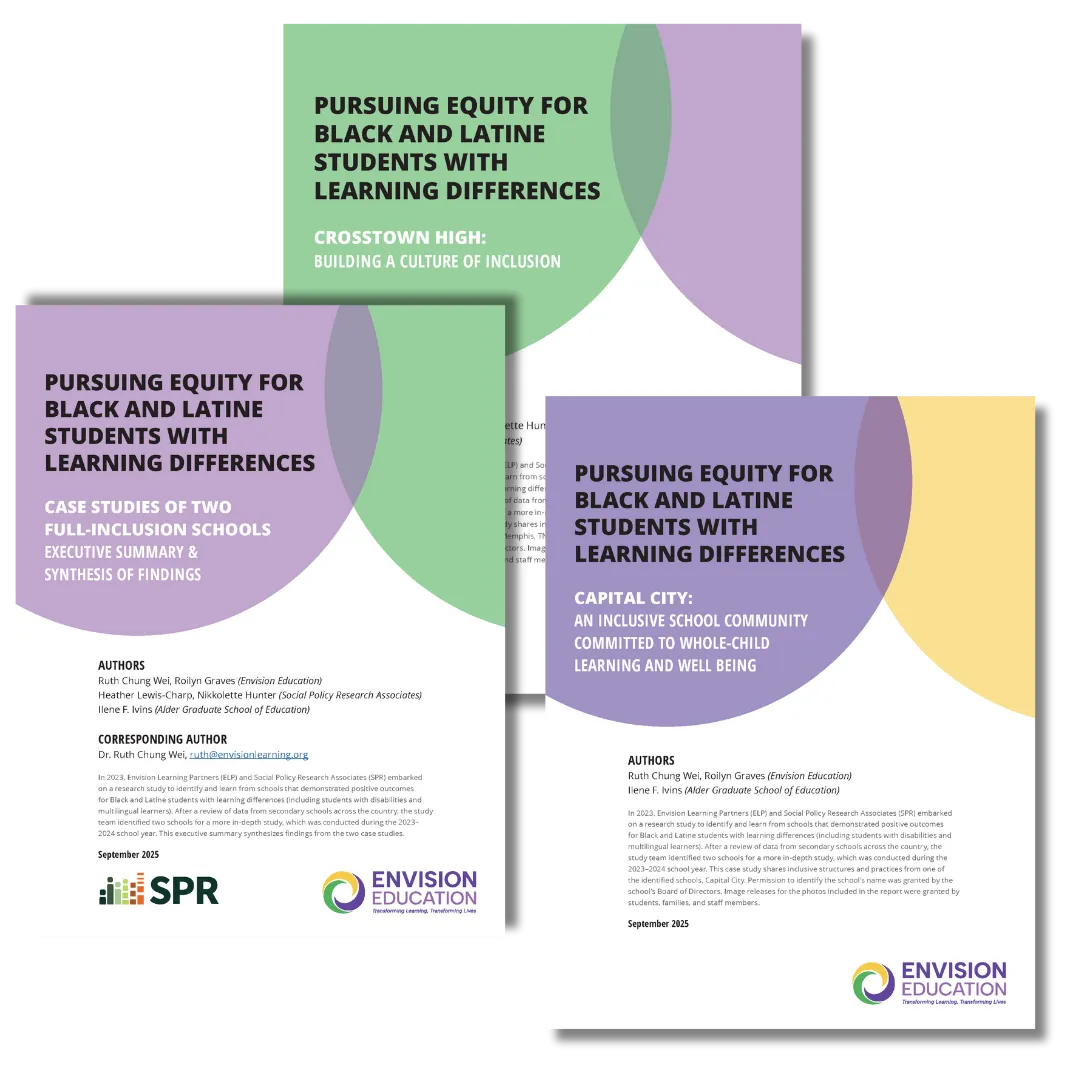




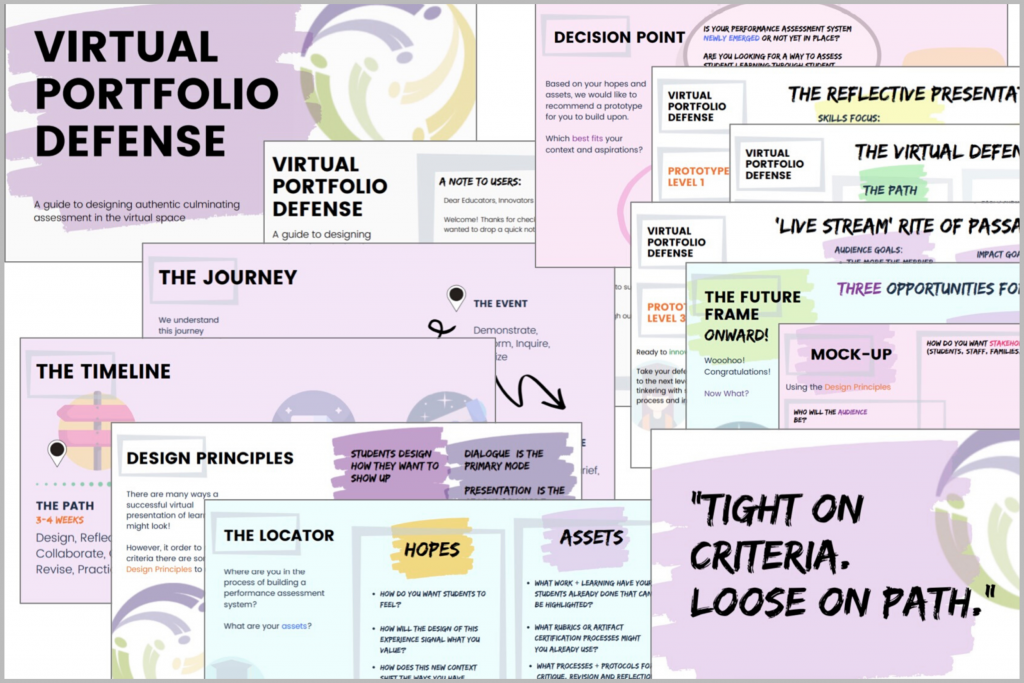




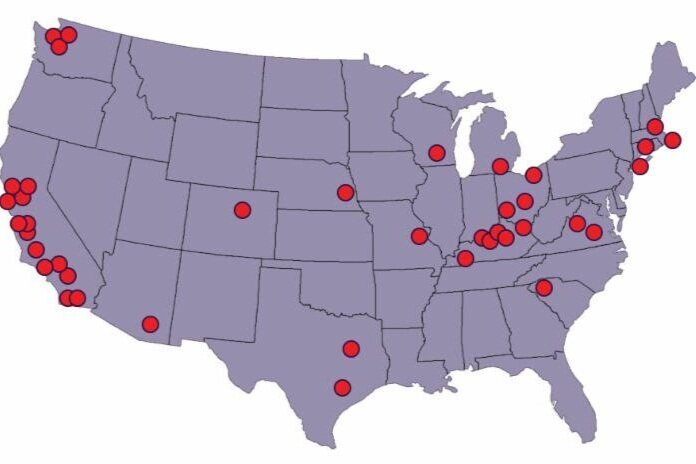



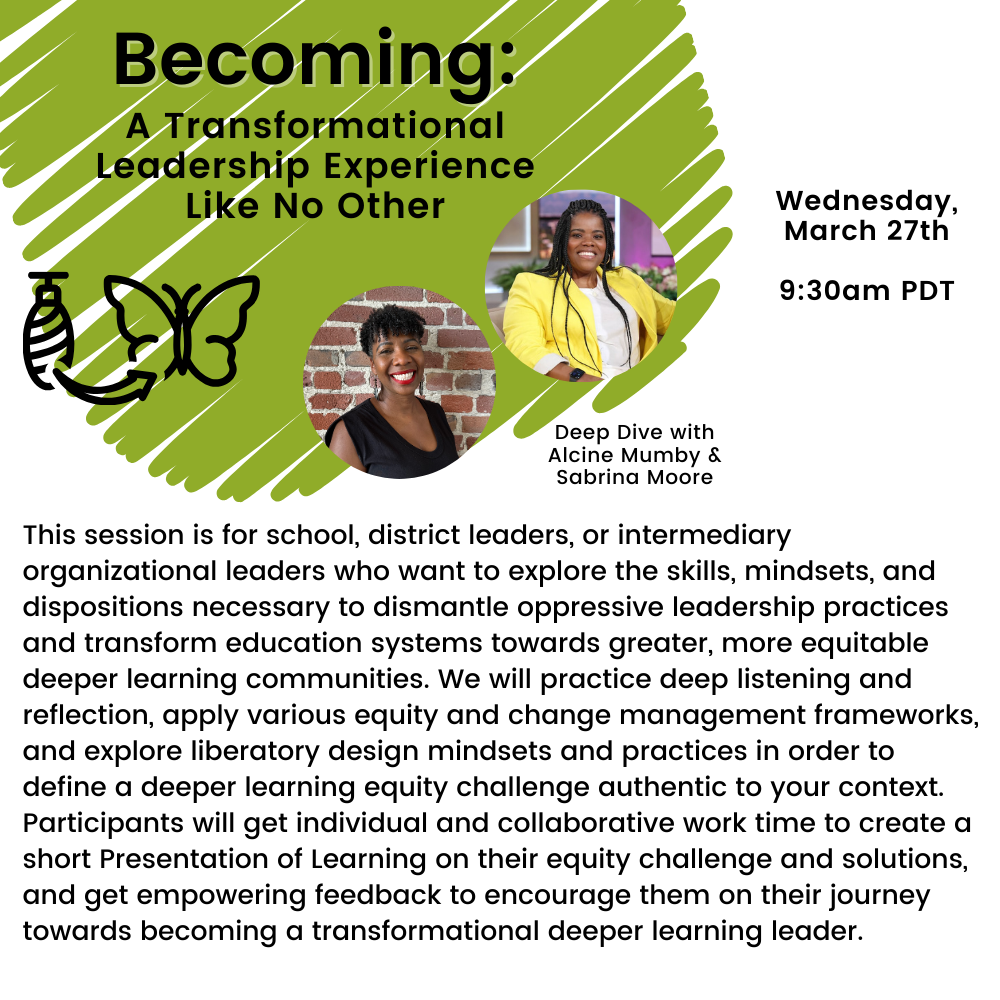
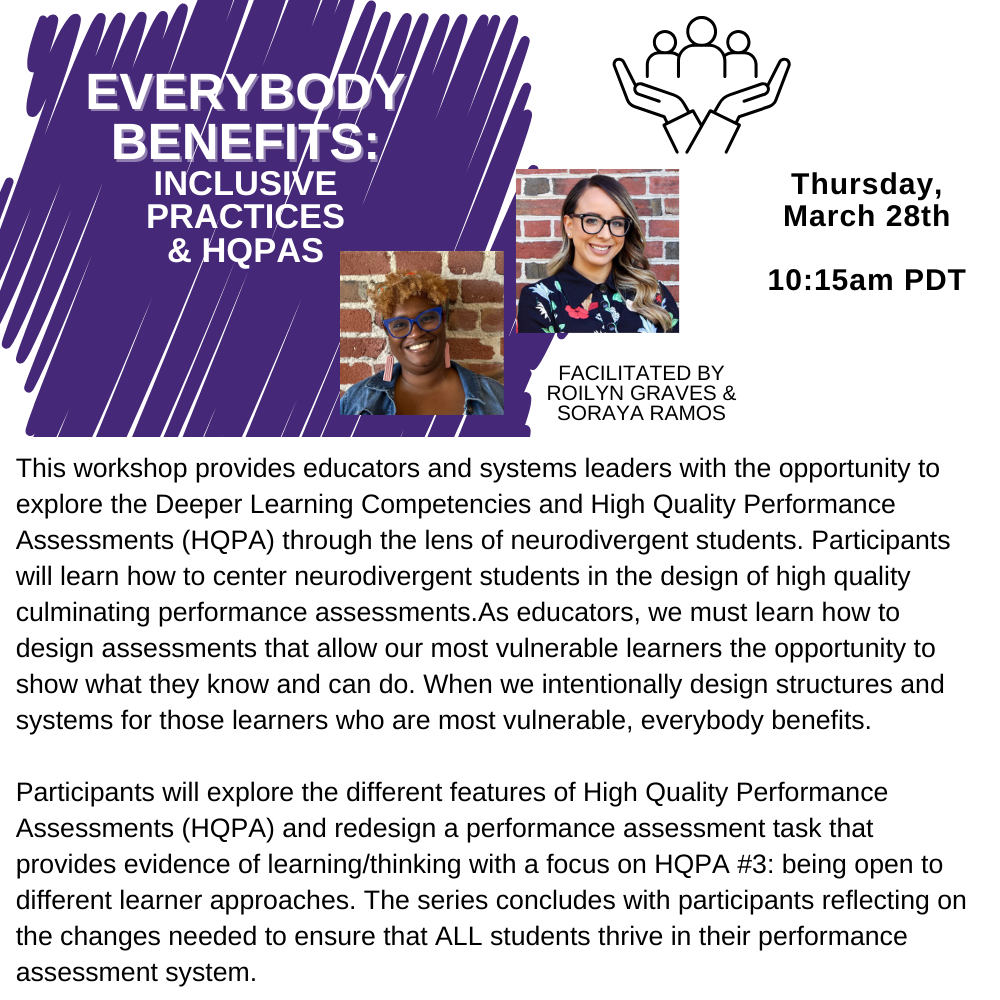


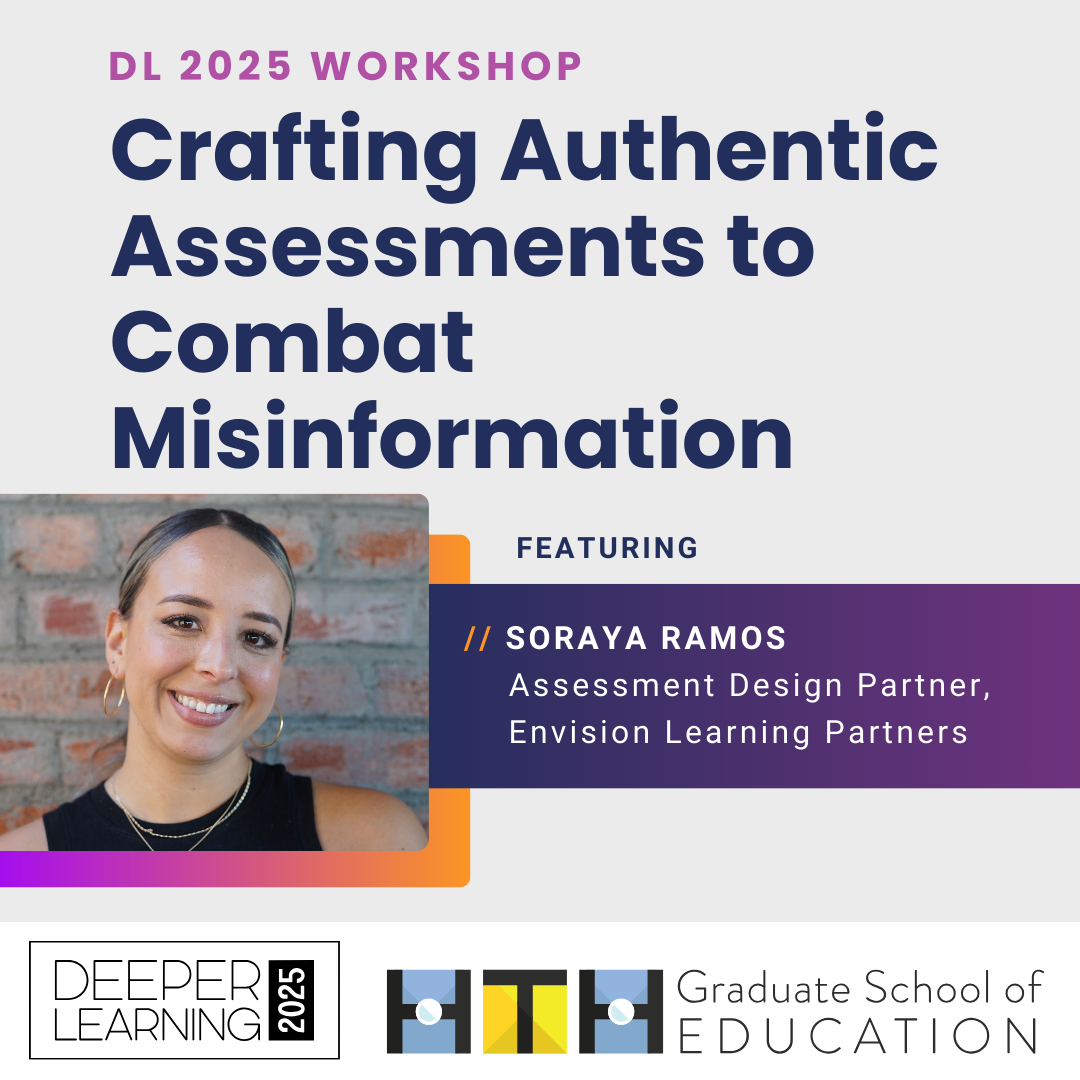
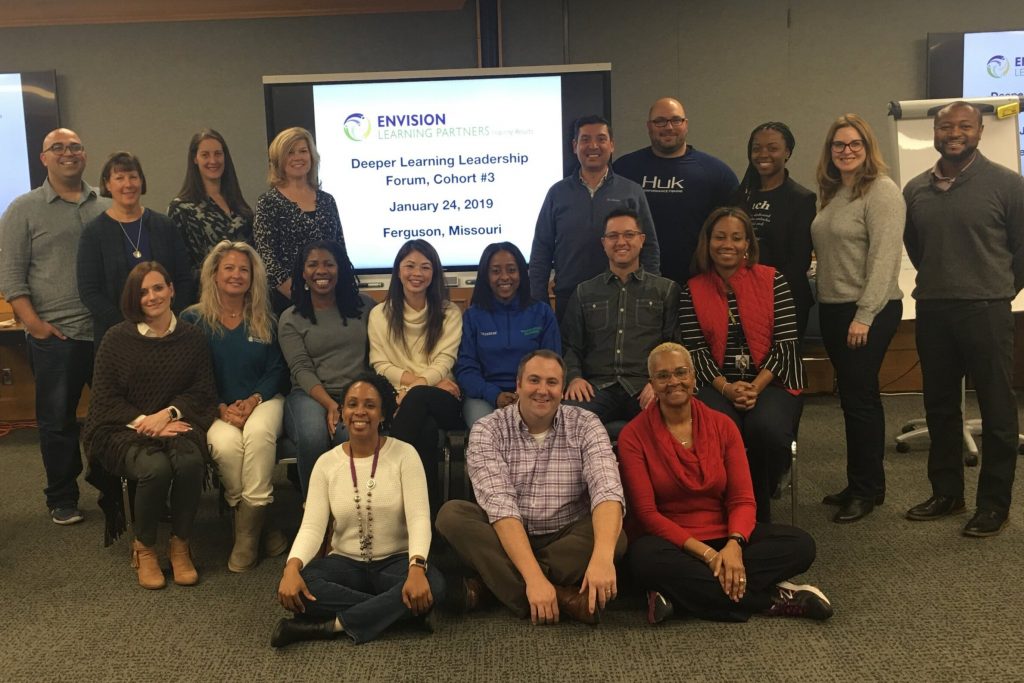
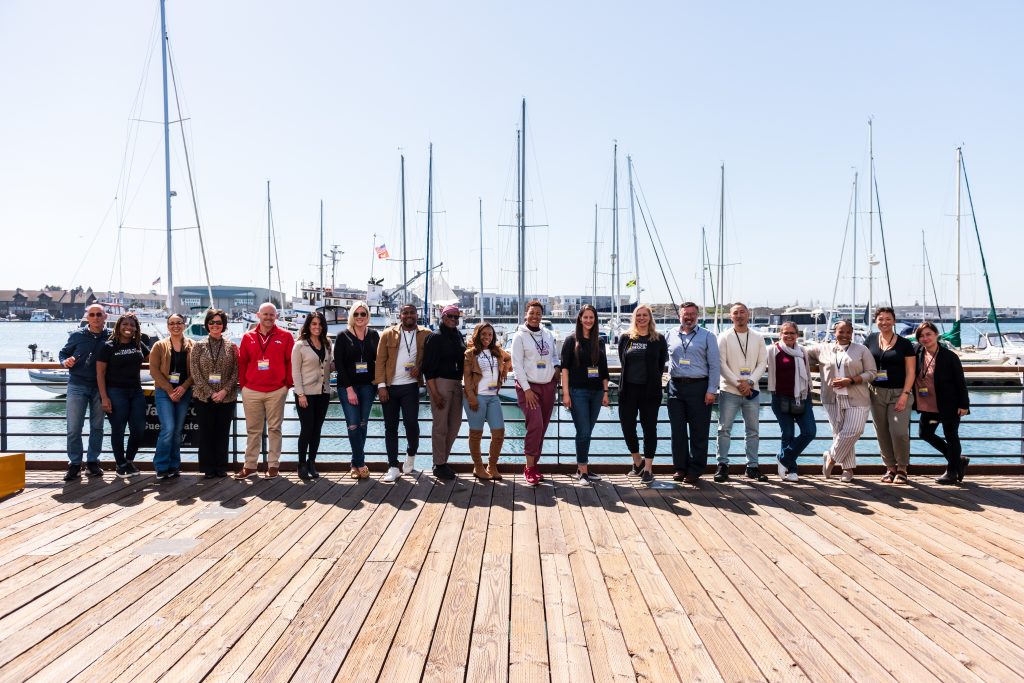

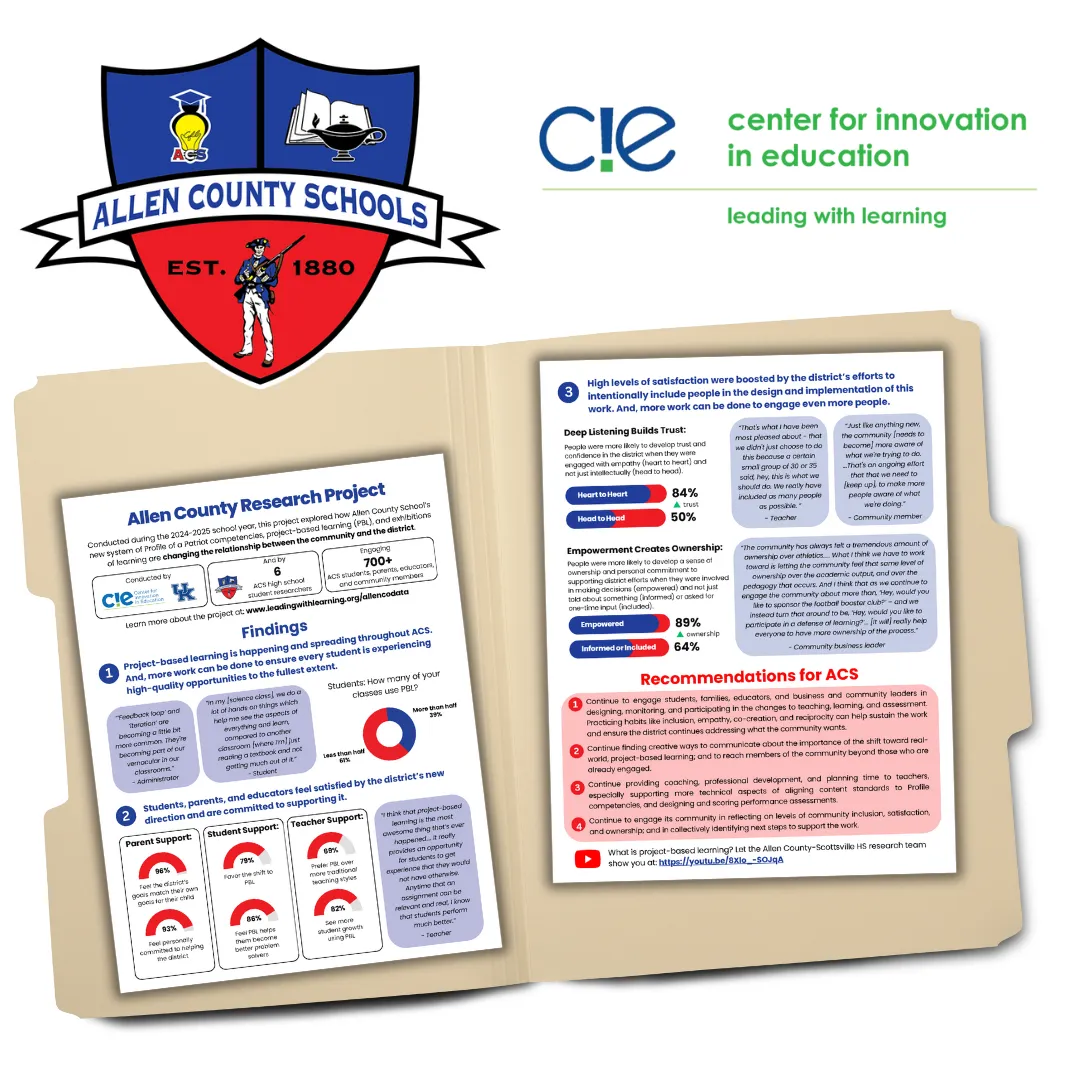



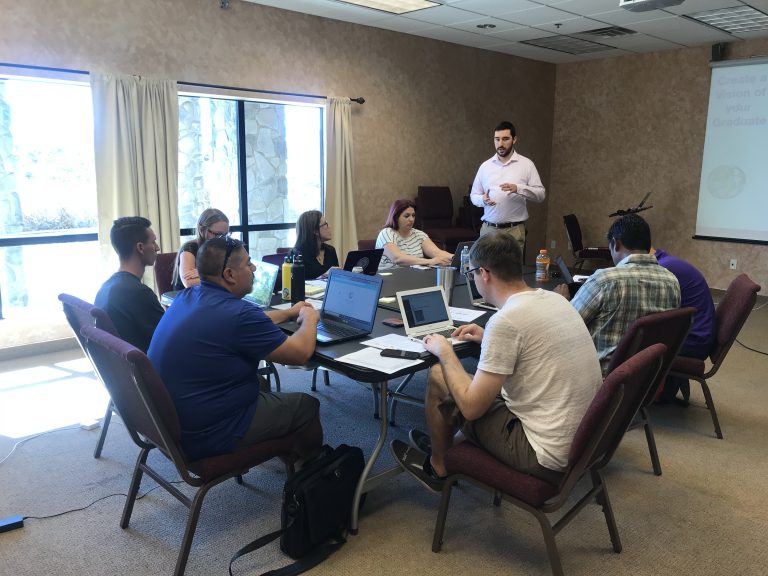
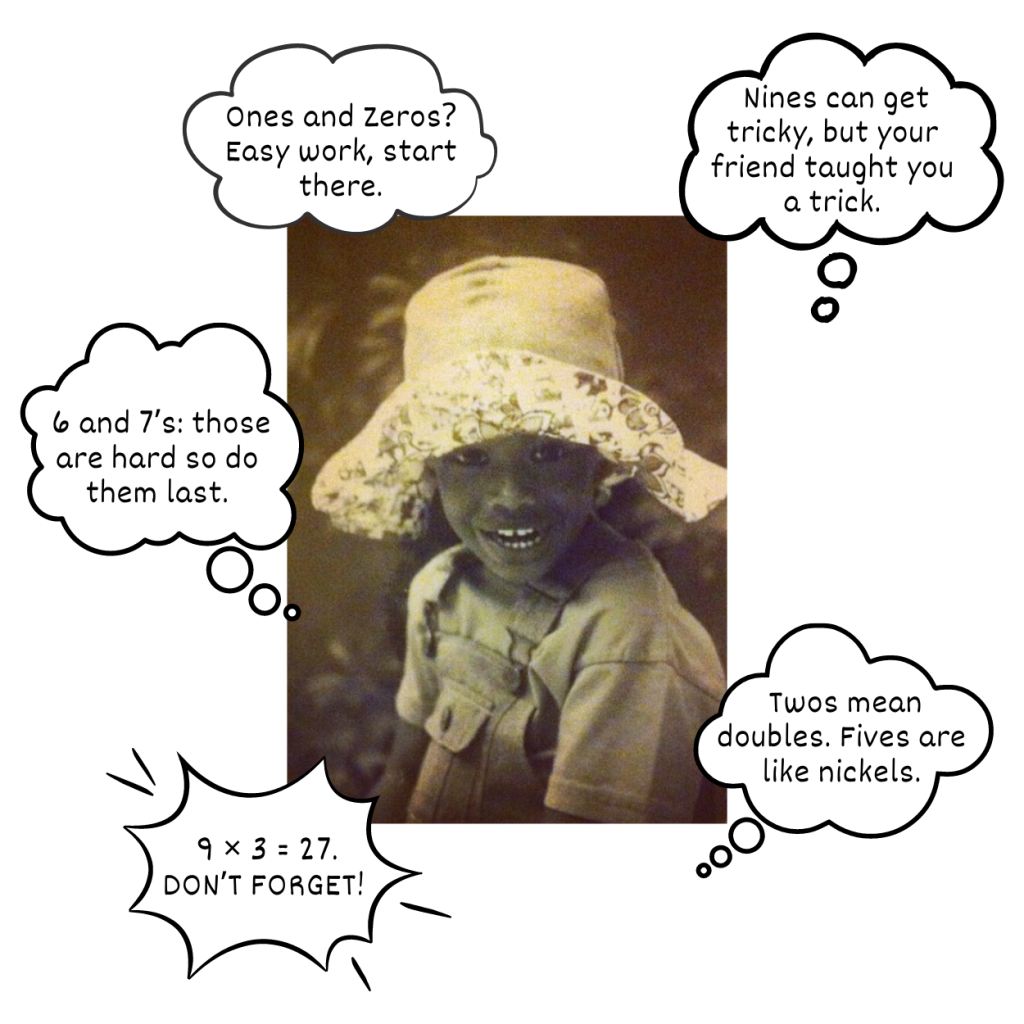

.png)

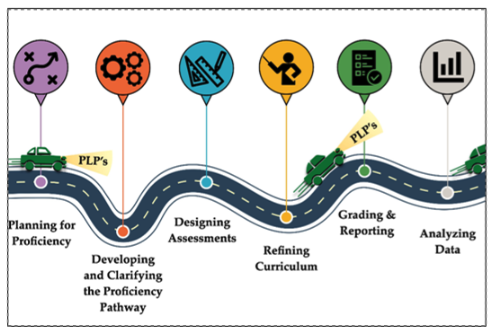








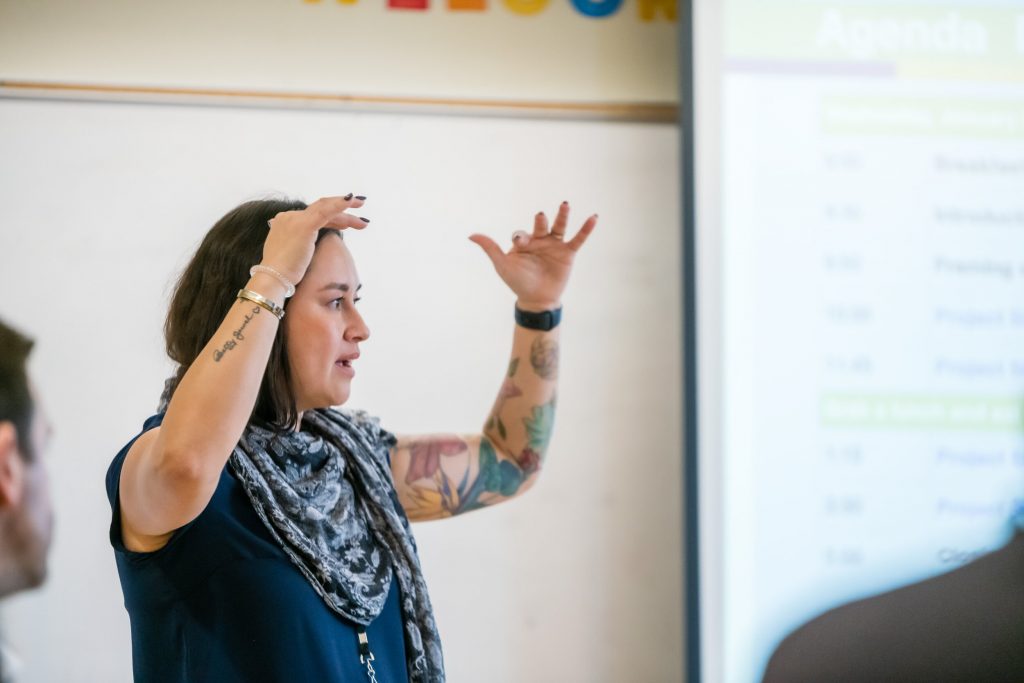



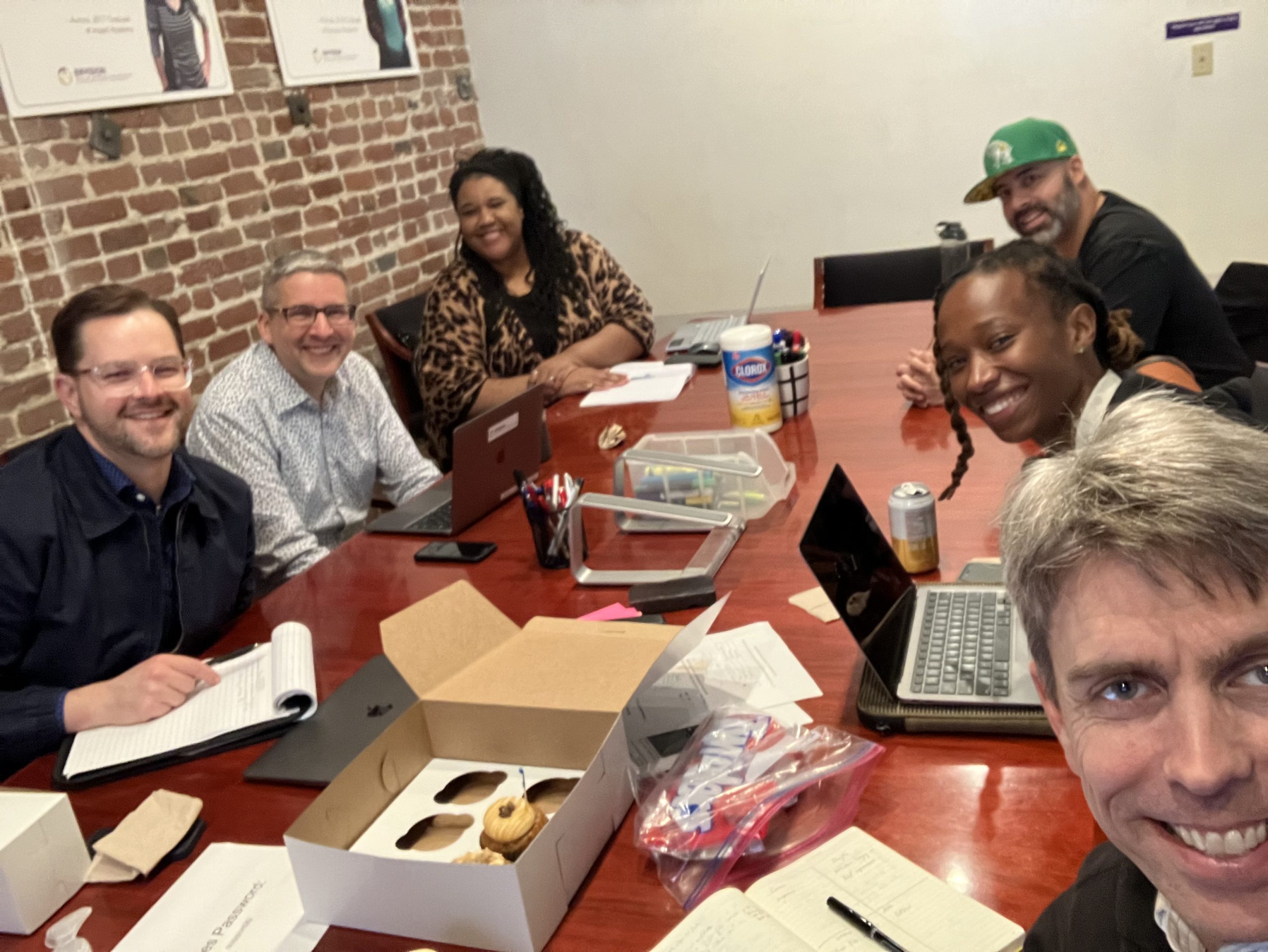
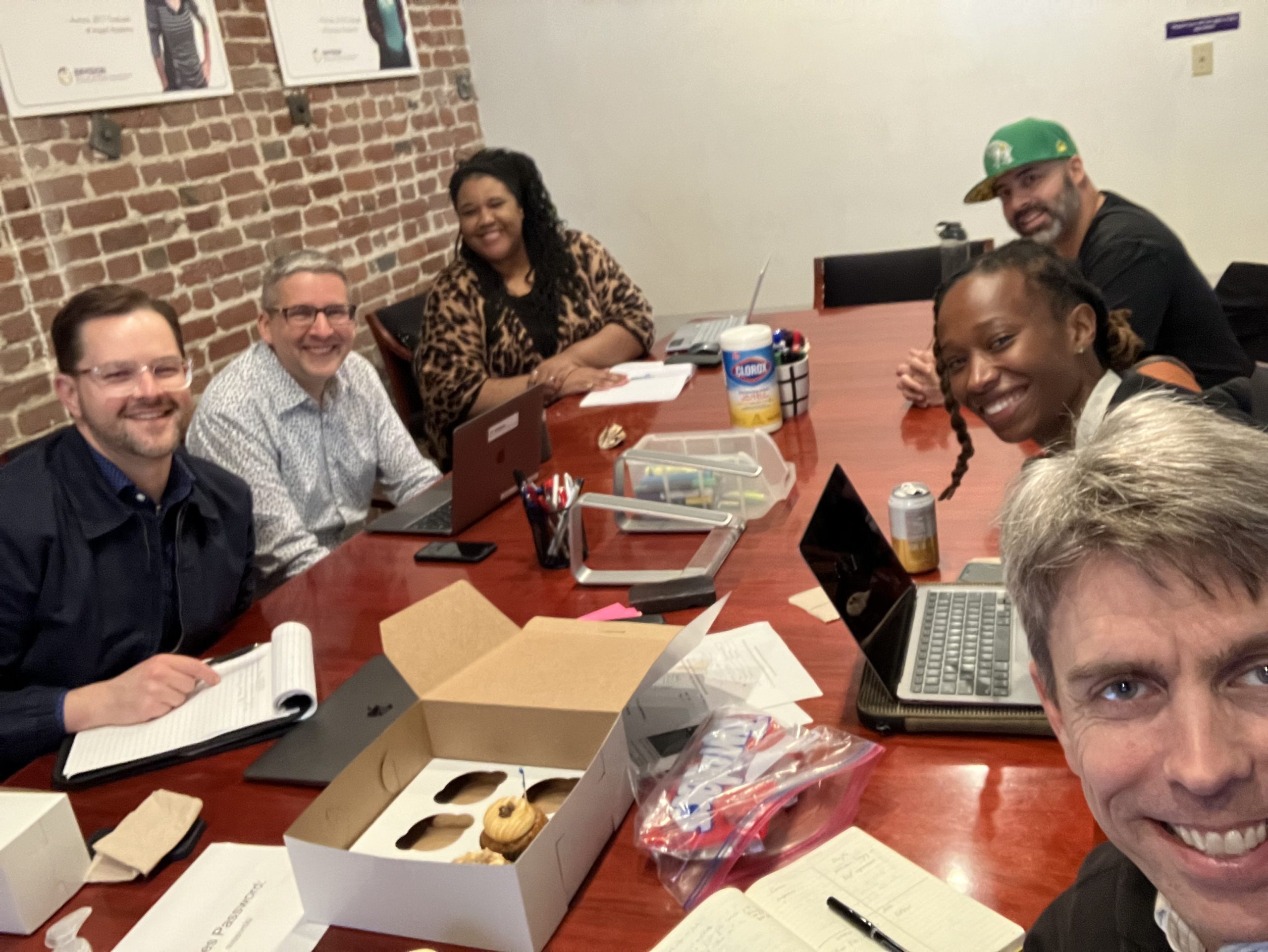



.svg)
.svg)

.svg)

.svg)

