Lorem ipsum dolor sit amet, consectetur adipiscing elit, sed do eiusmod tempor incididunt ut labore et dolore magna aliqua. Ut enim ad minim veniam, quis nostrud exercitation ullamco laboris nisi ut aliquip ex ea commodo consequat. Duis aute irure dolor in reprehenderit in voluptate velit esse cillum dolore eu fugiat nulla pariatur.
A family vacation can be about prioritizing presence and connection, relaxing, doing activities and creating fun memories, while also enjoying good food and conversation. However, in some worlds it can also feel like “forced family time,” because being under the same roof or on a joint itinerary can feel like testing the limits of patience and politeness. While both of those options can be true at the same time and were for me earlier this month, it also reminded me that vacations are experiences ripe to practice experience design. Although, when I found myself on “the balcony” watching myself and my family on “the “dance floor” (a metaphor we use at Leadership+Design (L+D) to help leaders reflect on their role or behavior both while doing
something and observing yourself do that thing), it felt like we unintentionally missed a design opportunity, which as an attendee of many professional gatherings feels more common than not.
Think about the gatherings you attend each year. If you were to use the mental model that everything is designed, how many of those gatherings were designed well? How do you decide if it was designed well, what metrics would you use? If you had to guess, what and whom were they designed for? What were the outcomes the planners tried to achieve?
This year at gatherings, I felt deep connection and relationship, disconnection and minor loneliness, high expectations and missed opportunities and both joy and awe. As a human-centered designer (who has a disposition for wanting to connect with other people), it’s difficult for me to participate in things and not use the lens described above and have those questions rattling around in my head. Having both been on the planning and attending side of events, I often wonder if we spend enough time mapping out our intentions and “why” the gathering exists, as Priya Parker asked us to do in The Art of Gathering.
There seem to be three main design categories related to the level of human connection in programs or gatherings:
First, there is being together in person, in community, in authenticity, etc. If this is the goal, likely there has been attention paid to helping people be in proximity to one another and build relationships. It’s not always easy or cost effective, but it is a design tool you can use to achieve your outcomes. I will say though that you can have proximity, but not create a feeling of being together.
At Leadership+Design we prioritize this design outcome in our leadership development programs. This summer we convened 32 women (educators and leaders) for a 4 day leadership program, Wonder Women, in Connecticut. In this program, the degree of intended togetherness was designed formally through a learning partner and small group project, in addition to full group sharing. Togetherness also existed informally with morning runs, evening trivia and larger breaks to allow for reflection and networking. Based on feedback, this in-person experience felt moving for attendees, and could not have been created if the program was much bigger or had been held virtually.
Another example was this year’s Assessment for Learning (AFL) Winter and Spring Convenings, led by the Center for Innovation in Education in partnership with Envision Learning Partners and L+D. These were designed for a smaller
Some of the AFL Design Team in Oakland, CA
audience (under 40 participants), embedded in local communities with a focus on belonging, inclusion, reciprocity and supported provocations to learn newassessment practices. In both events (Aurora, CO and Oakland, CA), conversations led to connections and strengthened a network of progressive educators and leaders asking how we could work together to improve assessment practices. This felt human, vulnerable and connected.
Second, there is designing to keep people separate, which is actually not a gathering, but could be a decision when you scope your desired outcomes. This may be a more efficient or cost effective strategy on the surface, but it depends on the type of experience you want to create and are honest about the costs of asking for engagement virtually or for people to work independently.
In the past month, I have had two sets of parents with driver-aged kids tell me that Driver’s Education used to be a right of passage and a coming of age experience that was about friendship and social interaction, as much as it was about driving (this was my personal experience as well). The new model however, is more cost effective and efficient, but it’s at home, alone and virtual. Obviously, there was a design decision there, one that prioritized cost and personal flexibility over the likely unintentional lost human connection that resulted from the old model.
The third option is the combination of being together physically (or virtually in some instances) but feeling or functionally remaining separate (in practice or mindset).
An example of this could be many of our experiences during plane travel. While, passengers share a four inch armrest, you are inarguably “in this together”, but unless one of passengers chooses to engage and open the communication channels, we exist separately.
This spring, I attended a very large conference where I knew only my team and a handful of other people. The event was housed in a large convention center which elicited a feeling of being separate and disconnected even when the conference attempted design decisions aimed at connection (i.e. a lounge space with arcade games and coffee, but was seemingly always empty).
This summer during a family reunion vacation, I looked outside and 12 of the 15 family members ranging in age from 11 to 76 (my kids are too young to have devices) were sitting on the patio in a circle all on their phones not speaking to one another. The group was physically present, but mentally somewhere else.
This year, I have attended well designed experiences that create human connection, a design principle I was looking for. This contributed to my growing awareness of how we conceive and design experiences for humans to gather and whether the true outcome is bringing people together and creating connection, keeping them separate, or bringing them together and still missing the opportunity to help attendees feel belonging, inclusion and connection.
It comes back to the foundational reality in decision making, design matters. I believe that in “our day and age” human connection also matters. If you want human connection, you need to design gatherings with this in mind, including the invitation, the space, the roles, and the schedule so people can find the time to connect. This is true for vacations, conference, book clubs or neighborhood block parties. We need to know who we are designing for, build trust in our communities to ask if we are effective, and realize that while it’s not efficient, sometimes being together and connected will help us as humans and leaders.
What can we do differently?
Below are some ideas on how to build additional human connections through gathering and being together. In addition to my experience at convenings this spring, I have also found some great resources to push my thinking and help my personal “aha” feel more rooted and connected to a larger community of people having a similar “aha” about what will help us as educators, community members, parents, and leaders.
CHALLENGE #1
The other day, I discovered an interview by the New York Times with Robert Putnam, author of numerous books including a favorite of mine, Bowling Alone and most recently The Upswing: How America Came Together a Century Ago and How We Can Do It Again. In the interview he shared how the structures or lack thereof that our culture employs deepen the feelings of loneliness and disconnection. The outcome of this disconnection impacts the level of separation we feel with “the other side” and he asserts that by involvement in community and civic groups we will learn about one another and build trust and connection. Even if we are opposites in our beliefs, if we are together and not separate, our future is more optimistic.
TAKE ACTION #1: Join something. Especially something local, in-person, and one that comes with a possibility of real human connection. And when you are there, be together even if it’s vulnerable. If you can’t find anything to join, start something and invite others. Be human together and give yourself permission to share your goals for what brought you there. If you are seeking togetherness, remind yourself of Robbie Novak and Brad Montague’s provocation in Kid President’s Guide to Being Awesome“put down your phone” and connect. That is unless you are getting someone’s digits or making a plan for your next meet-up.
CHALLENGE #2
Putnam also references the level of politically-induced division and how it’s creating a lot of feelings on all sides. Decisions are made about who people are by what we think we know about them. In an effort to personally challenge my own mental models, leveraging tools and processes help.
Organizations like Starts With Us, which describes itself as “a movement to empower millions of Americans just like you — tired of our culture of contempt and energized to foster critical thinking and constructive communication across our lines of difference” can be great resources to locate and practice tools that help us build empathy, and as Putnam suggests, have conversations that build trust and human connection.
Leadership+Design, has taken on a similar cause by developing a human-centered curricular resource, Design For Election Season, to help school communities (both students and adults) practice the skills of being curious and developing empathy and understanding for someone who has a different lived experience or set of beliefs. The “container” for learning is political in nature (not partisan), but it’s rooted in the belief that as humans we need to spend time learning from and listening to one another. The resource shares tools and protocols to help structure that learning.
TAKE ACTION #2: Think about your own echo chambers and be honest about the biases you have about people and their beliefs. Take time to challenge those assumptions and practice critical curiosity. Lean on tools and protocols like those above to be comfortable being uncomfortable.
CHALLENGE #3
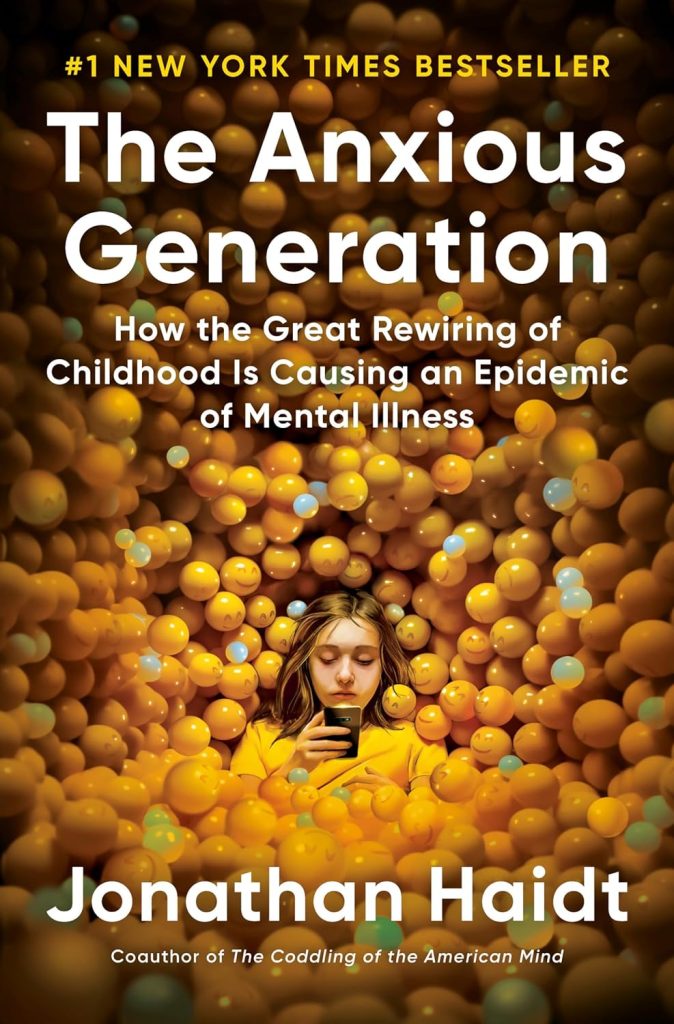
On recent drives with my 8 year old son, we listen to the book The Anxious Generation: How the Great Rewiring of Childhood Is Causing an Epidemic of Mental Illness by Jonathan Haidt. The book focuses on the mental and physical health implications of technology use, specifically on young people. As I reflect on my own feelings about togetherness and separateness, and my time on the patio with my family, it relates to what we are willing to do about the changes we want.
A colleague at Leadership+Design reminded me that while I can only control myself (related to technology use), I can initiate a conversation about how I feel at that moment, share my reaction to being together, but separate. I could share my goals for our time together and enter into a conversion about what brought us all to the gathering. This is something in my control.
TAKE ACTION #3: Design with intention and communicate the intentions you have for an experience to those who are invited. If you want others to help you design, align your design principles towards the experience you want to have. If you are either someone who attends gatherings or plans them, you still have an opportunity to have an opinion. Think about what feels better, together or separate or together and still separate, and be part of the solution to improve the gatherings.
All of this to say, let’s do better.Assessment for Learning convening was a relatively small group of education leaders who prioritized designing for connection, but that was a choice we made. In contrast, it felt like my family vacation took a “wait and see” approach. We can also make choices starting with the patio conversations, the armrest airplane engagement and the commitment to looking across “the aisle” to build
relationships and trust. We can continue to be told by the media, the Surgeon General, and Putman how bad things are when we don’t have a strong social fabric to care about and not fear one another. However, they and many others continue to remind us, it’s up to us whether we plan our lives, relationships, gatherings and organizations to simply happen or whether we design them to be catalysts for change and improved connection.
Learn more heading
content paragraph
Blogs and News
Latest Stories and Resources
Insights, partner highlights, guest perspectives, and resources to support your work
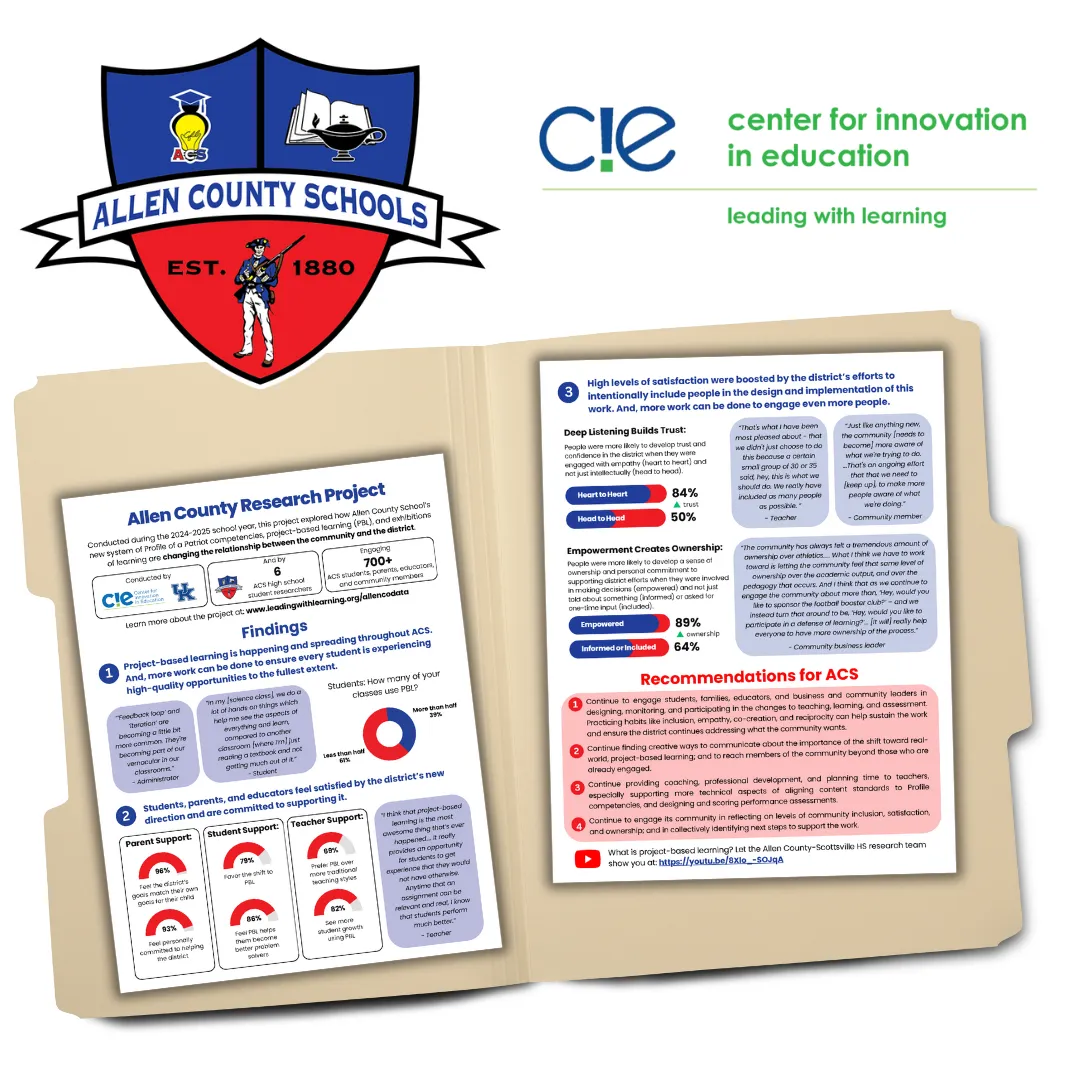
A newly published case study from the Center for Innovation in Education (C!E), featuring Envision Learning Partners in Appendix C, highlights Allen County, Kentucky’s multi-year effort to redesign assessment and accountability through Inclusive Design. The report, Better Together, shows how the district co-created their graduation competencies called “Profile of A Patriot” and embedded project-based learning and performance assessments to place students’ passions and real-world skills at the center of learning.
Envision Learning Partners has been proud to support Allen County in this work, and we’re excited to share C!E’s new case study. We’ve partnered closely with C!E through the Assessment for Learning Project, working together to advance learner-centered assessment practices nationally.
By Michael Viera, Envision Education’s College and Career Pathways Manager
Several years ago the city of Oakland came together to support college and career programming for high schoolers, by advancing and deepening career pathways in alignment with the Linked Learning Alliance standards and methodology. The Linked Learning Alliance hosts an annual conference where educators share best practices and takeaways from school sites around the state. Oakland schools always show out in big numbers at the conference, but this year it took place in downtown Oakland, so the presence was even greater.
I had been to the conference previously, but this time was different. Being my 3rd year at Envision in this role, I felt like I finally understood what it was all about. I had colleagues from Envision Learning Partners in attendance and collaborating with me. I got to connect with colleagues from other Oakland schools. I knew what to look for and who to listen to in order to improve our programming at Envision Academy and across the Envision network.
The conference was motivating, to say the least. It is a breath of fresh air being in rooms of educators who are excited and realistic about their work in schools, and who understand the skills students need to have success in their futures.
I came back from the conference and immediately organized Envision Academy’s first job fair since COVID. We had twelve community partners visit our campus to share information with students on internship opportunities, after school and summer programs, and community resources. Students seemed excited about these experiences that they can be a part of outside of their regular curriculum.
At the end of the event, two students stayed back and pulled me aside. I thought something bad had happened. Instead, one of them simply said, “Mr. Viera, we just wanted to thank you for putting together this event. It’s really inspiring to see all these opportunities we didn’t know about until now.”
After a couple of weeks of back and forth emails and phone calls with partners, planning meetings with administration, and quite literally running around setting up tables and chairs on the day of the event, those students made it all worth it. When students are able to take their learning outside of school walls and make connections with their community, they feel seen and they thrive.
Hear from Michael and ELP Assessment Design Partner, Josette Neal-De-Stanton on their takeaways from the Linked Learning Conference.
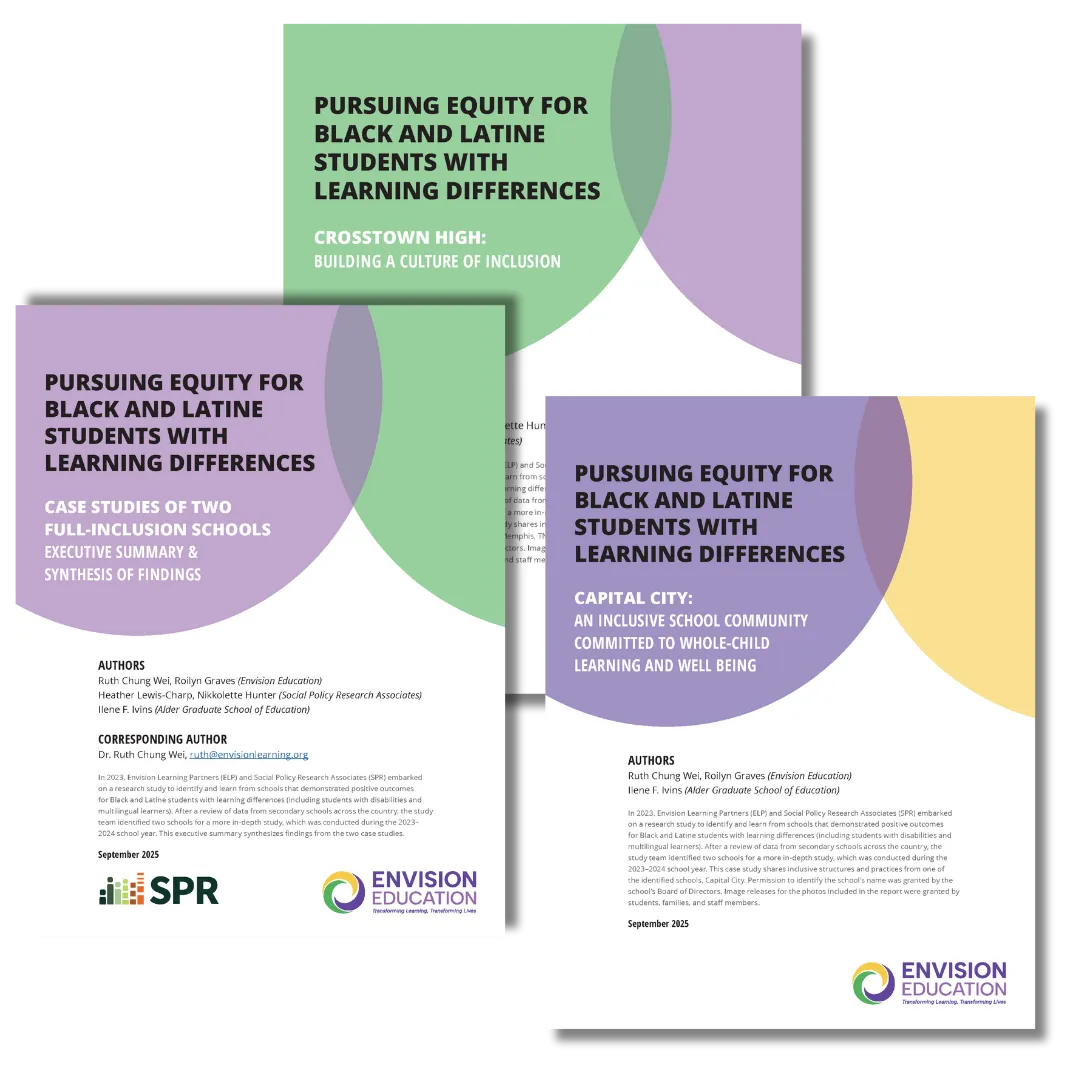
Envision Education is excited to share the culmination of its two-year research project, Pursuing Equity for Black & Latine Students with Learning Differences, which
documents and illustrates the systems, practices, cultures, and supports that are associated with the well being and success of Black and Latine students with learning differences – students with disabilities and multilingual students with disabilities.
In 2023, Envision Learning Partners (ELP) and Social Policy Research Associates (SPR) embarked on a research study to identify and learn from schools that demonstrated positive outcomes for Black and Latine students with learning differences (including students with disabilities and multilingual learners). After a review of data from secondary schools across the country, the study team identified two schools for a more in-depth study, which was conducted during the 2023–2024 school year.
The results of the research are shared through case studies of the two schools that were the focus of the research: 1) Crosstown High: Building a Culture of Inclusion; 2) Capital City: An Inclusive School Community Committed to Whole-Child Learning and Well Being; and 3) An Executive Summary/Synthesis of Findings.
In addition, we have authored four practice briefs based on the findings of the research that provide practical steps that schools can take to create more inclusive environments that support the success of Black and Latine students with learning differences.
Co-teaching: A Means to Creating Inclusive and Equitable General Education Classrooms
UDL: Universal Design for Learning in a Culturally Responsive Context
Culturally Responsive Practices: An Inclusive, Culturally Responsive School Culture That Fosters Relationships
Competency-Based Learning and Assessment: Assessment and Grading Practices That Support an Inclusive Learning Culture
This research was made possible through the generous support of New Profit, a venture philanthropic organization, and the Oak Foundation.
Explore our diverse events. Enhance your expertise, connect with thought leaders, and broaden your horizons.
A newly published case study from the Center for Innovation in Education (C!E), featuring Envision Learning Partners in Appendix C, highlights Allen County, Kentucky’s multi-year effort to redesign assessment and accountability through Inclusive Design. The report, Better Together, shows how the district co-created their graduation competencies called “Profile of A Patriot” and embedded project-based learning and performance assessments to place students’ passions and real-world skills at the center of learning.
Envision Learning Partners has been proud to support Allen County in this work, and we’re excited to share C!E’s new case study. We’ve partnered closely with C!E through the Assessment for Learning Project, working together to advance learner-centered assessment practices nationally.
By Michael Viera, Envision Education’s College and Career Pathways Manager
Several years ago the city of Oakland came together to support college and career programming for high schoolers, by advancing and deepening career pathways in alignment with the Linked Learning Alliance standards and methodology. The Linked Learning Alliance hosts an annual conference where educators share best practices and takeaways from school sites around the state. Oakland schools always show out in big numbers at the conference, but this year it took place in downtown Oakland, so the presence was even greater.
I had been to the conference previously, but this time was different. Being my 3rd year at Envision in this role, I felt like I finally understood what it was all about. I had colleagues from Envision Learning Partners in attendance and collaborating with me. I got to connect with colleagues from other Oakland schools. I knew what to look for and who to listen to in order to improve our programming at Envision Academy and across the Envision network.
The conference was motivating, to say the least. It is a breath of fresh air being in rooms of educators who are excited and realistic about their work in schools, and who understand the skills students need to have success in their futures.
I came back from the conference and immediately organized Envision Academy’s first job fair since COVID. We had twelve community partners visit our campus to share information with students on internship opportunities, after school and summer programs, and community resources. Students seemed excited about these experiences that they can be a part of outside of their regular curriculum.
At the end of the event, two students stayed back and pulled me aside. I thought something bad had happened. Instead, one of them simply said, “Mr. Viera, we just wanted to thank you for putting together this event. It’s really inspiring to see all these opportunities we didn’t know about until now.”
After a couple of weeks of back and forth emails and phone calls with partners, planning meetings with administration, and quite literally running around setting up tables and chairs on the day of the event, those students made it all worth it. When students are able to take their learning outside of school walls and make connections with their community, they feel seen and they thrive.
Hear from Michael and ELP Assessment Design Partner, Josette Neal-De-Stanton on their takeaways from the Linked Learning Conference.
Envision Education is excited to share the culmination of its two-year research project, Pursuing Equity for Black & Latine Students with Learning Differences, which
documents and illustrates the systems, practices, cultures, and supports that are associated with the well being and success of Black and Latine students with learning differences – students with disabilities and multilingual students with disabilities.
In 2023, Envision Learning Partners (ELP) and Social Policy Research Associates (SPR) embarked on a research study to identify and learn from schools that demonstrated positive outcomes for Black and Latine students with learning differences (including students with disabilities and multilingual learners). After a review of data from secondary schools across the country, the study team identified two schools for a more in-depth study, which was conducted during the 2023–2024 school year.
The results of the research are shared through case studies of the two schools that were the focus of the research: 1) Crosstown High: Building a Culture of Inclusion; 2) Capital City: An Inclusive School Community Committed to Whole-Child Learning and Well Being; and 3) An Executive Summary/Synthesis of Findings.
In addition, we have authored four practice briefs based on the findings of the research that provide practical steps that schools can take to create more inclusive environments that support the success of Black and Latine students with learning differences.
Co-teaching: A Means to Creating Inclusive and Equitable General Education Classrooms
UDL: Universal Design for Learning in a Culturally Responsive Context
Culturally Responsive Practices: An Inclusive, Culturally Responsive School Culture That Fosters Relationships
Competency-Based Learning and Assessment: Assessment and Grading Practices That Support an Inclusive Learning Culture
This research was made possible through the generous support of New Profit, a venture philanthropic organization, and the Oak Foundation.

.svg)
.svg)


.svg)
.svg)






.svg)
.svg)

.svg)

.svg)

