Checkout our most recent Resource Corner!
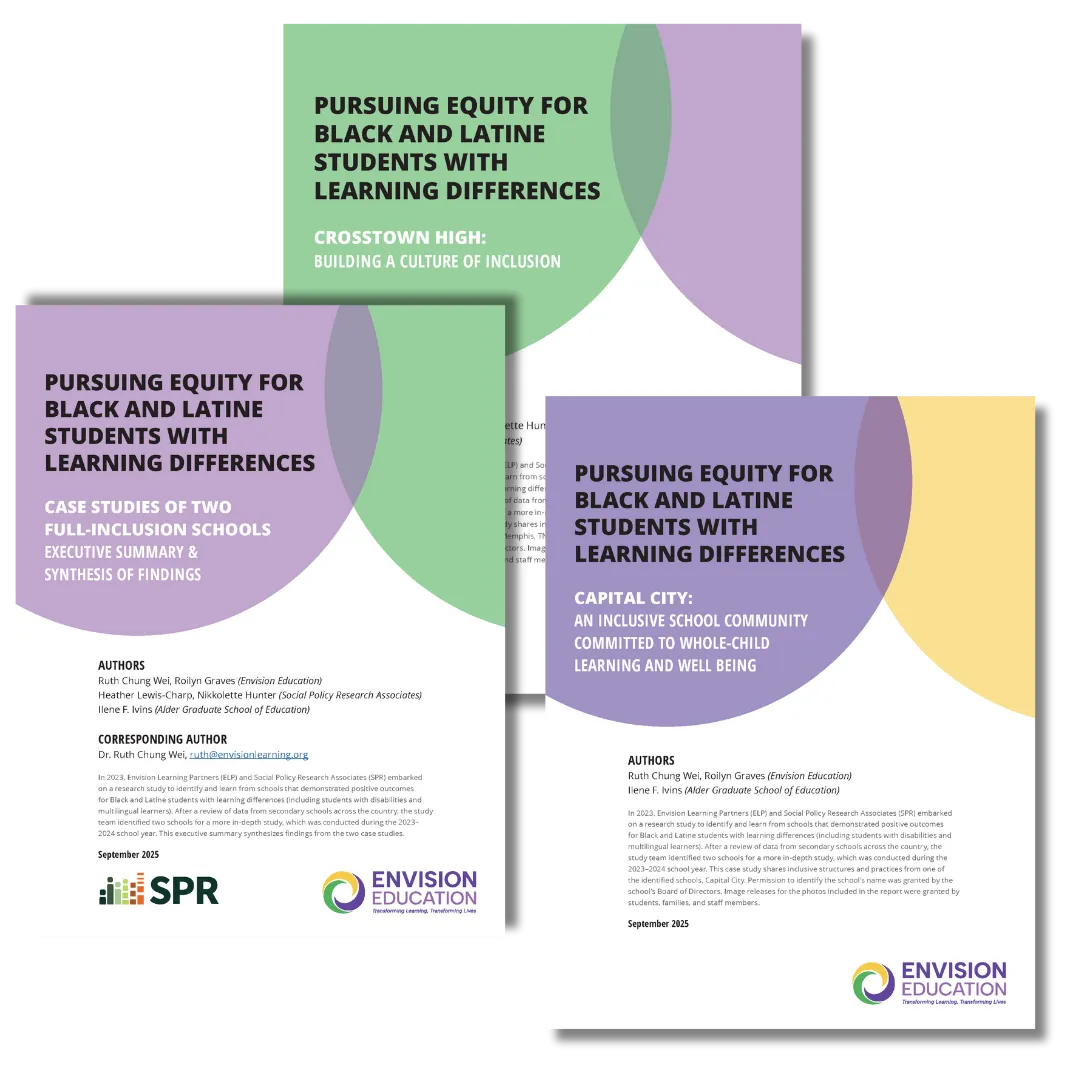
Envision Education is excited to share the culmination of its two-year research project, Pursuing Equity for Black & Latine Students with Learning Differences, which
documents and illustrates the systems, practices, cultures, and supports that are associated with the well being and success of Black and Latine students with learning differences – students with disabilities and multilingual students with disabilities.
In 2023, Envision Learning Partners (ELP) and Social Policy Research Associates (SPR) embarked on a research study to identify and learn from schools that demonstrated positive outcomes for Black and Latine students with learning differences (including students with disabilities and multilingual learners). After a review of data from secondary schools across the country, the study team identified two schools for a more in-depth study, which was conducted during the 2023–2024 school year.
The results of the research are shared through case studies of the two schools that were the focus of the research: 1) Crosstown High: Building a Culture of Inclusion; 2) Capital City: An Inclusive School Community Committed to Whole-Child Learning and Well Being; and 3) An Executive Summary/Synthesis of Findings.
In addition, we have authored four practice briefs based on the findings of the research that provide practical steps that schools can take to create more inclusive environments that support the success of Black and Latine students with learning differences.
- Co-teaching: A Means to Creating Inclusive and Equitable General Education Classrooms
- UDL: Universal Design for Learning in a Culturally Responsive Context
- Culturally Responsive Practices: An Inclusive, Culturally Responsive School Culture That Fosters Relationships
- Competency-Based Learning and Assessment: Assessment and Grading Practices That Support an Inclusive Learning Culture
This research was made possible through the generous support of New Profit, a venture philanthropic organization, and the Oak Foundation.

Resource Corner: Pursuing Equity for Black and Latine Students with Learning Differences Case Studies & Practice Briefs
Envision Education has long been proud that we not only serve students directly through our Bay Area schools but also commit to serving public school students everywhere through our consulting division, Envision Learning Partners. Our understanding of our past and potential future is even clearer now, thanks to A Pragmatic Playbook for Impact: Direct, Widespread, and Systemic, which offers an illuminating framework for analyzing how mission-driven ed organizations work to spread the change they seek.
To help illustrate the framework, Bellwether Education Partners, in partnership with New Profit, conducted a case study on Envision Education, based on a series of interviews with longtime Envision teacher and now ELP leader, Justin Wells. For us at Envision, the case study was a chance not only to reflect but also to learn. We came out of the experience with a better sense of who we are and where we are headed as an organization, and we are grateful to Bellwether and New Profit for the opportunity.
On August 11th, Bellwether is hosting a webinar where you can hear ELP and other educational organizations discuss their various approaches to scaling impact.

ELP was honored to partner with so many other incredible organizations to develop this resource.

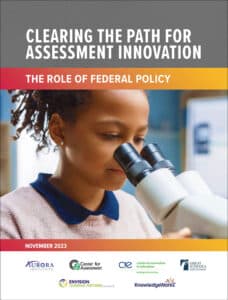
Beyond the Horizon: Blazing a Trail Toward Learner-Centered School Quality Systems includes recommendations for education leaders at every level of the system, mapping the course for the future of assessment and accountability.
Created in collaboration with leaders in K-12 student-centered learning from across the country, these recommendations support a learner-centered accountability system that would:
- Create to conditions that honor local context while ensure the quality of every learner’s educational experience
- Utilize holistic indicators that include school inputs and a range of student outcomes
- Place emphasis on mastery of academic knowledge and assessment of essential skills
- Focus on growth, not grades
- Use data to calibrate for progress and pace
Realizing the full potential of student-centered learning requires transformation of traditional approaches to assessment and accountability. To truly move to student-centered learning at scale, education systems must be redesigned.
Envision Learning Partners is honored to have co-authored a new paper alongside the Aurora Institute, the Center for Assessment, the Center for Innovation in Education, the Great Schools Partnership, and KnowledgeWorks.

Resource Corner: Clearing the Path for Assessment Innovation

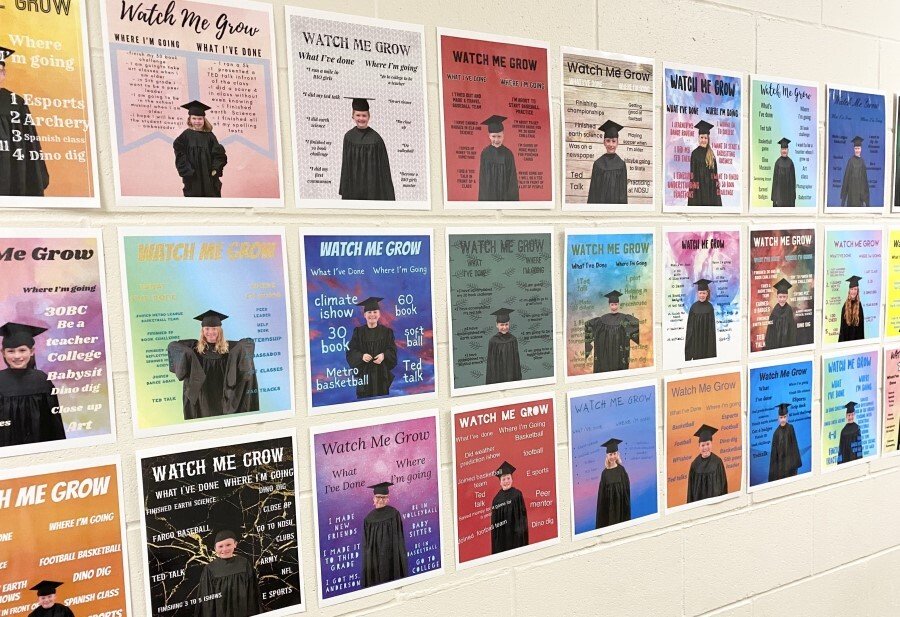
We recently read an article by NGLC’s dynamite Knowledge Officer, Kristen Vogt. The piece shares an observation that many of us have seen in the field: graduate profiles are often discussed as something meant for high school students, with little clear connection to elementary and middle schools. Kristen shares examples of schools across the country aligning instruction across K-12 to graduate profiles, including elementary and middle schools (you will be particularly impressed by Megan Margerum in North Dakota). We love the recognition that portraits of a graduate are, among other things, a journey map, and these journeys are most successful when they are seen not just as standalone endings, but part of a student’s experience in elementary and middle school as well.

Interested in launching or revising your Graduate Profile? We can help.

Resource Corner: Developing Portrait of a Graduate Skills from Elementary School to High School Graduation (and Beyond)
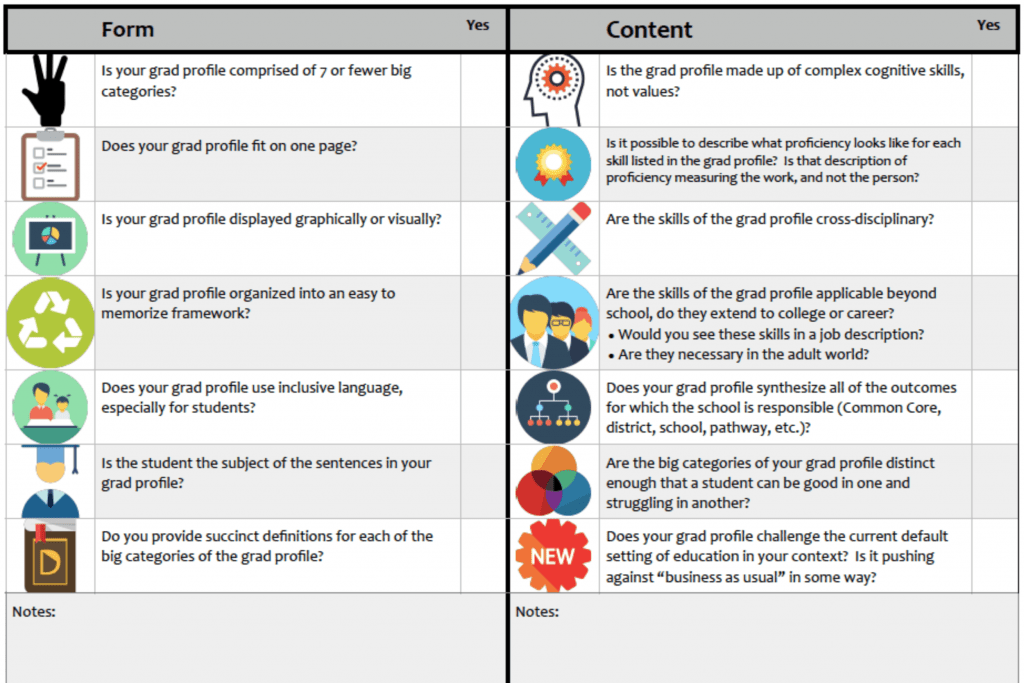
Is your Grad Profile made up of complex cognitive skills, not values? That’s one of the 10+ questions we ask with our Graduate Profile Quality Criteria Check Tool. We have been delighted to see the surge in Graduate Profiles developed by school systems across the USA over the past year but have noticed the need for an important next step: check whether your new grad profile meets these important quality criteria that we’ve developed over the past decade working with hundreds of schools.
Click the resource button to download the PDF.
This resource was developed for math teachers looking for a pathway into developing Student language (disciplinary language, English language, and academic language).It serves as an invitation to be intentionally experimental with three processes that students experience often in school, but not as often in math class: students revising their work and their thinking; students interpreting the writing of other students; and students interacting with each other.
Click the resource button to download and explore this resource tool!

This resource is one that ELP has adapted from the School Reform Initiative Colorado Center of Activity and has been previously used in a Deeper Learning Leadership Forum (DLLF) session.
Holding a Kiva Panel allows a larger group of listeners to highlight and learn from the voices of the selected panelists and can be adjusted for the virtual world.

Click the resource button to download the PDF.
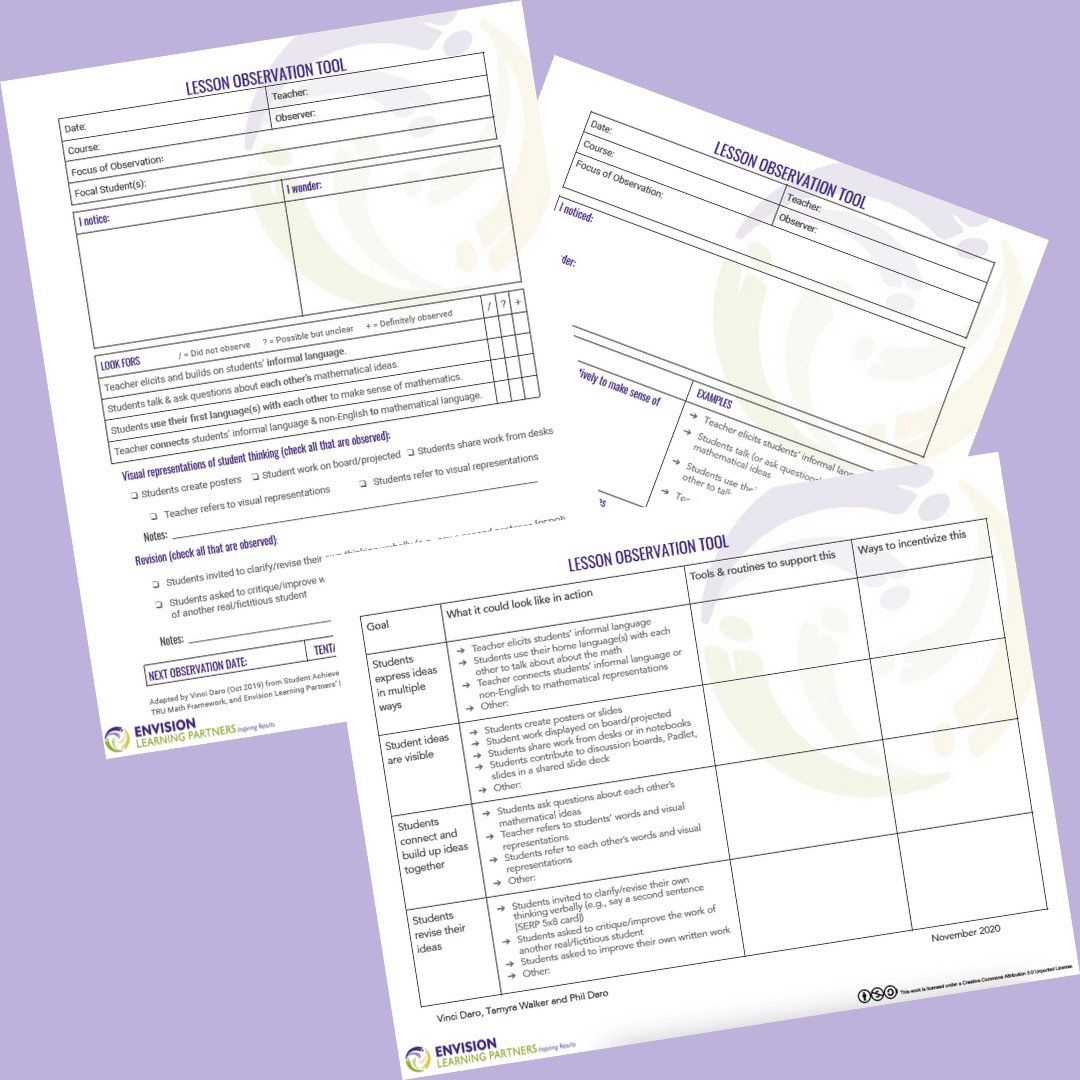
These three observation tools are intended to support ‘minimal-prep’ lesson observation in classrooms where student ideas, language, and interaction are at the center of the learning process. They were specifically designed for mathematics classrooms, but may also be useful in other contexts.
The two Lesson Observation Tools are meant as note catchers and as a manageable list of student and teacher actions to look for. In using these tools, it is important to agree with the teacher on the focus of the observation, for example: Use of instructional routines to surface and develop student ideas and language.
The Language-Rich Classrooms: Observation & Planning Tool is meant for a coach and teacher, or teacher peers, to use together for linking an observation with a conversation about planning next steps. It, too, has a list of example student and teacher actions to look for.
Click the resource button to download the editable PDFs.
Looking for even more resources? Visit the ELP blog for all past newsletter content.
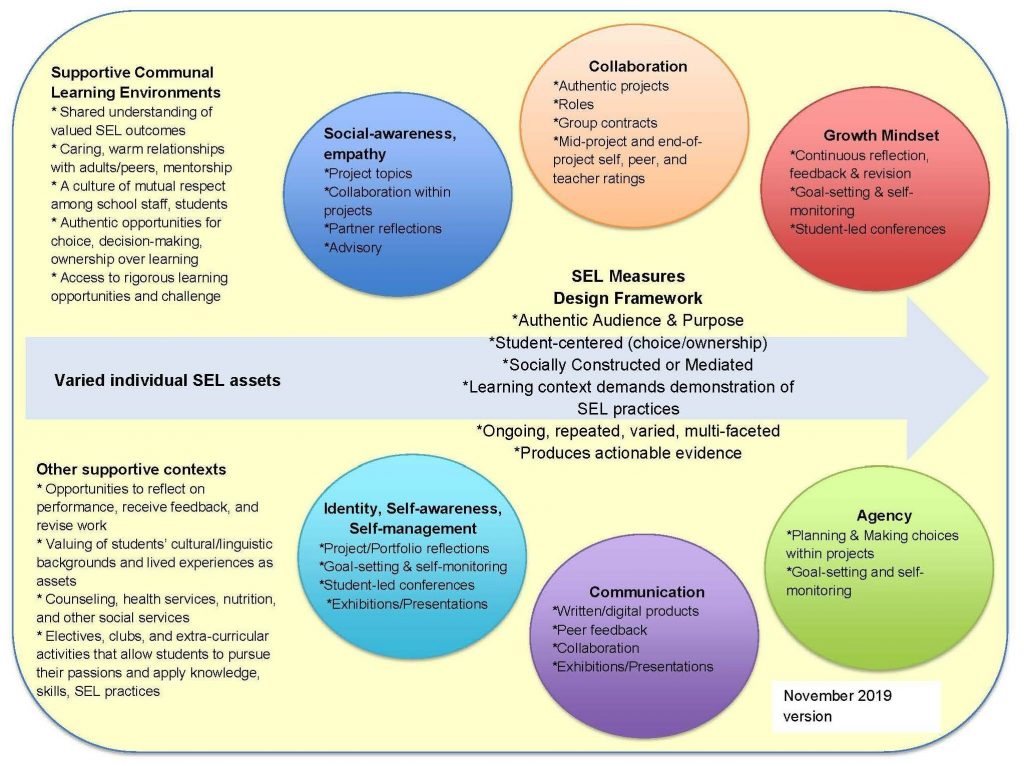
Can we develop valid, instructionally useful, educative, and equitable ways to measure social-emotional learning?
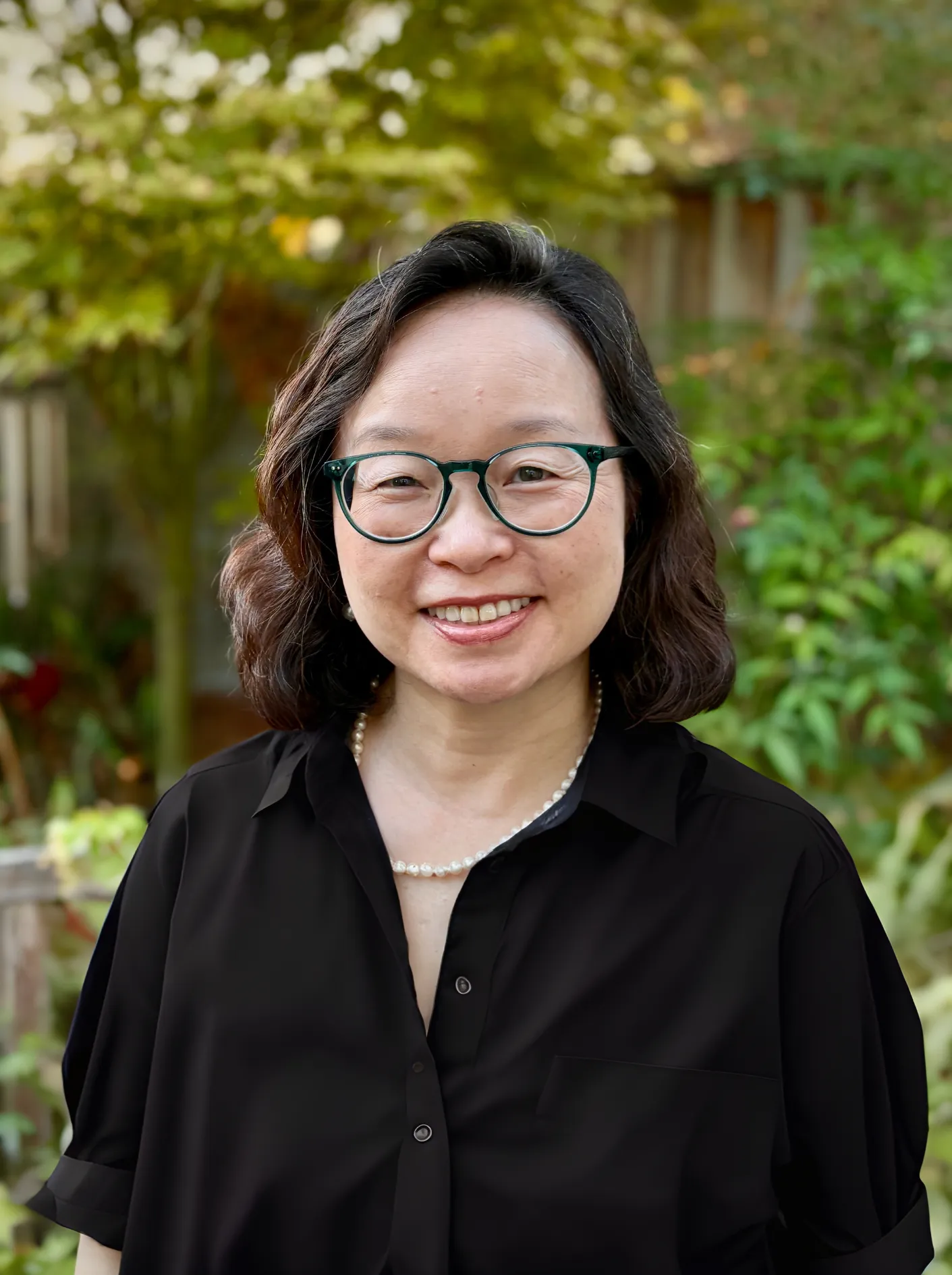
ELP’s Director of Research and Innovation, Ruth Chung Wei, had the opportunity to direct a research study with a team at the Stanford Center for Assessment, Learning, & Equity (SCALE) and ELP called “Measures of Social-Emotional Learning.” The Executive Summary of this three-year project provides an overview of the findings and can be downloaded by clicking on the image below.
Learn more about Ruth in her “I am ELP” highlight, by clicking here.
This resource comes from the 2022 Deeper Learning Conference and is a conversation about modernizing mathematics: perspectives from the classroom and beyond. This panel discussion explores the topic of mathematics teaching and learning in the current age and for the future. ELP Director of STEM Learning, Vinci Daro, is one of the four amazing panelists.
We know that we want students engaging deeply with rigorous content, but knowing what to look for in a classroom where students are struggling productively with rigorous mathematics content is a challenge among many of our partners.
Click the resource button to download!
Take a look at the Productive Struggle Observation Tool our STEM team has developed for observers to use to look for and capture relevant student and teacher actions in math classrooms. Clare Green, principal at Envision Education’s Hayward high school, Impact Academy says this about the tool: “The productive struggle rubric helps to drive a conversation about what high-quality, student-centered instruction looks like. This conversation now happens not only between coaches, teachers, and administrators but also with students.”
Let us know what you think – is the observation tool something that might be useful in your context? What do you look for in classrooms when you want to know if students are struggling productively with meaningful material?

ELP is excited to announce that we have published five new performance task resources in the Performance Assessment Resource Bank (PARB), an online resource that ELP has stewarded since 2018.

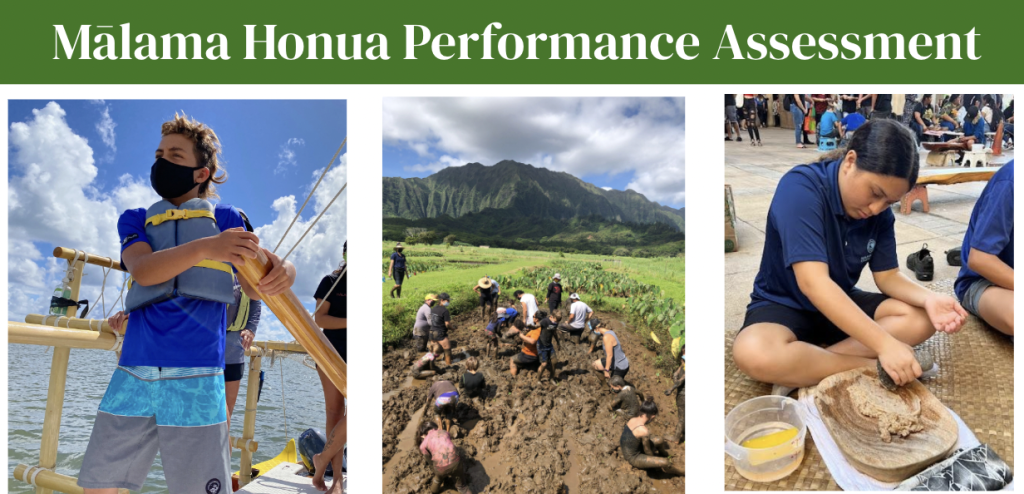
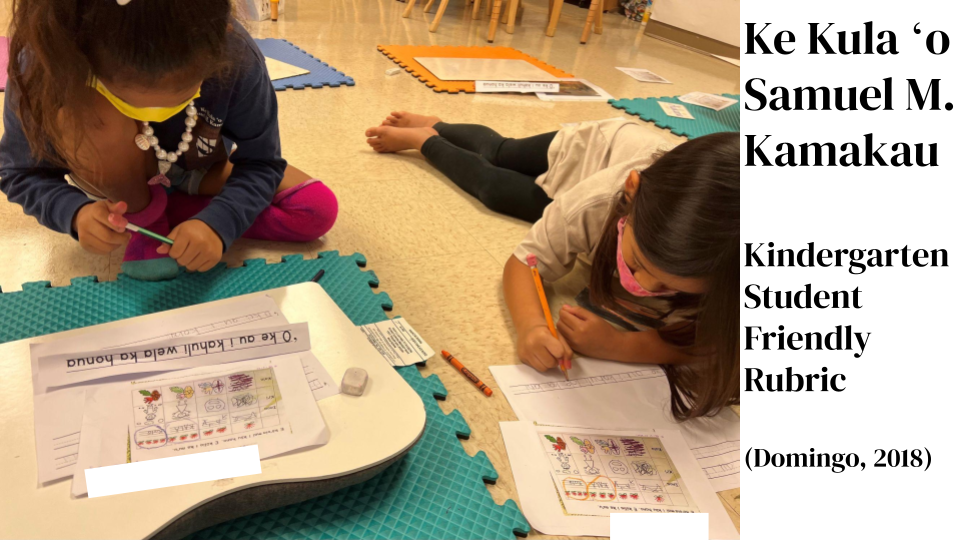
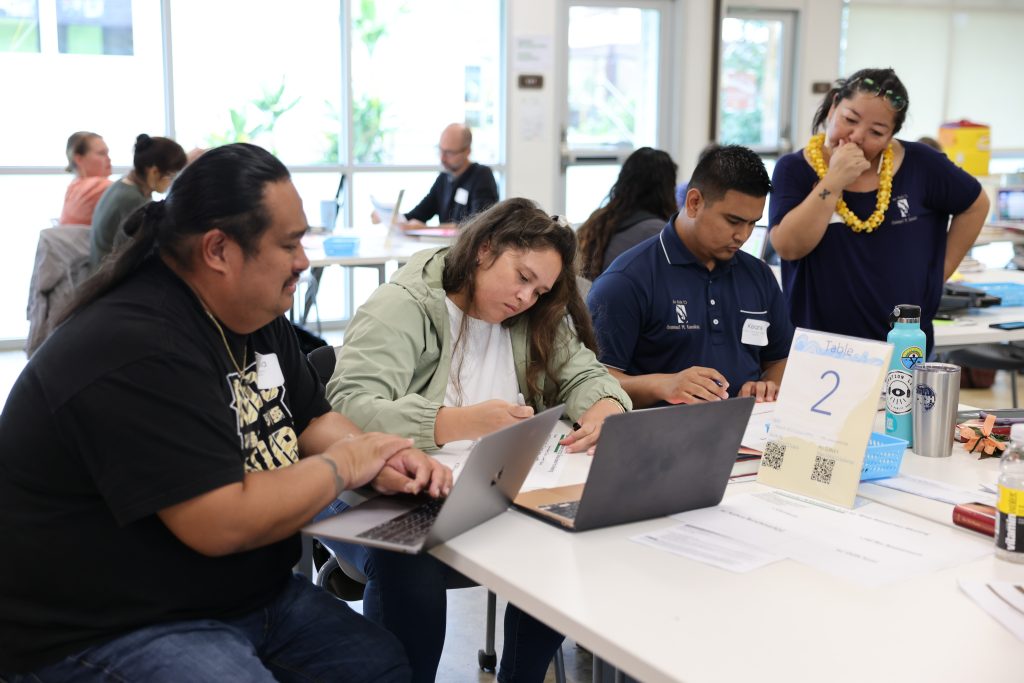
The five new resources are capstone portfolios, projects, and/or portfolio defenses from a consortium of schools in Hawai’i – the Hawaiian Focused Charter Schools (HCFS), which has been developing and implementing culturally sustaining curriculum, instruction, and assessment strategies to cultivate and preserve the language and culture of native Hawaiians. As part of its Culturally Relevant Assessment project, four HFCS schools and an additional charter school submitted capstone projects, ranging from Kindergarten through 12th grade capstones, for review and feedback from ELP during the 2022-23 academic year. Included among these five capstone projects is a Hawaiian-language kindergarten capstone project, the first non-English project to be included in the PARB. The revised projects were then submitted for a formal review process by performance assessment experts for inclusion in the Performance Assessment Resource Bank (PARB), using a hybrid review instrument, “ELP High Quality Performance Assessment Criteria + PARB/ILN Quality Criteria for Performance Assessments,” that combines ELP’s HQPA criteria and the PARB/ILN Quality Criteria developed by SCALE to vet submissions for the PARB.The instrument was adapted to include ʻāina (land)-based learning outcomes. All five of the submitted projects from the HFCS schools met project certification criteria after one or two cycles of review and feedback. ELP benefited from the experience of reviewing these submissions to deepen our understanding of culturally sustaining performance assessment and broadening our practice to be more inclusive of the diverse learners that our nation’s schools serve. This project was completed with the funding and support of the Kamehameha Schools, a private educational institution in Hawaiʻi that aims to improve the capability and well-being of Native Hawaiians through education.

We encourage you to peruse these resources and reach out to learn more!
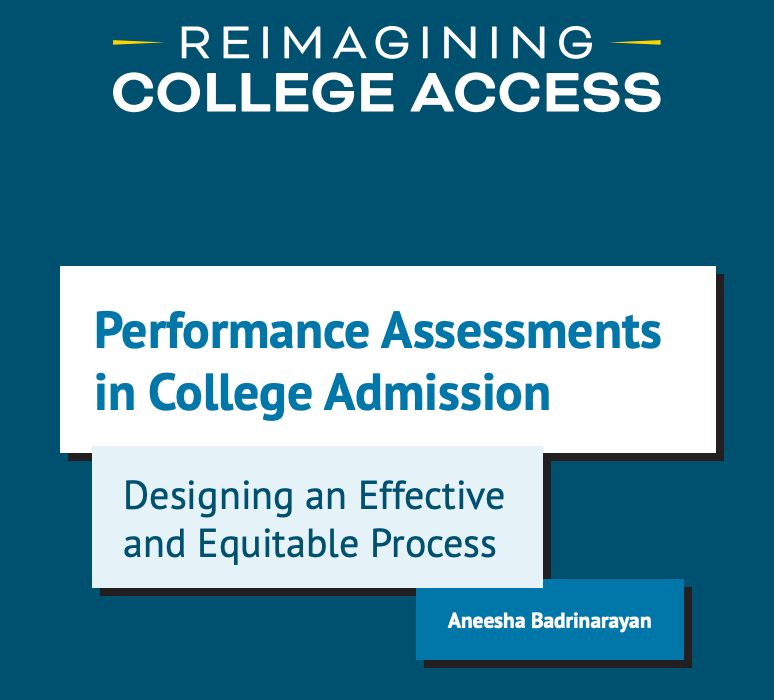
The Reimagining College Access initiative recently released a guidance document, authored by Aneesha Badrinarayan, aimed at colleges interested in integrating performance assessments into their college admission systems: Performance Assessment in College Admission: Designing an Effective and Equitable Process.
Although the tool is designed for admission officers, it can also be used by K–12 educators to gain a better understanding of the considerations that colleges must take into account in the use of performance assessments in admissions. The tool defines performance assessment and then provides concrete guidance on how admission officers can incorporate information about students’ K–12 performance assessments into their application and review processes.
Click the image below to download this tool.


Resource Corner: Performance Assessment in College Admission: Designing an Effective and Equitable Process
When we meet with a potential school partner, we are often asked: What does the process of evolving into a school with a High-Quality Performance Assessment System (HQPAS) look like? We have worked with thousands of educators serving hundreds of thousands of learners since our inception in 2010 and have developed a Theory of Action that consistently drives the transformation to a HQPAS:
Click the resource button to download!
- Start by developing a graduate profile with your stakeholders,
- design performance assessments that measure that graduate profile, and finally,
- implement pedagogies and school structures that lead to student success on the performance assessments.
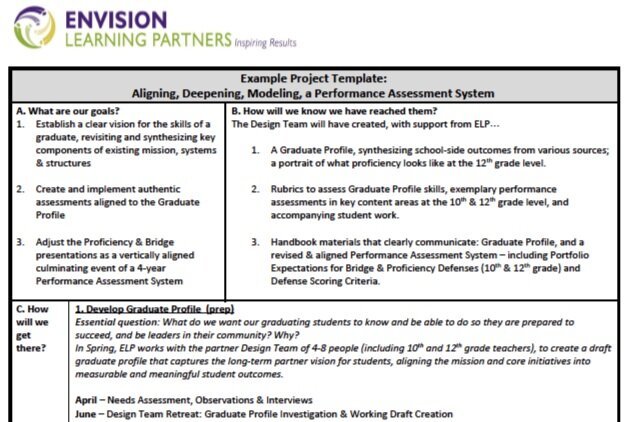
These three phases, done in that order, lead to a successful implementation of a High-Quality Performance Assessment System. A second common question we hear is focused on implementation steps and timeline. As you can imagine, each partner takes a unique path on its implementation journey, but over the years, we have seen some common elements. This month, we share a simplified project template to give you a better idea of potential steps involved. Enjoy reading and don’t hesitate to reach out with any questions.
Envision Education is excited to share the culmination of its two-year research project, Pursuing Equity for Black & Latine Students with Learning Differences, which
documents and illustrates the systems, practices, cultures, and supports that are associated with the well being and success of Black and Latine students with learning differences – students with disabilities and multilingual students with disabilities.
In 2023, Envision Learning Partners (ELP) and Social Policy Research Associates (SPR) embarked on a research study to identify and learn from schools that demonstrated positive outcomes for Black and Latine students with learning differences (including students with disabilities and multilingual learners). After a review of data from secondary schools across the country, the study team identified two schools for a more in-depth study, which was conducted during the 2023–2024 school year.
The results of the research are shared through case studies of the two schools that were the focus of the research: 1) Crosstown High: Building a Culture of Inclusion; 2) Capital City: An Inclusive School Community Committed to Whole-Child Learning and Well Being; and 3) An Executive Summary/Synthesis of Findings.
In addition, we have authored four practice briefs based on the findings of the research that provide practical steps that schools can take to create more inclusive environments that support the success of Black and Latine students with learning differences.
- Co-teaching: A Means to Creating Inclusive and Equitable General Education Classrooms
- UDL: Universal Design for Learning in a Culturally Responsive Context
- Culturally Responsive Practices: An Inclusive, Culturally Responsive School Culture That Fosters Relationships
- Competency-Based Learning and Assessment: Assessment and Grading Practices That Support an Inclusive Learning Culture
This research was made possible through the generous support of New Profit, a venture philanthropic organization, and the Oak Foundation.

Resource Corner: Pursuing Equity for Black and Latine Students with Learning Differences Case Studies & Practice Briefs
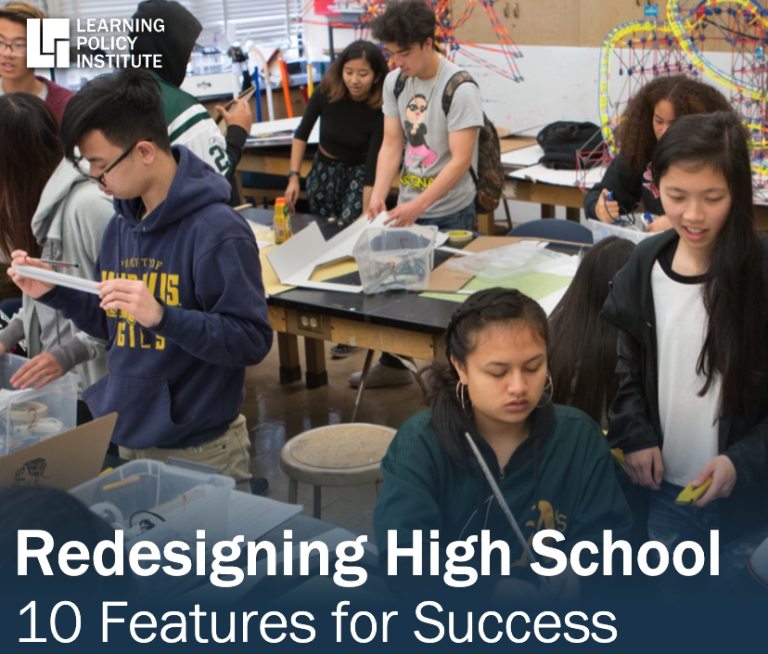
Earlier this year, Learning Policy Institute (LPI) released this resource that outlines 10 features from effectively redesigned high schools and highlights examples of schools that are putting the features into practice to create powerful learning opportunities for youth.
ELP was honored to be listed under the Additional Resources. If you are interested in a redesign or have any questions, contact the ELP team to schedule your free consultation.
Click here to download this resource.


Resource Corner: Redesigning High Schools: 10 Features for Success
9 Tips for Writing Effective Rubrics – Adapted from the important thinking of our partners at SCALE, this tool attempts to capture the quality criteria of solid rubric design. The tool is helping our partner schools all over the country to develop performance indicators that serve to define proficiency for their Graduate Profile skills. Take a look and share with us any quality criteria you’ve found effective!
Resource Corner: Scaling Student Success Briefs & Policy White Paper

For educators and educational leaders seeking to bring your Graduate Profile to life, Scaling Student Success has released a series of Practice and Policy Briefs to support this journey! The Briefs tell the story of five different districts across California that are successfully integrating their Graduate Profiles (or Learner Portraits) into their curriculum, culture, and classrooms, and seeing a positive impact on student success. They’re a valuable learning resource for any school interested in redefining student success! Learn more and access the briefs here.

Scaling Student Success also recently authored a white paper focused on statewide policy recommendations that support many of the transformation systems we want to see in schools (graduate profiles, authentic assessments, etc.). ELP has offered to be listed as one of the organizations to officially “sign on” to the paper. Click here to read: A Student-Centered Approach to Education.

Resource Corner: Scaling Student Success
Resource Corner: Student Innovation Edition
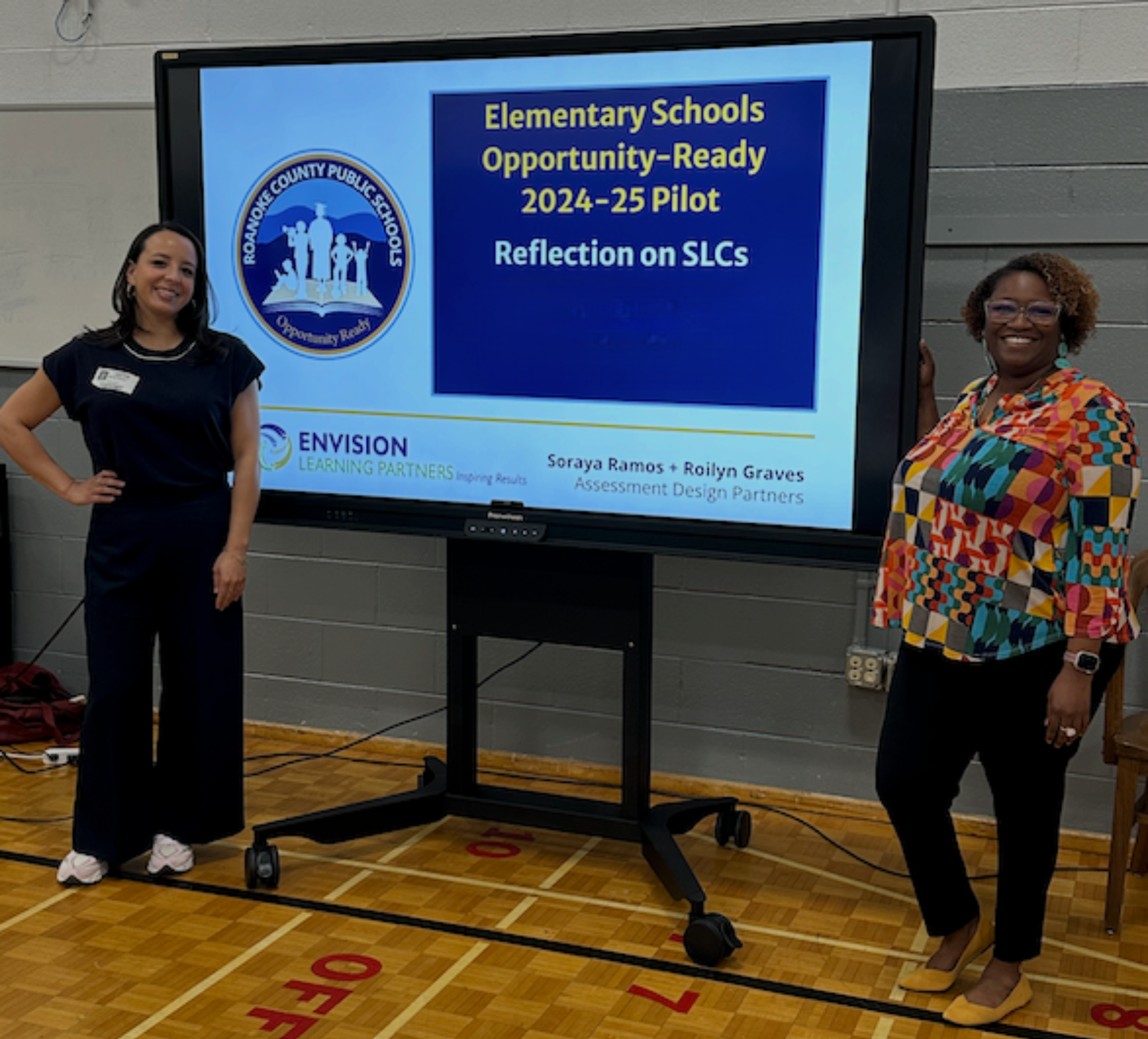
Earlier this spring, Assessment Design Partners Roilyn Graves and Soraya Ramos spent time in Roanoke County Public Schools in Virginia, collaborating with district and school leaders to refine and pilot a culminating performance assessment system aligned to the district’s Opportunity-Ready Skills.
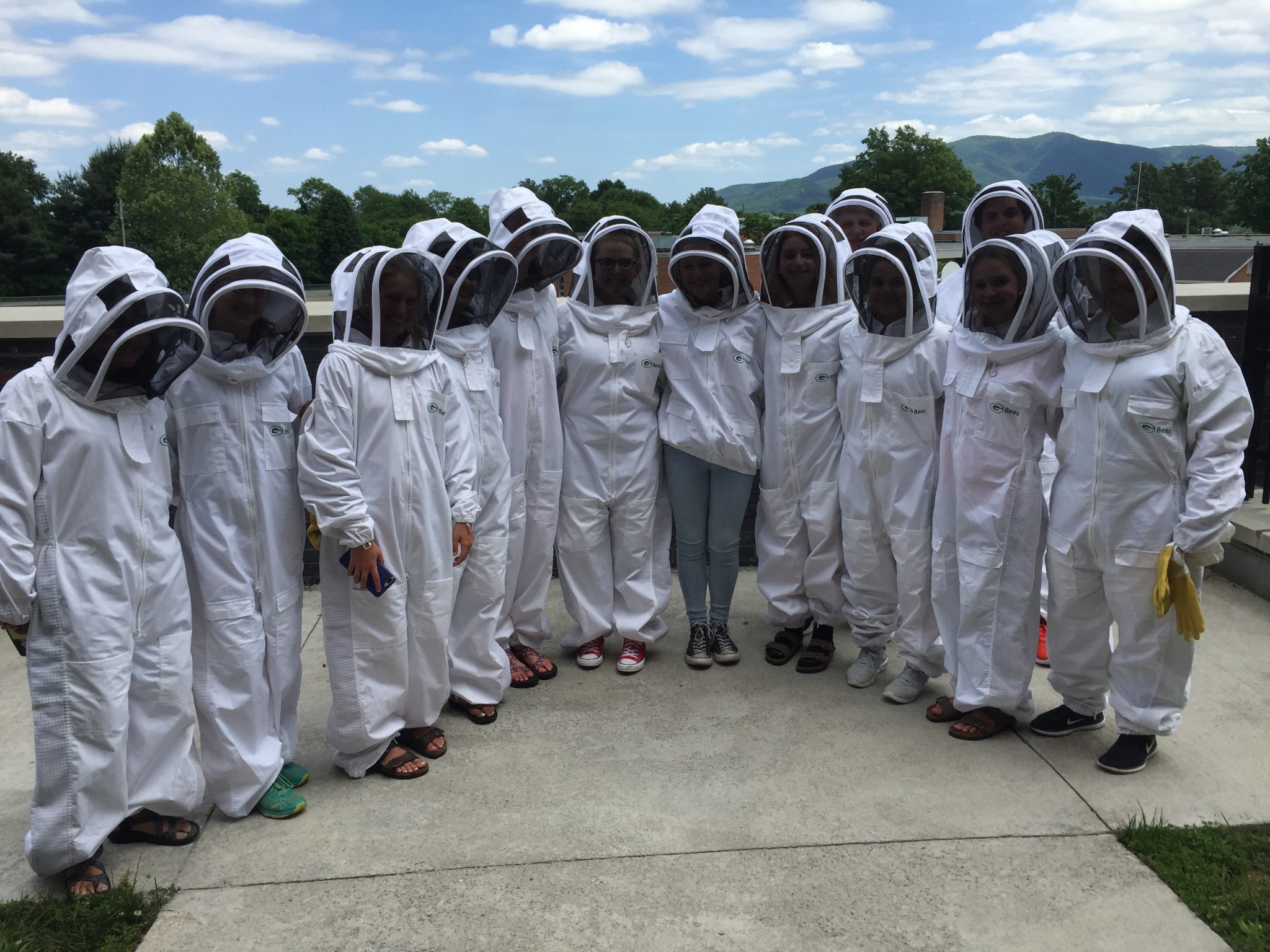
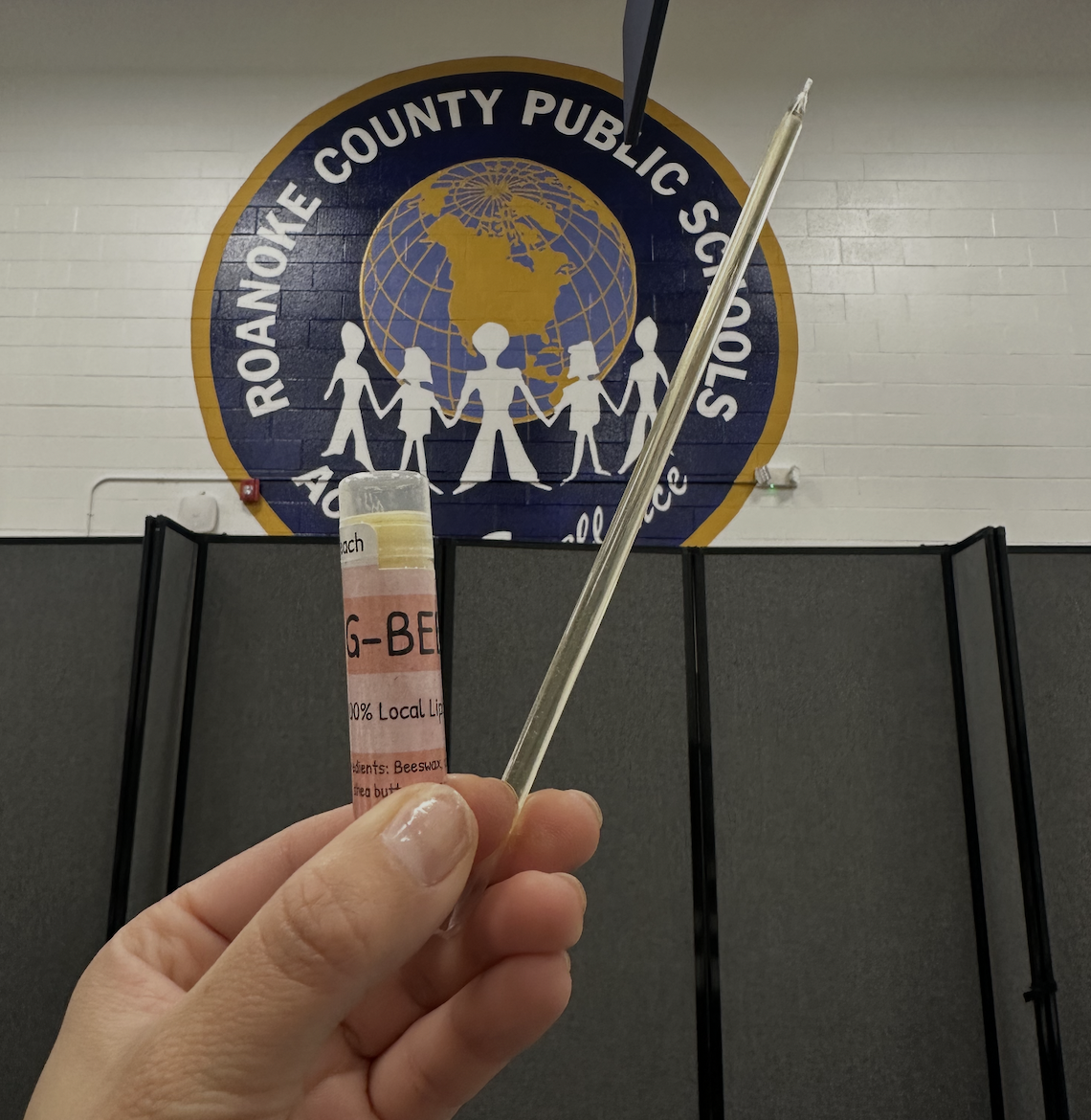
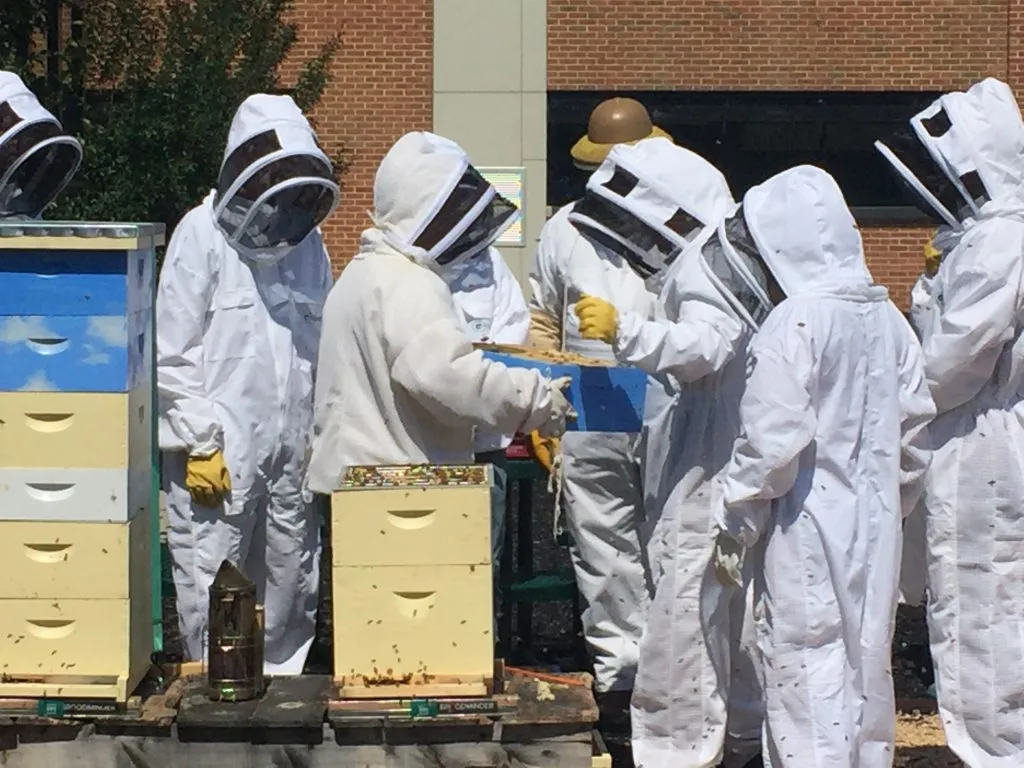
During their visit, they had the opportunity to tour Glenvar High School—and were inspired by an incredible student-led initiative: the G-Bees. This club involves students in every aspect of beekeeping, from hive maintenance to harvesting honey, and even crafting a range of products like lip balm, soap, candles, hot honey, and more.
Through this hands-on work, students are not only gaining valuable entrepreneurial experience, but also raising funds for outdoor education and scholarships. It’s a powerful example of student-centered, purpose-driven learning at its best.
The G-Bees program is truly performance assessment in action—students applying their knowledge and skills in meaningful, real-world ways. While online sales aren’t available, we’re excited to share their story as a model of what authentic, engaged learning can look like.
Learn more about the program through this link.


Resource Corner: Student Innovation Edition
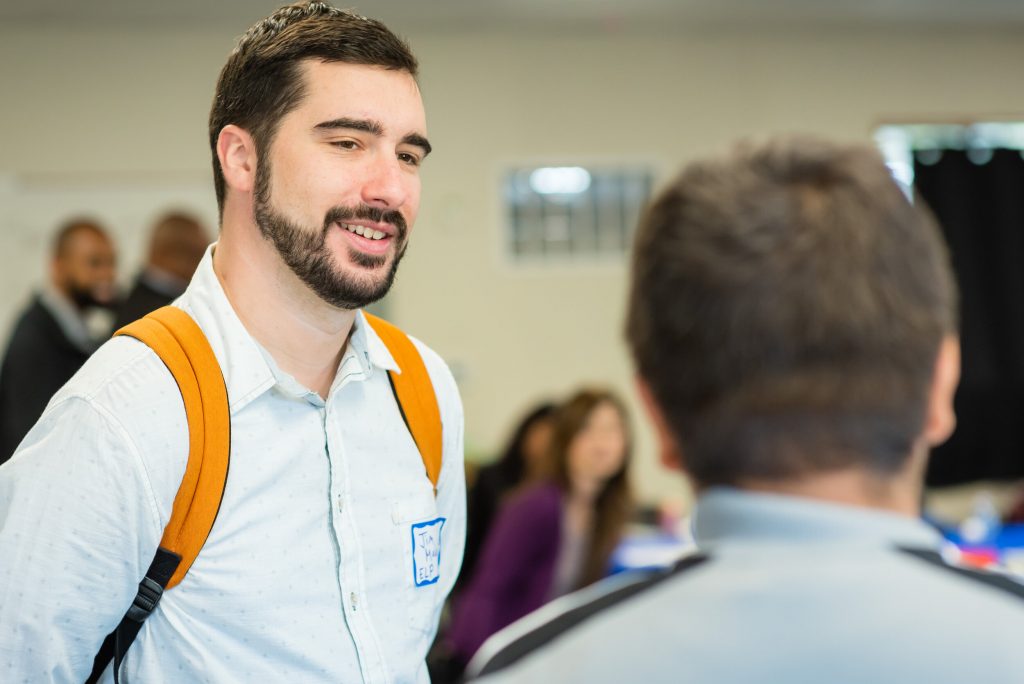
This month, watch ELP STEM assessment specialist, Jim Malamut, share his ideas on Proximity of Evidence to student thinking.
Looking for more resources? Visit the ELP blog page for all past newsletter content.
Describe what you do at ELP?
I serve as the Director of Research and Innovation. My main role is to document the impact that designing and implementing high quality performance assessment systems has on outcomes for K-12 students, the learning environments that student experience, and systems and cultures that support student success. The “innovation” part of my work has to do with developing new tools, frameworks, and methodologies for the work we do with the latest evidence from research and practice. What that really means is that I support our coaches as a thought partner as they develop new products with their district and school partners, and codify tools, products, and practices into a unique ELP-branded suite of resources. I also spend a lot of time writing, reviewing, and explaining rubrics!
What experiences brought you to ELP?
That’s a long story, but I’ll give it a try! I started my career in 1997 as a history teacher in New York City, at a Queens high school that was part of the small schools movement in the city, and regularly assigned projects and performance assessments to my students, even before I knew what PBL and performance assessments were. During my graduate studies at the Stanford Graduate School of Education, I studied the impact of a teaching performance assessment (Performance Assessment for California Teachers) on the learning of preservice teachers, having been inspired by teachers reporting that the NBPTS portfolio assessment had a tremendously positive impact on their professional learning. During my graduate studies, I also began supporting the work of the School Redesign Network at Stanford which was supporting the Bay Area Performance Assessment Consortium (BayPAC), and that’s how I met Bob Lenz, one of the founders of Envision Schools and my current colleagues, Justin, Alcine, Rachel, and Abby, among other founding teachers. Bob requested technical support from the School Redesign Network team. That’s how I ended up facilitating teams of Envision Schools educators as they developed their suite of disciplinary performance outcomes, rubrics, and the portfolio defense, and as teachers got calibrated on the portfolio rubrics. When Envision had its first graduating classes, I conducted a couple of small studies to evaluate the impact of the portfolio and defense on students’ learning experiences and then a follow-up study to learn how graduates who had been out of high school for one or two years were doing. Later, I also participated in collecting data for another set of studies that included Impact Academy and City Arts & Tech HS called the Study of Student Centered Schools (completed by the Stanford SCOPE Center). Between 2008 and 2020, I worked as the Director of Assessment Research and Development at SCALE – the Stanford Center for Assessment, Learning, and Equity, which evolved from the School Redesign Network. SCALE’s primary mission is to support districts, states, and higher ed institutions as they develop and implement balanced, credible, and reliable assessment systems that include performance assessments. I started working at ELP part-time in January 2018, when SCALE staff merged with ELP. I started working full-time at ELP in January of 2020. In many ways, it felt like coming back home, to a school organization with an assessment system that I was part of building. I am so proud of what Envision Schools have become and that we are a national and international leader in the performance assessment movement.
What do you enjoy most about working for ELP?
I love working at ELP because I feel so much at home here. I truly feel that my colleagues are like-minded people with the “same heart.” At ELP, I know my colleagues hold very similar beliefs about the potential of all students and a similar drive to do work that makes a difference in students’ lives. We rejoice and celebrate the same small victories, and we mourn and weep for the same systemic sources of injustice in our world. We geek out over backwards planning and all believe in the power of student work as a key lever for teacher learning. We support and care for each other, and know that even when we push back on one another, it is out of love. That’s what makes it feel like home.
What do you like to do when you’re not working?
I wish I had more time for all my non-work interests – but these days, when I’m able to come up for air, I enjoy making a delicious meal for my family, going for long walks, tinkering on my mandolin, piano, or violin (not all at once!), and shelter-in-place Karaoke nights with my family. Also, I enjoy cuddling with our long-haired Chihuahua-Papillon mixed pup and our aging tabby cat while catching up on the latest sci-fi or historical fiction drama on Netflix.
I began working at ELP in January 2018 as the Director of Research and Innovation. Since then, I’ve been working on the nationwide team providing direct service and technical consulting to client partners and creating assessment products, as well as directing ELP’s research projects.
I’m excited to share that in July 2025, I stepped into a new role: Senior Director of Assessment for Envision Education. This role encompasses responsibilities for the whole organization – Envision Schools and Envision Learning Partners. Envision Schools runs four charter schools in the Bay Area (in San Francisco, Oakland, and Hayward). My new responsibilities include overseeing the design and implementation of a comprehensive assessment system for the schools, ensuring the use of rigorous, standards-aligned assessment practices that demonstrate student achievement of core academic skills. At the same time, our system aims to provide regular opportunities for students to demonstrate ambitious learning outcomes aligned to Envision’s graduate profile competencies in real-world-relevant, meaningful, and culturally sustaining contexts. We seek to more systematically integrate authentic and high-quality project-based learning and student-led conferences at all grades 6-12, and portfolios + defenses at grades 8, 10, and 12. We want to develop our schools as models of a balanced and comprehensive assessment system that supports student achievement of both foundational academic skills and ambitious, authentic demonstrations of learning. This new assessment system is described more fully in our new Envision Way documents.
In my new role, I also continue to work with my ELP colleagues, supporting the learning and effectiveness of our national team of Assessment Design Partners, and developing new services aligned to the Envision Way as we seek to meet the evolving needs of both external district partners and our own schools. Our long-term strategy is to strengthen our own schools so they are clear models of the quality assessment systems that we are also seeking to strengthen in partnership with districts. We call this the “flywheel” because of the reciprocal nature of our learning and development work as we pilot new practices, collect data, and evaluate their effectiveness in our schools and in partnership with external districts.
I continue to also be involved in exploring ways for Envision Education to gather evidence of its effectiveness through systematic collection of evidence in our own schools (in partnership with John Ericson, our Director of Data & Assessments), and by initiating research projects to collect evidence of the impact of ELP’s work with districts. I am also continuing to coordinate the research project “Pursuing Equity for Black & Latine Students with Learning Differences”. We wrapped up two years of school case study work in July, and are preparing to launch a two-year professional-development pilot and evaluation phase of the project with a large school district. More news to come!
What do you enjoy most about working for Envision?
It’s definitely always been the people. I truly enjoy working alongside colleagues with a similar commitment to our most marginalized students and who are striving so hard to create supportive, inclusive learning environments that lead to equitable learning outcomes. I am learning so much from my ADP colleagues as well as my Academic Programs Team colleagues. They are all so incisive and brilliant and I have so much to learn from them. I truly feel blessed and lucky to have them as colleagues!
I’m also proud to be working in an organization with a commitment to its pro-Black, anti-racist stance, engaging us all in developing a self-awareness of our individual and collective contributions to our cultural norms, and providing the space to engage in productive struggle to begin changing those norms.
Last, I love that Envision honors hard work while also honoring our need for joy, self-care, and rest! The yoga and art breaks, retreats, sound baths, line dancing, karaoke nights, breaking bread together, and other opportunities to take mind breaks are all helpful reminders that we are whole people who also need laughter, rest, and nourishment to thrive. My family always gets a kick out of hearing about the latest fun things I get to do with my work friends!

I am ELP: Ruth Chung Wei, Senior Director of Assessment
What experiences brought you to ELP?

Performance assessments have always played a big role in my educational journey, even when I was unable to name it. As a Bilingual teacher in Chicago, I centered my teaching on performing and bringing the content to life. The traditional assessment measures were invalid and were unable to capture the pure brilliance of my students and their community. In the past three years, I’ve focused on partnering with school districts in New England to develop high quality performance assessments that promote joy and equity. Now, as an Assessment Design Partner at ELP, I’m excited to engage in deeper ways with assessment systems and Graduate Profiles.
What are you hoping to learn while you’re at ELP?
I’m hoping to deepen my understanding of graduate profiles and how they can serve as a lever for equity for school districts. Most importantly, I’m looking forward to collaborating with the wonderful ELP team to design learning experiences that promote antiracism.
What are you most excited about starting at ELP?
I’m most excited to work with the wonderful team at ELP and their school partners. It is energizing to work with a team that is unafraid to think outside-the-box with antiracism at the center of the work.
What do you like to do when you’re not working?
There are many things that bring me joy and restore my spirit. One of my top priorities is exercise- I like early morning runs or group workouts followed by an iced coffee and a relaxed afternoon by the beach. I also appreciate time with my family and friends-especially after living on the East Coast for several years. In fact, one of my favorite activities with my mom is to visit TJMaxx and browse the clothes and home decor section. It’s the little things that count.


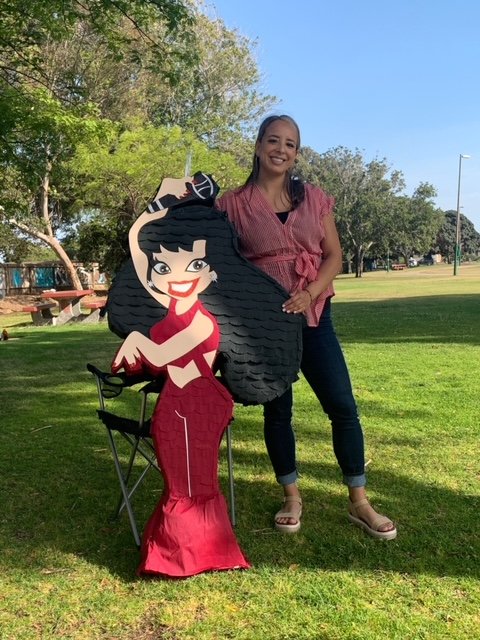
A picture with me and my beautiful family and a picture of me and my birthday piñata (Selena)!
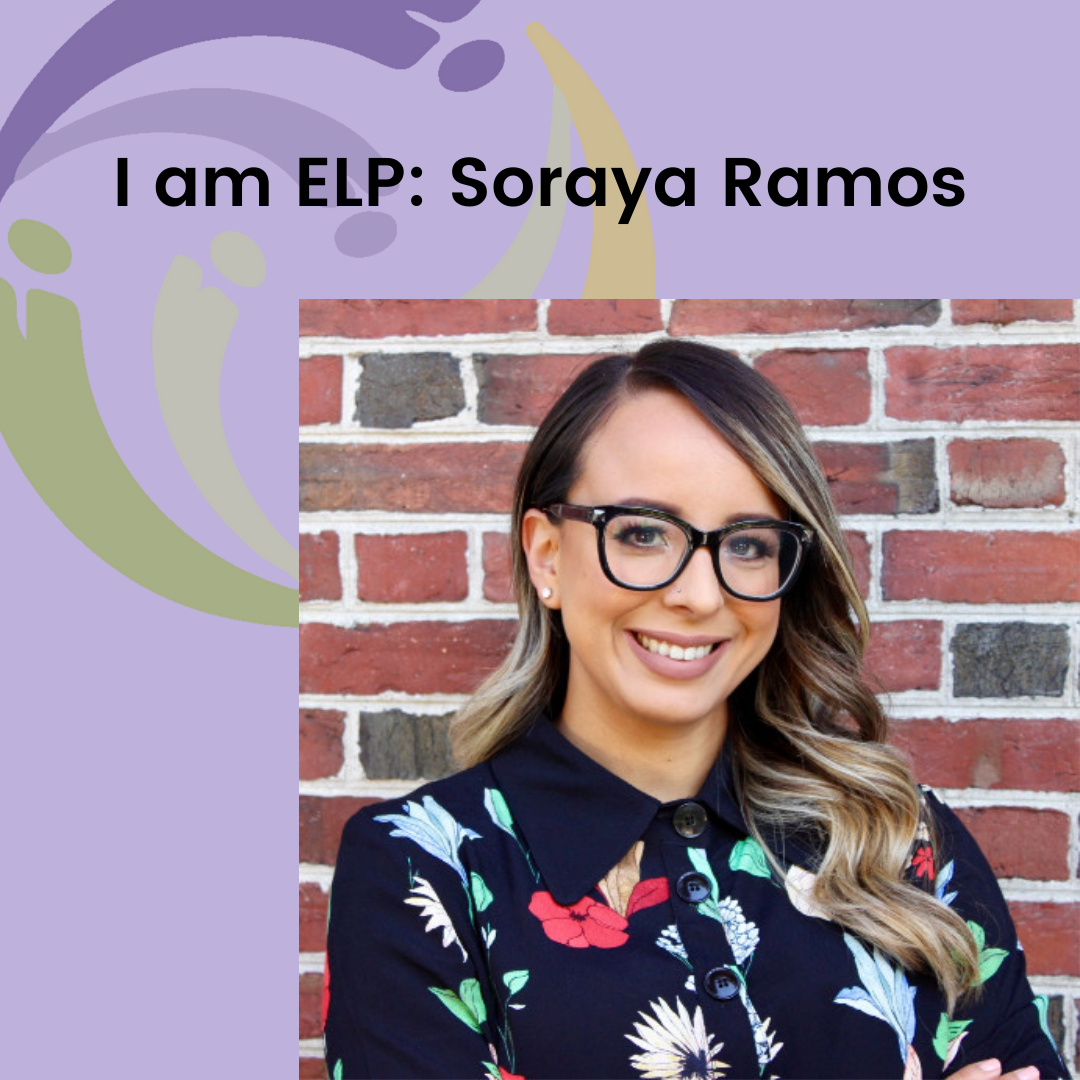
Soraya’s Bio:
Soraya is joining the Envision team as an Assessment Design Partner. With nearly a decade of experience in education, Soraya has worked to promote and support anti-racist teaching and learning practices through her roles as a teacher and as an assessment designer. Before joining Envision, Soraya served as a Senior Associate at the Center for Collaborative Education (CCE). There she worked in partnership with schools and districts in New England and nationally to design high quality assessments and systems that promote equity and engagement. In addition to professional learning and coaching, she led a consortium of districts in Massachusetts in their pursuit of designing an alternative assessment and accountability system. Soraya believes that lasting assessment systems need to be in alignment with a community’s vision and coherent to a district and school’s priorities. Soraya holds an Ed.M. in Education Policy and Management from the Harvard Graduate School of Education and a B.A. in Chicana/o Studies and Political Science from the University of California, Los Angeles.
Describe what you do at ELP.
I am the Director of STEM Learning at ELP. I get to work with colleagues in many different roles — teachers, coaches, administrators, curriculum developers, assessment developers, and professional learning providers — to design learning experiences and assessment tools that help students become better problem-solvers, and better communicators about their problem-solving strategies. A big part of my work is figuring out how to set students up to use their own everyday language and the disciplinary language of mathematics and science to express and clarify their own ideas, and to build on each other’s ideas (for example, the Math Language Routines). Another big part of my work is developing tools to help educators sharpen their lens for analyzing student work to get better at identifying and describing evidence of learning, and to get better at planning instruction and assessment based on that evidence (for example, Collaborative Analysis of Student Work Protocol). I also get to collaborate on tools for observing classrooms, and for using observation data to plan instruction (for example Observation + Planning Tool); developing and adapting tools like these for distance learning contexts has kept me very busy this year. I am always on the lookout for projects in which the Common Core State Standards for Mathematics and the Next Generation Science Standards are used to optimize student curiosity and student agency.
What experiences brought you to ELP?
My journey to ELP was a happy and unplanned confluence of opportunities and relationships. I joined ELP in early 2018 as part of a team of colleagues from Stanford (Understanding Language/Stanford Center for Assessment, Learning & Equity), and one of the primary magnets that drew us to ELP was a clear commitment to both equity in education and anti-racism broadly. In that merging of people and projects, ELP gained STEM content expertise and I gained a bit more freedom to pursue projects that align with my interests in making school a place where students not only grow their competence in solving problems, but are recognized for their competence. Prior to joining ELP, I was the Director of Math Learning at UL/SCALE, and before that worked for many years with Ann Shannon and Associates, using the Shell Center Formative Assessment Lessons, which transformed my understanding of the importance of attending closely to the variety of ways students generate evidence their learning. I’ve had many opportunities to integrate my training as a cultural anthropologist and ethnographer into my work in math education, but often only secretly; ELP is a place where I get to be my whole self.
Part of the ELP team prototyping at a 2019 retreat.
What do you enjoy most about working for ELP?
Colleagues. The people. (ELP has the best people). The deep expertise and wisdom about working with schools and districts to shift mindsets, to re-align educational systems for equity and learning that matters, and to build tools collaboratively that make these shifts and re-alignments sustainable. Being able to draw on what ELP colleagues are doing at the scale of systems, and in relation to other content areas, provides a much more holistic perspective than is possible in professional settings narrowly bounded by content area.
I also enjoy all of the opportunities to collaborate with the incredible staff at Envision Schools. Partnering with STEM leaders at Envision Schools has been an ongoing source of energy and an actively experimental space for professional learning design and assessment design.
What do you like to do when you’re not working?
Anything that does not involve a screen: being and moving outside (walking, running, hiking, biking, kayaking); touching and reading printed pages; playing cards, Pentago, chess, Codenames, Just One, and other games with my 14 year old daughter and 11 year old son; playing with our accidental pet, Philmore the fabulous rat. And — when all goes well — living car-free until our summer cross-country road trip to Carrboro, NC, visiting family and friends along the way.
A Note from the Designers: Just so you know- we hear you and we are answering your call!
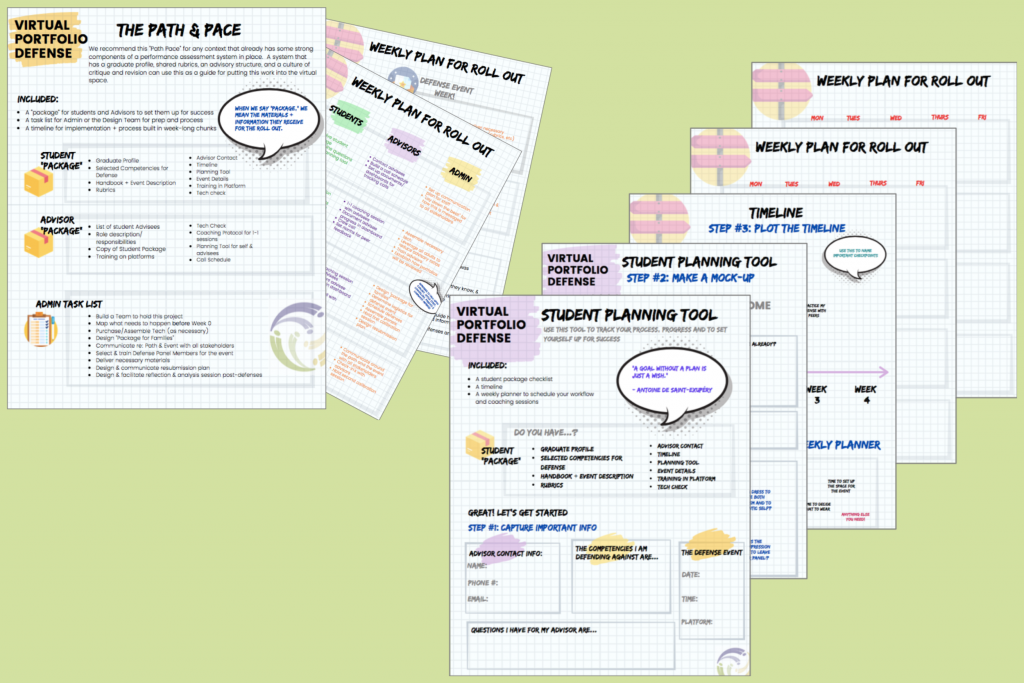
Path Pace Tool
“Yes – we want to lean in and invite students to tell the journey of their learning in a Virtual Defense… but where do we start?”
We are thrilled that you are digging deeper into the Virtual Defense Toolkit! Each part of this Toolkit is being built with our own main design principle in mind: Tight on criteria, loose on path. Thus the Path Pace is intended to be a guide as you look at where you are currently, and how you might move as a system toward virtual student defenses and beyond.This tool includes suggested tasks and timelines for each of the primary stakeholder groups – students, advisors/mentors, and Admin. We then break down those tasks into week-long chunks. We invite you to explore this tool and then reflect on your context, your capacity, and what feels right for your community. Adopt what resonates, adapt what you want to modify, and hopefully this gives you a place to start. We will be offering resources for several of these tasks as the days go on, and are excited to continue to build what you may need as you take this on.
Student Planning Tool
“This is awesome… but how do we support students to hold parts of this process?”
Yes! We are so glad you asked. Any student-centered assessment supports students to be co- designers of the experience and invites them to activate their agency in the process. This planning tool is built to help them set goals, track key information, manage workload and consider important factors as they prepare to defend their learning.In this new landscape, we know that circumstances and home learning contexts are unique to each student. As you engage in building towards a culminating event with your students, we invite you to question assumptions and let students lead where possible. They are the experts in their home contexts and can make choices about how and when to complete work, the best space in their home environments for hosting the event and of course- how to best be their authentic selves in this process.As always, these tools are an offering and we are excited to see how you use them and what other needs emerge. We are actively designing and releasing this package as needs become clear.Onward!We held a couple of sessions to answer questions and dream with you all. We were excited to learn more about the complexities you’re working through and to imagine how we can support.
Virtual Portfolio Defense Webinar: Tuesday, April 14th
- This webinar was recorded and is available using this link.
Virtual Defense: Ask Me Anything Session: Thursday, April 16th
- Stay tuned for details from the session!
Join the conversation on Twitter by tagging us @EnvisionSchools and using the hashtag #ELPVirtualDefense.
Stay Well,
Morgan Vien & Abby Benedetto, ELP Deeper Learning Coaches
Welcome the Fourth Cohort of the Deeper Learning Leadership Forum!
We are delighted to announce the education leaders that have been selected to join the newest cohort of our Deeper Learning Leadership Forum. The Deeper Learning Leadership Forum (DLLF) is a cohort-based leadership experience that aims to develop, strengthen, and support a group of educational leaders to work at the intersection of equity and design thinking. As DLLF members cultivate relationships and learn across their diverse contexts, they will become more adept and strategic at leading reform efforts in their local systems, thus producing more equitable deeper learning outcomes across the country.
Meet our fourth cohort leaders here. Click the link and scroll down to Cohort 4!
Envision Education is hiring!
Envision Education is seeking a dynamic, experienced educator and leader to build on the successes of our three high schools and two middle schools and establish Envision Schools as exemplar schools of equity and excellence for our students and for Envision Learning Partners. The Chief Academic Officer (CAO) will do this by providing vision, management experience, educational expertise, and operational oversight. Click here for the official position description.
Questions? Contact David Edwards, Director of Talent and Human Resources – dedwards@envisionschools.org – 510.451.2415 x 107
IL-EMPOWER
ELP has been selected as an approved learning partner by IL-EMPOWER for Illinois schools. IL-EMPOWER is the statewide system of support that empowers schools with greater choice in determining their path to improved student outcomes. Schools are informed through a continuous school improvement process which includes analysis of academic and school quality indicators, a system needs assessment, and selecting an approved learning partner like ELP.
To learn more about our partnership, click here.
How ELP Delivers Internal Professional Development!
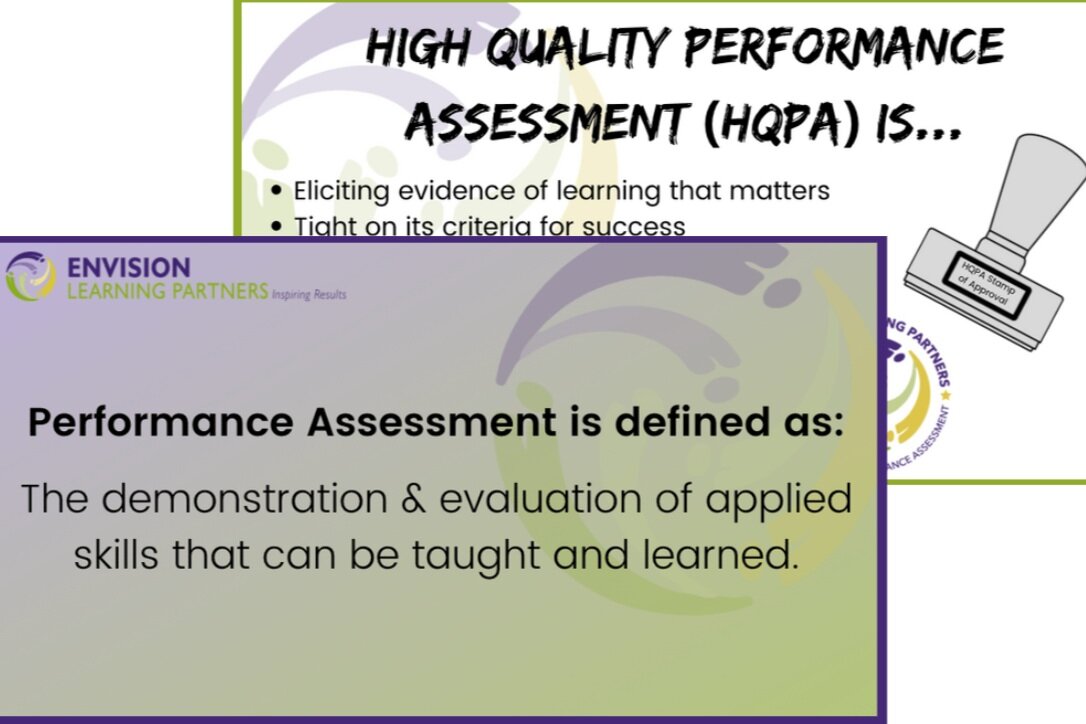
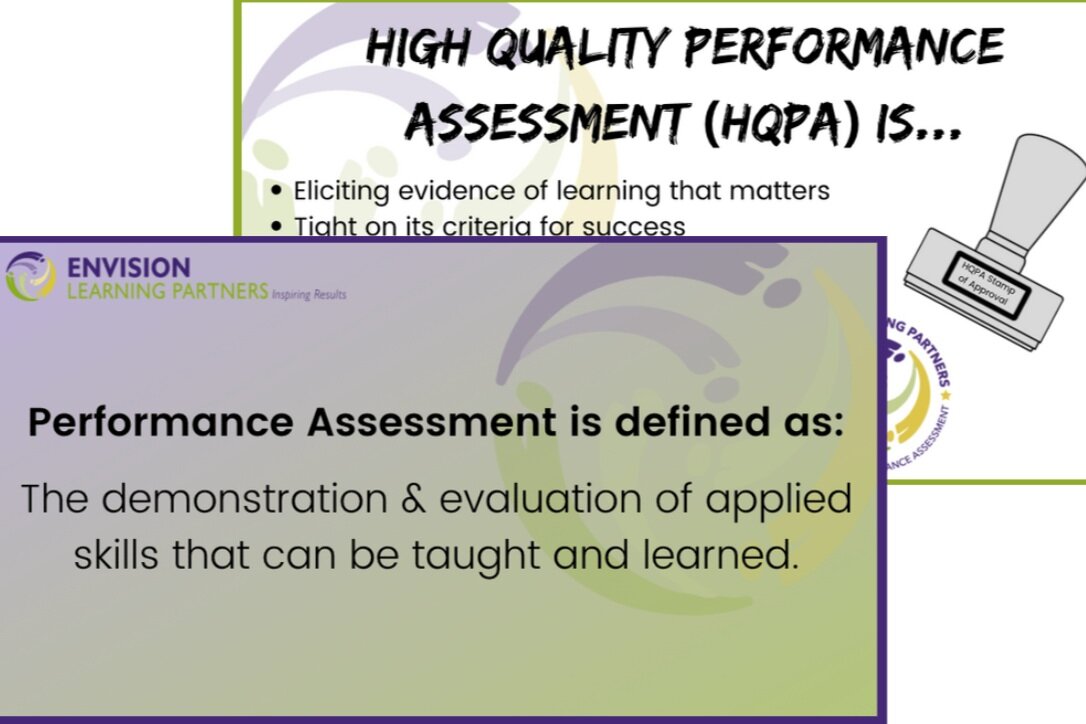
ELP spends much of its time delivering PD to our partners from coast to coast. Many partners don’t realize that we also turn our PD chops inwards to refine our practices, learn from each other’s work in the field and have some fun along the way! At our last retreat, we focused our efforts on refining our definition of High Quality Performance Assessments. We believe a High Quality Performance Assessment…
- elicits evidence of skills and knowledge that matter
- is tight on quality criteria while open to different approaches
- is authentic
- is a learning experience in and of itself
We’ll expand on this suite of definitions in the coming weeks – stay tuned!
Happy Holidays from the ELP team!
UPCOMING CONFERENCES
The Assessment for Learning Conference is next month! Below is a sneak peak at the ELP-lead sessions!
- Let Us Count the Ways: Creatively Tackling the Logistics of Exhibition – Suzanne Malek – Wednesday, February 12 • 9:15am – 10:15am
- It’s Elementary, My Dear!: Exhibition at the Elementary Level – Morgan Vien & Jeff Embleton – Wednesday, February 12 • 10:40am – 12:10pm
- Creating Culminating Assessments Where ALL Students Thrive – Abby Benedetto & Alcine Mumby – Wednesday, February 12 • 1:30pm – 3:00pm
- Show Don’t Tell: How to Design Capstone Experiences that Embody Your Learning Outcomes – Justin Wells – Wednesday, February 12 • 1:30pm – 3:00pm
- Taking a Defense Process from Good to Great using Quality Criteria – Abby Benedetto – Thursday, February 13 • 9:30am – 11:00am
Join ELP for the following sessions at the Deeper Learning Conference on March 25-27, 2020 in San Diego, CA!
- “Deeper Assessment: Designing Equitable Performance Assessment Systems” Deep Dive – Alcine Mumby & Abby Benedetto
- “A Catalyzing Experience: Working In Alliance Across Difference” Den – Alcine Mumby, Morgan Vien, Rachel Maida, & Courtney Katen
- “We are Change-makers: Working at the intersection of Equity and Design” Den – the Deeper Learning Leadership Forum, Cohort 3
- “Preparing Students to Build their Future: Developing and Measuring Design Thinking Mindsets” Deep Dive – Ruth Chung Wei & the Design Tech High School
- “Hacking + Holonomy = Hardware” Deep Dive – Morgan Vien & Jeff Embleton from ASCEND
DEFENSE DESIGN STUDIOS
Observe an entire Portfolio Defense, learn how the model works, and reflect on how you can apply the concepts in your own context.The Portfolio Defense is the capstone activity of a whole-school performance assessment system. It is the culmination of a student’s 4-year journey. Similar to a masters defense, students stand before a panel of peers, educators, and mentors to demonstrate — to the panel and to themselves — that they are ready to graduate and ready for a successful future.A Defense Design Studio consists of two parts:
- Observe a live student defense: watch a student defend their learning in front of a panel.
- Debrief – Talk with an Envision Learning Partners coach and fellow educators about how to translate this nationally-recognized assessment model to your own educational context.
Join ELP at our partner school’s DDS:
- Bryan Adams High School – Dallas, TX – March 26 & 27, 2020
- LAUSD – Linked Learning – Los Angeles, CA
- March 20 – School for the Visual Arts and Humanities
- April 21 – Los Angeles High School of the Arts
- June 1 – Nightingale Middle School
Bay Area Envision Education DDS dates TBD.
Grad Profile Workshop Series: Jan 28, Feb 5 & Feb 10 (Sold out but more dates to come!)
In this three-part workshop series, led by Deeper Learning Coach, Abby Benedetto, participants will explore the value of having a Graduate Profile, develop and define a draft, and then learn how to implement and measure it once they take it back to their school, district, etc.
Given the surprisingly high demand for this workshop, we have sold out! We are currently scheduling another set of dates, as soon as late February. Please use this Google Form to join the interest list and be the first to know as soon as new dates/times have been confirmed.
Session A: Intro to the Graduate Profile
- January 28th, 2021⋅9:30 – 11:30am PT
This workshop is designed for folks who are learning about the concept of a Graduate Profile (aka Vision of a Graduate, Portrait of a Graduate). We will explore what a Graduate Profile is and why it is an important shift for schools, districts, systems, etc., as well as what it means to situate the Graduate Profile as your organizing principle. Participants will brainstorm the skills they believe would be ideal for their graduates, then have an opportunity to check that brainstorm against quality criteria, ideate and revise again. Participants will leave with a draft prototype of a graduate profile as well as a plan to engage stakeholders in a vital input/feedback process in order to move toward a more finalized draft.
Session A TLDR: You have heard about this thing called a Graduate Profile and want to take your first leap into learning more.
Session B: Defining Your Graduate Profile
- February 5th, 2021⋅9:30 – 11:30am PT
Once participants have a draft of a Graduate Profile (aka Vision of a Graduate, Portrait of a Graduate) that includes larger skill categories, the next step is to define what you actually mean by those categories in the form of Performance Outcomes. During this session, we will clarify what Performance Outcomes are, determine the scope of the Outcomes that you are drafting (individual school, district-wide, etc.), and practice creating high quality Performance Outcomes for your Graduate Profile. This language will then be used to design shared assessment tools and much, much more. Participants will leave with a more fully defined set of skills for their Graduate Profile, as well as a plan to engage stakeholders in a vital input/feedback process in order to move toward a more finalized draft.
Session B TLDR: You have a list of amazing skills/competencies that you want for your graduates, and you are ready to get more specific about what that really means.
Session C: Select & Design Your Culminating Performance Assessment
- February 10th, 2021⋅10:30am – 12:30pm PT
Once you have your Graduate Profile designed and defined, you need to create a system that actually measures it. If you don’t, it remains a pretty poster on the wall. One component of that measurement system is a culminating assessment that gives you and your students concrete evidence of how they are able to demonstrate the skills of your Graduate Profile. In various groups, participants will explore different types of exhibitions (student-led conferences, capstones, portfolio defenses, etc.) and design a prototype of a culminating exhibition that provides evidence of student learning/thinking of essential competencies.
Session C TLDR: You want to design a culminating performance assessment that will measure your Graduate Profile.
Assessment for Learning Conference- Winter Launch: February 3rd
ELP is pleased to partner for a second year with the Center for Innovation in Education and Next Generation Learning Challenges on the Assessment for Learning Conference!
Assessment for Learning is a continuing process based in learner goals, relationships, complex tasks, reflection and exhibitions of learning. The Winter Launch is about setting goals and building relationships before the spring conference on May 6th & 7th, 2021.
The focus of the Winter Launch is on connection and inquiry, and we won’t be introducing new content through traditional conference sessions like panels and presentations at this event.
You’ll spend most of your time during the Winter Launch in small group conversations on big questions about assessment. We’ll use a new guided reflection process to help make sense of this moment and envision a more just and student-centered future.
You’ll finish the event with learning intentions for the rest of this year, new ways to connect with AFL peers, and the charge to invite more people into this community.
This is an event for people who are passionate about building the movement to make assessment for learning the norm in our education systems. We expect that most participants will be people who support assessment in schools, districts and networks; people who implement and advocate for assessment-related policies; and teacher leaders.
What kind of assignments?
Like many educators not currently teaching, I’ve had multiple opportunities through this pandemic to be back in the classroom, serving as a substitute teacher. It’s helped me see how stressful things have been for teachers, students, and school leaders.
In the midst of another chaotic year, the idea of performance assessment system building might seem luxurious. Most schools are struggling to staff campus tomorrow. Those big plans for rolling out the district’s new graduate profile or developing your school’s performance outcomes? Maybe next year.
Still, when I’ve been subbing, looking over the shoulders of students communicating with their teachers on Google Classroom, I am reminded that the essence of teaching and learning remains: Students learn content and skills by working through the challenges that their teachers assign and guide them through.
What’s the student work? What kind of assignments? Such questions are always relevant, and whenever we raise and discuss them in dialogue with colleagues, we are engaged in the work of performance assessment system building, even in a year like this. Every assignment that a teacher sets up to advance student learning is an opportunity to apply the principles of High Quality Performance Assessment (HQPA).
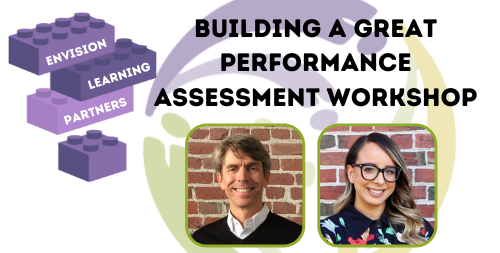
ELP’s newest virtual workshop, debuting in February, is called “Building a Great Performance Assessment.” Designed for classroom teachers, it’s a place to revise or create a standards-aligned task that is ready to embed in instruction. It’s hands-on, small-scale, and, we hope, won’t require a sub.
Justin Wells, ELP Executive Director
i

Building a Great Performance Assessment Workshop Series
The best assessments not only capture our students’ brilliance but also enable them to see and feel their progress. In this three-part workshop, you will learn the principles of high-quality performance assessment (HQPA) and apply them to the design of a task that aligns to your outcomes and provides evidence of your students’ learning. You’ll come out of the workshop with an assessment that is ready to implement in your classroom.
This workshop series is facilitated by ELP Assessment Design Partner, Soraya Ramos and ELP Executive Director, Justin Wells.
Session #1: Wednesday, February 16th, 1:00pm-3:00pm PT (4:00-6:00pm ET)
Session #2: Wednesday, February 23rd, 1:00pm-3:00pm PT (4:00-6:00pm ET)
Session #3: Wednesday, March 2nd, 1:00pm-3:00pm PT (4:00-6:00pm ET)
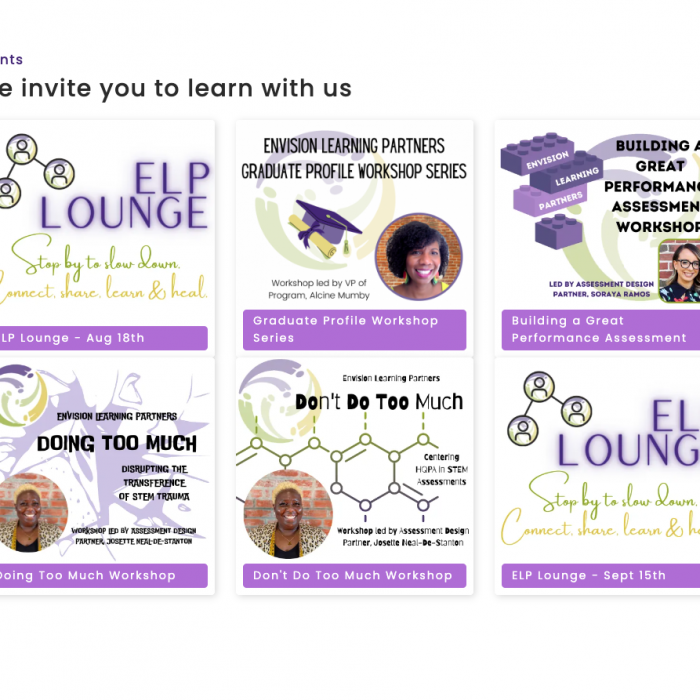
Mark your calendars for the next ELP Lounge!
The ELP Lounge will offer time to share stories, thought partnership with peers, or just the chance to throw up your hands and say, am I the only one experiencing this??? Plan to stop in and slow down to connect, share, learn, & heal. We can’t wait to see you.
Thursday, February 17th, 4:00-5:00pm PT (7:00-8:00pm ET)
Click here to grab your free ticket!

Deeper Learning Conference 2022
Share space with change-makers like you who are in search of a collective experience to highlight current triumphs and challenges, leverage student voice, and move from aspiration to action.
ELP will be facilitating sessions both, in-person and virtually! Keep an eye out for more details.
Happening March 29th-31st, 2022. Learn more about the event and register here.
TEAM UPDATES
The ELP team had a full and exciting year in 2018-19:
- Two of our team members (Alcine and Aragon) joined the inaugural Nexus Fellowship to further develop ELP’s equity stance through equityXdesign – a practice that merges the consciousness of racial equity work with the methodology of design thinking.
- ELP’s launched our first Summer Accelerator (designed and led by Abby): an intensive, immersive experience during which inclusive school design teams consisting of adults and students learn, imagine, and plan for how we might redesign school models to better serve all students.
- ELP recognized the need to spend more time together to refine our programs and learn from each other’s practice – Learning Days was launched in May, led by Abby, bringing our coaches together monthly from across the country.
- We added two members to our talented team: Aragon Burlingham joined at the beginning of the year as Director of Partnerships, and Morgan Vien joined at the end of the year as a Deeper Learning coach.
- Finally, ELP focused its talented coaches (Jim and Vinci) inwards to help our own Envision Schools develop deeper content learning in mathematics.
GEOGRAPHIC REACH
ELP added 20 cities to it’s operational reach this fiscal year, totaling 56 cities in the US and one in Beijing. ELP also quadrupled its support of State Departments, working with Virginia last year, and serving Ohio, Kentucky, and Colorado this year.
BLOG RELAUNCH
ELP is relaunching our blog – keep up with past newsletter content, including more in-depth articles and shared resources! Click on any of the section titles in the newsletter for a quick link to that blog post.
ELP IN THE NEWS
ELP was recently highlighted in an EdWeek article, thanks to a partnership between two of our team members, Ruth Chung Wei & Vinci Daro, and a charter school in Washington DC. Two Rivers Public Charter School started offering a 12-month program for teachers focused on better defining, teaching, and assessing critical thinking and problem-solving skills. Ruth and Vinci provided feedback to the cohort members on their assessment task designs.
Where in the World is ELP?
ELP was in 44 cities across the country last year, take a look at the updated map on our new website homepage to see where we’ve been.
Virtual Portfolio Defenses
At the beginning of the current health crisis, ELP developed some resources for those pursuing virtual portfolio defenses. Now, we have an entire webpage dedicated to those tools, examples, and more.
ELP was proud to partner with the Learning Policy Institute and the Linked Learning Alliance to launch the “Defending Learning at a Distance” series, which presented opportunities to observe students’ virtual defenses of learning and engage in conversations with the inspiring students and educators who have remained committed to performance assessment despite school closures. There is still time to share your students’ stories, click here to find out more.
Did your school pilot virtual defenses this year? If so, we’d love to hear from you! Click here to let us know how it went and what you would do differently next time.
Continued Support for the Deeper Learning Leadership Forum
ELP is proud to announce that we have received funding for three more years, which allows for two more cohorts of the Deeper Learning Leadership Forum! This generous grant from the William and Flora Hewlett Foundation will allow ELP to continue addressing issues of inequity in our school systems by bringing together leaders to define and unpack these challenges. For more information about the program and to meet our cohort members, click here.
Saying Goodbye
It is with heavy hearts that we say goodbye to two ELPers, Director of Partnerships, Aragon Burlingham, and Alternative Assessments Coordinator and Coach, Theresa Morris.
- Aragon, as ELP’s Director of Partnerships, was responsible for developing and growing our nationwide network of partners committed to Deeper Learning through our High Quality Performance Assessment. He focused on ELP’s growth, systems, and dedication to equity. Aragon will be joining CuriOdyssey, a science museum featuring exhibits, educational experiences, and wildlife, as Interim Executive Director. Click here to read CuriOdyssey’s press release.
- Theresa has transitioned to independent consulting, and will continue her great work building capacity at the district level and state level to build performance assessment systems. We plan to partner with her where our work intersects, and will be cheering her on with her ongoing work in Texas, Ohio, and California (Antelope Valley, Los Angeles, Riverside, and beyond).

Introducing the 5th cohort of the Deeper Learning Leadership Forum!
Click here to learn more about each of these amazing leaders.
Summer Graduate Profile Workshop Series
Educators across the country are beginning this school year with incredible opportunities to continue to push on what school looks like/sounds like/feels like for all students. We know that teachers, school & district leaders, students, and parents worked tirelessly last year to meet the needs of young people in a constantly shifting set of conditions. Innovation was happening each day in zoom rooms from Maine to Hawaii. Resisting the all too-easy slide back into the way things were is hard, as the inertia of public education in the US is an incredibly powerful force. But we believe in the power of centering students, and in the possibility of designing school systems around the sets of skills that our young people need so they can go out into the world and create the lives they dream of.
Send a team of folks from your school or district to this workshop series so they can come back with inspiration and with practical tools and processes to share with your community. Choose this school year to design and begin implementing a graduate profile – there is no better time to start!
August 25, 26 & 27th, 2021 ‣ 9am-12pm PT/12-3pm ET
Participants will explore the value of having a Graduate Profile, develop and define a draft, and then learn how to implement and measure it once they take it back to their school, district, etc. These workshops will be led by ELP Assessment Design Partner, Abby Benedetto.
Click here a 9-minute glimpse into Session A.
COMING SOON!
Designed to Thrive Workshop Series
Keep an eye out for this NEW three-part workshop series asks, “What kind of performance assessment experiences would we create to ensure that learners, especially those farthest from opportunity, thrive when we operationalize our current vision/profile of a graduate?”
Participants will explore the different features of high quality performance assessment (HQPA) and design a prototype of a performance assessment experience that provides evidence of student learning/thinking of essential competencies. The series concludes with participants iterating on that prototype after centering the lived experience of a marginalized student your system may serve, and reflecting on the changes needed to ensure that ALL students thrive in their performance assessment system.
Summer Reflections
Summer, while certainly not a vacation for most educators, can make possible more time for reflection and goal-setting. ELP is appreciative of two recent opportunities to reflect on the bigger picture of our work and to share those reflections with you.
Add to your podcast queue my recent discussion with Dr. Greg Goins on his excellent Reimagine Schools podcast. Mixing educational history and philosophy, Dr. Goins and I reflect on how performance assessment is situated within the larger movement known as deeper learning.
For the many of you actively working to broaden the adoption of good ideas, I recommend A Pragmatic Playbook for Impact, published by Bellwether Education Partners, which includes a case study on Envision Education and an upcoming August webinar that features ELP’s story. See below for more on this.
After another very challenging year for educators, we hope that summer has afforded you some time to look up to the horizons of your work. Please reach out to ELP for support as you consider your next move in the project of building a performance assessment system. Our talented team stands ready to help you train your teachers in HQPA, design a portfolio-defense system, or make your graduate profile a reality.
In community,

Justin Wells, ELP Executive Director
ELP is excited to share our Den Talk for this year’s Deeper Learning Conference- Listening to Black Women: What Conditions Enable Black Women Deeper Learning Leaders to Thrive?
Deeper Learning Coach, Alcine Mumby, will be hosting and spotlighting the wisdom of 3 Black women leaders: LaShawnna Harris, Sabrina Moore, and Kai Mathews. All three are alumni of ELP’s Deeper Learning Leadership Forum.
This will be a Kiva panel where Black women systems leaders from various levels of the deeper learning movement with embodied knowledge and expertise will share their wisdom on creating conditions for Black women and Black learners to thrive in this community. Participants will take notes as they listen deeply, scribing exact words and phrases that resonate with them, then reflect on the shifts and new learning created when they listened to understand to Black women. This promises to be a transformative den experience for participants as they seek to practice the foundational equity skill of listening to disrupt/dismantle their own beliefs about deeper learning, leadership, and equity for liberation.
Kai Mathews
Dr. Kai Mathews is the MTSS (Multi-tiered System of Support) Director at UCLA’s Center for the Transformation of Schools. In this position, she co-leads a statewide pilot aimed at improving school climate and conditions. Dr. Kai (as her students call her) has dedicated her life to creating innovative and equitable learning environments for underrepresented populations. She is an educator, researcher, and creative strategist who is passionate about innovative reforms and practices in K-12 and higher education. With over 10 years of practical work and research experience with students, teachers, and administrators in various school districts around the country, her areas of expertise and passions include educational equity; culturally responsive, inclusive, sustaining education; Project-Based Learning (PBL); Universal Design for Learning (UDL); Blended Learning (BL); and Design Thinking.
As a former 8th grade teacher at High Tech Middle, Chula Vista, Dr. Kai prides herself in creating immersive, project-based learning environments that push, uplift, and teach the whole child and allows students to engage in critical inquiry, social advocacy, and divergent dialogue.
She has a Ph.D. in Leadership Studies with a specialization in K-12 education from the University of San Diego, an M.A. in Communication from Ellis University, and a B.A. in English with a minor in Creative Writing from Spelman College.
Sabrina Moore
Sabrina “Bri” Moore, is an Oakland native. She has been a student, teacher, and is now an administrator in service of students and families in Oakland.
Sabrina “Bri” came to education as a career changer. She remembers the day she made the decision to leave a 15 year career with AT&T Telecommunications for teaching. She was in the midst of obtaining a masters degree and remembered her high school teacher telling her “if you get a masters degree you can be a teacher.” She quit a few months later to do just that and has been pushing for Oakland students ever since.
Her orientation towards school leadership began during her time with Teach Tomorrow in Oakland as a facilitator of professional development and providing mentoring and coaching support to new teachers. “I was encouraged as a new teacher to take risks, to try new approaches and to share my successes and failures with my colleagues,” recalls Moore. “If offered an opportunity to learn something new as a teacher, or as a teacher leader, I never said no- I took all opportunities offered to me to continue to learn and grow.” The same has been true of her in administration. Seeking every opportunity to learn, grow and improve for kids.
She is currently pursuing a doctorate of education in social justice from California State University East Bay in hopes to become the future superintendent of Oakland Unified School district.
When asked to describe her leadership style, Bri says she sees herself as “an anti-racist liberatory leader who is unapologetically Black, Proud and pushing for kids that look like me, come from where I come from and deserve way more than we get”, she is also dedicated to speaking truth to racism so we can see a change to systems, practices and policies that stay perpetuating hate and marginalizing folk.
Bri currently serves as the principal at MPA Primary, facilitates diversity, equity and inclusion professional learning for several organizations, provides adjunct professional learning for new principals and is a new principal mentor for OUSD. She works from one core value, “Kids First” and believes everything else is secondary. She loves what she does so much, even on the worst day she’s SMILING!
Sabrina believes that teaching and leading changes lives and with the best team possible strives for excellence in education. She is driven by the dream of seeing, “kids like me be whatever they want – no excuses and every opportunity to Live their best Lives.”
LaShawnna Harris
LaShawnna Harris is the Founder and President of Creative Station LLC a NYC based education consulting firm. She received a B.S. in Management from Rensselaer Polytechnic Institute, M.S. in teaching from the Fordham University and a M.S. in school building leadership from Mercy College.
LaShawnna previously worked as an elementary school teacher, math staff developer, assistant principal, founding principal, new principal coach and most recently as the Senior Director of School Improvement for the New York City Department of Education.
As the founding principal of PS 330Q, it was her vision that all students would learn in a supportive environment that focused on their academic and social-emotional development, so they could pursue and achieve their dreams. LaShawnna was noted in the Huffington Post article, “Why School Culture Matters, and How to Improve it” by Michael Haberman that showcased her work with Morrison Healthcare through the school’s PENCIL partnership to improve school culture.
She has a passion and commitment to supporting school leaders with school improvement. Her strengths are facilitating small group professional learning community sessions on managing complex change, strategic planning, collaborative problem solving and improved systems and Operations.
Register for the session using this link: https://sched.co/i5i4
For more information about the Deeper Learning Conference and to register, click here.
Learn more about Deeper Learning Coach, Alcine Mumby, in her “I am ELP” highlight.

Reflections on the Assessment for Learning Conference by Morgan Vien, Contributing Conference Designer
The AfL Conference was a powerful experience for me in many ways. A huge part of my job is curating learning experiences that shake up “business as usual.” In a conference design role, it was interesting to design an experience for 400 people that felt personal, reflective and inclusive. That being said, I think we did that. I am stoked to continue to build out this muscle and imagine what is possible for this gathering. One shift I would make for the future is to support presenters to design even more hands on learning experiences for participants. As leaders who believe in learner-centered processes, we have to practice what we preach and this conference experience is a great place to prototype that work across contexts.
Stay tuned for AfL Conference 2021, as well as resources from this year’s conference!
Cancellation of Deeper Learning Conference 2020
In light of the current health climate, the difficult decision to cancel Deeper Learning 2020 was made. The event will not be rescheduled to later on this year, instead all efforts will be put toward making DL2021 an epic event, set for March 23-25, 2021! The Envision Learning Partners look forward to connecting with everyone in San Diego next year!
Registration will open in September. For more information, click here.
April Graduate Profile Workshop Series
Join us for the next round of our three-part workshop series, led by Deeper Learning Coach, Abby Benedetto. Participants will explore the value of having a Graduate Profile, develop and define a draft, and then learn how to implement and measure it once they take it back to their school, district, etc.
Session A: Intro to the Graduate Profile
Tuesday, April 6th, 2021⋅9-12pm PT / 12-3pm ET
You have heard about this thing called a Graduate Profile and want to take your first leap into learning more.
Session B: Defining Your Graduate Profile
Tuesday, April 13th, 2021⋅9-12pm PT / 12-3pm ET
You have a list of amazing skills/competencies that you want for your graduates, and you are ready to get more specific about what that really means.
Session C: Select & Design Your Culminating Performance Assessment
Tuesday, April 20th, 2021⋅9-12pm PT / 12-3pm ET
You want to design a culminating performance assessment that will measure your Graduate Profile.
For a description of the sessions, FAQs, and to register- click here.
Assessment for Learning Spring Conference: May 6-7, 2021
The 2021 Assessment for Learning Conference is a two-day virtual learning experience. Sessions will be ‘flipped’ so that we can spend our live time together in smaller group discussions of content, questions of practice, and design. The Conference will be a chance to build the collective knowledge and shared vision of the Assessment for Learning community.
The AFL2021 Call for Submissions is open and stipends are available! Propose a session today to share your work with a community of educators and policymakers who are committed to fundamentally #RethinkAssessment. How has assessment for learning helped us navigate the crises of the past year? And what must we learn from from this in order to build a more just and student-centered future of public education? Proposals are due March 29th.
Visit the AFL2021 website to learn more!
Deeper Learning Conference #reEngage 2021
ELP is excited to share our Den Talk at this year’s conference: Listening to Black Women: What Conditions Enable Black Women Deeper Learning Leaders to Thrive?
Deeper Learning Coach, Alcine Mumby, will be hosting and spotlighting the wisdom of 3 Black women leaders: LaShawnna Harris, Sabrina Moore, and Kai Mathews.
Click here for more details about this session and bios of the three women being highlighted.
Applications are open for Cohort 5 of the Deeper Learning Leadership Forum!
ELP is pleased to announce that applications and nominations for the 5th cohort of The Deeper Learning Leadership Forum (DLLF) are now open!
The DLLF is a cohort-based leadership experience that aims to develop, strengthen, and support a group of educational leaders to work at the intersection of equity and design thinking.
We are seeking diverse applicants and nominees for our fifth Cohort who are interested in working with other education leaders to address the single biggest challenge facing public education today: inequity.
Click here for more details, links to apply or nominate someone, and a list of FAQs.
Applications due Monday, March 29th.
Big-Picture and Fine-Grained
Cautiously, things are opening up. ELP has a growing number of dates on the calendar for in-person service. We are about to attend our first conference since the pandemic began. We look forward to seeing many of you at Deeper Learning 2022 in San Diego next week. (Read below to learn about ELP’s offerings at the conference.)It’s a good moment to be reminded that performance assessment system building is both big-picture and fine-grained. It’s the highly visible work of establishing a district-wide graduate profile; it’s also the more subtle work of ensuring that science tasks are as standards aligned and culturally responsive as possible. Depending on where there is energy and opportunity, a learning community can toggle between levels and still be making progress.Whatever level of the system you are ready to work on, we’re working to ensure that relevant ELP support is right around the corner. If you don’t see it on the calendar, reach out to us anyway. It’s likely we can meet your needs on short notice.In community,

Building a Great Performance Assessment Workshop Series

Back by popular demand! Teachers know that the best assessments not only capture our students’ brilliance but also enable learners to see their progress. In this three-part workshop, you will learn the principles of high-quality assessment and apply them to the design of a task that aligns to your desired outcomes and provides evidence of your students’ learning. By the end of the workshop you will have an assessment that is ready to implement in your classroom.This workshop series is facilitated by ELP Assessment Design Partner, Soraya Ramos and ELP Executive Director, Justin Wells.
- Session #1: Wednesday, April 20th, 12:00pm-2:00pm PT (3:00-5:00pm ET)
- Session #2: Wednesday, April 27th, 12:00pm-2:00pm PT (3:00-5:00pm ET)
- Session #3: Wednesday, May 4th, 12:00pm-2:00pm PT (3:00-5:00pm ET)
Click here for more details and to get your team registered.
Join us in April’s ELP Lounge!
We’re excited to announce our first ever ELP Lounge Guest:Trevor Gardner! Trevor is an educator, consultant, author, and anELP Deeper Learning Leadership ForumAlumni.This special event will include time to connect with each other and feel free to come with wonderings about Trevor’s Guest Blog: Urgency, Patience, and the Cultivation of Hope. Plan to stop in and slow down to connect, share, learn, & heal. We can’t wait to see you.
Thursday, April 21st, 4:00-5:00pm PT (7:00-8:00pm ET)
Click here to grab your free ticket and let us know you’re coming!
Deeper Learning Conference 2022
We’re looking forward to seeing many of you virtually and in-person next week! Here is the official line up of ELP’s sessions:
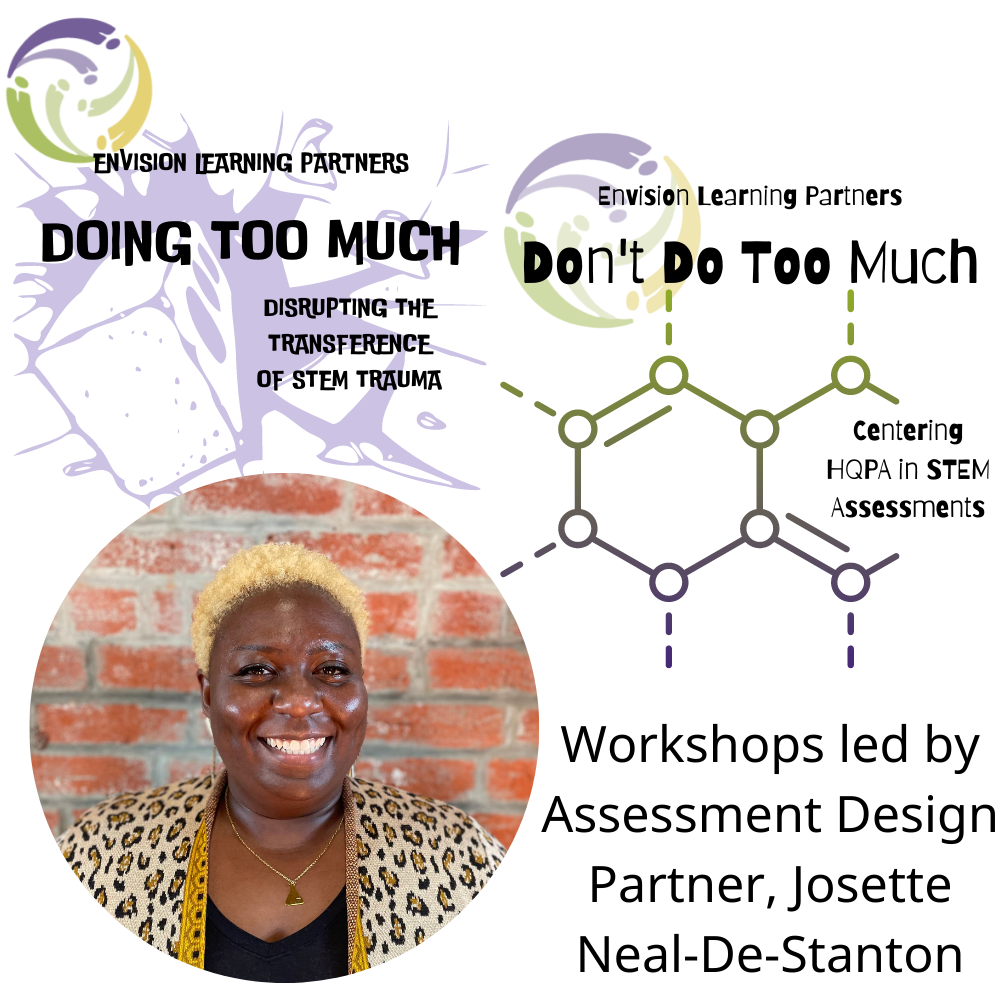
Don’t Do Too Much with Josette Neal-De-Stanton: How to make culturally responsive practice and DEI authentically enhance your science assessments.
- Tuesday, March 29th ⋅ 4:30 – 6:00pm PT (in-person)
- Thursday, March 31st ⋅ 9:45 – 11:15am PT (in-person)
This workshop will dive into the importance of incorporating culturally responsive practice and DEI authentically into your classroom! Going beyond adding a trendy handshake or latest song into a presentation, we will be looking into how we use these definitions and principles to create science assessments that are engaging to all demographics, particularly targeting your most disengaged students. Far too often we overthink how to incorporate culture into science, but it is easier than you think, and doesn’t have to involve embarrassment as you fumble to remember the lyrics to a Top 20 song to make a “cultural connection.”
Designed to Thrive with Alcine Mumby & Abby Benedetto: Creating High Quality Performance Assessments That Enable Marginalized Learners to Thrive.
- Wednesday, March 30th ⋅ 1:00 PM – 6:00 PM PT (virtual)
Participants will explore the different features of high-quality performance assessment (HQPA) and design a prototype of a performance assessment experience that provides evidence of student learning/thinking in essential competencies. The session concludes with participants iterating on that prototype after centering the lived experience of a marginalized student your system may serve and reflecting on the changes needed to ensure that ALL students thrive in their performance assessment system.
Making Good On Our Promises with Justin Wells & Soraya Ramos: Designing A High Quality Performance Assessment System.
- Wednesday, March 30th ⋅ 10:30am – 4:00pm PT (in-person)
This is an interactive, hands-on workshop where participants will prototype a high-quality performance assessment (HQPA) aligned to deeper learning competencies. Learn the principles of high-quality assessment and apply them to the design of a task that aligns to your desired outcomes and provides evidence of your students’ learning.
Virtual Den Talk with Vinci Daro: A conversation about modernizing mathematics: perspectives from the classroom and beyond.
DEFENSE DESIGN STUDIO UPDATE
ELP will be moving our annual Defense Design Studio energy to sharing stories in the hopes of inspiring others to take on the powerful practice of student defenses of learning. We have partnered up with the Learning Policy Institute and the Linked Learning Alliance as part of the California Performance Assessment Collaborative to bring you an online series of virtual defenses and behind-the-scene interviews.
Take a look at the first video in the series, Envision senior, Dani Martin, who vlogs about preparing for her virtual defense.
Click here for more information, including how you can get involved!!
ELP HAS OFFICIALLY LAUNCHED OUR NEW PODCAST, ReMix-Ed!
This podcast situates where Assessment, Deeper Learning, Equity and Systems Change meet. Transforming schools is not light work. We illuminate complexities, lift up what’s working and imagine a path forward. With our equity lens we seek to learn from marginalized identities AND intentionally lift up their expertise.
Use this link to check out the first three episodes.
TWITTER CHAT: DEFENDING LEARNING IN MATH
ELP just held our second Twitter Chat earlier this month and the focus was all about students defending their learning in math. The online conversation was held by our Director of STEM, Vinci Daro and previous Deeper Learning Coach & math enthusiast, Jim Malamut.
Keep an eye out for our next Twitter Chat by following ELP on Twitter at @EnvisionSchools and using the hashtag #ELPCoachChat!
Click here to see the resources from our first chat, held in March, which focused on Developing & Measuring your Grad Profile with Deeper Learning Coaches, Abby Benedetto & Suzanne Malek.
Summer Graduate Profile Workshops
Join us for one of the consecutive 3-day workshops to build community with other educators, and to imagine the possibilities when we center systems of education around the skills that young people need in order to thrive.
Participants will explore the value of having a Graduate Profile, develop and define a draft, and then learn how to implement and measure it once they take it back to their school, district, etc. These workshops will be led by Deeper Learning Coach, Abby Benedetto.
We are also offering an additional option for a direct consultation with Abby after the session of your choice. This would be a great time to get your team’s questions answered and customized suggestions
August 24-26th, 2021 ‣ 9am-12pm PT/12-3pm ET
Designed to Thrive Workshop Series
This three-part workshop series asks, “What kind of performance assessment experiences would we create to ensure that learners, especially those farthest from opportunity, thrive when we operationalize our current vision/profile of a graduate?”
Participants will explore the different features of high quality performance assessment (HQPA) and design a prototype of a performance assessment experience that provides evidence of student learning/thinking of essential competencies. The series concludes with participants iterating on that prototype after centering the lived experience of a marginalized student your system may serve, and reflecting on the changes needed to ensure that ALL students thrive in their performance assessment system.
This workshop series is facilitated by Deeper Learning Coaches, Alcine Mumby and Abby Benedetto.
Aug 4th, 11th & 18th ‣ 9:30am-12:30pm PT / 12:30-3:30pm ET
CuriOdyssey STEMCorps
Are you a teacher interested in developing your early science teaching skills? CuriOdyssey is offering grant-funded professional development for the 2021-22 school year. This PD focuses on building comfort, competence and capacity to deliver science ed, aligned with NGSS. Learn more here.
Always a Journey.
In schools all over the country, May is a month when many students share their learning—through project exhibitions, capstone presentations, defenses of learning, and other culminating experiences. Here’s to all the students and teachers out there, even in this difficult year, who are working to culminate learning in ways that are challenging, meaningful, and memorable. Learning is always a journey. It runs deeper when it is designed to feel like one.As you look to the 22–23 school year, please reach out to ELP for thought partnership and support. How will your students be sharing their learning in May of 2023? Now is the right time to ask. And summer is the best time to design those deep learning journeys for students.Speaking of memorable journeys, we’re in the midst of an important transition for Envision Education, ELP’s parent organization. After a remarkable tenure as our CEO for most of the past 10 years, Gia Truong is moving on. Many of you know Gia as a passionate leader for equity, deeper learning, and performance assessment. Her support for ELP’s mission has been unwavering, and her legacy includes theDeeper Learning Leadership Forum. Gia—from the entire ELP team, it’s been an honor and joy to travel with you.Going forward, we are excited to be partnering with our new Envision CEO Jillian Juman. Jillian introduces herself in this newsletter’s guest blog; read on to hear from her directly.In community,Justin Wells, ELP Executive Director
Coming June 9th & 14th- TWO New STEM Workshops!
Part A: Doing Too Much: Disrupting the Transference of STEM Trauma
This workshop will explore the often problematic relationship many students and teachers have with STEM education emerging from traumatic experiences we simply never address. This workshop particularly focuses on the roots of science as it relates to white supremacy culture and science education, and how that bleeds into the way we see ourselves, or don’t, in science. We will look at ELP’s HQPA principles as a means to address healing and thriving in the design of STEM assessments that matter.
Part B: Don’t Do Too Much: Centering HQPA in STEM Assessments
This workshop will dive into the importance of incorporating culturally responsive practices and DEI authentically in order to thrive in your classrooms! Going beyond adding a trendy handshake or latest song into a presentation, we will be looking into how we use these definitions and ELP’s HQPA principles to create STEM assessments that are engaging to all demographics, particularly targeting your most disengaged students.
Join us for June’s ELP Lounge!
We’re excited to announce that in June, we’ll have incoming Envision Education CEO, Jillian Juman, as our ELP Lounge Special Guest!
Stop by to slow down. Connect, share, learn & heal. We can’t wait to see you!
Thursday, June 16th, 4:00-5:00pm PT (7:00-8:00pm ET)
Click here to grab your free ticket and let us know you’re coming!
The DLLF application deadline has been extended to May 31st!
The Deeper Learning Leadership Forum (DLLF) is a cohort-based leadership experience that aims to develop, strengthen, and support a group of educational leaders to work at the intersection of equity and design thinking. DLLF seeks to address issues of inequity in our school systems by bringing together leaders to define and unpack these challenges. On this journey, leaders will explore deeper learning practices; develop the skills to identify and disrupt oppressive ideologies, systems, and structures within education; and practice employing an equity-centered design thinking approach. Learn more about the program here.