
Measuring What Matters in Colorado
There is statewide support for Deeper Learning in Colorado, and Envision Learning Partners is playing a key role.
Read More

.svg)
.svg)


.svg)
.svg)
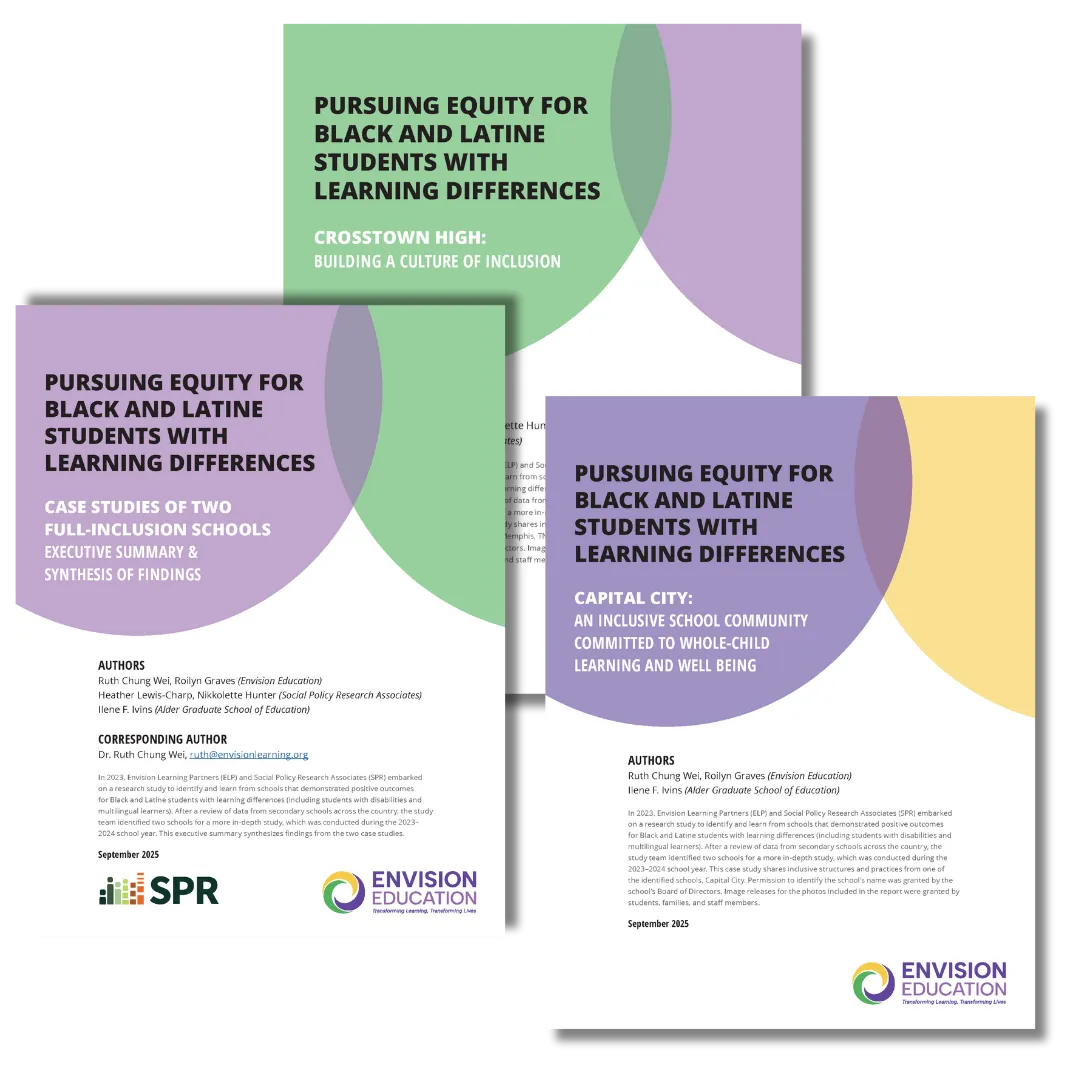
Envision Education is excited to share the culmination of its two-year research project, Pursuing Equity for Black & Latine Students with Learning Differences, which
documents and illustrates the systems, practices, cultures, and supports that are associated with the well being and success of Black and Latine students with learning differences – students with disabilities and multilingual students with disabilities.
In 2023, Envision Learning Partners (ELP) and Social Policy Research Associates (SPR) embarked on a research study to identify and learn from schools that demonstrated positive outcomes for Black and Latine students with learning differences (including students with disabilities and multilingual learners). After a review of data from secondary schools across the country, the study team identified two schools for a more in-depth study, which was conducted during the 2023–2024 school year.
The results of the research are shared through case studies of the two schools that were the focus of the research: 1) Crosstown High: Building a Culture of Inclusion; 2) Capital City: An Inclusive School Community Committed to Whole-Child Learning and Well Being; and 3) An Executive Summary/Synthesis of Findings.
In addition, we have authored four practice briefs based on the findings of the research that provide practical steps that schools can take to create more inclusive environments that support the success of Black and Latine students with learning differences.
This research was made possible through the generous support of New Profit, a venture philanthropic organization, and the Oak Foundation.
There is statewide support for Deeper Learning in Colorado, and Envision Learning Partners is playing a key role.
In 2007, the state of Colorado asked districts to choose the ways their students will demonstrate college and career readiness, and therefore readiness to graduate from high school.
This Graduation Guidelines menu lists the options. In the mix of more traditional tests, two options provide a clear pathway for students to graduate by demonstrating their skills through an individualized product or presentation: Capstone Projects and Collaboratively Developed Standards-Based Performance Assessment.
Since April 2018, Envision Learning Partners has been honored and energized to work in an accelerated way with educators at every level of the Colorado educational system, to design meaningful and sustainable assessment systems worthy of and accessible to every student in Colorado, strongly aligned to the demands of a wide variety of 21st century college and career options.
This June marks the close of two incredible first-year partnerships between ELP and the Colorado Department of Education, as well as the Colorado Education Initiative; both projects involve educators from every corner of the state to transform education statewide.
Dear ELP Community:
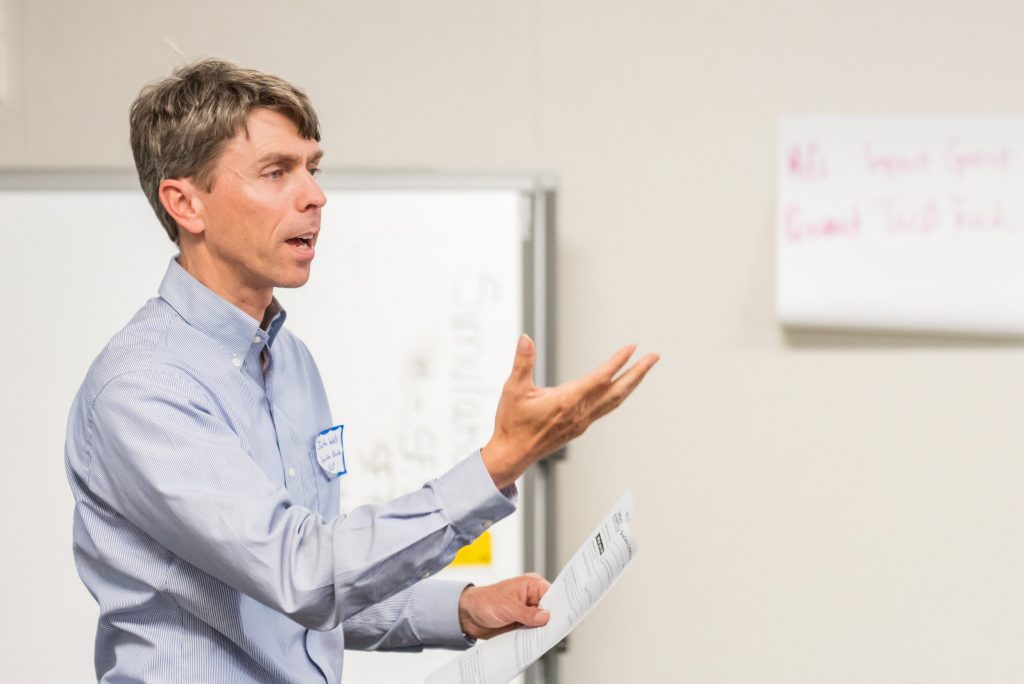
I am writing with news about a transition for Envision Learning Partners. This past year has been eventful for us (as I am sure it has been for you). We onboarded a new Executive Director and a new Assessment Design Partner. We completed strategic plan processes for both Envision Learning Partners and Envision Education org-wide. We are about to finish a 3-month study of our impact and ways to expand it. Now, as we wrap up the school year, we consider the future and make decisions about how to navigate education’s changing times and shifting landscapes.
Royce Conner, ELP’s Executive Director, will be transitioning from his role on June 30th. We are grateful to Royce for the important contributions he has made and projects he has led during his tenure, and we deeply support him as he moves into the next chapter of his distinguished career as an educator. Feel free to connect with Royce on LinkedIn.
Royce’s responsibilities will be distributed across Envision Education as part of a comprehensive org-wide strategy to deepen the integration between our schools (our local impact) and our consulting service (our nationwide impact). Out in the field, our remarkable team of coaches and operations professionals will continue to help school districts build high-quality performance assessment systems. In my role as Chief Program Officer, I am excited for the opportunity and the commitment to make the sum of “One Envision” to be greater than its already powerful parts.
As we head into the summer, when educators often feel a welcome shift in pace, I invite you to reach out to me with questions or wonders. ELP remains your steadfast partner in our movement to bring high-quality performance assessment to all students.
In community,

Justin Wells, Chief Program Officer
In a recent conversation with fellow advocates of performance assessment, a colleague made the point that our job as educators is not to teach standards but to teach students.
Of course, standards play an important role in guiding teachers’ work. But given the structures and incentives of our system, it’s easy for standards to slip into the position of ends rather than means. Tragically, covering standards—“I taught it; some got it.”—feeds inequities that plague education. When we truly reorient to “teaching students,” we stay focused on those whole human beings in our classrooms. What do our students need to achieve, how will we know they have achieved it, and how do we support their getting there? This is performance assessment system design.
The graduate profile movement is a boon, pushing students into the focal point of our energies. Social-emotional learning (SEL) is trending, reminding us to attend to the whole child. But none of these ideas will translate into lived learning experiences until students are regularly tackling rigorous and real-world challenges that elicit the skills they need to practice and master. Our kids need high-quality performance assessments.
Join us on twitter for more conversation about the importance of teaching students over standards, using the hashtag #TeachStudentsNotStandards
Sincerely,
Justin Wells, ELP Executive Director
During his keynote at last fall’s EdLeader21 Conference, educational thought leader, Tony Wagner, did not mince words. “A graduate portrait without an assessment,” he said, “is useless.”
The audience members—mainly district leaders from around the country—audibly shifted in their seats. Although it’s hard to disagree, it’s also hard to pull off. How can school districts assess skills that are as complex as the ones we see on a typical graduate profile?
Tony followed up his challenge with two recommendations:
He’s right. Portfolio assessment and presentations of learning (which come in many forms, including defenses and student-led conferences) are two effective, customizable, scalable, and actionable ways to move from “poster to practice.”
ELP cheers the graduate profile movement because of its potential to change our society’s conception of education’s purpose. But we also worry for the movement. If we don’t see graduate profiles made visible in the actual work of our students—“show don’t tell,” says this old English teacher—then we’re destined to look back on this as another edu-trend that came to nothing. That’s why Tony Wagner’s admonition is so urgent.
The challenge of assessing graduate profiles is one of the major themes of next month’s Assessment for Learning Conference. I know I will see many of you there, and I am excited for the opportunity to work on this together.

Justin Wells,
ELP Executive Director
ELP is thrilled to welcome Morgan Vien to our team of Deeper Learning Coaches. Fabulously talented and exploding with ideas, Morgan complements our team with her experience in K-8 school leadership (most recently, serving as principal at ASCEND School in Oakland) and facilitating design thinking (as a School Retool Coach for Stanford’s d.school). We, and our client partners, are going to learn so much from her. Please welcome Morgan when you see her out in the field.
In other ELP news, we recently hatched a new strategic plan, our first since joining forces with the Stanford Center for Assessment, Learning, and Equity (SCALE) over a year and a half ago. ELP’s vision—every student in America is learning within a high-quality performance assessment system—is ambitious in scale and generational in scope, so we know we need to set ourselves up for the long haul. In the coming three years, our strategic priorities are:
As always, we welcome your thought partnership. Let us know what you think about our plan, or ask any one of us to elaborate when our paths cross in the field.
Sincerely,
Justin Wells, ELP Executive Director
The COVID crisis deepens. All of us engaged in the endeavor of learning—students and teachers—now gather ourselves for what we know will be a strange, trying, and unpredictable school year ahead.
As your learning community makes its mad design dash to the start of the school year, with all your contingency plans and spreadsheets and multiple scenarios, don’t forget to keep your graduate profile, or whatever serves as your overarching set of desired learning outcomes, close at hand. Refer often to that list, and keep asking, How are we designing ways for our students to practice these skills?
This pandemic is driving home the pre-pandemic truth that learning is not about seat time or content delivery or testing, all of which crumbled with startling quickness last spring. Learning has always been and will always be about improving one’s skills through practice, guided by coaching. Conceived as such, learning is remarkably flexible. Practice, guided by coaching, can happen at home independently, or on a video call, or in a sparsely desked classroom with children in masks. Establish practice routines for the key skills of your course. Introduce them as early as possible in the school year. Design those routines to be portable, and demonstrate that portability to your students by simulating at-home practice when you have them in your classrooms, and in-classroom practice when you have them on a video call.
I have more to say about elevating the “practice question” in a blog I recently contributed to our friends at Future Focused Education.
We can rise to this challenge, especially if we apply the principles of High-Quality Performance Assessment, and we can make school better than it was before.
In solidarity with educators everywhere,
Justin Wells, ELP Executive Director
Have you had a chance to read Jal Mehta’s piece in Ed Week, “Why Equity Has Been a Conservative Force in American Education—And How That Could Change”? If you haven’t, you should.
Mehta argues that “the effort to close achievement gaps has in practice doubled down on the century-old industrial model of schooling, leaving in place all of the essential elements of its grammar: teaching as transmission, batch processing of students, conventional assessments, tracking and leveling, and all of the rest. Anything that moves away from those assumptions—like project-based learning, problem-based learning, interdisciplinary learning, authentic assessment, or constructivist pedagogy—is seen as ‘risky;’ something that is ‘OK for the privileged kids’ but somehow distracts from the real work of closing achievement gaps on state-sponsored tests.”
We at Envision Learning Partners see deeper learning not as a risk but as a moral imperative, not only because all children deserve it, but also because it’s the right way to make change. I agree with Mehta’s notion of “liberatory design,” which “assumes that teachers and students would like to develop engaging, meaningful learning experiences, and that the problem is not them but the institutional structures and culture of schools that constrains them.” I am fortunate to witness proof of this regularly in my work when, for example, I see the excitement among students and teachers who have designed and implemented a portfolio-defense system.
The teachers and leaders who reach out to partner with ELP have drawn similar conclusions about deeper learning. We are proud to serve their schools and districts, and we are always inspired by their courage to do this work.
Sincerely,
Justin Wells, ELP Executive Director
As you work furiously and heroically to serve your students through the COVID-19 crisis, ELP offers this advice: Don’t forget about your graduate profile. Now’s the time to lean into it.
It doesn’t matter whether your performance assessment system is well established or just getting off the ground, whether you’re currently reaching your students through Zoom or printed worksheet packets. If your learning community has a graduate profile or similar set of learner outcomes, you should use that language to remind your students of their assets and to challenge them to grow. Most graduate profiles were designed to focus us on the skills students need to navigate a fast-changing world with an unpredictable future. Now we get to put them to the test.
Many graduate or learner profiles, for example, target a competency that has to do with being a “self-directed learner.” Let’s admit that it’s a concept more aspirational than operational. In most of our highly-structured learning environments, young people have very little opportunity to practice being self-directed. Guess what? Now they need it. And we need to teach it. So invoke the skill, express high expectations for students to develop the skill during this time, give them ideas for how to practice and demonstrate it, structure opportunities for them to reflect on it, and challenge them to document evidence of their growth. This goes for any skill that’s on your graduate profile.
Stay tuned. In coming weeks, ELP will continue to share suggestions for ways to leverage or advance the elements of your performance assessment system: the use of portfolios, running defenses of learning virtually, building a culture of revision and reflection. There are enormous opportunities in this crisis for students to practice and be assessed on the skills we say are important.
Sincerely,
Justin Wells, ELP Executive Director
The Practice Question
Across education, I see the development of a healthy habit, and the performance assessment movement deserves plenty of credit for it. Educators everywhere, when considering a desired learning outcome, are reflexively asking, “How would we measure that?”
This is good. Asking the measurement question holds us accountable to our goals; answering it points us to actions.
But there’s another question that is just as focusing, should be just as reflexive, and would not hurt to come first: “How will our students practice that skill?”
Answer the practice question, and the measurement answer comes easily. It’s not so easy the other way around.
As a young teacher, I too often measured things that my students didn’t get to practice. I whipped out a public speaking rubric when students presented at the front of the room. I assessed them on their volume and eye contact. But we hadn’t practiced those skills in class.
Collaboration shows up on most graduate profiles. How will our students practice that skill? Answer it honestly. Assigning some group work is not the same thing as practicing collaboration.
Another grad profile meme—critical thinking—is not any kind of thinking. It’s grappling with “How might I be wrong?” How do students practice that skill? If a student has gone through a school year without consciously changing her mind on anything, then I doubt she has really practiced critical thinking.
I applaud what I see announced on graduate profiles all over the country—really important skills that schools can help kids get better at: inquiry, citizenship, creativity, persistence, problem solving, cultural competence, and so on. But it’s not fair to measure things that students haven’t had an opportunity to practice.
A high-quality performance assessment system knows its desired outcomes and its measurements; it also takes responsibility for scheduling practice.
Please share with us one of your favorite ways to help your students practice a key skill!
Sincerely,
Justin Wells, ELP Executive Director
The “yes buts”—the common objections to performance assessment—keep dropping away.
The latest comes with the revolutionary announcement from the UC Board of Regents last week: Going forward, the SAT or ACT test is not required for admission to a UC campus. The requirement will be phased out completely by 2025.
And just like that, there goes the “yes but the SAT” counterargument to performance assessment system building. An institutional practice that had seemed entrenched is now revealed by the pandemic to be fragile.
We can add the SAT to a growing list that includes “Yes but instructional minutes,” “Yes but the end-of-year standardized tests,” and “Yes but the course grade.”
Meanwhile, the concept of a defense of learning has proven resilient in this crisis. ELP is proud to partner with the Learning Policy Institute and the Linked Learning Alliance to launch the “Defending Learning at a Distance” series, which in coming weeks presents multiple opportunities to observe students’ virtual defenses of learning and engage in conversations with the inspiring students and educators who have remained committed to performance assessment despite school closures. (For those of you wondering about ELP’s long running practice of Defense Design Studios, this series is where we are putting that energy this year.)
Watch this web page closely for upcoming dates associated with the “Defending Learning at a Distance” series. There are some events happening later this week. And more will be added as plans get solidified. Students and schools are moving fast. Don’t take it from us: Watch Envision student Dani Martin vlog about preparing for her virtual defense. I can’t wait to witness what students have to say about their learning in the next couple weeks, and to discuss the implications of this with all of you in the months to come.
Stay safe,
Justin Wells, ELP Executive Director
Here at Envision Learning Partners, we believe that every student deserves to learn within a high-quality performance assessment system. That means every student goes to a school where:
If a school does not have these conditions in place, or isn’t actively working toward them, then I hesitate to call it a good school, no matter how high its test scores, shiny its hallways, or champion-like its teachers.
We in the performance assessment movement must clamor for focus on the quality of our students’ work—not proxies for their work, like test scores or classroom observations, but the work itself. How are you focusing on and highlighting your students’ work? Drop us a line to let us know!
I invite you to read more of my thoughts on the subject in “What Is a Good School?,” a short piece I wrote for EdWeek’s Learning Deeply blog.
Sincerely,
Justin Wells, ELP Executive Director
I am excited about the upcoming Assessment for Learning Conference and encourage everyone in the performance assessment movement to join us in San Diego this February (11–13th).
For the past three years, the educators and system leaders of the Assessment for Learning Project have been designing, learning, and innovating together to reimagine what’s possible for assessment. Having learned much from being part of this community, ELP has been hungry to see it grow. So we’re thrilled that the Assessment for Learning Project is stepping up to host its first-ever conference. The event will be populated with some of the most innovative, thoughtful, equity-minded, and visionary educators and system leaders when it comes to assessment.
ELP is proud to be a co-designer of the conference, and it’s shaping up to be a cutting-edge learning experience for attendees, who will be challenged to apply innovative assessment principles to their own 3-day learning journey. This is a conference designed for practicing, not preaching.
There are so many educators around the country who are doing incredible work to transform assessment, and this conference is a chance for us to learn with each other and build on the momentum to create an Assessment FOR Learning movement. I hope you will join us!
For more info and to register, go to www.assessmentforlearningconference.org.
Sincerely,
Justin Wells, ELP Executive Director
A high school principal recently lamented to me that many of his students’ grades are cratering during this time of distance learning. Much of the problem, he observes, is coming from classes whose grades are calculated using points.
Work is assigned, work is not received, and the work gets a zero in the grade book. After that, it’s out of the teacher’s hands. Simple math takes over. Average up the points. Out spits the failing grade.
Keeping our students engaged when we can’t serve them in person has, understandably, proven a challenge. Around the country, teachers are Zooming real hard and feeling disappointed by what they are getting back from students in return. But that problem is compounded by points-based grading systems, which the pandemic has exposed as a pervasive practice in our schools.
Where I see a course that organizes itself around points and percentages, I usually find a learning environment in which the teacher and the students do not share clear answers to simple questions of purpose: What are our learning goals? What are the skills we are focused on improving? What are the ways that students can demonstrate their progress?
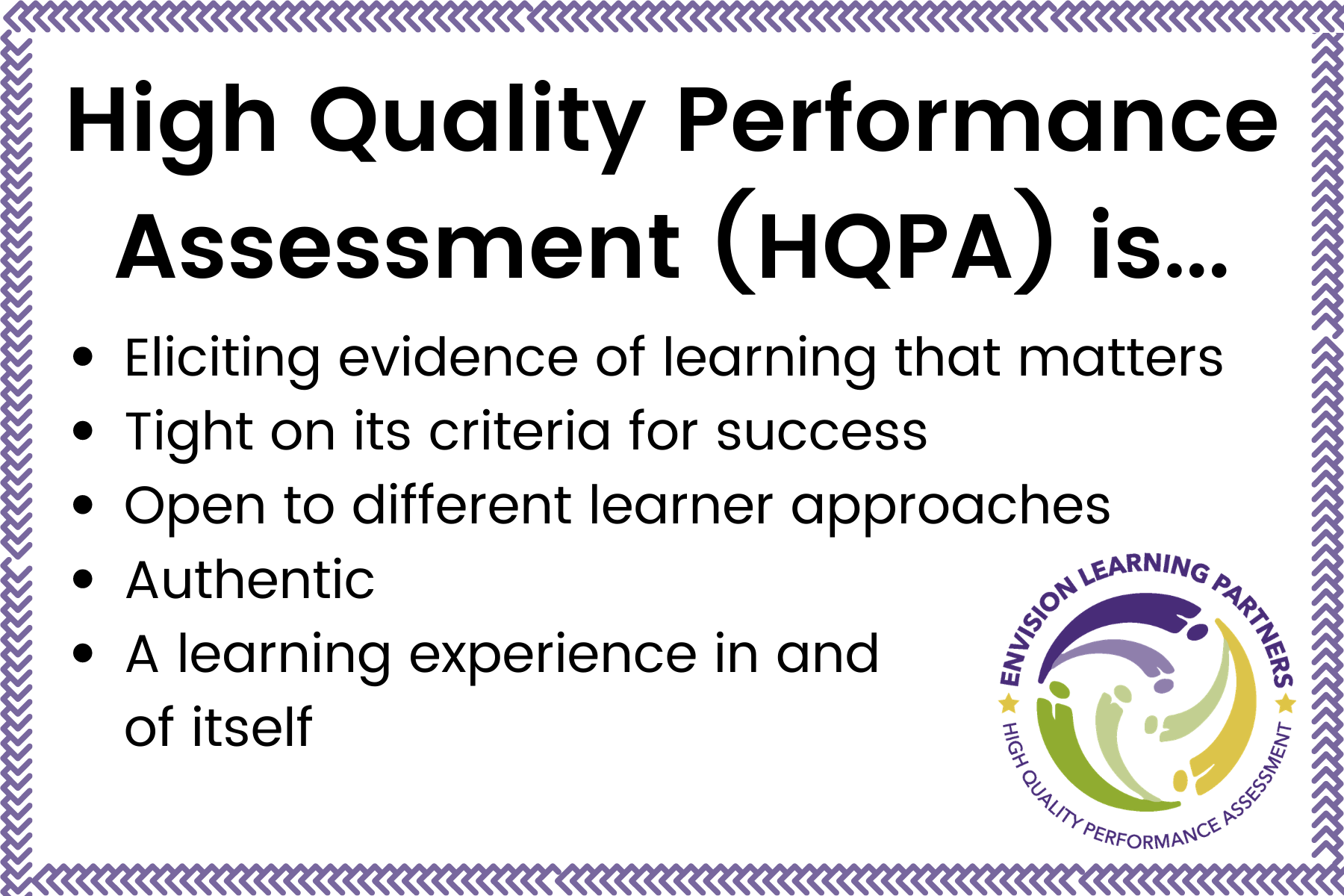
Two principles of ELP’s High-Quality Performance Assessment (HQPA) framework are particularly germane here: 1) tight on criteria for success and 2) open to different learner approaches. In a course that is rooted in HQPA, students can describe what success looks like with words, not numbers. And the teacher can point out different paths to success. In such a course, there is no reason why a student cannot, in a single, convincing performance of the targeted skills, redeem a whole semester’s worth of struggle.
If there’s one educational practice that I wish this pandemic would eradicate, it is the use of points for calculating course grades. Its disappearance would be a major advance toward an educational system where assessment is for learning, not for sorting.
With respect and gratitude for the work of educators everywhere.
Sometimes it’s important, in our jargon-loving profession, to put things as plainly we can. That’s certainly true for a concept such as performance assessment.
A word that comes in handy is the word challenge. I use it for two key questions:
The first is, How are we challenging our students?
Schools and districts that are consciously building a performance assessment system tend to have crisp answers to that question: “We challenge our students to do a year-long research project.” “Our 3rd graders plan and facilitate their own conferences.” “11th graders must design and implement a statistical analysis with help from an outside expert.” “Our kids have to defend their learning every two years.”
The second question is then, How are we challenging ourselves and our system to prepare our students for their challenges?
Again, I am encouraged by crisp answers: “We look at student work and calibrate on our rubrics once per month.” “Our grade level teams meet in the summer to design two multi-disciplinary projects per year.” “The science department will be using a Next-Gen-aligned rubric for assessing inquiry projects next year.” “We’re investing in PD so that our teachers can teach public speaking across the curriculum.”
Try it. As you build your performance assessment system, keep asking, “How are we challenging our students?” and “How are we challenging ourselves?” Tighten up your answers. Then live them.
Sincerely,
Justin Wells, ELP Executive Director
One widespread way that schools have adapted to the pandemic, particularly at the secondary level, is a dramatic restructuring of the “bell schedule.” In the virtual and hybrid contexts we’re now operating in, many students are taking, and teachers are teaching, fewer classes at one time, typically made possible by shortening the length of courses or chunking them into alternating modules (which is what we are doing here at Envision Schools).
The challenges are obvious: These new schedules are born of compromise. They are harder to manage for some disciplines than others. Abrupt change is exhausting. But they do present an opportunity for advancing a key element of your performance assessment system—the culture of reflection and revision among teachers.
In a functioning performance assessment system, students’ work (their response to assignments) informs teachers’ work (their design of assignments) in a process that is collaborative and continual. With courses on faster cycles, there are more opportunities to iterate. A semester-long course, if offered twice during the year, doubles the pace of iteration.
Let’s acknowledge that making time for collaborative revision of courses is not easy. Right now, the brute logistics of delivering instruction in the midst of a pandemic are monopolizing our energies. But as we get deeper into the fall, ELP urges educators to dedicate some of your precious PD time, in whatever form it comes, to sharing assessments and analyzing student work, building your system’s muscles for reflection and revision.
Shorter courses demand even crisper answers to the questions that never go away: What do students need to learn, and how will we know they have learned it?
When teachers do have opportunities to share their work with each other, we encourage you to use ELP’s principles of High Quality Performance Assessment (HQPA) as a common language for exchanging feedback. We offer both a set of look-fors and single-point rubrics for each of the five principles. Don’t hesitate to reach out to us with questions on how to use these tools in your learning community.
with respect and gratitude for the work of educators everywhere.
This is an interactive hands-on workshop where participants will prototype a high quality performance assessment (HQPA) aligned to deeper learning competencies. Through learning stations, participants will explore the what and why of performance assessments and use quality criteria tools to analyze for rigor, learner agency, and authenticity. Participants will then prototype their ideal HQPA and brainstorm the potential implications on their school structures and pedagogies. The design experience will culminate with participants sharing their performance assessment tasks, identifying next first steps, and reflecting on their own learning and leadership.
Join us to…
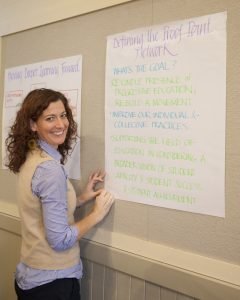
I am writing to share the news that December 30th marked my final day at Envision Learning Partners. It is impossible to put into words the depth of gratitude and appreciation I have for Envision as an organization, and for all of the amazing humans whom I have met over the past fifteen years(!!!!) – inside and outside of the org. Having spent the last decade and a half learning how to be an educator committed to deeper learning, and learning how to engage in transformative systems change work, there is no way that I can capture the role that Envision has played in my professional and personal evolution.
What did you most enjoy about being a coach with ELP?
I had no idea the profound impact that ELP would have on my life when I said yes to the opportunity to help found the organization and dream up what we wanted to do and be back in 2010. As I look back now, over a decade later, it is… of course… the people who have taught me the most, and whom I hold in my heart as I make my way through the world. Courageous and visionary school leaders from Hawaii to Maine who have invited me in to their most sacred place – their schools. Boundlessly passionate educators who have pushed their own practice with open hearts and open minds in order better support their most sacred people – their students. Brilliant partners who are doing the work in organizations across the country, confronting a complex and entrenched system that we all know can and needs to be better. And the ELP team… oh, the humans who are ELP… I have been held, challenged, taught, supported, encouraged, questioned, and loved by these humans in the most foundational of ways. So it feels quite impossible to describe what I have enjoyed the most about being a coach with ELP because it has been my identity for so long. The enjoyment is just one dimension of all that ELP has added to my life. Mostly, it has been all of you… so, thank you.

Why am I leaving and what am I doing next
It has been a deeply moving decision to say goodbye to these people and this place, and say yes to the unknown. But I feel called to set out on a new challenge, and to see where it takes me. As 2020 unfolded and the world was newly turned upside down because of covid, the persistent and inexcusable murders of unarmed Black men and women, forest fires raging around us, and clear threats to our democracy, I found myself heavy with so many questions of what am I doing? and what can I do? While I don’t feel that I have any definitive answers to those questions at this point, the process has led me to some new lenses of purpose and focus.
I am excited to announce that I have started my own consulting business called Core Shifts (website coming soon). I believe deeply in the power of performance assessment, and will continue to partner with schools and districts to support the work of building systems organized around the skills that young people need in order to go out into the world and create the lives in which they will thrive. I am excited to continue to partner with ELP in this work so that all students can experience the power of owning their own story of learning and growth. Simultaneously, I feel compelled to continue to confront and grapple with the ways in which my identity as a white woman within education has contributed, and still contributes to the oppression of marginalized students and adults. I am committed to doing the ongoing mirror work myself so that I can better explicitly name, analyze, and be an effective co-conspirator in working to reduce and ultimately dismantle the hold that white supremacy culture has on public education. (One way I have been practicing this internal work is through the co-design and co-facilitation of an anti-racist learning experience for white folks in affinity space with another former Envisioner. It is called What is at Your Core and you can learn more about that on the website. Our next course starts this month, if you know of anyone who might be interested).
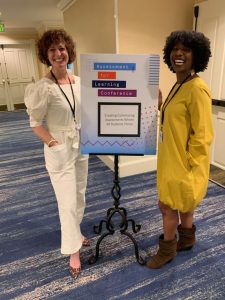
It is at the explicit intersection of system redesign and anti-racist work that I hope to build Core Shifts. I have a lot to learn, and I am ready to lean into the challenge.
There are no words to capture how much of who I am now is because of my time at Envision Education, and Envision Learning Partners. I continue to be deeply inspired by the passion, the commitment, the vulnerability, and the care with which this organization and all of the incredible clients and partners with whom we work take on the unthinkably complex job of holding our young people at the center of all that we do… especially this year. Please know how grateful I am to have learned with you.

You can find me at abby@core-shifts.com.
ELP continues to have a strong presence at conferences all over the US in 19-20:
Upcoming conferences:
NEW ELP PARTNERS FOR 19-20
Each school year, ELP welcomes new education partners from across the country. Please join us in welcoming:
GATES FOUNDATION PROFESSIONAL LEARNING PARTNERSHIP GRANT
We are delighted to share that ConnectED and Envision Learning Partners are partnering with the San Diego Unified School District to enhance the integrated sequence of the Illustrative Mathematics high school curriculum. This work is funded by a grant from the Gates Foundation. In collaboration with our partners, we will leverage existing curriculum-embedded instructional resources and parent engagement approaches, elevating strategies that close achievement gaps for English Learners.
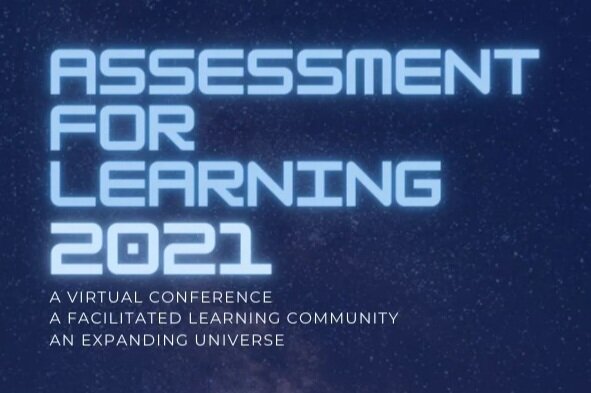
The Assessment for Learning Conference 2021
ELP is pleased to partner again with the Center for Innovation in Education and Next Generation Learning Challenges on the 2021 Assessment for Learning Conference!
The guiding question for AFL 2021 is: How will the assessment for learning movement lead us through the crises of the moment to a more just, equitable and student-centered future of learning?
AFL 2021 blurs the line between conference and community of practice. Think of it as a series of missions to escape the gravitational pull of our assumptions and to-do lists, so that we can find space for sharing, reflecting, connecting and imagining.
Get a head start on AFL 2021 right now! Join one of the free 75-minute virtual sessions to cut through the space junk, surface challenges and opportunities, share resources, and help us set the priorities for AFL 2021!
The National Geographic Society
ELP had the pleasure of leading the National Geographic Society and members of their global community through a Design Sprint. In facilitating a Liberatory Design Process, the team was able to develop a set of design principles that will be the foundation for future work and a lens with which to understand and refine past work.
DLLF: Where are they now?
We’re highlighting some of the DLLF alumni who are making moves- achieving goals, serving their communities, and impacting the future of education. Click here to read more about some of their achievements.
ELP has worked with 58 educational leaders from all over the United States since 2016 and we’re excited to open applications for our fifth cohort early next year!
Join us TOMORROW in the ELP Lounge!
The ELP Lounge will offer time to share stories, thought partnership with peers, or just the chance to throw up your hands and say, am I the only one experiencing this??? Plan to stop in and slow down to connect, share, learn, & heal. We can’t wait to see you.
Thursday, November 18th, 4:00-5:00pm PT (7:00-8:00pm ET)
Click here to grab your free ticket!
Deeper Learning Conference 2022
Share space with change-makers like you who are in search of a collective experience to highlight current triumphs and challenges, leverage student voice, and move from aspiration to action.Happening in-person and virtually, March 29th-31st, 2021. Get your tickets here.
More details about ELP’s sessions to come!
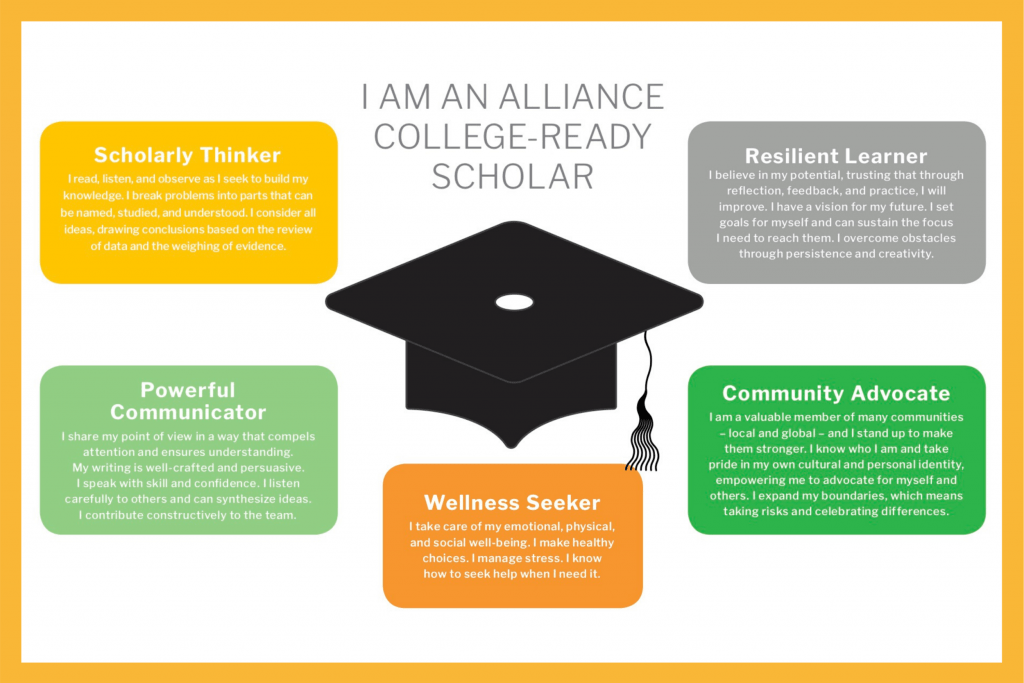
Envision Learning Partners is delighted and honored to introduce Alliance College-Ready Public Schools. ELP and Alliance kicked off our partnership in the 2018-19 school year. In our first year we worked together to deeply engage around building Alliance’s Graduate Profile (shown below). In 2019-20, we have been engaged with the Alliance team to develop a vertical articulation of the graduate profile.
Fifteen years ago a group of Los Angeles educators, civil rights activists, and community leaders believed in great public schools. They believed all kids could learn, regardless of zip code or background. They believed they could make a difference––and they did. Together, they founded Alliance College-Ready Public Schools to challenge the status quo for public education.
Today, 95% of Alliance seniors graduate high school and are accepted to college; 73% to a four-year college or university. In comparison, when Alliance opened its first public charter school in 2004 at the corner of Western and Martin Luther King Boulevard, the high school graduation rate in Los Angeles was 49%––many Los Angeles high schools were known as drop-out factories.
Eva Luc is the Director of Strategic Initiatives and College Success at Alliance and has shared her thoughts on our work together below.
Alliance Design Team working at a Vertical Alignment Workshop
What have you learnt during this process?
It’s critical to authentically engage the communities we serve and the staff on the ground, because they are ultimately the ones impacted by and carrying out the work, and they deserve to be front and center in the process. Otherwise, you risk creating for and not with folks. We are proud that school leaders, teachers, counselors, parent specialists, families, and scholars past and present co-created the Alliance Graduate Profile, and are also part of the vertical articulation and design teams.
Based on our scholars’ experiences, research and best practices, we know that academic strength is just part of what makes a successful Alliance graduate in whatever their chosen path beyond high school might be. The Graduate Profile provides a north star of the full set of skills (beyond just the academics) that we, as a network, should be focusing on. It allows us to have a cohesive vision of scholar success that we work towards collectively.
Is there one story you can share that illustrates how this work is benefitting your school and your students?
So far, the Graduate Profile has already impacted Alliance scholars in a positive way. Our Graduate Profile emphasized social and emotional learning so much so that Alliance created a new team – Scholar, Family and Community Services – this year to develop a framework for Social Emotional Learning and align resources to support that framework.
Read more about our partnership with Alliance in our January Guest Blog, written by Deeper Learning Coach, Morgan Vien.
What is an accelerator? Accelerator programs are designed to foster and support innovation. They usually have a set timeframe in which individual companies spend anywhere from a few weeks to a few months in an intensive, immersive environment working with a group of mentors to build out their business and avoid problems along the way. [Techrepublic]
What is Tinquevation? to introduce something new and/or to make changes in anything established through seeking knowledge/understanding by questioning/investigation, with the explicit intent to obstruct, threaten, & dismantle systems of oppression.
Click this link to view the document!
Here is a mathematics performance task we’d like to share with you. This task is designed to be used formatively to assess students’ use of percents and ratios to reason about speeding tickets. Depending on how it is implemented, the task provides multiple opportunities to elicit — and develop — students’ written and verbal disciplinary language for making comparisons.
The ELP Deeper Learning Coaches have been hard at work developing practical resources for the performance assessment community since the Virtual Defense Toolkit was first in early April. Here’s a window into the latest!
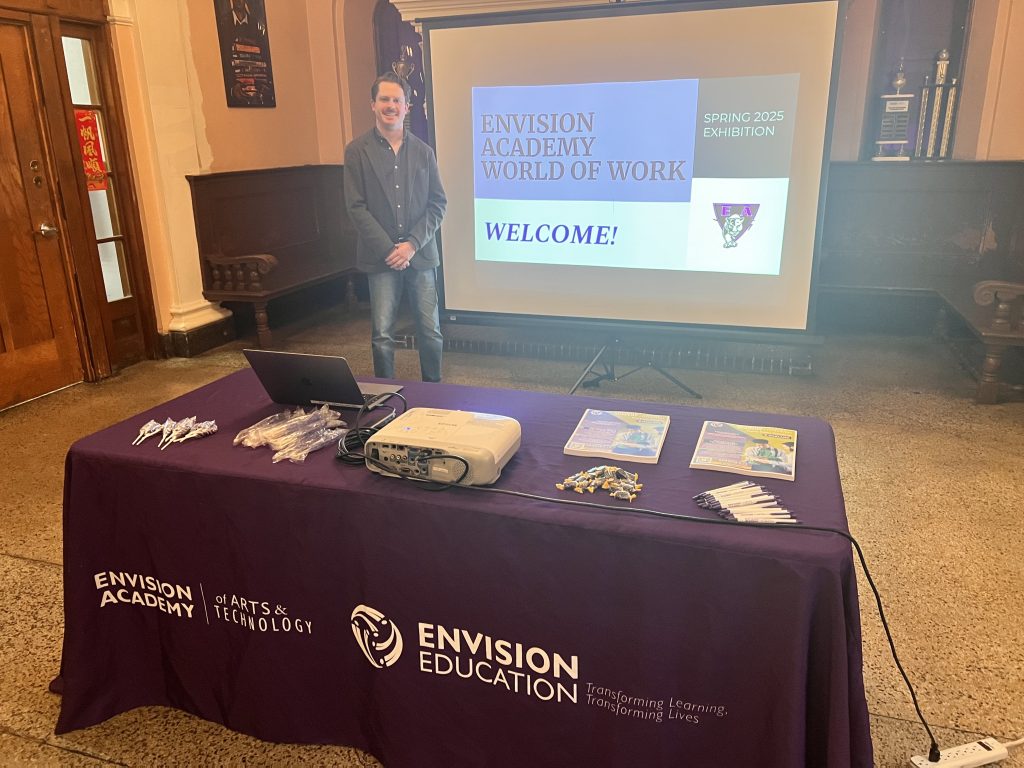
Every year, 11th grade students at Envision Academy, our Oakland 6-12 grade school, complete a week-long internship as part of their Work-Based Learning experience, known as World of Work (“WoW“). The purpose is for students to gain work experience and develop career interests and ambitions through internships in professional settings. The internships are intended to expose students to the rigor and requirements of full-time jobs, while allowing them to explore passions outside of the regular school structure.
The Envision Learning Partners team used this as an opportunity to collaborate on a project that showcased the power of student voice with a group of three EA interns. What began as an initiative to capture the amazing work through Student Led Conferences and Portfolio Defenses quickly evolved into a dynamic social media campaign, all thanks to the creativity and expertise of our interns. This experience served as a powerful reminder of the impact student-driven initiatives have on everyone involved.
Quotes from the interns about their experience:
Resources used by the ELP team throughout the week:
Envision Academy’s World of Work Internship Exhibition:
We understand these are challenging times for many people, especially educators challenged with rapid transition to online teaching. Here are some resources we’ve been gathering to potentially help:
Keep an eye out for more resources and if you aren’t already signed up for our bi-monthly newsletter, sign up here. This will deliver updates, interesting news, and resources right to your inbox!
It’s with heavy hearts, that we announce that Morgan Vien is moving away from her role at ELP as an Assessment Design Partner (aka Deeper Learning Coach).
Being a Deeper Learning Coach with ELP was nothing short of a gift. As an organization, we have such deep and expansive relationships both with the assessment community and with those centered around doing student-centered learning. It is because of those relationships and good work, that being on this team has afforded me the opportunity to work closely with, and to support systems leaders and communities across the country. It is a powerful perspective to know and value rigor, while being able to innovate and move the dial on making change— and this team has that.
My two favorite projects have been co-facilitating the Deeper Learning Leadership Forum and being a core designer of the Assessment for Learning Conference. Each for different reasons, but alike they both seek to gather eager and ready leaders, who are actively working to make change in their communities and who want to learn from others who are pushing the boundaries of what school can be. I thrive at that precipice- working with those who are ready to push, build and transform. I have so much gratitude for all of the brilliant minds, vulnerable leadership and care that I have been around during my time at ELP.
I am super stoked to write this new chapter and head towards an opportunity that I just could not pass up. I am co-founding a design thinking collaborative called, Design for Emergence. We are a cadre of design thinkers. Through liberatory design and an emergent strategy, we help systems get clear on where they are headed, stay agile in their approach and use human-centered design to solve complex problems. We work both in and adjacent to the education space. While bringing this vision to life, I am also collaborating on the K12 Lab team, at the d.school at Stanford, where we are working to imagine the role of Futures Thinking in education.
LOOKING FOR THE NEXT DLLF COHORT!
ELP is pleased to announce that applications and nominations for the fourth cohort of The Deeper Learning Leadership Forum (DLLF) will be open on October 1st!
The DLLF is a cohort-based leadership experience that aims to develop, strengthen, and support a group of educational leaders to work at the intersection of equity and design thinking. We invite you to contribute your expertise and passion to this collective effort to increase educational equity.
For more information click here and view the Guest Blog here, written by Cohort 3 member, Robert Moore.
AMPLIFIED LABS JOINS ELP AS A STRATEGIC PARTNER
Each year, ELP works with schools, districts, and states to help them in their journey to deploying High-Quality Performance Assessment Systems. We are often asked by our partners what digital student portfolio systems can we recommend. Based on our work in districts that have adopted the platform, we believe Amplified IT’s Backpack for Google Drive is a promising system for students to curate, reflect upon, and showcase digital learning artifacts against a district-defined skills framework.
FAREWELL, JIM
Deeper Learning Coach, Jim Malamut, left ELP this summer to pursue a Ph.D. in Math Curriculum & Teacher Education at Stanford to learn even more ways he can help support schools. Read more about Jim and his favorite ELP coaching moments here.
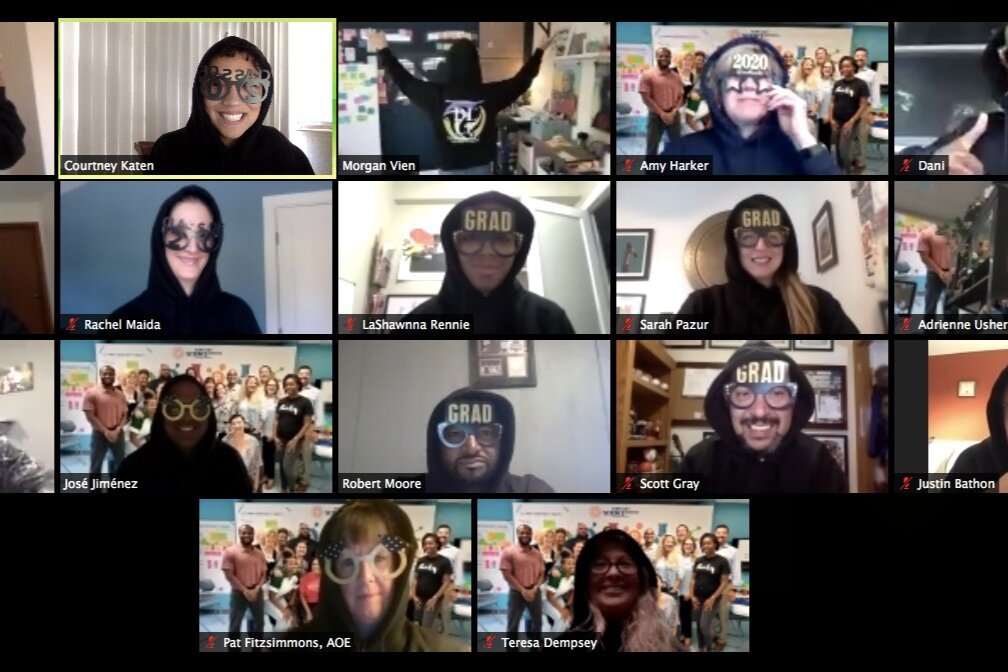
Earlier this month, the Deeper Learning Leadership Forum (DLLF) conducted a virtual graduation for our third cohort, internally and affectionately known as “Dope @#$ Cohort 3.” This group of systems leaders have spent the last two years learning with and from one another how to lead their systems to make the necessary shifts so that each and every student has access to deeper learning experiences and outcomes.
To learn more about these amazing members and the overall DLLF program, click here.
Dear ELP Partner,In this time of crisis, I am reminded of one of ELP’s defining characteristics of a high-quality performance assessment: it is tight on quality criteria while open to different learner approaches.
That principle certainly applies to our relationship with you in the uncertain times ahead. Now more than ever, ELP is committed to supporting your school system and finding creative ways to help you navigate the crisis while still moving toward your goals. We take seriously our role as your partner, so as you face the challenges posed by the coronavirus, consider us part of your support team.
Your ELP coach will be reaching out, if they haven’t already, to extend that support, offer thought partnership, and think through shifts that may need to happen in our service to you. ELP takes pride in being nimble and flexible in our service to partners. And there are opportunities that emerge in any crisis: more time for some virtual PD with teachers, for example, if students are at home doing lessons online.
With deep empathy for leaders of schools and districts (our own Envision Schools are closing on Monday, March 16th),

Justin Wells | Executive Director
ELP is excited to announce that longtime team member, performance assessment expert, and champion for educational justice—Alcine Mumby—is now ELP’s Vice President of Program.
In this role, Alcine leads the delivery of ELP’s professional services, ensuring that client partners and system leaders gain the skills needed to build and sustain high-quality systems of performance assessment. She will guide our team of coaches—now known as Assessment Design Partners—so that every ELP client gets the service they need. As the VP of Program, Alcine will be ELP’s lead learner, ensuring that our service—both the what and the how—are continuously improving. (Don’t worry: Alcine will continue to lead the Deeper Learning Leadership Forum!)
Many of you are already fans of Alcine and know exactly why she is a leader in our movement to make assessment more learner-centered and just. She is a deep systems thinker, an unforgettably powerful communicator, and an unswerving believer in the potential of young people, especially the students most marginalized in our systems. Over the course of her career, Alcine has done it all: taught at pioneering programs (Fannie Lou Hamer Freedom High School in the Bronx), analyzed school outcomes data (for an Annenberg grant in NYC), founded a school as its principal (Envision Academy in Oakland), and helped to transform major urban school districts (Louisville, KY).
What vitalizes all her skill and experience is her moral vision. I sometimes call Alcine the conscience of ELP. She is as knowledgeable and passionate about performance assessment system building as anyone in the field, yet Alcine never forgets—and helps the rest of us to remember—the why of this work: justice for learners. For a glimpse of the power of Alcine’s moral vision, please see her keynote speech from the Assessment for Learning Conference.
Please congratulate Alcine on her new role when you next have the chance.
Wishing summer rejuvenation for educators everywhere,
Justin Wells, ELP Executive Director
Click below for a special message from Alcine.
ELP hosted its first “Tinquevation” Summer Accelerator, piloting a new structure that supports system design and transformation. The week-long experience was attended by Design Teams from 4 of the Envision Schools, and a client school from Madison, WI, Capital High. Click here to read more about Capital High, as Karyn Stocks Glover, principal of Capital High, shares her thoughts on our work together.
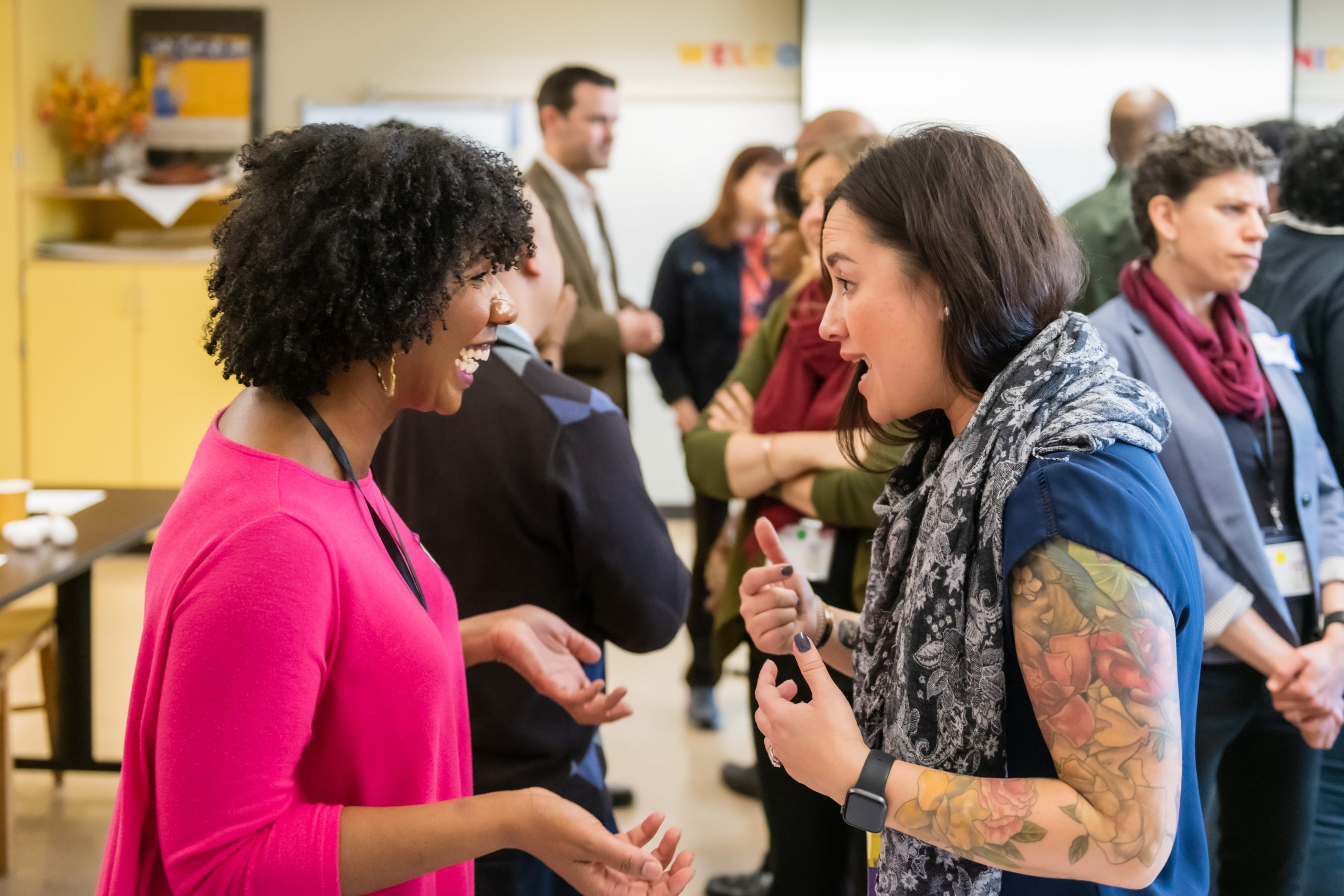
Design Teams consisted of school leaders, teacher leaders, and student leaders who came together in downtown Oakland to be in community together as we investigated how to re-imagine our systems with an uncompromising priority of putting equity at the center.
The Accelerator borrowed structures from the world of technology and start-ups to try and create spaces for people to learn deeply and then to immediately prototype applying that learning to their own contexts.
Each morning started with informative and diverse panels of speakers representing voices that we need to inspire and push our thinking – alumni, business leaders, higher education folks, etc. Personal and collective equity work was woven throughout each day, and thanks to the leadership of ELP coach, Alcine Mumby, it became clear that the most important work we need to do is to center the voices of our most marginalized in our systems.
One of the most impactful dimensions to the Accelerator was the uplifting and centering of student voice. Not surprisingly, having students at the table who felt invited and supported in speaking authentically about their lived experience within our systems was the richest content created during the week.
Teams left the Accelerator with plans to locate the most marginalized voices at each school and to engage in deep and relational empathy with these folks in order to better understand their realities, their needs, and their asks for changes to be made. Our school teams developed a clear path forward after the accelerator:
The Accelerator planning is being wonderfully lead by ELP team member, Abby Benedetto, learn more about her in this post, and is being supported by a long-time deeper learning colleague and thought leader around equity in education, Shane Safir.
ELP looks forward to the next iteration of the Accelerator, stay tuned for more details.
The September Newsletter’s Resource Corner provides some of the slides from the Accelerator and to read more about its development, click here.

As you now know, May 2024 is my final newsletter as Executive Director of Envision Learning Partners. My year with this tremendous team ends on June 30th, and OH what a wonderful year it has been! I take with me many lifelong memories and profound lessons. When I was interviewing for this role, I shared with the panel that one of my overarching motivations for joining the team at Envision was to reignite my optimism for public education. Too many experiences up to that point left me wondering whether systems were capable of making changes that truly met the needs of all students. And then I joined ELP! In the last year, I saw systems leaders engage in exemplary conversations about how to operationalize equity. I spoke to innovative educators working together to change assessment systems across an entire state. I heard students reflect on their learning while charting a course towards a successful future that was previously too intangible to embrace. Most important to me, I worked with a team here at ELP bursting with genius, creativity, and optimism. I am grateful to the ELP team for all they have done to shift schools in the direction of justice. And I am equally grateful to you, the ELP community, for embracing the optimism of change. I look forward to our paths crossing again.
Until next time,
Royce
What did you most enjoy about working at ELP?
What I enjoyed most was the inspiration and hope that comes from working alongside people dedicated to changing not just the experience students have with assessment, but the role that assessment plays in adults’ understanding of what school is for. Working at ELP over the past 5 years showed me what humanizing this change process can look like, sound like, and feel like.
I have been especially inspired by how ELP moves in partnership with schools and districts:
What are your plans now?
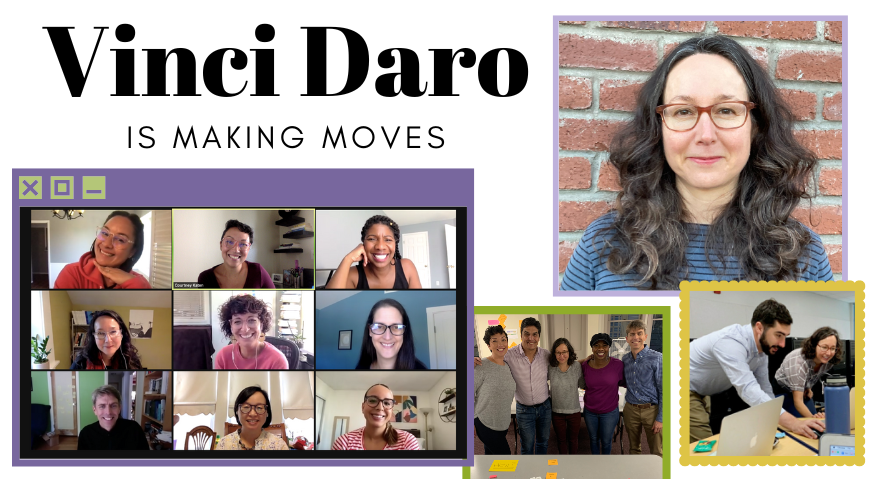
I have joined ConnectED as the Director of Instructional Impact in Mathematics, where I will continue working in partnership with San Diego Unified, Colton Joint Unified, West Contra Costa Unified, and Oakland Unified. In my new role, I also look forward to future collaborations with my incredible colleagues (and friends for life) at ELP.
My new email address is: vdaro@connectednational.org.
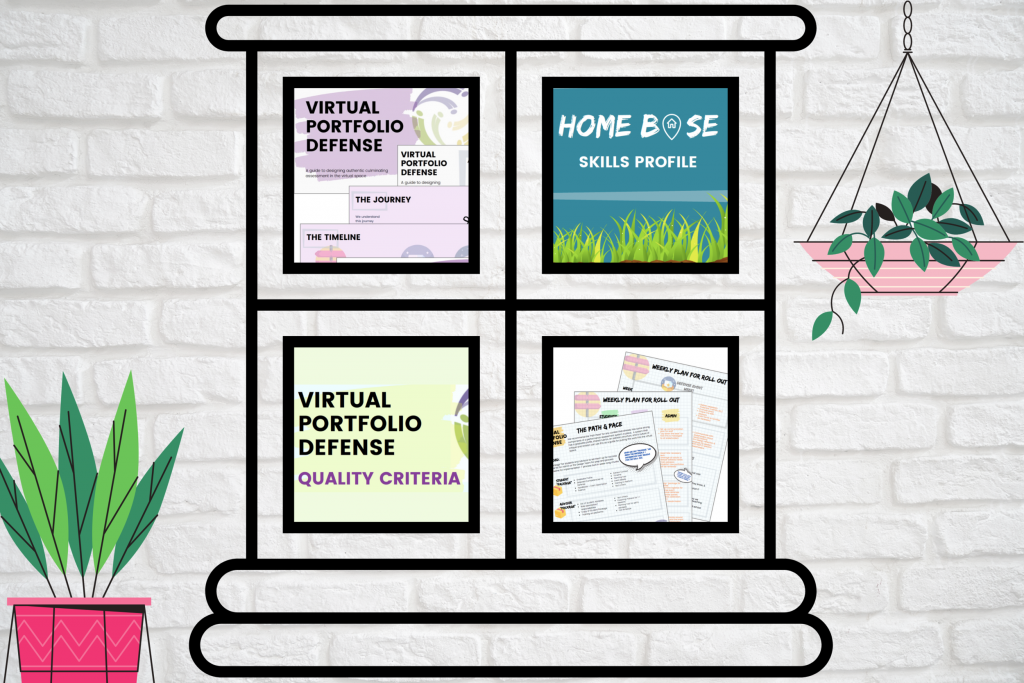
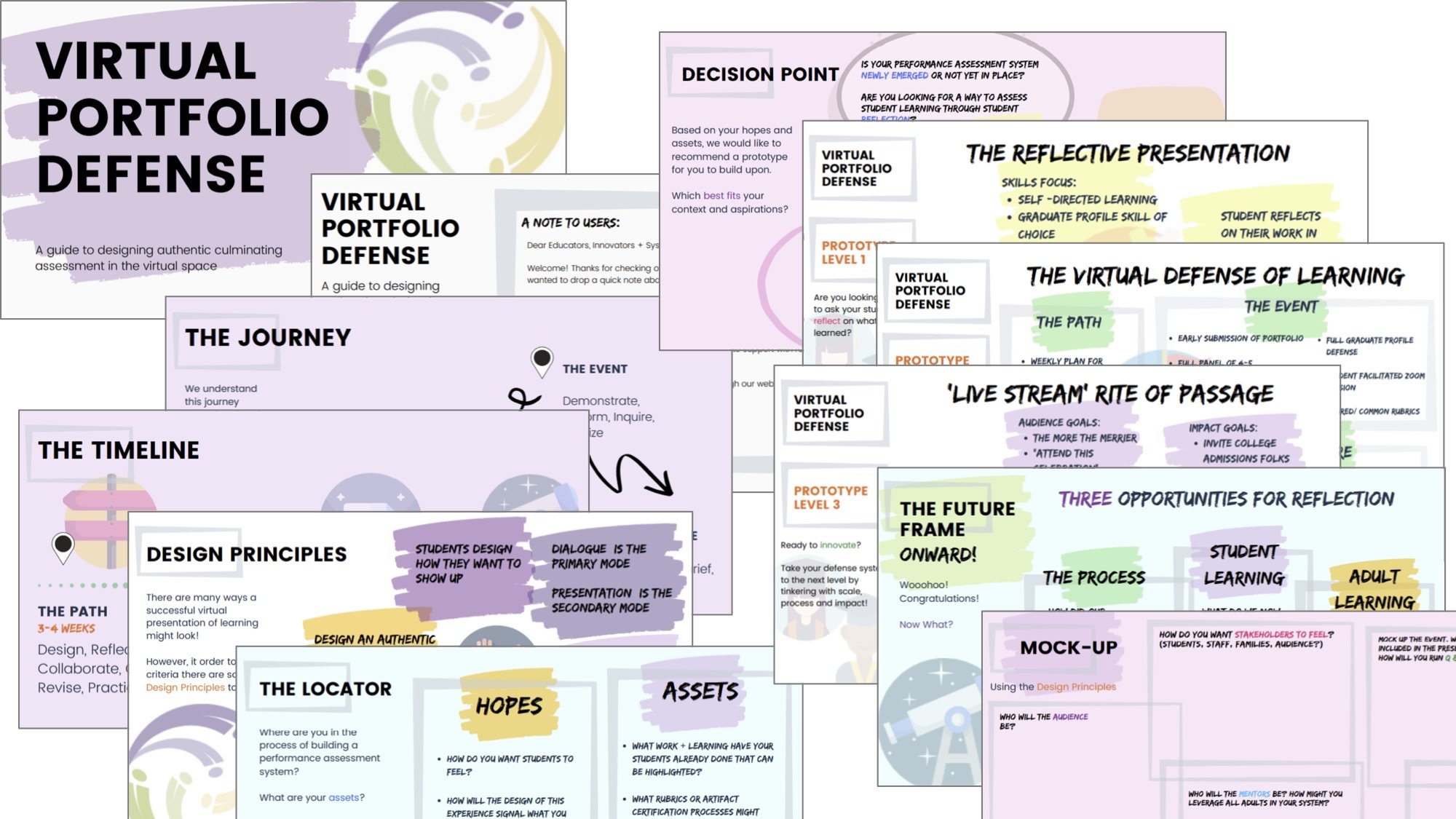
Still hot from the forgery, ELP’s Virtual Portfolio Defense Toolkit is hereby released to the world. Click the button below to download the toolkit. Use it and share it widely. We hope that it inspires action, saves you time, and helps you find opportunity within this crisis to put students at the center of their learning.
ELP was galvanized by what we are hearing from our partner schools and districts: Rather than backing off from your performance assessment systems, most of you are leaning into them, understanding that students need this now more than ever. This toolkit is ELP’s first answer to your call for help. It is designed for learning communities at all levels of experience, whether you’ve had kids defending their learning for years or see this as your first opportunity to try.
Prototype Level 2: Virtual Defense of Learning
Prototype Level 3: ‘Live Stream’ Rite of Passage
We are excited to populate this section with all of the amazing things you envision and create. Take inspiration from some of the folks who have been innovating and reimagining how to do their work in the time of COVID-19.
Click the images below for more information on these tools and download them for free!
Now that Defenses have become virtual, what has changed with how you feel about Defenses, and how you are approaching Defenses? What is hard about that change? What is exciting about that change?
In this first in a series of vlogs we are releasing, a high school senior talks about how she is adapting her defense for a virtual space and how she is feeling about it.
Happy New Year! As we dip our toes into the sea of 2024 and all that will come with it, we should take advantage of embracing the opportunities that come from the question “What will we do next?”.
As soon as I dipped my toes into this year, I came across an article in Ed Week titled “What 2024 Will Bring for K-12 Policy: 5 Issues to Watch.” To stretch the metaphor one final time, I feared the article would make me want to tear my feet from the water before sharks arrived. (Huge “Jaws” fan here)
Then I came to Issue #5, and the seas calmed.
Sitting at the end of an expansive policy list spanning everything from private school vouchers to AI came five words that sparked immense optimism in me: “Rethinking measures of student success.” The work that we have dedicated ourselves to is one of the country’s top policy priorities this year! Many of us have been advocating for more equitable approaches to assessing students and transforming schools for decades. For the first time in a long time, our national moment may have arrived.
With our work being recognized on a national level, I suggest it is time for us to consider what we will do next at the local level. For example, California districts should consider writing Graduate Profiles and performance assessments into your LCAP plans. If you need support or thought partnership around how to plan and implement this work, Envision Learning Partners stands ready to support you at whatever point you are in your journey.
Welcome to 2024, and we wish you a joyful year of celebrating the achievements of our schools and students!










.svg)
.svg)

.svg)

.svg)
