Partner Profile: Antelope Valley Union High School District
Published on
November 18, 2020
Heading 1
Heading 2
Heading 3
Heading 4
Heading 5
Heading 6
Lorem ipsum dolor sit amet, consectetur adipiscing elit, sed do eiusmod tempor incididunt ut labore et dolore magna aliqua. Ut enim ad minim veniam, quis nostrud exercitation ullamco laboris nisi ut aliquip ex ea commodo consequat. Duis aute irure dolor in reprehenderit in voluptate velit esse cillum dolore eu fugiat nulla pariatur.
content paragraph for dropdown (this does not appear on staging)
How are you advancing your Performance Assessment System? Is there one story you can share that illustrates how this work is benefitting your school, students or teachers?
The Antelope Valley Union High School District is located in the northern most part of Los Angeles County and covers over 1200 square miles. The Title I district serves approximately 21000 high school students at eight comprehensive sites and three alternative sites. The Linked Learning approach of rigorous academic and technical coursework, student supports and work-based learning is foundational to ensuring all students are both college and career ready. The district started work with Envision Learning Partners over three years ago with Lancaster High School’s Multi-Media and Engineering Academy and added the Biomedical Academy two years ago. Both academies received recognition as Gold Certified Linked Learning Academies in the 2019/20 school year, comprising two of twelve statewide programs to meet this acknowledgement of quality. Prior to the implications of remote learning, over half of the students in the Lancaster High School Multimedia and Engineering Academy completed their senior defense in front of a panel of educators and other stakeholders. In their third year, the performance assessment rubric used had been through several iterations to address increased levels of proficiency in areas of mastery and application of knowledge, meta-cognition, and presentation skills. With the onset of COVID 19 guidelines, the students who had not presented face-to-face senior defenses were given flexibility to present how and to whom. The Biomedical Academy at Eastside High School is in their second year of the process. The work done this year, facilitated by Envision, resulted in a revised performance assessment rubric that increased the level of rigor, relevance and expected outcomes. Additional focus to build capacity and increase fidelity of the performance assessment work around the district’s Graduate Student Profile was guided by Envision. Similar to LnHS, the rubric remained constant. The EHS teacher team also modified their senior defense process for students to allow more flexibility and choice on how and when students presented. Again, the decision aligned with the COVID 19 guidelines set forth from CDE and the district. Over 90 EHS students submitted senior defense work via online videos. The teacher who has oversight of the senior defense regularly communicated with the students and mentor teachers to identify areas of need and support.. During the weekly academy planning meetings, the teacher updated the team on the process and student progress within this new virtual instructional setting.
What have you learnt during this process?
Both schools’ academies that implemented performance assessments culminating with a senior defense commented that the teacher teams learned how to be more flexible and take input from various stakeholders. The acknowledgement of the increased level of stress amongst the team brought on by the uncertainties and impact of COVID 19 was balanced with the need and want to move forward for both students and teachers. It became important that they continued on the path even if meant modifications. At the district level, it was more evident than ever to let the process evolve from the teacher teams who were balancing many unknowns. They were the ones who understood their students and teacher team needs both personally and professionally. Each school took a different approach but both were successful.
What is the impact you are seeing on students and their work/teachers and practice?
Even with the interruptions, the majority of students were still committed to the process and wanted to highlight their learning/work. Because they were vested in the work and learning outcomes, many were proactive, inquiring about the presentations. There was a pride of reflection and accomplishment through a culminating assessment connected to their learning goals of their academy teachers. Now more than ever the students’ stories reinvigorated the teachers, reminding them of why they are educators. It allowed teachers to reflect on their practice, to find innovative ways to engage students and focus on the assessment piece. The work they had done throughout the year was on display instead of the daily challenges they were experiencing during a time of disruption.
What is the impact of this work ON YOU as a practitioner?
It is difficult yet rewarding work to develop performance assessments through continued collaborative efforts. The work requires educators to reflect on their own teaching practices, purpose and beliefs regarding students’ knowledge, traits and abilities. Often it requires a change in mindset within a system dictated by other metrics of student success. One teacher commented that it is a reminder that every student has a story, educators are part of that story, and even the smallest part can make a big difference in student outcomes/goals. The performance assessment through the senior defense highlights the teacher’s part. Another teacher mentioned that it allows educators to focus on the end result, which is often difficult to see, “the forest among the trees.” She acknowledged that practice helps to shape our perspective.
Is there one story you can share that illustrates how this work is benefitting your school and your students?
One student in the LnHS academy presented virtually and explained that he had not chosen the academy. He had average grades and not chosen to be in the academy. Through his senior defense, he explained how the rigor paired with the support made school “easy” for him. His final performance assessment gave him the opportunity to highlight how far he had come and having been placed in the academy with a senior defense was the best mistake that ever happened to him.
A student in the EHS academy addressed the proficiency of her being a collaborator. Like many high school students she had pegged herself as an introvert. The amount of group work with corresponding assessments and reflections gave her many opportunities to develop her assertiveness and give input. Those in the group acknowledged her research and math knowledge that contributed to her self-confidence and ability to work with others. Her video was shared with district leaders (Superintendent and Asst. Superintendent) who were dealing with all of the challenges and information during a time of transitioning the district to virtual instruction. At that time, it was a much needed inspiring reminder for those who were deep in process that student learning was still taking place.
Insights, partner highlights, guest perspectives, and resources to support your work
Roanoke County Public Schools has been partnering with Envision Learning Partners for the past four years to develop and implement a comprehensive performance assessment system aligned with their Opportunity Ready Graduate Profile. This collaboration has fundamentally transformed how students demonstrate essential skills needed for future success in an increasingly complex world.
A Decade of Transformation
The journey began a decade ago when Roanoke County developed their C-Change Framework, which meticulously detailed the conditions needed for deeper learning to thrive within school communities. This framework addressed multiple dimensions, including school and classroom climate, professional growth, support services, and learning culture. It also emphasized finding balance between preparing students for standardized testing and developing the critical skills needed to navigate a rapidly changing world.
Working with diverse stakeholders, they articulated the Opportunity Ready Graduate Profile, which defines the skills and attributes necessary for students to successfully navigate evolving life and career pathways and seize opportunities that come their way. Despite this solid foundation, the district initially struggled to quantify these skills in ways that were both meaningful and conducive to growth.
Partnership with Envision Learning Partners
This challenge led Roanoke County to form a strategic partnership with Envision Learning Partners. Over the past four years, they’ve evolved from conceptualizing what their assessment system could be to implementing a robust program across all 26 schools in the district. This systematic approach to performance assessment now forms a cornerstone of their educational philosophy.
Opportunity Ready Portfolio Process
At the heart of this work is the Opportunity Ready Portfolio Presentation, where students demonstrate mastery of three critical skills: Communication, Collaboration, and Critical Thinking. Using a structured process guided by clear rubrics and expectations, students select artifacts from their in-school and out-of-school learning experiences as evidence of their skill development.
Each student presentation is guided by the driving question: “How have I demonstrated and grown in my Opportunity Ready Skills as a Communicator, Collaborator, and Critical Thinker this school year, and how will I apply these Opportunity Ready skills to what’s next for me, including my future career?”
Trained panel members, including at least one member from the school’s design team, evaluate these presentations using standardized rubrics that assess specific performance outcomes for each skill area. The panels follow a structured protocol for scoring student work, ensuring consistency and fairness while providing constructive feedback.
Transformative Impact
“We learned that you don’t know what your students are capable of until you ask and give them a chance to respond,” shares one district leader. “We have been blown away by what our students are able to demonstrate through our performance assessment system.”
The impact of this work extends throughout the educational community:
For students, the process has revealed the power of reflection. Many students express surprise at how much they’ve grown until they take time to reflect on their learning journey. This metacognitive awareness strengthens their sense of personal growth and achievement.
Teachers, while initially cautious about the workload involved in preparing for conferences and defenses, become enthusiastic advocates after witnessing students’ presentations. As one administrator noted, “To a person, they are invigorated and excited to begin planning for the next year once they see it in action.”
For administrators and district leaders, the presentations have rekindled passion for educational transformation. “The impact the presentations have on the panel, parents, and staff has reignited our drive for this work,” reports a district representative.
Stories of Transformation
The most compelling evidence comes from individual student experiences. One particularly moving example involved a student who had struggled significantly during middle school. During their senior defense, the student articulated their growth journey with such clarity and reflection that “there was not a dry eye in the room.” This transformative moment exemplifies how the process helps students recognize and celebrate their own development while preparing them for future challenges.
Looking Forward
Through this ongoing partnership with Envision Learning Partners, Roanoke County Public Schools continues to refine and expand their performance assessment system. The district’s commitment to developing the whole student—not just academic knowledge but essential life skills—positions their graduates to thrive in whatever paths they choose after high school, whether in higher education, careers, or military service.
By creating authentic opportunities for students to demonstrate mastery of critical skills, reflect on their growth, and connect their learning to future aspirations, Roanoke County Public Schools is preparing students not just for tests, but for life beyond graduation in a rapidly changing world.
In this special Guest Blog Video Interview, hear from Alcine Mumby and Laureen Adams, interviewed by Niloy Gangopadhyay and Courtney Katen.
This interview was sparked by Alcine’s recent travel to the Ghana ASCD Educators’ Summit 2024 earlier this year.
Learn about Alcine and Laureen’s history- all starting in Oakland at Envision Academy, what Laureen took away and still carries with her as leader of the Tutu Institute in Ghana, why she believes so deeply in performance assessment, and what’s up next for her work continuing to support educators and systems.
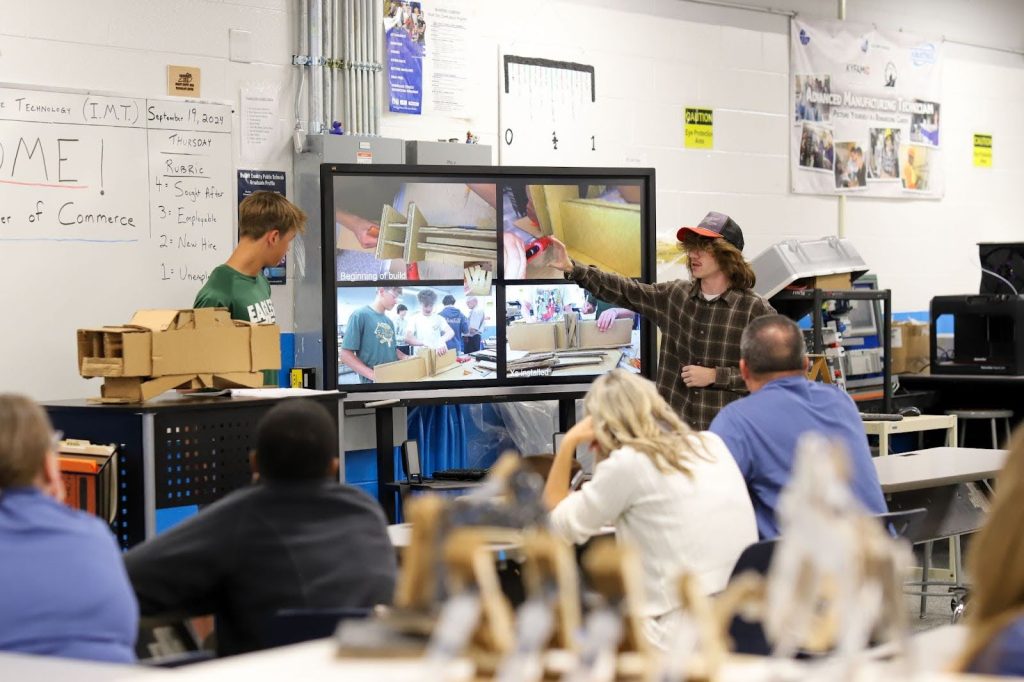
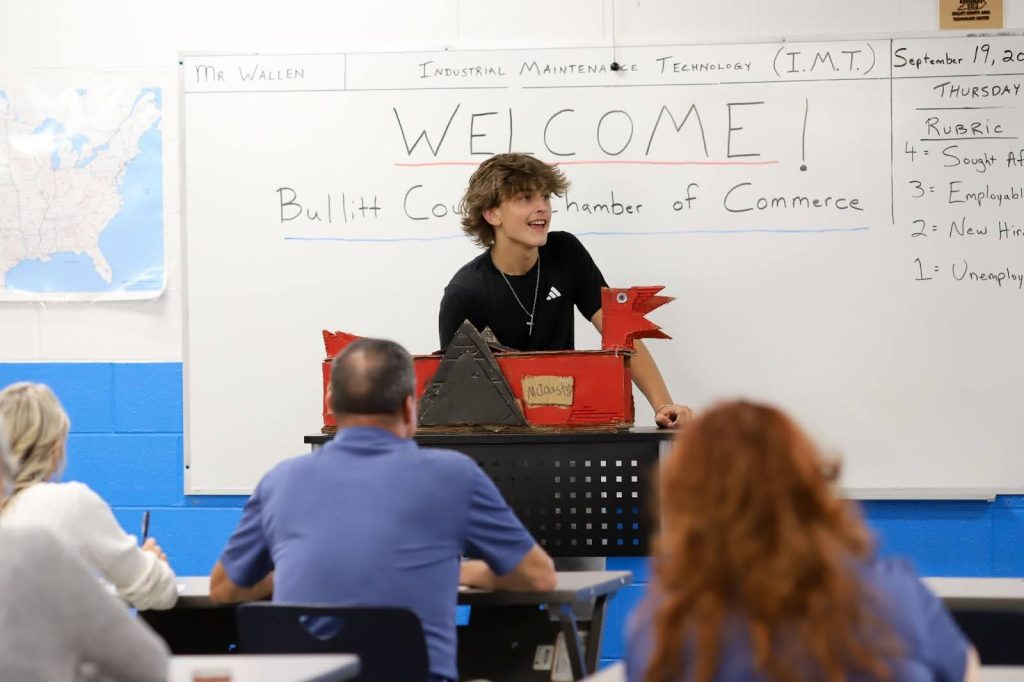
Bullitt County Public Schools is a public school district in Shepherdsville, KY that serves students from pre-K through 12th grade. The district is committed to providing a world-class education that prepares students for success beyond high school.
Envision Learning Partners has worked with Bullitt County Public Schools since 2018, partnering on their Graduate Profile development and performance assessment system. Bullitt County’s Superintendent, Dr. Jesse Bacon, and Assistant Superintendent, Dr. Adrienne Usher, are also both alumni of ELP’s Deeper Learning Leadership Forum.
In this Partner Profile, we hear from Assistant Superintendent, Adrienne Usher.
How are you advancing your Performance Assessment System? Is there one story you can share that illustrates how this work is benefitting your school, students or teachers?
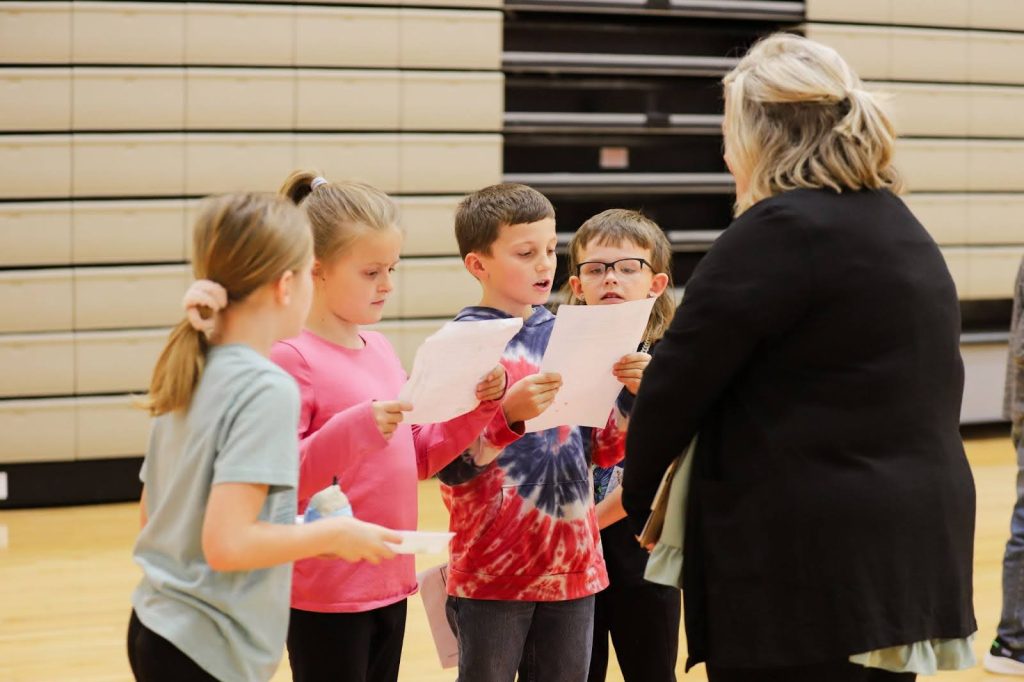
Advancing the Performance Assessment System in Bullitt County Public Schools involves the creation of Graduate Profile Performance outcomes for students in Grades K-2, 3-5, and 9-12. A notable story comes from a graduate of the district who, after completing postsecondary education, entered the workforce. This individual reflected on a high school assessment experience involving a presentation to a city council to solve a community problem, which proved invaluable when preparing for an engineering position interview. College courses, according to this graduate, did not fully address aspects of the interview process, including content, dispositions, and competencies. This example highlights the effectiveness of the performance assessment system in preparing students not only for specific occupations but also for broader workforce preparation.
What have you learnt during this process?
The process of transforming assessment has revealed the need to rethink its purpose and identify who truly owns it—students. While teachers play a critical role in this process, it is students who take ownership of their learning. Empowering students to demonstrate their learning fosters motivation and a deeper understanding of its larger purpose.
What is the impact you are seeing on students and their work?
The implementation of performance assessments and student ownership of learning is having a significant positive impact on students and their work. Students are more motivated as they recognize the relevance of their learning beyond the classroom. This approach is also fostering necessary dispositions and competencies, aligned to our Graduate Profile, preparing students for future challenges in higher education, the workforce, and beyond. By developing the skills to articulate their knowledge and connect it to meaningful purposes, students are not only achieving academic success but also growing into lifelong learners equipped for a dynamic and evolving world.
What is the impact you are seeing on teachers and their practice?
The gradual shift embedding performance assessments is creating meaningful changes in teachers and their practice. Teachers are rethinking the purpose of assessment on a continuum of traditional, transitional, and transformational methods that emphasize student ownership of learning combining academics and our Graduate Profile competencies. Teachers are becoming facilitators of learning, guiding students to take responsibility for their growth and encouraging reflection and self-assessment. This approach is also enhancing teachers’ instructional practices, as they integrate more student-centered strategies and focus on developing dispositions and competencies alongside content knowledge. The process is reinvigorating teachers’ sense of purpose and enthusiasm for a new school experience.
What is the impact of this work ON YOU as a practitioner?
The impact of this work I have experienced, as a practitioner, is related to understanding a larger purpose for school and its connection to the community and society. School can be viewed as a place to gain knowledge and get a high school diploma and it ends there. However, connecting school and assessment that impacts students in more comprehensive ways is about life preparation. In reality, the school experience, which includes teaching, learning, and assessment, is a reflection of what the greater community (students, parents, community members, industry partners, etc.) values. If communities want graduates to be more prepared and successful in the workforce and as citizens, collaboration that provides opportunities for learning and assessment which connects academics to real world problem solving is a future-focused necessity.
Explore our diverse events. Enhance your expertise, connect with thought leaders, and broaden your horizons.
Roanoke County Public Schools has been partnering with Envision Learning Partners for the past four years to develop and implement a comprehensive performance assessment system aligned with their Opportunity Ready Graduate Profile. This collaboration has fundamentally transformed how students demonstrate essential skills needed for future success in an increasingly complex world.
A Decade of Transformation
The journey began a decade ago when Roanoke County developed their C-Change Framework, which meticulously detailed the conditions needed for deeper learning to thrive within school communities. This framework addressed multiple dimensions, including school and classroom climate, professional growth, support services, and learning culture. It also emphasized finding balance between preparing students for standardized testing and developing the critical skills needed to navigate a rapidly changing world.
Working with diverse stakeholders, they articulated the Opportunity Ready Graduate Profile, which defines the skills and attributes necessary for students to successfully navigate evolving life and career pathways and seize opportunities that come their way. Despite this solid foundation, the district initially struggled to quantify these skills in ways that were both meaningful and conducive to growth.
Partnership with Envision Learning Partners
This challenge led Roanoke County to form a strategic partnership with Envision Learning Partners. Over the past four years, they’ve evolved from conceptualizing what their assessment system could be to implementing a robust program across all 26 schools in the district. This systematic approach to performance assessment now forms a cornerstone of their educational philosophy.
Opportunity Ready Portfolio Process
At the heart of this work is the Opportunity Ready Portfolio Presentation, where students demonstrate mastery of three critical skills: Communication, Collaboration, and Critical Thinking. Using a structured process guided by clear rubrics and expectations, students select artifacts from their in-school and out-of-school learning experiences as evidence of their skill development.
Each student presentation is guided by the driving question: “How have I demonstrated and grown in my Opportunity Ready Skills as a Communicator, Collaborator, and Critical Thinker this school year, and how will I apply these Opportunity Ready skills to what’s next for me, including my future career?”
Trained panel members, including at least one member from the school’s design team, evaluate these presentations using standardized rubrics that assess specific performance outcomes for each skill area. The panels follow a structured protocol for scoring student work, ensuring consistency and fairness while providing constructive feedback.
Transformative Impact
“We learned that you don’t know what your students are capable of until you ask and give them a chance to respond,” shares one district leader. “We have been blown away by what our students are able to demonstrate through our performance assessment system.”
The impact of this work extends throughout the educational community:
For students, the process has revealed the power of reflection. Many students express surprise at how much they’ve grown until they take time to reflect on their learning journey. This metacognitive awareness strengthens their sense of personal growth and achievement.
Teachers, while initially cautious about the workload involved in preparing for conferences and defenses, become enthusiastic advocates after witnessing students’ presentations. As one administrator noted, “To a person, they are invigorated and excited to begin planning for the next year once they see it in action.”
For administrators and district leaders, the presentations have rekindled passion for educational transformation. “The impact the presentations have on the panel, parents, and staff has reignited our drive for this work,” reports a district representative.
Stories of Transformation
The most compelling evidence comes from individual student experiences. One particularly moving example involved a student who had struggled significantly during middle school. During their senior defense, the student articulated their growth journey with such clarity and reflection that “there was not a dry eye in the room.” This transformative moment exemplifies how the process helps students recognize and celebrate their own development while preparing them for future challenges.
Looking Forward
Through this ongoing partnership with Envision Learning Partners, Roanoke County Public Schools continues to refine and expand their performance assessment system. The district’s commitment to developing the whole student—not just academic knowledge but essential life skills—positions their graduates to thrive in whatever paths they choose after high school, whether in higher education, careers, or military service.
By creating authentic opportunities for students to demonstrate mastery of critical skills, reflect on their growth, and connect their learning to future aspirations, Roanoke County Public Schools is preparing students not just for tests, but for life beyond graduation in a rapidly changing world.
In this special Guest Blog Video Interview, hear from Alcine Mumby and Laureen Adams, interviewed by Niloy Gangopadhyay and Courtney Katen.
This interview was sparked by Alcine’s recent travel to the Ghana ASCD Educators’ Summit 2024 earlier this year.
Learn about Alcine and Laureen’s history- all starting in Oakland at Envision Academy, what Laureen took away and still carries with her as leader of the Tutu Institute in Ghana, why she believes so deeply in performance assessment, and what’s up next for her work continuing to support educators and systems.
Bullitt County Public Schools is a public school district in Shepherdsville, KY that serves students from pre-K through 12th grade. The district is committed to providing a world-class education that prepares students for success beyond high school.
Envision Learning Partners has worked with Bullitt County Public Schools since 2018, partnering on their Graduate Profile development and performance assessment system. Bullitt County’s Superintendent, Dr. Jesse Bacon, and Assistant Superintendent, Dr. Adrienne Usher, are also both alumni of ELP’s Deeper Learning Leadership Forum.
In this Partner Profile, we hear from Assistant Superintendent, Adrienne Usher.
How are you advancing your Performance Assessment System? Is there one story you can share that illustrates how this work is benefitting your school, students or teachers?
Advancing the Performance Assessment System in Bullitt County Public Schools involves the creation of Graduate Profile Performance outcomes for students in Grades K-2, 3-5, and 9-12. A notable story comes from a graduate of the district who, after completing postsecondary education, entered the workforce. This individual reflected on a high school assessment experience involving a presentation to a city council to solve a community problem, which proved invaluable when preparing for an engineering position interview. College courses, according to this graduate, did not fully address aspects of the interview process, including content, dispositions, and competencies. This example highlights the effectiveness of the performance assessment system in preparing students not only for specific occupations but also for broader workforce preparation.
What have you learnt during this process?
The process of transforming assessment has revealed the need to rethink its purpose and identify who truly owns it—students. While teachers play a critical role in this process, it is students who take ownership of their learning. Empowering students to demonstrate their learning fosters motivation and a deeper understanding of its larger purpose.
What is the impact you are seeing on students and their work?
The implementation of performance assessments and student ownership of learning is having a significant positive impact on students and their work. Students are more motivated as they recognize the relevance of their learning beyond the classroom. This approach is also fostering necessary dispositions and competencies, aligned to our Graduate Profile, preparing students for future challenges in higher education, the workforce, and beyond. By developing the skills to articulate their knowledge and connect it to meaningful purposes, students are not only achieving academic success but also growing into lifelong learners equipped for a dynamic and evolving world.
What is the impact you are seeing on teachers and their practice?
The gradual shift embedding performance assessments is creating meaningful changes in teachers and their practice. Teachers are rethinking the purpose of assessment on a continuum of traditional, transitional, and transformational methods that emphasize student ownership of learning combining academics and our Graduate Profile competencies. Teachers are becoming facilitators of learning, guiding students to take responsibility for their growth and encouraging reflection and self-assessment. This approach is also enhancing teachers’ instructional practices, as they integrate more student-centered strategies and focus on developing dispositions and competencies alongside content knowledge. The process is reinvigorating teachers’ sense of purpose and enthusiasm for a new school experience.
What is the impact of this work ON YOU as a practitioner?
The impact of this work I have experienced, as a practitioner, is related to understanding a larger purpose for school and its connection to the community and society. School can be viewed as a place to gain knowledge and get a high school diploma and it ends there. However, connecting school and assessment that impacts students in more comprehensive ways is about life preparation. In reality, the school experience, which includes teaching, learning, and assessment, is a reflection of what the greater community (students, parents, community members, industry partners, etc.) values. If communities want graduates to be more prepared and successful in the workforce and as citizens, collaboration that provides opportunities for learning and assessment which connects academics to real world problem solving is a future-focused necessity.