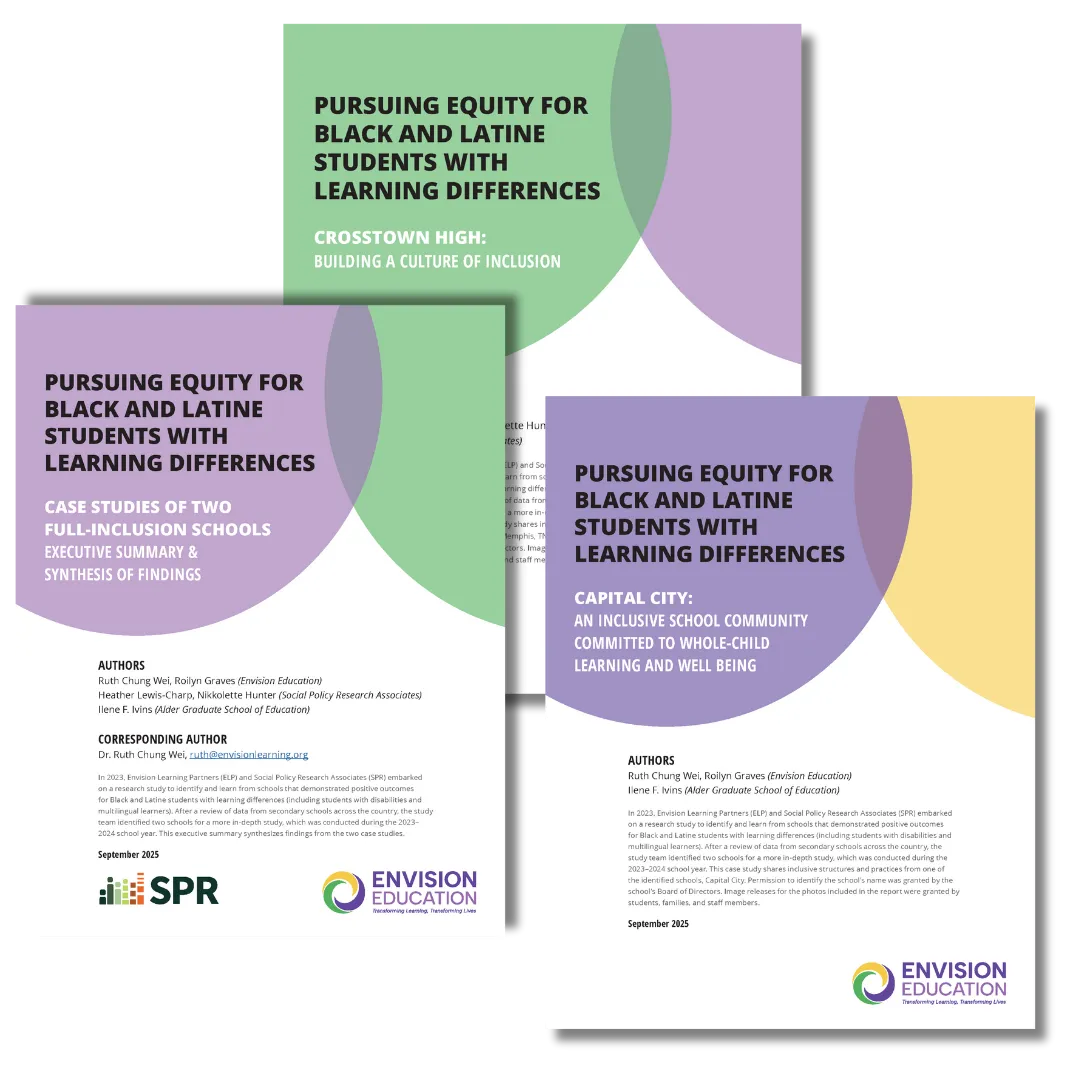
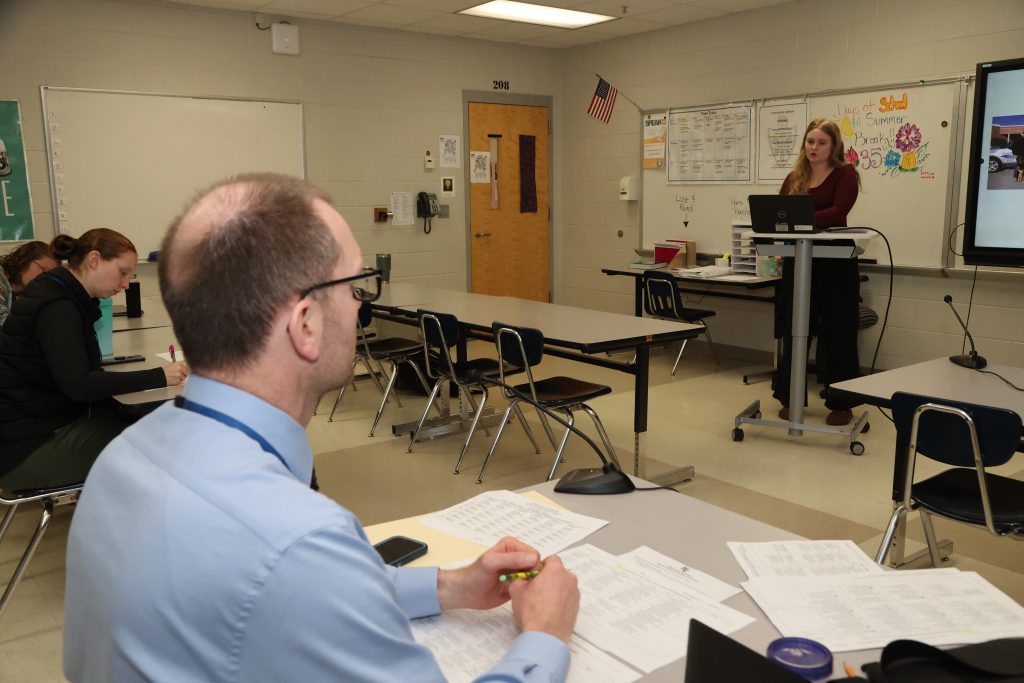
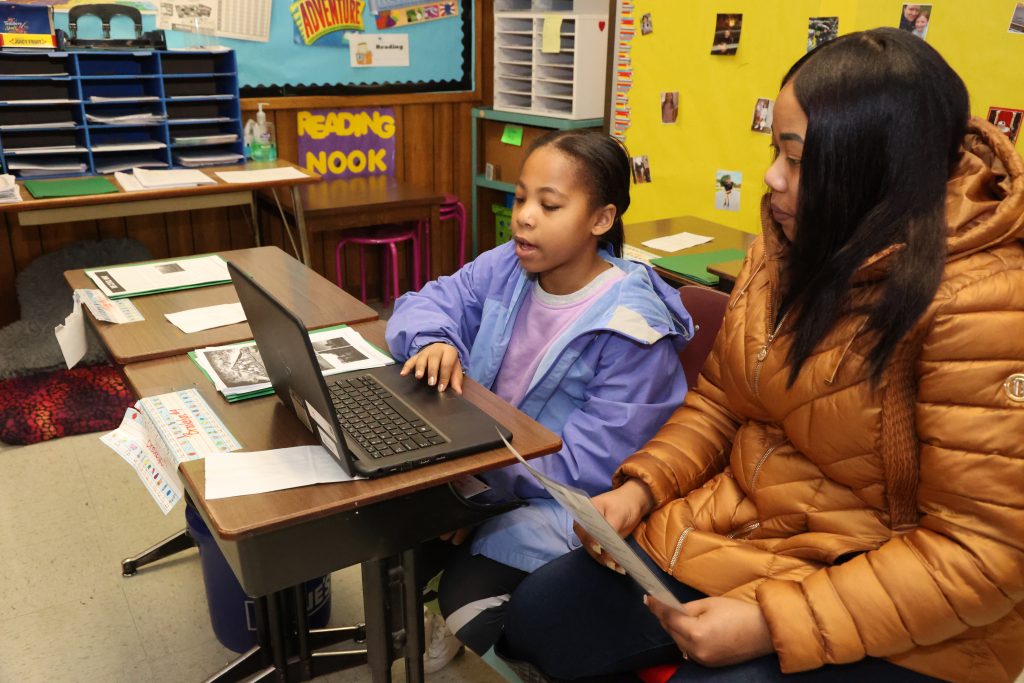
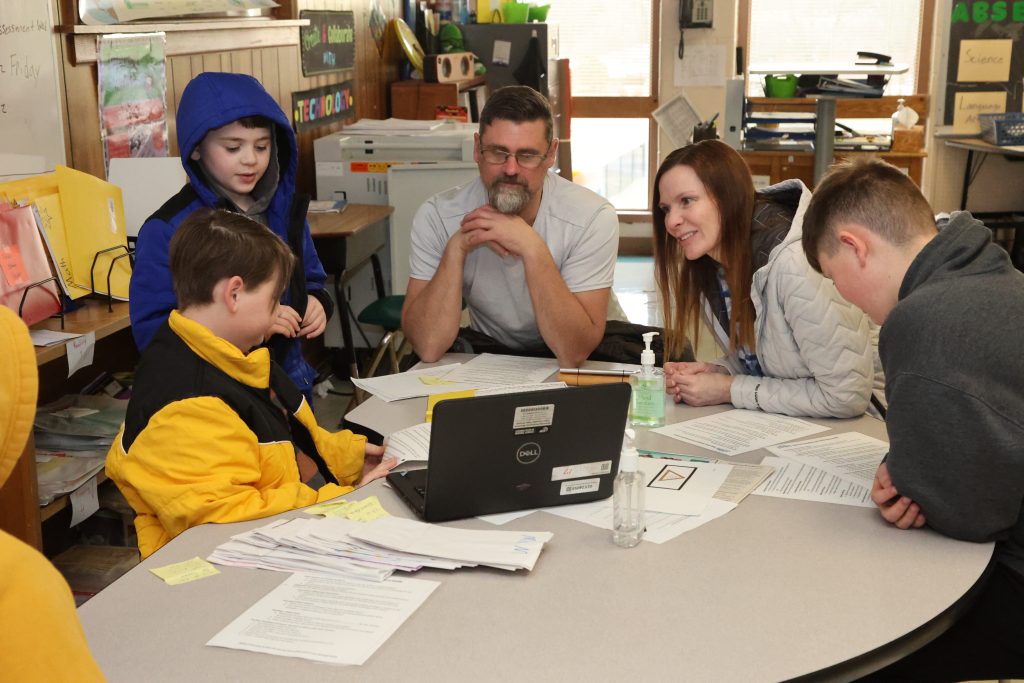
We're excited to share the culmination of a two-year research project, Pursuing Equity for Black & Latine Students with Learning Differences, which documents and illustrates the systems, practices, cultures, and supports that are associated with the well being and success of Black and Latine students with learning differences – students with disabilities and multilingual students with disabilities.
Envision Education is excited to share the culmination of its two-year research project, Pursuing Equity for Black & Latine Students with Learning Differences, which
documents and illustrates the systems, practices, cultures, and supports that are associated with the well being and success of Black and Latine students with learning differences – students with disabilities and multilingual students with disabilities.
In 2023, Envision Learning Partners (ELP) and Social Policy Research Associates (SPR) embarked on a research study to identify and learn from schools that demonstrated positive outcomes for Black and Latine students with learning differences (including students with disabilities and multilingual learners). After a review of data from secondary schools across the country, the study team identified two schools for a more in-depth study, which was conducted during the 2023–2024 school year.
The results of the research are shared through case studies of the two schools that were the focus of the research: 1) Crosstown High: Building a Culture of Inclusion; 2) Capital City: An Inclusive School Community Committed to Whole-Child Learning and Well Being; and 3) An Executive Summary/Synthesis of Findings.
In addition, we have authored four practice briefs based on the findings of the research that provide practical steps that schools can take to create more inclusive environments that support the success of Black and Latine students with learning differences.
Co-teaching: A Means to Creating Inclusive and Equitable General Education Classrooms
UDL: Universal Design for Learning in a Culturally Responsive Context
Culturally Responsive Practices: An Inclusive, Culturally Responsive School Culture That Fosters Relationships
Competency-Based Learning and Assessment: Assessment and Grading Practices That Support an Inclusive Learning Culture
This research was made possible through the generous support of New Profit, a venture philanthropic organization, and the Oak Foundation.
General
5 min read
Resource Corner: Pursuing Equity for Black and Latine Students with Learning Differences Case Studies & Practice Briefs
Envision Education is excited to share the culmination of its two-year research project, Pursuing Equity for Black & Latine Students with Learning Differences, which documents and illustrates the systems, practices, cultures, and supports that are associated with the well being and success of Black and Latine students with learning differences – students with disabilities and multilingual students with disabilities.
Oops! Something went wrong while submitting the form.
Thank you! Your submission has been received!
Oops! Something went wrong while submitting the form.
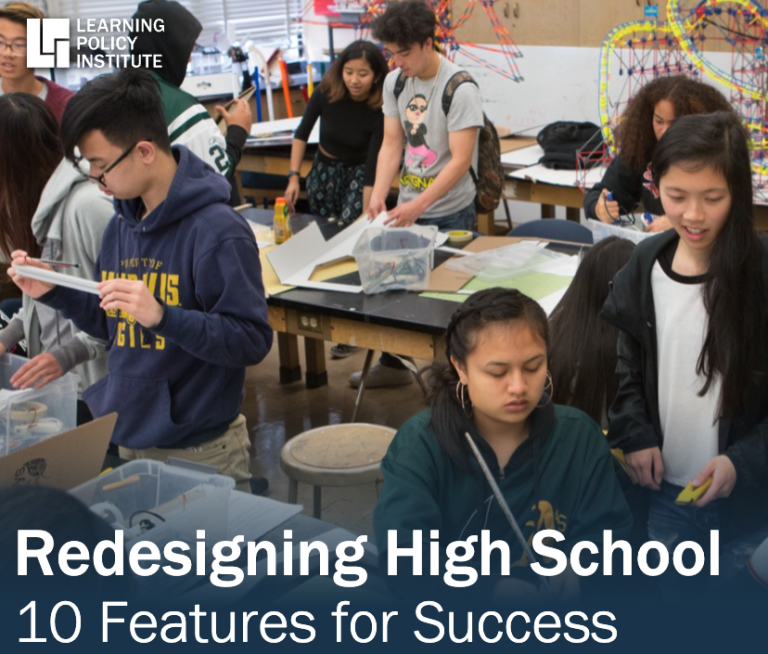
Earlier this year, Learning Policy Institute (LPI) released this resource that outlines 10 features from effectively redesigned high schools and highlights examples of schools that are putting the features into practice to create powerful learning opportunities for youth.
ELP was honored to be listed under the Additional Resources. If you are interested in a redesign or have any questions, contact the ELP team to schedule your free consultation.
Resource Corner: Redesigning High Schools: 10 Features for Success
Earlier this year, Learning Policy Institute (LPI) released this resource that outlines 10 features from effectively redesigned high schools and highlights examples of schools that are putting the features into practice to create powerful learning opportunities for youth.
Read More
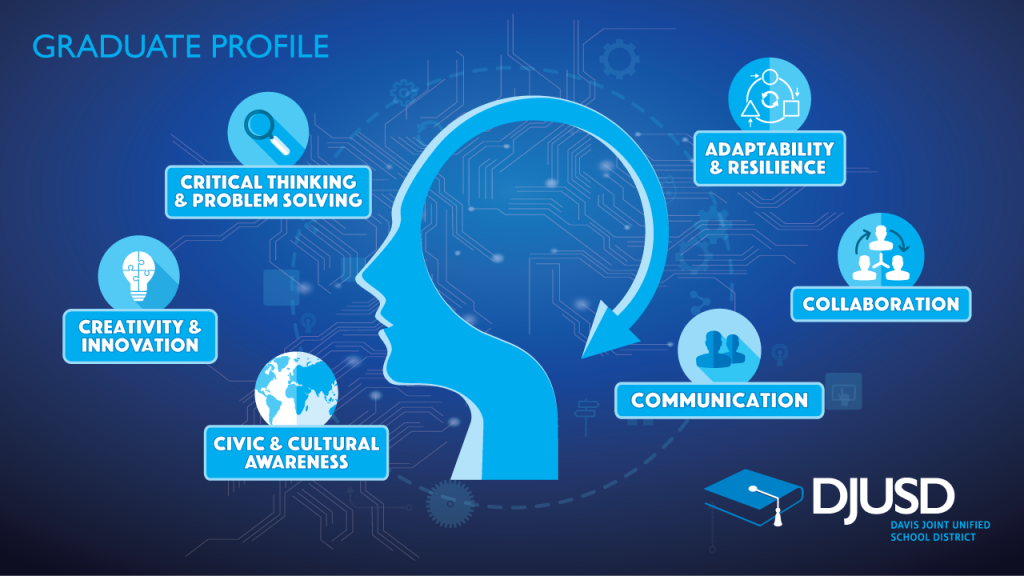
Six years into the Graduate Profile Journey, DJUSD is finally starting to make some systematic moves towards implementation. After exploration of different approaches to implementation, DJUSD has landed on a strategy that fits its context as a traditionally decentralized and high achieving district. The approach is to anchor each of the six graduate profile outcomes at strategic grade levels so that when students leave DJUSD they will have had robust experiences with all six during their career. The opportunity for providing these robust experiences is the power and potential of performance assessments.
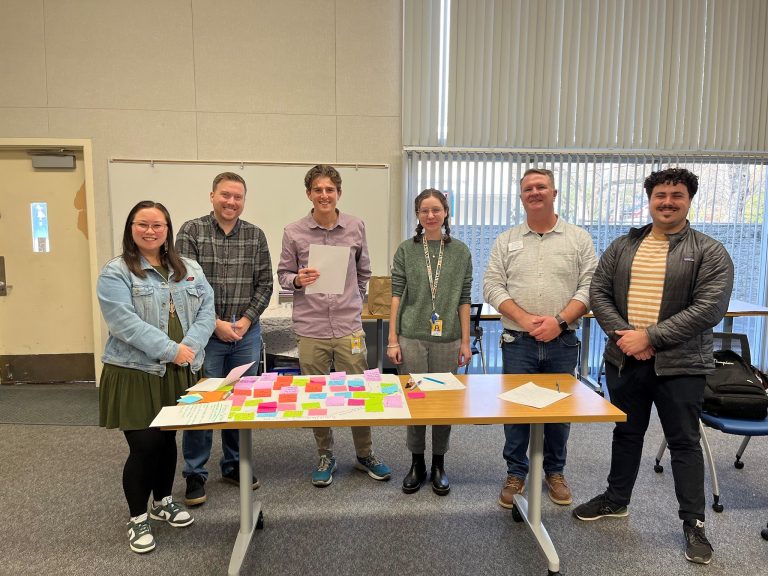
There are two important actions taking place in the 2024-25 school year to advance this strategy. First, in partnership with Scaling Student Success and Envision Learning Partners, we are working with a teacher leadership team of sixth grade teachers to design a performance assessment focused on the Adaptability and Resilience Outcome of our Graduate Profile. This group is underway and is energized about the opportunities to develop adaptability and resilience in their students who are at a key transitional stage in their personal and academic lives. The second action item in progress comes from our Grade 9 Ethnic Studies Leadership Team. The DJUSD Ethnic Studies Course, which is in its second year of
implementation, culminates with a Youth Participatory Action Research Project (YPAR). The Ethnic Studies Leadership Team seized on the opportunity to create alignment with the Civic and Cultural Awareness Graduate Profile Outcome and their YPAR project. The group is in the final stages of developing a Civic and Cultural Awareness Rubric which will solidify the Civic and Cultural skills, knowledge, and dispositions to be taught and assessed through the YPAR project. This will help move the YPAR project from a traditional project to a high quality performance assessment.
How are you advancing your Performance Assessment System? We are systematically developing performance assessments at targeted grade levels across the district. This year is Civic and Cultural Awareness at grade 9 through Ethnic Studies and Adaptability and Resilience at grade 6.
Is there a specific story that illustrates how this work is benefiting your school, students, or teachers? Honestly, it’s not really reaching students at this time. We are trying to move teachers and that is slow work in DJUSD. I can say with confidence two things: 1) our sixth grade team is eager about the opportunity to support their grade 6 students with adaptability and resilience because they feel strongly that students need support in that area. They are also invigorated by the possibility of doing something consistent across their grade level. 2) The Ethnic Studies Team feels incredibly validated by the opportunity to bring an Ethnic Studies lens to our district-wide concept of what Civic and Cultural Awareness can and should be.
What have you learned during this process that might be helpful to share with others? There has to be a plan and that plan has to fit the context. Our context leans towards the status quo so we need to move at a tolerable pace, especially for teachers. And, we need to focus on leveraging existing opportunities and relying heavily on the direction that teachers want to take the work in. New, additional things don’t work for us. Top down directives, won’t work for us.
What is the impact you’re seeing on students and their work, as well as on teachers and their practice? I can’t yet speak to students. I am seeing teachers developing a wider lens of what is possible and what is important.
How has this work impacted you personally as a practitioner? I am deepening my dedication to being steadfast and celebrating small wins. I am constantly reminding myself that to advance my own goals, I need to square them up with the goals and needs of the teachers I am working with, and that requires humility.
Any other anecdotes or stories you’d like to share about the positive changes you’re seeing? No, but Soraya is pretty cool.
Partner Profile
Partner Profile
5 Min read
Partner Profile: Davis Joint Unified School Disctrict
Six years into the Graduate Profile Journey, DJUSD is finally starting to make some systematic moves towards implementation.
Envision Learning Partners has had the honor of working with Antelope Valley Union High School District since 2017 and we’re excited to share an update on how they are Integrating Portfolio Defenses into the Curriculum: All-in for Success in this Guest Blog written by Duane Robertson.
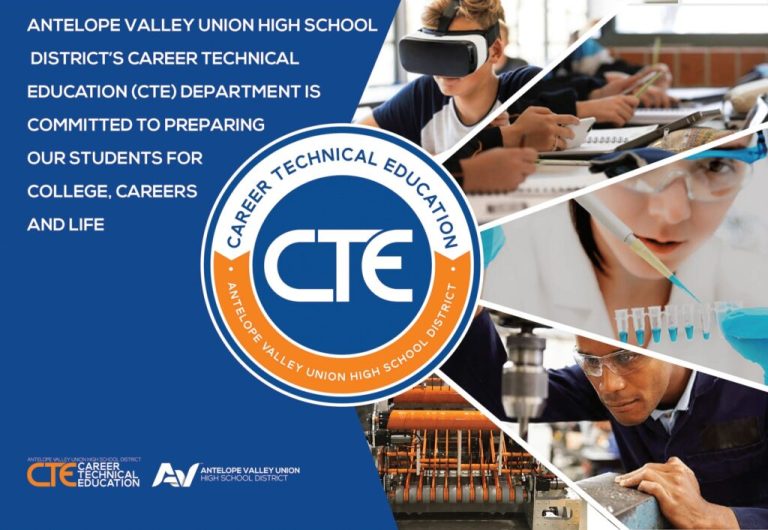
It is more critical than ever to equip students with a range of skills that will prepare them for college, careers, and life. One strategy that has been implemented in the Antelope Valley High School Districts (AVUHSD) Career Technical Education (CTE) pathways is the Portfolio Defenses. The portfolio defenses not only enhances communication but also fosters students confidence, critical thinking, and collaboration. Recognizing this importance, AVUHSD set a plan to integrate the portfolio defenses into the curriculum, making them an essential component of pathway students’ learning experiences. The implementation plan, the challenges faced, and the successes achieved by AVUHSD is outlined below.
Identifying the Need
After discussions with CTE administration and feedback from teachers, it became apparent that many students lacked opportunities to practice public speaking in structured, meaningful ways – especially after COVID 19. While presentations occasionally appeared in class, they were sporadic and often lacked uniform standards, rubrics or assessments. To address this gap, portfolio defenses were implemented to incorporate presentations as a formalized, skill-building component of CTE pathways.
Setting the Objectives
The primary goals for integrating defenses into the curriculum included:
Skill Development: To improve students’ communication, critical thinking, and organizational abilities.
Interdisciplinary Learning: To encourage students to draw connections between CTE and Academic classes.
Inclusivity: To ensure all students, regardless of confidence level, had the opportunity to grow in a supportive environment.
Assessment Alignment: To create clear rubrics that aligned with broader academic standards.
Graduate Profile: To align with components if the Graduate Profile.
Developing the Plan
The implementation plan was multi-faceted and involved the following steps:
Curriculum Mapping Pathway leads identified where presentations would naturally fit. For example, history classes could include debates or oral reports on historical events, while science courses might feature project-based presentations on experiments or innovations.
Teacher Training and Professional Development Workshops were organized to guide teachers on effective strategies for incorporating presentations, creating rubrics, and providing constructive feedback. Emphasis was placed on fostering a growth mindset and supporting students who struggled with public speaking.
Rubric Design A standardized rubric was created to ensure consistency and equity in assessment. The rubric focused on key components like content accuracy, delivery, visual aids, engagement, and providing student evidence of learning.
Student Preparation Resources were developed to help students prepare, including templates, teacher mentors, and strategies for engaging audiences.
Pilot ProgramBefore full implementation, a pilot program was conducted in select classrooms. Feedback from students and teachers during this time was invaluable in refining the student outcomes.
Overcoming Challenges
While the initiative was ultimately successful, it came with its share of challenges:
Resistance to Change: Some teachers were initially hesitant, citing concerns about time constraints and additional workload. Regular meetings and showcasing other schools early successes helped alleviate the concerns.
Student Anxiety: Many students were apprehensive about speaking in front of peers. To address this, smaller groups were formed and presentations were introduced before progressing to larger, graded ones.
Resource Allocation: Ensuring access to technology required careful planning.
Measuring Success
The impact of this initiative was evaluated through teacher and student reflections, and academic outcomes. Key findings included:
Improved Confidence: Over 80% of students reported feeling more confident speaking in front of an audience.
Enhanced Engagement: Teachers observed increased participation and enthusiasm, particularly in interdisciplinary projects.
Skill Retention: Students demonstrated improved organization and critical thinking in other assignments, indicating a transfer of skills.
Expanding the Vision
Encouraged by the success of the program, plans are underway to further enhance the initiative by extending portfolio beyond CTE classes:
Incorporating alumni and peer reviews to build collaborative skills.
Organizing a school-wide presentation day where students can showcase their work to a broader audience.
Partnering with community organizations to bring real-world relevance to student presentations and participate as panelists.
Conclusion
Integrating portfolio defenses into the curriculum has transformed the learning environment, empowering students with communication skills that extend far beyond the classroom. This initiative exemplifies how thoughtful planning, collaboration, and a commitment to students can create meaningful change in education. As students continue to excel in their portfolio defenses and critical thinking abilities, the benefits of this learning strategy reaffirm the importance of such initiatives in preparing our students for the future.
Duane Robertson is the Coordinator of CTE for the Antelope Valley Union High School District.
Mr. Robertson left his position as a multimedia and computer science instructor and Academy Coordinator of the Lancaster High School Engineering and Multimedia Academy, the first Linked Learning Silver-Certified academy. He previously taught business classes as an Adjunct Instructor, after a 15 year career as a project manager. He received his B.S. in Business with an emphasis in Management from Cal State Dominguez Hills, and his first Masters Degree in Education from Chapman University and a 2nd Masters in Administrative Leadership from Cal State Bakersfield.
Duane’s desire to reach students led him to his current role as CTE Coordinator for the Antelope Valley Union High School district. Under his leadership, the CTE classes and academies continue to align with the district’s vision of “every student who graduates will be prepared to pursue college and any career to which he or she aspires”.
Guest Blog: The Blueprint to Defenses by Duane Robertson, AVHSD
Envision Learning Partners has had the honor of working with Antelope Valley Union High School District since 2017 and we’re excited to share an update on how they are Integrating Portfolio Defenses into the Curriculum: All-in for Success in this Guest Blog written by Duane Robertson.
Read More
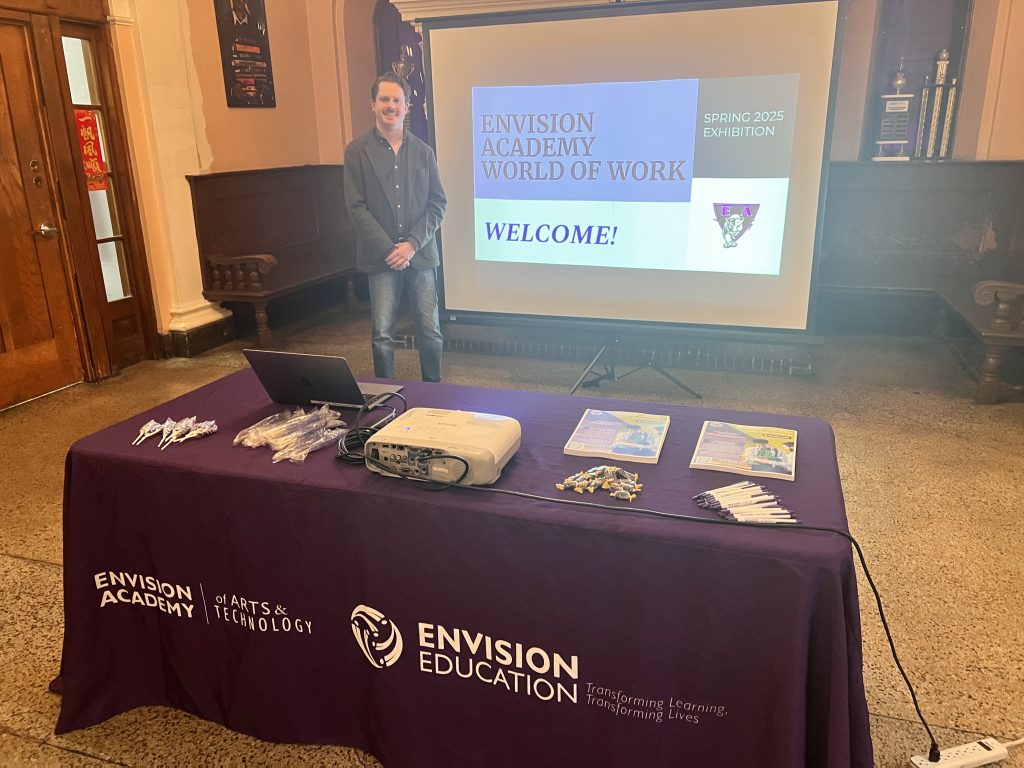
Every year, 11th grade students at Envision Academy, our Oakland 6-12 grade school, complete a week-long internship as part of their Work-Based Learning experience, known as World of Work (“WoW“). The purpose is for students to gain work experience and develop career interests and ambitions through internships in professional settings. The internships are intended to expose students to the rigor and requirements of full-time jobs, while allowing them to explore passions outside of the regular school structure.
The Envision Learning Partners team used this as an opportunity to collaborate on a project that showcased the power of student voice with a group of three EA interns. What began as an initiative to capture the amazing work through Student Led Conferences and Portfolio Defenses quickly evolved into a dynamic social media campaign, all thanks to the creativity and expertise of our interns. This experience served as a powerful reminder of the impact student-driven initiatives have on everyone involved.
Quotes from the interns about their experience:
“In my internship journey I’ve learned alot about my school, Envision Academy, it’s history and roots..also about defense and student-led conferences.”
“Connecting, learned a little bit more at becoming better at working in a team.”
“Learned a lot about video production…now I know there’s a lot of work that goes into it.”
“Communication, I do have anxiety communicating. Actually this week I did a presentation about my leadership goal to improve my communication.I can actually see the improvements. Whenever I had questions in the past I would keep them to myself.”
“I’m really glad I got to connect with and work with you guys, It’s been the best thing ever.”
“I learned a lot about my classmates and learned a lot from them. I really enjoyed it, I wish I could continue this.”
Resources used by the ELP team throughout the week:
Envision Academy’s World of Work Internship Exhibition:
Newsletters
Resources
Resources
5 Min read
Resource Corner: WOW Week with Envision Academy Interns
Every year, 11th grade students at Envision Academy, our Oakland 6-12 grade school, complete a week-long internship as part of their Work-Based Learning experience, known as World of Work (“WoW“).
Read More
Challenge Success-Stanford Survey of School Experiences, our student experience survey with dozens of school teams each year. While the survey covers many topics within student well-being, engagement, and belonging, one of the key metrics we discuss with schools is stress. Across hundreds of thousands of responses and 10 years, assessments, tests, and grades are consistently some of the top sources of stress for middle and high school students.
Productive Stress vs. Unhealthy Stress
Experiencing stress is not negative in and of itself. In fact, learning how to adapt to productive stressors such as a difficult subject or strenuous exercise is how we grow and develop. However, the stress students feel from assessments is too often an unhealthy form of stress. Traditional summative assessments, typically tests and quizzes, are clearly linked in students’ minds to grades, transcripts, and the post-secondary stakes associated with them. In this context, assessment can become a source of fear, anxiety, and dread. Some students respond to this stress by plowing hours of time studying and preparing at the expense of their sleep and other activities, while others might shut down, procrastinate, or resort to last-minute cramming. These strategies might help them score well, but don’t do much for long term learning.
Schools are in a challenging position because they are responsible for promoting student engagement, well-being, and belonging while also preparing them for post-secondary admissions and learning in the higher education system.
How can schools help students engage in rigorous, transferable learning in ways that help navigate this tension?
One promising path is to take a clear eyed look at assessment practices. When schools make time to consider why and how they assess, who their assessments are for, and ultimately what they want their assessments to look like, they often express a desire to make assessment to feel authentic and personally meaningful. They want assessments that inspire effort and growth, that demonstrate high levels of learning and a depth of understanding, and most of all that feel meaningful and important to their students.
In other words, they want more performance assessment.
Performance assessments are tasks where students apply their knowledge and skills to solve real problems, create authentic products, or demonstrate mastery in contexts that mirror professional or real-world situations. Think science experiments designed to solve local environmental problems, history projects creating museum exhibits, or math challenges proposing a redesign of a public park.
While talk of performance assessment often centers around all the ways it is a superior measure of complex, transferable skills, what I want to lift up here is how performance assessment done well is also a major lever for students’ overall well-being, engagement, and belonging.
Better for Well-Being: From Uncertainty to Productive Pressure
One of the biggest stressors for students is the uncertainty surrounding traditional assessments. They worry about what will be on the test, whether they studied the right material, and how their performance will impact their grades. This anxiety is not just about the difficulty of the work—it’s about the unpredictability of the assessment itself.
Performance assessments help eliminate this unnecessary stress by making expectations clear. During high quality performance assessments, students receive rubrics, exemplars, checklists, and guides that outline exactly what success looks like. With excellence made clear, instead of wondering “Will this be on the test?” students can instead start asking “How can I make my work stronger?” There’s still pressure to perform, but it’s a productive pressure, the kind that pushes students to pursue their best rather than paralyzing them with fear.
Additionally, traditional assessments often take a “stop and measure” approach, where the assessment feels like a separate event from the learning. This disconnection positions assessment as an, often high-stakes, judgment rather than part of the learning process. With performance assessments, students have the opportunity to learn through the assessment itself. They reflect on their work, receive feedback, and have opportunities to improve as they work towards a final product. The standards for quality remain high, but the process of pursuing those standards nurtures effort through emphasis on quality, revision, and growth rather than relying on high stakes for high, stressful effort.
Better for Engagement: From “Doing School” to Full Engagement
A common complaint from students is that schoolwork feels meaningless. They don’t see how what they’re doing in class connects to the world outside school or their future goals. In our Challenge Success Survey data, our most consistent finding is that students are mostly “doing school” when it comes to their engagement. They are working hard, paying attention, and turning in assignments, but they don’t have a strong sense of purpose, let alone interest in their work. Traditional assessments reinforce this disconnect, as they often emphasize memorization and rote recall rather than deep understanding and application.
Performance assessments change this dynamic by making learning more relevant. Instead of filling out study sheets to prepare for taking multiple-choice tests, students can be asked to tackle complex projects, solve real-world problems, and create authentic artifacts that mimic the kind of work professionals do. When students see that their work has real-world applications, they are more likely to find it meaningful and stay engaged.
Another key component of performance assessments is choice. Students have more agency in how they demonstrate their learning, whether that means choosing different materials, exploring unique lines of inquiry, or deciding how to present their findings. This autonomy increases motivation and makes learning more enjoyable. Plus, when students are able to tap into their strengths in their particular approach to the task, the assessment becomes more personally meaningful and enjoyable.
Better for Belonging: From One-Size-Fits-All to Each Voice Matters
Belonging is a crucial element of a healthy school experience, and performance assessments can play a major role in building a strong classroom community and individual excellence.
Belonging starts with connection, and performance assessments create space for meaningful teacher-student interactions. Because these assessments often involve complex work and ongoing feedback, teachers have more opportunities to connect with students one-on-one. These conversations help build trust and rapport, reinforcing the idea that teachers are there to support learning, not just evaluate performance.
Additionally, performance assessments encourage peer collaboration. Unlike traditional tests, which often promote competition and isolation, performance-based tasks allow students to collaborate, give each other feedback, and share ideas. This fosters a sense of shared purpose and community, shifting the classroom culture from “every person for themselves” to “we’re in this together.” The result? A stronger sense of belonging and a more positive learning environment.
Belonging is also related to our sense of identity. As we seek to inspire all learners to high levels of personal excellence, performance assessments provide opportunities to embrace a broader vision of excellence. Traditional high-stakes tests tend to privilege certain test-taking skills and a narrow range of talent, while performance assessments allow multiple ways to demonstrate understanding, empowering students from different backgrounds or with different strengths to succeed. Additionally, when students are able to make individually meaningful choices in their work, they are able to bring more of their full selves to their learning and to the classroom community.. This not only enriches their personal experience, it creates greater opportunity for connection and relationship building with teachers and peers.
It’s also important for students to see examples of successful work from people with diverse backgrounds, especially in fields where certain groups have been historically underrepresented. For example, young women of color in science classes can and should see examples of women of color thriving in those fields through exemplars, stories, and real-world models. Seeing themselves reflected in the work they’re being asked to do can build both belonging and ambition.
The Takeaway
Shifting toward more performance-based assessment is no small task. It requires thoughtful planning, sustained effort, and, often the guidance of experienced experts like the team at ELP. But the rewards make it worth the investment. Students’ well-being, engagement, and sense of belonging are deeply interconnected, shaping their entire experience of school. High-quality performance assessments are one of the most effective tools we have as educators to nurture these dimensions of student thriving. By integrating them into our practice, we can create learning environments that challenge students intellectually while supporting them emotionally, socially, and developmentally.
Guest Blog
Announcements
5 Min read
Guest Blog: Performance Assessment is Healthy Assessment
In my work as a researcher at Challenge Success, I have the opportunity to analyze and discuss data from the Challenge Success-Stanford Survey of School Experiences, our student experience survey with dozens of school teams each year. While the survey covers many topics within student well-being, engagement, and belonging, one of the key metrics we discuss with schools is stress. Across hundreds of thousands of responses and 10 years, assessments, tests, and grades are consistently some of the top sources of stress for middle and high school students.
Read More
Resource Corner: Student Innovation Edition
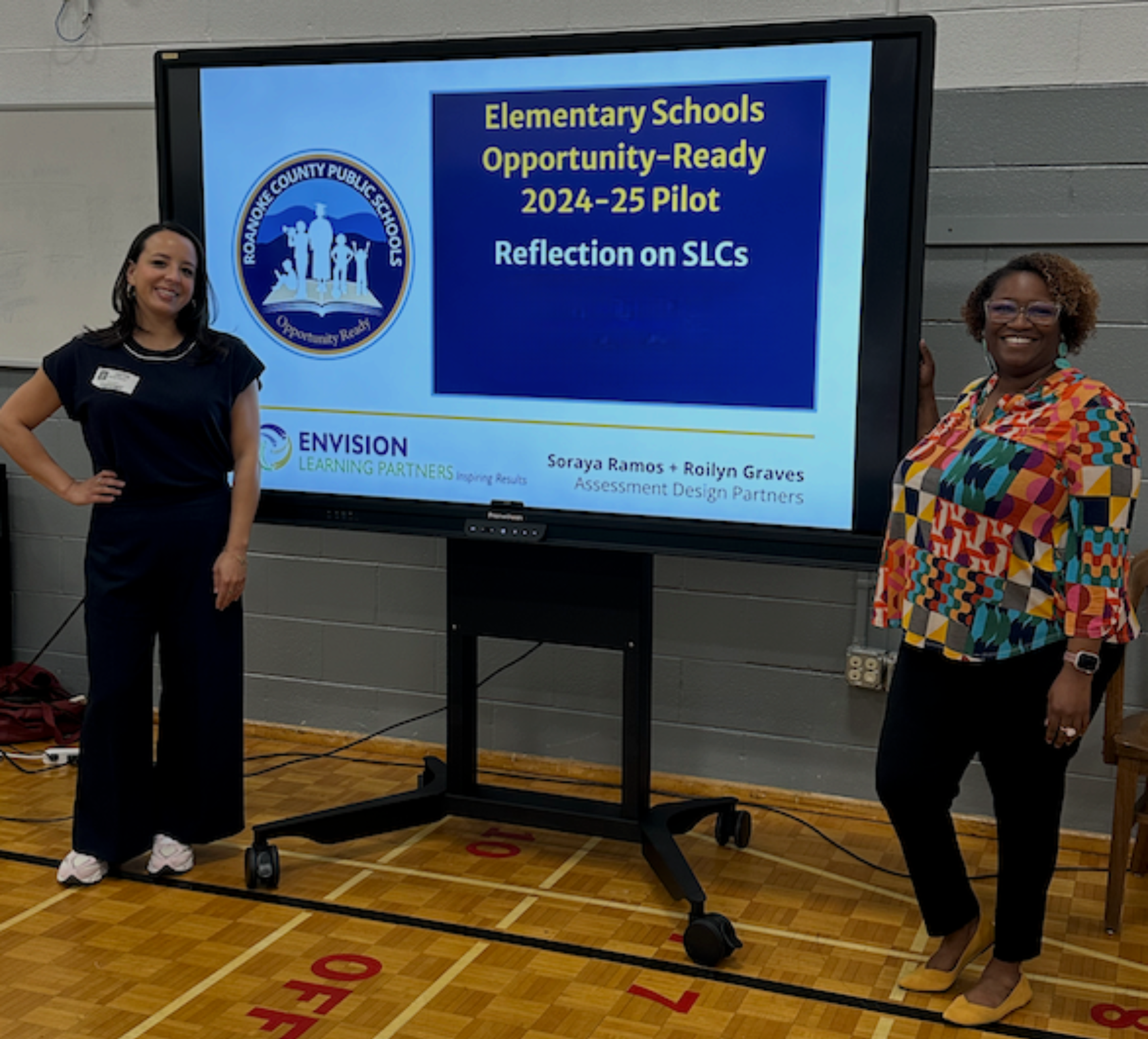
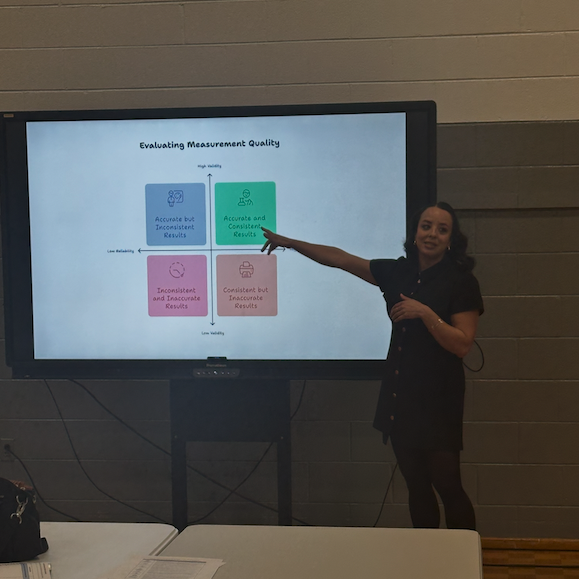
Earlier this spring, Assessment Design Partners Roilyn Graves and Soraya Ramos spent time in Roanoke County Public Schools in Virginia, collaborating with district and school leaders to refine and pilot a culminating performance assessment system aligned to the district’s Opportunity-Ready Skills.
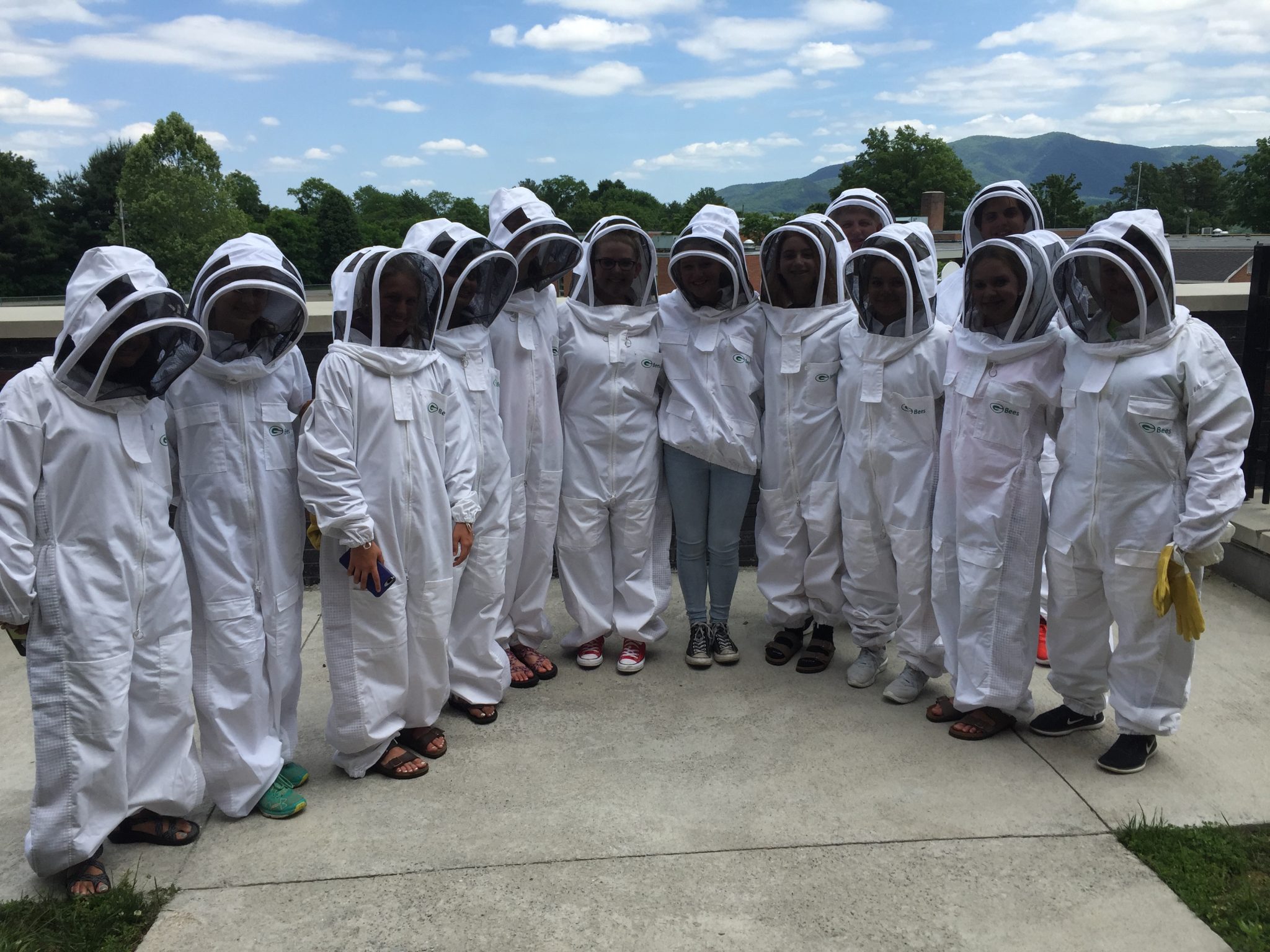
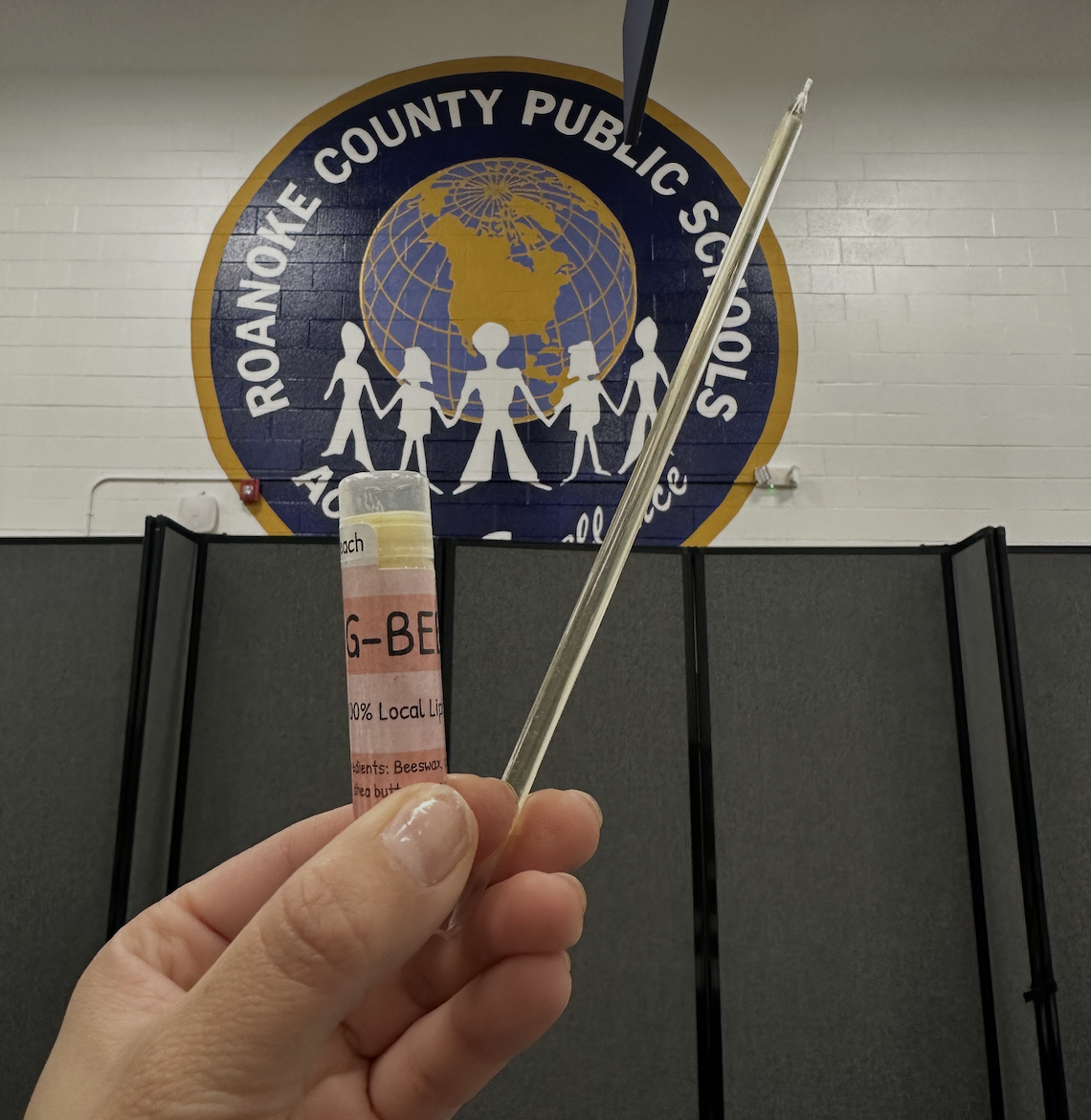
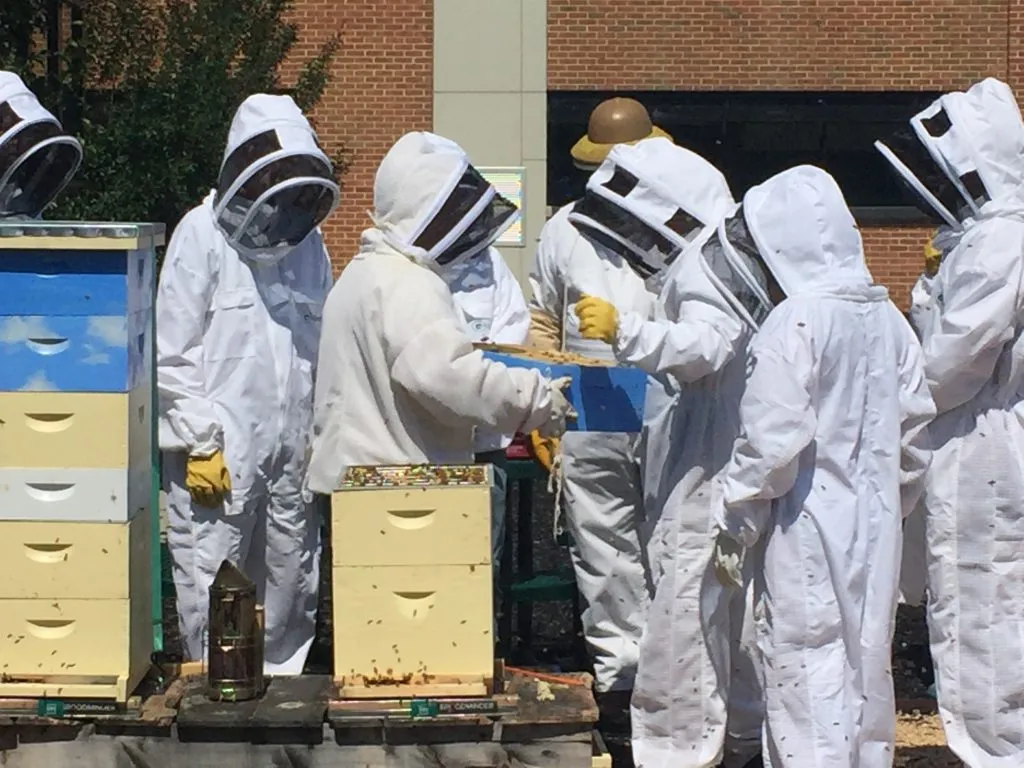
During their visit, they had the opportunity to tour Glenvar High School—and were inspired by an incredible student-led initiative: the G-Bees. This club involves students in every aspect of beekeeping, from hive maintenance to harvesting honey, and even crafting a range of products like lip balm, soap, candles, hot honey, and more.
Through this hands-on work, students are not only gaining valuable entrepreneurial experience, but also raising funds for outdoor education and scholarships. It’s a powerful example of student-centered, purpose-driven learning at its best.
The G-Bees program is truly performance assessment in action—students applying their knowledge and skills in meaningful, real-world ways. While online sales aren’t available, we’re excited to share their story as a model of what authentic, engaged learning can look like.
Assessment Design Partners, Soraya Ramos and Roilyn Graves.
General
Newsletters
Resources
General
5 Min read
Resource Corner: Student Innovation Edition
Earlier this spring, Assessment Design Partners Roilyn Graves and Soraya Ramos spent time in Roanoke County Public Schools in Virginia, collaborating with district and school leaders to refine and pilot a culminating performance assessment system aligned to the district’s Opportunity-Ready Skills.
Read More
I began working at ELP in January 2018 as the Director of Research and Innovation. Since then, I’ve been working on the nationwide team providing direct service and technical consulting to client partners and creating assessment products, as well as directing ELP’s research projects.
I’m excited to share that in July 2025, I stepped into a new role: Senior Director of Assessment for Envision Education. This role encompasses responsibilities for the whole organization – Envision Schools and Envision Learning Partners. Envision Schools runs four charter schools in the Bay Area (in San Francisco, Oakland, and Hayward). My new responsibilities include overseeing the design and implementation of a comprehensive assessment system for the schools, ensuring the use of rigorous, standards-aligned assessment practices that demonstrate student achievement of core academic skills. At the same time, our system aims to provide regular opportunities for students to demonstrate ambitious learning outcomes aligned to Envision’s graduate profile competencies in real-world-relevant, meaningful, and culturally sustaining contexts. We seek to more systematically integrate authentic and high-quality project-based learning and student-led conferences at all grades 6-12, and portfolios + defenses at grades 8, 10, and 12. We want to develop our schools as models of a balanced and comprehensive assessment system that supports student achievement of both foundational academic skills and ambitious, authentic demonstrations of learning. This new assessment system is described more fully in our new Envision Way documents.
In my new role, I also continue to work with my ELP colleagues, supporting the learning and effectiveness of our national team of Assessment Design Partners, and developing new services aligned to the Envision Way as we seek to meet the evolving needs of both external district partners and our own schools. Our long-term strategy is to strengthen our own schools so they are clear models of the quality assessment systems that we are also seeking to strengthen in partnership with districts. We call this the “flywheel” because of the reciprocal nature of our learning and development work as we pilot new practices, collect data, and evaluate their effectiveness in our schools and in partnership with external districts.
I continue to also be involved in exploring ways for Envision Education to gather evidence of its effectiveness through systematic collection of evidence in our own schools (in partnership with John Ericson, our Director of Data & Assessments), and by initiating research projects to collect evidence of the impact of ELP’s work with districts. I am also continuing to coordinate the research project “Pursuing Equity for Black & Latine Students with Learning Differences”. We wrapped up two years of school case study work in July, and are preparing to launch a two-year professional-development pilot and evaluation phase of the project with a large school district. More news to come!
What do you enjoy most about working for Envision?
It’s definitely always been the people. I truly enjoy working alongside colleagues with a similar commitment to our most marginalized students and who are striving so hard to create supportive, inclusive learning environments that lead to equitable learning outcomes. I am learning so much from my ADP colleagues as well as my Academic Programs Team colleagues. They are all so incisive and brilliant and I have so much to learn from them. I truly feel blessed and lucky to have them as colleagues!
I’m also proud to be working in an organization with a commitment to its pro-Black, anti-racist stance, engaging us all in developing a self-awareness of our individual and collective contributions to our cultural norms, and providing the space to engage in productive struggle to begin changing those norms.
Last, I love that Envision honors hard work while also honoring our need for joy, self-care, and rest! The yoga and art breaks, retreats, sound baths, line dancing, karaoke nights, breaking bread together, and other opportunities to take mind breaks are all helpful reminders that we are whole people who also need laughter, rest, and nourishment to thrive. My family always gets a kick out of hearing about the latest fun things I get to do with my work friends!
General
Announcements
I Am ELP
Newsletters
General
5 Min read
I am ELP: Ruth Chung Wei, Senior Director of Assessment
I began working at ELP in January 2018 as the Director of Research and Innovation. Since then, I’ve been working on the nationwide team providing direct service and technical consulting to client partners and creating assessment products, as well as directing ELP’s research projects.
Read More
Envision Education is excited to share the culmination of its two-year research project, Pursuing Equity for Black & Latine Students with Learning Differences, which
documents and illustrates the systems, practices, cultures, and supports that are associated with the well being and success of Black and Latine students with learning differences – students with disabilities and multilingual students with disabilities.
In 2023, Envision Learning Partners (ELP) and Social Policy Research Associates (SPR) embarked on a research study to identify and learn from schools that demonstrated positive outcomes for Black and Latine students with learning differences (including students with disabilities and multilingual learners). After a review of data from secondary schools across the country, the study team identified two schools for a more in-depth study, which was conducted during the 2023–2024 school year.
The results of the research are shared through case studies of the two schools that were the focus of the research: 1) Crosstown High: Building a Culture of Inclusion; 2) Capital City: An Inclusive School Community Committed to Whole-Child Learning and Well Being; and 3) An Executive Summary/Synthesis of Findings.
In addition, we have authored four practice briefs based on the findings of the research that provide practical steps that schools can take to create more inclusive environments that support the success of Black and Latine students with learning differences.
Co-teaching: A Means to Creating Inclusive and Equitable General Education Classrooms
UDL: Universal Design for Learning in a Culturally Responsive Context
Culturally Responsive Practices: An Inclusive, Culturally Responsive School Culture That Fosters Relationships
Competency-Based Learning and Assessment: Assessment and Grading Practices That Support an Inclusive Learning Culture
This research was made possible through the generous support of New Profit, a venture philanthropic organization, and the Oak Foundation.
General
Announcements
Newsletters
Resources
General
5 Min read
Resource Corner: Pursuing Equity for Black and Latine Students with Learning Differences Case Studies & Practice Briefs
Envision Education is excited to share the culmination of its two-year research project, Pursuing Equity for Black & Latine Students with Learning Differences, which documents and illustrates the systems, practices, cultures, and supports that are associated with the well being and success of Black and Latine students with learning differences – students with disabilities and multilingual students with disabilities.
Read More
By Michael Viera, Envision Education’s College and Career Pathways Manager
Several years ago the city of Oakland came together to support college and career programming for high schoolers, by advancing and deepening career pathways in alignment with the Linked Learning Alliance standards and methodology. The Linked Learning Alliance hosts an annual conference where educators share best practices and takeaways from school sites around the state. Oakland schools always show out in big numbers at the conference, but this year it took place in downtown Oakland, so the presence was even greater.
I had been to the conference previously, but this time was different. Being my 3rd year at Envision in this role, I felt like I finally understood what it was all about. I had colleagues from Envision Learning Partners in attendance and collaborating with me. I got to connect with colleagues from other Oakland schools. I knew what to look for and who to listen to in order to improve our programming at Envision Academy and across the Envision network.
The conference was motivating, to say the least. It is a breath of fresh air being in rooms of educators who are excited and realistic about their work in schools, and who understand the skills students need to have success in their futures.
I came back from the conference and immediately organized Envision Academy’s first job fair since COVID. We had twelve community partners visit our campus to share information with students on internship opportunities, after school and summer programs, and community resources. Students seemed excited about these experiences that they can be a part of outside of their regular curriculum.
At the end of the event, two students stayed back and pulled me aside. I thought something bad had happened. Instead, one of them simply said, “Mr. Viera, we just wanted to thank you for putting together this event. It’s really inspiring to see all these opportunities we didn’t know about until now.”
After a couple of weeks of back and forth emails and phone calls with partners, planning meetings with administration, and quite literally running around setting up tables and chairs on the day of the event, those students made it all worth it. When students are able to take their learning outside of school walls and make connections with their community, they feel seen and they thrive.
Hear from Michael and ELP Assessment Design Partner, Josette Neal-De-Stanton on their takeaways from the Linked Learning Conference.
General
Guest Blog
Newsletters
Video
General
5 Min read
Guest Blog: Linked Learning in Action By Michael Viera
A reflection on how the Linked Learning Conference reinvigorated Envision’s college and career pathways work, leading to strengthened community partnerships and meaningful opportunities for students. Michael Viera shares how renewed insights and collaboration resulted in Envision Academy’s first post-COVID job fair—and the student impact that made it all worth it.
Read More
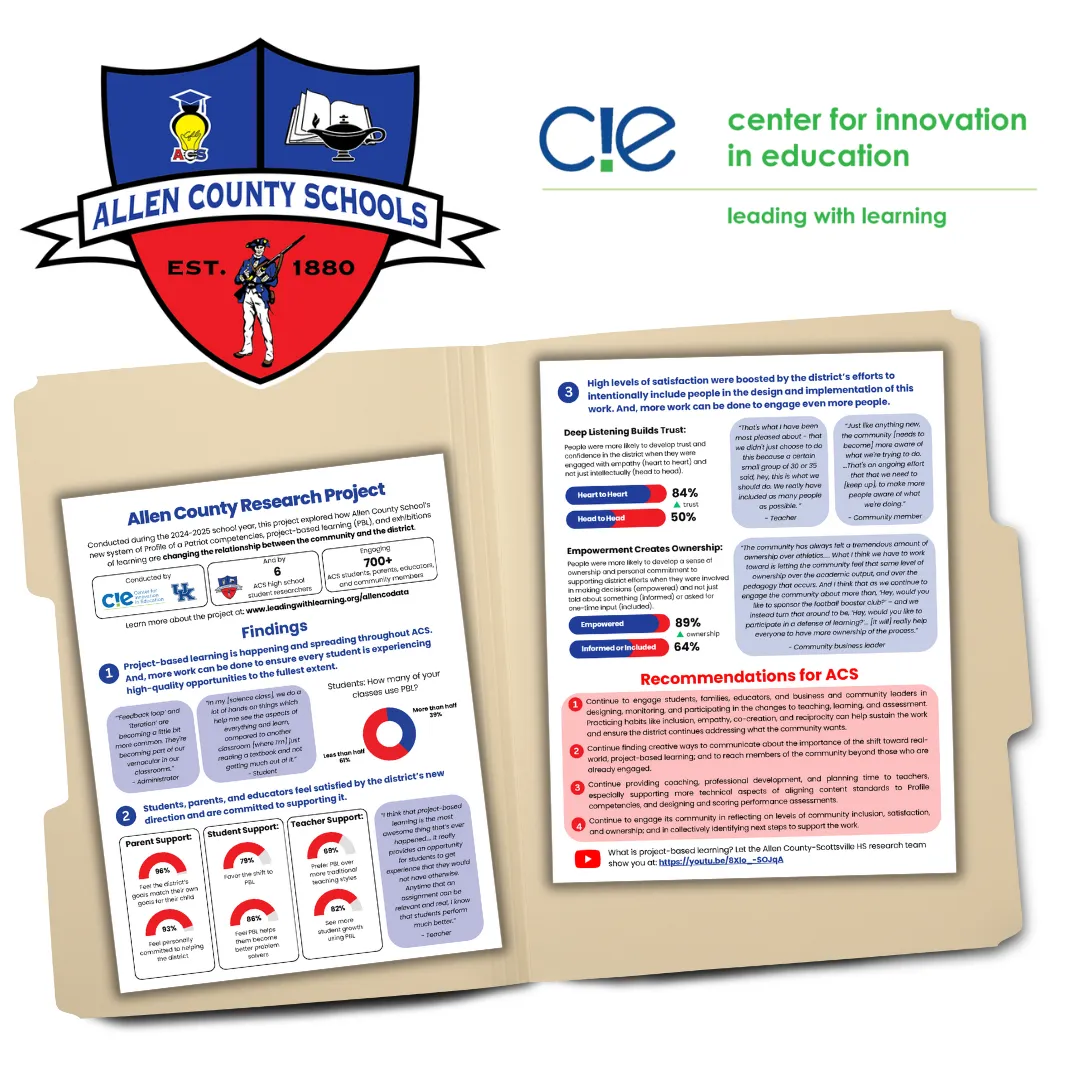
A newly published case study from the Center for Innovation in Education (C!E), featuring Envision Learning Partners in Appendix C, highlights Allen County, Kentucky’s multi-year effort to redesign assessment and accountability through Inclusive Design. The report, Better Together, shows how the district co-created their graduation competencies called “Profile of A Patriot” and embedded project-based learning and performance assessments to place students’ passions and real-world skills at the center of learning.
Envision Learning Partners has been proud to support Allen County in this work, and we’re excited to share C!E’s new case study. We’ve partnered closely with C!E through the Assessment for Learning Project, working together to advance learner-centered assessment practices nationally.
ELP Partner Resource: New Research on Learner-Centered Assessment in Allen County, Kentucky
A reflection on how the Linked Learning Conference renewed momentum for Envision’s college and career pathways, inspiring stronger partnerships and the return of Envision Academy’s job fair.
Read More
Guest Blog: Kina Evans, Bully Talk
Impact Academy alum, Kina Evans, shares how her time at Impact shaped her path from student to educator and now CEO. Walking the halls of Impact Academy, Kina learned not just academics, but how to find her voice, lead with confidence, and envision a future bigger than herself. After earning her master’s degree and teaching for six years, she founded Bully Talk Inc., a nonprofit dedicated to empowering youth and transforming school culture. In her ELP Guest Blog, Kina reflects on how Impact Academy’s lessons continue to guide her work as a leader, advocate, and change maker.
From Student to CEO: How Impact Academy Shaped My Path
Walking through the halls of Impact Academy in Hayward, CA was where my journey truly began. As a student, I didn’t just learn academics—I learned how to find my voice, lead with confidence, and envision a future bigger than myself. Those experiences planted the seeds for everything that would come after graduation.
After Impact, I pursued higher education and proudly earned my master’s degree. One of my proudest moments came when I was invited to appear on The Jennifer Hudson Show, where I was able to share my story and the mission behind my work. It was a reminder that the impact of our voices can carry far beyond the classroom.
For six years, I poured my heart into teaching, working directly with students and families every day. Teaching was more than a job—it was a calling, and it gave me the foundation to see where my true purpose was leading me. Eventually, I made the decision to transition into substitute teaching so I could dedicate more of my time and energy to building Bully Talk Inc., the nonprofit I founded to empower youth, transform school culture, and create safe spaces for students everywhere.
Looking back, I can see just how much Impact Academy changed my life. From the lessons I learned as a teenager to the resilience and drive I carry today, Impact has been a thread running through every step of my journey. It helped shape not just who I was then, but who I am now—a leader, an advocate, and someone committed to making a difference in the lives of others.
General
Guest Blog
Newsletters
Resources
Video
General
5 Min read
Guest Blog: Kina Evans, Bully Talk
Walking through the halls of Impact Academy in Hayward, CA was where my journey truly began. As a student, I didn’t just learn academics—I learned how to find my voice, lead with confidence, and envision a future bigger than myself. Those experiences planted the seeds for everything that would come after graduation.
Read More
Roanoke County Public Schools has been partnering with Envision Learning Partners for the past four years to develop and implement a comprehensive performance assessment system aligned with their Opportunity Ready Graduate Profile. This collaboration has fundamentally transformed how students demonstrate essential skills needed for future success in an increasingly complex world.
A Decade of Transformation
The journey began a decade ago when Roanoke County developed their C-Change Framework, which meticulously detailed the conditions needed for deeper learning to thrive within school communities. This framework addressed multiple dimensions, including school and classroom climate, professional growth, support services, and learning culture. It also emphasized finding balance between preparing students for standardized testing and developing the critical skills needed to navigate a rapidly changing world.
Working with diverse stakeholders, they articulated the Opportunity Ready Graduate Profile, which defines the skills and attributes necessary for students to successfully navigate evolving life and career pathways and seize opportunities that come their way. Despite this solid foundation, the district initially struggled to quantify these skills in ways that were both meaningful and conducive to growth.
Partnership with Envision Learning Partners
This challenge led Roanoke County to form a strategic partnership with Envision Learning Partners. Over the past four years, they’ve evolved from conceptualizing what their assessment system could be to implementing a robust program across all 26 schools in the district. This systematic approach to performance assessment now forms a cornerstone of their educational philosophy.
Opportunity Ready Portfolio Process
At the heart of this work is the Opportunity Ready Portfolio Presentation, where students demonstrate mastery of three critical skills: Communication, Collaboration, and Critical Thinking. Using a structured process guided by clear rubrics and expectations, students select artifacts from their in-school and out-of-school learning experiences as evidence of their skill development.
Each student presentation is guided by the driving question: “How have I demonstrated and grown in my Opportunity Ready Skills as a Communicator, Collaborator, and Critical Thinker this school year, and how will I apply these Opportunity Ready skills to what’s next for me, including my future career?”
Trained panel members, including at least one member from the school’s design team, evaluate these presentations using standardized rubrics that assess specific performance outcomes for each skill area. The panels follow a structured protocol for scoring student work, ensuring consistency and fairness while providing constructive feedback.
Transformative Impact
“We learned that you don’t know what your students are capable of until you ask and give them a chance to respond,” shares one district leader. “We have been blown away by what our students are able to demonstrate through our performance assessment system.”
The impact of this work extends throughout the educational community:
For students, the process has revealed the power of reflection. Many students express surprise at how much they’ve grown until they take time to reflect on their learning journey. This metacognitive awareness strengthens their sense of personal growth and achievement.
Teachers, while initially cautious about the workload involved in preparing for conferences and defenses, become enthusiastic advocates after witnessing students’ presentations. As one administrator noted, “To a person, they are invigorated and excited to begin planning for the next year once they see it in action.”
For administrators and district leaders, the presentations have rekindled passion for educational transformation. “The impact the presentations have on the panel, parents, and staff has reignited our drive for this work,” reports a district representative.
Stories of Transformation
The most compelling evidence comes from individual student experiences. One particularly moving example involved a student who had struggled significantly during middle school. During their senior defense, the student articulated their growth journey with such clarity and reflection that “there was not a dry eye in the room.” This transformative moment exemplifies how the process helps students recognize and celebrate their own development while preparing them for future challenges.
Looking Forward
Through this ongoing partnership with Envision Learning Partners, Roanoke County Public Schools continues to refine and expand their performance assessment system. The district’s commitment to developing the whole student—not just academic knowledge but essential life skills—positions their graduates to thrive in whatever paths they choose after high school, whether in higher education, careers, or military service.
By creating authentic opportunities for students to demonstrate mastery of critical skills, reflect on their growth, and connect their learning to future aspirations, Roanoke County Public Schools is preparing students not just for tests, but for life beyond graduation in a rapidly changing world.
Partner Profile
General
Newsletters
Partner Profile
5 Min read
Partner Profile: Roanoke County Public Schools
Roanoke County Public Schools has been partnering with Envision Learning Partners for the past four years to develop and implement a comprehensive performance assessment system aligned with their Opportunity Ready Graduate Profile. This collaboration has fundamentally transformed how students demonstrate essential skills needed for future success in an increasingly complex world.
Read More
ELP hopes to see you at the Deep Learning Conference in sunny San Diego this April 2025! Learn more about our Den Talk, Deep Dive, and Workshop opportunities!
When Envision CEO Jillian Juman and Chief Program Officer Justin Wells get on a plane together, they tend to have a deep and lively conversation about assessment. What makes for a comprehensive assessment system, one that truly prepares students to be global citizens that can drive systemic change, and what sustains such a system? Envision Education—known for portfolio-defense and other forms of high-quality performance assessment—has been innovating on assessment solutions for over 20 years. Lately, our talks circle the reflection that our current system is incomplete and not meeting the challenges of the time. Listen in—and join in—as Jillian and Justin bring their ongoing conversation out of the jet stream and into the Deeper Learning Den (to the welcome of Deeper Leaners and to the relief of plane passengers).
This deep dive addresses the problematic relationship students and teachers often have with STEM education, rooted in unaddressed trauma. It focuses on how white supremacy culture shapes science and impacts individuals’ sense of belonging in STEM. Participants will explore ELP’s HQPA principles 3: Open to different learner approaches and 5: A learning experience in itself to design STEM assessments that promote healing. Through dialogue, journaling, and personal timelines, participants will examine STEM trauma and develop strategies to disrupt it in their lives and work. By the end, participants will have tools to address and prevent STEM trauma transference in their classrooms and assessments. The workshop is split into two sections: naming and releasing trauma, and designing with critical hope.
Being offered two times! Wednesday, April 2, 2025 4:30pm – 6:00pm PDT Friday, April 4, 2025 10:00am – 11:30am PDT Click here to learn more and sign up!
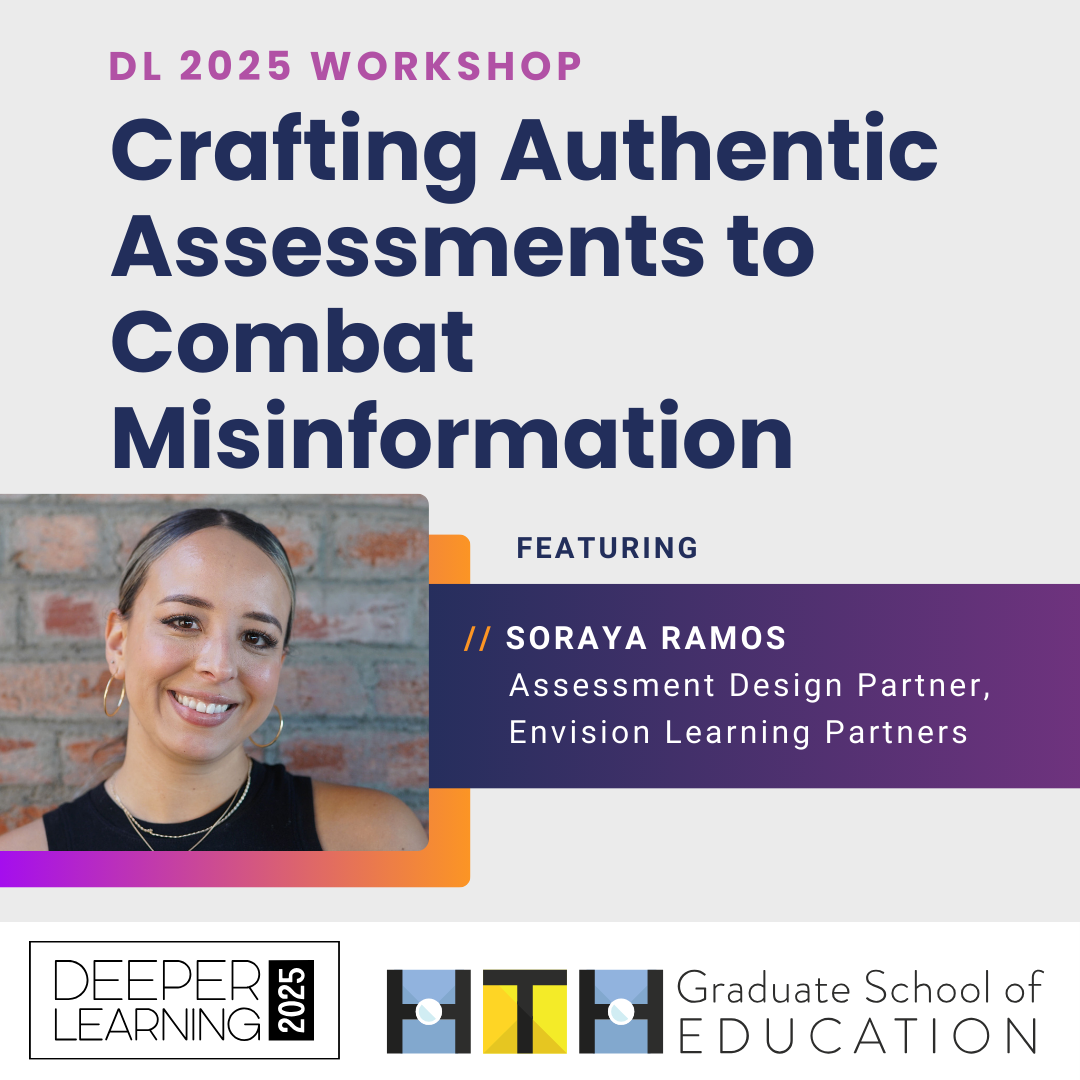
In today’s world, where misinformation spreads rapidly, it’s crucial to equip educators with the tools to create effective, reliable performance assessments.
This interactive session will explore the “what” and “why” of high-quality performance assessments, emphasizing the importance of authentic assessments that foster critical thinking. Participants will engage in a newsroom activity to examine the impact of misinformation on society by sharing current headlines circulating in our ecosystem and practice critical thinking to evaluate the legitimacy of information sources.
Participants will leave with actionable strategies to enhance their assessments, ensuring they not only measure student understanding but also prepare learners to navigate a complex information landscape effectively.
ELP hopes to see you at the Deeper Learning Conference in sunny San Diego this April 2025! Learn more about our Den Talk, Deep Dive, and Workshop opportunities!
Read More
In this special Guest Blog Video Interview, Assessment Design Partner, Josette Neal-De-Stanton, interviews her very own brother, Rene Neal-De-Stanton.
Rene is currently a science teacher byway of nursing school with a background in entertainment and dance.
They discuss the importance of project-based learning in science and dive into the importance of representation and equity in the classroom.
Guest Blog
General
Guest Blog
5 Min read
Guest Blog: “Importance of Projects in STEM”
In this special Guest Blog Video Interview, Assessment Design Partner, Josette Neal-De-Stanton, interviews her very own brother, Rene Neal-De-Stanton.
Read More
In this special Guest Blog Video Interview, hear from Alcine Mumby and Laureen Adams, interviewed by Niloy Gangopadhyay and Courtney Katen.
This interview was sparked by Alcine’s recent travel to the Ghana ASCD Educators’ Summit 2024 earlier this year.
Learn about Alcine and Laureen’s history- all starting in Oakland at Envision Academy, what Laureen took away and still carries with her as leader of the Tutu Institute in Ghana, why she believes so deeply in performance assessment, and what’s up next for her work continuing to support educators and systems.
Guest Blog
Resources
Video
Guest Blog
5 Min read
Guest Blog Video Interview: Alcine Mumby & Laureen Adams
In this special Guest Blog Video Interview, hear from Alcine Mumby and Laureen Adams, interviewed by Niloy Gangopadhyay and Courtney Katen.
Read More
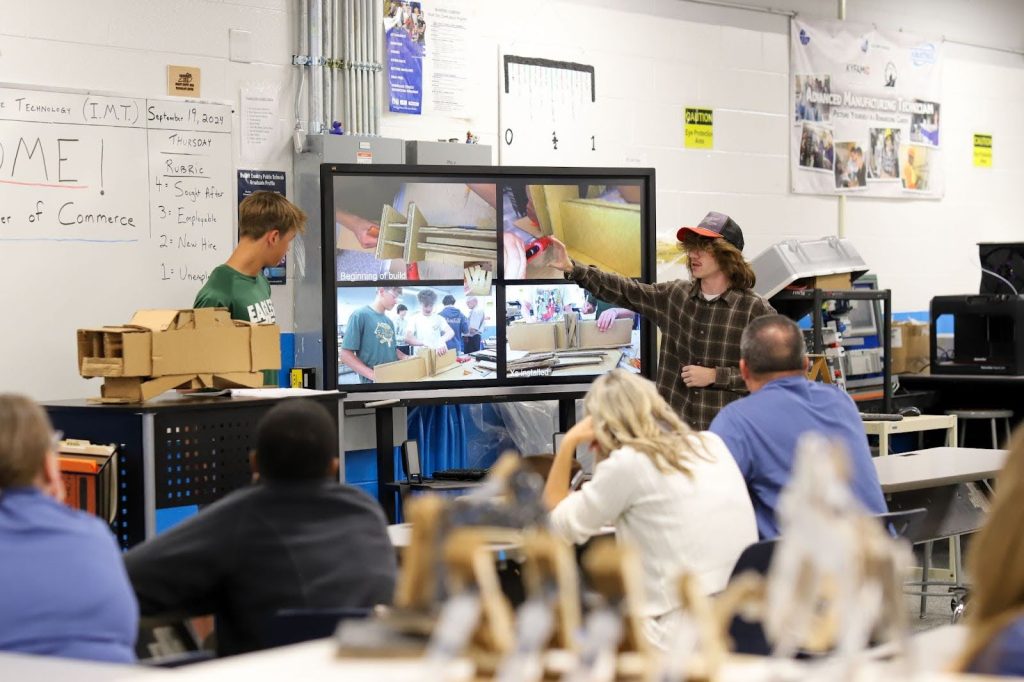
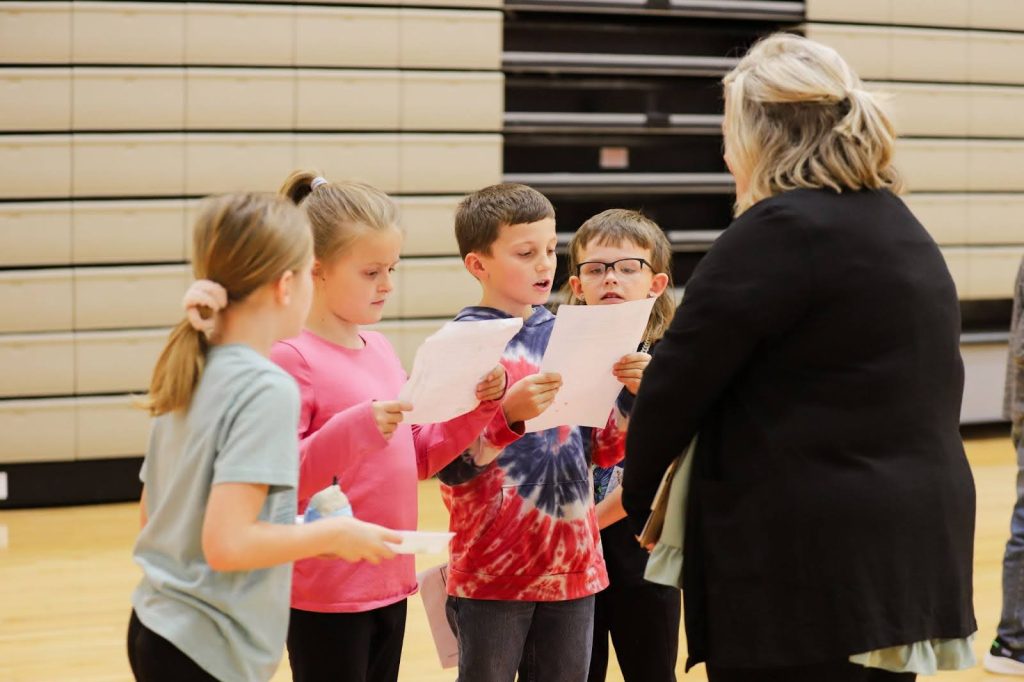
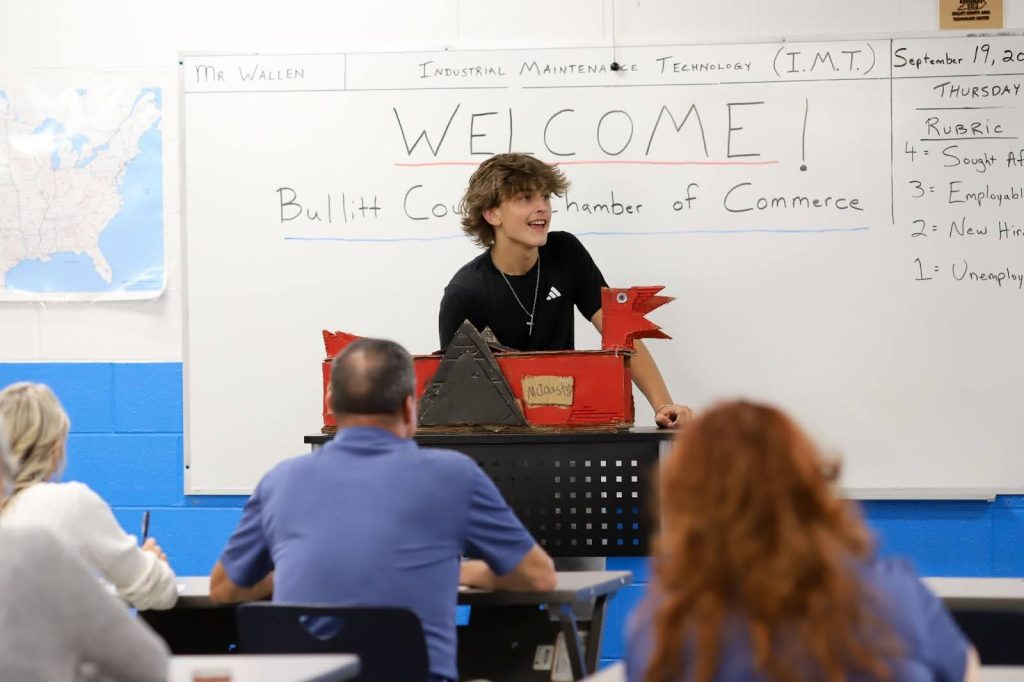
Bullitt County Public Schools is a public school district in Shepherdsville, KY that serves students from pre-K through 12th grade. The district is committed to providing a world-class education that prepares students for success beyond high school.
Envision Learning Partners has worked with Bullitt County Public Schools since 2018, partnering on their Graduate Profile development and performance assessment system. Bullitt County’s Superintendent, Dr. Jesse Bacon, and Assistant Superintendent, Dr. Adrienne Usher, are also both alumni of ELP’s Deeper Learning Leadership Forum.
In this Partner Profile, we hear from Assistant Superintendent, Adrienne Usher.
How are you advancing your Performance Assessment System? Is there one story you can share that illustrates how this work is benefitting your school, students or teachers?
Advancing the Performance Assessment System in Bullitt County Public Schools involves the creation of Graduate Profile Performance outcomes for students in Grades K-2, 3-5, and 9-12. A notable story comes from a graduate of the district who, after completing postsecondary education, entered the workforce. This individual reflected on a high school assessment experience involving a presentation to a city council to solve a community problem, which proved invaluable when preparing for an engineering position interview. College courses, according to this graduate, did not fully address aspects of the interview process, including content, dispositions, and competencies. This example highlights the effectiveness of the performance assessment system in preparing students not only for specific occupations but also for broader workforce preparation.
What have you learnt during this process?
The process of transforming assessment has revealed the need to rethink its purpose and identify who truly owns it—students. While teachers play a critical role in this process, it is students who take ownership of their learning. Empowering students to demonstrate their learning fosters motivation and a deeper understanding of its larger purpose.
What is the impact you are seeing on students and their work?
The implementation of performance assessments and student ownership of learning is having a significant positive impact on students and their work. Students are more motivated as they recognize the relevance of their learning beyond the classroom. This approach is also fostering necessary dispositions and competencies, aligned to our Graduate Profile, preparing students for future challenges in higher education, the workforce, and beyond. By developing the skills to articulate their knowledge and connect it to meaningful purposes, students are not only achieving academic success but also growing into lifelong learners equipped for a dynamic and evolving world.
What is the impact you are seeing on teachers and their practice?
The gradual shift embedding performance assessments is creating meaningful changes in teachers and their practice. Teachers are rethinking the purpose of assessment on a continuum of traditional, transitional, and transformational methods that emphasize student ownership of learning combining academics and our Graduate Profile competencies. Teachers are becoming facilitators of learning, guiding students to take responsibility for their growth and encouraging reflection and self-assessment. This approach is also enhancing teachers’ instructional practices, as they integrate more student-centered strategies and focus on developing dispositions and competencies alongside content knowledge. The process is reinvigorating teachers’ sense of purpose and enthusiasm for a new school experience.
What is the impact of this work ON YOU as a practitioner?
The impact of this work I have experienced, as a practitioner, is related to understanding a larger purpose for school and its connection to the community and society. School can be viewed as a place to gain knowledge and get a high school diploma and it ends there. However, connecting school and assessment that impacts students in more comprehensive ways is about life preparation. In reality, the school experience, which includes teaching, learning, and assessment, is a reflection of what the greater community (students, parents, community members, industry partners, etc.) values. If communities want graduates to be more prepared and successful in the workforce and as citizens, collaboration that provides opportunities for learning and assessment which connects academics to real world problem solving is a future-focused necessity.
Bullitt County Public Schools is a public school district in Shepherdsville, KY that serves students from pre-K through 12th grade. The district is committed to providing a world-class education that prepares students for success beyond high school.
Read More
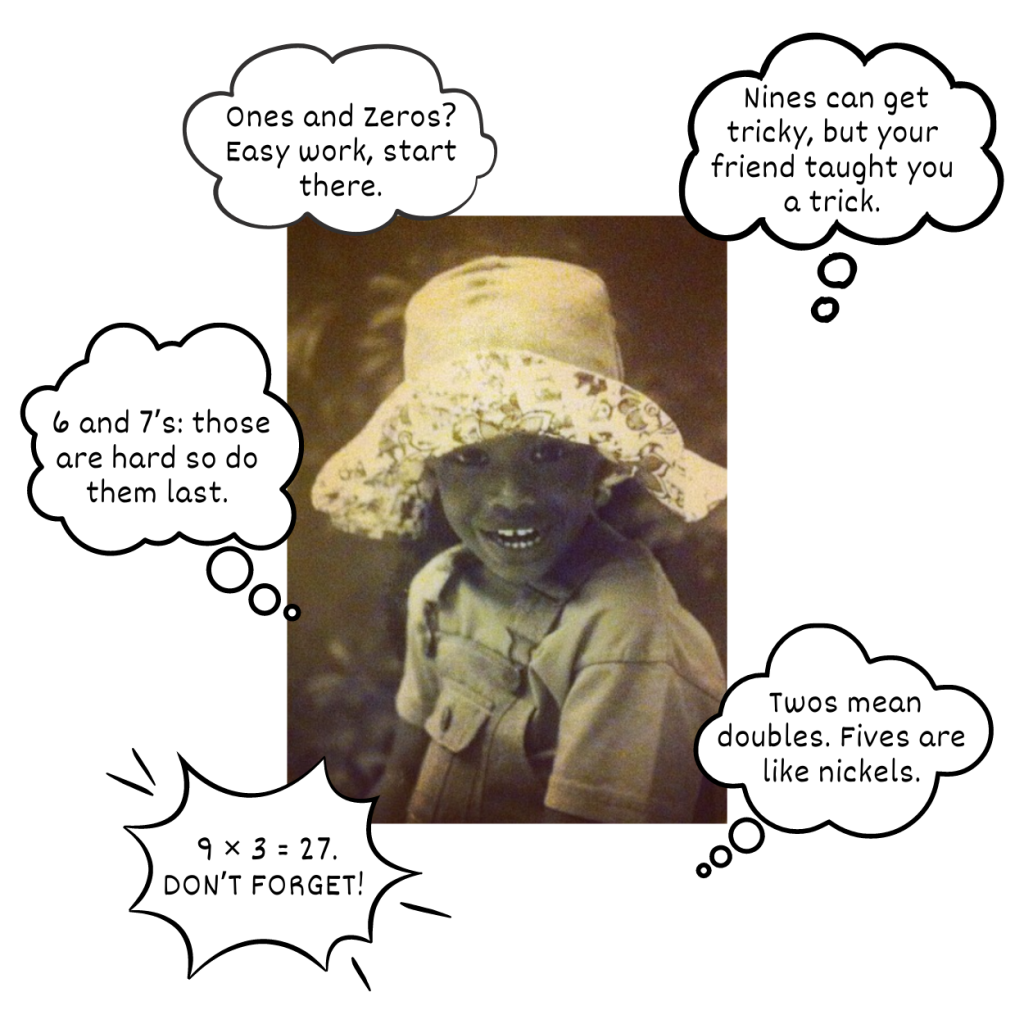
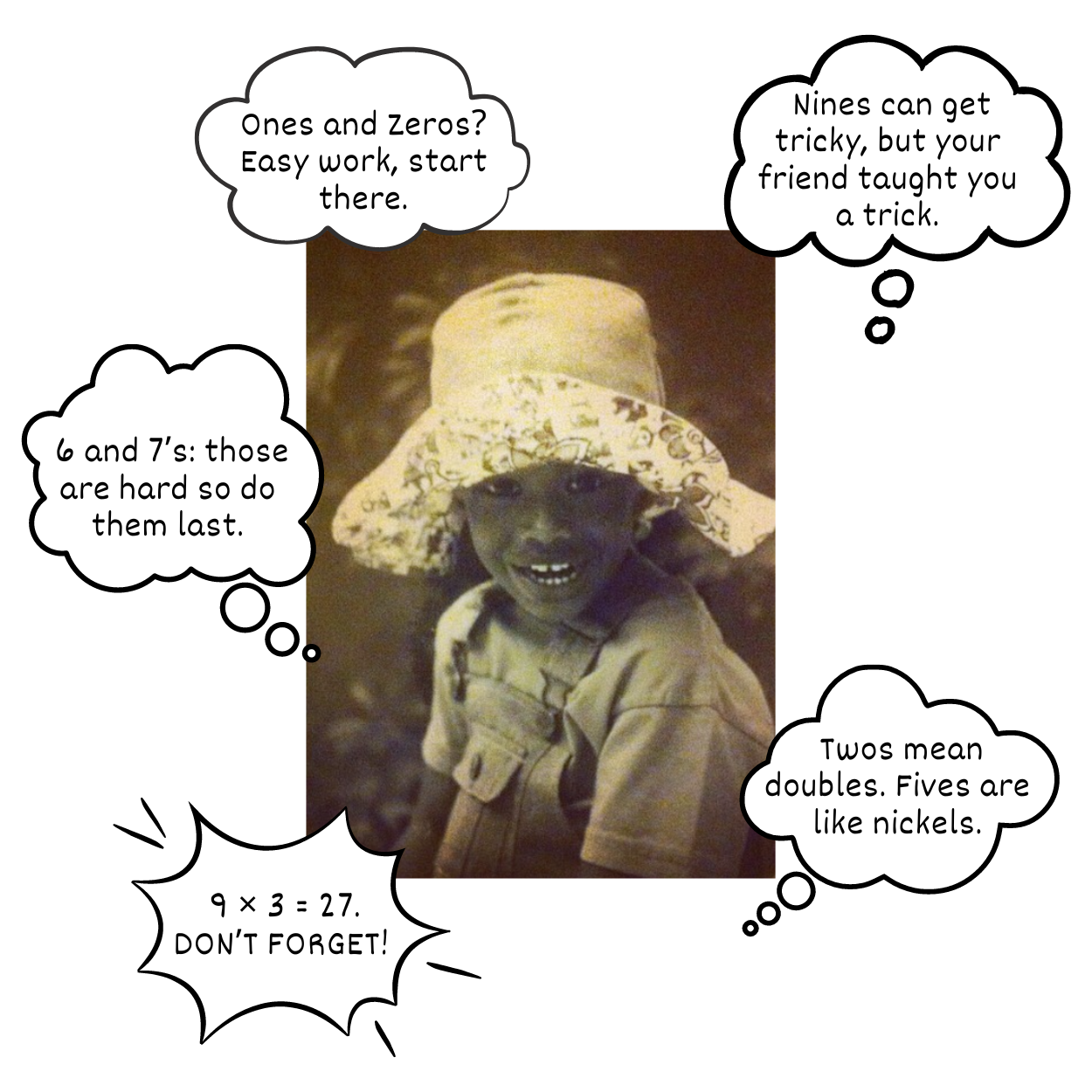
When I was a kid, I was thrilled by timed multiplication tests. You know the ones. Fresh paper flipped with the blank side up, while you recite to yourself…
Then go! You flip your paper and, hardly registering the numbers, answer 60 multiplication problems in 60 seconds (or less) with the speed of Usain Bolt. And when the time is up, you pass the paper to a classmate, hopefully a friend, to grade your paper in purple gel pen and find out whether you are a math genius or…well…hopefully you have other talents.
I loved it. To me, math was speed and accuracy. As I went from carrying the one to the Pythagorean Theory, I learned procedures to solve problems with speed and accuracy, hardly registering the numbers. Until I couldn’t anymore.
Eventually, the concepts became too abstract and the procedures couldn’t carry me to any solution – let alone with accuracy and speed. Eventually, I figured that I reached my limit and stopped. As my identity as a ‘math person’ ended, so did aspirations to work in the sciences and anything STEM related. With one course, my plans for my life changed.
Later in life, math and I were reintroduced, this time as a teacher. And I saw that my journey directly conflicted with what we ask of our students: be lifelong learners, persevere, you can do anything you put your mind to. It was then that a thought occurred to me: we’ve been thinking about math all wrong.
So here’s a reframe. The purpose of math class is not to learn numbers and theorems. That’s a byproduct. Instead, the purpose is to learn how to think, problem solve, and investigate our world. Everyday phenomena – natural or socially constructed – are linked to mathematics. It adds data, color, insights, and questions. How we approach a new or difficult math problem informs how we approach challenges that we encounter in our lives. Sure, learning new strategies is an important part of what educators teach in math. But perhaps more powerful is the idea that you can find and use new strategies in creative ways. That we all think differently. That we can build on each others’ ideas. We can aim to support students as they build up their toolboxes and practice being problem-solvers, innovators, and world builders in a variety of circumstances.
We see this shift with the eight standards for mathematical practice, which describe the “processes and proficiencies” that learners will need to be effective in their math education. Simply applied to finding solutions to problems, our learners likely won’t internalize the power of these practices. However, applied as an approach to problem solving, students become empowered in their learning and move toward liberation. When students ask, “Why do we need to learn this math?” We can respond, “So you can change the world.”
This reframe requires safe learning spaces where our students can make mistakes, try new strategies, and explore their world. It requires projects, games, and exploration. Going into next school year, how can we move away from a focus on speed, accuracy, and learning math as a checkbox for the next level of math? How can we move toward liberation?
If we are truly pursuing justice – now and in the future – then we have to change the way we think about math class.
This Guest Blog was written by Envision Education’s Director of STEM, Kala Stepter. Connect with her on LinkedIn.
Guest Blog
Guest Blog
5 Min read
Guest Blog: Thinking About Math All Wrong by Kala Stepter
When I was a kid, I was thrilled by timed multiplication tests. You know the ones. Fresh paper flipped with the blank side up, while you recite to yourself…
Read More
“My parents wanted to give me the values of education that they were unable to have when they were in school. They wanted us to be proud of who we are because we deserve to be the types of people that our kūpuna were. It is not our fault that our practices were interrupted but it is our kuleana to make sure that it does not happen again.” –Grade 12 HFCS student
“Less learning is shared on tests than Hōʻike which incorporates interviews, online research, and book research. If SAT was the only way to demonstrate my learning that would’ve been a big struggle and I would’ve just studied for the test and afterwards forgot.” –Grade 12 HFCS student
“We use our Hō`ike Capstone Projects to give back to our community….It is important to share the knowledge ʻĀnakala Bo gave to us because like he said, it is useless if no one uses it.” –Grade 8 HFCS student
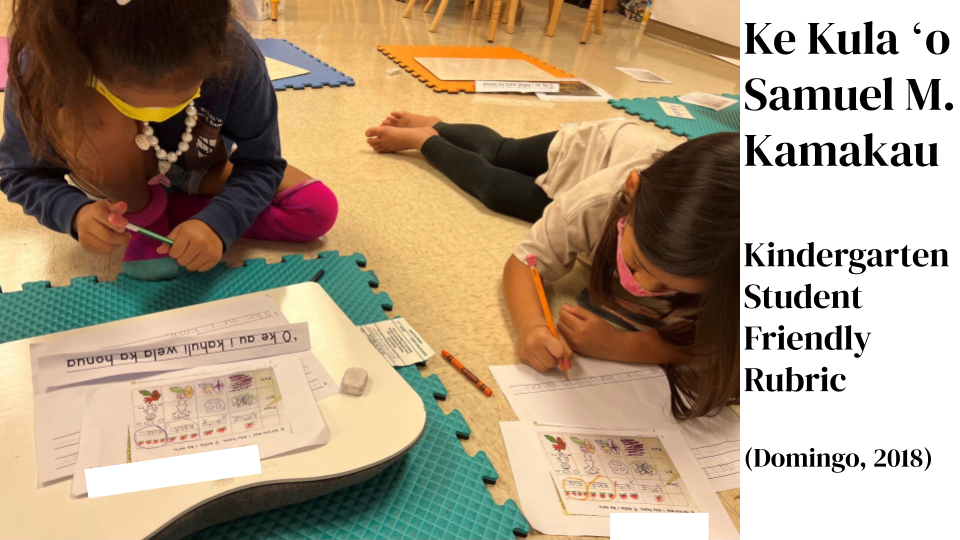
Hawaiian-focused Charter Schools (HFCS) are a consortium of public charter schools that have been designing and implementing culturally sustaining curriculum, instruction, and assessment since the early 2000s. Currently, there are 17 HFCSs, serving over 4,000 students, more than 80 percent of whom are part Native Hawaiian. What distinguishes these schools from regular public schools is that they center ʻĀina-based Education. ʻĀina-based learning experiences allow learners to create authentic, reciprocal relationships with the land, people, and resources of a specific community which fosters the development of ʻOiwi (indigenous) Leadership skills. This becomes an integral part of the learner’s
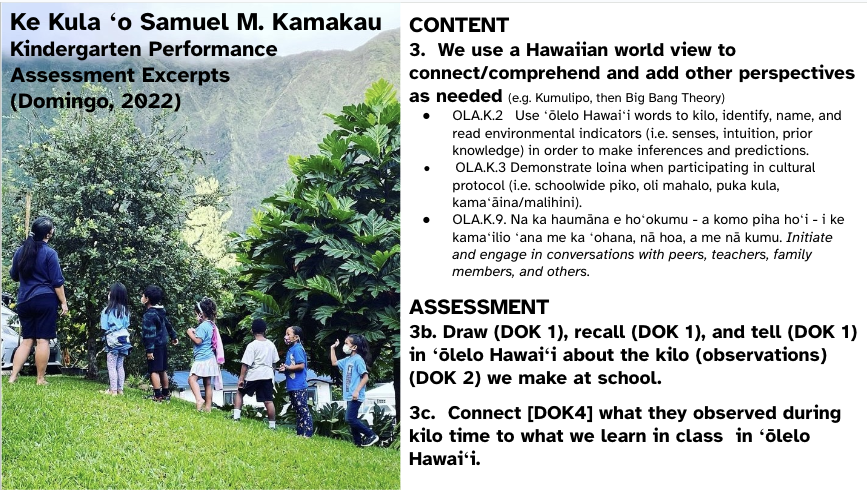
identity and a catalyst for a personal commitment to the health and well-being of that community. It is situated in learning that honors the past, present and future in order to ensure the sustainability and productivity of all forms of life. More specifically, ʻāina-based education embodies the wisdom of the ʻōlelo noʻeau: ‘O ka hā o ka ʻāina, ke ola o ka poʻe (The health of the land is the health of the people).” (Hakipuʻu Academy, Ke Kula ʻo Samuel M. Kamakau, Mālama Honua, 2020)
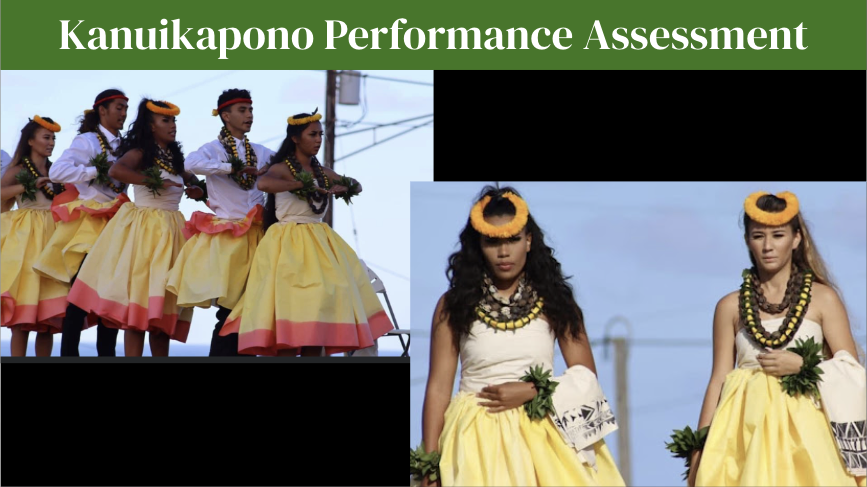
The HFCS have also been engaged in developing and implementing school-specific Culturally Relevant Assessment systems that are grounded in the HFCS Cultural Competency Framework inclusive of cultural artifacts, academic work, and hōʻike (Hawaiian cultural performance assessments).
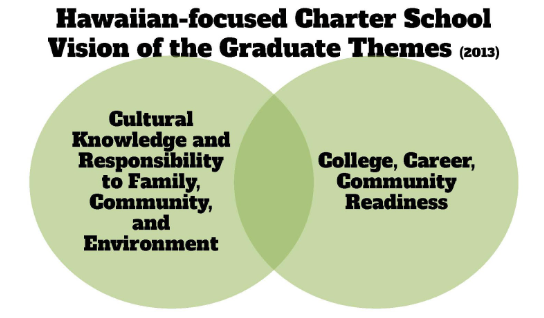
Assessments are also aligned to the commonly adopted HFCS Vision of the Graduate, represented below:
The HFCS have been supported financially by Kamehameha Schools Kaiāulu, the Office of Hawaiian Affairs, and other philanthropic organizations focused on culturally sustaining education, and partners with Hawaiian culture and assessment experts, such as Chelsea Keehne from Kamehameha Schools, a private educational institution. Dr. Keehne and other school leaders such as Dr. Denise Espania, Dr. Meahilahila Kelling, Paul Kepka, Dr. Kanoe Ahuna, and Buffy Cushman-Patz have led and facilitated efforts across the schools to develop their own local authentic assessment systems that align with the HFCS Vision of the Graduate while also honoring and centering each school’s unique graduate learning outcomes. This work began in 2012 through the Culturally Relevant Assessment Project. Its websitedocuments their collective work and includes a number of school examples.
Among the common tools that have been adopted to support CRA in each school are the HFCS Process Rubric; the Kupukupu Framework and Unit/Lesson Plan templates; the HFCS Assessment Profile; the Hōʻike Capstone Project Continuum; the Kupukupu External Review; and an HFCS Assessment Profile Instructional Guide. These resources can be found at the project website.
The quotes below from students illustrate the impacts that implementing the Hō`ike Capstone Projects have had on students and their families.
“The Hō`ike Capstone Project was an achievement not only for my school, but because it had to do with my Hawaiian culture. I learned so much about my culture that I didn’t know before. –Grade 8 HFCS student
“I feel proud… Me nā makakilo a me ku’u na’au pēlā nā kūpuna e ola ai (Singing: With observing eyes and my na’au, that is how kūpuna lived.)” – Kindergarten HFCS student
One performance assessment may not make a profound impact on students, but an accumulation of such assessments across the grades certainly should. This impact should be evident in the senior capstone hōʻike. As a network school educator stated, “Our seniors should be able to think about everything that happened, from kindergarten up to graduation, and be able to use all of their cultural experiences to build their hōʻike.”
To learn more about the HFCS and culturally relevant learning and assessment examples, below are a few video examples:
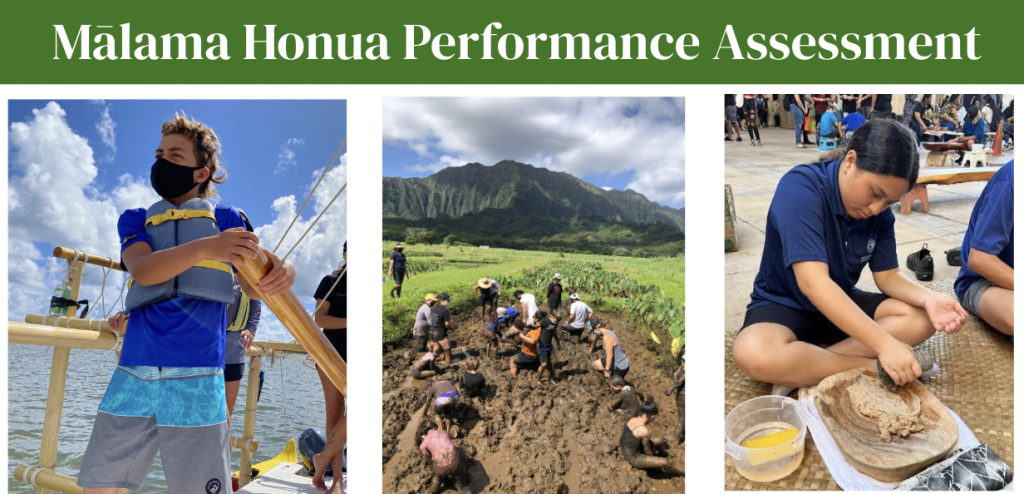
Beginning in 2022-23, Envision Learning Partners was privileged to learn from and collaborate with five Hawaiʻi public charter schools as they documented their school-specific capstone projects. The schools include four HFCS: Kamaile Academy, Ke Kula ʻo Samuel M. Kamakau Hawaiian Language Immersion School, Kanuikapono School, and Mālama Honua School; and one additional public charter school – SEEQS (School for Examining Essential Questions of Sustainability). ELP’s coaching team had previously supported Kamaile Academy, Mālama Honua School, and SEEQS in the mid 2010s by sharing Envision’s portfolio defense model. In this round of collaboration, Justin Wells, ELP’s former Executive Director (now Envision’s Chief Program Officer) provided support and feedback to school leaders as they shared their locally developed capstone assessments in order to more clearly communicate the components of their systems in a form that could be readily understood by an external audience. These final materials were submitted for review for entry into the Performance Assessment Resource Bank (PARB), received feedback from performance assessment experts, and after 1-2 rounds of revision, all were accepted as “Project-Certified” performance assessments to be shared broadly to an international audience. These are the first intentionally designed culturally relevant assessments that the PARB has included and as a result of this collaboration, ELP was able to modify and improve its High Quality Performance Assessment/PARB review instrument to recognize and honor the culturally relevant aspects of performance assessments that are designed to serve and meet the needs of diverse students.
Partner Profile: Hawaiian-focused Charter Schools & Kamehameha Schools
Hawaiian-focused Charter Schools (HFCS) are a consortium of public charter schools that have been designing and implementing culturally sustaining curriculum, instruction, and assessment since the early 2000s.
A family vacation can be about prioritizing presence and connection, relaxing, doing activities and creating fun memories, while also enjoying good food and conversation. However, in some worlds it can also feel like “forced family time,” because being under the same roof or on a joint itinerary can feel like testing the limits of patience and politeness. While both of those options can be true at the same time and were for me earlier this month, it also reminded me that vacations are experiences ripe to practice experience design. Although, when I found myself on “the balcony” watching myself and my family on “the “dance floor” (a metaphor we use at Leadership+Design (L+D) to help leaders reflect on their role or behavior both while doing something and observing yourself do that thing), it felt like we unintentionally missed a design opportunity, which as an attendee of many professional gatherings feels more common than not.
Think about the gatherings you attend each year. If you were to use the mental model that everything is designed, how many of those gatherings were designed well? How do you decide if it was designed well, what metrics would you use? If you had to guess, what and whom were they designed for? What were the outcomes the planners tried to achieve?
This year at gatherings, I felt deep connection and relationship, disconnection and minor loneliness, high expectations and missed opportunities and both joy and awe. As a human-centered designer (who has a disposition for wanting to connect with other people), it’s difficult for me to participate in things and not use the lens described above and have those questions rattling around in my head. Having both been on the planning and attending side of events, I often wonder if we spend enough time mapping out our intentions and “why” the gathering exists, as Priya Parker asked us to do in The Art of Gathering.
There seem to be three main design categories related to the level of human connection in programs or gatherings:
First, there is being together in person, in community, in authenticity, etc. If this is the goal, likely there has been attention paid to helping people be in proximity to one another and build relationships. It’s not always easy or cost effective, but it is a design tool you can use to achieve your outcomes. I will say though that you can have proximity, but not create a feeling of being together.
At Leadership+Design we prioritize this design outcome in our leadership development programs. This summer we convened 32 women (educators and leaders) for a 4 day leadership program, Wonder Women, in Connecticut. In this program, the degree of intended togetherness was designed formally through a learning partner and small group project, in addition to full group sharing. Togetherness also existed informally with morning runs, evening trivia and larger breaks to allow for reflection and networking. Based on feedback, this in-person experience felt moving for attendees, and could not have been created if the program was much bigger or had been held virtually.
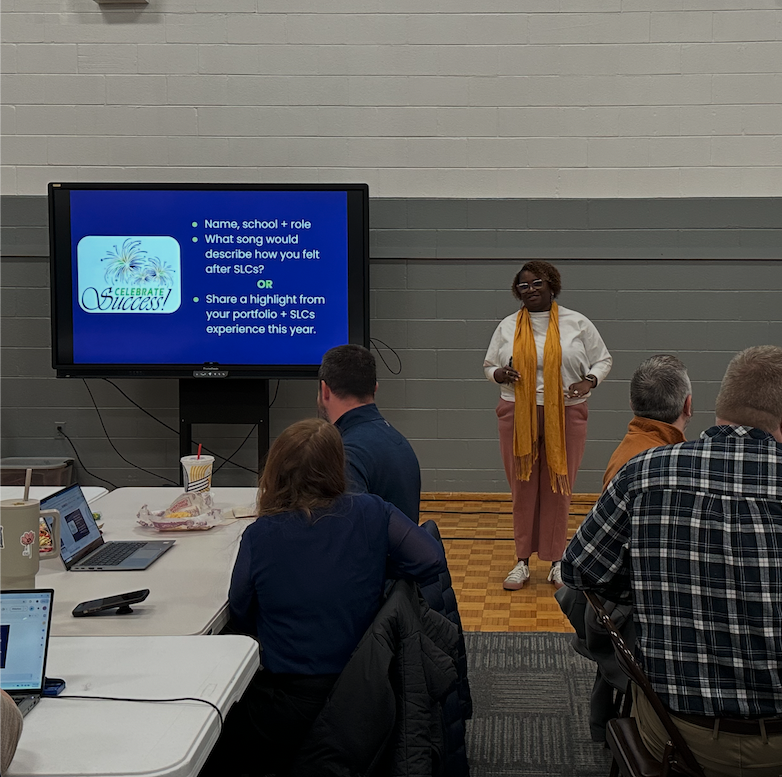
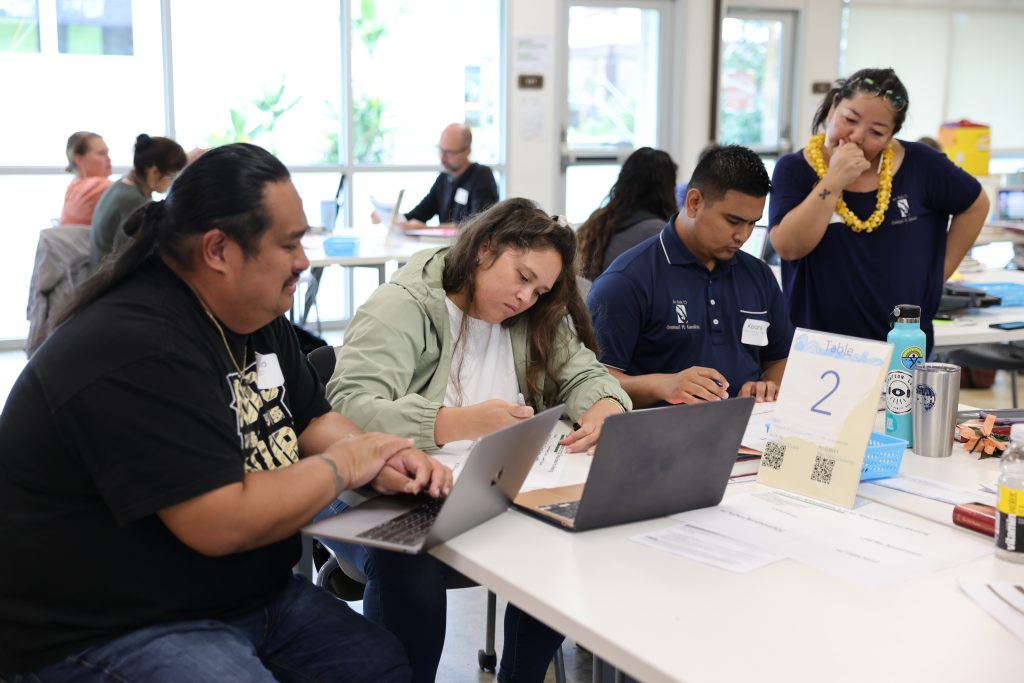
Another example was this year’s Assessment for Learning (AFL) Winter and Spring Convenings, led by the Center for Innovation in Education in partnership with Envision Learning Partners and L+D. These were designed for a smaller audience (under 40 participants), embedded in local communities with a focus on belonging, inclusion, reciprocity and supported provocations to learn newassessment practices. In both events (Aurora, CO and Oakland, CA), conversations led to connections and strengthened a network of progressive educators and leaders asking how we could work together to improve assessment practices. This felt human, vulnerable and connected.
Some of the AFL Design Team in Oakland, CA
Second, there is designing to keep people separate, which is actually not a gathering, but could be a decision when you scope your desired outcomes. This may be a more efficient or cost effective strategy on the surface, but it depends on the type of experience you want to create and are honest about the costs of asking for engagement virtually or for people to work independently.
In the past month, I have had two sets of parents with driver-aged kids tell me that Driver’s Education used to be a right of passage and a coming of age experience that was about friendship and social interaction, as much as it was about driving (this was my personal experience as well). The new model however, is more cost effective and efficient, but it’s at home, alone and virtual. Obviously, there was a design decision there, one that prioritized cost and personal flexibility over the likely unintentional lost human connection that resulted from the old model.
The third option is the combination of being together physically (or virtually in some instances) but feeling or functionally remaining separate (in practice or mindset).
An example of this could be many of our experiences during plane travel. While, passengers share a four inch armrest, you are inarguably “in this together”, but unless one of passengers chooses to engage and open the communication channels, we exist separately.
This spring, I attended a very large conference where I knew only my team and a handful of other people. The event was housed in a large convention center which elicited a feeling of being separate and disconnected even when the conference attempted design decisions aimed at connection (i.e. a lounge space with arcade games and coffee, but was seemingly always empty).
This summer during a family reunion vacation, I looked outside and 12 of the 15 family members ranging in age from 11 to 76 (my kids are too young to have devices) were sitting on the patio in a circle all on their phones not speaking to one another. The group was physically present, but mentally somewhere else.
This year, I have attended well designed experiences that create human connection, a design principle I was looking for. This contributed to my growing awareness of how we conceive and design experiences for humans to gather and whether the true outcome is bringing people together and creating connection, keeping them separate, or bringing them together and still missing the opportunity to help attendees feel belonging, inclusion and connection.
It comes back to the foundational reality in decision making, design matters. I believe that in “our day and age” human connection also matters. If you want human connection, you need to design gatherings with this in mind, including the invitation, the space, the roles, and the schedule so people can find the time to connect. This is true for vacations, conference, book clubs or neighborhood block parties. We need to know who we are designing for, build trust in our communities to ask if we are effective, and realize that while it’s not efficient, sometimes being together and connected will help us as humans and leaders.
What can we do differently?
Below are some ideas on how to build additional human connections through gathering and being together. In addition to my experience at convenings this spring, I have also found some great resources to push my thinking and help my personal “aha” feel more rooted and connected to a larger community of people having a similar “aha” about what will help us as educators, community members, parents, and leaders.
CHALLENGE #1
The other day, I discovered an interview by the New York Times with Robert Putnam, author of numerous books including a favorite of mine, Bowling Alone and most recently The Upswing: How America Came Together a Century Ago and How We Can Do It Again. In the interview he shared how the structures or lack thereof that our culture employs deepen the feelings of loneliness and disconnection. The outcome of this disconnection impacts the level of separation we feel with “the other side” and he asserts that by involvement in community and civic groups we will learn about one another and build trust and connection. Even if we are opposites in our beliefs, if we are together and not separate, our future is more optimistic.
TAKE ACTION #1: Join something. Especially something local, in-person, and one that comes with a possibility of real human connection. And when you are there, be together even if it’s vulnerable. If you can’t find anything to join, start something and invite others. Be human together and give yourself permission to share your goals for what brought you there. If you are seeking togetherness, remind yourself of Robbie Novak and Brad Montague’s provocation in Kid President’s Guide to Being Awesome“put down your phone” and connect. That is unless you are getting someone’s digits or making a plan for your next meet-up.
CHALLENGE #2
Putnam also references the level of politically-induced division and how it’s creating a lot of feelings on all sides. Decisions are made about who people are by what we think we know about them. In an effort to personally challenge my own mental models, leveraging tools and processes help.
Organizations like Starts With Us, which describes itself as “a movement to empower millions of Americans just like you — tired of our culture of contempt and energized to foster critical thinking and constructive communication across our lines of difference” can be great resources to locate and practice tools that help us build empathy, and as Putnam suggests, have conversations that build trust and human connection.
Leadership+Design, has taken on a similar cause by developing a human-centered curricular resource, Design For Election Season, to help school communities (both students and adults) practice the skills of being curious and developing empathy and understanding for someone who has a different lived experience or set of beliefs. The “container” for learning is political in nature (not partisan), but it’s rooted in the belief that as humans we need to spend time learning from and listening to one another. The resource shares tools and protocols to help structure that learning.
TAKE ACTION #2: Think about your own echo chambers and be honest about the biases you have about people and their beliefs. Take time to challenge those assumptions and practice critical curiosity. Lean on tools and protocols like those above to be comfortable being uncomfortable.
CHALLENGE #3
On recent drives with my 8 year old son, we listen to the book The Anxious Generation: How the Great Rewiring of Childhood Is Causing an Epidemic of Mental Illness by Jonathan Haidt. The book focuses on the mental and physical health implications of technology use, specifically on young people. As I reflect on my own feelings about togetherness and separateness, and my time on the patio with my family, it relates to what we are willing to do about the changes we want.
A colleague at Leadership+Design reminded me that while I can only control myself (related to technology use), I can initiate a conversation about how I feel at that moment, share my reaction to being together, but separate. I could share my goals for our time together and enter into a conversion about what brought us all to the gathering. This is something in my control.
TAKE ACTION #3: Design with intention and communicate the intentions you have for an experience to those who are invited. If you want others to help you design, align your design principles towards the experience you want to have. If you are either someone who attends gatherings or plans them, you still have an opportunity to have an opinion. Think about what feels better, together or separate or together and still separate, and be part of the solution to improve the gatherings.
All of this to say, let’s do better.Assessment for Learning convening was a relatively small group of education leaders who prioritized designing for connection, but that was a choice we made. In contrast, it felt like my family vacation took a “wait and see” approach. We can also make choices starting with the patio conversations, the armrest airplane engagement and the commitment to looking across “the aisle” to build relationships and trust. We can continue to be told by the media, the Surgeon General, and Putman how bad things are when we don’t have a strong social fabric to care about and not fear one another. However, they and many others continue to remind us, it’s up to us whether we plan our lives, relationships, gatherings and organizations to simply happen or whether we design them to be catalysts for change and improved connection.
Guest Blog
Guest Blog
5 Min read
Guest Blog: Designing for Human Connection
A family vacation can be about prioritizing presence and connection, relaxing, doing activities and creating fun memories, while also enjoying good food and conversation.
Read More
ELP is excited to announce that we have published five new performance task resources in the Performance Assessment Resource Bank (PARB), an online resource that ELP has stewarded since 2018.
The five new resources are capstone portfolios, projects, and/or portfolio defenses from a consortium of schools in Hawai’i – the Hawaiian Focused Charter Schools (HCFS), which has been developing and implementing culturally sustaining curriculum, instruction, and assessment strategies to cultivate and preserve the language and culture of native Hawaiians. As part of its Culturally Relevant Assessment project, four HFCS schools and an additional charter school submitted capstone projects, ranging from Kindergarten through 12th grade capstones, for review and feedback from ELP during the 2022-23 academic year. Included among these five capstone projects is a Hawaiian-language kindergarten capstone project, the first non-English project to be included in the PARB. The revised projects were then submitted for a formal review process by performance assessment experts for inclusion in the Performance Assessment Resource Bank (PARB), using a hybrid review instrument, “ELP High Quality Performance Assessment Criteria + PARB/ILN Quality Criteria for Performance Assessments,” that combines ELP’s HQPA criteria and the PARB/ILN Quality Criteria developed by SCALE to vet submissions for the PARB.The instrument was adapted to include ʻāina (land)-based learning outcomes. All five of the submitted projects from the HFCS schools met project certification criteria after one or two cycles of review and feedback. ELP benefited from the experience of reviewing these submissions to deepen our understanding of culturally sustaining performance assessment and broadening our practice to be more inclusive of the diverse learners that our nation’s schools serve. This project was completed with the funding and support of the Kamehameha Schools, a private educational institution in Hawaiʻi that aims to improve the capability and well-being of Native Hawaiians through education.
Resource Corner: PARB + Hawaiian Focused Charter Schools
ELP is excited to announce that we have published five new performance task resources in the Performance Assessment Resource Bank (PARB), an online resource that ELP has stewarded since 2018.
Read More
This workshop will dive deeply into the characteristics of High-Quality Performance Assessment. We know that one area where schools can improve students’ experiences is engaging them in rigorous, authentic assessments that provide students opportunities to lead their own learning experiences. Through performance assessments, students learn how to reflect, revise, and communicate in ways that strengthen teachers’ learning outcomes. Performance assessments also re-engage teachers in the craft of teaching, activating their own creativity and love of learning.
Participants will learn the characteristics of High-Quality Performance Assessments (HQPA). They will observe students engaged in a defense of learning and reflect on how the practice demonstrates the qualities of HQPA. We will also discuss examples of performance assessments and consider what teachers and leaders can do on Monday morning to move towards implementing performance assessments across schools and systems. Participants will leave the session understanding what is required to create outstanding performance assessments and excited to either start building new assessments or revising current assessments.
Envision Education has long been proud that we not only serve students directly through our Bay Area schools but also commit to serving public school students everywhere through our consulting division, Envision Learning Partners. Our understanding of our past and potential future is even clearer now, thanks to A Pragmatic Playbook for Impact: Direct, Widespread, and Systemic, which offers an illuminating framework for analyzing how mission-driven ed organizations work to spread the change they seek.
To help illustrate the framework, Bellwether Education Partners, in partnership with New Profit, conducted a case study on Envision Education, based on a series of interviews with longtime Envision teacher and now ELP leader, Justin Wells. For us at Envision, the case study was a chance not only to reflect but also to learn. We came out of the experience with a better sense of who we are and where we are headed as an organization, and we are grateful to Bellwether and New Profit for the opportunity.
Resource Corner: Bellwether Education Partners, a Pragmatic Playbook for Impact
Envision Education has long been proud that we not only serve students directly through our Bay Area schools but also commit to serving public school students everywhere through our consulting division, Envision Learning Partners.
Read More
ELP was honored to partner with so many other incredible organizations to develop this resource.
Created in collaboration with leaders in K-12 student-centered learning from across the country, these recommendations support a learner-centered accountability system that would:
Create to conditions that honor local context while ensure the quality of every learner’s educational experience
Utilize holistic indicators that include school inputs and a range of student outcomes
Place emphasis on mastery of academic knowledge and assessment of essential skills
Focus on growth, not grades
Use data to calibrate for progress and pace
Resources
General
Resources
5 Min read
Resource Corner: Beyond the Horizon: Blazing a Trail Toward Learner-Centered School Quality Systems
ELP was honored to partner with so many other incredible organizations to develop this resource.
Read More
Realizing the full potential of student-centered learning requires transformation of traditional approaches to assessment and accountability. To truly move to student-centered learning at scale, education systems must be redesigned.
Resource Corner: Clearing the Path for Assessment Innovation
Realizing the full potential of student-centered learning requires transformation of traditional approaches to assessment and accountability. To truly move to student-centered learning at scale, education systems must be redesigned.
Read More
We recently read an article by NGLC’s dynamite Knowledge Officer, Kristen Vogt. The piece shares an observation that many of us have seen in the field: graduate profiles are often discussed as something meant for high school students, with little clear connection to elementary and middle schools. Kristen shares examples of schools across the country aligning instruction across K-12 to graduate profiles, including elementary and middle schools (you will be particularly impressed by Megan Margerum in North Dakota). We love the recognition that portraits of a graduate are, among other things, a journey map, and these journeys are most successful when they are seen not just as standalone endings, but part of a student’s experience in elementary and middle school as well.
Interested in launching or revising your Graduate Profile? We can help.
Resources
General
Resources
5 Min read
Resource Corner: Developing Portrait of a Graduate Skills from Elementary School to High School Graduation (and Beyond)
We recently read an article by NGLC’s dynamite Knowledge Officer, Kristen Vogt. The piece shares an observation that many of us have seen in the field: graduate profiles are often discussed as something meant for high school students, with little clear connection to elementary and middle schools. Kristen shares examples of schools across the country aligning instruction across K-12 to graduate profiles, including elementary and middle schools (you will be particularly impressed by Megan Margerum in North Dakota). We love the recognition that portraits of a graduate are, among other things, a journey map, and these journeys are most successful when they are seen not just as standalone endings, but part of a student’s experience in elementary and middle school as well.
Read More
Is your Grad Profile made up of complex cognitive skills, not values? That’s one of the 10+ questions we ask with our Graduate Profile Quality Criteria Check Tool. We have been delighted to see the surge in Graduate Profiles developed by school systems across the USA over the past year but have noticed the need for an important next step: check whether your new grad profile meets these important quality criteria that we’ve developed over the past decade working with hundreds of schools.
Click the resource button to download the PDF.
Newsletters
Resources
Newsletters
5 Min read
Resource Corner: Grad Profile Quality Criteria Check
Is your Grad Profile made up of complex cognitive skills, not values? That’s one of the 10+ questions we ask with our Graduate Profile Quality Criteria Check
Read More
This resource was developed for math teachers looking for a pathway into developing Student language (disciplinary language, English language, and academic language).It serves as an invitation to be intentionally experimental with three processes that students experience often in school, but not as often in math class: students revising their work and their thinking; students interpreting the writing of other students; and students interacting with each other.
Click the resource button to download and explore this resource tool!
Resources
Resources
5 Min read
Resource Corner: Growing Student Language in Math Class
This resource was developed for math teachers looking for a pathway into developing Student language (disciplinary language, English language, and academic
Read More
This resource is one that ELP has adapted from the School Reform Initiative Colorado Center of Activity and has been previously used in a Deeper Learning Leadership Forum (DLLF) session.
Holding a Kiva Panel allows a larger group of listeners to highlight and learn from the voices of the selected panelists and can be adjusted for the virtual world.
This resource is one that ELP has adapted from the School Reform Initiative Colorado Center of Activity and has been previously used in a Deeper Learning
Read More
Click the resource button to download the PDF.
General
General
5 Min read
Resource Corner: HQPA Framework
Click the image below to download the PDF.
Read More
These three observation tools are intended to support ‘minimal-prep’ lesson observation in classrooms where student ideas, language, and interaction are at the center of the learning process. They were specifically designed for mathematics classrooms, but may also be useful in other contexts.
The two Lesson Observation Tools are meant as note catchers and as a manageable list of student and teacher actions to look for. In using these tools, it is important to agree with the teacher on the focus of the observation, for example: Use of instructional routines to surface and develop student ideas and language.
The Language-Rich Classrooms: Observation & Planning Tool is meant for a coach and teacher, or teacher peers, to use together for linking an observation with a conversation about planning next steps. It, too, has a list of example student and teacher actions to look for.
Click the resource button to download the editable PDFs.
Looking for even more resources? Visit the ELP blog for all past newsletter content.
Resources
Resources
5 Min read
Resource Corner: Lesson Observation Tools
These three observation tools are intended to support 'minimal-prep' lesson observation in classrooms where student ideas, language, and interaction are at
Read More
Can we develop valid, instructionally useful, educative, and equitable ways to measure social-emotional learning?
ELP’s Director of Research and Innovation, Ruth Chung Wei, had the opportunity to direct a research study with a team at the Stanford Center for Assessment, Learning, & Equity (SCALE) and ELP called “Measures of Social-Emotional Learning.” The Executive Summary of this three-year project provides an overview of the findings and can be downloaded by clicking on the image below.
Learn more about Ruth in her “I am ELP” highlight, by clicking here.
Resources
5 Min read
Resource Corner: Measures of SEL
ELP’s Director of Research and Innovation, Ruth Chung Wei, had the opportunity to direct a research study with a team at the Stanford Center for Assessment,
Read More
This resource comes from the 2022 Deeper Learning Conference and is a conversation about modernizing mathematics: perspectives from the classroom and beyond. This panel discussion explores the topic of mathematics teaching and learning in the current age and for the future. ELP Director of STEM Learning, Vinci Daro, is one of the four amazing panelists.
Resources
Resources
5 Min read
Resource Corner: Modernizing Mathematics
This panel discussion explores the topic of mathematics teaching and learning in the current age and for the future.
Read More
We know that we want students engaging deeply with rigorous content, but knowing what to look for in a classroom where students are struggling productively with rigorous mathematics content is a challenge among many of our partners.
Click the resource button to download!
Take a look at the Productive Struggle Observation Tool our STEM team has developed for observers to use to look for and capture relevant student and teacher actions in math classrooms. Clare Green, principal at Envision Education’s Hayward high school, Impact Academy says this about the tool: “The productive struggle rubric helps to drive a conversation about what high-quality, student-centered instruction looks like. This conversation now happens not only between coaches, teachers, and administrators but also with students.”
Let us know what you think – is the observation tool something that might be useful in your context? What do you look for in classrooms when you want to know if students are struggling productively with meaningful material?
Newsletters
Newsletters
5 Min read
Resource Corner – Observation Tool
We know that we want students engaging deeply with rigorous content, but knowing what to look for in a classroom where students are struggling productively
Read More
ELP is excited to announce that we have published five new performance task resources in the Performance Assessment Resource Bank (PARB), an online resource that ELP has stewarded since 2018.
The five new resources are capstone portfolios, projects, and/or portfolio defenses from a consortium of schools in Hawai’i – the Hawaiian Focused Charter Schools (HCFS), which has been developing and implementing culturally sustaining curriculum, instruction, and assessment strategies to cultivate and preserve the language and culture of native Hawaiians. As part of its Culturally Relevant Assessment project, four HFCS schools and an additional charter school submitted capstone projects, ranging from Kindergarten through 12th grade capstones, for review and feedback from ELP during the 2022-23 academic year. Included among these five capstone projects is a Hawaiian-language kindergarten capstone project, the first non-English project to be included in the PARB. The revised projects were then submitted for a formal review process by performance assessment experts for inclusion in the Performance Assessment Resource Bank (PARB), using a hybrid review instrument, “ELP High Quality Performance Assessment Criteria + PARB/ILN Quality Criteria for Performance Assessments,” that combines ELP’s HQPA criteria and the PARB/ILN Quality Criteria developed by SCALE to vet submissions for the PARB.The instrument was adapted to include ʻāina (land)-based learning outcomes. All five of the submitted projects from the HFCS schools met project certification criteria after one or two cycles of review and feedback. ELP benefited from the experience of reviewing these submissions to deepen our understanding of culturally sustaining performance assessment and broadening our practice to be more inclusive of the diverse learners that our nation’s schools serve. This project was completed with the funding and support of the Kamehameha Schools, a private educational institution in Hawaiʻi that aims to improve the capability and well-being of Native Hawaiians through education.
Resource Corner: PARB + Hawaiian Focused Charter Schools
ELP is excited to announce that we have published five new performance task resources in the Performance Assessment Resource Bank (PARB), an online resource that ELP has stewarded since 2018.
Read More
The Reimagining College Access initiative recently released a guidance document, authored by Aneesha Badrinarayan, aimed at colleges interested in integrating performance assessments into their college admission systems: Performance Assessment in College Admission: Designing an Effective and Equitable Process.
Although the tool is designed for admission officers, it can also be used by K–12 educators to gain a better understanding of the considerations that colleges must take into account in the use of performance assessments in admissions. The tool defines performance assessment and then provides concrete guidance on how admission officers can incorporate information about students’ K–12 performance assessments into their application and review processes.
Resource Corner: Performance Assessment in College Admission: Designing an Effective and Equitable Process
The Reimagining College Access initiative recently released a guidance document, authored by Aneesha Badrinarayan, aimed at colleges interested in integrating performance assessments into their college admission systems: Performance Assessment in College Admission: Designing an Effective and Equitable Process.
Read More
When we meet with a potential school partner, we are often asked: What does the process of evolving into a school with a High-Quality Performance Assessment System (HQPAS) look like? We have worked with thousands of educators serving hundreds of thousands of learners since our inception in 2010 and have developed a Theory of Action that consistently drives the transformation to a HQPAS:
Click the resource button to download!
Start by developing a graduate profile with your stakeholders,
design performance assessments that measure that graduate profile, and finally,
implement pedagogies and school structures that lead to student success on the performance assessments.
These three phases, done in that order, lead to a successful implementation of a High-Quality Performance Assessment System. A second common question we hear is focused on implementation steps and timeline. As you can imagine, each partner takes a unique path on its implementation journey, but over the years, we have seen some common elements. This month, we share a simplified project template to give you a better idea of potential steps involved. Enjoy reading and don’t hesitate to reach out with any questions.
Newsletters
Newsletters
5 Min read
Resource Corner – Project Template
When we meet with a potential school partner, we are often asked: What does the process of evolving into a school with a High-Quality Performance Assessment
Read More
Envision Education is excited to share the culmination of its two-year research project, Pursuing Equity for Black & Latine Students with Learning Differences, which
documents and illustrates the systems, practices, cultures, and supports that are associated with the well being and success of Black and Latine students with learning differences – students with disabilities and multilingual students with disabilities.
In 2023, Envision Learning Partners (ELP) and Social Policy Research Associates (SPR) embarked on a research study to identify and learn from schools that demonstrated positive outcomes for Black and Latine students with learning differences (including students with disabilities and multilingual learners). After a review of data from secondary schools across the country, the study team identified two schools for a more in-depth study, which was conducted during the 2023–2024 school year.
The results of the research are shared through case studies of the two schools that were the focus of the research: 1) Crosstown High: Building a Culture of Inclusion; 2) Capital City: An Inclusive School Community Committed to Whole-Child Learning and Well Being; and 3) An Executive Summary/Synthesis of Findings.
In addition, we have authored four practice briefs based on the findings of the research that provide practical steps that schools can take to create more inclusive environments that support the success of Black and Latine students with learning differences.
Co-teaching: A Means to Creating Inclusive and Equitable General Education Classrooms
UDL: Universal Design for Learning in a Culturally Responsive Context
Culturally Responsive Practices: An Inclusive, Culturally Responsive School Culture That Fosters Relationships
Competency-Based Learning and Assessment: Assessment and Grading Practices That Support an Inclusive Learning Culture
This research was made possible through the generous support of New Profit, a venture philanthropic organization, and the Oak Foundation.
General
Announcements
Newsletters
Resources
General
5 Min read
Resource Corner: Pursuing Equity for Black and Latine Students with Learning Differences Case Studies & Practice Briefs
Envision Education is excited to share the culmination of its two-year research project, Pursuing Equity for Black & Latine Students with Learning Differences, which documents and illustrates the systems, practices, cultures, and supports that are associated with the well being and success of Black and Latine students with learning differences – students with disabilities and multilingual students with disabilities.
Read More
Earlier this year, Learning Policy Institute (LPI) released this resource that outlines 10 features from effectively redesigned high schools and highlights examples of schools that are putting the features into practice to create powerful learning opportunities for youth.
ELP was honored to be listed under the Additional Resources. If you are interested in a redesign or have any questions, contact the ELP team to schedule your free consultation.
Resource Corner: Redesigning High Schools: 10 Features for Success
Earlier this year, Learning Policy Institute (LPI) released this resource that outlines 10 features from effectively redesigned high schools and highlights examples of schools that are putting the features into practice to create powerful learning opportunities for youth.
Read More
9 Tips for Writing Effective Rubrics – Adapted from the important thinking of our partners at SCALE, this tool attempts to capture the quality criteria of solid rubric design. The tool is helping our partner schools all over the country to develop performance indicators that serve to define proficiency for their Graduate Profile skills. Take a look and share with us any quality criteria you’ve found effective!
9 Tips for Writing Effective Rubrics - Adapted from the important thinking of our partners at SCALE, this tool attempts to capture the quality criteria of
Read More
Resource Corner: Scaling Student Success Briefs & Policy White Paper
For educators and educational leaders seeking to bring your Graduate Profile to life, Scaling Student Success has released a series of Practice and Policy Briefs to support this journey! The Briefs tell the story of five different districts across California that are successfully integrating their Graduate Profiles (or Learner Portraits) into their curriculum, culture, and classrooms, and seeing a positive impact on student success. They’re a valuable learning resource for any school interested in redefining student success! Learn more and access the briefs here.
Scaling Student Success also recently authored a white paper focused on statewide policy recommendations that support many of the transformation systems we want to see in schools (graduate profiles, authentic assessments, etc.). ELP has offered to be listed as one of the organizations to officially “sign on” to the paper. Click here to read: A Student-Centered Approach to Education.
Resources
Resources
5 Min read
Resource Corner: Scaling Student Success
For educators and educational leaders seeking to bring your Graduate Profile to life, Scaling Student Success has released a series of Practice and Policy Briefs to support this journey! The Briefs tell the story of five different districts across California that are successfully integrating their Graduate Profiles (or Learner Portraits) into their curriculum, culture, and classrooms, and seeing a positive impact on student success. They’re a valuable learning resource for any school interested in redefining student success! Learn more and access the briefs here.
Read More
Resource Corner: Student Innovation Edition
Earlier this spring, Assessment Design Partners Roilyn Graves and Soraya Ramos spent time in Roanoke County Public Schools in Virginia, collaborating with district and school leaders to refine and pilot a culminating performance assessment system aligned to the district’s Opportunity-Ready Skills.
During their visit, they had the opportunity to tour Glenvar High School—and were inspired by an incredible student-led initiative: the G-Bees. This club involves students in every aspect of beekeeping, from hive maintenance to harvesting honey, and even crafting a range of products like lip balm, soap, candles, hot honey, and more.
Through this hands-on work, students are not only gaining valuable entrepreneurial experience, but also raising funds for outdoor education and scholarships. It’s a powerful example of student-centered, purpose-driven learning at its best.
The G-Bees program is truly performance assessment in action—students applying their knowledge and skills in meaningful, real-world ways. While online sales aren’t available, we’re excited to share their story as a model of what authentic, engaged learning can look like.
Assessment Design Partners, Soraya Ramos and Roilyn Graves.
General
Newsletters
Resources
General
5 Min read
Resource Corner: Student Innovation Edition
Earlier this spring, Assessment Design Partners Roilyn Graves and Soraya Ramos spent time in Roanoke County Public Schools in Virginia, collaborating with district and school leaders to refine and pilot a culminating performance assessment system aligned to the district’s Opportunity-Ready Skills.
Read More
This month, watch ELP STEM assessment specialist, Jim Malamut, share his ideas on Proximity of Evidence to student thinking.
Looking for more resources? Visit the ELP blog pagefor all past newsletter content.
Newsletters
Newsletters
5 Min read
Resource Corner: The Proximity of Evidence to Student Thinking
This month, watch ELP STEM assessment specialist, Jim Malamut, share his ideas on Proximity of Evidence to student thinking.