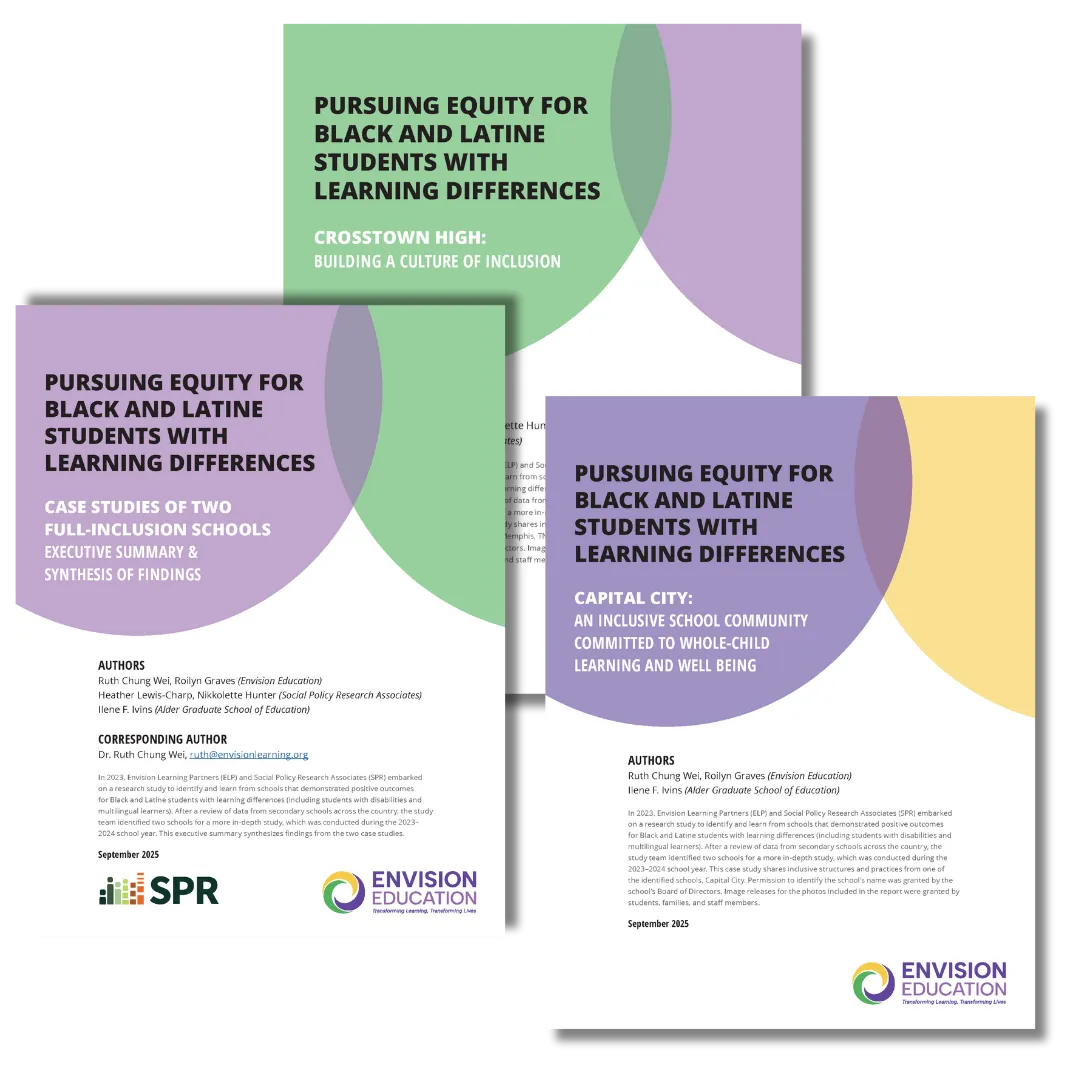
We're excited to share the culmination of a two-year research project, Pursuing Equity for Black & Latine Students with Learning Differences, which documents and illustrates the systems, practices, cultures, and supports that are associated with the well being and success of Black and Latine students with learning differences – students with disabilities and multilingual students with disabilities.
Envision Education is excited to share the culmination of its two-year research project, Pursuing Equity for Black & Latine Students with Learning Differences, which
documents and illustrates the systems, practices, cultures, and supports that are associated with the well being and success of Black and Latine students with learning differences – students with disabilities and multilingual students with disabilities.
In 2023, Envision Learning Partners (ELP) and Social Policy Research Associates (SPR) embarked on a research study to identify and learn from schools that demonstrated positive outcomes for Black and Latine students with learning differences (including students with disabilities and multilingual learners). After a review of data from secondary schools across the country, the study team identified two schools for a more in-depth study, which was conducted during the 2023–2024 school year.
The results of the research are shared through case studies of the two schools that were the focus of the research: 1) Crosstown High: Building a Culture of Inclusion; 2) Capital City: An Inclusive School Community Committed to Whole-Child Learning and Well Being; and 3) An Executive Summary/Synthesis of Findings.
In addition, we have authored four practice briefs based on the findings of the research that provide practical steps that schools can take to create more inclusive environments that support the success of Black and Latine students with learning differences.
Co-teaching: A Means to Creating Inclusive and Equitable General Education Classrooms
UDL: Universal Design for Learning in a Culturally Responsive Context
Culturally Responsive Practices: An Inclusive, Culturally Responsive School Culture That Fosters Relationships
Competency-Based Learning and Assessment: Assessment and Grading Practices That Support an Inclusive Learning Culture
This research was made possible through the generous support of New Profit, a venture philanthropic organization, and the Oak Foundation.
General
5 min read
Resource Corner: Pursuing Equity for Black and Latine Students with Learning Differences Case Studies & Practice Briefs
Envision Education is excited to share the culmination of its two-year research project, Pursuing Equity for Black & Latine Students with Learning Differences, which documents and illustrates the systems, practices, cultures, and supports that are associated with the well being and success of Black and Latine students with learning differences – students with disabilities and multilingual students with disabilities.
Oops! Something went wrong while submitting the form.
Thank you! Your submission has been received!
Oops! Something went wrong while submitting the form.
Envision Education has long been proud that we not only serve students directly through our Bay Area schools but also commit to serving public school students everywhere through our consulting division, Envision Learning Partners. Our understanding of our past and potential future is even clearer now, thanks to A Pragmatic Playbook for Impact: Direct, Widespread, and Systemic, which offers an illuminating framework for analyzing how mission-driven ed organizations work to spread the change they seek.
To help illustrate the framework, Bellwether Education Partners, in partnership with New Profit, conducted a case study on Envision Education, based on a series of interviews with longtime Envision teacher and now ELP leader, Justin Wells. For us at Envision, the case study was a chance not only to reflect but also to learn. We came out of the experience with a better sense of who we are and where we are headed as an organization, and we are grateful to Bellwether and New Profit for the opportunity.
Resource Corner: Bellwether Education Partners, a Pragmatic Playbook for Impact
Envision Education has long been proud that we not only serve students directly through our Bay Area schools but also commit to serving public school students everywhere through our consulting division, Envision Learning Partners.
Read More
ELP was honored to partner with so many other incredible organizations to develop this resource.
Created in collaboration with leaders in K-12 student-centered learning from across the country, these recommendations support a learner-centered accountability system that would:
Create to conditions that honor local context while ensure the quality of every learner’s educational experience
Utilize holistic indicators that include school inputs and a range of student outcomes
Place emphasis on mastery of academic knowledge and assessment of essential skills
Focus on growth, not grades
Use data to calibrate for progress and pace
Resources
General
Resources
5 Min read
Resource Corner: Beyond the Horizon: Blazing a Trail Toward Learner-Centered School Quality Systems
ELP was honored to partner with so many other incredible organizations to develop this resource.
Read More
Realizing the full potential of student-centered learning requires transformation of traditional approaches to assessment and accountability. To truly move to student-centered learning at scale, education systems must be redesigned.
Resource Corner: Clearing the Path for Assessment Innovation
Realizing the full potential of student-centered learning requires transformation of traditional approaches to assessment and accountability. To truly move to student-centered learning at scale, education systems must be redesigned.
Read More
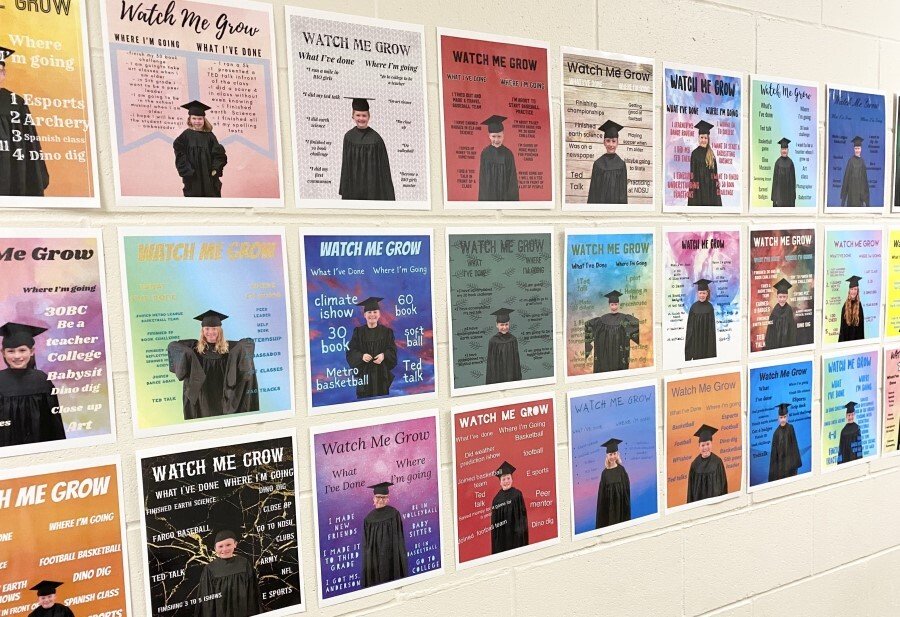
We recently read an article by NGLC’s dynamite Knowledge Officer, Kristen Vogt. The piece shares an observation that many of us have seen in the field: graduate profiles are often discussed as something meant for high school students, with little clear connection to elementary and middle schools. Kristen shares examples of schools across the country aligning instruction across K-12 to graduate profiles, including elementary and middle schools (you will be particularly impressed by Megan Margerum in North Dakota). We love the recognition that portraits of a graduate are, among other things, a journey map, and these journeys are most successful when they are seen not just as standalone endings, but part of a student’s experience in elementary and middle school as well.
Interested in launching or revising your Graduate Profile? We can help.
Resources
General
Resources
5 Min read
Resource Corner: Developing Portrait of a Graduate Skills from Elementary School to High School Graduation (and Beyond)
We recently read an article by NGLC’s dynamite Knowledge Officer, Kristen Vogt. The piece shares an observation that many of us have seen in the field: graduate profiles are often discussed as something meant for high school students, with little clear connection to elementary and middle schools. Kristen shares examples of schools across the country aligning instruction across K-12 to graduate profiles, including elementary and middle schools (you will be particularly impressed by Megan Margerum in North Dakota). We love the recognition that portraits of a graduate are, among other things, a journey map, and these journeys are most successful when they are seen not just as standalone endings, but part of a student’s experience in elementary and middle school as well.
Read More
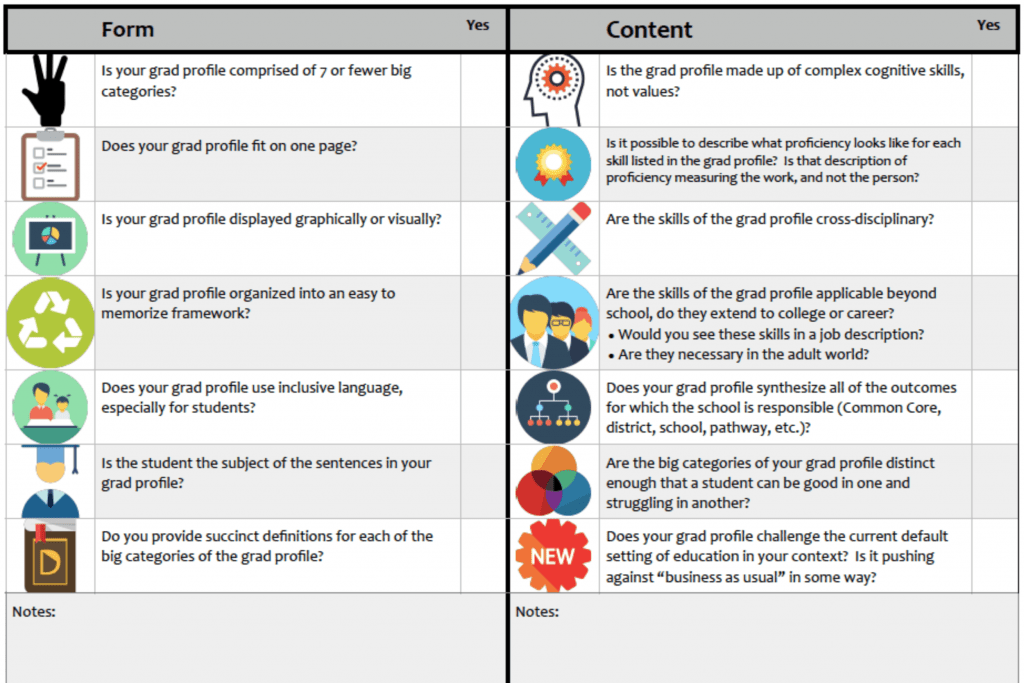
Is your Grad Profile made up of complex cognitive skills, not values? That’s one of the 10+ questions we ask with our Graduate Profile Quality Criteria Check Tool. We have been delighted to see the surge in Graduate Profiles developed by school systems across the USA over the past year but have noticed the need for an important next step: check whether your new grad profile meets these important quality criteria that we’ve developed over the past decade working with hundreds of schools.
Click the resource button to download the PDF.
Newsletters
Resources
Newsletters
5 Min read
Resource Corner: Grad Profile Quality Criteria Check
Is your Grad Profile made up of complex cognitive skills, not values? That’s one of the 10+ questions we ask with our Graduate Profile Quality Criteria Check
Read More
This resource was developed for math teachers looking for a pathway into developing Student language (disciplinary language, English language, and academic language).It serves as an invitation to be intentionally experimental with three processes that students experience often in school, but not as often in math class: students revising their work and their thinking; students interpreting the writing of other students; and students interacting with each other.
Click the resource button to download and explore this resource tool!
Resources
Resources
5 Min read
Resource Corner: Growing Student Language in Math Class
This resource was developed for math teachers looking for a pathway into developing Student language (disciplinary language, English language, and academic
Read More
This resource is one that ELP has adapted from the School Reform Initiative Colorado Center of Activity and has been previously used in a Deeper Learning Leadership Forum (DLLF) session.
Holding a Kiva Panel allows a larger group of listeners to highlight and learn from the voices of the selected panelists and can be adjusted for the virtual world.
This resource is one that ELP has adapted from the School Reform Initiative Colorado Center of Activity and has been previously used in a Deeper Learning
Read More
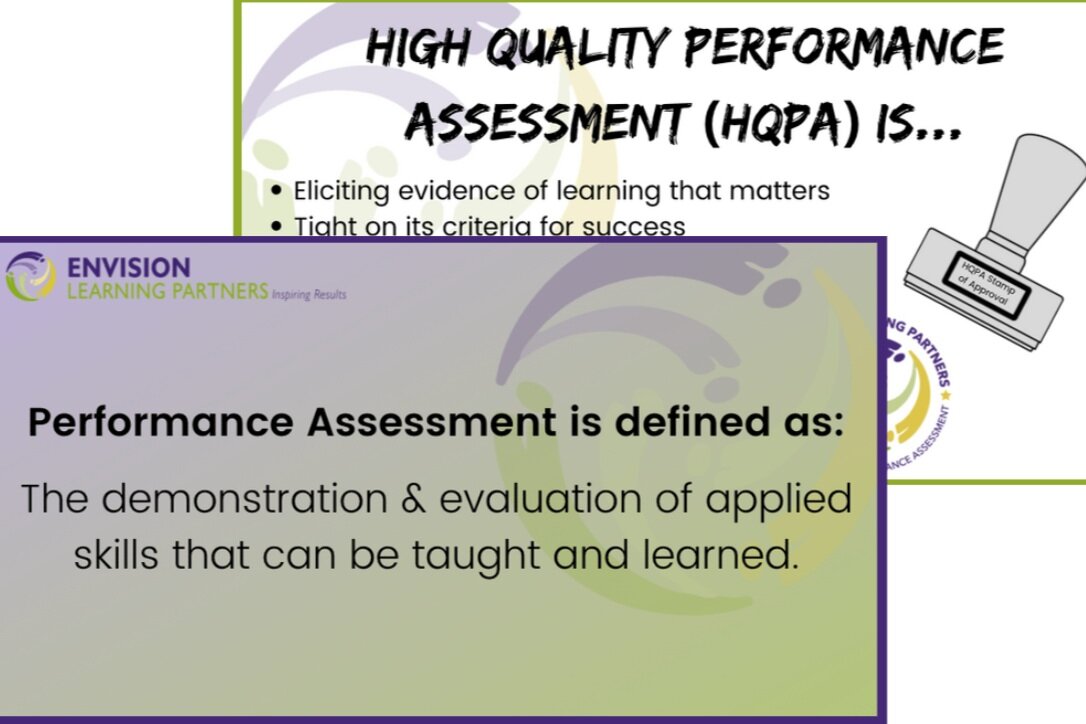
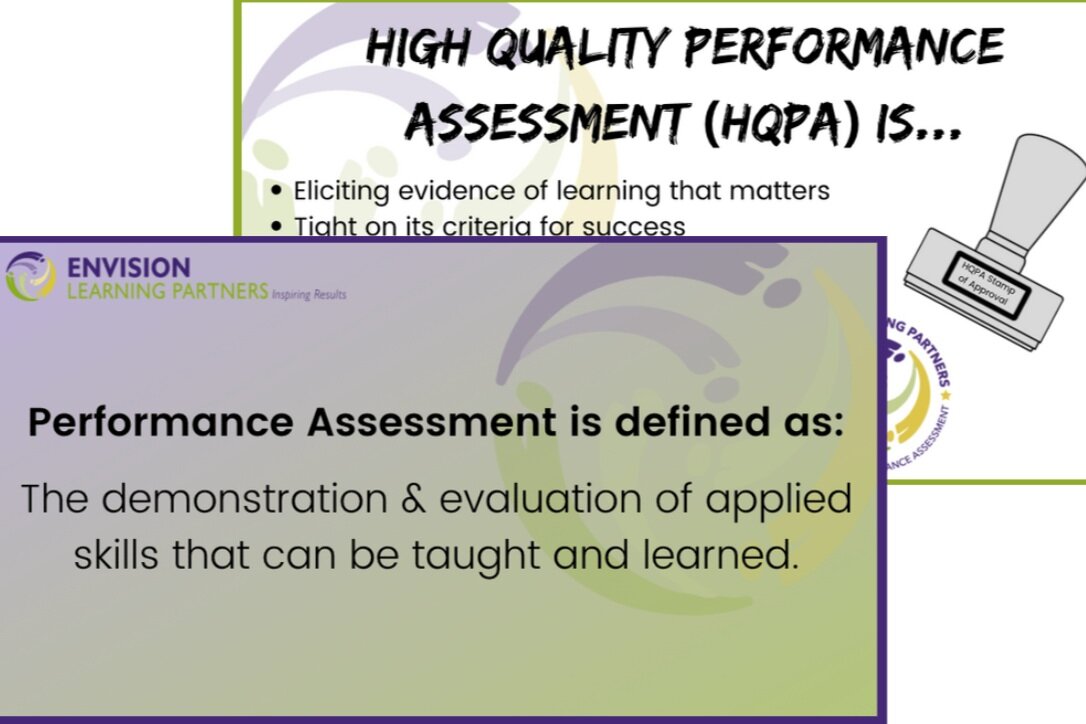
Click the resource button to download the PDF.
General
General
5 Min read
Resource Corner: HQPA Framework
Click the image below to download the PDF.
Read More
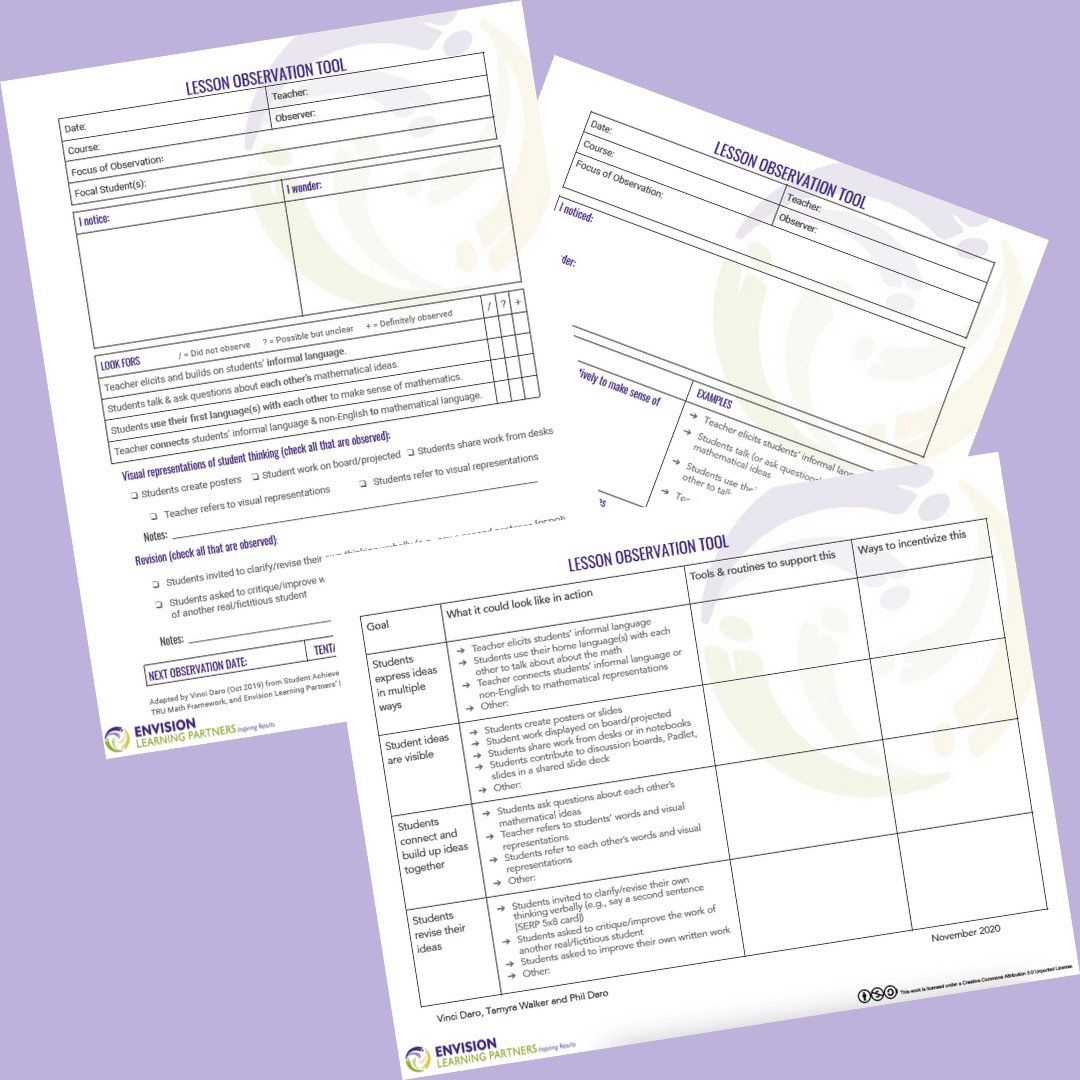
These three observation tools are intended to support ‘minimal-prep’ lesson observation in classrooms where student ideas, language, and interaction are at the center of the learning process. They were specifically designed for mathematics classrooms, but may also be useful in other contexts.
The two Lesson Observation Tools are meant as note catchers and as a manageable list of student and teacher actions to look for. In using these tools, it is important to agree with the teacher on the focus of the observation, for example: Use of instructional routines to surface and develop student ideas and language.
The Language-Rich Classrooms: Observation & Planning Tool is meant for a coach and teacher, or teacher peers, to use together for linking an observation with a conversation about planning next steps. It, too, has a list of example student and teacher actions to look for.
Click the resource button to download the editable PDFs.
Looking for even more resources? Visit the ELP blog for all past newsletter content.
Resources
Resources
5 Min read
Resource Corner: Lesson Observation Tools
These three observation tools are intended to support 'minimal-prep' lesson observation in classrooms where student ideas, language, and interaction are at
Read More
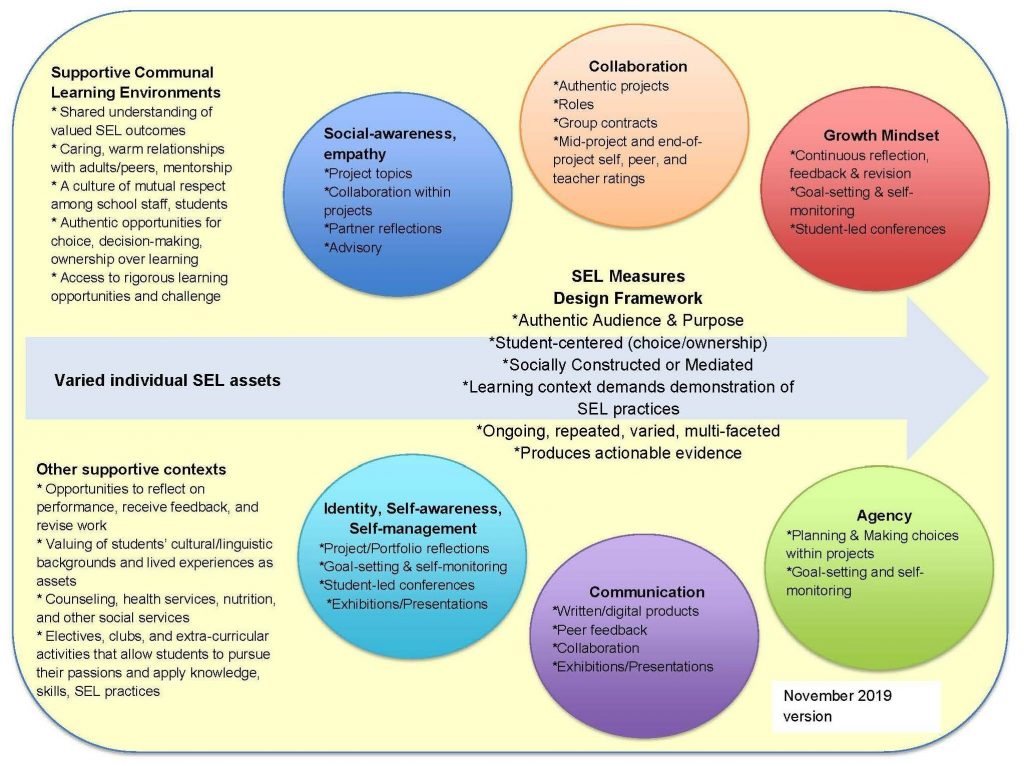
Can we develop valid, instructionally useful, educative, and equitable ways to measure social-emotional learning?
ELP’s Director of Research and Innovation, Ruth Chung Wei, had the opportunity to direct a research study with a team at the Stanford Center for Assessment, Learning, & Equity (SCALE) and ELP called “Measures of Social-Emotional Learning.” The Executive Summary of this three-year project provides an overview of the findings and can be downloaded by clicking on the image below.
Learn more about Ruth in her “I am ELP” highlight, by clicking here.
Resources
5 Min read
Resource Corner: Measures of SEL
ELP’s Director of Research and Innovation, Ruth Chung Wei, had the opportunity to direct a research study with a team at the Stanford Center for Assessment,
Read More
This resource comes from the 2022 Deeper Learning Conference and is a conversation about modernizing mathematics: perspectives from the classroom and beyond. This panel discussion explores the topic of mathematics teaching and learning in the current age and for the future. ELP Director of STEM Learning, Vinci Daro, is one of the four amazing panelists.
Resources
Resources
5 Min read
Resource Corner: Modernizing Mathematics
This panel discussion explores the topic of mathematics teaching and learning in the current age and for the future.
Read More
We know that we want students engaging deeply with rigorous content, but knowing what to look for in a classroom where students are struggling productively with rigorous mathematics content is a challenge among many of our partners.
Click the resource button to download!
Take a look at the Productive Struggle Observation Tool our STEM team has developed for observers to use to look for and capture relevant student and teacher actions in math classrooms. Clare Green, principal at Envision Education’s Hayward high school, Impact Academy says this about the tool: “The productive struggle rubric helps to drive a conversation about what high-quality, student-centered instruction looks like. This conversation now happens not only between coaches, teachers, and administrators but also with students.”
Let us know what you think – is the observation tool something that might be useful in your context? What do you look for in classrooms when you want to know if students are struggling productively with meaningful material?
Newsletters
Newsletters
5 Min read
Resource Corner – Observation Tool
We know that we want students engaging deeply with rigorous content, but knowing what to look for in a classroom where students are struggling productively
Read More
ELP is excited to announce that we have published five new performance task resources in the Performance Assessment Resource Bank (PARB), an online resource that ELP has stewarded since 2018.
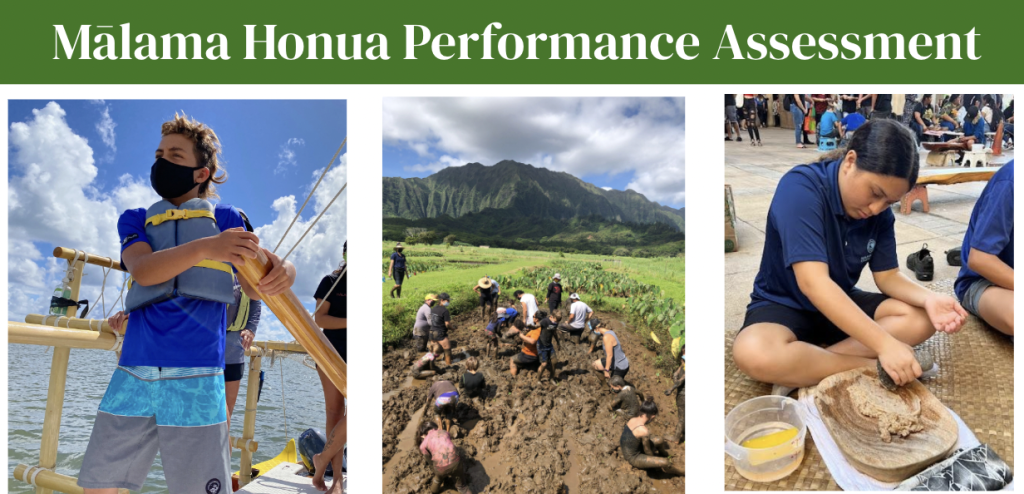
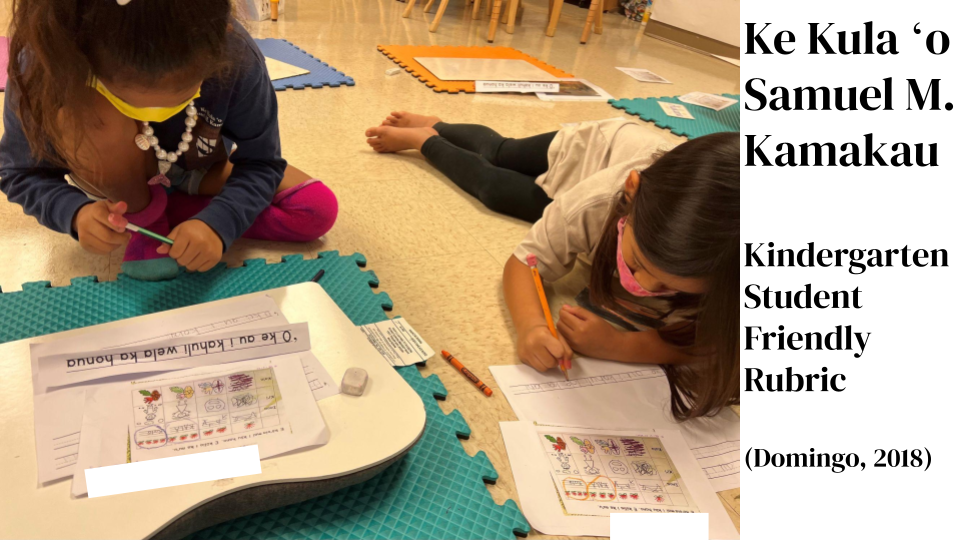
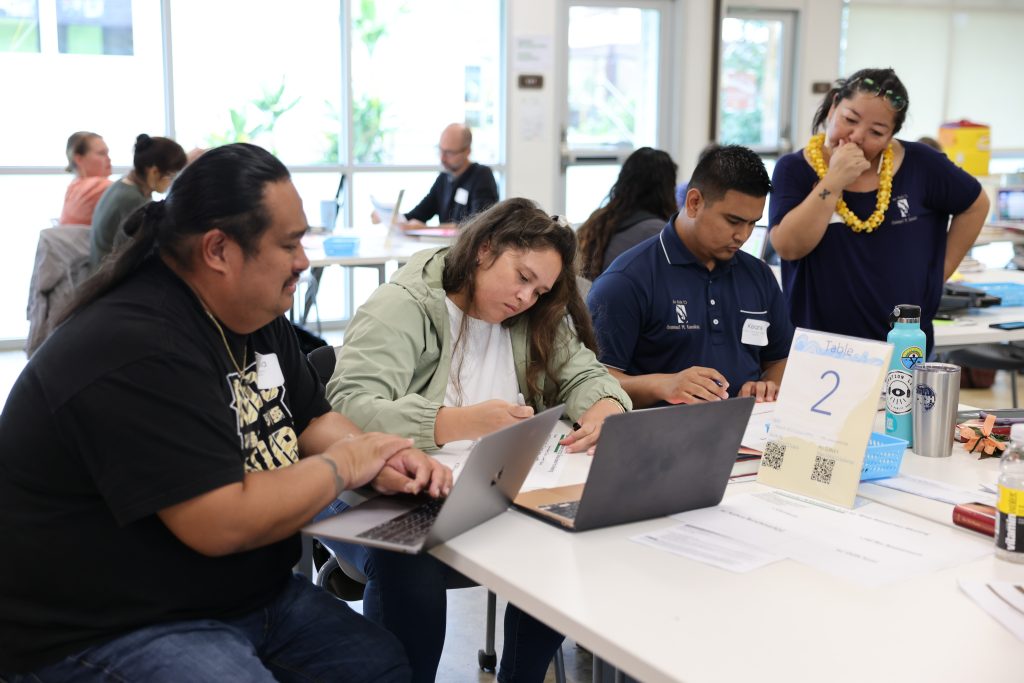
The five new resources are capstone portfolios, projects, and/or portfolio defenses from a consortium of schools in Hawai’i – the Hawaiian Focused Charter Schools (HCFS), which has been developing and implementing culturally sustaining curriculum, instruction, and assessment strategies to cultivate and preserve the language and culture of native Hawaiians. As part of its Culturally Relevant Assessment project, four HFCS schools and an additional charter school submitted capstone projects, ranging from Kindergarten through 12th grade capstones, for review and feedback from ELP during the 2022-23 academic year. Included among these five capstone projects is a Hawaiian-language kindergarten capstone project, the first non-English project to be included in the PARB. The revised projects were then submitted for a formal review process by performance assessment experts for inclusion in the Performance Assessment Resource Bank (PARB), using a hybrid review instrument, “ELP High Quality Performance Assessment Criteria + PARB/ILN Quality Criteria for Performance Assessments,” that combines ELP’s HQPA criteria and the PARB/ILN Quality Criteria developed by SCALE to vet submissions for the PARB.The instrument was adapted to include ʻāina (land)-based learning outcomes. All five of the submitted projects from the HFCS schools met project certification criteria after one or two cycles of review and feedback. ELP benefited from the experience of reviewing these submissions to deepen our understanding of culturally sustaining performance assessment and broadening our practice to be more inclusive of the diverse learners that our nation’s schools serve. This project was completed with the funding and support of the Kamehameha Schools, a private educational institution in Hawaiʻi that aims to improve the capability and well-being of Native Hawaiians through education.
Resource Corner: PARB + Hawaiian Focused Charter Schools
ELP is excited to announce that we have published five new performance task resources in the Performance Assessment Resource Bank (PARB), an online resource that ELP has stewarded since 2018.
Read More
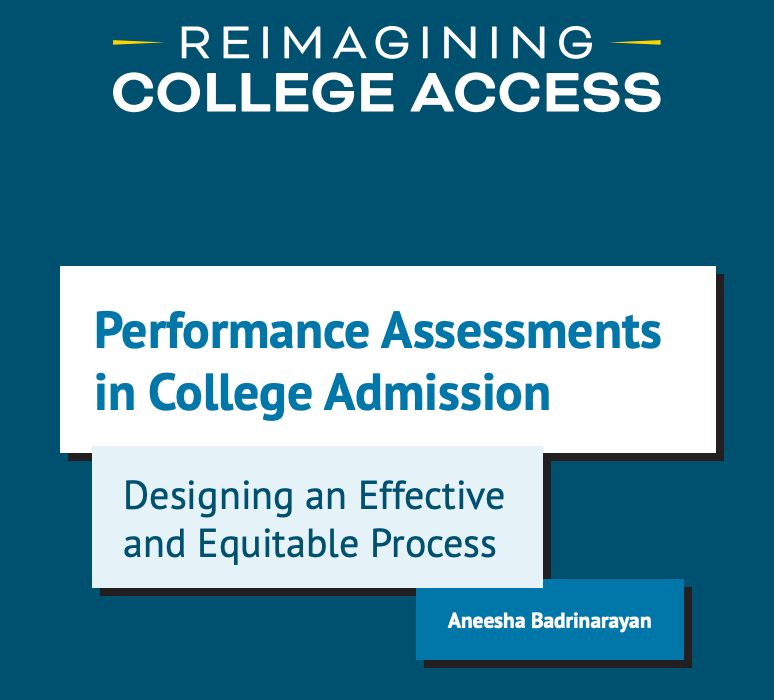
The Reimagining College Access initiative recently released a guidance document, authored by Aneesha Badrinarayan, aimed at colleges interested in integrating performance assessments into their college admission systems: Performance Assessment in College Admission: Designing an Effective and Equitable Process.
Although the tool is designed for admission officers, it can also be used by K–12 educators to gain a better understanding of the considerations that colleges must take into account in the use of performance assessments in admissions. The tool defines performance assessment and then provides concrete guidance on how admission officers can incorporate information about students’ K–12 performance assessments into their application and review processes.
Resource Corner: Performance Assessment in College Admission: Designing an Effective and Equitable Process
The Reimagining College Access initiative recently released a guidance document, authored by Aneesha Badrinarayan, aimed at colleges interested in integrating performance assessments into their college admission systems: Performance Assessment in College Admission: Designing an Effective and Equitable Process.
Read More
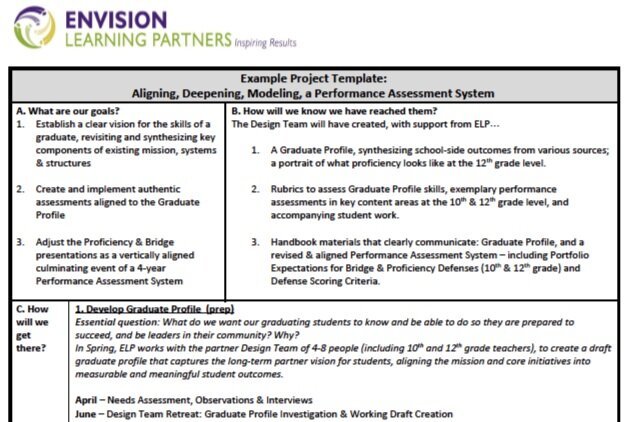
When we meet with a potential school partner, we are often asked: What does the process of evolving into a school with a High-Quality Performance Assessment System (HQPAS) look like? We have worked with thousands of educators serving hundreds of thousands of learners since our inception in 2010 and have developed a Theory of Action that consistently drives the transformation to a HQPAS:
Click the resource button to download!
Start by developing a graduate profile with your stakeholders,
design performance assessments that measure that graduate profile, and finally,
implement pedagogies and school structures that lead to student success on the performance assessments.
These three phases, done in that order, lead to a successful implementation of a High-Quality Performance Assessment System. A second common question we hear is focused on implementation steps and timeline. As you can imagine, each partner takes a unique path on its implementation journey, but over the years, we have seen some common elements. This month, we share a simplified project template to give you a better idea of potential steps involved. Enjoy reading and don’t hesitate to reach out with any questions.
Newsletters
Newsletters
5 Min read
Resource Corner – Project Template
When we meet with a potential school partner, we are often asked: What does the process of evolving into a school with a High-Quality Performance Assessment
Read More
Envision Education is excited to share the culmination of its two-year research project, Pursuing Equity for Black & Latine Students with Learning Differences, which
documents and illustrates the systems, practices, cultures, and supports that are associated with the well being and success of Black and Latine students with learning differences – students with disabilities and multilingual students with disabilities.
In 2023, Envision Learning Partners (ELP) and Social Policy Research Associates (SPR) embarked on a research study to identify and learn from schools that demonstrated positive outcomes for Black and Latine students with learning differences (including students with disabilities and multilingual learners). After a review of data from secondary schools across the country, the study team identified two schools for a more in-depth study, which was conducted during the 2023–2024 school year.
The results of the research are shared through case studies of the two schools that were the focus of the research: 1) Crosstown High: Building a Culture of Inclusion; 2) Capital City: An Inclusive School Community Committed to Whole-Child Learning and Well Being; and 3) An Executive Summary/Synthesis of Findings.
In addition, we have authored four practice briefs based on the findings of the research that provide practical steps that schools can take to create more inclusive environments that support the success of Black and Latine students with learning differences.
Co-teaching: A Means to Creating Inclusive and Equitable General Education Classrooms
UDL: Universal Design for Learning in a Culturally Responsive Context
Culturally Responsive Practices: An Inclusive, Culturally Responsive School Culture That Fosters Relationships
Competency-Based Learning and Assessment: Assessment and Grading Practices That Support an Inclusive Learning Culture
This research was made possible through the generous support of New Profit, a venture philanthropic organization, and the Oak Foundation.
General
Announcements
Newsletters
Resources
General
5 Min read
Resource Corner: Pursuing Equity for Black and Latine Students with Learning Differences Case Studies & Practice Briefs
Envision Education is excited to share the culmination of its two-year research project, Pursuing Equity for Black & Latine Students with Learning Differences, which documents and illustrates the systems, practices, cultures, and supports that are associated with the well being and success of Black and Latine students with learning differences – students with disabilities and multilingual students with disabilities.
Read More
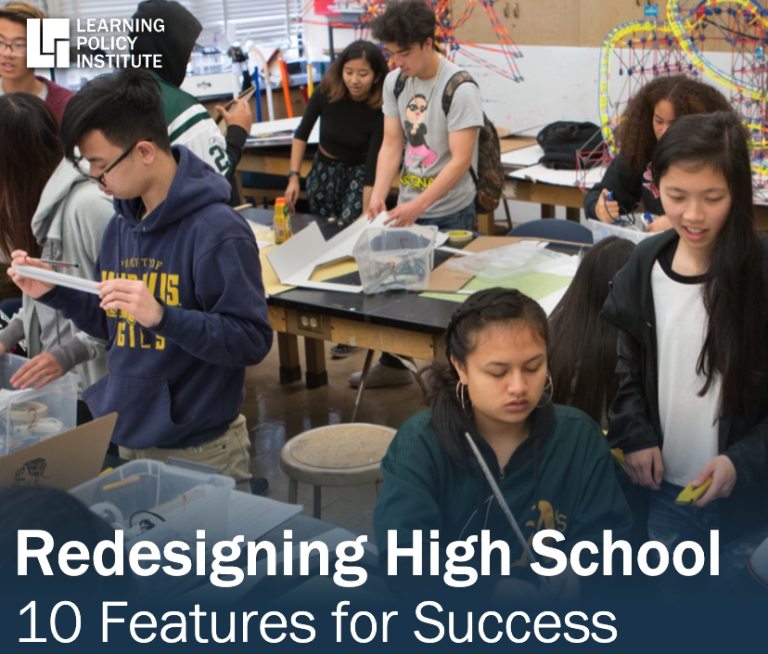
Earlier this year, Learning Policy Institute (LPI) released this resource that outlines 10 features from effectively redesigned high schools and highlights examples of schools that are putting the features into practice to create powerful learning opportunities for youth.
ELP was honored to be listed under the Additional Resources. If you are interested in a redesign or have any questions, contact the ELP team to schedule your free consultation.
Resource Corner: Redesigning High Schools: 10 Features for Success
Earlier this year, Learning Policy Institute (LPI) released this resource that outlines 10 features from effectively redesigned high schools and highlights examples of schools that are putting the features into practice to create powerful learning opportunities for youth.
Read More
9 Tips for Writing Effective Rubrics – Adapted from the important thinking of our partners at SCALE, this tool attempts to capture the quality criteria of solid rubric design. The tool is helping our partner schools all over the country to develop performance indicators that serve to define proficiency for their Graduate Profile skills. Take a look and share with us any quality criteria you’ve found effective!
9 Tips for Writing Effective Rubrics - Adapted from the important thinking of our partners at SCALE, this tool attempts to capture the quality criteria of
Read More
Resource Corner: Scaling Student Success Briefs & Policy White Paper
For educators and educational leaders seeking to bring your Graduate Profile to life, Scaling Student Success has released a series of Practice and Policy Briefs to support this journey! The Briefs tell the story of five different districts across California that are successfully integrating their Graduate Profiles (or Learner Portraits) into their curriculum, culture, and classrooms, and seeing a positive impact on student success. They’re a valuable learning resource for any school interested in redefining student success! Learn more and access the briefs here.
Scaling Student Success also recently authored a white paper focused on statewide policy recommendations that support many of the transformation systems we want to see in schools (graduate profiles, authentic assessments, etc.). ELP has offered to be listed as one of the organizations to officially “sign on” to the paper. Click here to read: A Student-Centered Approach to Education.
Resources
Resources
5 Min read
Resource Corner: Scaling Student Success
For educators and educational leaders seeking to bring your Graduate Profile to life, Scaling Student Success has released a series of Practice and Policy Briefs to support this journey! The Briefs tell the story of five different districts across California that are successfully integrating their Graduate Profiles (or Learner Portraits) into their curriculum, culture, and classrooms, and seeing a positive impact on student success. They’re a valuable learning resource for any school interested in redefining student success! Learn more and access the briefs here.
Read More
Resource Corner: Student Innovation Edition
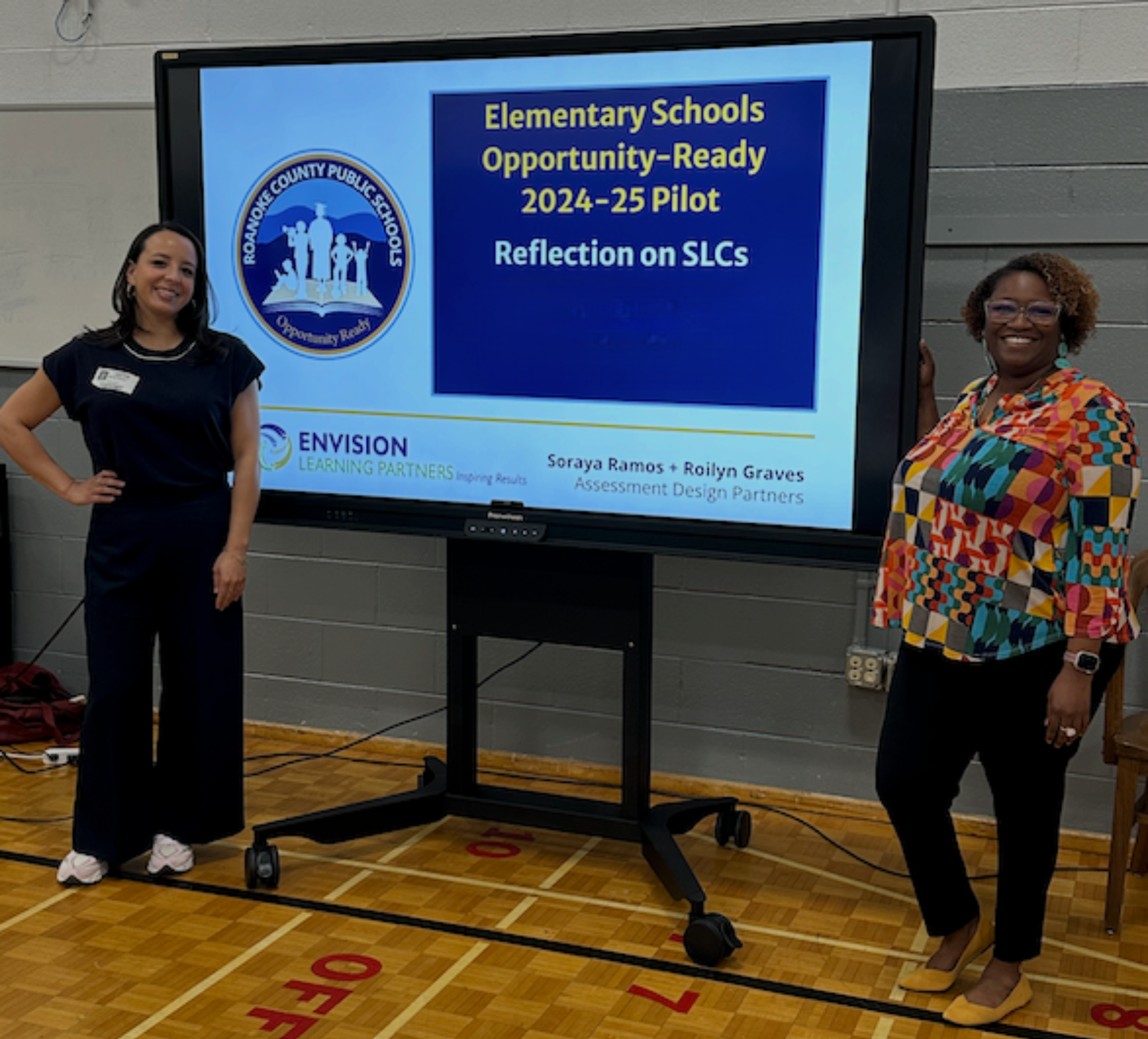
Earlier this spring, Assessment Design Partners Roilyn Graves and Soraya Ramos spent time in Roanoke County Public Schools in Virginia, collaborating with district and school leaders to refine and pilot a culminating performance assessment system aligned to the district’s Opportunity-Ready Skills.
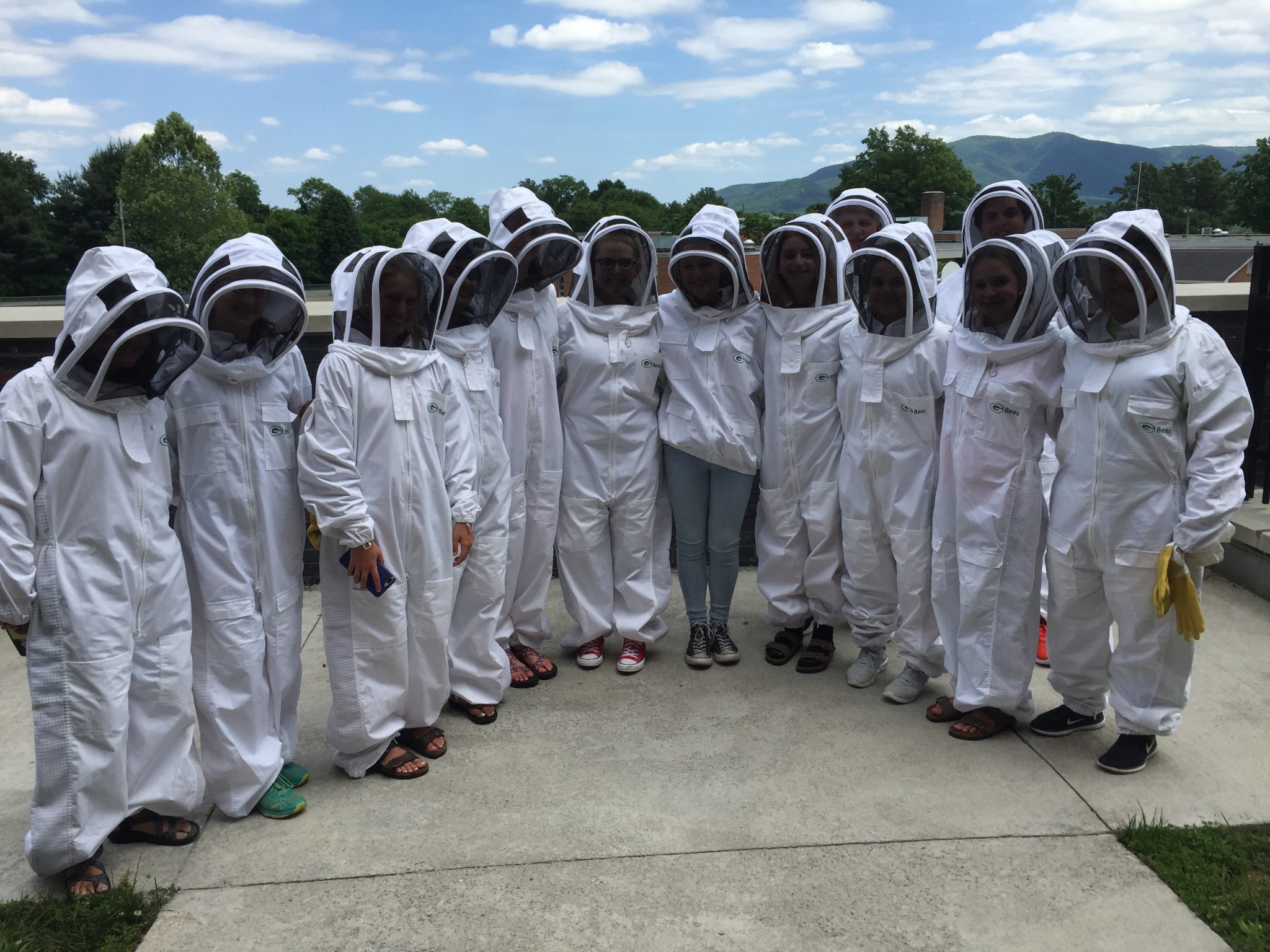
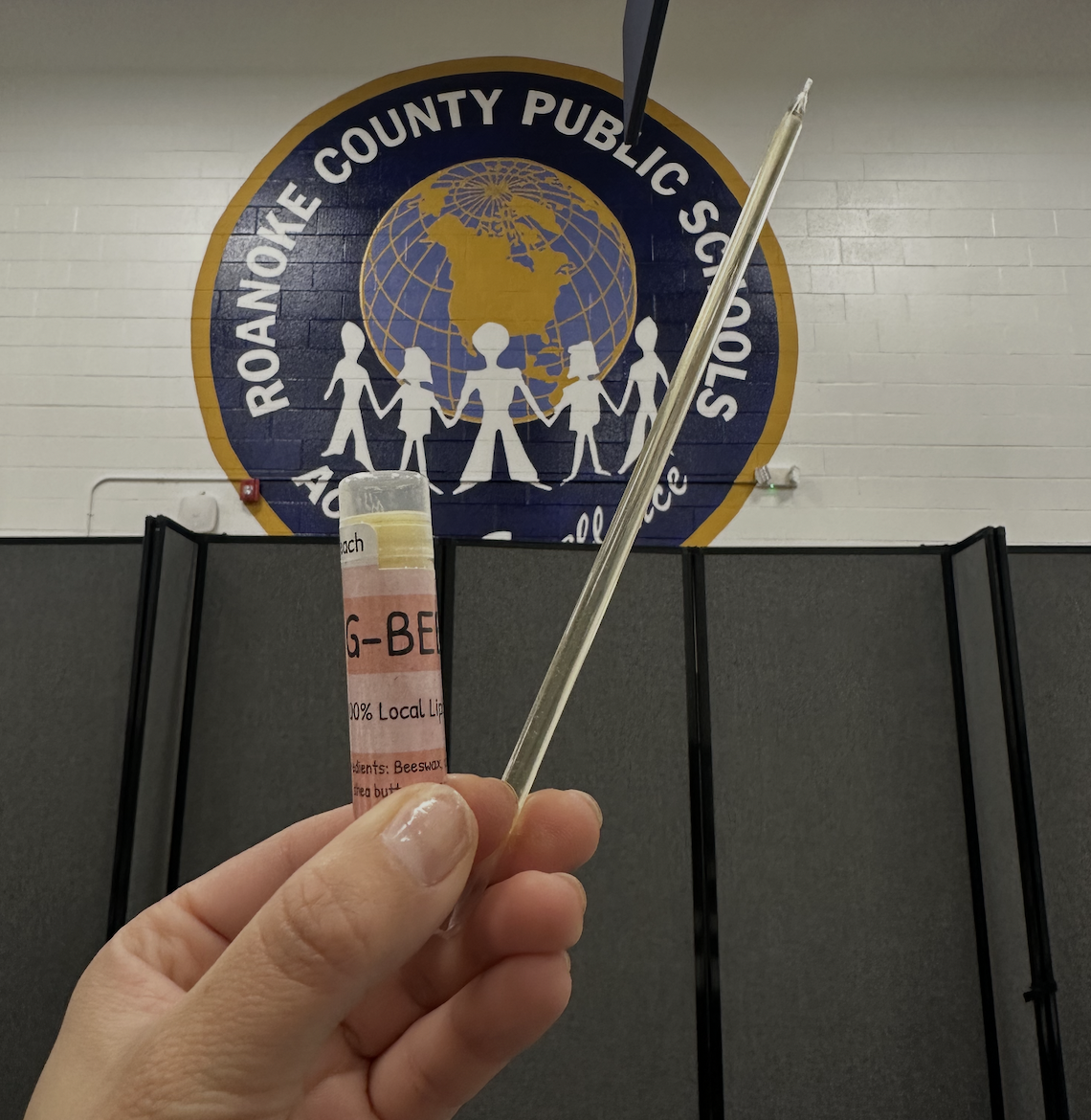
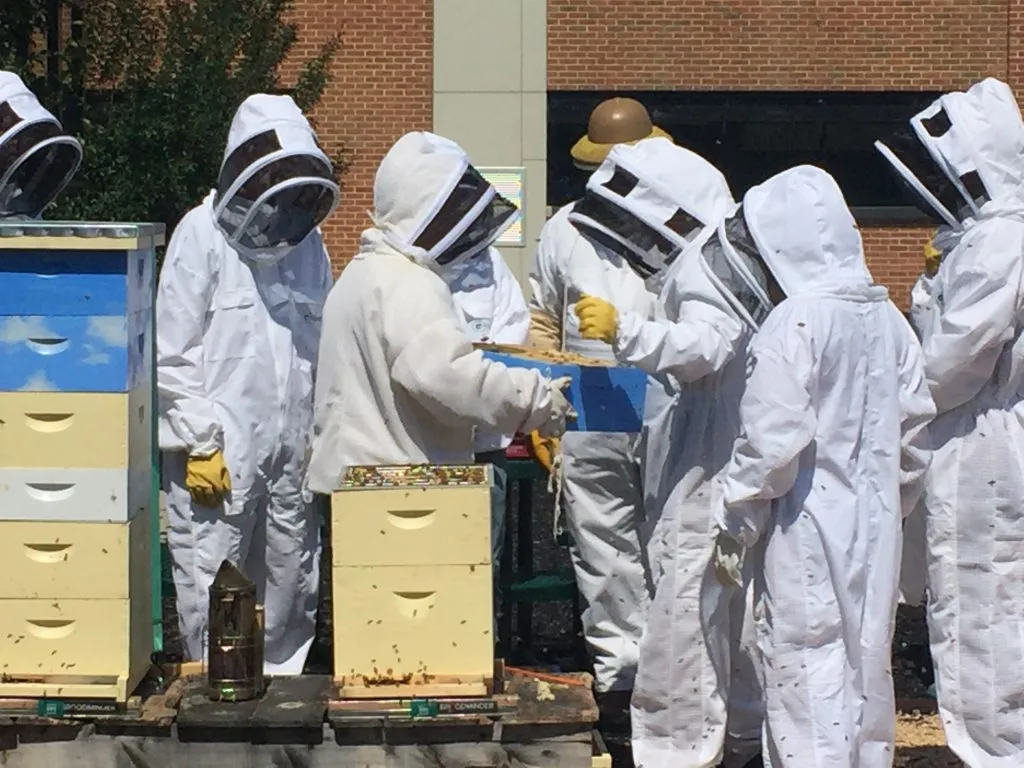
During their visit, they had the opportunity to tour Glenvar High School—and were inspired by an incredible student-led initiative: the G-Bees. This club involves students in every aspect of beekeeping, from hive maintenance to harvesting honey, and even crafting a range of products like lip balm, soap, candles, hot honey, and more.
Through this hands-on work, students are not only gaining valuable entrepreneurial experience, but also raising funds for outdoor education and scholarships. It’s a powerful example of student-centered, purpose-driven learning at its best.
The G-Bees program is truly performance assessment in action—students applying their knowledge and skills in meaningful, real-world ways. While online sales aren’t available, we’re excited to share their story as a model of what authentic, engaged learning can look like.
Assessment Design Partners, Soraya Ramos and Roilyn Graves.
General
Newsletters
Resources
General
5 Min read
Resource Corner: Student Innovation Edition
Earlier this spring, Assessment Design Partners Roilyn Graves and Soraya Ramos spent time in Roanoke County Public Schools in Virginia, collaborating with district and school leaders to refine and pilot a culminating performance assessment system aligned to the district’s Opportunity-Ready Skills.
Read More
This month, watch ELP STEM assessment specialist, Jim Malamut, share his ideas on Proximity of Evidence to student thinking.
Looking for more resources? Visit the ELP blog pagefor all past newsletter content.
Newsletters
Newsletters
5 Min read
Resource Corner: The Proximity of Evidence to Student Thinking
This month, watch ELP STEM assessment specialist, Jim Malamut, share his ideas on Proximity of Evidence to student thinking.
What is an accelerator? Accelerator programs are designed to foster and support innovation. They usually have a set timeframe in which individual companies spend anywhere from a few weeks to a few months in an intensive, immersive environment working with a group of mentors to build out their business and avoid problems along the way. [Techrepublic]
What is Tinquevation? to introduce something new and/or to make changes in anything established through seeking knowledge/understanding by questioning/investigation, with the explicit intent to obstruct, threaten, & dismantle systems of oppression.
A mindset: you can try it at different moments
A process: it can guide you and remind you to consider different things
A prototype: it is an idea/concept that will be improved by testing it out
Here is a mathematics performance task we’d like to share with you. This task is designed to be used formatively to assess students’ use of percents and ratios to reason about speeding tickets. Depending on how it is implemented, the task provides multiple opportunities to elicit — and develop — students’ written and verbal disciplinary language for making comparisons.
Newsletters
Newsletters
5 Min read
Resource Corner – Traffic Ticket Performance Task
Here is a mathematics performance task we’d like to share with you.
Read More
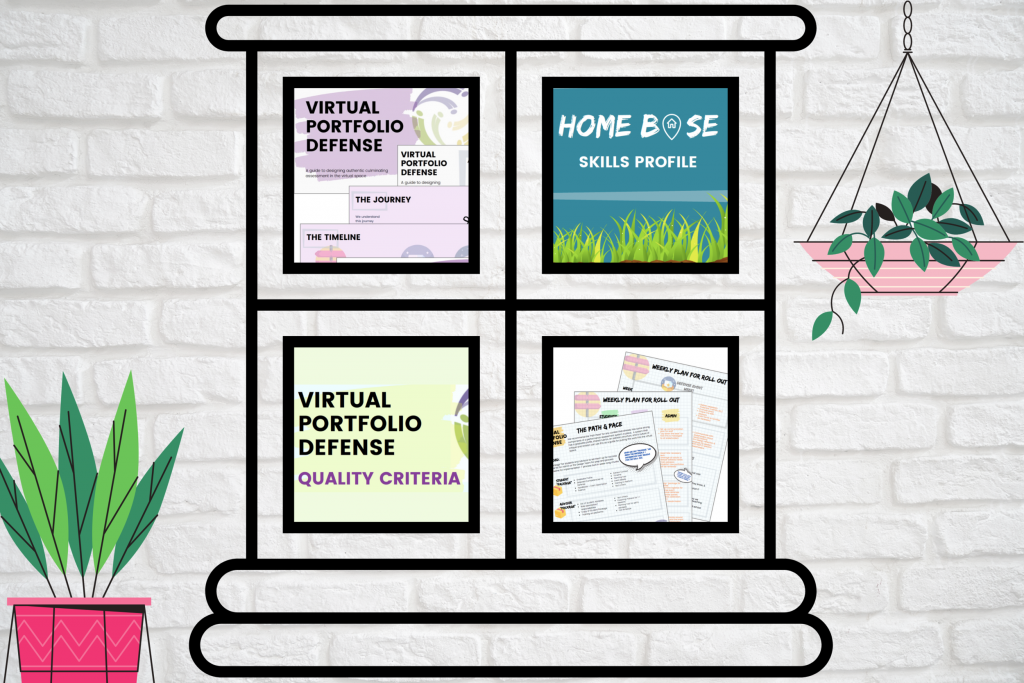
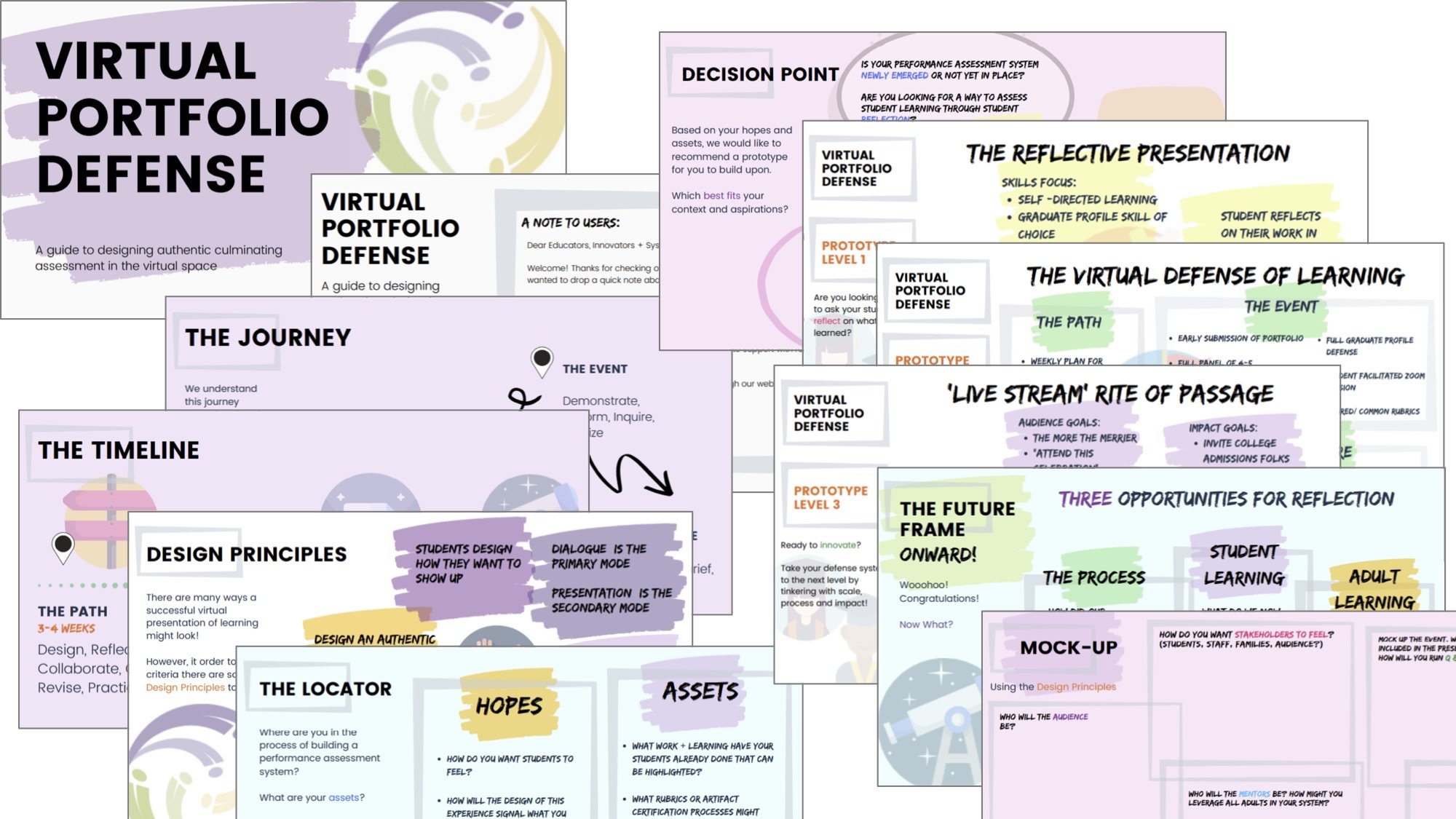
The ELP Deeper Learning Coaches have been hard at work developing practical resources for the performance assessment community since the Virtual Defense Toolkit was first in early April. Here’s a window into the latest!
Resources
Resources
5 Min read
Resource Corner: Virtual Portfolio Defense Tools
The ELP Deeper Learning Coaches have been hard at work developing practical resources for the performance assessment community since the Virtual Defense
Read More
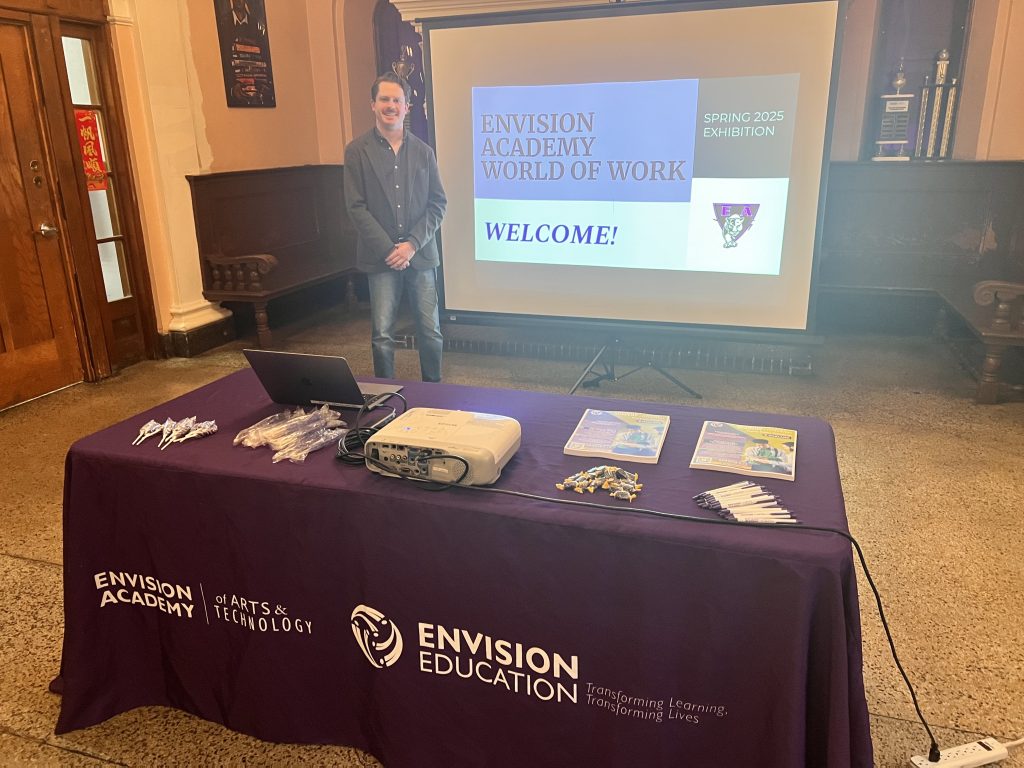
Every year, 11th grade students at Envision Academy, our Oakland 6-12 grade school, complete a week-long internship as part of their Work-Based Learning experience, known as World of Work (“WoW“). The purpose is for students to gain work experience and develop career interests and ambitions through internships in professional settings. The internships are intended to expose students to the rigor and requirements of full-time jobs, while allowing them to explore passions outside of the regular school structure.
The Envision Learning Partners team used this as an opportunity to collaborate on a project that showcased the power of student voice with a group of three EA interns. What began as an initiative to capture the amazing work through Student Led Conferences and Portfolio Defenses quickly evolved into a dynamic social media campaign, all thanks to the creativity and expertise of our interns. This experience served as a powerful reminder of the impact student-driven initiatives have on everyone involved.
Quotes from the interns about their experience:
“In my internship journey I’ve learned alot about my school, Envision Academy, it’s history and roots..also about defense and student-led conferences.”
“Connecting, learned a little bit more at becoming better at working in a team.”
“Learned a lot about video production…now I know there’s a lot of work that goes into it.”
“Communication, I do have anxiety communicating. Actually this week I did a presentation about my leadership goal to improve my communication.I can actually see the improvements. Whenever I had questions in the past I would keep them to myself.”
“I’m really glad I got to connect with and work with you guys, It’s been the best thing ever.”
“I learned a lot about my classmates and learned a lot from them. I really enjoyed it, I wish I could continue this.”
Resources used by the ELP team throughout the week:
Envision Academy’s World of Work Internship Exhibition:
Newsletters
Resources
Resources
5 Min read
Resource Corner: WOW Week with Envision Academy Interns
Every year, 11th grade students at Envision Academy, our Oakland 6-12 grade school, complete a week-long internship as part of their Work-Based Learning experience, known as World of Work (“WoW“).
Read More
We understand these are challenging times for many people, especially educators challenged with rapid transition to online teaching. Here are some resources we’ve been gathering to potentially help:
Centering Equity – List of Equity Web Resources from Erin Trent Johnson
Miro.com – An online collaborative white-boarding platform to bring teams together, anytime, anywhere
Apply for a FREE education account using this link
Keep an eye out for more resources and if you aren’t already signed up for our bi-monthly newsletter, sign up here. This will deliver updates, interesting news, and resources right to your inbox!
No items found.
5 Min read
Resources During Covid-19
Read More
It’s with heavy hearts, that we announce that Morgan Vien is moving away from her role at ELP as an Assessment Design Partner (aka Deeper Learning Coach).
What did you most enjoy about being a coach with ELP?
Being a Deeper Learning Coach with ELP was nothing short of a gift. As an organization, we have such deep and expansive relationships both with the assessment community and with those centered around doing student-centered learning. It is because of those relationships and good work, that being on this team has afforded me the opportunity to work closely with, and to support systems leaders and communities across the country. It is a powerful perspective to know and value rigor, while being able to innovate and move the dial on making change— and this team has that.
Favorite coaching experience or story?
My two favorite projects have been co-facilitating the Deeper Learning Leadership Forum and being a core designer of the Assessment for Learning Conference. Each for different reasons, but alike they both seek to gather eager and ready leaders, who are actively working to make change in their communities and who want to learn from others who are pushing the boundaries of what school can be. I thrive at that precipice- working with those who are ready to push, build and transform. I have so much gratitude for all of the brilliant minds, vulnerable leadership and care that I have been around during my time at ELP.
What are your plans now?
I am super stoked to write this new chapter and head towards an opportunity that I just could not pass up. I am co-founding a design thinking collaborative called, Design for Emergence. We are a cadre of design thinkers. Through liberatory design and an emergent strategy, we help systems get clear on where they are headed, stay agile in their approach and use human-centered design to solve complex problems. We work both in and adjacent to the education space. While bringing this vision to life, I am also collaborating on the K12 Lab team, at the d.school at Stanford, where we are working to imagine the role of Futures Thinking in education.
Announcements
Announcements
5 Min read
See you later, Morgan!
It's with heavy hearts, that we announce that Morgan Vien is moving away from her role at ELP as an Assessment Design Partner (aka Deeper Learning Coach).
Read More
LOOKING FOR THE NEXT DLLF COHORT!
ELP is pleased to announce that applications and nominations for the fourth cohort of The Deeper Learning Leadership Forum (DLLF) will be open on October 1st!
The DLLF is a cohort-based leadership experience that aims to develop, strengthen, and support a group of educational leaders to work at the intersection of equity and design thinking. We invite you to contribute your expertise and passion to this collective effort to increase educational equity.
For more information click here and view the Guest Blog here, written by Cohort 3 member, Robert Moore.
AMPLIFIED LABS JOINS ELP AS A STRATEGIC PARTNER
Each year, ELP works with schools, districts, and states to help them in their journey to deploying High-Quality Performance Assessment Systems. We are often asked by our partners what digital student portfolio systems can we recommend. Based on our work in districts that have adopted the platform, we believe Amplified IT’s Backpack for Google Drive is a promising system for students to curate, reflect upon, and showcase digital learning artifacts against a district-defined skills framework.
FAREWELL, JIM
Deeper Learning Coach, Jim Malamut, left ELP this summer to pursue a Ph.D. in Math Curriculum & Teacher Education at Stanford to learn even more ways he can help support schools. Read more about Jim and his favorite ELP coaching moments here.
Announcements
Announcements
5 Min read
September 2019 Announcements
ELP is pleased to announce that applications and nominations for the fourth cohort of The Deeper Learning Leadership Forum (DLLF) will be open on October 1st!
Across the US, districts have been forced to transition to virtual learning due to the global pandemic. Education leaders have the arduous task of making an informed decision about whether instruction will be in-person, virtual, or a hybrid model. As schools reopen in the fall, how to best meet the needs of students, particularly those most impacted by COVID-19, becomes a top priority. In part 3 of 3 in AYPF’s Deeper Learning in the Time of COVID-19 webinar series, participants will hear from district-level leaders, teachers, and students to learn about how the Pasadena Unified School District and Envision Learning Partners leveraged performance assessments and Graduate Student Profiles to meet the demands of this moment.
Deeper Learning Coaches, Morgan Vien & Abby Benedetto
In the initial shift to distance learning last spring, we heard educators across the country asking a similar question, “Now that students are at home, how do I know they are not googling the answers to the test?” Our response, which has only deepened as school remains virtual in many places across the country, is “perhaps you want to rethink the test…” Defenses of learning are an incredibly meaningful way for teachers and students alike to know what students know. This is true when we have the joy of being in person with each other, and is also true in a virtual context. This workshop will ask participants to consider the conditions they currently face as educators, create design principles that can guide their thinking, and even brainstorm a version of a defense of learning they can try out right now.
The session asks, “What kind of culminating performance assessment experience would we create to ensure that ALL learners thrive – especially those furthest from opportunity?” Participants will explore different types of performance assessments and design a prototype that provides evidence of student learning of essential competencies. The session concludes with participants testing their prototype from the perspective of a vulnerable student and reflecting on changes needed to ensure that ALL students thrive.
“How Intentional Equity Serves All Students”
October 28th, 8:45am PT
Deeper Learning Coach, Abby Benedetto
Equity in a school building doesn’t just happen, it is purposefully cultivated. Hear from school leaders on their methods to curate opportunities for all their students. In the wake of COVID they will share how the shift to remote learning not only highlighted inequitable truths but also provided a chance to even the playing field. Learn about family engagement tactics, diverse recruiting strategies that mirror local communities, and how students’ needs are met where they are.
DLLF Cohort 3 Graduation
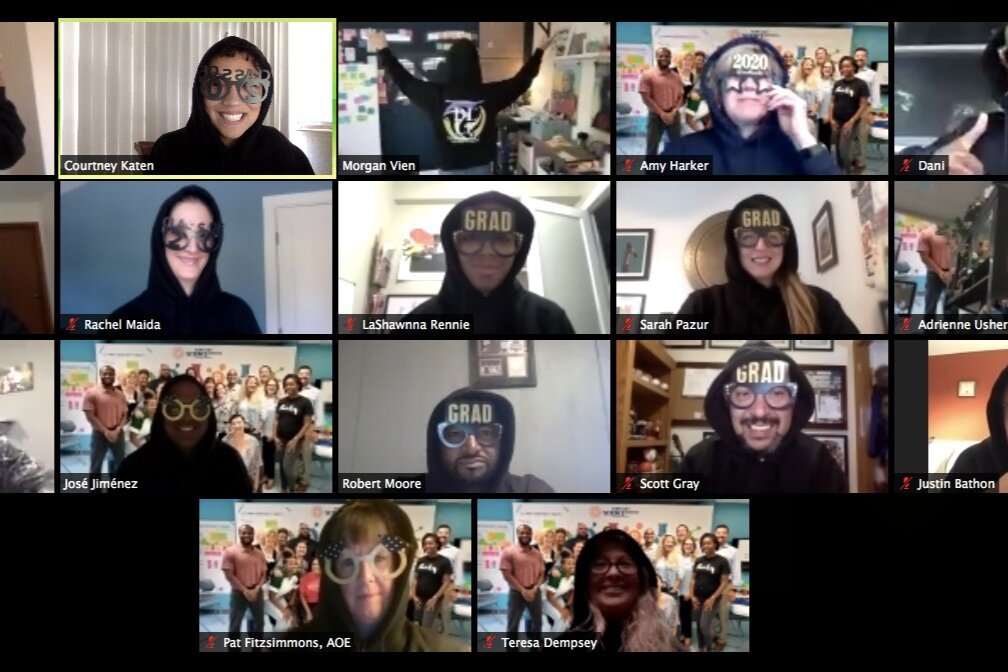
Earlier this month, the Deeper Learning Leadership Forum (DLLF) conducted a virtual graduation for our third cohort, internally and affectionately known as “Dope @#$ Cohort 3.” This group of systems leaders have spent the last two years learning with and from one another how to lead their systems to make the necessary shifts so that each and every student has access to deeper learning experiences and outcomes.
To learn more about these amazing members and the overall DLLF program, click here.
General
General
5 Min read
September 2020 Events & Announcements
Deeper Learning in the Time of COVID-19: Leveraging performance assessments & Graduate Profiles to best prepare for re-opening
Read More
Dear ELP Partner,In this time of crisis, I am reminded of one of ELP’s defining characteristics of a high-quality performance assessment: it is tight on quality criteria while open to different learner approaches.
That principle certainly applies to our relationship with you in the uncertain times ahead. Now more than ever, ELP is committed to supporting your school system and finding creative ways to help you navigate the crisis while still moving toward your goals. We take seriously our role as your partner, so as you face the challenges posed by the coronavirus, consider us part of your support team.
Your ELP coach will be reaching out, if they haven’t already, to extend that support, offer thought partnership, and think through shifts that may need to happen in our service to you. ELP takes pride in being nimble and flexible in our service to partners. And there are opportunities that emerge in any crisis: more time for some virtual PD with teachers, for example, if students are at home doing lessons online.
With deep empathy for leaders of schools and districts (our own Envision Schools are closing on Monday, March 16th),
Dear ELP Partner,In this time of crisis, I am reminded of one of ELP’s defining characteristics of a high-quality performance assessment: it is tight on
Read More
ELP is excited to announce that longtime team member, performance assessment expert, and champion for educational justice—Alcine Mumby—is now ELP’s Vice President of Program.
In this role, Alcine leads the delivery of ELP’s professional services, ensuring that client partners and system leaders gain the skills needed to build and sustain high-quality systems of performance assessment. She will guide our team of coaches—now known as Assessment Design Partners—so that every ELP client gets the service they need. As the VP of Program, Alcine will be ELP’s lead learner, ensuring that our service—both the what and the how—are continuously improving. (Don’t worry: Alcine will continue to lead the Deeper Learning Leadership Forum!)
Many of you are already fans of Alcine and know exactly why she is a leader in our movement to make assessment more learner-centered and just. She is a deep systems thinker, an unforgettably powerful communicator, and an unswerving believer in the potential of young people, especially the students most marginalized in our systems. Over the course of her career, Alcine has done it all: taught at pioneering programs (Fannie Lou Hamer Freedom High School in the Bronx), analyzed school outcomes data (for an Annenberg grant in NYC), founded a school as its principal (Envision Academy in Oakland), and helped to transform major urban school districts (Louisville, KY).
What vitalizes all her skill and experience is her moral vision. I sometimes call Alcine the conscience of ELP. She is as knowledgeable and passionate about performance assessment system building as anyone in the field, yet Alcine never forgets—and helps the rest of us to remember—the why of this work: justice for learners. For a glimpse of the power of Alcine’s moral vision, please see her keynote speech from the Assessment for Learning Conference.
Please congratulate Alcine on her new role when you next have the chance.
Wishing summer rejuvenation for educators everywhere,
Justin Wells, ELP Executive Director
Click below for a special message from Alcine.
Announcements
Announcements
5 Min read
The Visionary Leadership of Alcine Mumby
ELP is excited to announce that longtime team member, performance assessment expert, and champion for educational justice—Alcine Mumby—is now ELP’s Vice
Read More
ELP hosted its first “Tinquevation” Summer Accelerator, piloting a new structure that supports system design and transformation. The week-long experience was attended by Design Teams from 4 of the Envision Schools, and a client school from Madison, WI, Capital High. Click here to read more about Capital High, as Karyn Stocks Glover, principal of Capital High, shares her thoughts on our work together.
Design Teams consisted of school leaders, teacher leaders, and student leaders who came together in downtown Oakland to be in community together as we investigated how to re-imagine our systems with an uncompromising priority of putting equity at the center.
The Accelerator borrowed structures from the world of technology and start-ups to try and create spaces for people to learn deeply and then to immediately prototype applying that learning to their own contexts.
Each morning started with informative and diverse panels of speakers representing voices that we need to inspire and push our thinking – alumni, business leaders, higher education folks, etc. Personal and collective equity work was woven throughout each day, and thanks to the leadership of ELP coach, Alcine Mumby, it became clear that the most important work we need to do is to center the voices of our most marginalized in our systems.
One of the most impactful dimensions to the Accelerator was the uplifting and centering of student voice. Not surprisingly, having students at the table who felt invited and supported in speaking authentically about their lived experience within our systems was the richest content created during the week.
Teams left the Accelerator with plans to locate the most marginalized voices at each school and to engage in deep and relational empathy with these folks in order to better understand their realities, their needs, and their asks for changes to be made. Our school teams developed a clear path forward after the accelerator:
Envision Design Teams will meet with each other throughout the academic year as they dig into an inquiry project about what the Graduate Profile should be for Envision Schools, and how can it live more at the center of our system.
Capital High is mapping backward from their first round of Graduation Portfolio Defenses that will take place in May, during which their students will reflect deeply on how they have understood and practiced Growth Mindset in their lives in and outside of school.
The Accelerator planning is being wonderfully lead by ELP team member, Abby Benedetto, learn more about her in this post, and is being supported by a long-time deeper learning colleague and thought leader around equity in education, Shane Safir.
ELP looks forward to the next iteration of the Accelerator, stay tuned for more details.
ELP hosted its first “Tinquevation” Summer Accelerator, piloting a new structure that supports system design and transformation.
Read More
As you now know, May 2024 is my final newsletter as Executive Director of Envision Learning Partners. My year with this tremendous team ends on June 30th, and OH what a wonderful year it has been! I take with me many lifelong memories and profound lessons. When I was interviewing for this role, I shared with the panel that one of my overarching motivations for joining the team at Envision was to reignite my optimism for public education. Too many experiences up to that point left me wondering whether systems were capable of making changes that truly met the needs of all students. And then I joined ELP! In the last year, I saw systems leaders engage in exemplary conversations about how to operationalize equity. I spoke to innovative educators working together to change assessment systems across an entire state. I heard students reflect on their learning while charting a course towards a successful future that was previously too intangible to embrace. Most important to me, I worked with a team here at ELP bursting with genius, creativity, and optimism. I am grateful to the ELP team for all they have done to shift schools in the direction of justice. And I am equally grateful to you, the ELP community, for embracing the optimism of change. I look forward to our paths crossing again.
Until next time,
Royce
Announcements
Announcements
5 Min read
Until Next Time…
As you now know, May 2024 is my final newsletter as Executive Director of Envision Learning Partners.
Read More
What did you most enjoy about working at ELP?
What I enjoyed most was the inspiration and hope that comes from working alongside people dedicated to changing not just the experience students have with assessment, but the role that assessment plays in adults’ understanding of what school is for. Working at ELP over the past 5 years showed me what humanizing this change process can look like, sound like, and feel like.
I have been especially inspired by how ELP moves in partnership with schools and districts:
A remarkable capacity to stay focused on the big picture of systemic change and attend to the details that matter — and the voices that matter — in the process of collaboratively building toward that big picture.
Always asking:
Who is at the table right now?
Who could be at this table?
What will have to change in the system in order to make this change meaningful for students?
Are we asking the adults in the system to do the same things that we are asking students to do?
The joy in the asking, the joy in the challenge, the joy in being together.
What are your plans now?
I have joined ConnectED as the Director of Instructional Impact in Mathematics, where I will continue working in partnership with San Diego Unified, Colton Joint Unified, West Contra Costa Unified, and Oakland Unified. In my new role, I also look forward to future collaborations with my incredible colleagues (and friends for life) at ELP.
What I enjoyed most was the inspiration and hope that comes from working alongside people dedicated to changing not just the experience students have with assessment, but the role that assessment plays in adults’ understanding of what school is for. Working at ELP over the past 5 years showed me what humanizing this change process can look like, sound like, and feel like.
Read More
Still hot from the forgery, ELP’s Virtual Portfolio Defense Toolkit is hereby released to the world. Click the button below to download the toolkit. Use it and share it widely. We hope that it inspires action, saves you time, and helps you find opportunity within this crisis to put students at the center of their learning.
ELP was galvanized by what we are hearing from our partner schools and districts: Rather than backing off from your performance assessment systems, most of you are leaning into them, understanding that students need this now more than ever. This toolkit is ELP’s first answer to your call for help. It is designed for learning communities at all levels of experience, whether you’ve had kids defending their learning for years or see this as your first opportunity to try.
We are excited to populate this section with all of the amazing things you envision and create. Take inspiration from some of the folks who have been innovating and reimagining how to do their work in the time of COVID-19.
Click the images below for more information on these tools and download them for free!
Student VLOG: Virtual Defenses of Learning
Now that Defenses have become virtual, what has changed with how you feel about Defenses, and how you are approaching Defenses? What is hard about that change? What is exciting about that change?
In this first in a series of vlogs we are releasing, a high school senior talks about how she is adapting her defense for a virtual space and how she is feeling about it.
General
General
5 Min read
Virtual Defense Resources
Still hot from the forgery, ELP’s Virtual Portfolio Defense Toolkit is hereby released to the world. Click the button below to download the toolkit. Use it
Happy New Year! As we dip our toes into the sea of 2024 and all that will come with it, we should take advantage of embracing the opportunities that come from the question “What will we do next?”.
As soon as I dipped my toes into this year, I came across an article in Ed Week titled “What 2024 Will Bring for K-12 Policy: 5 Issues to Watch.” To stretch the metaphor one final time, I feared the article would make me want to tear my feet from the water before sharks arrived. (Huge “Jaws” fan here)
Then I came to Issue #5, and the seas calmed.
Sitting at the end of an expansive policy list spanning everything from private school vouchers to AI came five words that sparked immense optimism in me: “Rethinking measures of student success.” The work that we have dedicated ourselves to is one of the country’s top policy priorities this year! Many of us have been advocating for more equitable approaches to assessing students and transforming schools for decades. For the first time in a long time, our national moment may have arrived.
With our work being recognized on a national level, I suggest it is time for us to consider what we will do next at the local level. For example, California districts should consider writing Graduate Profiles and performance assessments into your LCAP plans. If you need support or thought partnership around how to plan and implement this work, Envision Learning Partners stands ready to support you at whatever point you are in your journey.
Welcome to 2024, and we wish you a joyful year of celebrating the achievements of our schools and students!
Newsletters
Newsletters
5 Min read
What comes next in 2024?
Happy New Year! As we dip our toes into the sea of 2024 and all that will come with it, we should take advantage of embracing the opportunities that come from the question “What will we do next?”.

.svg)
.svg)


.svg)
.svg)
















.svg)
.svg)

.svg)

.svg)

