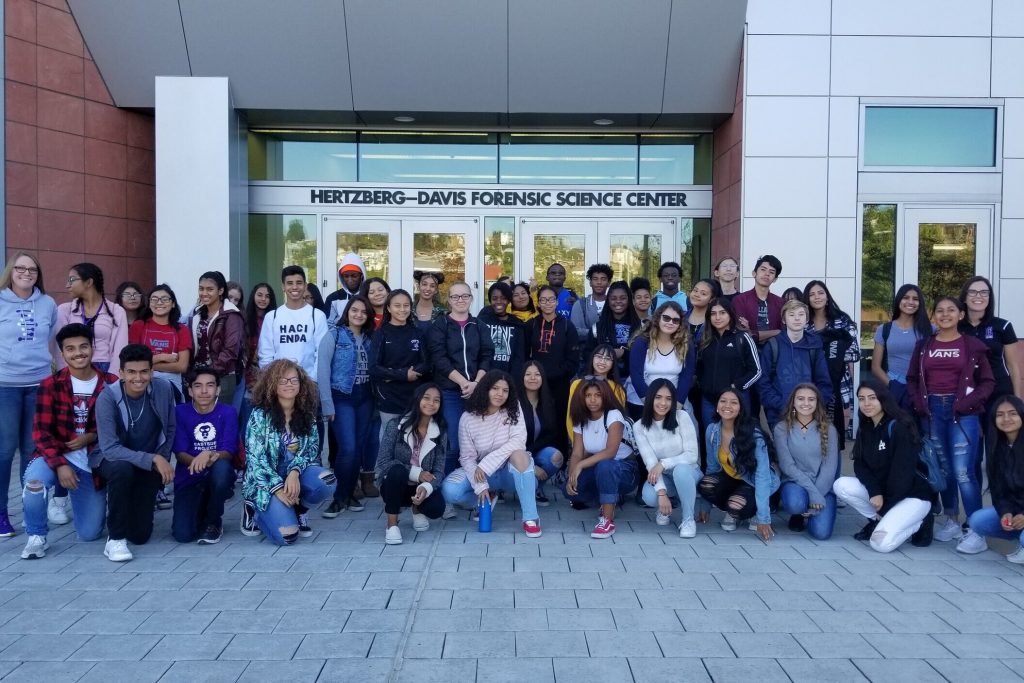
Partner Profile: Antelope Valley Union High School District
How are you advancing your Performance Assessment System? Is there one story you can share that illustrates how this work is benefitting your school,
Read More

.svg)
.svg)


.svg)
.svg)
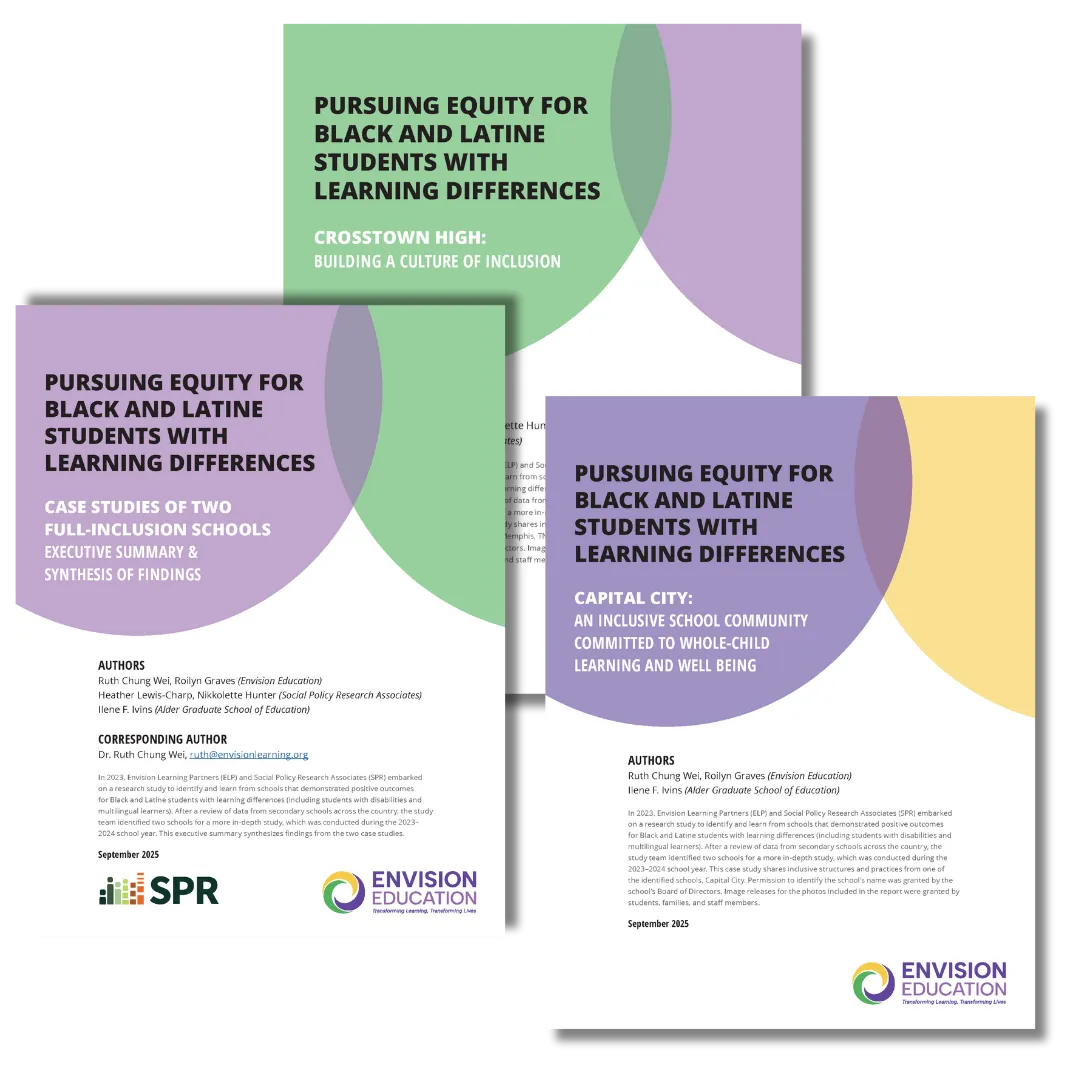
Envision Education is excited to share the culmination of its two-year research project, Pursuing Equity for Black & Latine Students with Learning Differences, which
documents and illustrates the systems, practices, cultures, and supports that are associated with the well being and success of Black and Latine students with learning differences – students with disabilities and multilingual students with disabilities.
In 2023, Envision Learning Partners (ELP) and Social Policy Research Associates (SPR) embarked on a research study to identify and learn from schools that demonstrated positive outcomes for Black and Latine students with learning differences (including students with disabilities and multilingual learners). After a review of data from secondary schools across the country, the study team identified two schools for a more in-depth study, which was conducted during the 2023–2024 school year.
The results of the research are shared through case studies of the two schools that were the focus of the research: 1) Crosstown High: Building a Culture of Inclusion; 2) Capital City: An Inclusive School Community Committed to Whole-Child Learning and Well Being; and 3) An Executive Summary/Synthesis of Findings.
In addition, we have authored four practice briefs based on the findings of the research that provide practical steps that schools can take to create more inclusive environments that support the success of Black and Latine students with learning differences.
This research was made possible through the generous support of New Profit, a venture philanthropic organization, and the Oak Foundation.
How are you advancing your Performance Assessment System? Is there one story you can share that illustrates how this work is benefitting your school, students or teachers?
The Antelope Valley Union High School District is located in the northern most part of Los Angeles County and covers over 1200 square miles. The Title I district serves approximately 21000 high school students at eight comprehensive sites and three alternative sites. The Linked Learning approach of rigorous academic and technical coursework, student supports and work-based learning is foundational to ensuring all students are both college and career ready. The district started work with Envision Learning Partners over three years ago with Lancaster High School’s Multi-Media and Engineering Academy and added the Biomedical Academy two years ago. Both academies received recognition as Gold Certified Linked Learning Academies in the 2019/20 school year, comprising two of twelve statewide programs to meet this acknowledgement of quality. Prior to the implications of remote learning, over half of the students in the Lancaster High School Multimedia and Engineering Academy completed their senior defense in front of a panel of educators and other stakeholders. In their third year, the performance assessment rubric used had been through several iterations to address increased levels of proficiency in areas of mastery and application of knowledge, meta-cognition, and presentation skills. With the onset of COVID 19 guidelines, the students who had not presented face-to-face senior defenses were given flexibility to present how and to whom. The Biomedical Academy at Eastside High School is in their second year of the process. The work done this year, facilitated by Envision, resulted in a revised performance assessment rubric that increased the level of rigor, relevance and expected outcomes. Additional focus to build capacity and increase fidelity of the performance assessment work around the district’s Graduate Student Profile was guided by Envision. Similar to LnHS, the rubric remained constant. The EHS teacher team also modified their senior defense process for students to allow more flexibility and choice on how and when students presented. Again, the decision aligned with the COVID 19 guidelines set forth from CDE and the district. Over 90 EHS students submitted senior defense work via online videos. The teacher who has oversight of the senior defense regularly communicated with the students and mentor teachers to identify areas of need and support.. During the weekly academy planning meetings, the teacher updated the team on the process and student progress within this new virtual instructional setting.
What have you learnt during this process?
Both schools’ academies that implemented performance assessments culminating with a senior defense commented that the teacher teams learned how to be more flexible and take input from various stakeholders. The acknowledgement of the increased level of stress amongst the team brought on by the uncertainties and impact of COVID 19 was balanced with the need and want to move forward for both students and teachers. It became important that they continued on the path even if meant modifications. At the district level, it was more evident than ever to let the process evolve from the teacher teams who were balancing many unknowns. They were the ones who understood their students and teacher team needs both personally and professionally. Each school took a different approach but both were successful.
What is the impact you are seeing on students and their work/teachers and practice?
Even with the interruptions, the majority of students were still committed to the process and wanted to highlight their learning/work. Because they were vested in the work and learning outcomes, many were proactive, inquiring about the presentations. There was a pride of reflection and accomplishment through a culminating assessment connected to their learning goals of their academy teachers. Now more than ever the students’ stories reinvigorated the teachers, reminding them of why they are educators. It allowed teachers to reflect on their practice, to find innovative ways to engage students and focus on the assessment piece. The work they had done throughout the year was on display instead of the daily challenges they were experiencing during a time of disruption.
What is the impact of this work ON YOU as a practitioner?
It is difficult yet rewarding work to develop performance assessments through continued collaborative efforts. The work requires educators to reflect on their own teaching practices, purpose and beliefs regarding students’ knowledge, traits and abilities. Often it requires a change in mindset within a system dictated by other metrics of student success. One teacher commented that it is a reminder that every student has a story, educators are part of that story, and even the smallest part can make a big difference in student outcomes/goals. The performance assessment through the senior defense highlights the teacher’s part. Another teacher mentioned that it allows educators to focus on the end result, which is often difficult to see, “the forest among the trees.” She acknowledged that practice helps to shape our perspective.
Is there one story you can share that illustrates how this work is benefitting your school and your students?
One student in the LnHS academy presented virtually and explained that he had not chosen the academy. He had average grades and not chosen to be in the academy. Through his senior defense, he explained how the rigor paired with the support made school “easy” for him. His final performance assessment gave him the opportunity to highlight how far he had come and having been placed in the academy with a senior defense was the best mistake that ever happened to him.
A student in the EHS academy addressed the proficiency of her being a collaborator. Like many high school students she had pegged herself as an introvert. The amount of group work with corresponding assessments and reflections gave her many opportunities to develop her assertiveness and give input. Those in the group acknowledged her research and math knowledge that contributed to her self-confidence and ability to work with others. Her video was shared with district leaders (Superintendent and Asst. Superintendent) who were dealing with all of the challenges and information during a time of transitioning the district to virtual instruction. At that time, it was a much needed inspiring reminder for those who were deep in process that student learning was still taking place.
Designing a Common “Record of College Readiness Evidence” for Integrating Performance Assessment Evidence into College Applications: A Partnership of Reimagining College Access and Envision Learning Partners
The Reimagining College Access initiative is a national effort, led by the Learning Policy Institute and EducationCounsel, to advance the use of high-quality performance assessments completed by secondary students for higher education admissions, placement, and advising decisions. The ultimate goal driving this initiative is to increase college access to underrepresented students by expanding and diversifying the types of information taken into consideration in college admissions, while also reinforcing the efforts of high schools to provide meaningful and rigorous assessment experiences for students.

Over the last two years of the global COVID-19 pandemic, many higher education institutions discontinued their use of standardized college admission test scores (SAT/ACT) due to the logistical challenges of conducting secure testing and a growing awareness of the equity concerns associated with admissions criteria that largely depended on test scores and grades. California’s public universities, including the UC and Cal State systems, have completely ended the practice of including these test scores in their admissions formulae, and some private universities, including Harvard University, paused the use of these test scores in their admissions criteria for several years. This policy change has created an opportune opening for the consideration of other types of evidence, such as performance assessments and authentic demonstrations. However, the challenge of this opportunity is getting this evidence into a standard form that colleges will see as valid, trustworthy, a “value add” to the evidence they already solicit, and can be processed efficiently and equitably.
Over the last academic year (2021-22), ELP (represented by Justin Wells and Ruth Wei) has been working together with LPI (Dr. Monica Martinez and Dr. Linda Darling-Hammond) to tackle this challenge – to develop a common and easily interpreted “Record of College Readiness Evidence” that represents students’ authentic demonstrations of their learning and accomplishments in a standardized way that is simultaneously accessible and useful to college admissions reviewers and allows students to present evidence of their unique intellectual, personal, cultural experiences/contexts, learning dispositions, and college readiness skills.
To accomplish this purpose, ELP and LPI convened a nationally representative Advisory Panel that included higher education admissions representatives and college counseling / secondary school networks that engage students in authentic demonstrations of learning. Advisory Panel members provided input into a blueprint – a set of design specifications – to guide the development of a common “Record of College Readiness Evidence”, and provided feedback on initial drafts of the blueprint and the elements of evidence that would be solicited from student applicants. Simultaneously, ELP conducted a national scan of performance assessment by conducting a survey of school networks using performance assessments as part of their assessment systems to determine the most common learning outcomes and means of demonstrating those outcomes, with the goal of creating an inclusive menu of learning outcomes and genres/types of performance assessments for the “Record”.
In the next academic year (2022-23), ELP will again be partnering with LPI to create an online representation of the “Record of College Readiness Evidence”, with the goal of spurring interest and commitment from higher education institutions and secondary school networks to participate in a pilot of the Record in the 2023-24 admissions year. The ultimate goal is to create a common online platform that can be used by students to submit authentic evidence of their learning and accomplishments while also meeting the needs of college admissions reviewers to seamlessly integrate new evidence into their data and review systems, and use this evidence efficiently, systematically, and equitably. There is growing interest among higher education admissions leaders in learning more deeply about student capacities that are difficult to capture in existing application materials (e.g., Harvard University’s “Making Caring Common” project) – such as students’ intellectual, civic, and moral character, personal drive, specific cultural and personal contexts/experiences, resilience and adaptability in new situations, and innovative thinking. Reimagining College Access and ELP hope to make a convincing case that authentic demonstrations of learning and accomplishments, and students’ reflections on the significance of that evidence, are robust, direct sources of evidence of these hard-to-measure traits.
The Reimagining College Access initiative recently released a guidance document, authored by Aneesha Badrinarayan, aimed at colleges interested in integrating performance assessments into their college admission systems: Performance Assessment in College Admission: Designing an Effective and Equitable Process. Although the tool is designed for admission officers, it can also be used by K–12 educators to gain a better understanding of the considerations that colleges must take into account in the use of performance assessments in admissions. The tool defines performance assessment and then provides concrete guidance on how admission officers can incorporate information about students’ K–12 performance assessments into their application and review processes.
We encourage K-12 school networks interested in potentially partnering with LPI and ELP in a 2023-24 pilot of the online “Record of College Readiness Evidence” platform to reach out to us! Please contact Ruth Wei (ruth@envisionlearning.org) or Justin Wells (justin@envisionlearning.org) to learn more!
Envision Learning Partners started working with Bryan Adams High School (Dallas, Texas) four years ago to help them transition their entire High School of 2,000 students to a Performance Assessment System. MaryAnn Suhl (Bryan Adams Vice Principal and the lead on this transition) shares her experiences on the project in this blog post:
How are you advancing your Performance Assessment System?
Since we began implementing our Performance Assessment System, we have continued to evolve it into something that works for our campus. Our Performance Assessment system is so beneficial and powerful for our students. When we host defenses, students want to stand in front of their peers, administrators, family members and the community so that they have an opportunity to share their story. It is something so transformative for our students, but also has had a major impact on our teachers because they can now see what students learned in their classes. In some cases, it has caused our teachers to rethink what and how they are teaching based on student defenses and performance assessments.
What have you learnt during this process?
Robot match for engineering students that was a performance assessment in their class
We have learned that this process takes time and that you have to keep it simple. It is important to create as much buy-in and support from all levels of staff so that it doesn’t become an initiative that “they are making them do” instead of what is best for students and their learning. Finally, don’t give up. You will hit snags and run into some roadblocks but the payoff in student learning and engagement makes the struggle so worthwhile.
What is the impact you are seeing on students and their work?
The direct impact is that students are being provided with greater opportunities to discuss the work they are doing in their classes and how it will impact and relate to what they want to do once they graduate high school. Now that we are four years into this process, it has become the thing that is done and students are now excited to participate in defending their learning and are excited to have a greater sense of purpose in what they are learning.
What is the impact you are seeing on teachers and their practice?
There has also been an unintended consequence of moving to performance assessments and defenses and having all of our faculty serve on defense panels to evaluate students on their ability to articulate their learning: Teachers at our campus now have a greater sense of ownership in the process and can now witness students struggle to describe their learning. In other words, it has caused deep reflections in our faculty on what and how they are teaching because it brought to light a realization that “hey, that is a really cool project and students loved getting to make it, but now I can see that they didn’t actually learn from it what the teacher intended – that is so powerful.” This awareness for students and teachers has brought a more critical and analytical lens to the assessments that our teachers are designing for students. The direct impact has been higher levels of rigor for so many of our classrooms and projects. Students can now engage in meaningful and relatable work – they can better articulate how it will help them in their futures.
Performance Task in Health Class
What is the impact of this work on you as a practitioner?
It has really forced me to rethink teaching and learning at the secondary level to consider the question of how are we really preparing our students for life after high school. As a teacher you spend days, weeks, and sometimes months on an assessment that you are so passionate about and think that it is well-structured and designed intricately so that your students are able to master all of the topics you’ve developed. It’s incredibly rewarding to watch students stand in front of their peers (defending their learning) and say things that are so profound, making deep connections to the lessons and to their own personal lives. Students describe how learning these skills, they feel that they are now better equipped to function in society – there is nothing like it. This experience makes me want performance assessments to be standard practice in all classrooms across the country. I have witnessed the true power of engaged learning that takes place when students have to demonstrate what they know, what they can do, and finally, reflect on how their learning has shaped themselves and their future. I am excited to take this learning and experience to more schools in our district to help other educators begin to see the power of performance assessments.
Teacher-leaders working together on creative solutions to develop performance assessments
Is there one story you can share that illustrates how this work is benefitting your school and your students?
This past year, I was sitting in a senior defense and a young lady stated that she had been accepted to nursing school and her performance assessments she discussed were mostly related to her career in the medical field. What was so profound is that this young lady was able to articulate the learning she participated in her classes, particularly in her science classes. She had a strong understanding of the ways in which learning that information in her classes was going to be very beneficial as she was embarking upon nursing school. She also was very candid about how she thought during her freshman year that defenses and performance assessments were silly and just extra projects. She didn’t think they were connected at all to leadership or preparing her for her future. Now she does.
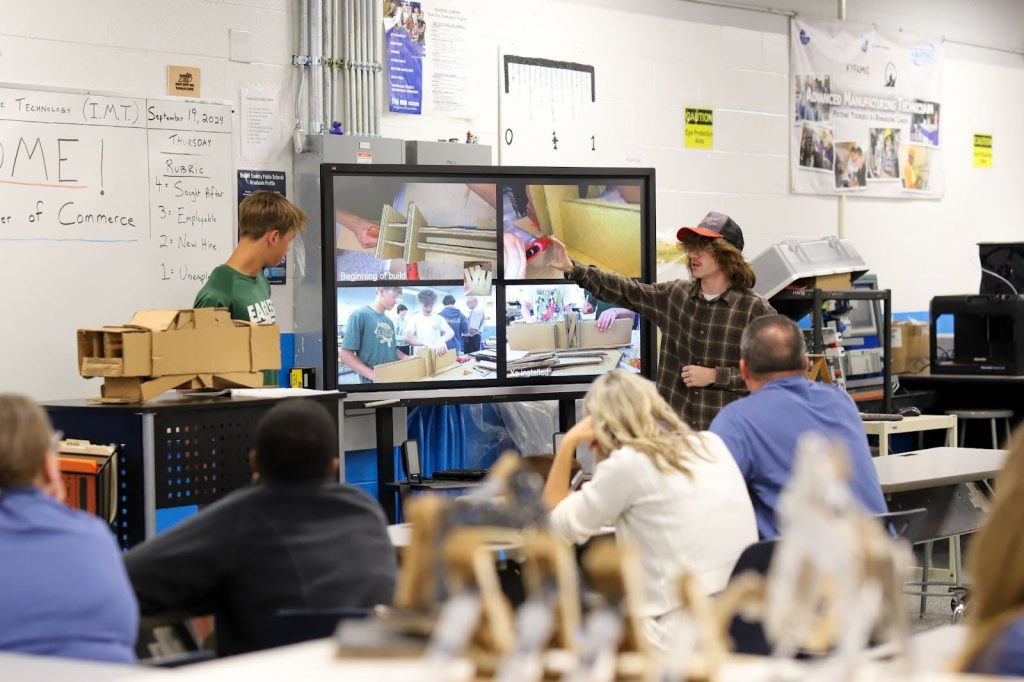
Bullitt County Public Schools is a public school district in Shepherdsville, KY that serves students from pre-K through 12th grade. The district is committed to providing a world-class education that prepares students for success beyond high school.
Envision Learning Partners has worked with Bullitt County Public Schools since 2018, partnering on their Graduate Profile development and performance assessment system. Bullitt County’s Superintendent, Dr. Jesse Bacon, and Assistant Superintendent, Dr. Adrienne Usher, are also both alumni of ELP’s Deeper Learning Leadership Forum.
In this Partner Profile, we hear from Assistant Superintendent, Adrienne Usher.

How are you advancing your Performance Assessment System? Is there one story you can share that illustrates how this work is benefitting your school, students or teachers?
Advancing the Performance Assessment System in Bullitt County Public Schools involves the creation of Graduate Profile Performance outcomes for students in Grades K-2, 3-5, and 9-12. A notable story comes from a graduate of the district who, after completing postsecondary education, entered the workforce. This individual reflected on a high school assessment experience involving a presentation to a city council to solve a community problem, which proved invaluable when preparing for an engineering position interview. College courses, according to this graduate, did not fully address aspects of the interview process, including content, dispositions, and competencies. This example highlights the effectiveness of the performance assessment system in preparing students not only for specific occupations but also for broader workforce preparation.
What have you learnt during this process?
The process of transforming assessment has revealed the need to rethink its purpose and identify who truly owns it—students. While teachers play a critical role in this process, it is students who take ownership of their learning. Empowering students to demonstrate their learning fosters motivation and a deeper understanding of its larger purpose.
What is the impact you are seeing on students and their work?
The implementation of performance assessments and student ownership of learning is having a significant positive impact on students and their work. Students are more motivated as they recognize the relevance of their learning beyond the classroom. This approach is also fostering necessary dispositions and competencies, aligned to our Graduate Profile, preparing students for future challenges in higher education, the workforce, and beyond. By developing the skills to articulate their knowledge and connect it to meaningful purposes, students are not only achieving academic success but also growing into lifelong learners equipped for a dynamic and evolving world.
What is the impact you are seeing on teachers and their practice?
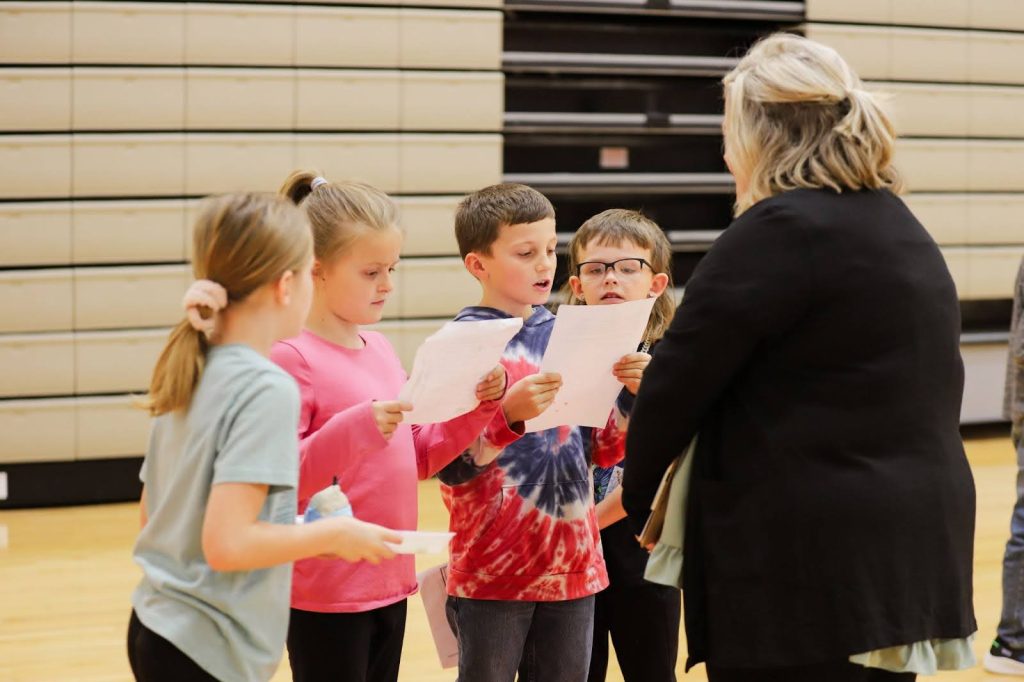
The gradual shift embedding performance assessments is creating meaningful changes in teachers and their practice. Teachers are rethinking the purpose of assessment on a continuum of traditional, transitional, and transformational methods that emphasize student ownership of learning combining academics and our Graduate Profile competencies. Teachers are becoming facilitators of learning, guiding students to take responsibility for their growth and encouraging reflection and self-assessment. This approach is also enhancing teachers’ instructional practices, as they integrate more student-centered strategies and focus on developing dispositions and competencies alongside content knowledge. The process is reinvigorating teachers’ sense of purpose and enthusiasm for a new school experience.
What is the impact of this work ON YOU as a practitioner?

The impact of this work I have experienced, as a practitioner, is related to understanding a larger purpose for school and its connection to the community and society. School can be viewed as a place to gain knowledge and get a high school diploma and it ends there. However, connecting school and assessment that impacts students in more comprehensive ways is about life preparation. In reality, the school experience, which includes teaching, learning, and assessment, is a reflection of what the greater community (students, parents, community members, industry partners, etc.) values. If communities want graduates to be more prepared and successful in the workforce and as citizens, collaboration that provides opportunities for learning and assessment which connects academics to real world problem solving is a future-focused necessity.
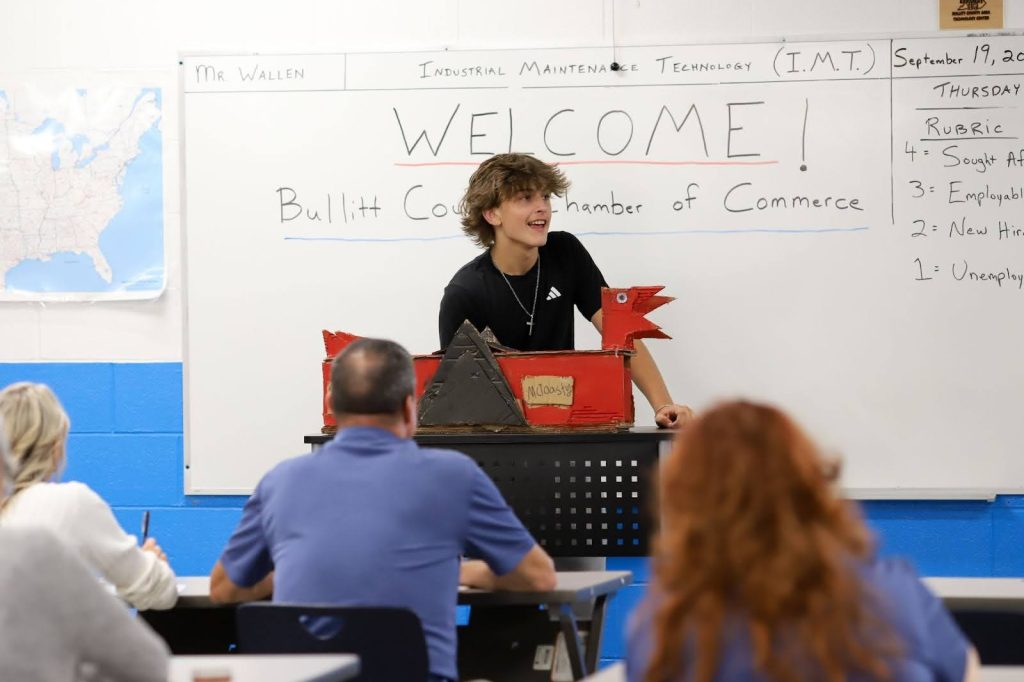
Learn more about the great work being done in Bullitt County in this EdWeek article.
Envision Learning Partners is delighted and honored to introduce Capital High with the Madison Metropolitan School District in Wisconsin. We started our partnership with the district back in 2016, and this year we are thrilled to be working with three of their schools. Karyn Stocks Glover is the principal of Capital High and has shared her thoughts on our work together below.
How are you advancing your Performance Assessment System?
Capital High is guided by an equity vision and four equity drivers that support doing school differently. Capital High is launching its Graduation by Portfolio Performance Assessment this year. With the support and expertise of our Envision Learning Partners (ELP), we are designing a portfolio model that is aligned to competencies identified in the Madison Metropolitan School District’s graduate vision, that is specifically focused on growth mindset as a critical driver for deeper learning, and that is incorporated in all areas of learning through our Core Benchmarks (see in Appendix).
Madison Metropolitan School District’s Graduate Profile
Our participation in the Tinquevation Accelerator Workshop this summer with ELP supported us to engage in designing at the margins, and an outcome of this five-day intensive was naming and claiming growth mindset as a core value and a core practice across all areas of teaching and learning. Recognizing that our students and staff are inherently resilient, we framed our growth mindset skills (curiosity, planning, risk-taking, reflection) in this core belief. We are beginning to develop rubrics for our performance assessment system, which we will do in partnership with ELP.
We will have our first portfolio defenses in May 2020. Over the next two years, we will continue to partner with ELP in order to expand our graduation by portfolio model to include self-knowledge and interpersonal skills.
What have you learnt during this process?
We have learned doing school differently means defining deeper learning through asking students what they need to be successful in the long term and in the moment, and through supporting teachers to work in teams that prioritize student demonstration of mastery in knowledge and skills over time and through multiple opportunities in a variety of academic settings. We have learned that we thrive through shared leadership.
What is the impact you are seeing on students and their work?
Our students are building trust with their peers and the adults who support them; they are learning that Capital High is a community that believes completely in their innate goodness and intelligence, and that their voices are valued. We are seeing evidence of students being thoughtfully reflective about their learning through the lens of growth mindset.
What is the impact you are seeing on teachers and their practice?
Staff choose to work at Capital High because our goal to do school differently aligns with their values and because they want to work in professional partnership with their peers. Staff recognize that teaching skills versus content, measuring progress versus outcomes, and embracing collaboration versus isolation require curiosity, planning, risk taking and reflection with peers. Capital High staff are applying a growth mindset in their own practices.
What is the impact of this work ON YOU as a practitioner?
As the founding principal of Capital High, I value the partnership with ELP to support our journey to do school differently. While I brought a number of leadership strengths to the role, I have found that my capacity for leading transformational change is enhanced by working with an organization that has always prioritized identity work through student voice and student growth. I appreciate that ELP is not a model one adopts, but rather a way of working that centers race and equity and applies design thinking (where you are encouraged to design at the margins) so that schools can write their own stories.
Capital High’s Equity Vision
Empowered by personalized learning in a diverse and supportive community, and strengthened by family and school partnerships, all students will graduate prepared to succeed on their individual pathway.
Who We Are
Capital High is a non-traditional high school that is committed to deeper learning in the Madison Metropolitan School District. Our work is guided by the district’s Strategic Framework and Graduate Vision, as well as our school’s equity vision. We have an unwavering commitment to racial equity and an ambitious plan to serve opportunity youth. Our mission is to change the narrative for opportunity youth by providing learning through interests opportunities and preparing youth for post-secondary success in college and career.
We are engaged in a school design and development process that is fortified by a dedicated staff who are deeply committed to transformational change – individually, collectively, and institutionally. Disciplined and thoughtful professional collaboration is a standard of practice at Capital High. Together, we are creating and sustaining a thriving school community that is anchored in its commitment to anti-racist values and learning partnerships with students and families.
Our Approach
Our approach prioritizes opportunities and practices for youth engagement through student involvement and shared power. Our work is guided by four equity drivers – competency teaching and learning, advisory, experiential learning, and professional collaboration. These transformational change drivers support our commitment to a clear vision with targeted strategies and are embedded in “fail forward, fail fast” practices of innovation in service of opportunity youth. Our academic competency model is aligned to Common Core State Standards and articulated through measurable benchmarks of college readiness. Our advisory model prioritizes student agency through goal setting and reflection, as well as developing well being through relationships to self and others. Our experiential learning model promotes student inquiry and exploration of higher education, career pathways, and community partnerships. Our professional collaboration model is built on the belief that through collective efficacy we improve the lives of all members of our school community. Students graduate by portfolio with multiple opportunities to meet and exceed competencies in mastery of content and growth mindset.
Envision Learning Partners is delighted and honored to introduce the Colorado Education Initiative (CEI). The Colorado Education Initiative is a statewide nonprofit organization in Colorado that invests time, expertise, and dollars in schools, students, educators, and leaders. They are rooted in a vision of equitable outcomes for every kid that drives a strong bias for action focused on sustainable change to the system.
ELP and CEI kicked off our partnership in the 2017-18 school year. Amy Spicer is the Senior Program Lead at CEI and has shared her thoughts on our work together below.
We have been working with ELP for the past two years to help schools and districts in Colorado build capstone experiences that meet the needs of our state’s Graduation Guidelines policy. Graduation Guidelines put a menu in place for districts to use in establishing graduation requirements, including traditional ways to demonstrate college and career readiness such as SAT and ACT scores, as well as performance-based demonstrations such as portfolios and capstone projects.
The capstone and performance assessment options both open up immense possibilities for Colorado’s students. In addition to providing students with more options to show that they have mastered academic content, the performance-based pathways to graduation allow students to go beyond demonstrating proficiency in traditional academic subjects. The world is rapidly changing, and what students need to be successful in college, a career, and in life require additional skills like collaboration, critical thinking, creativity, and problem-solving—all things that students cannot show with a single test score.
CEI’s partnership with ELP has resulted in over fifteen schools and districts building systems that are equally rigorous to test scores and have allowed Colorado districts to rethink assessment practices in ways that are more inclusive and empowering of students who have been under-served by our traditional systems. When done well, capstones can show more of what students know and are able to do than the SAT or ACT.
Our work has benefited greatly from the guidance from ELP. The theory of action that ELP brings—define a graduate profile, design a system of performance assessments that measure that profile, and implement pedagogies and school structures that lead to success—has allowed for schools and districts to create comprehensive capstone systems that break through traditional learning environments. In particular, we have seen the immense impact that the locally-developed graduate profile has on building rigorous capstones. When communities come together to define the competencies and skills they seek for their students to acquire in their K-12 career, they have a framework in which to design systems and structures that allow students to demonstrate their mastery.
I have learned so much through this project and our partnership with Envision. By far the biggest impact on me has been on how I approach supporting schools and districts to enact change: when the work is meaningful and relevant, we as facilitators need to introduce tools and resources and then get out of the way. When we first started this project, there was one school district in particular that asked to have a lot of interrupted time to work on their capstone after our initial kickoff and introduction. At first, we weren’t sure how this would go—would they create rigorous plans? Would they make the amount of progress we were seeking? Could we let go and see what happened?
This district—Canon City School District—ended up making a significant amount of progress in a short time. They have created an incredible program that is based on the needs of their community, one that has become an exemplar across the state. What they are building is still a work in progress, but they have taught me the value of not over-facilitating and trusting in the good work that our educators—who are truly the experts—accomplish when they are given inspiration, time, and space. This has impacted my work far beyond the scope of this project, as I have taken this lesson into all projects I lead.
Click here for a deeper look into CEI’s Capstone Design.
ConnectED has worked to change public education and improve student outcomes for over 15 years. The organization was founded with the belief that every student deserves a great education – especially those furthest from opportunity. ConnectED works with school districts, colleges, and employers to create learning opportunities for students that help prepare them for success in college, career, and life. We broker partnerships that span K-12 schools, postsecondary education, and workforce to address systemic barriers that perpetuate educational inequalities.
To deliver on this promise ConnectED, in partnership with Envision Learning Partners, recognizes the very significant and real barrier that mathematics has traditionally played. Decades of research in a number of fields have consistently revealed that secondary mathematics, and in particular Algebra I, play a major gatekeeping role for post-secondary education and career opportunities. The transition from arithmetic to algebra involves a significant shift in reasoning and talking about equivalence, which is a fundamental concept in mathematics. The risks associated with underperformance in math are greatest for students who are historically underrepresented in postsecondary education such as students of color, youth from low-income households, and multilingual learners.
In response, ConnectED and ELP are working together to develop shared approaches, tools, and resources that support our partner districts to take their mathematics learning to the next level. Our approaches build student, teacher and leaders’ capacities with the Illustrative Mathematics curriculum to both strengthen the effectiveness of math instruction and improve student learning and engagement by making math more relevant for young people. Our work centers the use of embedded Mathematics Language Routines as drivers for building student-centered learning experiences, and as research-based strategies to simultaneously support mathematics and language learning for multilingual learners.
Specific Regional Solution
For the past 5 years ConnectED and ELP have been working closely with the San Diego Enhanced Mathematics Initiative. In this collaboration we have supported the district to build a coherent instructional system to support a new approach to mathematics; to pilot a new curriculum; to develop supplemental materials and projects; to support teachers and school sites; and to work closely with district leadership to develop and monitor implementation plans. The team in San Diego has developed a strong vision for modernizing mathematics for all. This work has predominantly been serving middle schools, with a growing number of piloting elementary schools and a few piloting high schools.
For the past 3 years ConnectED and ELP had also been supporting West Contra Costa Unified School District and Colton Joint Unified School District. Both districts are working to develop coherent instructional systems in mathematics through supporting middle schools to pilot and adopt high quality curriculum and cultivate aligned instructional approaches.
Video Club
Over the past 2 years, ConnectED and ELP have been piloting and researching the use of an approach to Professional Learning called Video Club. In Video Club, an Algebra 1 teacher, for example, brings a video clip from their classroom to share with other Algebra 1 teachers. Using ConnectED’s video analysis tagging tool, rewindED, teachers look for instances of high-leverage instructional moves and “tag” what they see in the video. The group of teachers then discusses what they observed in their colleagues’ classroom, what questions they have, and how they might apply any learning to their own classroom teaching. Through this process, teachers learn from one another and make shifts to their own instructional approaches in their classrooms.
Working closely with the Algebra 1 teachers in Oakland Unified, we have focused the Video Club on instructional moments where the class is engaged on 1 of the 8 embedded Math Language Routines within the Illustrative Mathematics curriculum. The Language Routines provide structured protocols to support students developing their mathematical understanding together with their use of language. These routines support students to make their thinking more visible and clear through both written and oral interactions, and by structuring opportunities for revision.
These projects are generously supported by The Gates Foundation and we look forward to being able to share our research findings from American Institutes for Research with you.
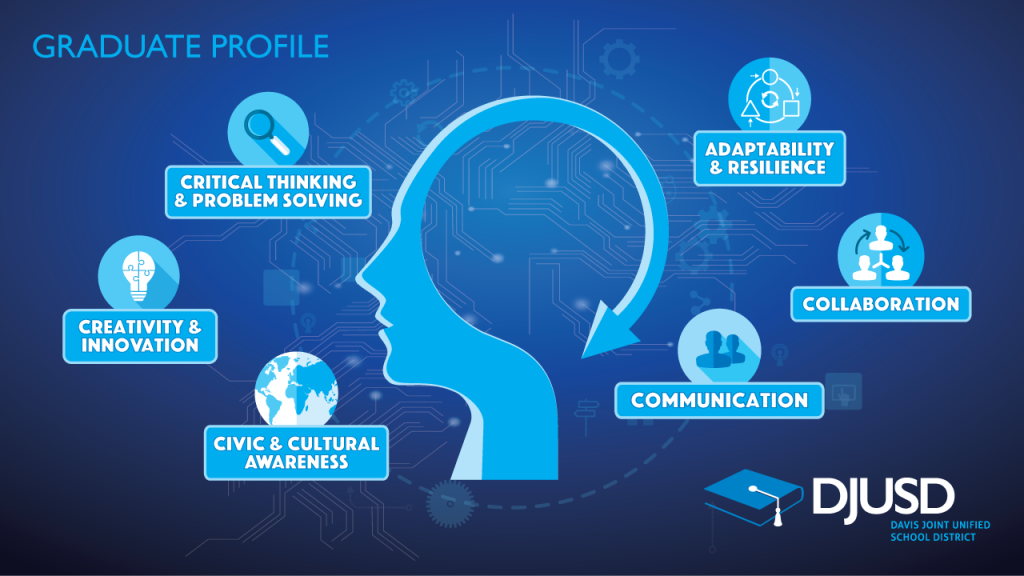
Six years into the Graduate Profile Journey, DJUSD is finally starting to make some systematic moves towards implementation. After exploration of different approaches to implementation, DJUSD has landed on a strategy that fits its context as a traditionally decentralized and high achieving district. The approach is to anchor each of the six graduate profile outcomes at strategic grade levels so that when students leave DJUSD they will have had robust experiences with all six during their career. The opportunity for providing these robust experiences is the power and potential of performance assessments.

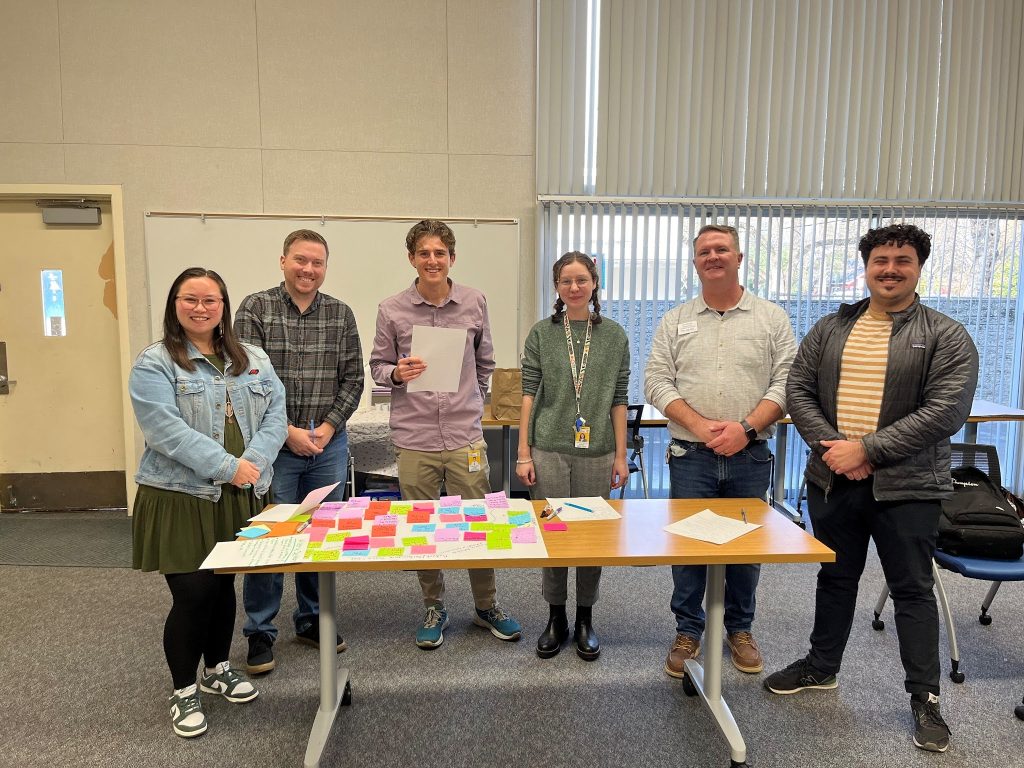
There are two important actions taking place in the 2024-25 school year to advance this strategy. First, in partnership with Scaling Student Success and Envision Learning Partners, we are working with a teacher leadership team of sixth grade teachers to design a performance assessment focused on the Adaptability and Resilience Outcome of our Graduate Profile. This group is underway and is energized about the opportunities to develop adaptability and resilience in their students who are at a key transitional stage in their personal and academic lives. The second action item in progress comes from our Grade 9 Ethnic Studies Leadership Team. The DJUSD Ethnic Studies Course, which is in its second year of
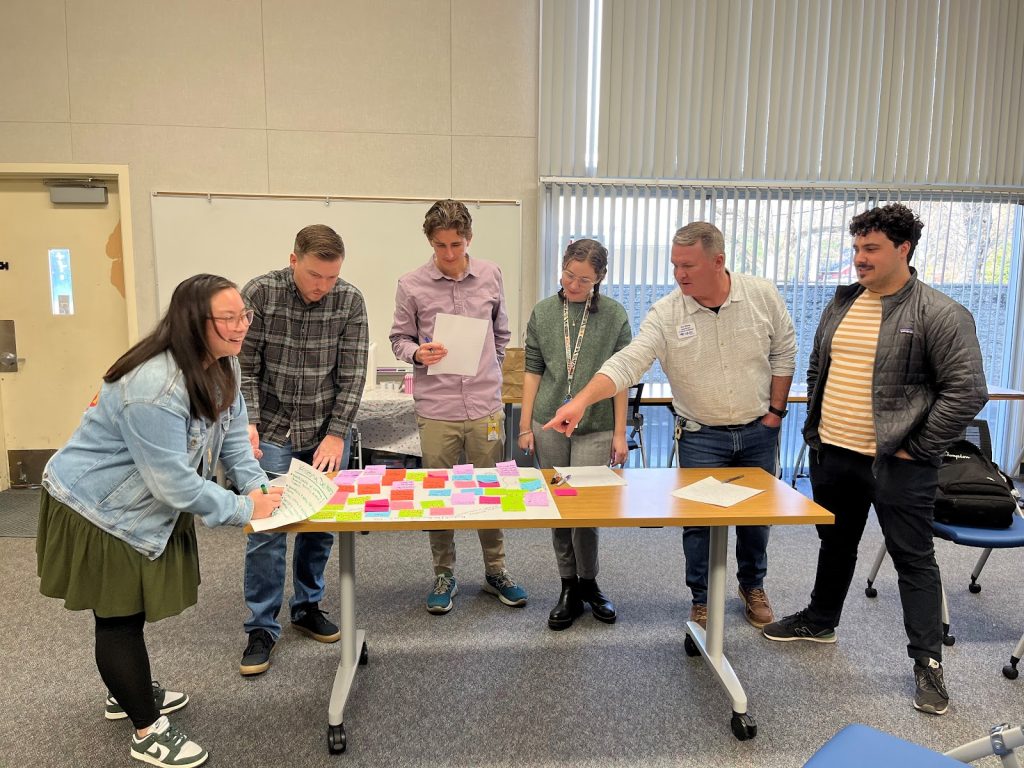
implementation, culminates with a Youth Participatory Action Research Project (YPAR). The Ethnic Studies Leadership Team seized on the opportunity to create alignment with the Civic and Cultural Awareness Graduate Profile Outcome and their YPAR project. The group is in the final stages of developing a Civic and Cultural Awareness Rubric which will solidify the Civic and Cultural skills, knowledge, and dispositions to be taught and assessed through the YPAR project. This will help move the YPAR project from a traditional project to a high quality performance assessment.
In collaboration with ELP, Moonshot Academy in Beijing, China has built an assessment system to support competency-based education for their students!Guided by their mission to help learners better understand their intrinsic talents and the outside world, and assist them in becoming fulfilled, compassionate, and active citizens, Moonshot Academy built their model keeping these two critical questions in mind:
Ruth Chung Wei, ELP’s Director of Research and Innovation, is working with Moonshot’s educators, and has this to say about the partnership:”The Moonshot staff were so serious and eager to learn – it was inspiring to be around a group with such energy and passion for personalized learning. Working cross-culturally has pushed ELP coaches to really consolidate our key lessons, and to find ways to share them in a way that is accessible and immediately applicable.”
Click the resource button to read the full ELP Partner Profile by Tommy Zhu, Moonshot Academy’s Director of Feedback System
Design Tech High School (also known as “d.tech HS”) in Redwood City, CA was co-founded in 2014 by Ken Montgomery and Nicole Cerra, with the support of the Oracle Education Foundation, to prepare students to make the world a better place by supporting their development of “design thinking” skills and mindsets that ignite students’ empathy and passion, and expand their creative problem-solving capacities. From 2018-2020, d.tech HS staff partnered with ELP to work on the development and piloting of its Innovation Diploma performance tasks and rubrics. Ruth Chung Wei, Director of Research and Innovation, and Vinci Daro, Director of STEM Learning, provided technical assistance during the development process and evaluation of the first year pilot. The partnership culminated in an external review of the Innovation Diploma, which found overwhelmingly affirmative feedback from design experts in higher education and industry.
The Innovation Diploma is an assessment system that was designed to provide students with an opportunity to demonstrate their ability to apply mindsets and skills that are necessary to design solutions to real-world problems. The focus of the Innovation Diploma at d.tech is on addressing problems related to the United Nations Sustainable Development Goals. Students select one or more of the Sustainable Development Goals and a need that they have identified in their local context or in the world, and develop a design solution to address that problem/need. Earning the Innovation Diploma certifies that a student has met industry and academic standards for creativity, leadership, self-direction and has also demonstrated an understanding of their responsibilities as a designer.
One d.tech alumna Joelene, who is now a student at UC Berkeley, explained how her experience with design thinking in high school prepared her for college learning and work experiences.
“My time at d.tech taught me to be adaptive and creative when approaching unfamiliar situations and daunting problems, and it started building the foundations in me to approach designing and building solutions with empathy at the forefront. At UC Berkeley, I’m a designer and project leader in a student-run organization that builds technology for nonprofits. This semester, I’m leading the development of a mobile application partnered with We Care Solar, an international organization that provides life-saving solar energy to community health centers in hard to reach villages all over the world — every step of the way, I know that the principles that I’ve learned at d.tech will come in handy, from user-centered design, to a mindset of iteration and growth, to a willingness to work in initially ambiguous and new environments…Although the 5 step design-thinking process that we learned in school is rarely referenced explicitly, it’s grown to be part of the work that I do and the way I approach new challenges that arise; through practice, it’s become a natural part of my toolkit when I embark on a new project or explore a new entrepreneurial idea!”
Design Tech plans on supporting high schools around the world in offering the Innovation Diploma to their students. To learn more about the Innovation Diploma program, please visit innovationdiploma.org or contact Dr. Ken Montgomery at kmontgomery@dtechhs.org.

Meghna G. BA/MD Student at Northwestern University. Conducting antibody research to better understand social determinants that affect human health
In my experience, the design thinking process has proven to be a very powerful thought process that constantly makes me think about how I can better my surroundings. I am currently a pre-med student, which consists of a lot of studying and memorization about the world, but ironically, not a lot about how one can help the world. Therefore, I am grateful for my background in design thinking because it has ingrained within me the ability to think outside of the traditional framework of academia and to think creatively about how I can take what I’ve learned to not just solve problems on a test, but more importantly, solve problems in my community. For example, right now in college, I’ve been using design thinking as a guide to develop effective programs that work on menstrual equity and community development through art. I’m so grateful that d.tech taught me design thinking so early on, as it has become an invaluable mindset that has shown me that I have the power to make a difference at any stage of life, and that is an empowering lesson that I’ll carry forever.
Adelyn C. Freshmen at The Wharton School at Penn
I was recently offered an internship with the San Francisco Veterans Affairs Department, and I’ll be working with them from September through May to redesign the post-COVID hospital experience. The internship was supposedly directed at graduate students (the application said graduate students were preferred) but I think my unique background stood out because I did an activity session/group interview alongside four other graduate student applicants and was still selected! d.tech and my experiences with design thinking really shaped my application.
Joelene L. UC Berkeley, intern at Slack and Kleiner Perkins
My time at d.tech taught me to be adaptive and creative when approaching unfamiliar situations and daunting problems, and it started building the foundations in me to approach designing and building solutions with empathy at the forefront. At UC Berkeley, I’m a designer and project leader in a student-run organization that builds technology for nonprofits. This semester, I’m leading the development of a mobile application partnered with We Care Solar, an international organization that provides life-saving solar energy to community health centers in hard to reach villages all over the world — every step of the way, I know that the principles that I’ve learned at d.tech will come in handy, from user-centered design, to a mindset of iteration and growth, to a willingness to work in initially ambiguous and new environments. “although the 5 step design-thinking process that we learned in school is rarely referenced explicitly, it’s grown to be part of the work that I do and the way I approach new challenges that arise; through practice, it’s become a natural part of my toolkit when I embark on a new project or explore a new entrepreneurial idea!”
The Envision Learning Partners are entering our second year of partnership with the East Palo Alto Academy High School. They have been collaborating with Deeper Learning Coach, Morgan Vien, to develop their graduate profile and, due to distance learning, were forced to pivot and reimagine how to do their defenses of learning. Read more here from EPAA principal, Amika M. Guillaume, on what they’ve learned in this process and the impact on their teachers, students, and even Amika, herself.
How are cohort participants redesigning and/or advancing their systems to provide rigorous and equitable capstone experiences for their students? Is there one story you can share that illustrates how this work is benefitting schools, students or teachers?
We had an awesome experience working with Morgan Vien to carefully consider our language and priorities it represented. This was accomplished through a walkthrough and deep analysis by a design team composed of teaching colleagues and administration. After a deep dive and some tough choices, we were able to create one of many drafts, representing our EPAA Graduate Profile. It was reassuring to see that the overall design was something that clearly defined what we believed as a school and desired for our students and community. The entire process was inspiring how it helped galvanize our team and drive our approach to curriculum and instruction. We are all excited about the impact this will have on teaching, learning and authentic assessment.
During Distance Learning we were forced to pivot and re imagine how to do a portfolio defense of learning, for our first time, and from afar. To do so we identified a group of rising seniors to beta test our graduate profile. During one of our many Zoom classes one of the students said the most important and profound statements that defined this entire experience. “Our other exhibitions were about researching and learning something new. It was interesting and we learned, but it wasn’t as hard or important. This time we are talking about our learning and our thinking. This is much harder and better.”
What have you learned during this process?
Perhaps the most important part of this work is around using a graduate profile to drive instruction that is about deep and rigorous learning. As a school we have been very driven by our school vision (All students will graduate college-ready, empowered with the knowledge, skills and passion to positively impact their own lives, their community and the global society.), be it in student essays, reflections, decisions about course offerings, and the partnerships we pursue. We are also driven by our Bulldog Way: love, attitude, mindset, grit & power, but nonetheless we didn’t have something driving the kind of instruction, learning and assessment we knew we needed for our students’ long term success. We are extremely proud of and motivated to move forward with the portfolio defense of learning, based on our graduate profile
What is the impact you are seeing on leaders, teachers, and/or students?
It was so important to do this work as a design team that later engaged the rest of the staff in digging deep to develop our graduate profile. We are confident that once we begin to design our lessons with this profile in mind, we will be even more aligned and confident in our ability to push our students in a rigorous way. In our work with students we saw them thinking differently and more carefully about their learning. It was inspiring to see students pushing not only their own thinking, but also that of their classmates through the facilitated work in beta testing the defense of learning.
What has been the impact of this work ON YOU? Is there one story you can share that illustrates this?
I don’t know where to begin, but I know Morgan can also speak to this.
We are in the middle of a global pandemic, but that didn’t stop us. We engaged in deep learning from afar, thanks to Zoom and dedicated teachers, students and Envision Learning coach extraordinaire, Morgan Vien. We had students going deep in their reflections, their learning and their collaboration. There was the day that Deisy ran in late from her workplace, you could see her removing her “Mr. PIckle” apron and getting situated in front of her camera. This, after she submitted her slides (yes SLIDES) using her PHONE because the internet was so terrible from her home. Slides, which by the way, became our exemplar for its use of storytelling, visuals, succinct descriptions and overall impact. The two before her who presented their learning reflection on the theme of “growth mindset” did a solid job, but it was this student, who is working DURING A PANDEMIC, rushing to join us in the meeting ASAP, about 30 minutes late, who leaves us speechless with her prowess, determination and getting it DONE despite all obstacles. We had goosebumps.
AMIKA M. GUILLAUME
EPAA PRINCIPAL
“My parents wanted to give me the values of education that they were unable to have when they were in school. They wanted us to be proud of who we are because we deserve to be the types of people that our kūpuna were. It is not our fault that our practices were interrupted but it is our kuleana to make sure that it does not happen again.” –Grade 12 HFCS student
“Less learning is shared on tests than Hōʻike which incorporates interviews, online research, and book research. If SAT was the only way to demonstrate my learning that would’ve been a big struggle and I would’ve just studied for the test and afterwards forgot.” –Grade 12 HFCS student
“We use our Hō`ike Capstone Projects to give back to our community….It is important to share the knowledge ʻĀnakala Bo gave to us because like he said, it is useless if no one uses it.” –Grade 8 HFCS student
Hawaiian-focused Charter Schools (HFCS) are a consortium of public charter schools that have been designing and implementing culturally sustaining curriculum, instruction, and assessment since the early 2000s. Currently, there are 17 HFCSs, serving over 4,000 students, more than 80 percent of whom are part Native Hawaiian. What distinguishes these schools from regular public schools is that they center ʻĀina-based Education. ʻĀina-based learning experiences allow learners to create authentic, reciprocal relationships with the land, people, and resources of a specific community which fosters the development of ʻOiwi (indigenous) Leadership skills. This becomes an integral part of the learner’s

identity and a catalyst for a personal commitment to the health and well-being of that community. It is situated in learning that honors the past, present and future in order to ensure the sustainability and productivity of all forms of life. More specifically, ʻāina-based education embodies the wisdom of the ʻōlelo noʻeau: ‘O ka hā o ka ʻāina, ke ola o ka poʻe (The health of the land is the health of the people).” (Hakipuʻu Academy, Ke Kula ʻo Samuel M. Kamakau, Mālama Honua, 2020)
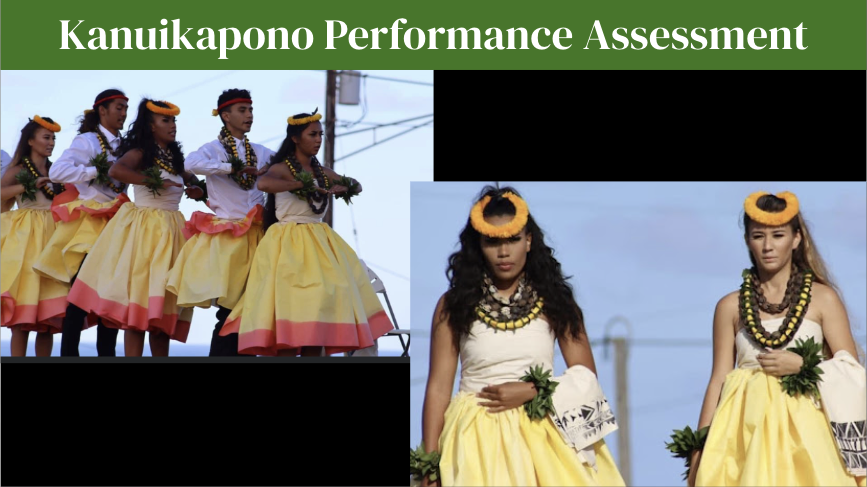
The HFCS have also been engaged in developing and implementing school-specific Culturally Relevant Assessment systems that are grounded in the HFCS Cultural Competency Framework inclusive of cultural artifacts, academic work, and hōʻike (Hawaiian cultural performance assessments).
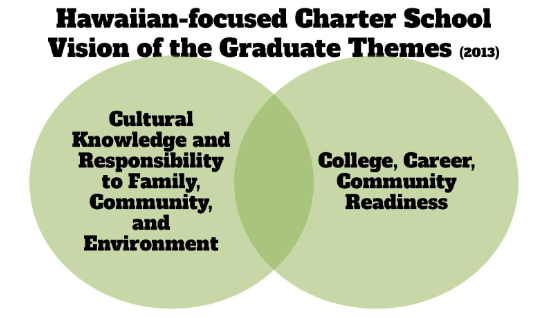
Assessments are also aligned to the commonly adopted HFCS Vision of the Graduate, represented below:
The HFCS have been supported financially by Kamehameha Schools Kaiāulu, the Office of Hawaiian Affairs, and other philanthropic organizations focused on culturally sustaining education, and partners with Hawaiian culture and assessment experts, such as Chelsea Keehne from Kamehameha Schools, a private educational institution. Dr. Keehne and other school leaders such as Dr. Denise Espania, Dr. Meahilahila Kelling, Paul Kepka, Dr. Kanoe Ahuna, and Buffy Cushman-Patz have led and facilitated efforts across the schools to develop their own local authentic assessment systems that align with the HFCS Vision of the Graduate while also honoring and centering each school’s unique graduate learning outcomes. This work began in 2012 through the Culturally Relevant Assessment Project. Its website documents their collective work and includes a number of school examples.
Among the common tools that have been adopted to support CRA in each school are the HFCS Process Rubric; the Kupukupu Framework and Unit/Lesson Plan templates; the HFCS Assessment Profile; the Hōʻike Capstone Project Continuum; the Kupukupu External Review; and an HFCS Assessment Profile Instructional Guide. These resources can be found at the project website.
The quotes below from students illustrate the impacts that implementing the Hō`ike Capstone Projects have had on students and their families.
“The Hō`ike Capstone Project was an achievement not only for my school, but because it had to do with my Hawaiian culture. I learned so much about my culture that I didn’t know before. –Grade 8 HFCS student
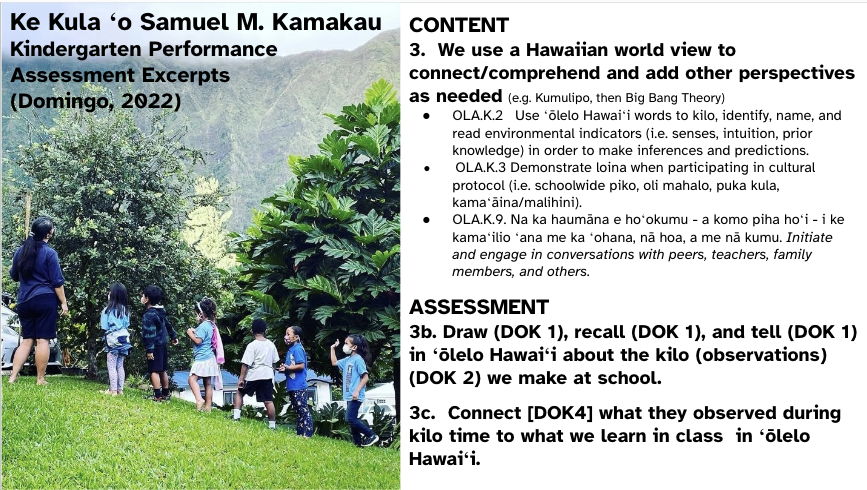
“I feel proud… Me nā makakilo a me ku’u na’au pēlā nā kūpuna e ola ai (Singing: With observing eyes and my na’au, that is how kūpuna lived.)” – Kindergarten HFCS student
One performance assessment may not make a profound impact on students, but an accumulation of such assessments across the grades certainly should. This impact should be evident in the senior capstone hōʻike. As a network school educator stated, “Our seniors should be able to think about everything that happened, from kindergarten up to graduation, and be able to use all of their cultural experiences to build their hōʻike.”
To learn more about the HFCS and culturally relevant learning and assessment examples, below are a few video examples:

Beginning in 2022-23, Envision Learning Partners was privileged to learn from and collaborate with five Hawaiʻi public charter schools as they documented their school-specific capstone projects. The schools include four HFCS: Kamaile Academy, Ke Kula ʻo Samuel M. Kamakau Hawaiian Language Immersion School, Kanuikapono School, and Mālama Honua School; and one additional public charter school – SEEQS (School for Examining Essential Questions of Sustainability). ELP’s coaching team had previously supported Kamaile Academy, Mālama Honua School, and SEEQS in the mid 2010s by sharing Envision’s portfolio defense model. In this round of collaboration, Justin Wells, ELP’s former Executive Director (now Envision’s Chief Program Officer) provided support and feedback to school leaders as they shared their locally developed capstone assessments in order to more clearly communicate the components of their systems in a form that could be readily understood by an external audience. These final materials were submitted for review for entry into the Performance Assessment Resource Bank (PARB), received feedback from performance assessment experts, and after 1-2 rounds of revision, all were accepted as “Project-Certified” performance assessments to be shared broadly to an international audience. These are the first intentionally designed culturally relevant assessments that the PARB has included and as a result of this collaboration, ELP was able to modify and improve its High Quality Performance Assessment/PARB review instrument to recognize and honor the culturally relevant aspects of performance assessments that are designed to serve and meet the needs of diverse students.
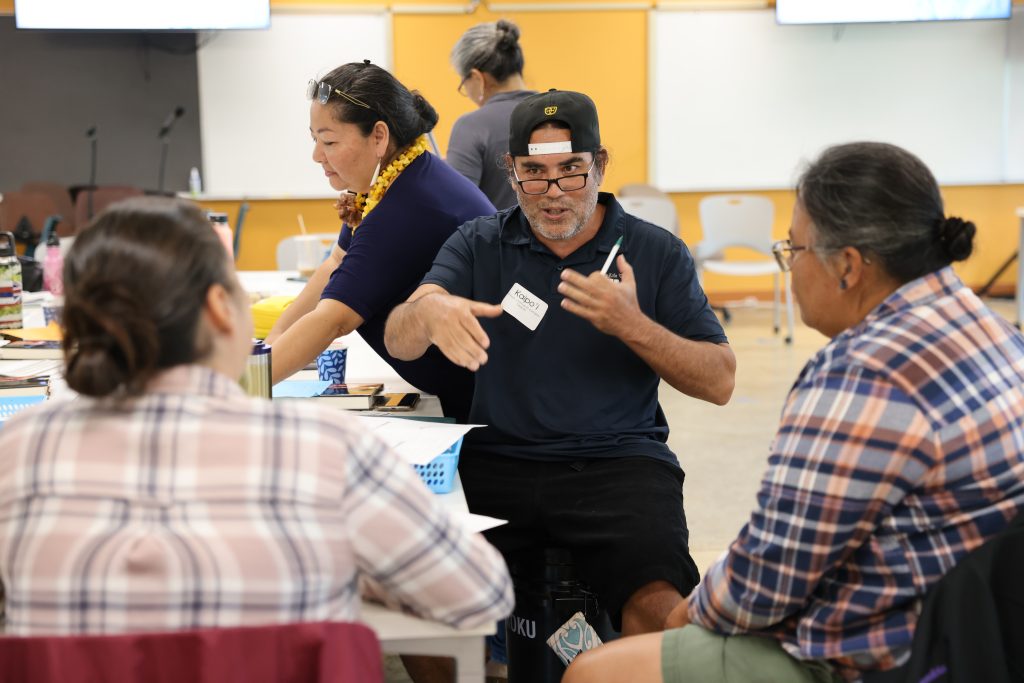
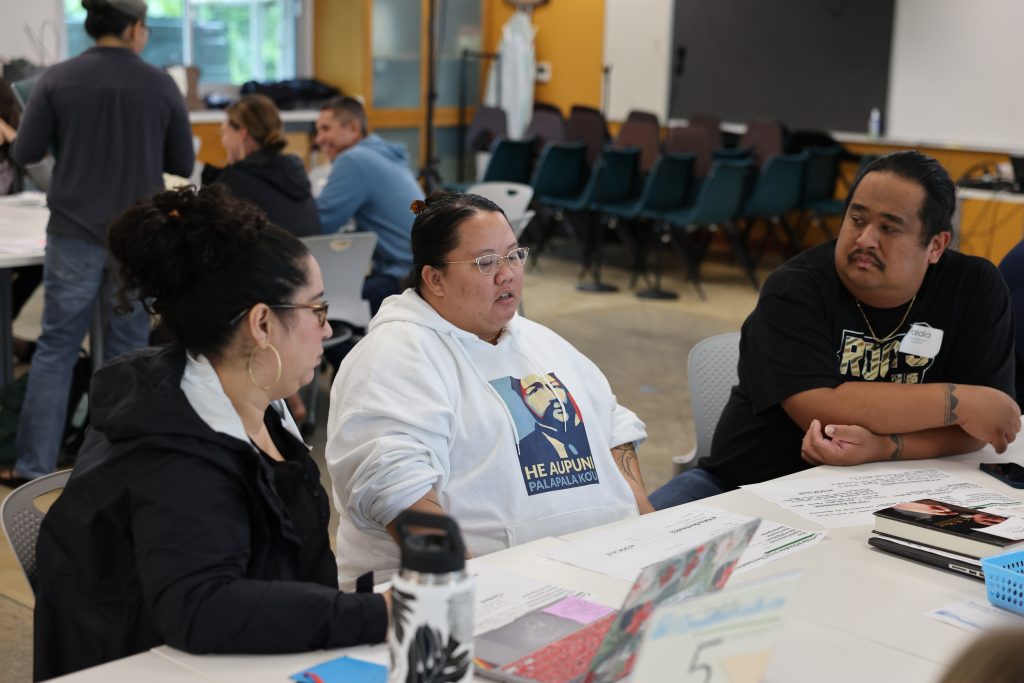
This past school year (2022-2023), Milpitas Unified School District, in partnership with Envision Learning Partners (ELP), brought together its two middle schools to develop common, skills-based rubrics to guide the development and implementation of deeper learning assessments. Employing common rubrics fundamentally changes the student learning experience by elevating the level of assessment and instruction that must occur prior to the assessment. Through deeper learning assessments and common rubrics, we know we can close the opportunity gap as it will force instructional moves that evoke deeper learning to meet the needs of all students.
The goal with these assessments is to increase student engagement through relevance and to provide multiple modalities to demonstrate mastery. Traditional assessments are often not culturally responsive and then our historically marginalized students are further marginalized when placed in remedial classes based on these biased metrics. When we do this, students miss out on developing new skills, connecting knowledge to existing schema, analyzing and synthesizing their relevance, and incorporating them into their identity. Instead, Milpitas Unified is focusing on creating windows, mirrors, and doors for students to critically think about the world around them through implementation of deeper learning assessments.
This past year, through guided, collaborative learning from Envision Learning Partners, each middle schools’ core departments (ELA, math, science and social studies) developed skill-based rubrics in partnership with Envision Learning Partners. Collaboration was a key win for the district as teachers were energized by their learning. They engaged in deep conversations around culturally relevant instruction and grading for equity as a result of their shared understanding of deeper learning assessments and rubrics. Most importantly, teachers saw the value in collaborating with each other as they saw the strengths and knowledge they each brought to the work and how their thinking and pedagogy was being pushed and expanded.
The 2023-2024 school year will be implementation year 1 of deeper learning assessments and common rubrics. The partnership with ELP will continue to foster our teachers’ ability to align current assessments to High Quality Performance Assessment criteria, pilot the assessments, analyze student work and refine the rubrics through a calibration process. Through calibration we hope to unpack critical questions like:
We saw the profound impact HQPAs have on our students. Our science teams piloted a deeper learning assessment using a common rubric and found that students who were not always successful on traditional assessments, were able to thrive using this new assessment design. This speaks to the power of this work and the access deeper learning assessments and common rubrics provide to all students. Next year, we hope to share more learnings from our pilot and calibration efforts in partnership with ELP.
The Ramsey School District has long prided itself on preparing students for not just the modern world, but the one of the future. In January 2018, we set out to identify the top competencies that our school community named as important for a Ramsey student to possess upon graduation. Using over 1,000 survey responses from all stakeholders in the educational community, we arrived at our Profile of a Ramsey Graduate. These competencies, modeled after Coach John Wooden’s Pyramid of Success, serve as the “North Star” that guides all of our district work from PreK through Grade 12. It informs curriculum writing, teaching practices, and assessment across the district.
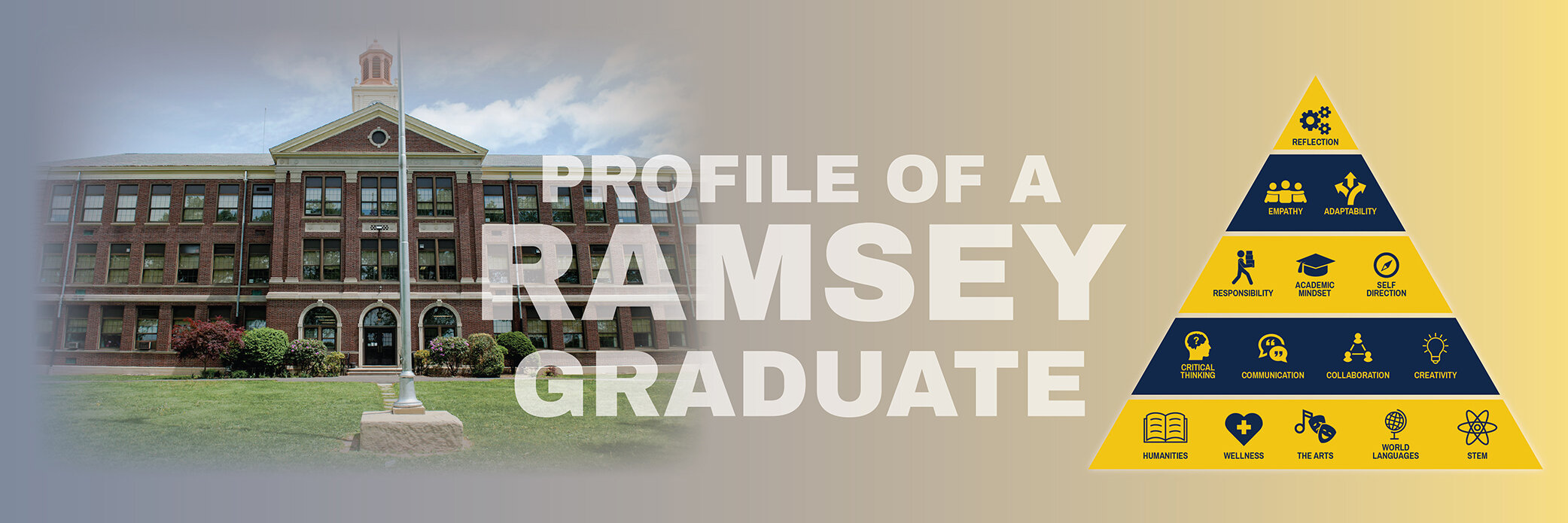
Soon after adopting the Profile of a Ramsey Graduate, the district set out to design Profile Projects to serve as capstone assessments at each culminating grade (3, 5, 8, and 12) throughout the district. Our goal was to align these cornerstone assessments with the Profile competencies to provide the students the opportunity to work towards the explicit and ambitious goals. But we really wanted to make sure the Profile became something more than just a poster that hangs on the wall. In the words of Tony Wagner, “A profile without an assessment is useless.” Our work with Envision Learning Partners transformed our approach from the collection of a body of student work to an active and interactive proof of lifelong, adaptive competencies.
Ramsey High School was in the process of designing a senior capstone project, and that gave our Grade 12 a head start. We built upon that work and, with support from international curriculum expert Jay McTighe and Envision Learners Partners, we aligned our emerging capstone to our new graduate profile. Despite the challenges of the pandemic, a group of teachers and administrators worked with Jay McTighe, Justin Wells, and Suzanne Malek to collaboratively develop new courses which, while honoring the student-driven project component, also grafted (McTighe & Curtis, 2020) a small set of discipline specific big ideas with certain Profile competencies, to create a student experience that honored our district goals of Developing a Ramsey Graduate and Teaching for Understanding As importantly, honoring equity led us to design inclusive and distinct courses that provided the opportunity for our students with special needs and English Language Learners to complete Profile Projects and Defenses of Learning as well.
The distinct Profile courses are:
Our Profile Projects ask students to draft extensive proposals, engage in research, and compile working portfolios. They navigate obstacles along the way with frequent moments of reflection and conferences with their course instructor. By Grade 12, our students are reflecting on their growth through the lens of the Profile of a Ramsey Graduate competencies. This goes far beyond our original goal of public exhibition of completed projects. Aided by Envision Learners Partners, our group realized that the effort should instead culminate with student delivery of a Defense of Learning. That more meaningful and more interactive presentation calls for students to leverage artifacts and reflections as they deliver multimedia Defenses to a panel of Ramsey faculty. Panelists will hear each student’s defense, engage the student in a period of Q&A, deliberate, and then meet with the student to offer feedback.
For centuries it has been common practice for someone earning a doctoral degree to be required to defend his or her dissertation in front of a panel. Other types of defenses in higher education have included oral examinations and defenses of thesis. This practice is less common and, in fact, is very rare in high schools. However, completing a senior project and defending the learning associated with completion of that project is now something that about 100 Ramsey High School seniors will have achieved come June 2021. Beginning in the 2021-2022 school year, every graduating senior will complete a Profile Project and a Defense of Learning. This will serve as a fitting culmination of their K-12 experience and prepare them for success after graduation. We are very excited about and proud of these Defenses and believe it is something that truly sets Ramsey apart from other schools.
Nantucket Public Schools started their partnership with Envision Learning Partners last summer. In their first year, they started rapid prototyping their Vision of a Graduate, with engaging conversations around values, traits, and skills. Rubric creation followed next focusing as a whole faculty on what their students learn, how they learn it, and how they demonstrate that learning. In the near future, ELP will assist the team at Nantucket in creating high-quality performance assessments. A team from Nantucket will be visiting California in the late Spring to see students defending their learning.
Our work so far with Envision Learning Partners has helped us begin so many important conversations about what we value and what we want for our students at Nantucket High School. Along with changes in curriculum and state testing, our school size and population has changed dramatically in the past eight years. As the only high school on the island, it is so important for us to think about our vision of the graduate and how we can be sure we are assessing students’ learning in a meaningful way.
We opened the school year with rapid prototyping our vision of a graduate, facilitated by our Envision partners. Much of our work focused on meaningful (and sometimes frustrating) conversations about values, traits, and skills. Are they teach-able? learn-able? practice-able? measure-able? Transfer-able? We focused on what skills we are already teaching and assessing and how. It took some time, but we got to a place where everyone was comfortable with a draft vision.
Once we had a draft vision, we began the process of creating rubrics that would assess the skills we identified as important for all students to have. Once again, our conversations were messy and frustrating at times, but we found ourselves focusing, for the first time in a long time as a whole faculty, on what our students learn, how they learn it, and how they demonstrate that learning. The rubric creation was a transformative moment for us because the true nature of the transferability of the skills we chose and the different ways our students could demonstrate them really made sense.
At this point, we are poised for the next stage in our journey with Envision, creating high quality performance assessments. Many of us are already thinking about our assessments on an individual classroom level as a result of these conversations. Two faculty members are looking forward to visiting a partner school engaged in a portfolio defense this May in Los Angeles, in the hope that we can bring elements of that system to our own school.
Roanoke County Public Schools has been partnering with Envision Learning Partners for the past four years to develop and implement a comprehensive performance assessment system aligned with their Opportunity Ready Graduate Profile. This collaboration has fundamentally transformed how students demonstrate essential skills needed for future success in an increasingly complex world.
The journey began a decade ago when Roanoke County developed their C-Change Framework, which meticulously detailed the conditions needed for deeper learning to thrive within school communities. This framework addressed multiple dimensions, including school and classroom climate, professional growth, support services, and learning culture. It also emphasized finding balance between preparing students for standardized testing and developing the critical skills needed to navigate a rapidly changing world.
Working with diverse stakeholders, they articulated the Opportunity Ready Graduate Profile, which defines the skills and attributes necessary for students to successfully navigate evolving life and career pathways and seize opportunities that come their way. Despite this solid foundation, the district initially struggled to quantify these skills in ways that were both meaningful and conducive to growth.
This challenge led Roanoke County to form a strategic partnership with Envision Learning Partners. Over the past four years, they’ve evolved from conceptualizing what their assessment system could be to implementing a robust program across all 26 schools in the district. This systematic approach to performance assessment now forms a cornerstone of their educational philosophy.
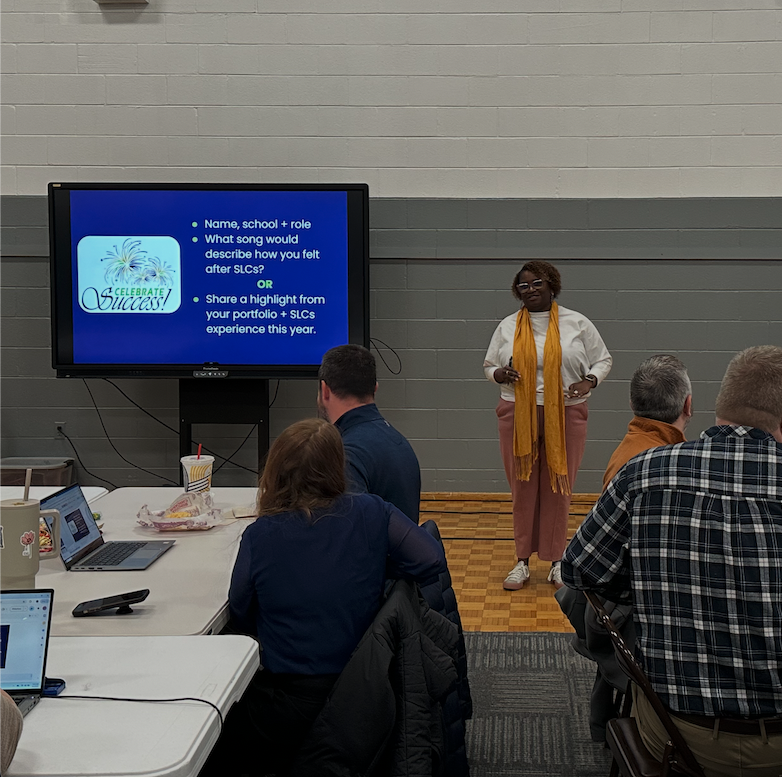

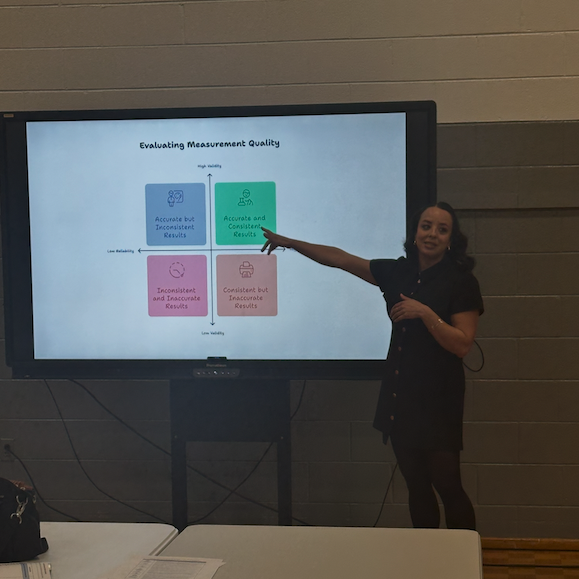
At the heart of this work is the Opportunity Ready Portfolio Presentation, where students demonstrate mastery of three critical skills: Communication, Collaboration, and Critical Thinking. Using a structured process guided by clear rubrics and expectations, students select artifacts from their in-school and out-of-school learning experiences as evidence of their skill development.
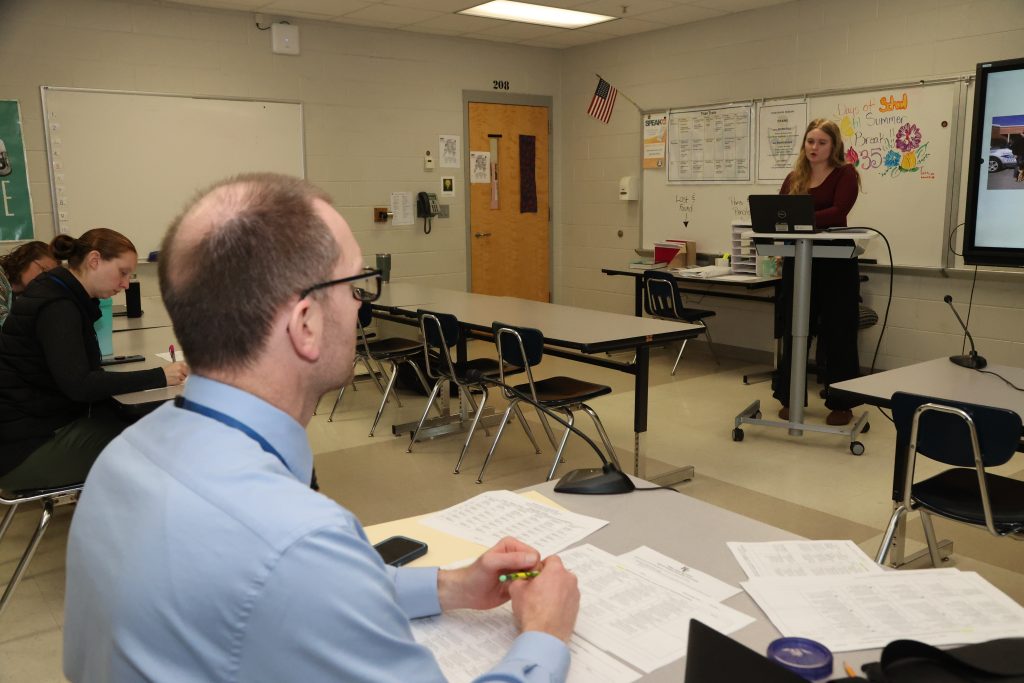
Each student presentation is guided by the driving question: “How have I demonstrated and grown in my Opportunity Ready Skills as a Communicator, Collaborator, and Critical Thinker this school year, and how will I apply these Opportunity Ready skills to what’s next for me, including my future career?”
Trained panel members, including at least one member from the school’s design team, evaluate these presentations using standardized rubrics that assess specific performance outcomes for each skill area. The panels follow a structured protocol for scoring student work, ensuring consistency and fairness while providing constructive feedback.
“We learned that you don’t know what your students are capable of until you ask and give them a chance to respond,” shares one district leader. “We have been blown away by what our students are able to demonstrate through our performance assessment system.”

The impact of this work extends throughout the educational community:
For students, the process has revealed the power of reflection. Many students express surprise at how much they’ve grown until they take time to reflect on their learning journey. This metacognitive awareness strengthens their sense of personal growth and achievement.
Teachers, while initially cautious about the workload involved in preparing for conferences and defenses, become enthusiastic advocates after witnessing students’ presentations. As one administrator noted, “To a person, they are invigorated and excited to begin planning for the next year once they see it in action.”
For administrators and district leaders, the presentations have rekindled passion for educational transformation. “The impact the presentations have on the panel, parents, and staff has reignited our drive for this work,” reports a district representative.

The most compelling evidence comes from individual student experiences. One particularly moving example involved a student who had struggled significantly during middle school. During their senior defense, the student articulated their growth journey with such clarity and reflection that “there was not a dry eye in the room.” This transformative moment exemplifies how the process helps students recognize and celebrate their own development while preparing them for future challenges.
Through this ongoing partnership with Envision Learning Partners, Roanoke County Public Schools continues to refine and expand their performance assessment system. The district’s commitment to developing the whole student—not just academic knowledge but essential life skills—positions their graduates to thrive in whatever paths they choose after high school, whether in higher education, careers, or military service.
By creating authentic opportunities for students to demonstrate mastery of critical skills, reflect on their growth, and connect their learning to future aspirations, Roanoke County Public Schools is preparing students not just for tests, but for life beyond graduation in a rapidly changing world.

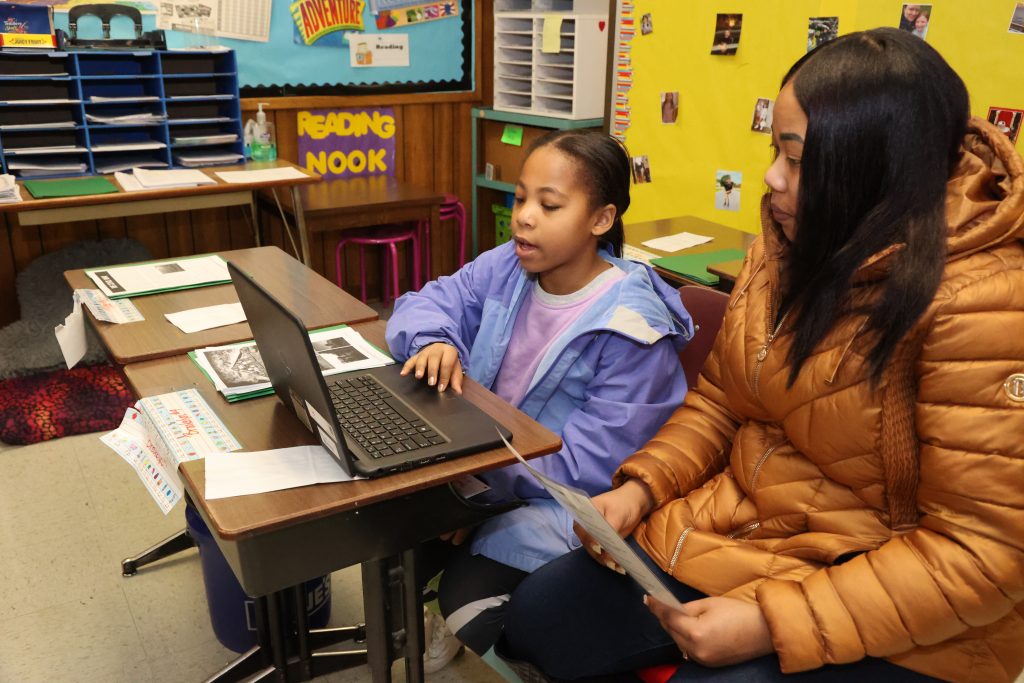
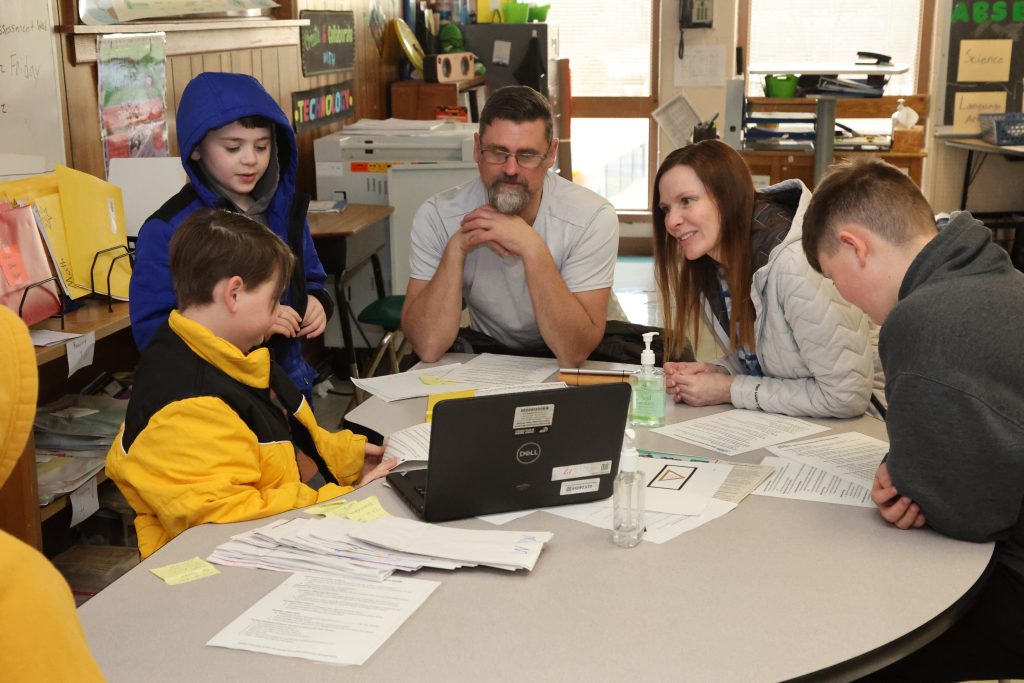

SFUSD has been thrilled to partner with Envision Learning Partners these past three years to operationalize our district’s Graduate Profile and begin developing a performance assessment system that is more aligned to our Profile and measures more of what we want for our young people. We are striving to have demonstrations of learning happen systematically across our schools including portfolio defenses, capstones, student-led conferences, formative assessment use, school-wide rubrics, and exhibitions. Putting the cognitive work of reflection, self assessment, and showing what they know in the hands of students instead of always being held by adults supports students to be in charge of their learning. It also supports teachers to engage in meaningful work that is reflection worthy, and supports schools to be places where the thinking and doing is held by the young people and not dominated by the adults. This is particularly relevant in this moment of distance learning when we dramatically changed our way of teaching while simultaneously losing all of our traditional measures of progress. We don’t have comprehensive strategies right now for seeing how our students are actually doing, what they are absorbing and retaining, and how they are making meaning of it. More than ever, that data from them is crucial for us. Many educators and schools are partnering with central office leaders to co-design, pilot, and embed performance assessments in their work with the help of Envision Learning. We look forward to celebrating all of this learning at the end of the school year for all to see! These initial steps of providing demonstrations of learning and ongoing reflective practice will put us on a path towards a different system-wide approach to how we grade, assess, and support student learning.
PBL Teacher Leader Fellowship: Learnings & Reflections 2019-20
Thank you to the SFUSD team that contributed to this Partner Profile:
SEEQS: the School for Examining Essential Questions of Sustainability is a public charter school in Honolulu, HI serving students in grades 6-8 that opened in 2013. SEEQS exists to foster the next generation of systems thinkers, environmental advocates, and community leaders in Hawaiʻi and beyond. SEEQS’s methodology is embedded in the structure and schedule of the school day itself; students begin every day with community building and play in their advisories or physical activity groups, followed by content courses, and ending with a two-hour project-based learning block called EQS, or Essential Questions of Sustainability. EQS is the cornerstone of the SEEQS model, as it allows students to engage in real-world learning that emphasizes the practical applications of the content courses as they relate to modern issues of sustainability that directly impact their communities. With all of this in mind, SEEQS’s Portrait of a Graduate is a student who continuously reflects on and utilizes the five SEEQS Sustainability Skills: Managing Effectively, Communicating Powerfully, Collaborating Productively, Reasoning Analytically, and Thinking Systemically. Using these Sustainability Skills, SEEQS Students, or SEEQers, can move on to become stewards of Planet Earth and healthy, effective citizens of the world.
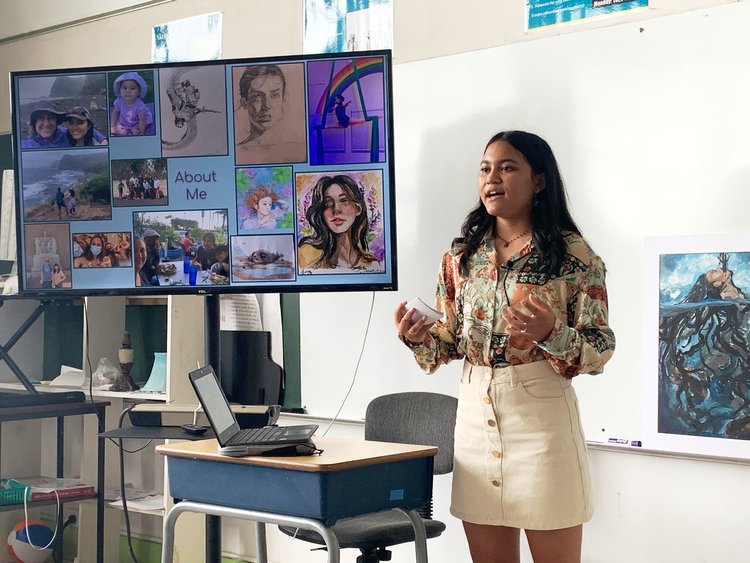
This framework of interconnected skills that comprise a sustainability-focused mindset is what students are defending as they finish 8th grade. SEEQS worked with Envision Learning Partners early in its developing stages to build out a Portfolio Defense process that felt authentic to the school’s community-centered values and vision for a sustainable future. Students select five different projects from across their three years at SEEQS that exemplify their growth and understanding of the five Sustainability Skills in the Portfolio. After successfully completing the Portfolio, students choose two of the five skills to focus on for the Defense presentation to a panel of faculty, community guests, and a 7th grade peer.
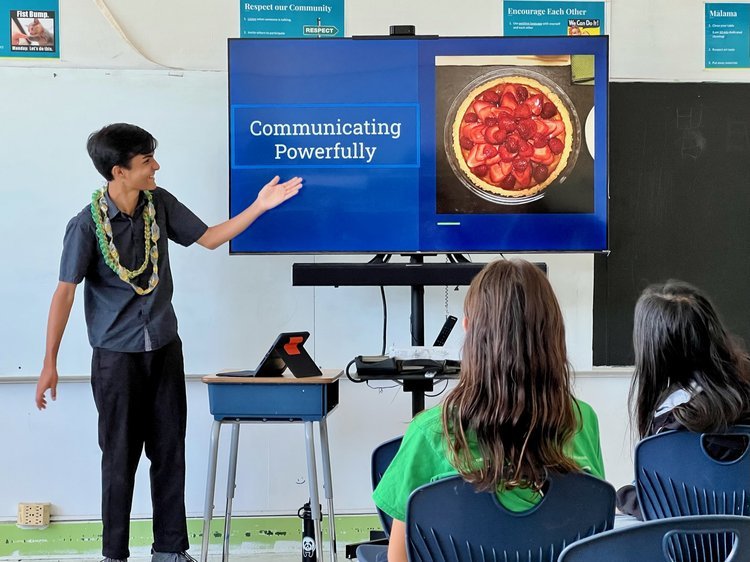
Over time, SEEQS has refined its Portfolio Defense system to pull out the Portfolio as its own important piece of work that stands on its own before the Defense process. We learned from Envision the analogy of “the Portfolio as a resume and the Defense as an interview,” and we worked with students to really think about a resume that stands on its own.
Another crucial series of iterations in SEEQS’s Portfolio Defense system has been its multi-stage onboarding and calibration process. Faculty panelists begin preparing months in advance with a series of orientation sessions, delving into the rubric, collectively evaluating and discussing previous years’ portfolios, and coming to a consensus about the attributes of high-quality work that are most impactful in a successful Portfolio Defense. The school has also spent years building a database of willing and able external panelists (community partners, sustainability experts, educators from other schools, etc.) and by doing so, providing a form of professional development to others.
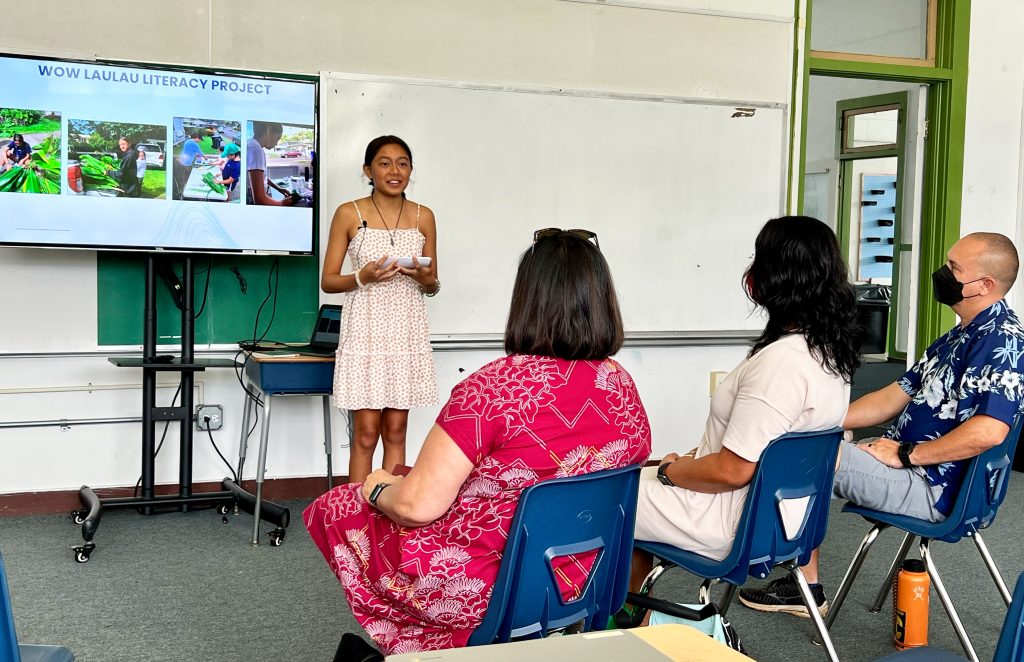
SEEQS’s next goal is to “indigenize” the Portfolio Defense process to be more expansive and inclusive of cultural values in Hawaiʻi. They plan to do this by working with a number of Hawaiian-focused charter schools that also implement culminating performance assessments.
Every year, 8th graders have meaningful and profound things to say about their learning experiences when given the opportunity to reflect on it. They read and hear amazing quotes from students during their defenses every year that they document and hold onto; this record includes statements like the one below from Ansel B., class of 2023:
“Before I came to SEEQS, I didn’t care as much, but over my time at SEEQS I’ve started to see that the world isn’t just this nebulous idea; it’s the people and places around us, and a major step to being a steward of planet Earth is to care about the world around you.”
The impact that Portfolio Defense has had on SEEQS students is immense. Many alumni and parents reflect both during and after the process about the value of the reflections and skills that the process aids in growing. One parent of an alumni, Lisa W., shared this testimony after seeing her son successfully present his portfolio:
“The middle school years are especially filled with doubt as they try to fit in with their peers and start to question who they are. Creating the space and requiring them to reflect on and recognize this growth in themselves at such a young age is such a huge building block in knowing, loving and appreciating who they are. The satisfaction of completing such a rigorous assignment, watching the doubts and nervousness transform into relief and celebration was so uplifting. Then seeing the subtle shift in their energy, a little less self doubt, that little more confidence – was priceless.”
Even with so many developments and changes to their process over the last ten years, SEEQS has bigger plans ahead. As they build out a high school, they plan to follow a student’s development over a longer period of time by repeating the Portfolio Defense process in grades 10 and 12. Beyond reflecting on just their growth in the Sustainability Skills in 8th grade, high school SEEQers will have to demonstrate proficiency in two of the five skills in 10th grade, then all five by the end of their SEEQS career. Through internships, community action projects, and other opportunities to become deeply involved in real-world issues, SEEQS students will have assembled an impressive collection of advocacy and research that will prepare them for whatever comes next.
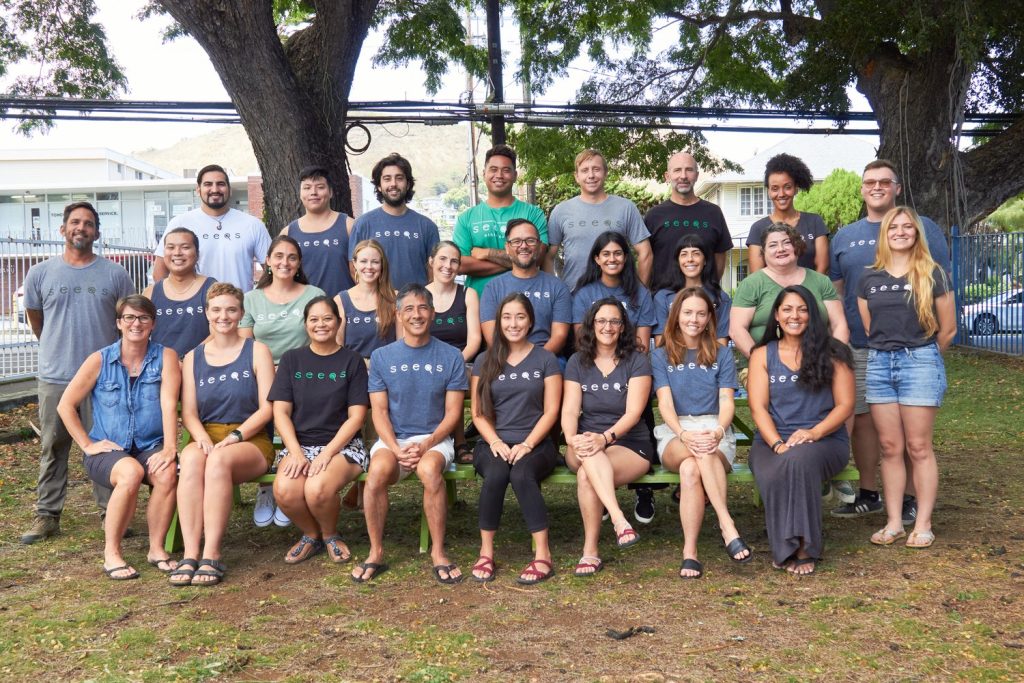
Hear more about SEEQS, including a more about our prior work together, on this episode of the Learner-Centered Collaborative Podcast: Keeping Humanity at the Center of Assessment with Buffy Cushman-Patz, SEEQS Executive Director.
Whew! The Assessment for Learning Conference, AFL 2021, just wrapped- and yet it feels like a new beginning. Given the ‘needs of now,’ this conference experience stretched from a January launch and call to action- to a May culminating event and provoking of the system. Along the way, we tested new ways to collide ideas, ritualized ways to host important conversations, and practiced ways to connect across the virtual space- toward a collective impact in the future of assessment.
350+ registrants strong, the community answered the call to action and the challenge to look closely at race, resources, power, systems and ourselves as core parts of a ‘just assessment system.’ This conference reminded us all- that it’s about the journey, and the time is now.
Idea Collider Exhibition
Do you ever wonder what happens when you bring 20 passionate designers and educators together, from across the country, during a pandemic time to build on strong assessment for learning practices, with a focus on the ‘needs of now?’ We wondered, and we did it.
Radically Humanizing Accountability and Power: An Invitation to Abolition
Provocation by Dr. Robert S. Harvey, Superintendent & Chief Academic Officer, EHTP
The Road to Assessment Hell is Paved with Color-Blind Intentions
Provocation by Jennifer Randall, Ph.D. Associate Professor in Research, Educational Measurement and Psychometrics, College of Education, University of Massachusetts Amherst
Designed to Thrive: Creating High Quality Performance Assessment Experiences So That All Students Can Thrive
This session asked, “What kind of performance assessment experiences would we create to ensure that learners, especially those farthest from opportunity, thrive when we operationalize our current vision/profile of a graduate?” Participants explored the different features of high quality performance assessment (HQPA) and designed a prototype of a performance assessment experience that provides evidence of student learning/thinking of essential competencies. The session concluded with participants iterating on that prototype after centering the lived experience of a marginalized student their system may serve, and reflecting on the changes needed to ensure that ALL students thrive in their performance assessment system.
If you’re interested in this workshop, join ELP for a three-part workshop series in August 2021, led by Deeper Learning Coaches, Alcine Mumby and Abby Benedetto. Click on the image to access the registration link.
Rubric Revolution Brainstorm: How to Get Rolling with Round Rubrics?
This session was a collaborative brainstorm with anyone interested in iterating on the idea of a rubric that is round: rings around a center instead of rows in a grid.
SEL Buddies: Collaborative & Reflective Assessments that Forge Self-Learning and Relationships
This session shared what was learned from a “practice-research partnership” in which staff working in an alternative high school and researchers co-developed and piloted an authentic measure of SEL. The voices highlighted were that of school staff and a former student about their experiences with developing and implementing a collaboratively-designed tool for SEL assessment. Research partners shared the design principles that informed the development of the tool, and that were critical to providing students with authentic opportunities to build relationships with peers and adults, to grow in self-awareness, and to become agents in their own social and emotional learning. The SEL Buddies assessment model illustrates key design principles: socially-mediated, student-centered, and authentic audience and purpose. Researches buddied with the school, teachers buddied with researchers, and students buddied with each other. Students and teachers found the SEL measure a valuable way to capture and nurture SEL progress, while also building trusting relationships and community within advisory classes. Offering students opportunities to interact and provide feedback to their peers on self-defined struggles and goals were perceived as the most valuable aspect of the measure.
Additional Resources (SEL Tools, the STRONG framework, and examples of “The Gift”)
Over the course of our year as Nexus Fellows (see the I am ELP post: Nexus Edition for more insight) we were given many incredible resources to guide and help us in our journey to design a better, more equitable education system for all children. Our Nexus journey was captured beautifully by Caroline Hill (228 Accelerator and Nexus Coach). Follow them on Twitter at @228accelerator.
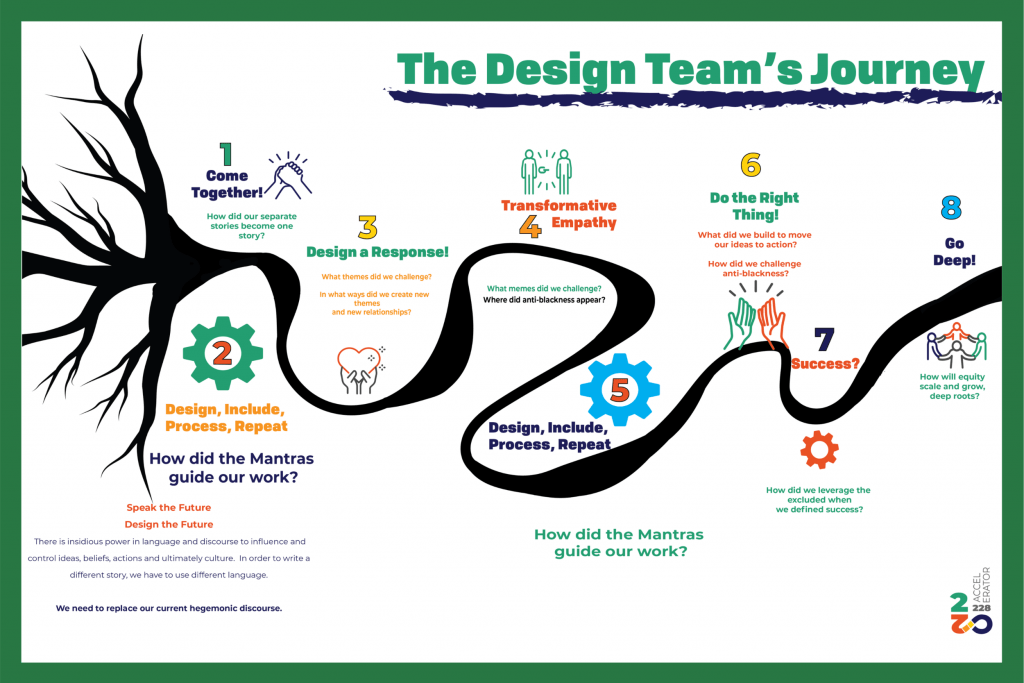
We urge our partners and friends to join us in engaging or recommitting to anti-racist equity work within your organizations. And we ask you to do it with the guidance of expert individuals and organizations, such as those listed below, that were committed and practiced long before 2020 hashtags and uprisings. Consider learning from and supporting any of the following Black-led organizations:
Envision Education has long been proud that we not only serve students directly through our Bay Area schools but also commit to serving public school students everywhere through our consulting division, Envision Learning Partners. Our understanding of our past and potential future is even clearer now, thanks to A Pragmatic Playbook for Impact: Direct, Widespread, and Systemic, which offers an illuminating framework for analyzing how mission-driven ed organizations work to spread the change they seek.
To help illustrate the framework, Bellwether Education Partners, in partnership with New Profit, conducted a case study on Envision Education, based on a series of interviews with longtime Envision teacher and now ELP leader, Justin Wells. For us at Envision, the case study was a chance not only to reflect but also to learn. We came out of the experience with a better sense of who we are and where we are headed as an organization, and we are grateful to Bellwether and New Profit for the opportunity.
On August 11th, Bellwether is hosting a webinar where you can hear ELP and other educational organizations discuss their various approaches to scaling impact.


ELP was honored to partner with so many other incredible organizations to develop this resource.
Beyond the Horizon: Blazing a Trail Toward Learner-Centered School Quality Systems includes recommendations for education leaders at every level of the system, mapping the course for the future of assessment and accountability.
Created in collaboration with leaders in K-12 student-centered learning from across the country, these recommendations support a learner-centered accountability system that would:
Realizing the full potential of student-centered learning requires transformation of traditional approaches to assessment and accountability. To truly move to student-centered learning at scale, education systems must be redesigned.
Envision Learning Partners is honored to have co-authored a new paper alongside the Aurora Institute, the Center for Assessment, the Center for Innovation in Education, the Great Schools Partnership, and KnowledgeWorks.

We recently read an article by NGLC’s dynamite Knowledge Officer, Kristen Vogt. The piece shares an observation that many of us have seen in the field: graduate profiles are often discussed as something meant for high school students, with little clear connection to elementary and middle schools. Kristen shares examples of schools across the country aligning instruction across K-12 to graduate profiles, including elementary and middle schools (you will be particularly impressed by Megan Margerum in North Dakota). We love the recognition that portraits of a graduate are, among other things, a journey map, and these journeys are most successful when they are seen not just as standalone endings, but part of a student’s experience in elementary and middle school as well.
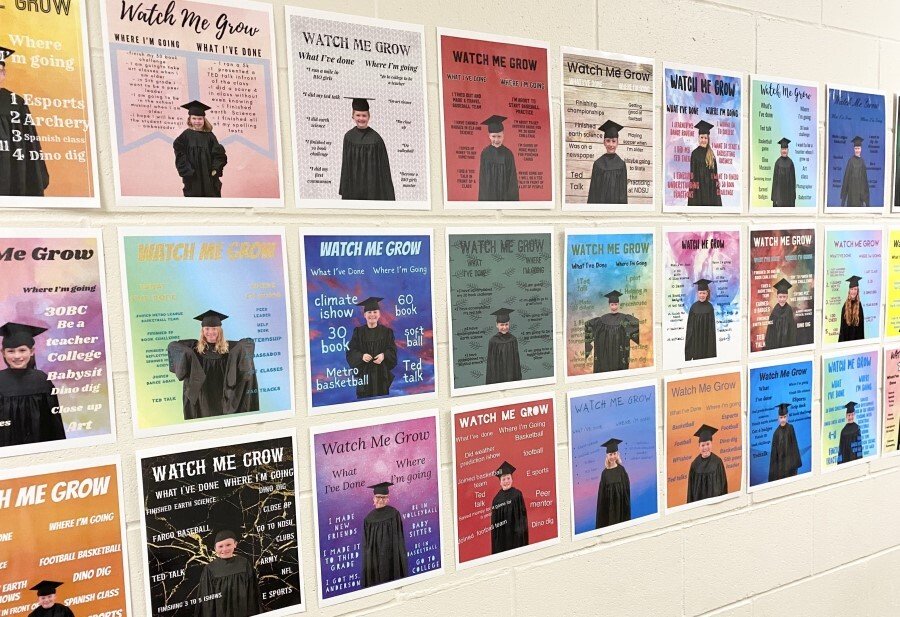
Interested in launching or revising your Graduate Profile? We can help.
Is your Grad Profile made up of complex cognitive skills, not values? That’s one of the 10+ questions we ask with our Graduate Profile Quality Criteria Check Tool. We have been delighted to see the surge in Graduate Profiles developed by school systems across the USA over the past year but have noticed the need for an important next step: check whether your new grad profile meets these important quality criteria that we’ve developed over the past decade working with hundreds of schools.
Click the resource button to download the PDF.
This resource was developed for math teachers looking for a pathway into developing Student language (disciplinary language, English language, and academic language).It serves as an invitation to be intentionally experimental with three processes that students experience often in school, but not as often in math class: students revising their work and their thinking; students interpreting the writing of other students; and students interacting with each other.
Click the resource button to download and explore this resource tool!
This resource is one that ELP has adapted from the School Reform Initiative Colorado Center of Activity and has been previously used in a Deeper Learning Leadership Forum (DLLF) session.
Holding a Kiva Panel allows a larger group of listeners to highlight and learn from the voices of the selected panelists and can be adjusted for the virtual world.
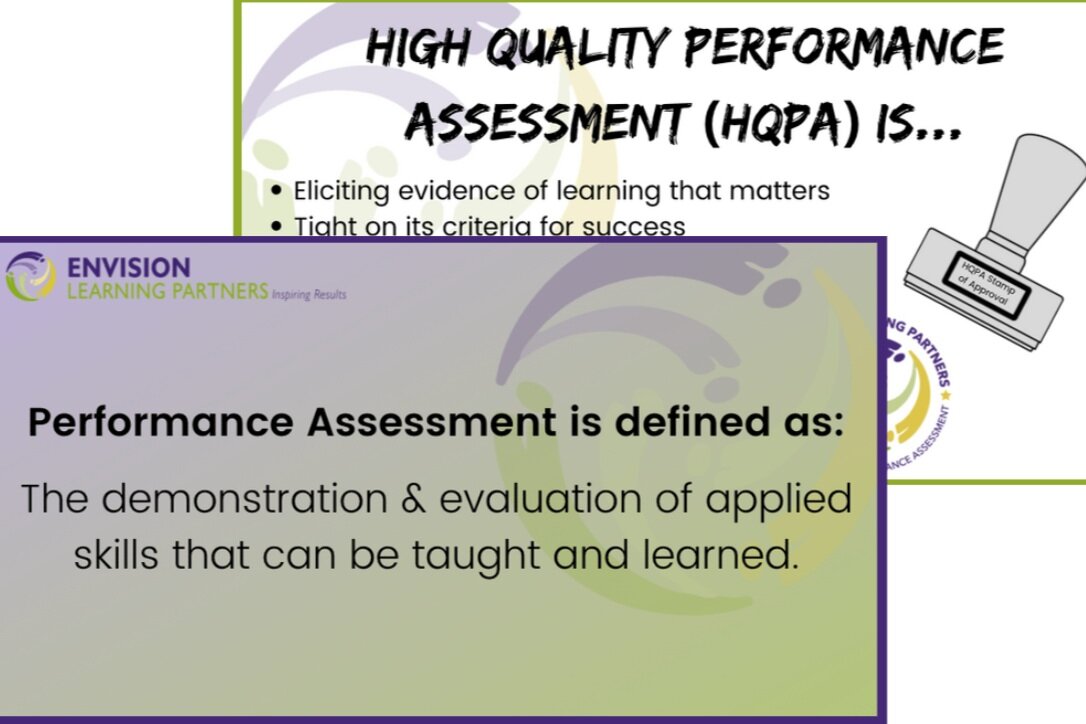
Click the resource button to download the PDF.
These three observation tools are intended to support ‘minimal-prep’ lesson observation in classrooms where student ideas, language, and interaction are at the center of the learning process. They were specifically designed for mathematics classrooms, but may also be useful in other contexts.
The two Lesson Observation Tools are meant as note catchers and as a manageable list of student and teacher actions to look for. In using these tools, it is important to agree with the teacher on the focus of the observation, for example: Use of instructional routines to surface and develop student ideas and language.
The Language-Rich Classrooms: Observation & Planning Tool is meant for a coach and teacher, or teacher peers, to use together for linking an observation with a conversation about planning next steps. It, too, has a list of example student and teacher actions to look for.
Click the resource button to download the editable PDFs.
Looking for even more resources? Visit the ELP blog for all past newsletter content.
ELP’s Director of Research and Innovation, Ruth Chung Wei, had the opportunity to direct a research study with a team at the Stanford Center for Assessment, Learning, & Equity (SCALE) and ELP called “Measures of Social-Emotional Learning.” The Executive Summary of this three-year project provides an overview of the findings and can be downloaded by clicking on the image below.
Learn more about Ruth in her “I am ELP” highlight, by clicking here.
This resource comes from the 2022 Deeper Learning Conference and is a conversation about modernizing mathematics: perspectives from the classroom and beyond. This panel discussion explores the topic of mathematics teaching and learning in the current age and for the future. ELP Director of STEM Learning, Vinci Daro, is one of the four amazing panelists.
We know that we want students engaging deeply with rigorous content, but knowing what to look for in a classroom where students are struggling productively with rigorous mathematics content is a challenge among many of our partners.
Click the resource button to download!
Take a look at the Productive Struggle Observation Tool our STEM team has developed for observers to use to look for and capture relevant student and teacher actions in math classrooms. Clare Green, principal at Envision Education’s Hayward high school, Impact Academy says this about the tool: “The productive struggle rubric helps to drive a conversation about what high-quality, student-centered instruction looks like. This conversation now happens not only between coaches, teachers, and administrators but also with students.”
Let us know what you think – is the observation tool something that might be useful in your context? What do you look for in classrooms when you want to know if students are struggling productively with meaningful material?

ELP is excited to announce that we have published five new performance task resources in the Performance Assessment Resource Bank (PARB), an online resource that ELP has stewarded since 2018.
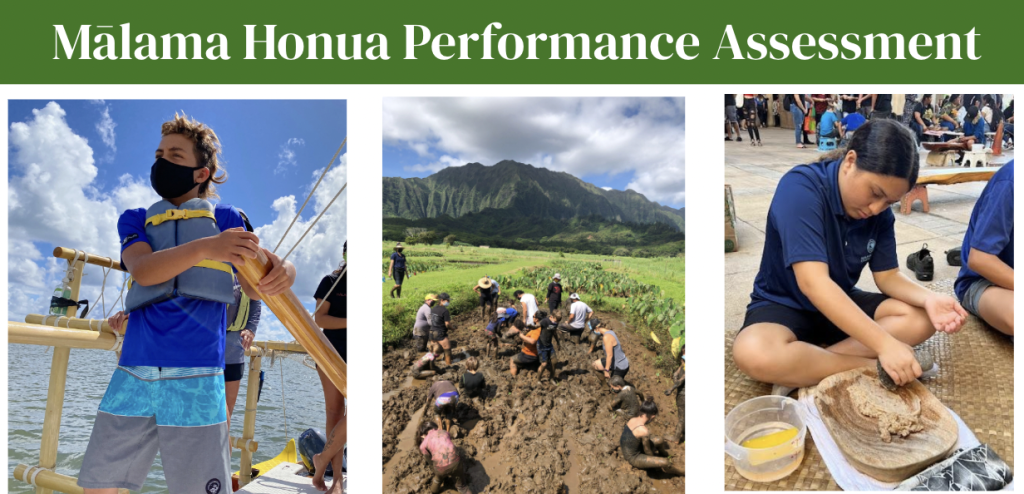
The five new resources are capstone portfolios, projects, and/or portfolio defenses from a consortium of schools in Hawai’i – the Hawaiian Focused Charter Schools (HCFS), which has been developing and implementing culturally sustaining curriculum, instruction, and assessment strategies to cultivate and preserve the language and culture of native Hawaiians. As part of its Culturally Relevant Assessment project, four HFCS schools and an additional charter school submitted capstone projects, ranging from Kindergarten through 12th grade capstones, for review and feedback from ELP during the 2022-23 academic year. Included among these five capstone projects is a Hawaiian-language kindergarten capstone project, the first non-English project to be included in the PARB. The revised projects were then submitted for a formal review process by performance assessment experts for inclusion in the Performance Assessment Resource Bank (PARB), using a hybrid review instrument, “ELP High Quality Performance Assessment Criteria + PARB/ILN Quality Criteria for Performance Assessments,” that combines ELP’s HQPA criteria and the PARB/ILN Quality Criteria developed by SCALE to vet submissions for the PARB.The instrument was adapted to include ʻāina (land)-based learning outcomes. All five of the submitted projects from the HFCS schools met project certification criteria after one or two cycles of review and feedback. ELP benefited from the experience of reviewing these submissions to deepen our understanding of culturally sustaining performance assessment and broadening our practice to be more inclusive of the diverse learners that our nation’s schools serve. This project was completed with the funding and support of the Kamehameha Schools, a private educational institution in Hawaiʻi that aims to improve the capability and well-being of Native Hawaiians through education.
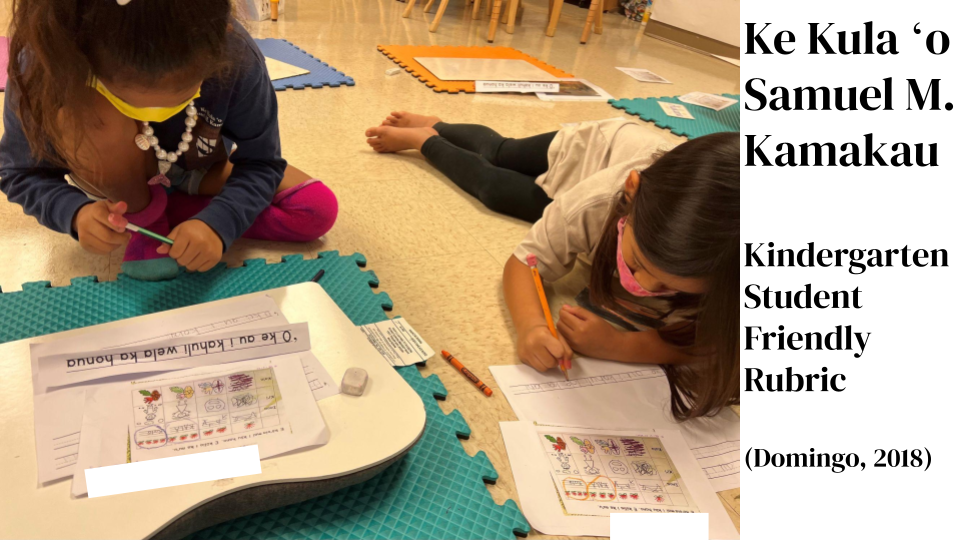
We encourage you to peruse these resources and reach out to learn more!
The Reimagining College Access initiative recently released a guidance document, authored by Aneesha Badrinarayan, aimed at colleges interested in integrating performance assessments into their college admission systems: Performance Assessment in College Admission: Designing an Effective and Equitable Process.
Although the tool is designed for admission officers, it can also be used by K–12 educators to gain a better understanding of the considerations that colleges must take into account in the use of performance assessments in admissions. The tool defines performance assessment and then provides concrete guidance on how admission officers can incorporate information about students’ K–12 performance assessments into their application and review processes.
Click the image below to download this tool.
When we meet with a potential school partner, we are often asked: What does the process of evolving into a school with a High-Quality Performance Assessment System (HQPAS) look like? We have worked with thousands of educators serving hundreds of thousands of learners since our inception in 2010 and have developed a Theory of Action that consistently drives the transformation to a HQPAS:
Click the resource button to download!
These three phases, done in that order, lead to a successful implementation of a High-Quality Performance Assessment System. A second common question we hear is focused on implementation steps and timeline. As you can imagine, each partner takes a unique path on its implementation journey, but over the years, we have seen some common elements. This month, we share a simplified project template to give you a better idea of potential steps involved. Enjoy reading and don’t hesitate to reach out with any questions.
Envision Education is excited to share the culmination of its two-year research project, Pursuing Equity for Black & Latine Students with Learning Differences, which
documents and illustrates the systems, practices, cultures, and supports that are associated with the well being and success of Black and Latine students with learning differences – students with disabilities and multilingual students with disabilities.
In 2023, Envision Learning Partners (ELP) and Social Policy Research Associates (SPR) embarked on a research study to identify and learn from schools that demonstrated positive outcomes for Black and Latine students with learning differences (including students with disabilities and multilingual learners). After a review of data from secondary schools across the country, the study team identified two schools for a more in-depth study, which was conducted during the 2023–2024 school year.
The results of the research are shared through case studies of the two schools that were the focus of the research: 1) Crosstown High: Building a Culture of Inclusion; 2) Capital City: An Inclusive School Community Committed to Whole-Child Learning and Well Being; and 3) An Executive Summary/Synthesis of Findings.
In addition, we have authored four practice briefs based on the findings of the research that provide practical steps that schools can take to create more inclusive environments that support the success of Black and Latine students with learning differences.
This research was made possible through the generous support of New Profit, a venture philanthropic organization, and the Oak Foundation.
Earlier this year, Learning Policy Institute (LPI) released this resource that outlines 10 features from effectively redesigned high schools and highlights examples of schools that are putting the features into practice to create powerful learning opportunities for youth.
ELP was honored to be listed under the Additional Resources. If you are interested in a redesign or have any questions, contact the ELP team to schedule your free consultation.
Click here to download this resource.

9 Tips for Writing Effective Rubrics – Adapted from the important thinking of our partners at SCALE, this tool attempts to capture the quality criteria of solid rubric design. The tool is helping our partner schools all over the country to develop performance indicators that serve to define proficiency for their Graduate Profile skills. Take a look and share with us any quality criteria you’ve found effective!
Resource Corner: Scaling Student Success Briefs & Policy White Paper

For educators and educational leaders seeking to bring your Graduate Profile to life, Scaling Student Success has released a series of Practice and Policy Briefs to support this journey! The Briefs tell the story of five different districts across California that are successfully integrating their Graduate Profiles (or Learner Portraits) into their curriculum, culture, and classrooms, and seeing a positive impact on student success. They’re a valuable learning resource for any school interested in redefining student success! Learn more and access the briefs here.

Scaling Student Success also recently authored a white paper focused on statewide policy recommendations that support many of the transformation systems we want to see in schools (graduate profiles, authentic assessments, etc.). ELP has offered to be listed as one of the organizations to officially “sign on” to the paper. Click here to read: A Student-Centered Approach to Education.
Earlier this spring, Assessment Design Partners Roilyn Graves and Soraya Ramos spent time in Roanoke County Public Schools in Virginia, collaborating with district and school leaders to refine and pilot a culminating performance assessment system aligned to the district’s Opportunity-Ready Skills.
During their visit, they had the opportunity to tour Glenvar High School—and were inspired by an incredible student-led initiative: the G-Bees. This club involves students in every aspect of beekeeping, from hive maintenance to harvesting honey, and even crafting a range of products like lip balm, soap, candles, hot honey, and more.
Through this hands-on work, students are not only gaining valuable entrepreneurial experience, but also raising funds for outdoor education and scholarships. It’s a powerful example of student-centered, purpose-driven learning at its best.
The G-Bees program is truly performance assessment in action—students applying their knowledge and skills in meaningful, real-world ways. While online sales aren’t available, we’re excited to share their story as a model of what authentic, engaged learning can look like.
Learn more about the program through this link.
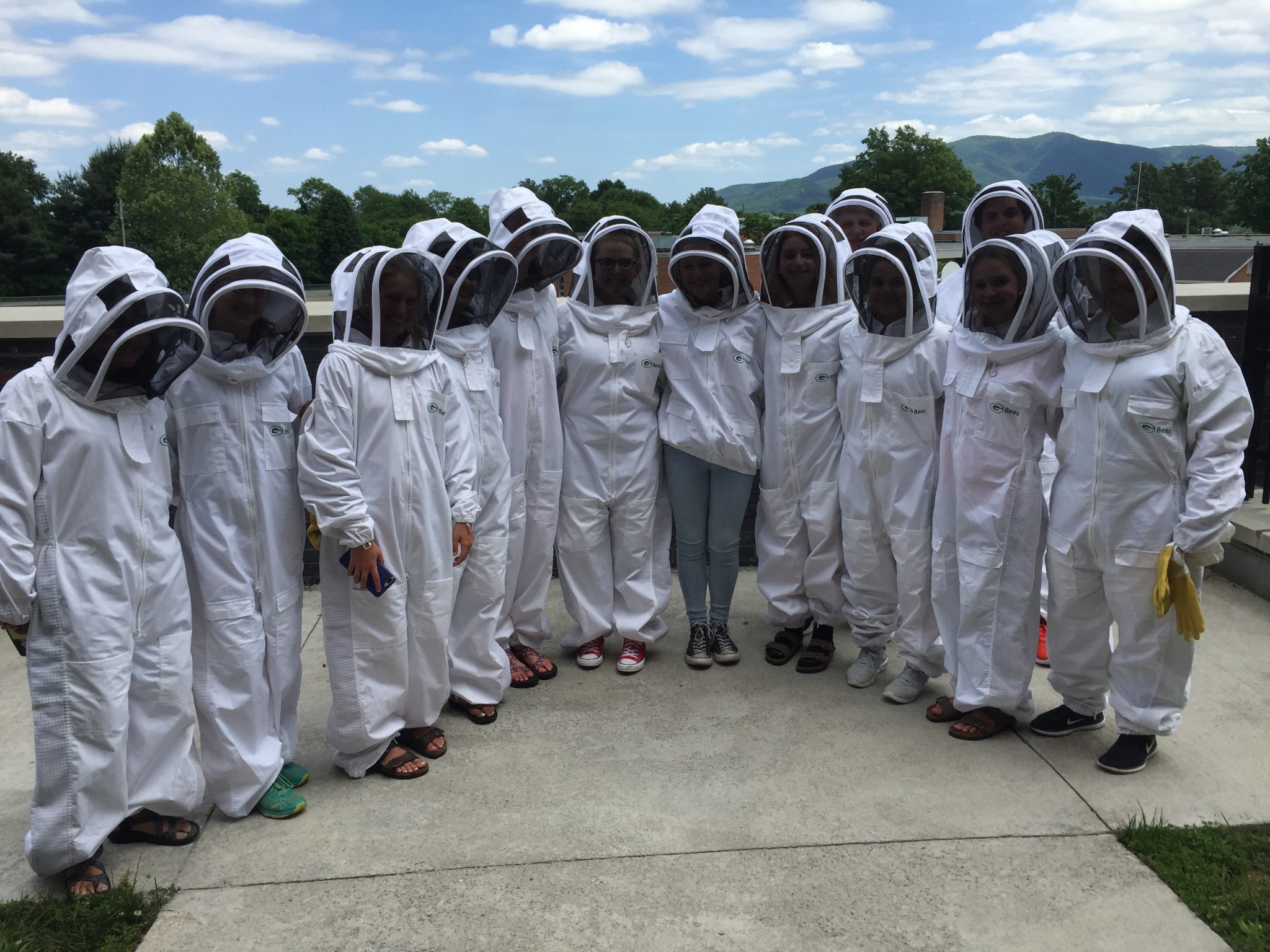
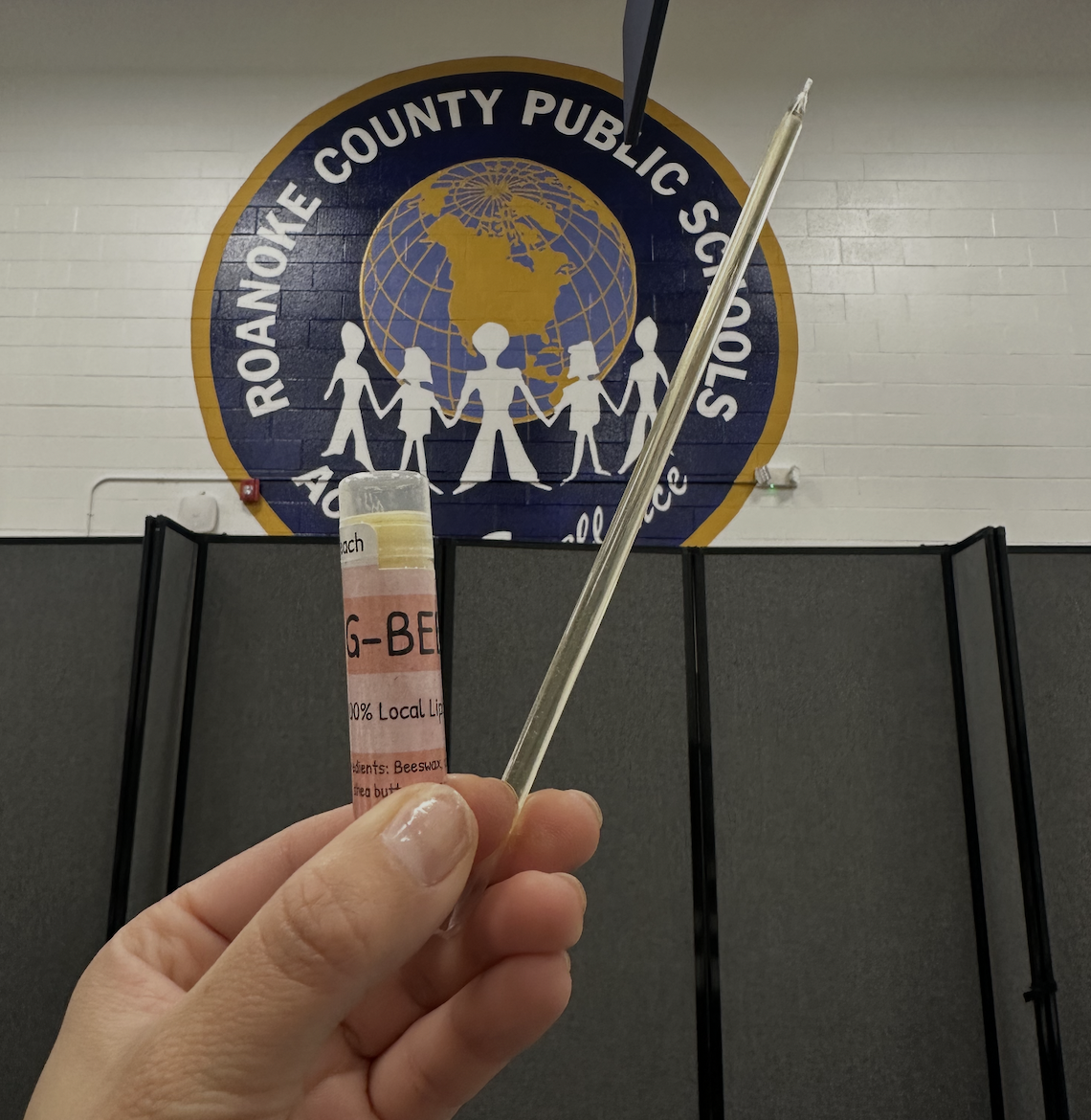
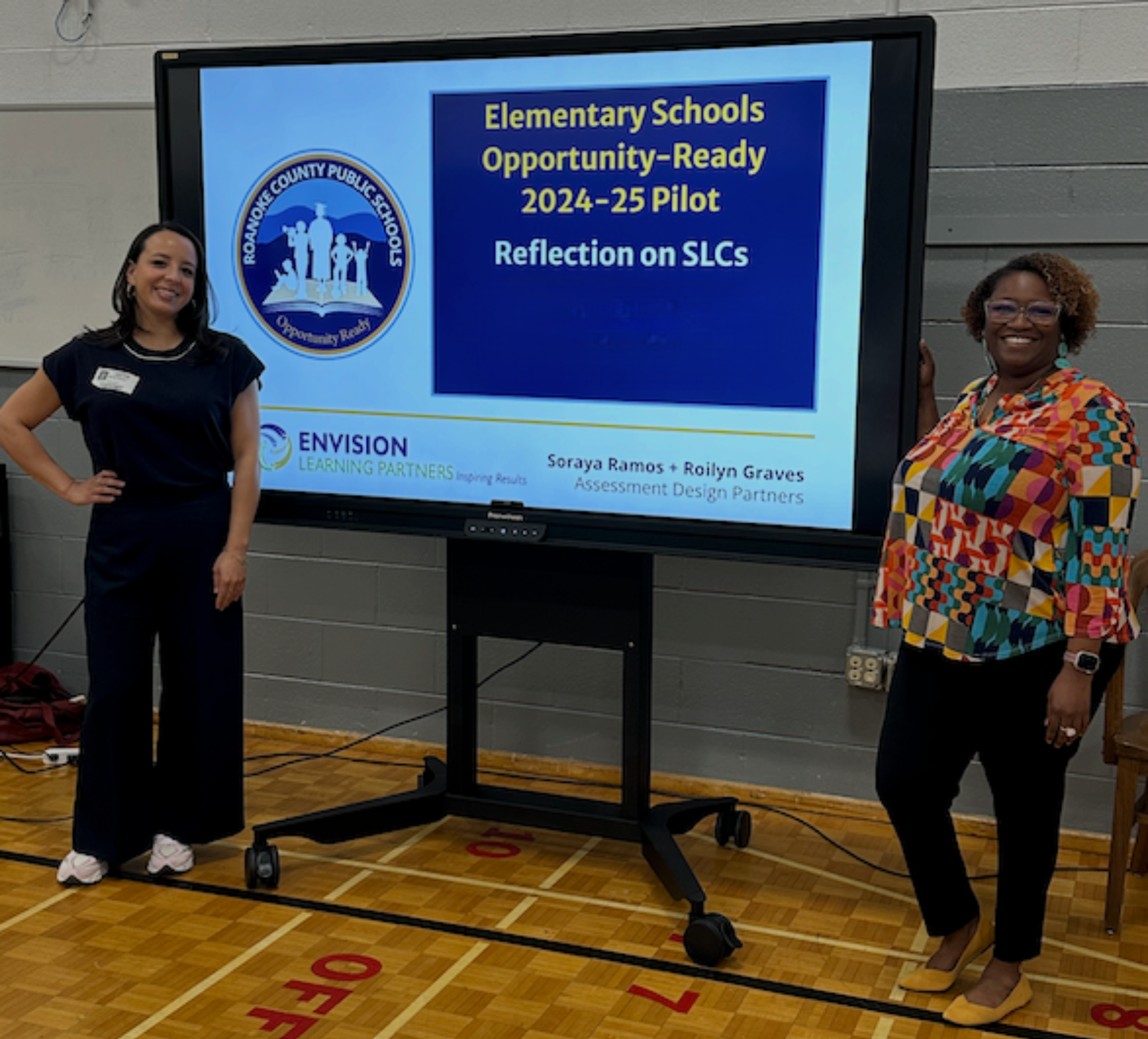
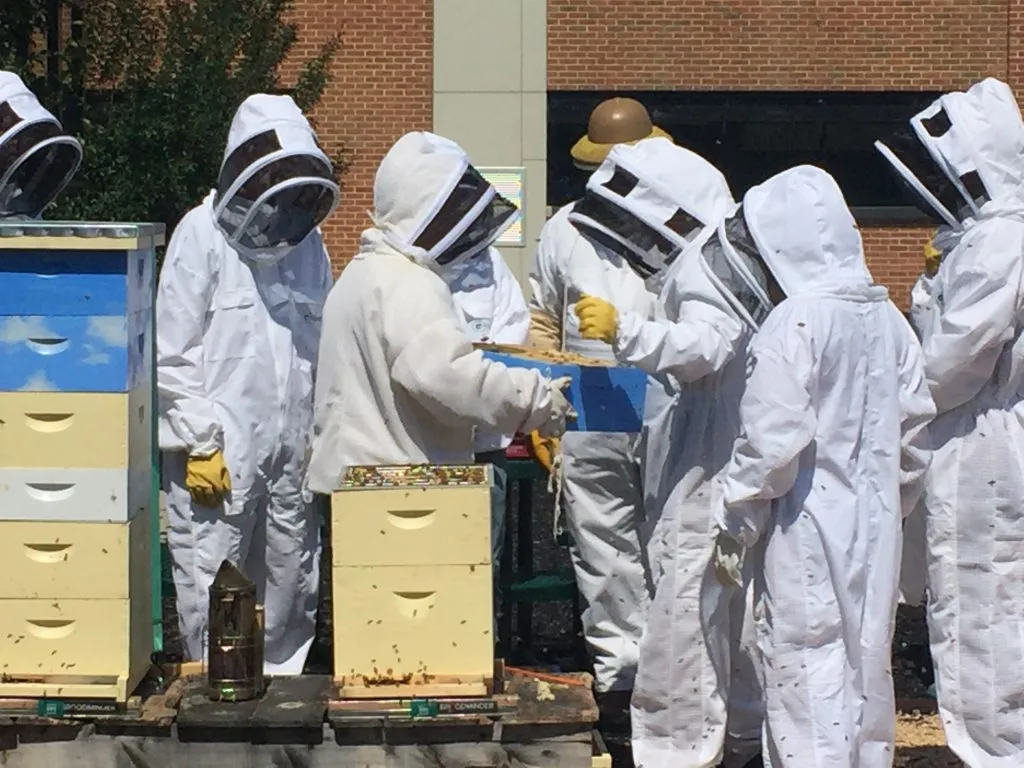
This month, watch ELP STEM assessment specialist, Jim Malamut, share his ideas on Proximity of Evidence to student thinking.
Looking for more resources? Visit the ELP blog page for all past newsletter content.




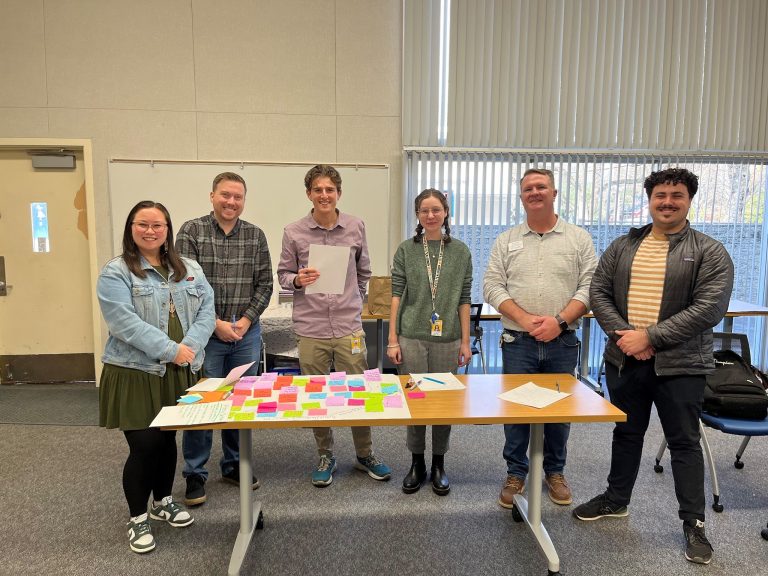
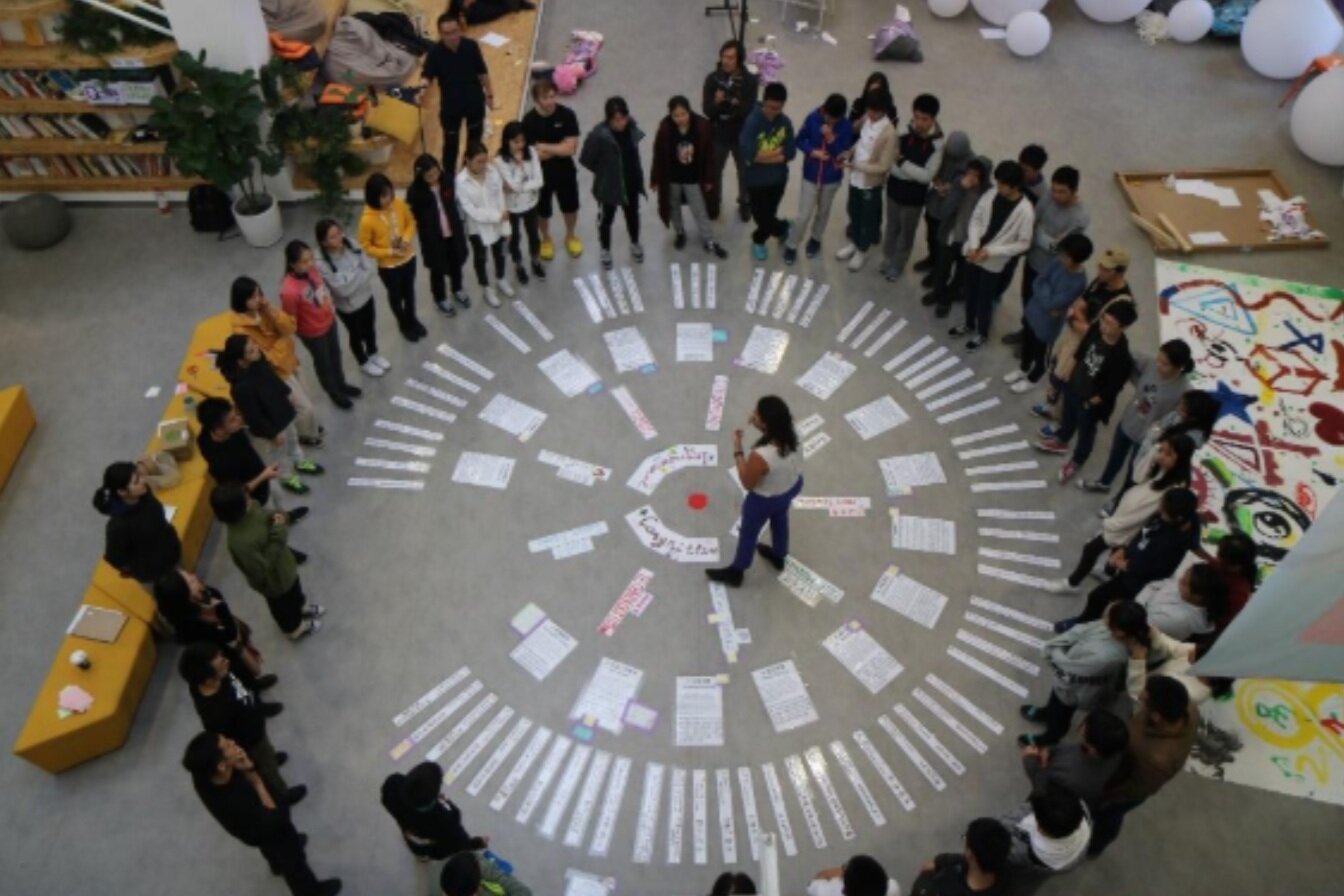



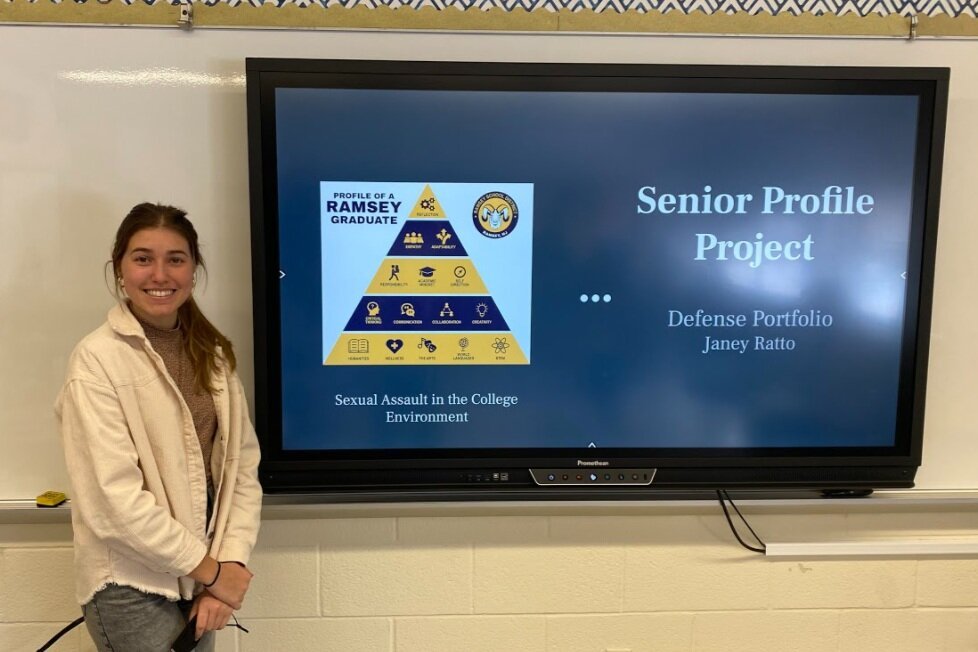
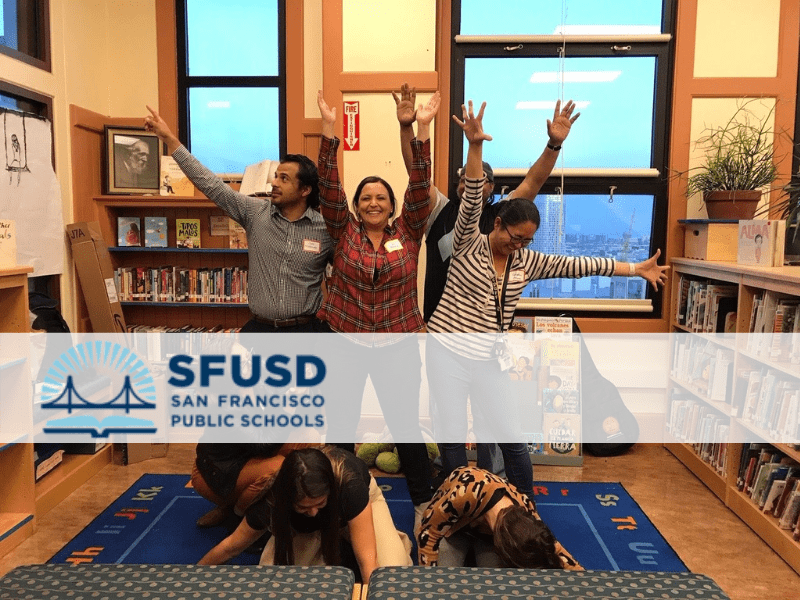

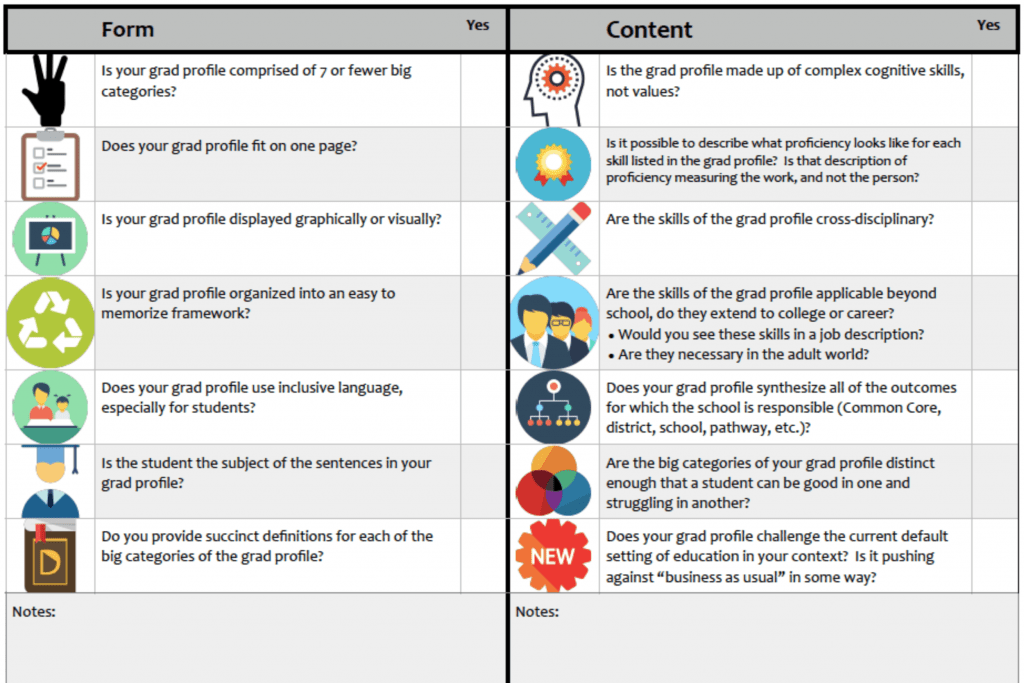
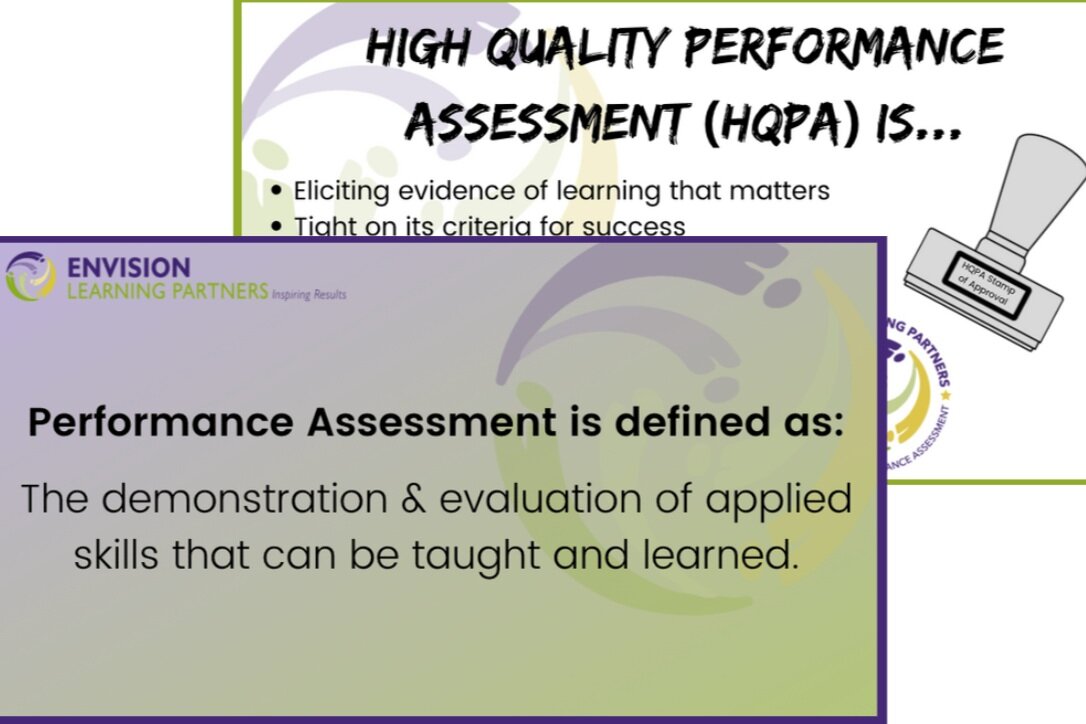
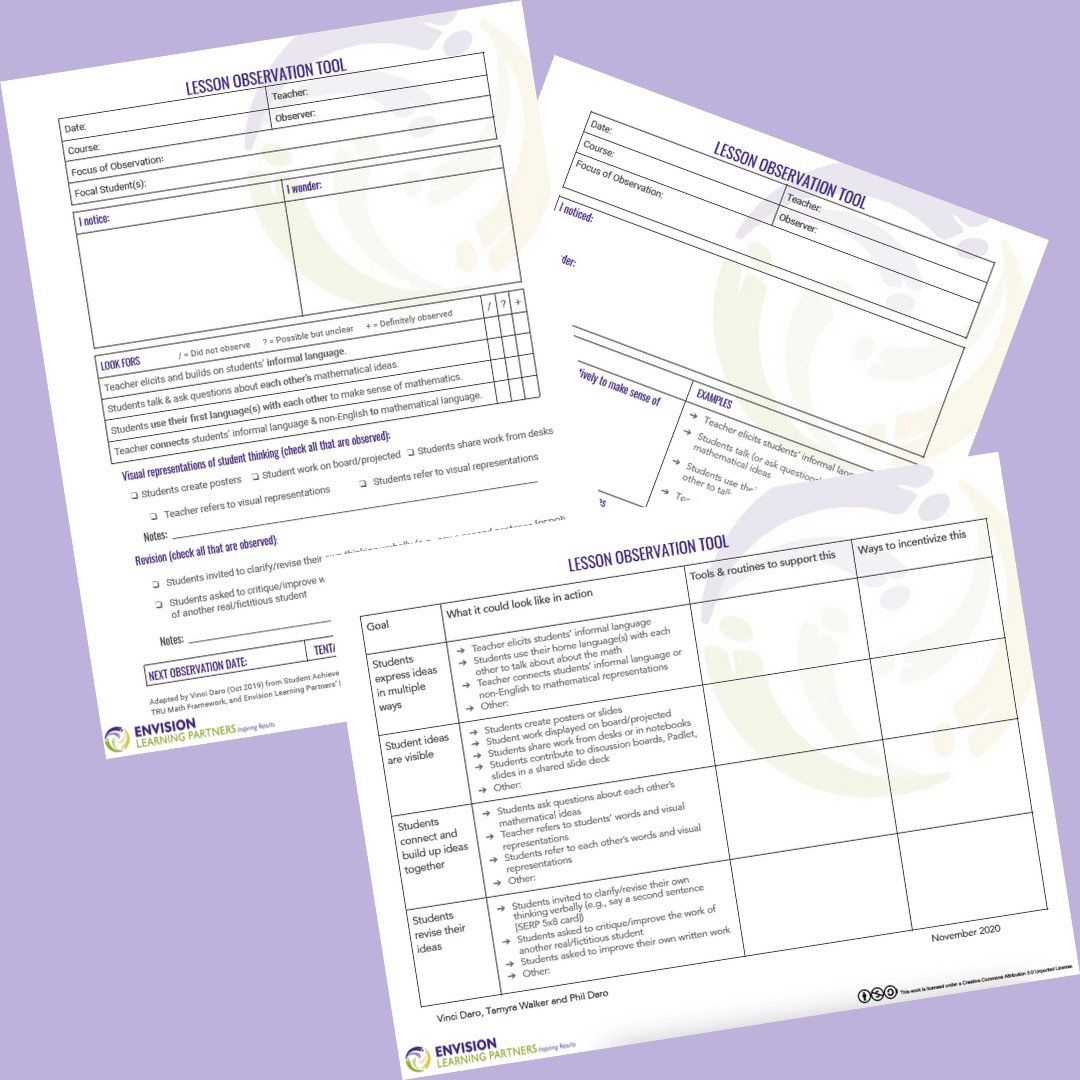
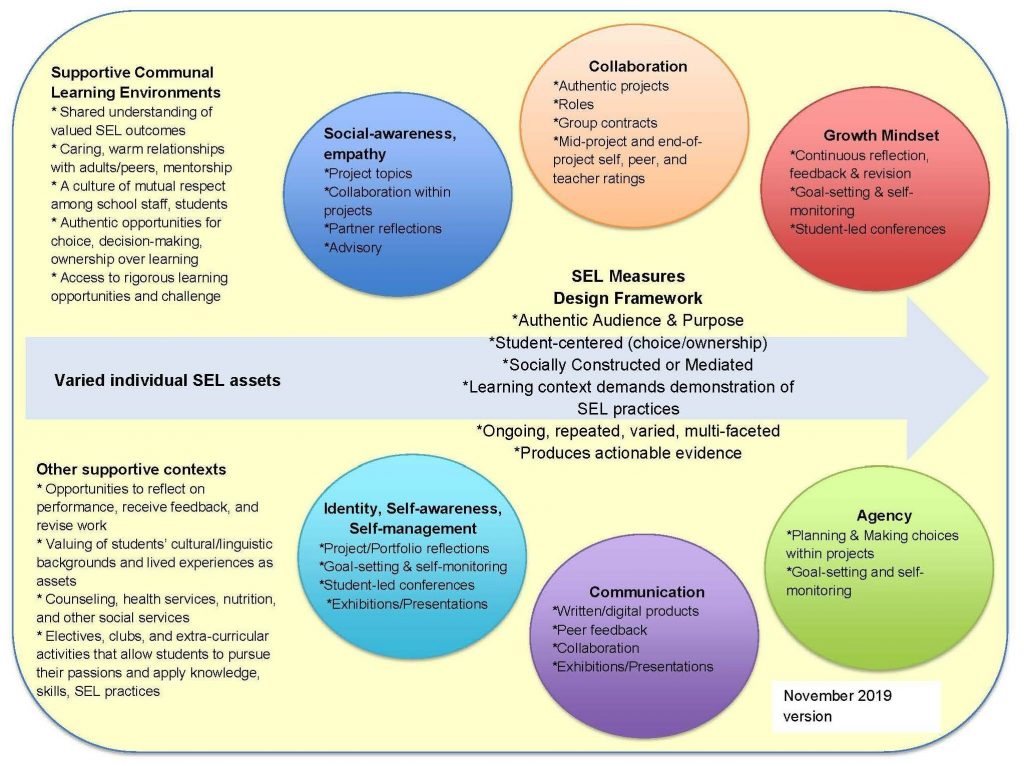


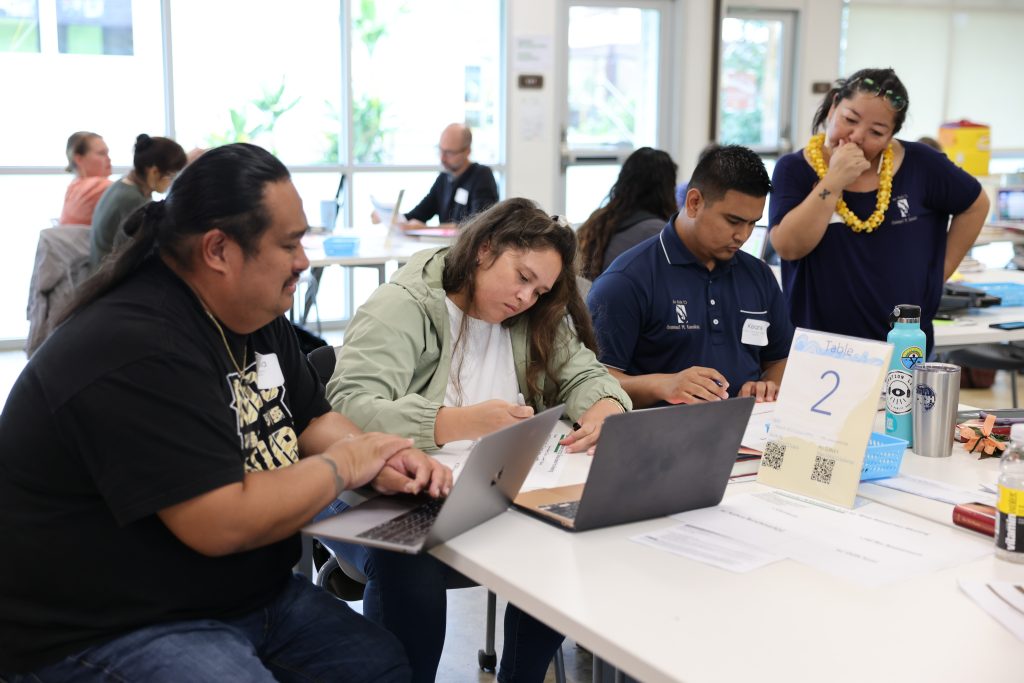
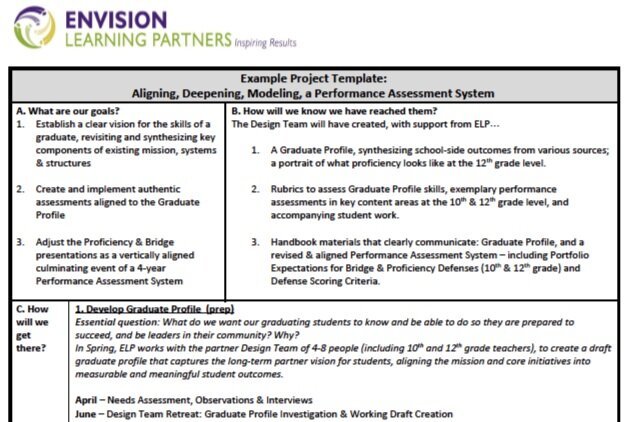
.svg)
.svg)

.svg)

.svg)
